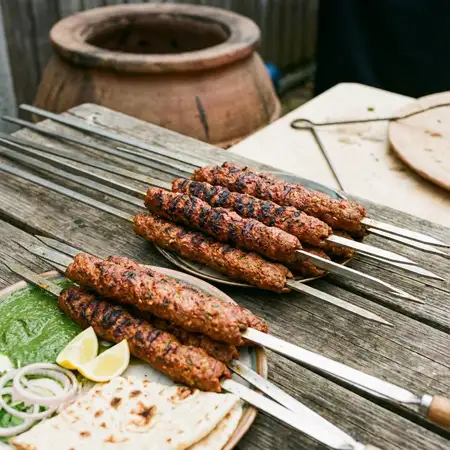
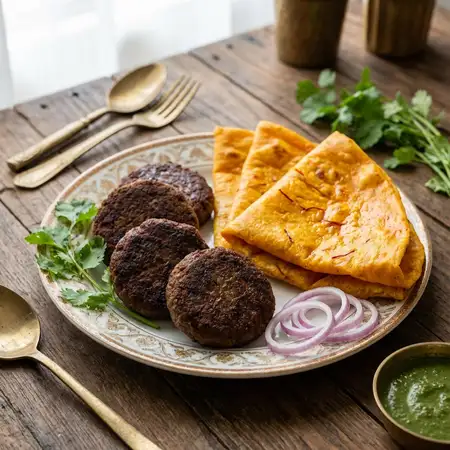
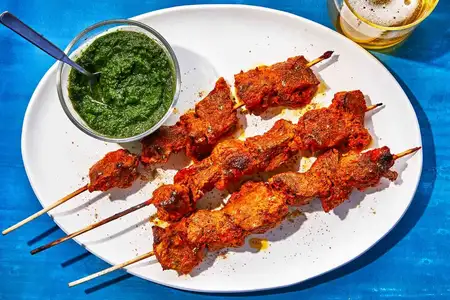
Boneless chicken pieces double-marinated in lemon, then spiced yogurt, and blistered on skewers in a tandoor. It is the boneless, faster-cooking sibling of tandoori chicken and the base of the famous masala curry.
Also known as: murgh tikka, chicken tika, tikka kebab, chicken teeka, चिकन टिक्का, چکن تکہ
Watch it made
Ingredients
- 700 g boneless chicken thigh, in 4 cm pieces
- 30 ml lemon juice
- 2 tbsp ginger-garlic paste, divided
- 150 g hung curd or thick Greek yogurt
- 1 tbsp Kashmiri chili powder
- 1 tsp garam masala and 0.5 tsp turmeric
- 1 tbsp mustard oil
- 1 tsp kasuri methi, crushed
- Salt
- 20 g butter, plus chaat masala and lemon to finish
How to make it
- 1
First marinade: rub the chicken with lemon juice, half the ginger-garlic and salt; set aside 30 minutes.
- 2
Whisk the yogurt with the remaining ginger-garlic, chili powder, garam masala, turmeric, mustard oil and kasuri methi, then coat the chicken and refrigerate 4-6 hours.
- 3
Thread onto skewers and roast at 240 C (or under a raging grill) for 12-14 minutes, turning once, until the edges blacken in spots.
- 4
Brush with butter and give it 2 final minutes for the smoky gloss.
- 5
Finish with chaat masala and a hard squeeze of lemon before anyone touches it.
Pro tip: Hang the yogurt or buy it thick: watery yogurt slides off in the heat and the chicken steams grey. A marinade that holds its shape on a spoon will hold onto the meat.
The story of Chicken Tikka
Chicken tikka is the boneless, faster-cooking sibling of tandoori chicken and one of the most widely eaten dishes in the world, largely because it became the base of chicken tikka masala. Tikka means pieces, and the dish is exactly that: boneless chicken, double-marinated, blistered on skewers in a tandoor.
Its modern form is Punjabi and twentieth-century, developed alongside the commercial tandoor in Peshawar and Delhi restaurants. Its global spread came through the British curry house, where it arrived as a starter and stayed as the country's most ordered flavour, which is a strange fate for a dish that is fundamentally about a clay oven.
The technique that defines it
The double marinade is the technique and skipping the first stage is the most common shortcut. The first marinade is short — lemon juice, salt, ginger-garlic paste, red chilli — and its job is to season the surface and draw out a little moisture. The second is thick yoghurt with spices, and it clings to that prepared surface rather than sliding off.
The yoghurt must be hung or strained, because watery yoghurt drips off the skewer and steams the meat. In a tandoor the pieces cook in six or seven minutes at ferocious heat; in a domestic oven the equivalent is the highest setting with the grill element on, pieces on a rack over a tray, turned once, and finished with a brush of melted butter.
Choosing your ingredients
Chicken thigh gives a better result than breast — more forgiving, more flavour — though restaurants often use breast for appearance. Cut into pieces of about four centimetres. Full-fat yoghurt, hung in a cloth for an hour to thicken.
Kashmiri red chilli powder gives colour without excessive heat and is the traditional source of the dish's redness; food colouring is a restaurant shortcut. Garam masala, cumin, coriander, ginger-garlic paste, and a little mustard oil in the Punjabi style. A pinch of kasuri methi (dried fenugreek leaf) crushed in at the end is the detail that makes it taste like a restaurant.
Mistakes that ruin it
Skipping the first marinade
The lemon-and-salt stage prepares the surface so the yoghurt adheres. Without it the second marinade slides off.
Watery yoghurt
It drips off and steams the chicken. Hang or strain it first.
Chicken breast
It dries in the two minutes between done and overdone. Thigh is materially better.
A moderate oven
It needs the highest heat you have, with the grill element on. A slow oven gives pale, dry, sad tikka.
How it is served
With mint-coriander chutney, sliced onion rings with lemon and chaat masala, and naan or roti. As a starter in a restaurant, or as the base of a masala curry. In Punjab it is eaten straight off the skewer with onion and lemon and nothing else.
Questions about Chicken Tikka
What is the difference between chicken tikka and tandoori chicken?
Tandoori chicken is bone-in, usually whole pieces or a whole bird. Chicken tikka is boneless pieces, which cook faster and take more marinade per gram.
Why is chicken tikka red?
Traditionally from Kashmiri red chilli powder, which gives colour without much heat. Many restaurants add food colouring, which is a shortcut rather than a tradition.
Do I need a tandoor?
No. The highest setting on a domestic oven with the grill element on, pieces on a rack over a tray, gets close. Finish with melted butter.
Thigh or breast?
Thigh. It has the fat to survive very high heat and forgives an extra minute, which breast does not.