Indian kebabs cover a wide range of textures, marinades, and spice profiles, from soft minced mixtures to boldly seasoned chunks cooked over high heat. The family is broad enough that it makes more sense to think in clusters: minced skewers, soft pan- or tawa-style kebabs, yogurt-marinated chicken, and chunk-meat kebabs built around smoke and spice balance.
Collection
Indian Kebab Recipes
A collection of Indian kebab styles, from seekh and galouti to boti, reshmi, and green-marinated skewers.
This collection helps group the main styles together so the differences between seekh, galouti, chapli, boti, reshmi, bihari, and green-marinated skewers stay clear. It is meant to show where tenderness comes from, why some mixtures are delicate while others are robust, and how breads, chutneys, onions, and cooling sides complete the final plate.
If you want Indian kebabs to taste intentional instead of generic, you need to know which style you are cooking. The spices, texture target, shaping method, and service style all shift from one branch to another.
What changes from one style to another
Some Indian kebabs are built around minced meat and tenderness, while others focus on marinated pieces, smoke, and spice balance. Seekh and galouti are solving very different problems, even when both are served as kebabs.
Understanding the texture goal of each recipe is the fastest way to avoid turning them into generic grilled meat. One style may want softness and melt, another a springier bite, and another clear char on marinated edges.
Spice use also changes by style. In some recipes spices should perfume the meat; in others they should define the entire bite. This hub is here to help you keep those differences sharp.
How to serve them well
Flatbreads, chutneys, onions, and cooling sides help support the spice and smoke without overpowering the kebab itself. The point is contrast: heat against freshness, char against softness, spice against relief.
Use this collection to connect the skewers with the breads and accompaniments that make the meal feel complete. A kebab that is perfect on the grill can still feel unfinished if the serving side is flat, dry, or too heavy.
Naan, roomali-style breads, onion salads, mint chutney, yogurt-based sauces, and lemon all have a place here, but the best pairing depends on whether the kebab is delicate, smoky, fatty, or aggressively seasoned.
Start here by texture preference
Start with seekh if you want the classic minced-skewer route. It teaches mixture handling, skewer pressure, and balanced spice application without the extreme softness of galouti.
Choose galouti when you want to study tenderness and luxurious texture. It is less about grill marks and more about softness, spice layering, and careful handling.
Move to boti, bihari, reshmi, or haryali styles if you want chunk-meat marinades and stronger contrasts between exterior char and interior moisture.
What this hub helps you compare
It lets you compare minced versus chunked kebabs, tawa-friendly versus skewer-friendly methods, dairy-heavy versus herb-heavy marinades, and assertive spice profiles versus more rounded aromatic ones.
That comparative view matters because many home cooks borrow one technique from one Indian kebab style and accidentally apply it to another. This collection is meant to keep those borders clear so the recipes stay recognizable.
Recipes In This Collection
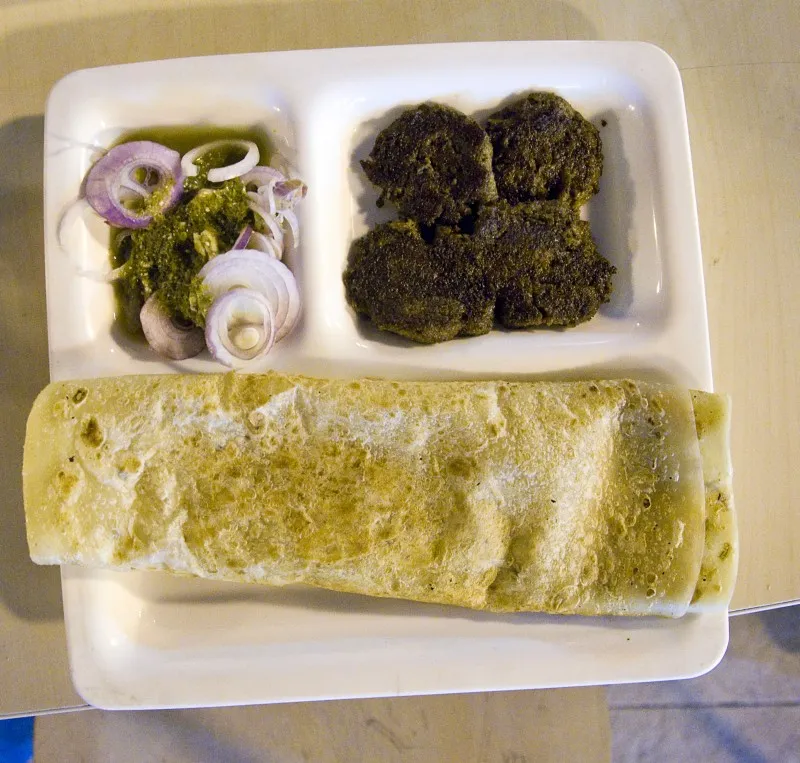
Lamb / 2h
Galouti Kebab
The "Melt-in-Mouth" kebab of Lucknow. Finely minced meat with papaya tenderizer.
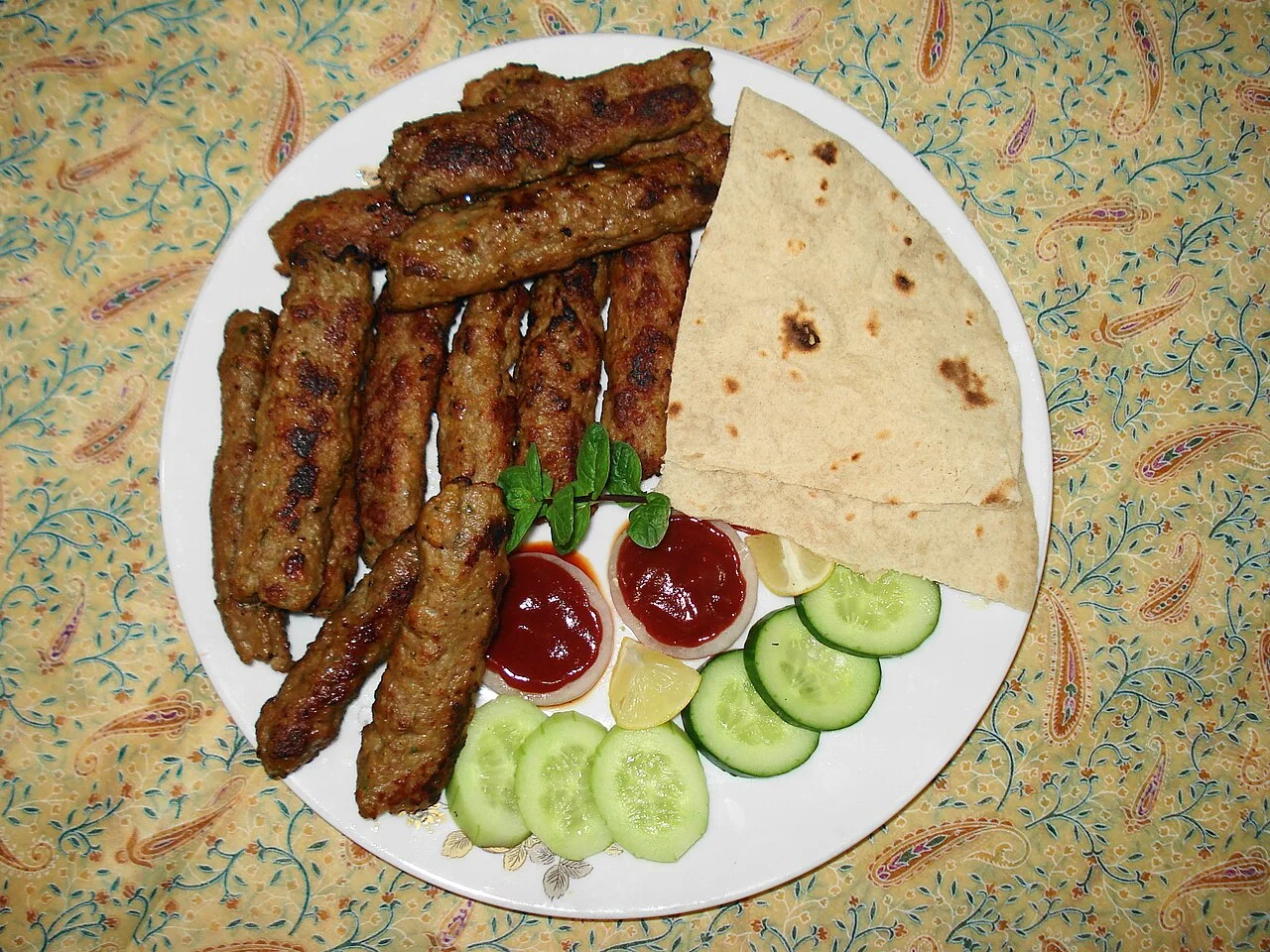
Beef / 1h
Seekh Kebab
Spiced minced meat cylinders cooked in a Tandoor.
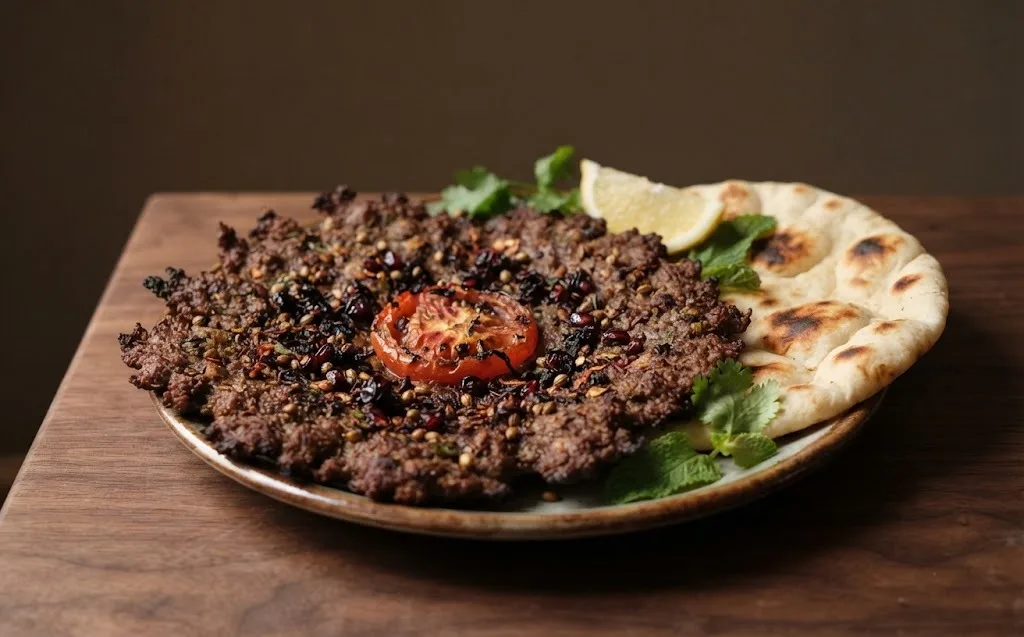 AI illustration
Beef / 30m
Chapli Kebab
Giant, flat, fried beef patties from Peshawar. Uniquely crunchy with pomegranate seeds.
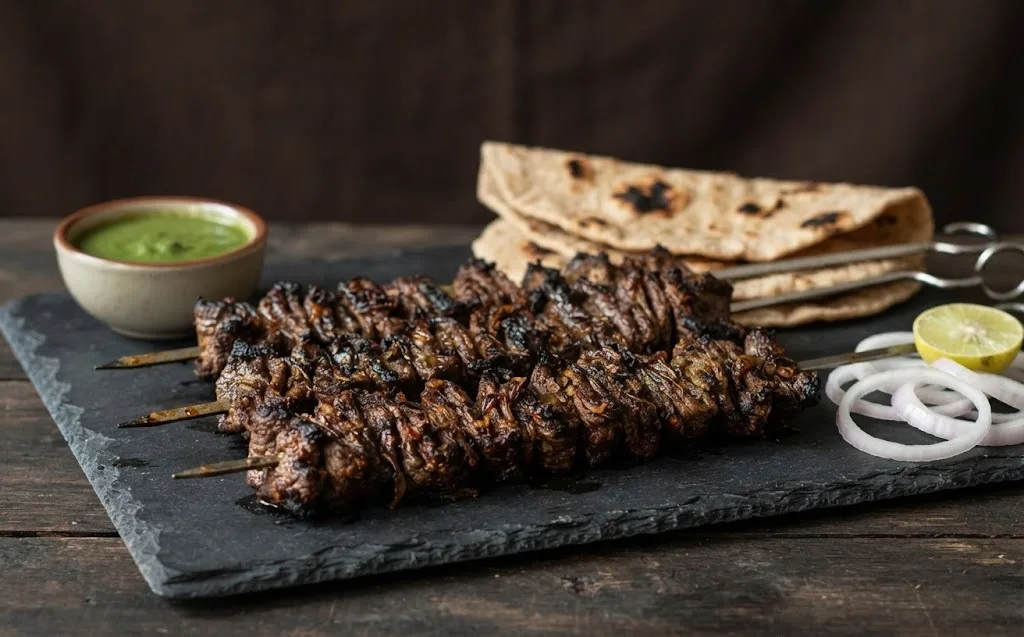 AI illustration
Beef / 6h
Bihari Kebab
Thin beef strips marinated in yogurt and papaya, incredibly tender.
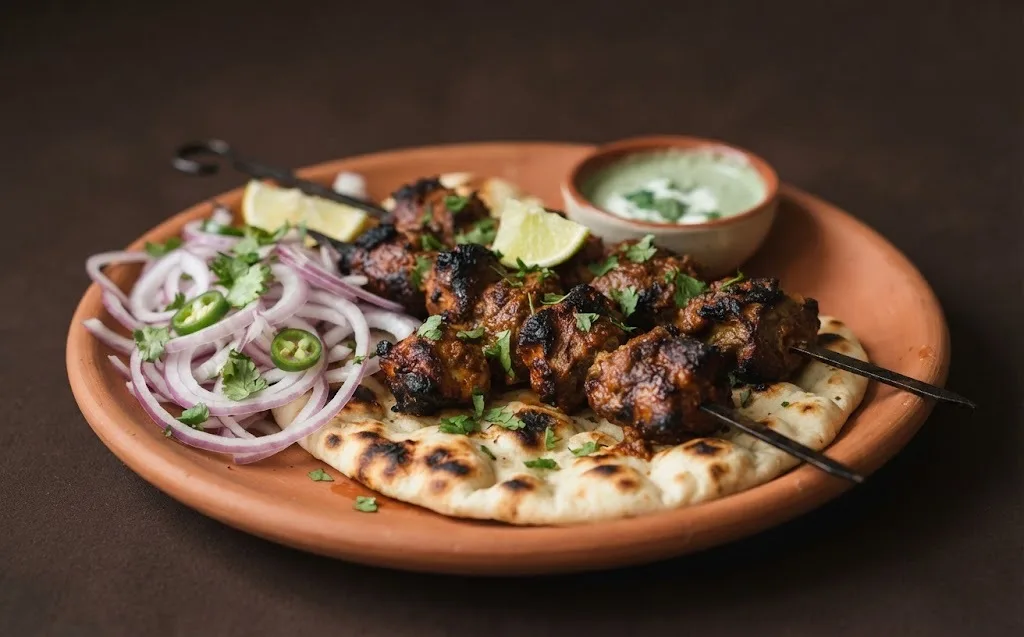 AI illustration
Lamb / 6h
Boti Kebab
Marinated chunks of spiced meat. The chunk version of the minced Seekh.
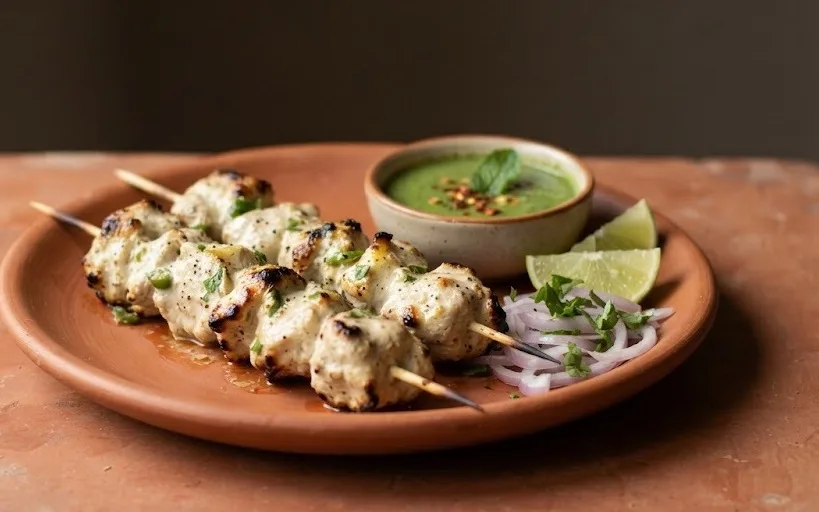 AI illustration
Chicken / 4h
Reshmi (Malai) Kebab
The "Silk" Kebab. Chicken marinated in cream, cashew paste, and cheese. White and mild.
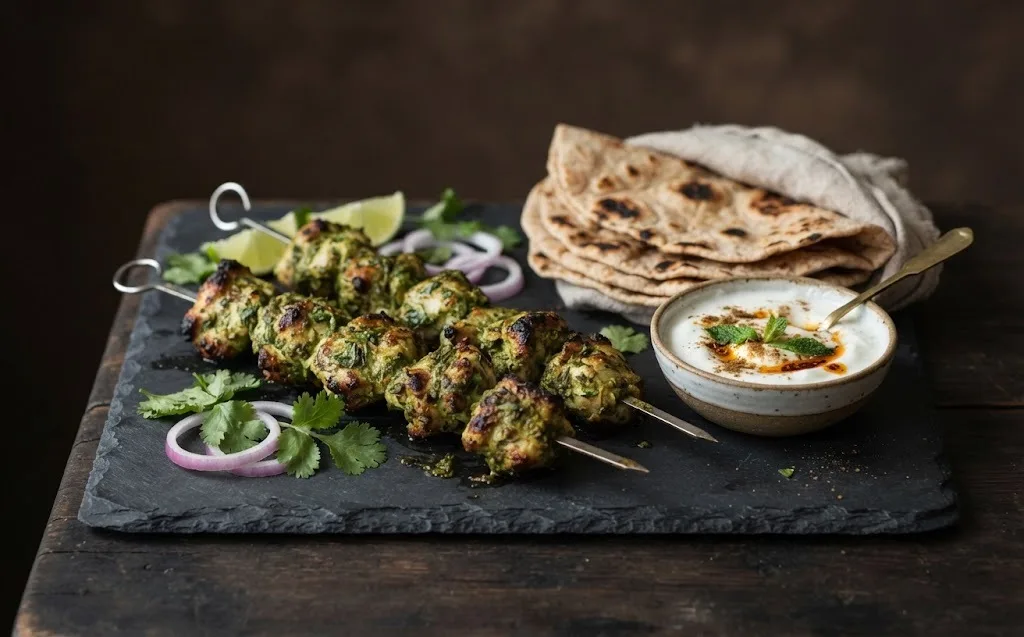 AI illustration
Chicken / 4h
Haryali Kebab
Green Chicken Kebab. Marinated in fresh mint, coriander, and spinach.
 AI illustration
Breads / 2h
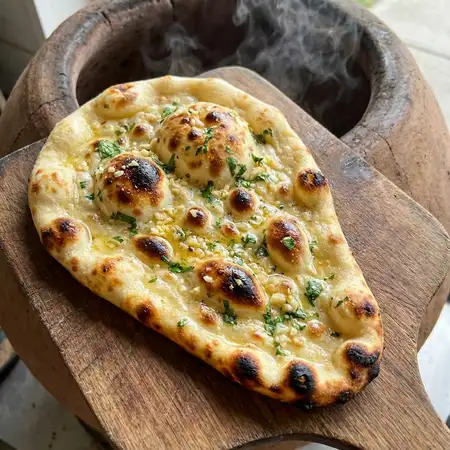
Tandoori Naan
Leavened Indian flatbread slapped onto the walls of a clay oven.
From The Kebab Atlas
Kakori Kebab
An Awadhi refinement of the seekh from the town of Kakori near Lucknow: lamb minced to a near-paste with fat, raw papaya, and a famously subtle spice mix, so soft it barely clings to the skewer.
Tunday Kebab
Lucknow's most storied griddle kebab, created by a one-armed ('tunda') cook whose family still guards a spice blend said to run past 100 ingredients.
Paneer Tikka
India's flagship vegetarian kebab: cubes of fresh paneer cheese and peppers coated in spiced, gram-flour-thickened yogurt and charred in the tandoor.
Malai Kebab
Chicken cubes soaked in a white marinade of cream, cheese, cashew, and green cardamom, grilled just until golden at the edges.
Tangdi Kebab
Whole chicken drumsticks slashed to the bone, marinated in spiced yogurt (kalmi versions add cream and cheese), and roasted in the tandoor.
Shikampuri Kebab
Hyderabad's 'belly-full' kebab: a shami-style meat-and-lentil patty stuffed with a pocket of tangy yogurt, onion, and mint before shallow-frying.
Patthar ka Gosht
A Hyderabadi Nizam-era specialty in which paper-thin marinated lamb slices are seared directly on a slab of granite heated over coals.
Sutli Kebab
Bhopal's answer to the gola kebab: ultra-tender minced buffalo or mutton wound onto skewers with cotton string ('sutli') that is snipped away before serving.
Kathi Kebab Roll
Kolkata street food born at the Nizam's restaurant: skewer-roasted meat ('kathi' means stick) rolled into a flaky, egg-fried paratha with onions and lime.
Hara Bhara Kebab
A vegetarian patty of spinach, green peas, and potato, spiced and pan-fried until crusted.
Dahi ke Kebab
An Awadhi vegetarian curiosity: thick hung yogurt bound with roasted gram flour and onions, shaped into discs and fried to a shell that gives way to a molten, tangy center.
Chargha
Lahore's whole-bird kebab-house classic: a full chicken scored, steeped in spiced yogurt and vinegar, steamed until cooked, then flash deep-fried so the skin crackles.
Dum ke Kebab
A Hyderabadi specialty, made for Eid and family gatherings, in which marinated minced or flattened mutton is sealed in a tray and slow-baked under 'dum' with live coals smoking the surface.
Malai Boti
Chicken cubes steeped in a marinade of cream (malai), cream cheese or yogurt, green chili, and white pepper, grilled on skewers to a pale, barely-charred finish that stays deliberately mild and velvety.