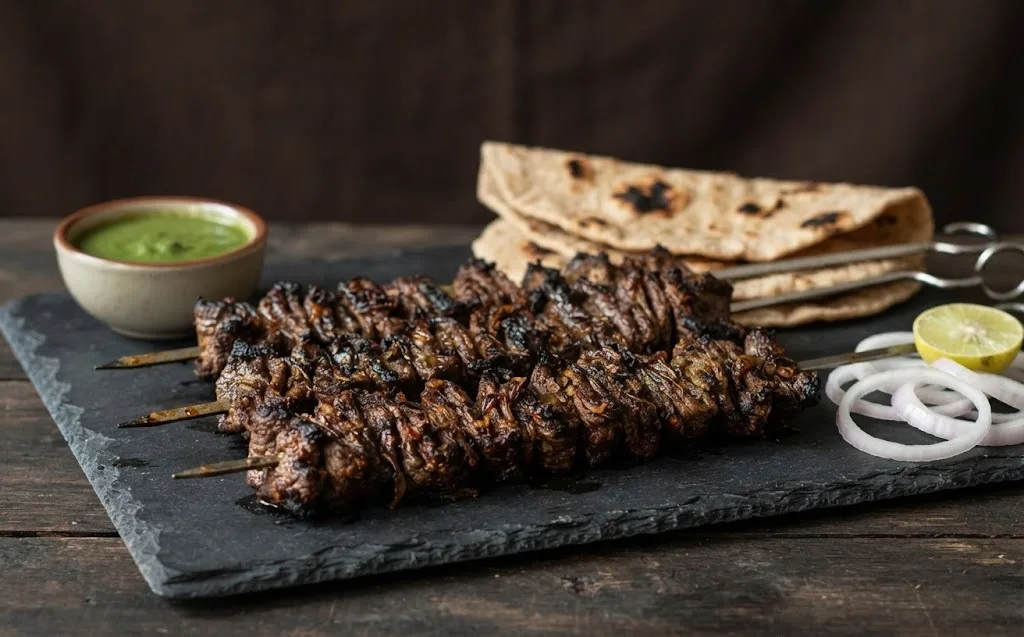
Bihari kebab is proof that humble cuts can outclass expensive ones when the marinade knows what it's doing. Born in Bihar in eastern India and now a Ramadan-night institution across Pakistan and Bangladesh, it takes thin ribbons of beef — traditionally undercut or flank, sliced pasanda-style along the grain — and drowns them for hours in mustard oil, yogurt, browned-onion paste, raw papaya and a dark, warming masala. The papaya breaks the tough fibres down, the mustard oil carries a pungent edge you will find in no Punjabi kebab, and the strips, threaded in a tight accordion or ribbon pattern before they ever hit the grill, pick up a fast, even char over live charcoal. The result folds like silk and tastes like it spent hours over wood.
Also known as: Bihari Kabob, Tenderized Beef Kebab
Reference video
Reference video, embedded from YouTube: filmed by Cooking With Rozins, not by How To Make A Kebab, and not owned, relicensed or distributed by this site.
View Original Video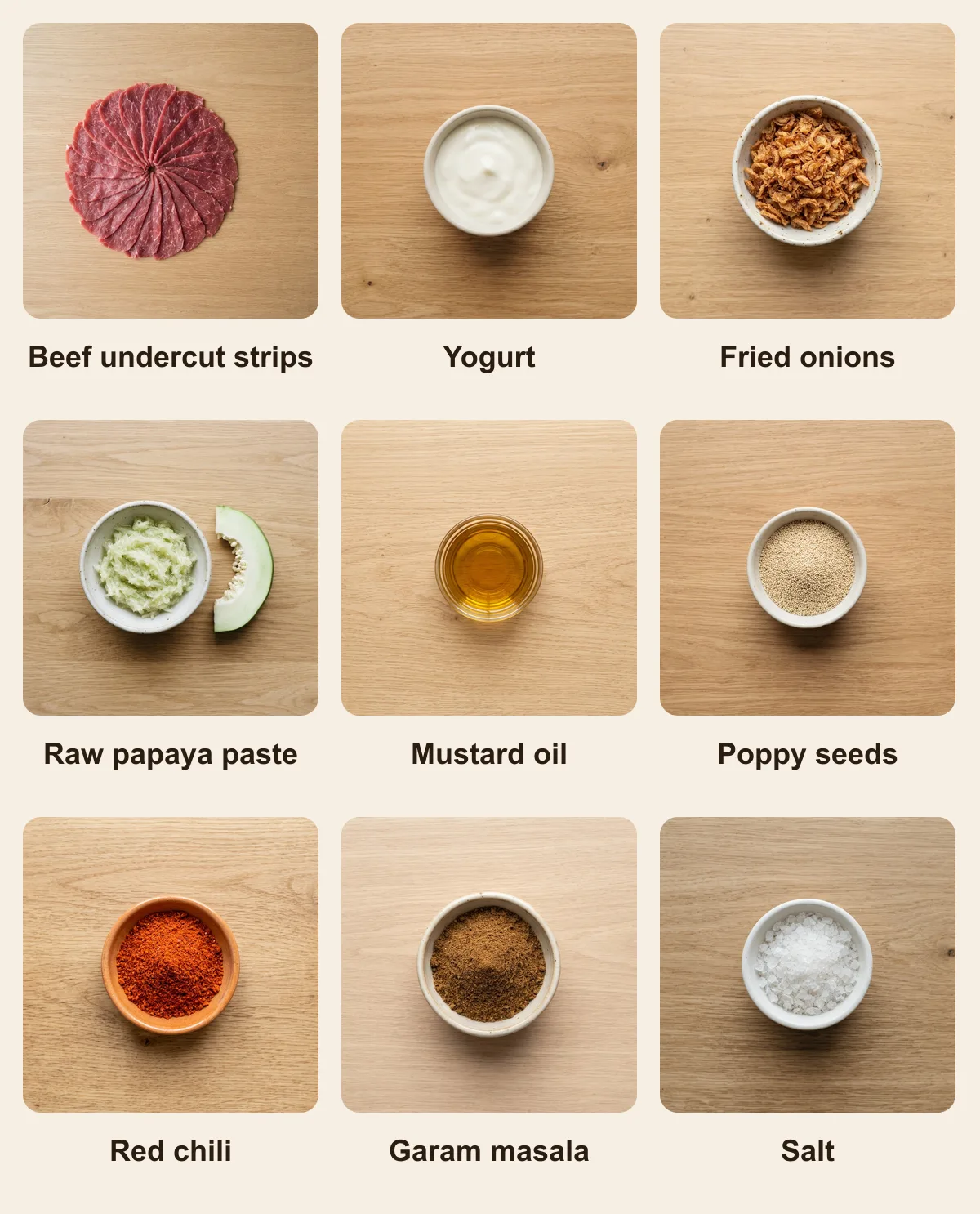
Ingredients
- 500g Beef Undercut (Thin long strips/Pasanda cut)
- 1/2 cup Yogurt
- 1/2 cup Fried Onions (Crushed to paste)
- 2 tbsp Raw Papaya Paste
- 2 tbsp Mustard Oil
- 1 tbsp Poppy Seeds (Ground)
- Spices: 1 tsp Red Chili, 1 tsp Garam Masala, Salt to taste
How To Make Bihari Kebab
-
1
Rub the papaya paste over the beef strips until each one is coated, then cover and refrigerate for 4-6 hours while the papaya breaks down the tough fibers.
-
2
In a separate bowl, stir the yogurt, fried-onion paste, mustard oil, ground poppy seeds, red chili, garam masala and salt together into a thick, even marinade.
-
3
Rub the marinade into the papaya-coated strips with your hands, working it over both sides of every strip until no bare meat shows.
-
4
Thread each strip onto a skewer in a tight accordion or ribbon pattern, folding it back and forth and piercing it at every fold so it sits in ripples along the skewer.
-
5
Grill over hot charcoal for 3-4 minutes per side, turning once, until the edges are charred. Cut into one fold to check that the beef is cooked through, with no raw red meat left inside.
Note: Mustard oil gives the signature pungent kick. Papaya is essential, otherwise beef strips will be tough.
Go Deeper · the full story
About this recipe
Bihari kebab makes the case that marinade technique matters more than the cut of meat. The beef is sliced along the grain rather than against it, into ribbons thin enough that they get more contact with the marinade per gram than any thick chunk could: it is the thinness, not the grain direction, that the whole dish is built around.
This version leans into the ribbon format: the strips are threaded onto skewers in a tight accordion or ribbon pattern rather than laid flat, which packs the maximum amount of surface against the fire. Mustard oil, a staple of Bihar and Bengal, provides the sharp, pungent edge the dish is known for, and raw papaya does the actual work of turning a cheap cut tender.
Why this recipe works
Why This Recipe Works
- Slicing the beef into thin strips along the grain, rather than cubes, gives the marinade far more surface area to work with in the same amount of time.
- Ground poppy seed paste thickens the marinade so it clings to the thin strips instead of running off, coating them evenly with the mustard oil and spice mix.
- Raw papaya paste breaks down the tough fibers of an inexpensive cut over four to six hours, which is what makes the thin-strip format hold together instead of shredding on the grill.
How to serve it
Serving Notes
Serve hot off the grill with sliced onion and a squeeze of lemon; the strips are thin enough to cool and toughen quickly once plated.
Warm roti or naan makes a better plate partner than rice, since the strips are built to be picked up and eaten by hand.
A cooling yogurt-based side balances the sharp mustard-oil pungency that defines the dish.
Common mistakes to avoid
Common Mistakes
- Slicing the beef into cubes instead of thin ribbons: the whole marinade logic depends on a high surface-to-volume ratio that cubes don't have.
- Cutting the papaya tenderizing time short: under four hours the tough fibers of the undercut or flank cut haven't broken down enough.
- Using ordinary cooking oil instead of mustard oil: the sharp, pungent edge is specific to mustard oil and can't really be substituted.
- Threading the strips flat instead of in an accordion or ribbon pattern: less surface reaches the fire and the char comes out uneven.
Frequently Asked Questions
Can I use a different cut of beef?
Bihari starts from an undercut or pasanda-style cut sliced into thin long strips — any similarly lean cut works as long as it's sliced thin along the grain, since the marinade depends on that surface area.
What does mustard oil actually add that other oils don't?
A sharp, pungent bite that is core to Bihari kebab — swapping it for a neutral oil noticeably changes the flavor.
Is raw papaya essential, or can I skip it?
It's the tenderizer that turns a cheap, chewy cut buttery in four to six hours — skip it and thin strips of undercut beef will stay tough.
How is Bihari kebab different from seekh kebab?
Seekh is minced meat shaped around a skewer; Bihari kebab is whole thin strips of beef threaded in a ribbon pattern — different cut, different marinade, same charcoal finish.
Sources and further reading
- Bihari kebab — Wikipedia
- Kebab — Wikipedia
- Food Stories: Bihari Kabab — Dawn Images (Bisma Tirmizi)
- What Are Bihari Kebabs? — TASTE (Penguin Random House)
Keep Cooking
Build The Full Plate
Technique And Support Guides
Best Meat For Kebab
Choose the best meat for kebab by fat ratio, cut, grind, and cooking style, whether it ends up on a skewer, in a wrap, or on a plate.
How To Keep Kebab On The Skewer
Learn how to keep kebab on the skewer with the right fat level, onion handling, kneading, skewer shape, and grill timing.
Metal Vs Wooden Skewers For Kebab
Understand when to use metal or wooden skewers for kebab, plus why flat skewers matter for minced kebab and how oven use changes the choice.
Best Cut For Shish Kebab
Choose the best cut for shish kebab with a practical guide to lamb, beef, and chicken options, cube size, fat balance, and what actually stays juicy on skewers.
Related Recipes
Galouti Kebab
The "Melt-in-Mouth" kebab of Lucknow. Finely minced meat with papaya tenderizer.
Seekh Kebab
Spiced minced meat cylinders cooked in a Tandoor.
Chapli Kebab
Giant, flat, fried beef patties from Peshawar. Uniquely crunchy with pomegranate seeds.
Boti Kebab
Marinated chunks of spiced meat. The chunk version of the minced Seekh.