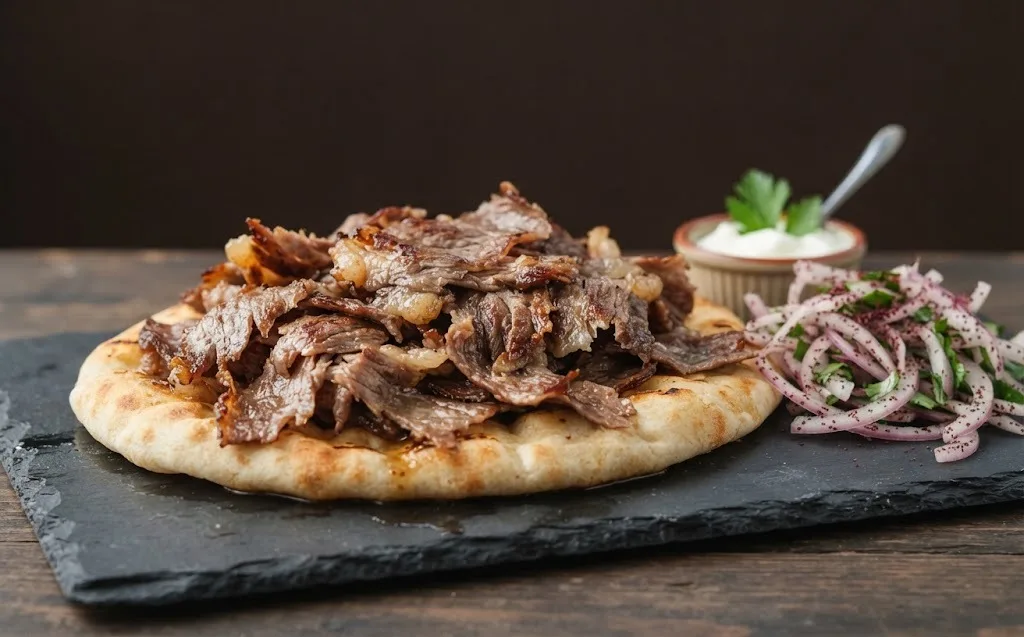
Stand in front of a serious dönerci in Istanbul and study the stack: if you can see distinct sheets of meat pressed together like pages in a book, you are looking at yaprak döner — 'leaf' döner — and you should order it. Yaprak means every layer is a whole slice of beef or lamb leg, pounded thin, bathed for a full day in milk, yogurt, onion juice, and spice, then threaded onto the spit one sheet at a time. No mince, no fillers, no binder; the dairy tenderises while its sugars brown. This is what Turkish butcher-shop döner (kasap döner) built its reputation on, and it costs more for a reason. This recipe follows the shop method: leaves and tail fat stacked on a vertical spit, trimmed into a cone, and roasted upright against a charcoal fire.
Also known as: Yaprak Doneri, Leaf Doner, Steak Doner, Beef Doner, Turkish Gyro
Reference video
Reference video, embedded from YouTube: filmed by Brothers Kitchen, not by How To Make A Kebab, and not owned, relicensed or distributed by this site.
View Original Video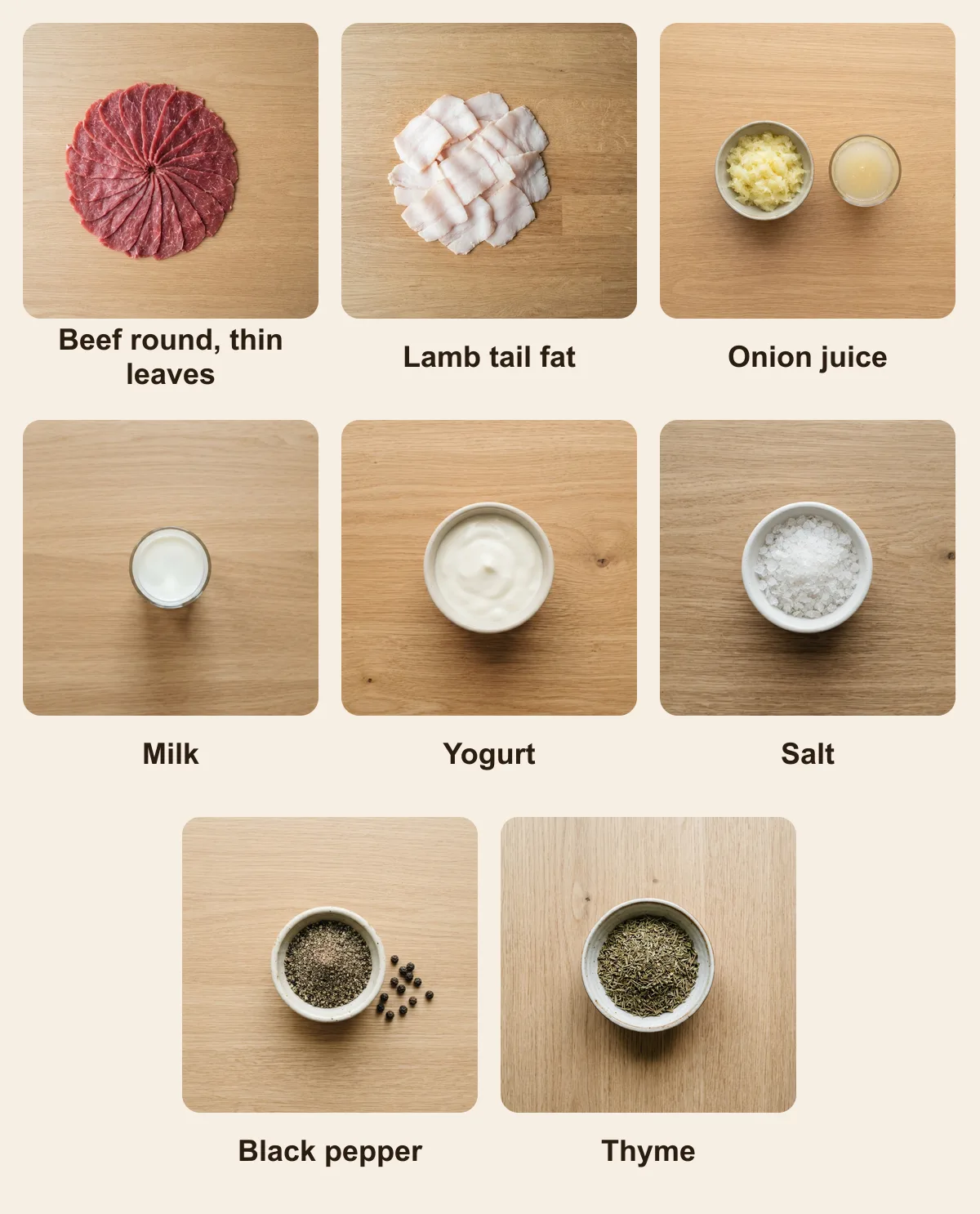
Ingredients
- 1kg Beef Tranche/Round (Veal leg) - Sliced thin leaves
- 200g Lamb Tail Fat (Kuyruk Yagi) - Sliced thin
- 1 Onion (Juice)
- 1/2 cup Milk
- 1 tbsp Yogurt
- 1 tsp Salt & 1/2 tsp Black Pepper
- 1/2 tsp Thyme
How To Make Yaprak Doner
-
1
If you are cutting the leaves yourself, firm the beef in the freezer for about an hour first, then cut it into large, thin, leaf-like sheets. Lay each sheet between cling film and pound it lightly to an even thickness so every layer cooks at the same rate.
-
2
Grate the onion and squeeze the pulp through a sieve to collect the juice, then whisk the juice with the milk, yogurt, salt, pepper and thyme. Turn every leaf through the marinade so both sides are coated, cover and refrigerate for 24 hours.
-
3
Thread a few slices of tail fat onto the spit first to form a base. Then add the marinated leaves one at a time, pressing each layer down firmly, and slip in a slice of tail fat after every 3 to 4 leaves so the stack bastes itself as it cooks.
-
4
Once the spit is loaded, trim the ragged edges with a sharp knife so the stack forms a smooth, even cone, the classic doner shape, which turns and browns evenly in front of the fire.
-
5
Stand the spit upright in front of a steady wood-charcoal fire and turn it slowly so every side gets the same heat, keeping the fire going for the whole cook. Let the outer layer roast until it is browned and cooked right through; a probe pushed sideways into that layer should read at least 75°C (167°F) before you carve.
-
6
Carve the cooked outer layer from top to bottom in long, thin strips with a sharp knife, taking only what you will serve at once, then let the newly exposed surface roast until browned and cooked through again before the next cut.
Note: Real Yaprak Doner has NO mince. It is pure steak. The milk in the marinade tenderizes the lean meat.
Go Deeper · the full story
About this recipe
You can spot yaprak döner from across the shop: the side of the cone shows seams, like the fore-edge of a closed book, and the carved face tears into ragged ribbons instead of shaving off in neat uniform curls. That look is the whole promise — every layer went on as a whole leaf of beef, so every ribbon that comes off pulls apart in sheets.
This is the style Bursa built its reputation on. When İskender Efendi stood the spit upright in the 19th century, the meat turning on it was stacked leaves, not mince — and his way of serving those shavings over pide with tomato sauce and brown butter became the İskender kebap. Order döner in a serious Bursa lokanta today and yaprak is still the default, not the upgrade.
At the butcher, ask for beef round or veal leg run thin through the slicer; at home, firm the meat in the freezer for an hour and cut the leaves yourself. The 24-hour dairy marinade is not padding on the clock — leg muscle is dense and lean, and the onion juice, milk, and yogurt need the full window to soften it before the tail fat takes over on the fire.
Why this recipe works
Why This Recipe Works
- Whole pounded leaves separate along their seams when carved, which is where the ribbon texture comes from. Mince can be seasoned to taste similar, but it slices like sausage — the seams are the dish.
- The marinade tenderises on two fronts: onion juice works its enzymes into the surface of each leaf, while milk and yogurt soften more slowly and quietly than any vinegar or lemon would, so a full day leaves the beef supple instead of mushy.
- A slice of tail fat every three or four layers turns the stack self-basting. Beef round has almost no internal fat; without the kuyruk yağı between the leaves it roasts into dry sheets no marinade can rescue.
- Pounding the leaves to an even thinness means every layer cooks at the same rate, so the carved face browns evenly instead of alternating pale and scorched patches.
How to serve it
Serving Notes
The Bursa treatment is the benchmark: lay the hot ribbons over cubes of toasted pide, spoon over tomato sauce, pour on sizzling butter, and set thick yogurt alongside — that plate is İskender, and it was designed for exactly this meat.
For a simpler plate, pile the ribbons next to rice or bulgur with grilled peppers and tomato, plus thin onions rubbed with sumac and salt to cut the fat.
Serve it the moment it is carved. Yaprak ribbons are thin and lose their heat and crisp edges faster than minced döner does, which is why a good shop only shaves what it can sell.
Common mistakes to avoid
Common Mistakes
- Slicing the leaves thick to save effort. Thick layers refuse to fuse on the spit, cook unevenly, and carve into chewy slabs instead of ribbons.
- Trimming away or skimping the tail fat because the meat should be "pure". The leaves are pure; the fat between them is the basting system that keeps lean leg meat edible.
- Cutting the marinade short. It needs 24 hours because dense beef round tenderises slowly — the dairy needs the full day to earn the texture this style is judged on.
Frequently Asked Questions
What is the difference between yaprak döner and normal döner?
Yaprak döner is built from whole thin leaves of beef or lamb, marinated and threaded onto the spit one slice at a time, so it carves into ribbons that pull apart in sheets. The standard shop cone is usually minced meat, or mince pressed around a few token slices, which carves into uniform pieces with a sausage-like bite. Same spit, same knife — completely different meat.
What cut of meat is yaprak döner made from?
Classically beef round or veal leg — a lean, wide muscle that yields large even leaves — layered with lamb tail fat every few layers to keep it moist. Ask your butcher to run the meat through the slicer, or firm it in the freezer for about an hour and cut thin leaves yourself, then pound them slightly so they cook at one rate.
Is yaprak döner the same as İskender kebab?
No — yaprak döner is the meat, İskender is a way of serving it. In Bursa the shaved ribbons are laid over toasted pide, dressed with tomato sauce and sizzling brown butter, with yogurt on the side, and that assembled plate is the İskender kebap. Every good İskender starts with yaprak-style döner underneath.
Why is yaprak döner more expensive than regular döner?
Because there is nowhere to hide. Whole beef leg costs more than mince and trim, there are no fillers or binders to stretch it, and someone has to slice, pound, marinate, and stack the cone leaf by leaf. That labour and honesty is what the kasap (butcher-shop) döner price is paying for.
Sources and further reading
- What is doner kebab and where to eat it — National Geographic
- What is Yaprak Doner Kebab? — Egea Food
Keep Cooking
Build The Full Plate
Iskender Kebab
The Bursa plate built on this exact meat: yaprak ribbons over pide, tomato sauce, brown butter.
Döner Kebab
The full homemade döner method — stack, roast, shave, and pan-crisp at loaf-tin scale.
Cag Kebab
The horizontal ancestor from Erzurum: stacked marinated lamb, before the spit stood up.
Technique And Support Guides
Best Meat For Kebab
Choose the best meat for kebab by fat ratio, cut, grind, and cooking style, whether it ends up on a skewer, in a wrap, or on a plate.
How To Keep Kebab On The Skewer
Learn how to keep kebab on the skewer with the right fat level, onion handling, kneading, skewer shape, and grill timing.
How To Cook Kebab In The Oven
Learn how to cook kebab in the oven with better browning, broiler timing, pan setup, and moisture control for minced and chunked kebabs.
Metal Vs Wooden Skewers For Kebab
Understand when to use metal or wooden skewers for kebab, plus why flat skewers matter for minced kebab and how oven use changes the choice.
Related Recipes
Adana Kebab
The spicy gold standard of Turkish BBQ. Hand-minced lamb with tail fat.
Urfa Kebab
Adana's non-spicy sibling. Deep flavor from smoky isot pepper.
Iskender Kebab
Doner meat over chopped pide, topped with tomato sauce and sizzling butter.
Cag Kebabi
The horizontal ancestor of Doner. Marinated lamb slices on a wood fire.