Most kebab in the world is cooked over live fire, and most kebab at home is not. That is the honest starting point. A domestic oven cannot give you smoke, but it can absolutely give you the two things that matter more: a hard-set browned crust and juicy meat underneath. The cooks who fail indoors are not failing because they lack charcoal. They are failing because they run the oven like it is Sunday roast equipment, at 180 degrees Celsius with the door shut and hope in their heart.
Oven guide
How to Cook Kebab in the Oven
By Ali Ocak
Updated 2026-11-03
Quick answer
How long do you cook a kebab in the oven?
For a minced kebab 2 centimeters thick, use the broiler at full power with the meat 8 centimeters below it: 7 to 9 minutes total, with one flip.
Should I bake or broil kebabs in the oven?
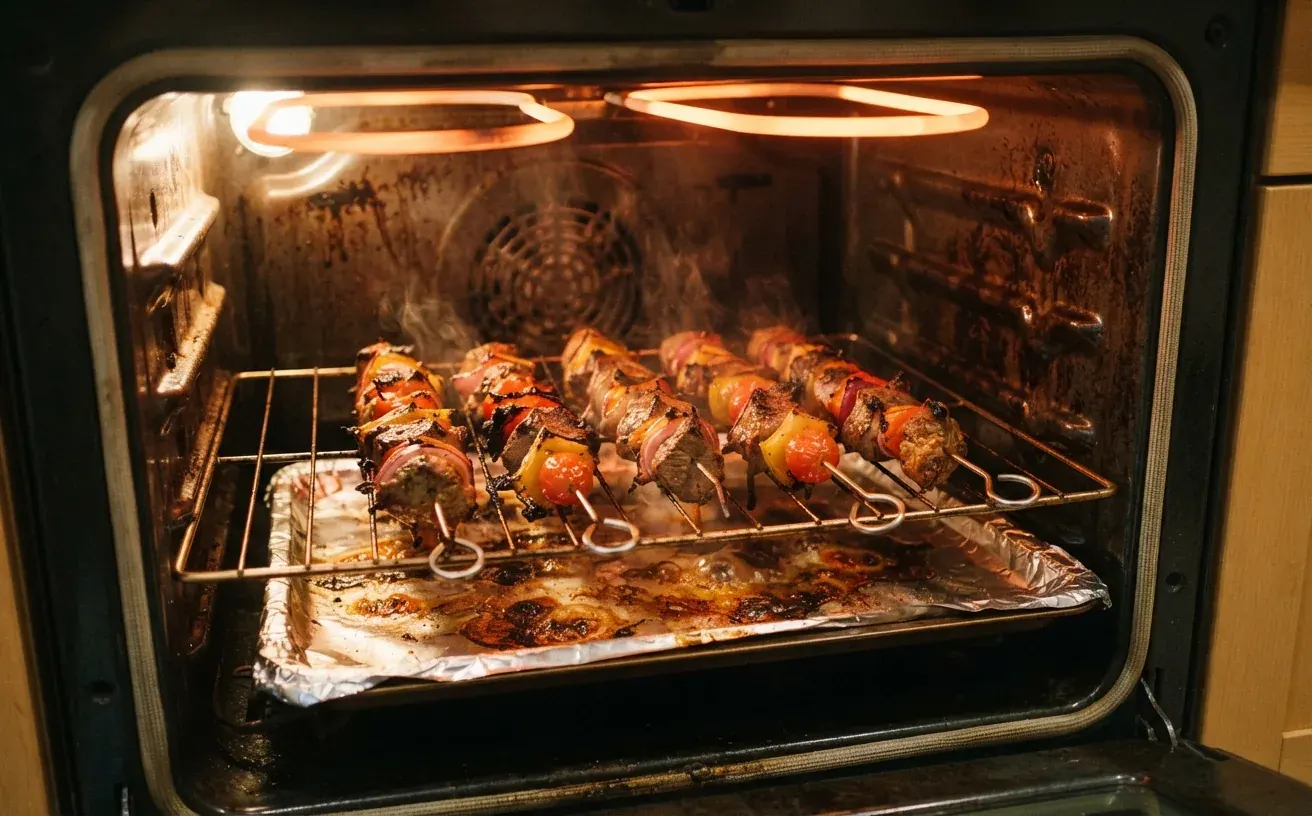
Broil. A broiler element runs at roughly 260 to 290 degrees Celsius of radiant heat, the same order of intensity as glowing charcoal; the bake setting mostly moves hot air.
Key takeaways
- A broiler element runs at roughly 260 to 290 degrees Celsius of radiant heat, which is the same order of intensity as glowing charcoal.
- Use a wire rack set over a foil-lined rimmed tray.
- Minced kebab succeeds or fails before the oven is involved.
- You cannot replicate a rotating spit, and you should not try to fake it with skewer towers balanced in mugs.
- If the kebab is minced and 2 centimeters thick: broiler, full power, 8 centimeters, 7 to 9 minutes total, one flip.
- Oven kebab is missing one flavor channel, smoke, so the plate has to compensate through the others.
Kebab is a high-heat, short-time food. Adana wants its surface set in the first two minutes. Shish tawook wants color on the outside before the inside climbs past 74 degrees Celsius. That means the useful part of your oven is the broiler, the top element most people only use for cheese on toast. Run it at full power, put the meat 8 to 10 centimeters below it, and you have a one-sided vertical grill, which is closer to a real ocakbasi than most people realize.
This guide covers the three families separately, because they behave differently in an oven: minced kebabs like adana, koobideh, and cevapi; chunked kebabs like shish tawook, boti, and souvlaki; and the stacked doner and gyros logic, which the oven handles surprisingly well with a loaf method. Read the mistakes section even if you skip everything else, because oven kebab fails for mechanical reasons, not mysterious ones.
Think broiler, not oven
A broiler element runs at roughly 260 to 290 degrees Celsius of radiant heat, which is the same order of intensity as glowing charcoal. The bake setting, even at its 250 degree maximum, mostly moves hot air, and hot air browns meat slowly. Radiant heat browns it fast. Fast matters because browning, the Maillard reaction, only takes off once the meat surface passes about 140 to 150 degrees Celsius, and the surface cannot get there until its moisture has boiled off. The stronger the heat source, the sooner that happens, and the less of the interior you overcook while waiting.
So the decision rule is simple. If the piece is 3 centimeters thick or less, which covers nearly every kebab, use the broiler at full power for the entire cook. If it is thicker, or it is a doner loaf, bake first at moderate heat and finish under the broiler for color. There is no kebab that benefits from 180 degrees Celsius for 40 minutes. That schedule produces gray, dry, faintly roasted meat, which is a different food.
Preheat properly: 15 minutes minimum with the broiler on and the tray already inside. A cold tray under a hot element gives you one-sided cooking and a pale, sweaty underside. A tray that has been sitting under the broiler sears the bottom on contact, which is the closest an oven gets to grill grates.
The pan setup that changes everything
Use a wire rack set over a foil-lined rimmed tray. The rack does two jobs: it lifts the meat so rendering fat drips away instead of pooling, and it lets hot air reach the underside so you are not obliged to flip constantly. Meat sitting flat in its own fat is frying on one side and steaming on the other, and the steamed side never browns.
Position is a real variable, not a detail. For minced kebabs, 8 centimeters from the element is right: the surface sets before the fat runs. For chunked skewers, 10 centimeters gives the interior time to catch up with the crust. For anything with a sugary marinade, honey, pomegranate molasses, sweet paprika in oil, drop to 12 to 15 centimeters, because sugars scorch well before 200 degrees Celsius and a blackened marinade tastes bitter, not charred.
If your broiler is weak or the drawer type, the fallback is a heavy steel or cast-iron pan preheated in a 250 degree Celsius oven for 20 minutes. Lay the kebabs directly on it. The stored heat in the metal sears the contact side hard, and one flip at the halfway mark finishes the job. This pan method actually beats a feeble broiler for cevapi, which are small enough to cook through in 8 to 10 minutes total.
Minced kebabs: adana, koobideh, cevapi
Minced kebab succeeds or fails before the oven is involved. The mixture needs 20 to 25 percent fat, salt at 1.5 to 2 percent of the meat weight, and several minutes of proper kneading until it turns tacky and pale. That stickiness is dissolved myosin, the protein that binds the mass together, and salt is what draws it out. Skip the kneading and the kebab crumbles as the fat renders; that is the whole mechanism behind meat falling off skewers, indoors or out.
Chill the shaped kebabs for 30 minutes before cooking. Cold fat renders slower, so the crust sets first and the fat bastes from inside instead of flooding the tray. Shape them 2 centimeters thick at most. Broil at 8 centimeters: 4 to 5 minutes on the first side, flip once, 3 to 4 on the second. Ground meat should reach 71 degrees Celsius inside, and at this thickness it will get there just as the outside takes color, which is exactly the coordination you want.
You do not need skewers in an oven, since nothing has to bridge a fire pit. Free-form adana logs or cevapi fingers on the rack cook the same and handle easier. If you want the traditional look, flat metal skewers only; round wooden ones give a minced mixture nothing to grip and the meat spins and slumps.
One deliberate exception: cevapi are traditionally kept leaner and are casing-free, and they tolerate the pan-sear fallback better than adana does, because their small 2 by 8 centimeter format cooks through before the surface overdoes. If your broiler is marginal, make cevapi, not adana.
Chunked kebabs: shish tawook, boti, souvlaki
Cut matters more than marinade. Cubes of 2.5 to 3 centimeters, uniform, no tapered scraps on the ends. Smaller cubes overcook in the time the surface needs to brown; bigger ones brown beautifully and stay raw at the center. Thread with a few millimeters of daylight between pieces. Pieces jammed together shield each other from the heat and the shielded faces steam gray.
Yogurt marinades, the shish tawook and boti tradition, are ideal for oven work: 2 to 24 hours, no longer, because the acid keeps tenderizing until the surface turns mealy. The lactose and milk solids also brown faster than bare meat, buying color in an oven that needs the help. Souvlaki-style marinades of olive oil, lemon, and oregano behave similarly, but add the lemon in the last 2 hours only, since citric acid is more aggressive than yogurt acid.
Broil at 10 centimeters, turning once: chicken thigh needs 12 to 15 minutes total to reach 74 degrees Celsius; lamb leg or beef, 8 to 12 minutes to 63 degrees and a 3-minute rest for pink, 71 and up if your table wants it done. Chicken breast is the trap cut, drying out at anything past 70, so if you must use it, choose thigh next time. Onions and peppers cook slower than meat at this intensity, so give vegetables their own skewer instead of alternating; the picturesque meat-pepper-onion pattern is precisely how you get charred onion and pale meat on the same stick.
Doner and gyros without the vertical spit
You cannot replicate a rotating spit, and you should not try to fake it with skewer towers balanced in mugs. The honest oven translation is the loaf method: press marinated, thin-sliced or minced-and-layered meat firmly into a loaf pan, compress it hard, and bake at 160 degrees Celsius until it reaches 71 degrees inside (74 if it holds chicken), roughly 60 to 75 minutes for a standard loaf. Cool it fully, refrigerate, then slice as thin as your knife allows, 2 to 3 millimeters.
The second stage is where the doner character comes from. Spread the slices on your preheated tray and broil them 2 to 3 minutes until the edges frizzle and crisp. A vertical spit only ever crisps the outside face of the cone before the knife takes it; broiling thin slices crisps every slice, which is why the loaf method eats better than most kebab-shop doner in a wrap.
The same two-stage logic serves gyros: pork shoulder or chicken thigh, the Greek oregano-heavy seasoning, loaf, chill, slice, blast. The difference between doner and gyros here is spice, not technique. For either, the slices go straight into warm bread with onion and sauce while still sizzling, because crisped thin meat goes leathery within 10 minutes of coming out.
The decision table
If the kebab is minced and 2 centimeters thick: broiler, full power, 8 centimeters, 7 to 9 minutes total, one flip. If it is chunked at 2.5 to 3 centimeters: broiler, 10 centimeters, 8 to 15 minutes depending on the meat, one flip. If it is a doner or gyros loaf: 160 degrees bake to 71 inside, then chill, slice, and broil the slices. If the marinade carries sugar: drop to 12 to 15 centimeters or the sugar burns before the meat browns.
If your broiler is weak: preheated heavy pan at 250 degrees for everything under 2.5 centimeters, and pick cevapi or tawook over adana. If you have a convection setting: use it for the loaf stage at 140 to 150 instead of 160, but switch it off under the broiler, since moving air at that range mostly dries the surface without adding browning speed you can use.
If you own an oven thermometer, trust it over the dial; domestic ovens routinely run 15 to 25 degrees off their setting, and at kebab timescales of 4 minutes a side, that error is the difference between mahogany and beige.
Serve like the smoke was never the point
Oven kebab is missing one flavor channel, smoke, so the plate has to compensate through the others. This is not a garnish question; it is the reason kebab is served the way it is. Sliced onion tossed with sumac and parsley brings the acidity and bite. Bread warmed directly on the oven rack for 60 seconds catches dripped fat the way lavash catches it on a mangal. A charred tomato and pepper, broiled alongside the meat in its last 5 minutes, brings actual blistered bitterness to the plate.
Rest minced and chunked kebabs 3 to 5 minutes before serving so the juices thicken and stay in the meat instead of on the board. Doner and gyros slices are the exception, served immediately, as covered above. And salt the onions, not just the meat: an undersalted garnish makes a correctly salted kebab taste flat.
A note of perspective: souvlaki and shish tawook were never about heavy smoke even over charcoal, which is why they translate to the oven almost without loss. Adana loses the most and rewards the strongest broiler. Set your expectations by dish, not by appliance.
Why oven kebab fails: the real mechanisms
Crowding is failure mechanism number one. Meat is roughly 70 percent water, and every piece on the tray is pumping steam. Pack the tray and you build a humid microclimate where the surfaces cannot exceed 100 degrees Celsius until the water is gone, and Maillard browning needs 140 plus. The visible symptom is meat stewing in gray liquid. The fix is brutal and simple: two batches, or two trays on separate shelves rotated once.
Low-and-slow is mechanism number two. At 160 to 180 degrees, a 2 centimeter kebab passes its target internal temperature long before the surface browns, so you choose between pale-and-juicy and brown-and-sawdust. High heat is not bravado; it is the only geometry that lets crust and doneness arrive together on thin pieces.
The remaining failures are quicker to name. Opening the door to peek dumps 25 to 50 degrees of air temperature each time and stalls a weak broiler badly, so look through the glass. Lean mince, supermarket 10 percent fat, produces dry crumble regardless of technique, because the fat was the moisture budget; ask the butcher for 20 to 25 percent or grind in lamb fat yourself. Skipping the tray preheat gives a raw, greasy underside. And sauce cannot rescue overcooked meat, it can only lubricate it; if the kebab needed drowning, the error happened four minutes earlier, under the element, with the door shut and nobody watching the clock.
Sources and further reading
- Safe Minimum Internal Temperature Chart — USDA Food Safety and Inspection Service (FSIS)
- Cooking food safely (Food hygiene for businesses) — GOV.UK (UK Government food hygiene guidance)
- "Danger Zone" (40°F - 140°F) — USDA Food Safety and Inspection Service (FSIS)
Cook These Next

Lamb / 1h
Adana Kebab
The spicy gold standard of Turkish BBQ. Hand-minced lamb with tail fat.
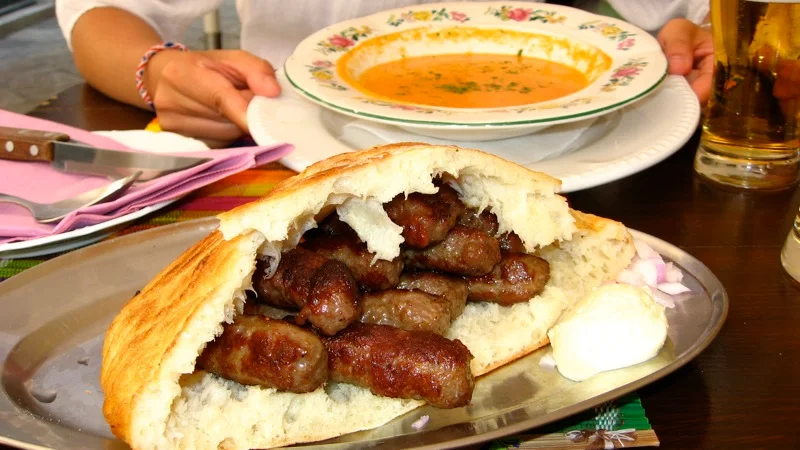
Beef / 24h 40m
Cevapi (Cevapcici)
Small skinless grilled thick sausages. The soul food of the Balkans.
 AI illustration
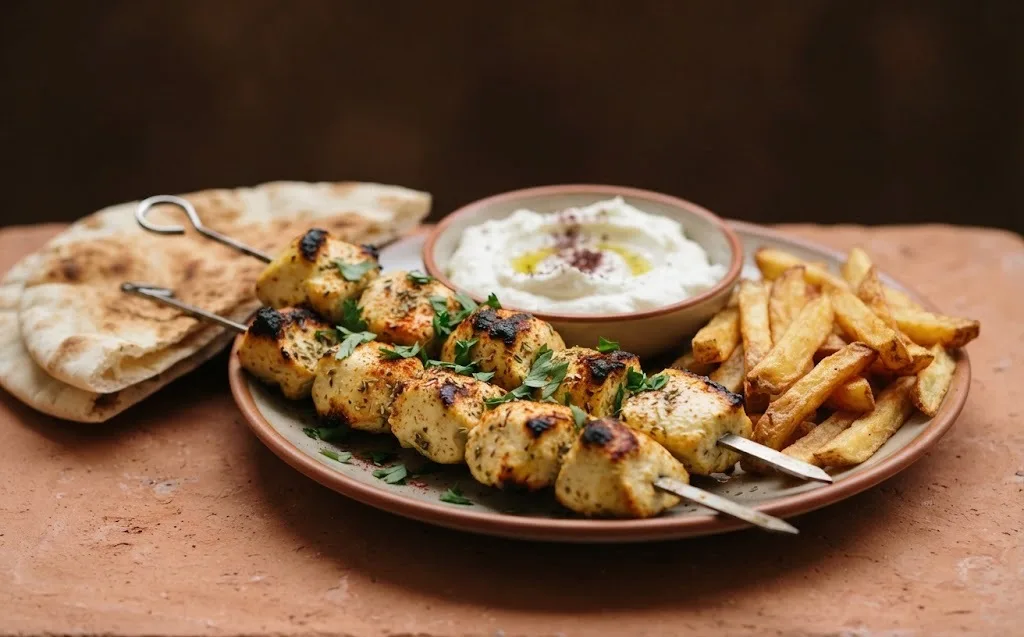
Chicken / 6h 35m
Shish Tawook
Levantine grilled chicken skewers. White marinade of yogurt, lemon, and garlic.
 AI illustration
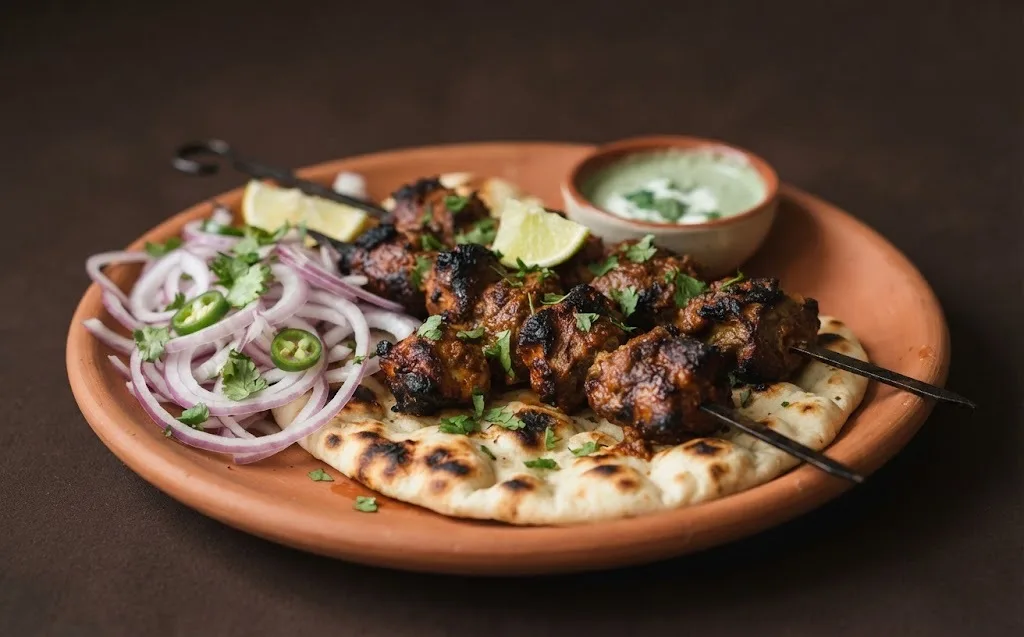
Lamb / 5h 40m
Boti Kebab
Marinated chunks of spiced meat. The chunk version of the minced Seekh.
Related Collections
More Guides
Equipment guide
Metal Vs Wooden Skewers For Kebab
Understand when to use metal or wooden skewers for kebab, plus why flat skewers matter for minced kebab and how oven use changes the choice.
Sauce guide
Best Sauce For Kebab
Find the best sauce for kebab, gyros, shawarma, and cevapi with a practical guide to yogurt sauces, garlic sauces, tahini, and chili styles.
Comparison
Adana Vs Urfa Kebab
Compare Adana and Urfa kebab by heat level, fat feel, pepper use, texture, and serving style so you know which one to cook.
Serving guide
What To Serve With Cevapi
Serve cevapi properly with somun, onion, ajvar, kajmak, and practical Balkan plate-building advice for home cooks.
Meat guide
Best Cut For Shish Kebab
Choose the best cut for shish kebab with a practical guide to lamb, beef, and chicken options, cube size, fat balance, and what actually stays juicy on skewers.
Technique guide
How To Marinate Kebab Properly
Learn how to marinate kebab without making the meat mushy, watery, or flat, with clear guidance for chicken, lamb, beef, and yogurt-based marinades.
Keep cooking
New to kebab? Start with how to make a kebab, then read about tunde kabab, tombik bread or satti.
How People Search for This
Readers find this page on Google with these searches:
how to cook in oven · can i use an oven? · kebab in oven temperature · which setting should i use
In other languages:
תנור · كيف شكلها
Comments
Cooked it, changed something, or spotted a mistake? Say so here. Every comment is read before it is published.