Ask for a kebab wrap in Yerevan, Athens, and Istanbul and you will get three different breads, three different rolling techniques, and three different eating experiences. Lavash, pita, and durum are not interchangeable wrappers. Each one was shaped by a specific oven, a specific dough, and a specific way of serving meat, and each one fails in a specific way when you use it for the wrong job.
Bread comparison
Lavash Vs Pita Vs Durum
By Ali Ocak
Updated 2026-11-03
Quick answer
What is the difference between lavash and pita?
Lavash is an unleavened or barely leavened sheet stretched to 1 to 2 millimetres and baked in under a minute, while pita is a yeasted dough baked at 260 degrees C or hotter so it balloons into a pocket.
What is the difference between durum and pita?
Durum is a roll, not a bread: thin lavash or yufka rolled tight around the filling. Pita is a leavened bread that puffs into a pocket, or in the Greek style is griddled thick, soft and pocketless.
Key takeaways
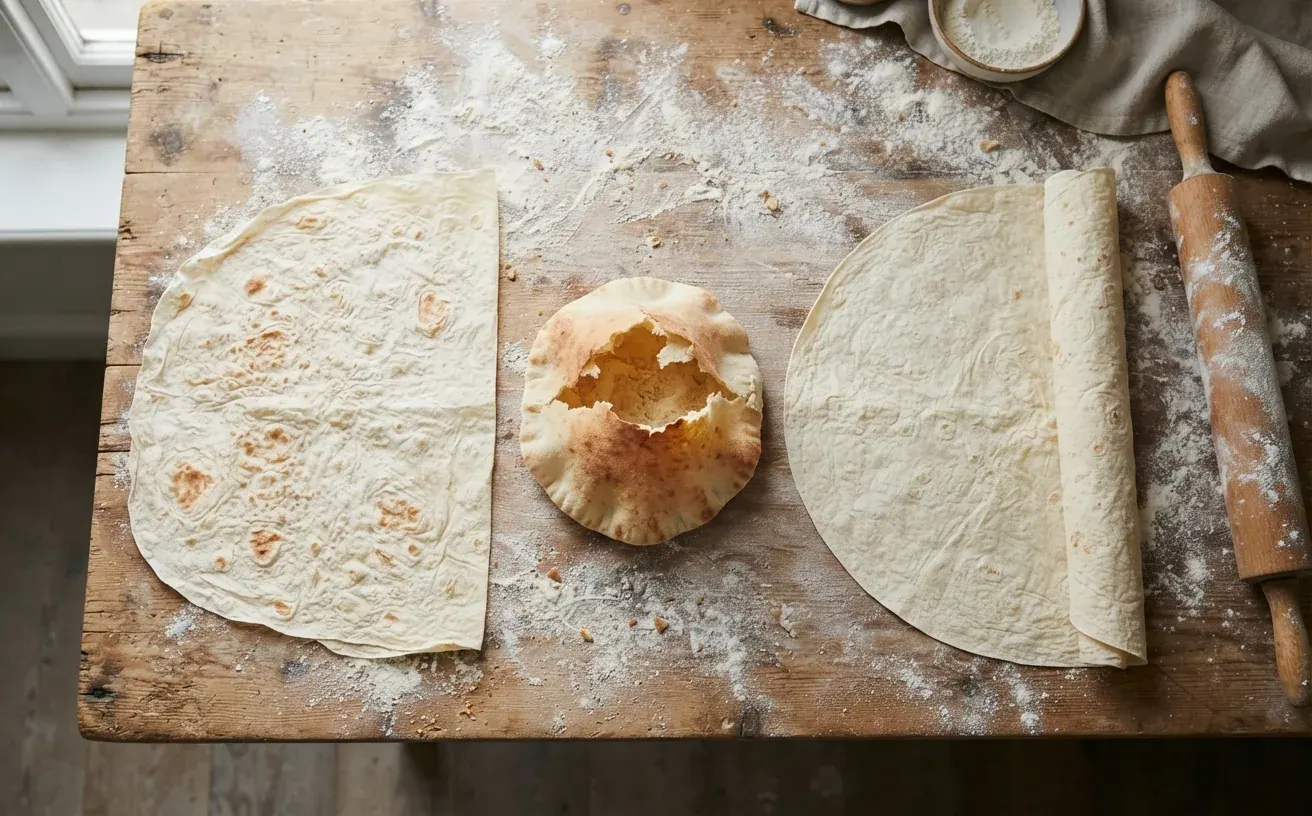
- Lavash is the oldest logic of the three: an unleavened or barely leavened sheet, stretched to 1 to 2 millimetres, slapped against the wall of a tandoor and baked in 30 to 60 seconds at 400 to 500 degrees C.
- Every practical difference between these breads traces back to four numbers: hydration, leavening, thickness, and bake time.
- Fresh lavash is the best bread on this page for letting the filling speak.
- Treating pita as one bread causes more bad wraps than any other confusion in this comparison.
- The durum earns its place as the default kebab-shop roll in Turkey because yufka solves the lavash problem without inheriting the pita problem.
- For sliced doner and shawarma: lavash if you will press and toast the finished roll and eat within 15 minutes; yufka durum if the wrap needs to travel or the filling is on the juicy side.
The differences start in the dough. Lavash is rolled to 1 to 2 millimetres and blasted in a tandoor for under a minute. Pita is a leavened dough baked hot enough to balloon into a pocket, or griddled thick and soft in the Greek style. Durum is a roll rather than a bread, made with thin lavash or with yufka, a near-unleavened sheet cooked on a domed sac griddle until it is thin, dry, and strong enough to roll a full portion of Adana without splitting.
This guide lays out what each bread actually is, the numbers behind how it behaves, and a clear verdict for every common filling on this site, from doner and shawarma to gyros, souvlaki, adana, cevapi, and koobideh. By the end you should be able to look at any filling and know, before you roll, which bread will hold and which will tear.
Three breads, three ovens, three logics
Lavash is the oldest logic of the three: an unleavened or barely leavened sheet, stretched to 1 to 2 millimetres, slapped against the wall of a tandoor and baked in 30 to 60 seconds at 400 to 500 degrees C. Traditional Armenian lavash comes off the wall in sheets up to 60 or 70 centimetres long, dries hard for storage, and is revived with a sprinkle of water before serving. Its making was inscribed on the UNESCO Intangible Cultural Heritage list in 2014, which tells you how central it is to Armenian food culture, but the bread itself spread across the whole Caucasus, Iran, and eastern Anatolia. It is the natural partner of sliced and minced meats alike, including koobideh, which in Iran is routinely served on or with lavash rather than rolled.
Pita follows a completely different logic: a yeasted dough at roughly 60 to 65 percent hydration, rested until active, then baked at 260 degrees C or hotter. At that temperature the water in the thin disc flashes to steam faster than it can escape, the bread inflates in about 90 seconds, and you get the famous pocket. The Greek pita used for gyros and souvlaki is the important exception: it is pocketless, 4 to 6 millimetres thick, and finished on an oiled griddle, which makes it soft, pliable, and rich rather than dry and hollow.
Durum needs one clarification before anything else: durum, or durum in Turkish spelling, means the roll, not the bread. The bread inside a Turkish durum is thin lavash or yufka. Yufka is a sheet around 1 millimetre thick and 40 to 45 centimetres across, made from a stiff, low-hydration dough with little or no leavening, cooked briefly on a convex steel griddle called a sac. Yufka is drier and stronger than lavash of the same thickness, which is exactly why Turkish shops trust it to carry a full skewer of adana plus onions, sumac, and grilled peppers in one tight cylinder.
The dough numbers that decide everything
Every practical difference between these breads traces back to four numbers: hydration, leavening, thickness, and bake time. Lavash and yufka sit at the thin end, 1 to 2 millimetres, baked in under a minute, so they finish with very little internal moisture. That makes them strong and rollable but hygroscopic: they will drink sauce and meat juices fast, which is a feature for the first ten minutes of eating and a structural failure after twenty.
Pocket pita holds the most internal moisture of the three because its 3 to 6 millimetre crumb traps steam during the bake. That crumb is what makes pita forgiving: it absorbs a wet filling into itself instead of transmitting the moisture straight to the outer surface. The cost is bulk. A pita pocket adds far more bread per bite than a single layer of lavash, so a delicate filling gets muted.
The decision rule that falls out of these numbers: the wetter and heavier your filling, the more crumb you need between the filling and your hand. Dry-ish sliced meat with a controlled amount of sauce, choose a thin bread and roll it tight. Juicy tomato, tzatziki, and fries in the Greek manner, choose the thick griddled pita and fold, do not roll. Anything in between, yufka in a durum roll is the workhorse compromise, thin enough to keep the meat in charge but strong enough to survive the juice.
Lavash: the thin, fast, absorbent one
Fresh lavash is the best bread on this page for letting the filling speak. A single 1 to 2 millimetre layer adds almost no chew of its own, so garlicky shawarma, toum, and pickles hit at full volume. It rolls into the tightest cylinder of the three, which is why shawarma stands across the Levant and the Caucasus reach for it: a tight roll pressed briefly on the grill or in a contact press for 60 to 90 seconds crisps the outside, welds the seam shut, and turns the wrap into a clean handheld unit.
Lavash has two weaknesses. First, it dries out fastest. Once a sheet has gone leathery, it cracks along the fold lines instead of bending; a 10 to 15 second pass over steam or a damp-towel rest brings it back, and skipping that step is the single most common reason home lavash wraps split. Second, it saturates fastest. Because there is no crumb to buffer moisture, a heavy hand with sauce reaches the outer surface in minutes.
Verdict: lavash is the first choice for shawarma-style builds, for sliced doner when you want the pressed-and-toasted finish, and for serving alongside koobideh in the Iranian manner, where the bread arrives flat under the skewered meat and you tear and wrap at the table. If your build includes fresh tomato, wet salads, or more than a thin ribbon of sauce, move to pita or yufka.
Pita: pocket versus Greek, and why it matters
Treating pita as one bread causes more bad wraps than any other confusion in this comparison. Pocket pita is a container: you split the top, open the cavity, and load it. It is the right vehicle for chunked, saucy fillings that would slide out of a roll, and for anything eaten one-handed while walking. Its failure mode is tearing at the base when overloaded, because the pocket walls are only a couple of millimetres thick where the steam separated them.
Greek pocketless pita is a folding bread, not a container. At 4 to 6 millimetres, griddled with oil until soft and lightly blistered, it wraps gyros or souvlaki in a loose cone rather than a sealed cylinder. That extra thickness is not laziness, it is load-bearing engineering: a proper gyros carries tzatziki, tomato, onion, and often fries, a combination that would drown lavash in five minutes. The oiled surface also slows moisture penetration, buying you the length of the meal.
Pita is also the most forgiving bread for home cooks. It tolerates being a day old, revives well with 20 to 30 seconds in a dry pan per side, and does not demand rolling technique. If you are building your first wraps from the gyros or souvlaki recipes on this site, start with Greek-style pita and folds, then graduate to rolled breads.
Verdict: pocket pita for chunked, heavily sauced fillings and grab-and-go eating; Greek pocketless pita for gyros, souvlaki, and any build where juicy vegetables and thick yogurt sauce are non-negotiable. Cevapi sits near this family too: its traditional lepinja is a thicker leavened flatbread, and a good Greek-style pita is the closest stand-in on this list, split and stuffed with the little sausages, raw onion, and kajmak or a stand-in cream.
Durum: the yufka roll that Turkish shops trust
The durum earns its place as the default kebab-shop roll in Turkey because yufka solves the lavash problem without inheriting the pita problem. Its stiffer, drier dough gives a sheet that stays flexible longer than lavash at the same thickness and resists saturation better, while still adding almost no bread-bulk to the bite. A 40 to 45 centimetre round is big enough to give a full double wrap of bread around the filling, which is where the durum's strength really comes from: two overlapping layers, not one.
The classic use case is adana durum: the minced, pepper-laced skewer slid off its flat blade onto the yufka, topped with sliced onions rubbed with sumac, flat-leaf parsley, and grilled peppers and tomato, then rolled tight and often given a final minute on the grill so the bread takes on fat and char. The same format carries sliced doner as the standard Turkish street doner durum. If you make the adana recipe on this site, this is the bread its service was designed around.
The rolling technique matters as much as the bread. Lay the filling in a bar across the lower third, leave a 3 to 4 centimetre margin at each end, fold the ends in, then roll forward keeping tension on every turn. A tight roll compresses the filling so each bite is meat, onion, and bread in fixed ratio; a loose roll lets the filling migrate and shear the bread from inside.
Verdict: durum on yufka is the best all-rounder for minced-kebab wraps, adana above all, and the best sliced-doner roll when you want thin bread that survives longer than lavash. If you cannot buy yufka, a large thin flour tortilla is a workable structural substitute, though it is softer, slightly sweet, and closer to 2 millimetres, so expect a chewier, blander roll.
Match the bread to the filling: the decision table
For sliced doner and shawarma: lavash if you will press and toast the finished roll and eat within 15 minutes; yufka durum if the wrap needs to travel or the filling is on the juicy side. The pressed lavash roll gives the best crisp-to-meat contrast; the durum gives the best structural life span.
For gyros and souvlaki: Greek pocketless pita, no contest. The tzatziki-tomato-onion load defines these builds, and only a thick oiled crumb carries it. Putting a full gyros load in lavash produces a wrap that fails from the bottom seam outward, usually before you are halfway through.
For minced kebabs, adana and koobideh: yufka durum for rolled service, lavash for flat, tear-and-wrap table service. Minced kebab renders fat as you eat, and that fat is the best thing that can happen to a thin bread pressed against it, softening and flavoring the inner layer. Cevapi is the outlier: it wants a thick, fluffy bread, so use pita-style breads and treat it as a stuffed fold, not a roll.
For chunked skewers like shish tawook or boti: pocket pita if sauced, durum if dry-spiced. Chunks are the hardest filling to roll because they create point loads against the bread; a pocket distributes those loads, and a tight double-layer durum tolerates them. Single-layer lavash is the worst choice here, since one corner of a meat cube will find the fold line.
Heat, steam, and the ten-minute rule
Every one of these breads is dramatically better warm, and each wants a different revival method. Lavash and yufka want moisture plus brief heat: a light water sprinkle or a pass over steam, then 10 to 20 seconds on a hot dry pan, and the sheet turns from crackable to pliable. Pita wants dry heat only: 20 to 30 seconds per side in a dry or lightly oiled pan at medium-high, until it puffs slightly and softens. Microwaving any of them under a damp paper towel for about 15 seconds works, but the bread re-hardens within minutes as it cools, so microwave last, roll immediately.
The finished wrap has a clock on it. A rolled thin-bread wrap eats at its best in the first 10 minutes, holds acceptably to about 20, and is soggy or cracked past 30 depending on the filling's moisture. You can extend the window three ways: press-toast the finished roll so the outer surface is dried and fat-sealed, wrap it in paper rather than cling film so steam escapes instead of condensing, and keep wet elements, especially tomato and yogurt sauces, in the centre of the filling bar where the bread cannot touch them directly.
If you are serving a group, do not pre-roll. Warm the breads, stack them under a towel, lay the fillings out, and roll to order. Ten minutes of assembly line beats a platter of wraps that were all born at the same time and all die at the same time.
Where wraps actually fail: the mistakes and their mechanisms
Cold, dry bread cracking on the fold. Thin unleavened breads below room temperature have lost the plasticity that gluten and residual moisture provide; the fold concentrates strain along one line and the sheet fractures exactly there. The fix is always the same: moisture plus brief heat before rolling, never rolling straight from the bag.
Saturation collapse. Moisture migrates from filling to bread at a rate driven by contact and salt: salted tomatoes and loose sauces shed water continuously, and a single-layer bread has no crumb to absorb it. The wrap fails at the bottom, where juice pools under gravity. Mechanism-based fixes: seed and salt tomatoes 10 minutes ahead and drain them, thicken yogurt sauces by straining, put a dry barrier layer, lettuce, parsley, or the meat itself, between wet elements and the bread, and cap sauce at roughly two tablespoons per wrap for thin breads.
Overstuffed pocket tear-out. A pita pocket's walls are thinnest at the base seam. Overfilling levers the walls apart and the first bite's compression pushes filling through the seam. Fill a pocket to two-thirds, never to the rim, and load chunks before sauce so the sauce sits on top instead of pooling at the seam.
Loose rolling and end-leak. A loose durum leaves air channels that let the filling shear and slide; the first bite compresses the tube and extrudes filling out of the far end. Fold both ends in before the final rolls and keep tension through every turn. And the quiet mistake behind many failures: too much filling, full stop. A wrap on a 40 centimetre yufka carries about 150 to 200 grams of meat comfortably; past that, no technique saves you, and the right move is two wraps, not one heroic one.
Sources and further reading
- Lavash, the preparation, meaning and appearance of traditional bread as an expression of culture in Armenia — UNESCO Intangible Cultural Heritage
- Flatbread making and sharing culture: Lavash, Katyrma, Jupka, Yufka — UNESCO Intangible Cultural Heritage
- Golden Pita Bread Recipe — King Arthur Baking
- Dürüm — Wikipedia
Cook These Next
 AI illustration
Breads / 1h 20m
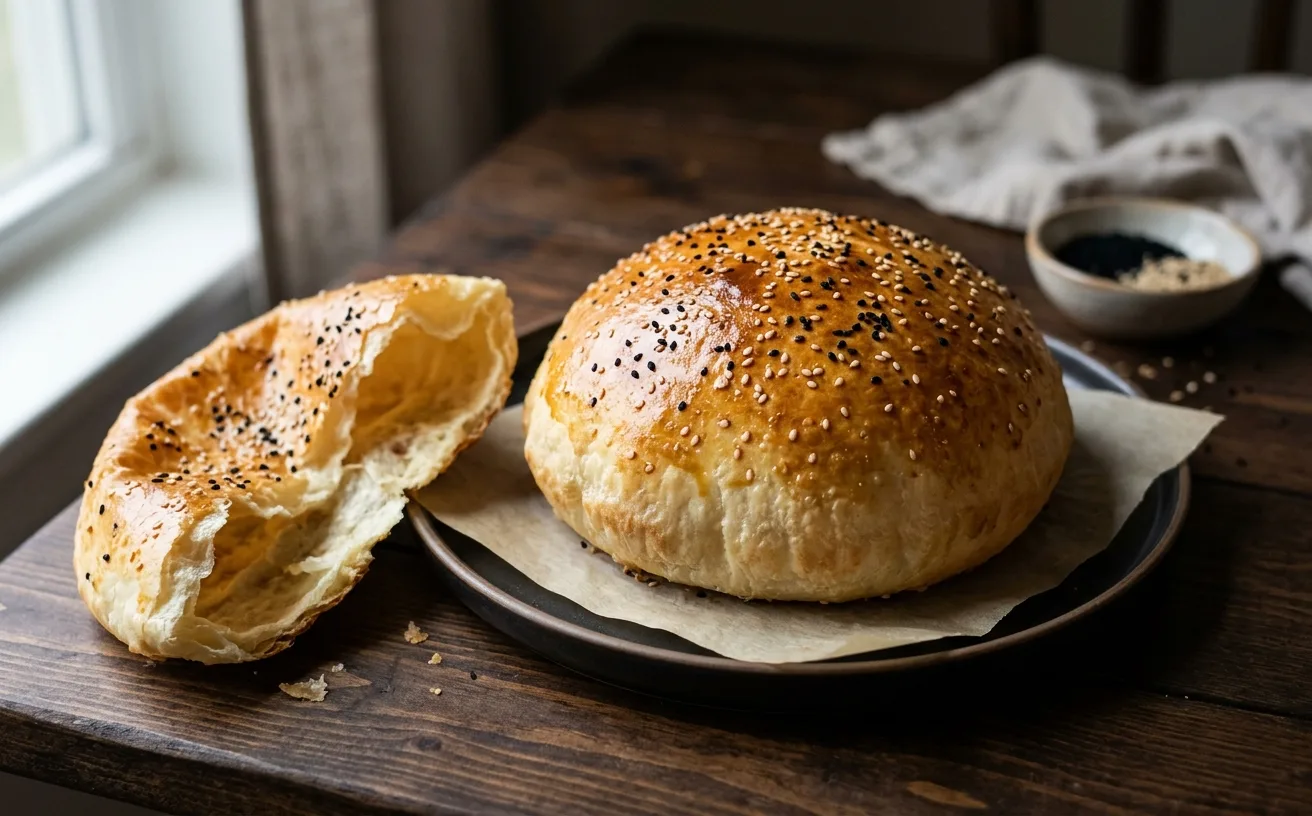
Balloon Lavas
Thin, hollow flatbread that puffs up like a balloon in the oven. Spectacular presentation.
 AI illustration
Lamb / 45m
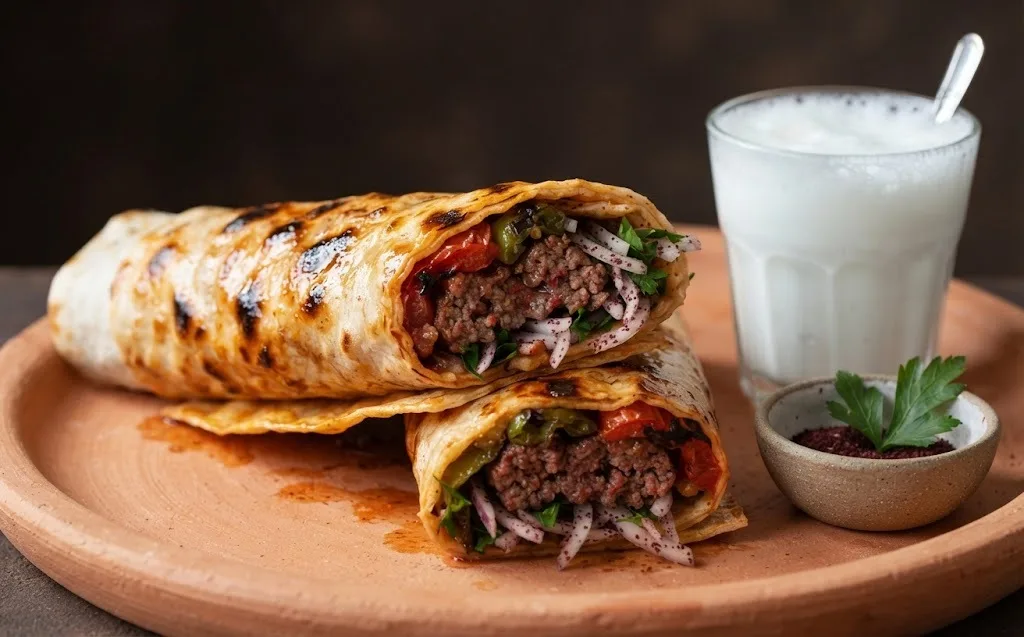
Durum (Turkish Kebab Wrap)
The Turkish street wrap: a hot Adana kebab rolled tight in fat-soaked lavash.
Pork / 9h 50m
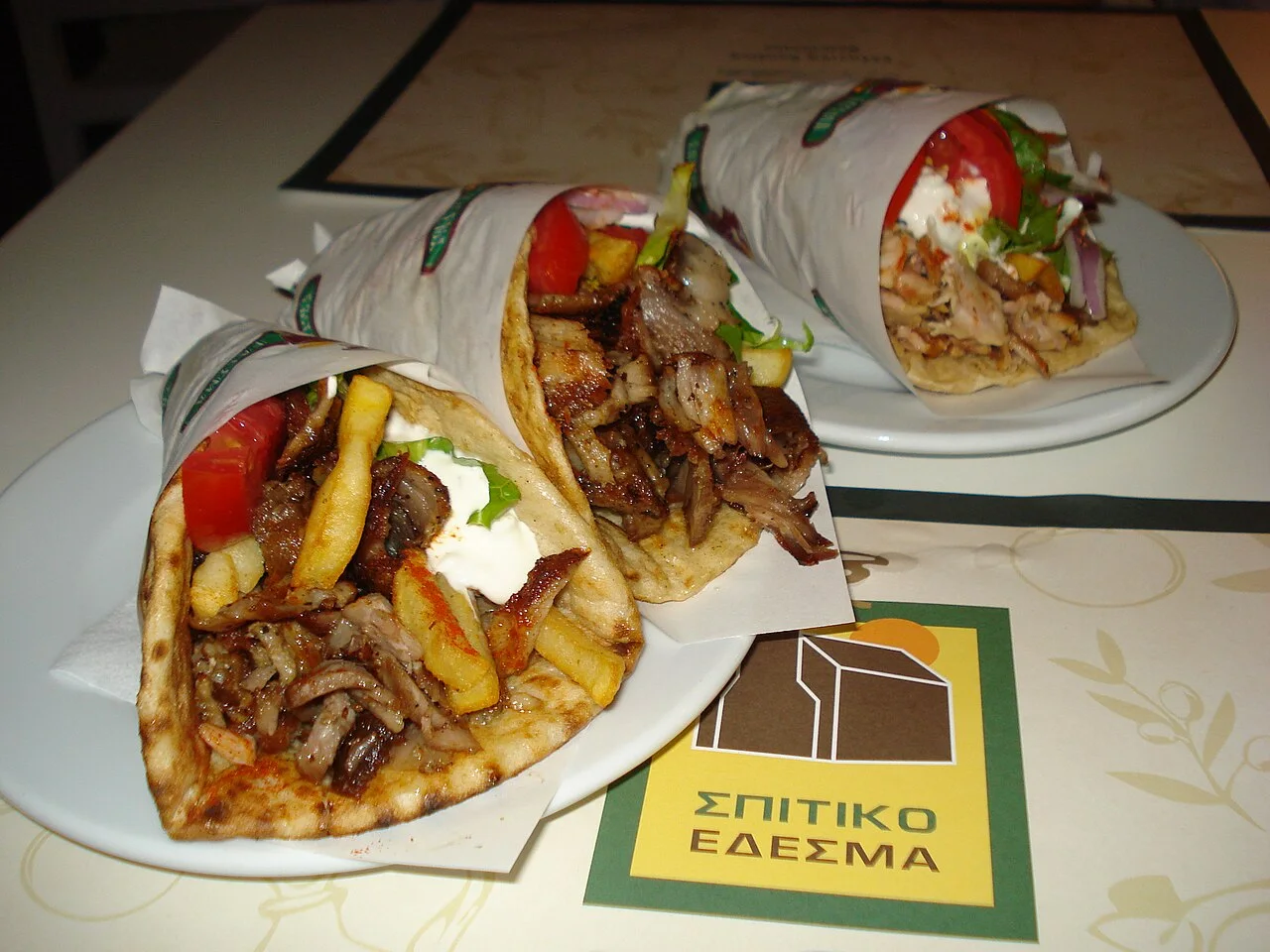
Authentic Gyros
The Greek vertical rotisserie. Pork slices stacked and shaved.

Lamb / 1h
Adana Kebab
The spicy gold standard of Turkish BBQ. Hand-minced lamb with tail fat.
Related Collections
Best Bread for Kebab, Shawarma, and Gyros
Learn which bread to use for kebab wraps, gyros, shawarma, doner, and grilled meat plates, including lavash, pita, pide, somun, lepinja, and durum.
Gyros, Shawarma, and Donair Guide
Compare gyros, shawarma, donair, souvlaki, and tawook with bread pairings, sauce choices, wrap assembly, and serving ideas.
More Guides
Oven guide
How to Cook Kebab in the Oven
Oven kebabs brown when the broiler is hot, the skewers sit on a rack over a tray and the meat is not crowded. Pan setup, timing and doneness for minced and chunked kebabs.
Equipment guide
Metal Vs Wooden Skewers For Kebab
Understand when to use metal or wooden skewers for kebab, plus why flat skewers matter for minced kebab and how oven use changes the choice.
Sauce guide
Best Sauce For Kebab
Find the best sauce for kebab, gyros, shawarma, and cevapi with a practical guide to yogurt sauces, garlic sauces, tahini, and chili styles.
Comparison
Adana Vs Urfa Kebab
Compare Adana and Urfa kebab by heat level, fat feel, pepper use, texture, and serving style so you know which one to cook.
Serving guide
What To Serve With Cevapi
Serve cevapi properly with somun, onion, ajvar, kajmak, and practical Balkan plate-building advice for home cooks.
Meat guide
Best Cut For Shish Kebab
Choose the best cut for shish kebab with a practical guide to lamb, beef, and chicken options, cube size, fat balance, and what actually stays juicy on skewers.
Keep cooking
New to kebab? Start with our step-by-step kebab guide, then read about lok lok, lula kebab or kebab pizza.
How People Search for This
Readers find this page on Google with these searches:
chicken durum · durum turkey · kebab bread name · what bread is used for kebabs · which one is better
In other languages:
или лучше это? · плотнее
Comments
Cooked it, changed something, or spotted a mistake? Say so here. Every comment is read before it is published.