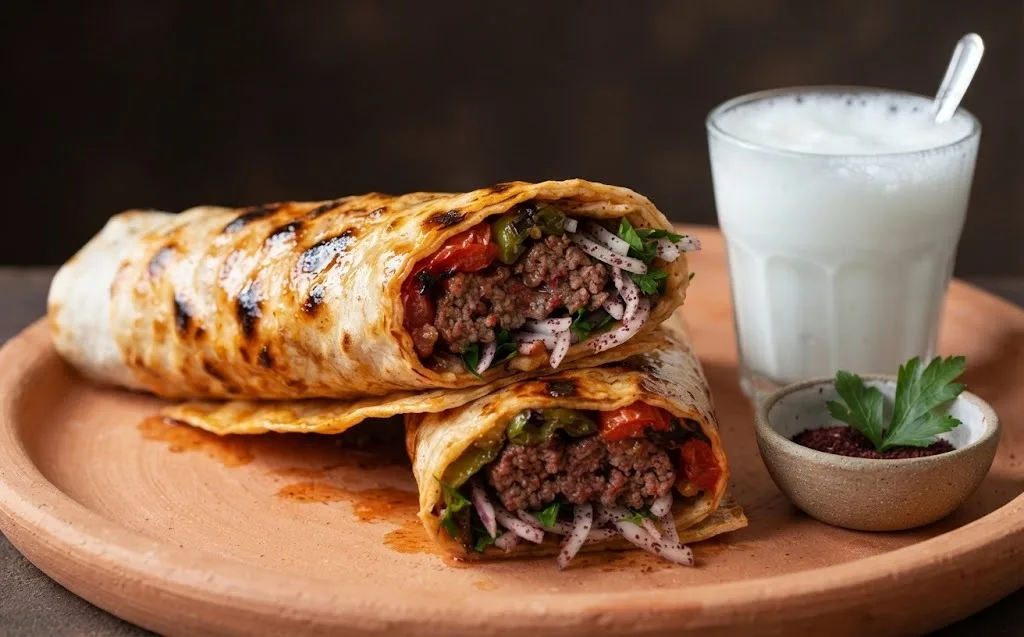
A dürüm (often typed durum) is the Turkish kebab wrap: a hot Adana or shaved döner rolled tight in thin lavash with sumac onions. It has nothing to do with durum wheat, the hard pasta wheat that shares the spelling, and almost any hot kebab can end up inside one. The name literally means 'roll', and the bread that makes rolling possible is lavash — the thin Anatolian flatbread so old that its making is inscribed on UNESCO's cultural heritage lists across the region, from Turkey through the Caucasus. The dough is lean — flour, water, salt, sometimes a whisper of yeast — rolled to near-translucency and blistered for under a minute on a sac, the convex steel griddle, though a dry skillet or upturned wok does the same job. Fresh off the heat it is soft, elastic, and faintly chewy: strong enough to hold a dripping Adana, thin enough never to dominate it. Supermarket tortillas are the wrong texture and the wrong flavour. If you make your own, twenty minutes of dough rest and one hot pan solve the problem permanently, and the breads freeze flat with parchment between them.
Also known as: Adana Wrap, Durum Kebab
Ingredients
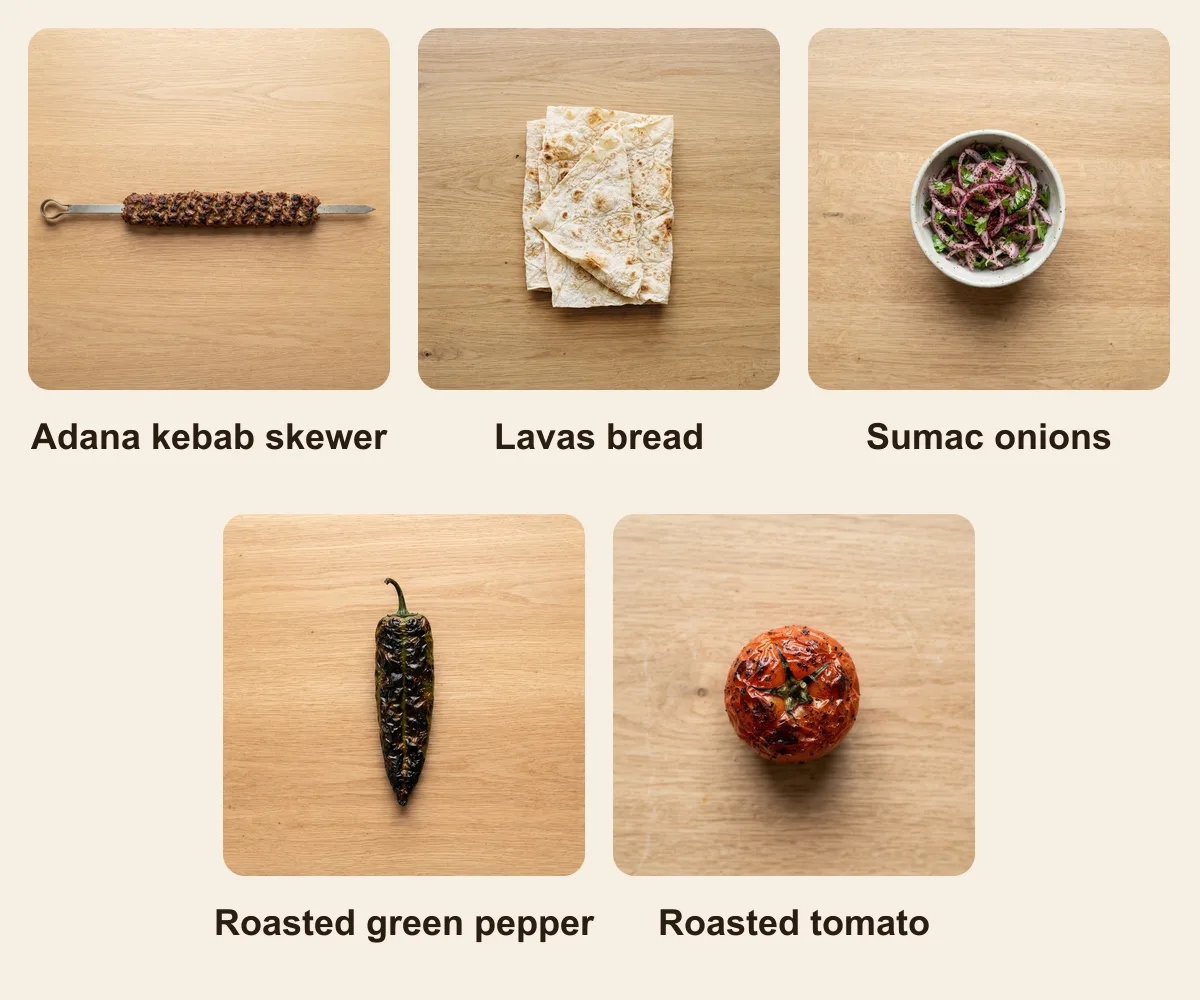
- 1 Adana Kebab Skewer (Cooked)
- 1 Sheet Fresh Lavas Bread
- Sumac Onions (1/2 Red Onion, thinly sliced + 2 tbsp Parsley, chopped + 1 tsp Sumac)
- Roasted Green Pepper
- Roasted Tomato (Mashed)
How To Make Durum (Turkish Kebab Wrap)
-
1
While the kebab is still on the grill, lay the lavas over it and press it down onto the meat so the bread warms through and soaks up the rendered fat.
-
2
Lay the warm lavas flat on the counter and spread the mashed roasted tomato over it.
-
3
Lay the hot kebab, still on its skewer, across the bread with the roasted green pepper beside it, then top with the sumac onions and parsley.
-
4
Grip the meat through the lavas with one hand and pull the skewer out firmly with the other, so the kebab stays in one piece inside the bread.
-
5
Roll the lavas up tightly around the filling, with enough tension that the bread holds the cylinder on its own, then cut it on the diagonal.
-
6
Serve it straight away, while the bread and meat are still hot, with a glass of ayran alongside.
Note: The bread must be "fatty" (Yagli Ekmek) - seasoned by the cooking meat.
Go Deeper · the full story
About this recipe
Dürüm is the wrap version of a kebab, not a sandwich version — the bread rolls around the filling in a tight cylinder instead of pocketing it, and it works with whatever hot grilled meat is on hand, from Adana to shaved döner. What makes it a dürüm instead of just 'a wrap' is the bread: thin lavaş or yufka, never a thick pocket bread, because a tight roll needs a wrapper that bends without cracking.
This recipe builds its dürüm specifically around a cooked Adana kebab skewer. The lavaş goes directly onto the grilling meat first, so it absorbs the rendered fat before it ever touches the filling, then gets laid flat, spread with mashed roasted tomato, topped with the hot kebab and sumac onions, and rolled tight the moment the skewer is pulled out — the whole build happens while everything is still hot.
Why this recipe works
Why This Recipe Works
- Pressing the lavaş directly onto the grilling kebab lets it soak up rendered fat before assembly, which keeps the finished wrap from tasting dry.
- Pulling the skewer out while holding the meat against the bread keeps the kebab in one piece instead of it crumbling loose during the roll.
- Rolling immediately, while the bread and filling are both still hot, lets the wrap hold a tight cylinder instead of unrolling on the plate.
How to serve it
Serving Notes
Serve with ayran — its acidity and salt cut through the fat-soaked bread.
Cut on the diagonal right after rolling; a straight cut exposes less of the cross-section and the wrap looks, and eats, worse.
Eat it standing up if you can — dürüm is street food, built to be eaten hot within minutes of rolling, not reheated.
Common mistakes to avoid
Common Mistakes
- Using a thick pocket bread instead of lavaş — it won't roll tight and will crack instead of bending around the filling.
- Skipping the warm-bread-on-the-grill step — the lavaş stays plain and dry instead of picking up the meat's rendered fat.
- Rolling loosely — a loose dürüm falls apart the moment it's picked up; the roll needs to be tight enough that the bread holds its own tension.
- Letting the kebab or bread cool before rolling — a cold dürüm doesn't hold together the same way, and the fat re-solidifies before it's absorbed.
Frequently Asked Questions
Can I make dürüm with a different kebab besides Adana?
Yes — this recipe uses a cooked Adana skewer, but the same lavaş-and-sumac-onion wrap works with shaved döner or any other hot grilled kebab.
What's the difference between a dürüm and a regular kebab sandwich?
A sandwich uses a thicker pocket or loaf bread around the filling; dürüm specifically means the filling is rolled tight inside thin lavaş or yufka.
Can I use store-bought tortillas instead of lavaş?
Fresh lavaş is the bread to use because it's thin enough to roll tight without cracking; a thicker tortilla changes the texture of the wrap.
Why press the bread against the grilling meat before assembling?
It's how the lavaş absorbs the kebab's rendered fat before the wrap is built, and that fat supplies the flavor instead of a separate sauce.
Sources and further reading
- Dürüm — Wikipedia
- Dürüm — A Delicious Non-Veg Wrap — Istanbul.com
Keep Cooking
Build The Full Plate
Complete Kebab Guide
The full method behind every kebab on this site: meat and fat, heat, bread and sauce.
Kebab Breads
Choose the bread that matches the moisture, fat level, and service style of this recipe.
Turkish Kebab Collection
Compare related Turkish kebab formats, breads, and serving styles.
Technique And Support Guides
Best Bread For Kebab Wraps
Choose the best bread for kebab wraps, gyros, shawarma, doner, and plate service with lavash, pita, somun, pide, and durum explained clearly.
Lavash Vs Pita Vs Durum
Compare lavash, pita, and durum for kebab wraps so you know which bread to use for gyros, shawarma, Adana wraps, and sliced-meat rolls.
Best Meat For Kebab
Choose the best meat for kebab by fat ratio, cut, grind, and cooking style, whether it ends up on a skewer, in a wrap, or on a plate.
How To Keep Kebab On The Skewer
Learn how to keep kebab on the skewer with the right fat level, onion handling, kneading, skewer shape, and grill timing.
Explore Related Hubs
Turkish Kebab Guides
A focused collection for Turkish kebab styles including Adana, Urfa, Cag, Iskender, and supporting bread pages.
Best Bread for Kebab, Shawarma, and Gyros
Learn which bread to use for kebab wraps, gyros, shawarma, doner, and grilled meat plates, including lavash, pita, pide, somun, lepinja, and durum.
Related Recipes
Adana Kebab
The spicy gold standard of Turkish BBQ. Hand-minced lamb with tail fat.
Urfa Kebab
Adana's non-spicy sibling. Deep flavor from smoky isot pepper.
Iskender Kebab
Doner meat over chopped pide, topped with tomato sauce and sizzling butter.
Cag Kebabi
The horizontal ancestor of Doner. Marinated lamb slices on a wood fire.