Gyros and shawarma recipes are won or lost at assembly: meat texture, slicing, sauce, salad, and warm bread have to work together. This is the part of the kebab world where service format matters as much as seasoning, because the same meat can feel completely different depending on the bread, sauce, slicing pattern, and order of assembly.
Collection
Gyros, Shawarma, and Donair Guide
Compare gyros, shawarma, donair, souvlaki, and tawook with bread pairings, sauce choices, wrap assembly, and serving ideas.
This hub is for wrap-first recipes including Greek gyros, Canadian donair, souvlaki, beef shawarma, chicken shawarma, and shish tawook. It is intentionally comparative, because readers searching these dishes often know one name well and need help understanding the differences in bread, sauce, texture, and regional identity.
Use it when you want to build a convincing handheld meal at home rather than just cook seasoned meat. The wrap should feel coherent from first bite to last: warm bread, properly cut meat, the right sauce, enough crunch, and no collapsing structure.
Best starter recipe
Start with gyros if you want a Greek-style wrap with warm pita, sliced meat, tomato, onion, and a cooling sauce.
Choose donair when you want a sweet-garlic sauce profile and a compact sliced-meat wrap that is easier to reproduce at home.
Choose shish tawook if you want a chicken skewer that still fits naturally inside a shawarma-style plate or wrap.
Start with shawarma if your main interest is spiced sliced meat and a tighter roll structure. It is the best branch for studying pickles, garlic sauce, and compact wrap assembly.
Bread pairings
Use Greek pita for gyros and souvlaki when you want a soft, folded handheld rather than a thin rolled wrap.
Use lavash or durum bread for tighter shawarma-style rolls where the filling needs to be contained from end to end.
Warm the bread before assembly. Cold bread makes the wrap crack and keeps the meat from feeling freshly served.
Bread choice also changes portion logic. Pita suits open, folded, ingredient-visible wraps, while lavash and durum support tighter, street-style rolling where the filling is compressed into each bite.
Sauces that belong here
Gyros usually works best with a cooling yogurt or tzatziki-style sauce, plus tomato and onion for freshness.
Donair depends on its sweet garlic sauce, so the meat seasoning should stay bold enough to cut through it.
Shawarma-style wraps can handle garlic sauce, tahini, pickles, and crisp vegetables, but the sauce should support the meat instead of drowning it.
Souvlaki and tawook can move between wrap and plate service more easily, so they tolerate a broader range of supporting sauces as long as the skewer itself stays recognizable.
Wrap assembly
Put warm bread down first, then meat, then sauce, then salad or onion. This order keeps the bread flexible and stops watery garnish from soaking the base too early.
Keep the filling tight and focused. A smaller wrap with the right bread, meat, sauce, and crunch usually beats an overloaded wrap that collapses.
Cut or slice the meat with service in mind. Long shreds, compact slices, or chunked skewer pieces each behave differently once the wrap is folded, so the assembly should respect the shape of the protein.
How these styles differ
Gyros usually centers on Greek pita, sliced meat, tomato, onion, and a cooling sauce. Donair moves toward sweet garlic sauce and a more compact, Canadian late-night wrap logic.
Shawarma pushes harder on spice layering, pickles, garlic sauce, and thin rolled breads. Souvlaki stays closer to grilled skewer culture, while tawook brings a chicken-skewer branch into the same wrap-and-plate ecosystem.
That is why these dishes belong on one hub but should not be flattened into one recipe family. They overlap in format, yet each has its own bread expectations, sauce identity, and meat texture.
Start here by craving
Choose gyros if you want the most familiar Greek folded-wrap experience.
Choose donair if you want sweet-savory sauce and compact sliced meat.
Choose beef or chicken shawarma if you want spice, pickles, and a tighter roll.
Choose souvlaki or tawook if you want skewers that can move cleanly between plate service and handheld wraps.
How To Use This Collection
Use this collection as a route, not just a list of URLs. Start with the recipe you already know, then move to the bread, sauce, garnish, or regional variation that makes the plate feel complete. For this cluster, the most useful starting points are Joojeh Kabab, Souvlaki, Authentic Gyros, Halifax Donair, Cypriot Sheftalia, Beef Shawarma.
These pages work best when they are read together. A strong result in this category is rarely only about grilled meat or one filling; it is about the correct carrier, the right garnish, the right serving temperature, and the small details that keep the dish anchored to Iran, Athens, Greece, Greece, Halifax, Canada, Cyprus.
That is also why this hub exists. Searchers often land on a single page, but a useful food site should help them continue naturally into the next relevant page instead of sending them back to Google for every small question.
What Makes These Pages Useful
Each featured recipe in this hub is written to answer practical cooking questions: which cut or grind to use, how much fat is needed, how to manage the heat, what bread belongs with the dish, and which condiments sharpen rather than bury the main flavor.
The point is not to flood the page with filler. The point is to make sure a home cook can understand the dish well enough to choose the correct next step, whether that means making a wrap, serving a plate, building a charcoal-style skewer, or choosing the right bread.
If you are comparing similar dishes, read the descriptions and serving notes side by side. That is usually where the real difference appears first, especially in collections that contain closely related kebabs, wraps, breads, and sauces.
Start With These Pages
Joojeh Kabab
Classic Persian saffron chicken. Golden, citrusy, and tender. This version focuses on the Iran style, with practical home-cooking guidance for texture, seasoning, and serving. Key ingredients include 1kg Chicken (Poussin/Cornish Hen bone-in pieces OR Breast chunks), 1 cup Greek Yogurt, 2 Onions (Sliced), supported by the technique notes on the page. The method starts with bLOOM SAFFRON: Grind saffron threads with a pinch of sugar, dissolve in hot water.
Souvlaki
Classic Greek skewers. Traditionally Pork, marinated in lemon and oregano. This version focuses on the Athens, Greece style, with practical home-cooking guidance for texture, seasoning, and serving. Key ingredients include 1kg Pork Neck (Best cut for skewers), 1/2 cup Olive Oil, 2 tbsp Dried Oregano (Rigani), supported by the technique notes on the page. The method starts with cUT: Cut pork neck into 1-inch cubes. Keep the fat.
Authentic Gyros
The Greek vertical rotisserie. Pork slices stacked and shaved. This version focuses on the Greece style, with practical home-cooking guidance for texture, seasoning, and serving. Key ingredients include 2kg Pork Shoulder & Belly (Sliced 5mm thick), 1 Onion (grated and squeezed for juice), 3 tbsp Red Wine Vinegar, supported by the technique notes on the page. The method starts with pREP: Slice meat thin. Pound it thinner.
Halifax Donair
Canada's spiced beef masterpiece with sweet condensed milk sauce. This version focuses on the Halifax, Canada style, with practical home-cooking guidance for texture, seasoning, and serving. Key ingredients include 500g Ground Beef (Lean), 1 tsp Cayenne Pepper, 1 tsp Garlic Powder, supported by the technique notes on the page. The method starts with mEAT: Mix beef and spices. SLAP the meat mixture onto the counter 20 times to extract protein (elasticity).
Cypriot Sheftalia
Crepinette-style sausages. Spiced pork mince wrapped in caul fat. This version focuses on the Cyprus style, with practical home-cooking guidance for texture, seasoning, and serving. Key ingredients include 500g Minced Pork, 200g Caul Fat (Pork or Lamb membrane), 1 Onion (Finely chopped), supported by the technique notes on the page. The method starts with pREP: Soak caul fat in warm water and vinegar to clean/soften.
Beef Shawarma
The Levantine ancestor of Gyros. Distinct Arab spices (cardamom, cinnamon) and Tahini sauce. This version focuses on the Lebanon style, with practical home-cooking guidance for texture, seasoning, and serving. Key ingredients include 1kg Beef Top Round (Steaks), 200g Lamb Fat (for layering), Marinade: Vinegar, Lemon, 7-Spice (Baharat), Cardamom, Cinnamon, Cloves, Mastic, supported by the technique notes on the page. The method starts with mARINADE: Mix vinegar and dry spices. Coat meat slices. Marinate 24h.
Featured Recipes In This Collection
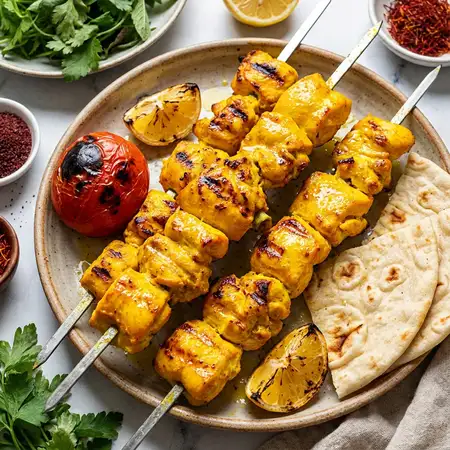
Chicken / 24h
Joojeh Kabab
Classic Persian saffron chicken. Golden, citrusy, and tender. This version focuses on the Iran style, with practical home-cooking guidance for texture, seasoning, and serving. Key ingredients include 1kg Chicken (Poussin/Cornish Hen bone-in pieces OR Breast chunks), 1 cup Greek Yogurt, 2 Onions (Sliced), supported by the technique notes on the page. The method starts with bLOOM SAFFRON: Grind saffron threads with a pinch of sugar, dissolve in hot water.
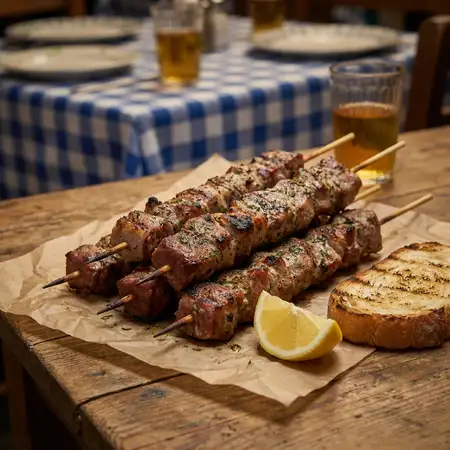
Pork / 2h
Souvlaki
Classic Greek skewers. Traditionally Pork, marinated in lemon and oregano. This version focuses on the Athens, Greece style, with practical home-cooking guidance for texture, seasoning, and serving. Key ingredients include 1kg Pork Neck (Best cut for skewers), 1/2 cup Olive Oil, 2 tbsp Dried Oregano (Rigani), supported by the technique notes on the page. The method starts with cUT: Cut pork neck into 1-inch cubes. Keep the fat.
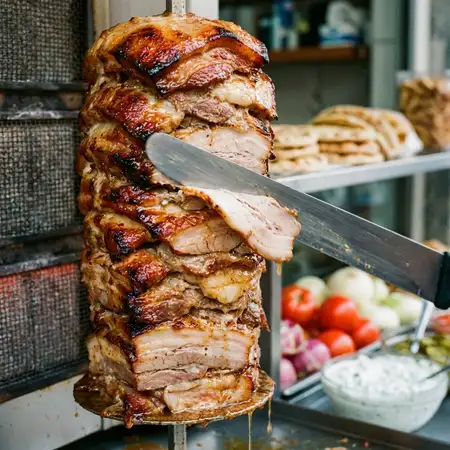
Pork / 24h
Authentic Gyros
The Greek vertical rotisserie. Pork slices stacked and shaved. This version focuses on the Greece style, with practical home-cooking guidance for texture, seasoning, and serving. Key ingredients include 2kg Pork Shoulder & Belly (Sliced 5mm thick), 1 Onion (grated and squeezed for juice), 3 tbsp Red Wine Vinegar, supported by the technique notes on the page. The method starts with pREP: Slice meat thin. Pound it thinner.
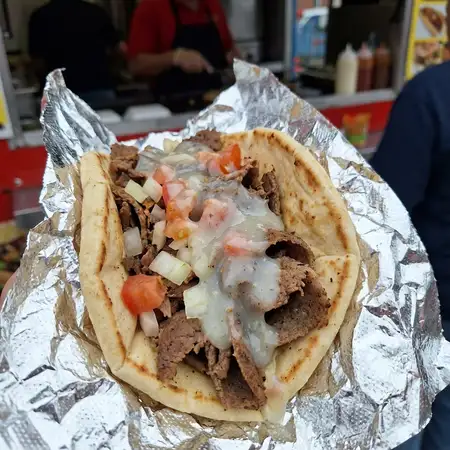
Beef / 1h
Halifax Donair
Canada's spiced beef masterpiece with sweet condensed milk sauce. This version focuses on the Halifax, Canada style, with practical home-cooking guidance for texture, seasoning, and serving. Key ingredients include 500g Ground Beef (Lean), 1 tsp Cayenne Pepper, 1 tsp Garlic Powder, supported by the technique notes on the page. The method starts with mEAT: Mix beef and spices. SLAP the meat mixture onto the counter 20 times to extract protein (elasticity).
Pork / 1h
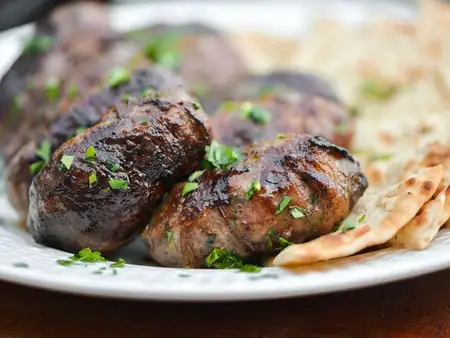
Cypriot Sheftalia
Crepinette-style sausages. Spiced pork mince wrapped in caul fat. This version focuses on the Cyprus style, with practical home-cooking guidance for texture, seasoning, and serving. Key ingredients include 500g Minced Pork, 200g Caul Fat (Pork or Lamb membrane), 1 Onion (Finely chopped), supported by the technique notes on the page. The method starts with pREP: Soak caul fat in warm water and vinegar to clean/soften.
Beef / 24h
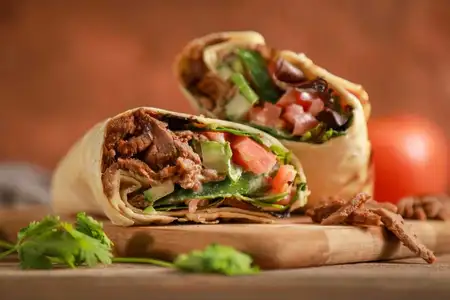
Beef Shawarma
The Levantine ancestor of Gyros. Distinct Arab spices (cardamom, cinnamon) and Tahini sauce. This version focuses on the Lebanon style, with practical home-cooking guidance for texture, seasoning, and serving. Key ingredients include 1kg Beef Top Round (Steaks), 200g Lamb Fat (for layering), Marinade: Vinegar, Lemon, 7-Spice (Baharat), Cardamom, Cinnamon, Cloves, Mastic, supported by the technique notes on the page. The method starts with mARINADE: Mix vinegar and dry spices. Coat meat slices. Marinate 24h.
Chicken / 12h
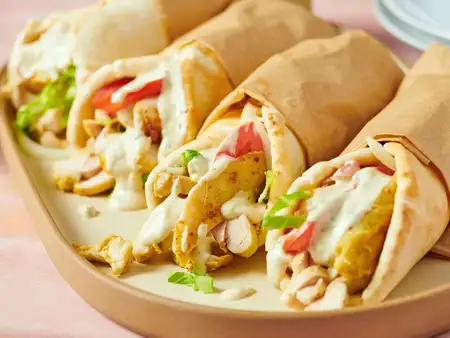
Chicken Shawarma
Garlic-lovers dream. Stacked chicken marinated in yogurt and lemon, served with Toum. This version focuses on the Lebanon style, with practical home-cooking guidance for texture, seasoning, and serving. Key ingredients include 1kg Chicken Thighs (Boneless), Marinade: Yogurt, Vinegar, Lemon, Cardamom, Garlic, Sauce: Toum (Garlic Emulsion), supported by the technique notes on the page. The method starts with mARINADE: Yogurt base with heavy garlic and cardamom. Marinate overnight.
Chicken / 6h
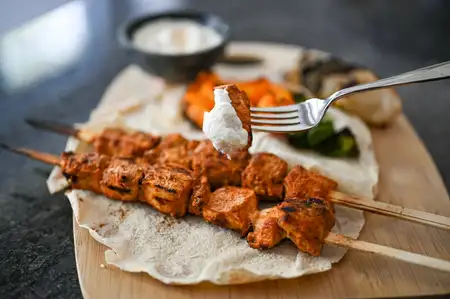
Shish Tawook
Levantine grilled chicken skewers. White marinade of yogurt, lemon, and garlic. This version focuses on the Lebanon / Syria style, with practical home-cooking guidance for texture, seasoning, and serving. Key ingredients include 1kg Chicken Breast (Cubed), 1 cup Yogurt, 1/4 cup Lemon Juice, supported by the technique notes on the page. The method starts with mARINADE: Mix yogurt, lemon, crushed garlic, tomato paste (optional red version) or just white marinade.