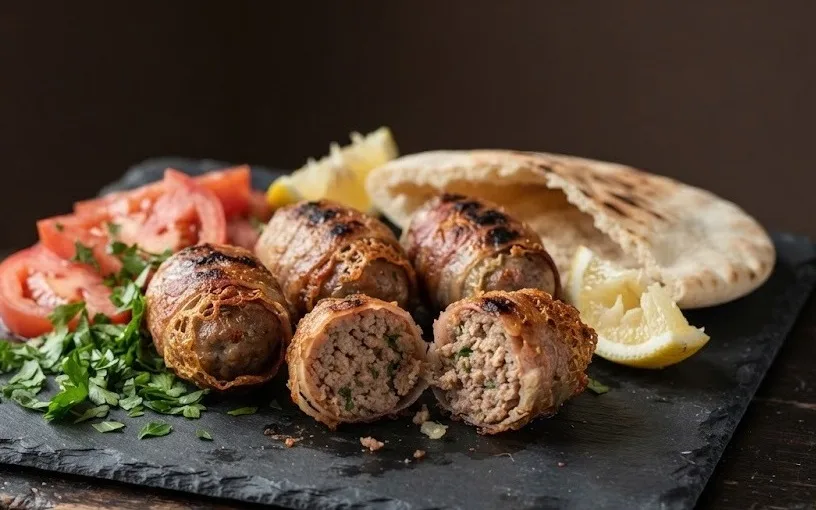
Caul fat is the whole trick. Sheftalia, Cyprus's beloved village sausage, wraps a rough mix of pork mince, finely chopped onion, parsley, and cinnamon inside panna — the lacy membrane that surrounds a pig's stomach — instead of stuffing it into casings. Over the charcoal of a foukou rotisserie, that webbing renders and bastes the meat continuously, then crisps into a fine, golden crust you can't achieve any other way. These are the crepinettes of the Eastern Mediterranean, standard at every Cypriot souvla gathering, served in pita pockets with lemon wedges, parsley, and thick slices of tomato, or piled on a mixed grill alongside souvlaki. The filling stays coarse and loosely packed on purpose; sheftalia should be juicy and crumbly inside its shattering wrapper, not dense. Ask your butcher for caul fat in advance — it freezes beautifully.
Reference video
Reference video, embedded from YouTube: filmed by Nikolopaa, not by How To Make A Kebab, and not owned, relicensed or distributed by this site.
View Original Video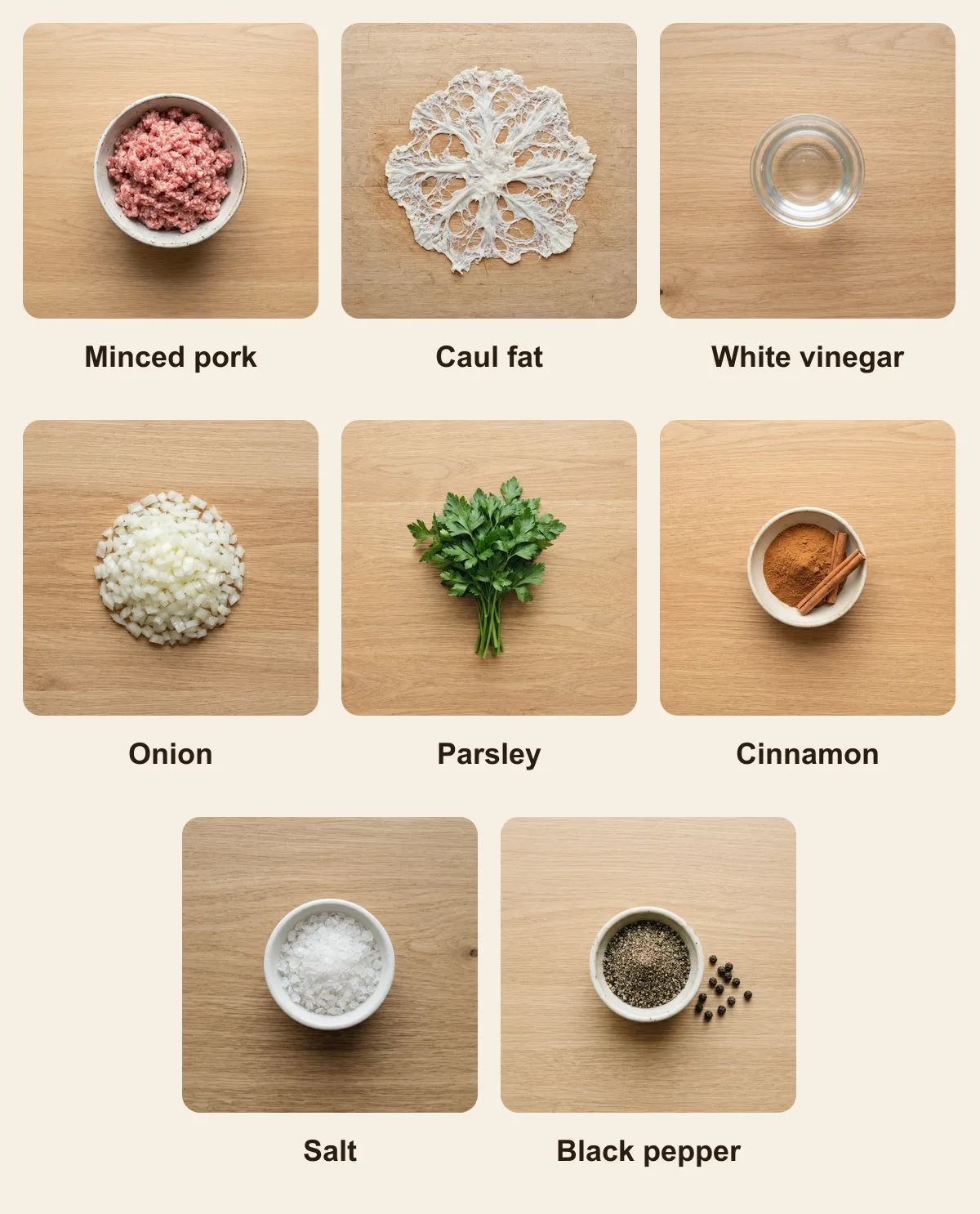
Ingredients
- 500g Minced Pork
- 200g Caul Fat (Pork or Lamb membrane)
- 100ml White Vinegar (for the caul fat soak)
- 1 Onion (Finely chopped)
- 1 cup Parsley (Chopped)
- 1/2 tsp Cinnamon
- 1 tsp Salt & 1/2 tsp Black Pepper
How To Make Cypriot Sheftalia
-
1
Soak the caul fat in a bowl of warm water with the 100ml white vinegar until it is clean, soft and easy to unfold, then drain it.
-
2
In a large bowl, combine the minced pork with the chopped onion, parsley, cinnamon, salt and pepper. Knead with your hands just until everything is evenly mixed, then stop, so the filling stays loose and coarse.
-
3
Take egg-sized portions of the mixture and shape them into small ovals, handling them lightly instead of packing them tight.
-
4
Spread a piece of caul fat flat on a board and set a sausage near one edge. Roll it over once, fold in the sides to close the ends, and trim off the excess fat with a knife.
-
5
Grill over medium charcoal heat for 15-20 minutes, turning occasionally, until the caul fat is crisp and golden and the centre of each sausage reaches 71°C (160°F). As the caul fat renders, it bastes the meat from the outside.
Note: The caul fat bastes the meat from the outside in. Do not use high heat or fat will flare up violently.
Go Deeper · the full story
About this recipe
Sheftalia solves a problem most sausages solve with a casing: how to hold a loose, juicy mince together on a grill. Cyprus's answer is caul fat, the lacy membrane that would otherwise get thrown out, wrapped once around a coarse pork mince instead of stuffed into an intestine casing.
This recipe keeps the filling deliberately loose - minced pork, onion, parsley and cinnamon, kneaded until evenly mixed - then wraps it in soaked caul fat and grills it over medium charcoal for 15-20 minutes, turning occasionally, until the fat crisps and the sausages are cooked through. The caul fat does the basting; nothing else is added to keep the meat moist.
Why this recipe works
Why This Recipe Works
- Soaking the caul fat in warm water and vinegar first softens the delicate membrane enough to unfold and wrap around the sausages without tearing.
- Grilling over medium heat for 15-20 minutes gives the caul fat time to render slowly, basting the pork mince from the outside as it crisps instead of flaring up and burning.
- Keeping the filling coarse and loosely shaped, not packed tight, leaves it tender inside the shattering caul-fat wrapper without turning rubbery.
How to serve it
Serving Notes
Serve in pita pockets with lemon wedges, parsley and thick tomato slices, the traditional Cypriot plate.
These hold up well on a mixed grill alongside other skewers - the caul fat wrapper keeps them from drying out while they wait.
Ask a butcher for caul fat ahead of time; it isn't a shelf staple, but it freezes well.
Common mistakes to avoid
Common Mistakes
- Grilling over high heat instead of medium. The caul fat flares up and burns before the pork inside cooks through.
- Packing the filling in tight. The sausages turn dense and rubbery instead of staying loose and juicy.
- Skipping the vinegar soak on the caul fat. The membrane stays stiff and tears when you try to wrap it.
- Pulling the sausages off before the full 15-20 minutes. The caul fat won't have crisped, and the center may still be underdone.
Frequently Asked Questions
Where do I find caul fat?
A butcher can usually order it in; it's the membrane from around a pig's or lamb's stomach and isn't something most supermarkets stock.
Can I use sausage casing instead of caul fat?
That skips the point of the dish - caul fat both bastes the mince as it renders and gives sheftalia its crisp, lacy crust, which casing doesn't do.
Why does my caul fat keep tearing?
It's likely too stiff to work with; soaking it in warm water and vinegar first softens the membrane enough to unfold without ripping.
Can I make these ahead and reheat?
They're best straight off the grill while the caul fat is still crisp; reheating softens the crust that makes sheftalia worth making in the first place.
Sources and further reading
- Sheftalia — Wikipedia
- Cyprus sheftalia named world's second best sausage dish — Cyprus Mail
Keep Cooking
Build The Full Plate
Technique And Support Guides
Best Bread For Kebab Wraps
Choose the best bread for kebab wraps, gyros, shawarma, doner, and plate service with lavash, pita, somun, pide, and durum explained clearly.
Gyros Vs Shawarma Vs Donair
Compare gyros, shawarma, and donair by meat style, bread, sauce, garnish, and wrap structure so you know which page to cook next.
Lavash Vs Pita Vs Durum
Compare lavash, pita, and durum for kebab wraps so you know which bread to use for gyros, shawarma, Adana wraps, and sliced-meat rolls.
How To Cook Kebab In The Oven
Learn how to cook kebab in the oven with better browning, broiler timing, pan setup, and moisture control for minced and chunked kebabs.
Related Recipes
Souvlaki
Classic Greek skewers. Traditionally Pork, marinated in lemon and oregano.
Authentic Gyros
The Greek vertical rotisserie. Pork slices stacked and shaved.
Halifax Donair
Canada's spiced beef masterpiece with sweet condensed milk sauce.
Beef Shawarma
The Levantine ancestor of Gyros. Distinct Arab spices (cardamom, cinnamon) and Tahini sauce.