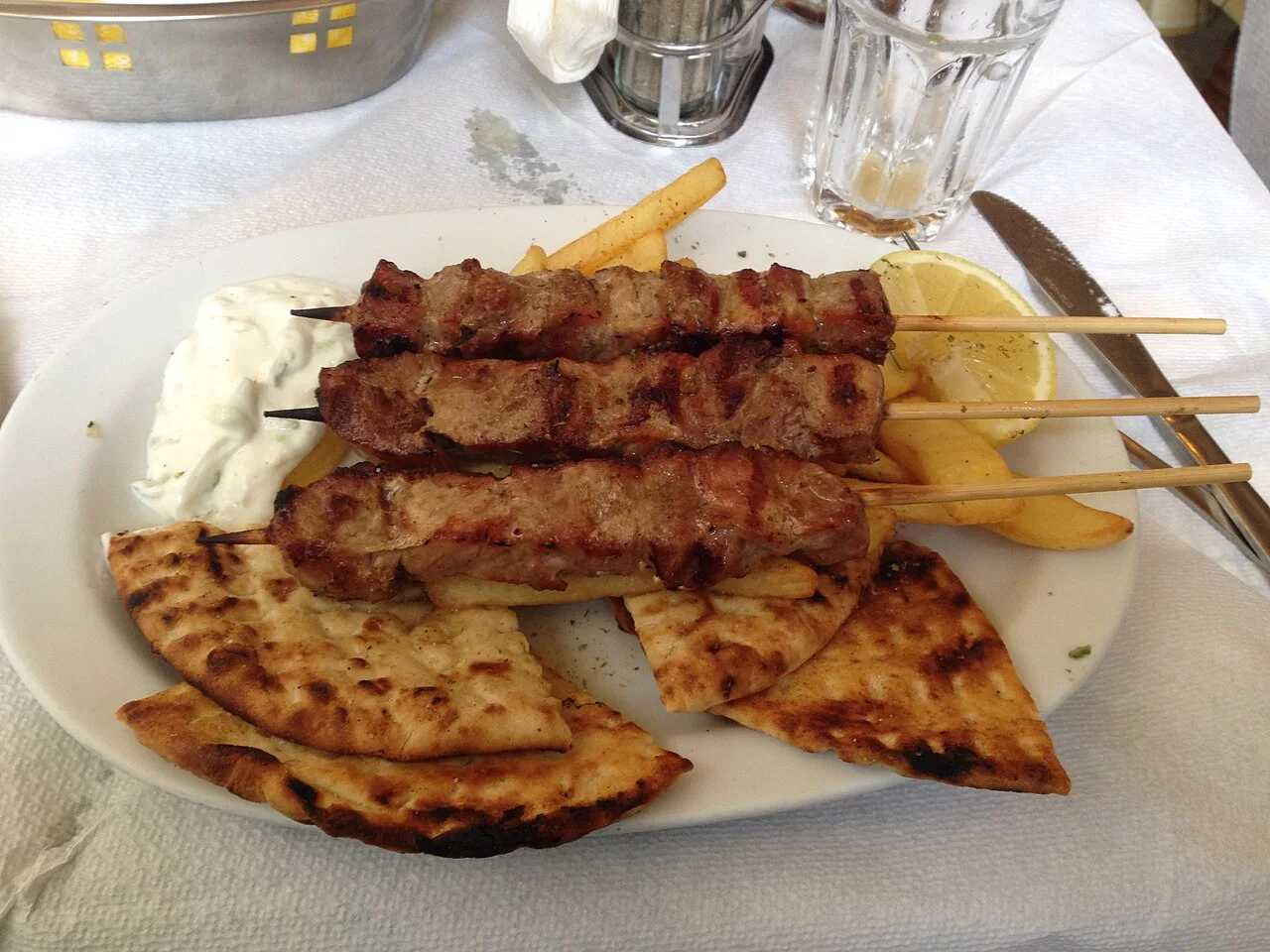
Greeks were threading meat onto small spits before Homer wrote about it — stone barbecue trays with notches for skewers turned up in the Bronze Age ruins of Akrotiri on Santorini. The modern descendant is souvlaki: cubes of pork neck bathed in olive oil, lemon, and dried Greek oregano, grilled over coals until the edges catch and blister. In Athens you'll hear it ordered as kalamaki, eaten straight off the stick with a squeeze of lemon, or tucked into charred pita with tzatziki, tomato, onion, and, yes, a few chips inside the wrap. Pork is the traditional meat, and neck is fatty enough to forgive a hot grill, though chicken has claimed ground in recent decades. The marinade is deliberately short. Greek cooking trusts four good ingredients over fourteen mediocre ones, and souvlaki is that philosophy on a stick.
Also known as: Kalamaki, Greek Shish Kabob, Pork Skewers, Greek Kebab
Reference video
Reference video, embedded from YouTube: filmed by MyGreekDish, not by How To Make A Kebab, and not owned, relicensed or distributed by this site.
View Original Video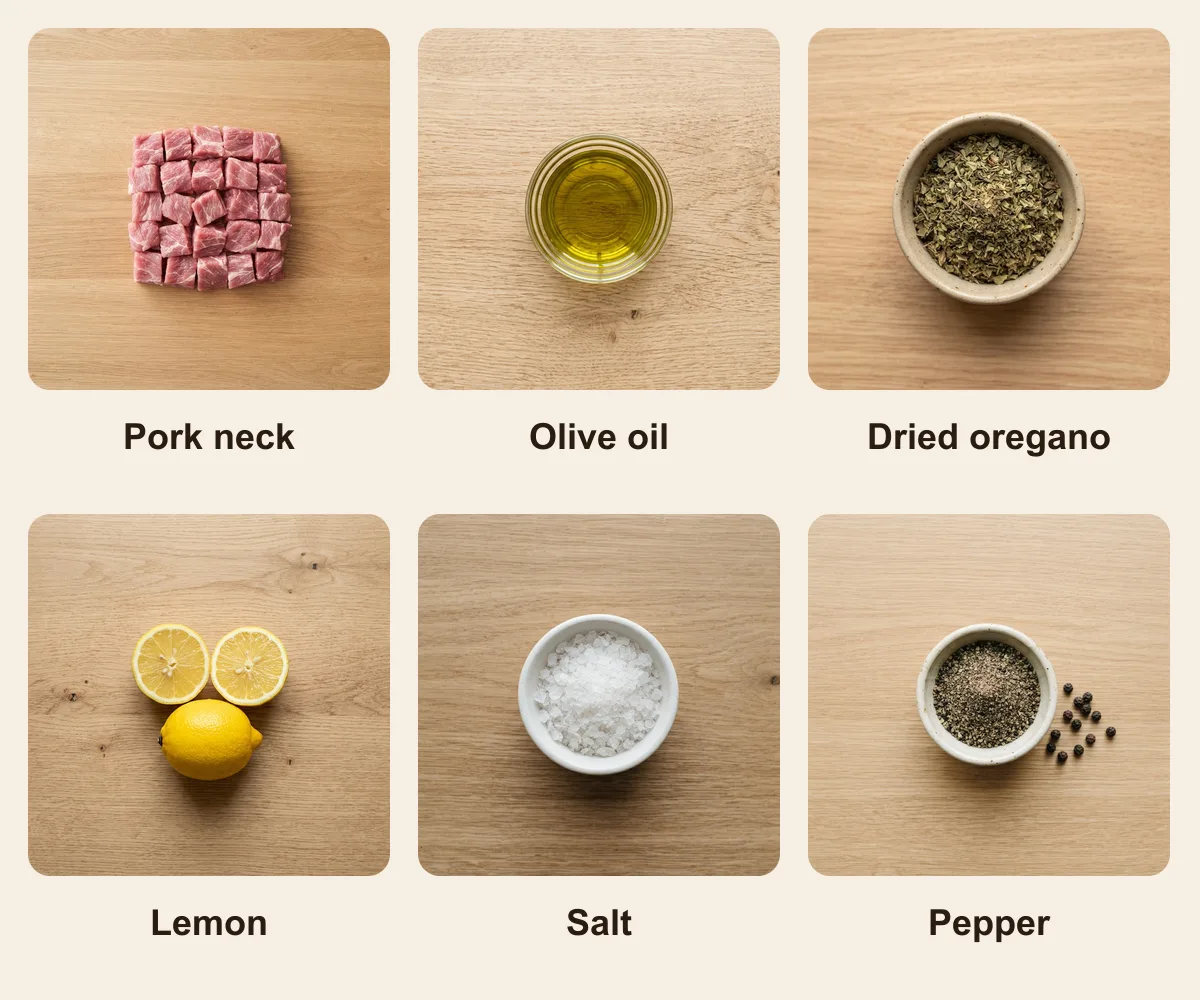
Ingredients
- 1kg Pork Neck (Best cut for skewers)
- 1/2 cup Olive Oil
- 2 tbsp Dried Oregano (Rigani)
- 1 Lemon (Juice)
- 1 tsp Salt & 1/2 tsp Black Pepper
How To Make Souvlaki
-
1
Cut the pork neck into even 2.5 cm (1-inch) cubes and leave the fat on; that fat is what keeps the meat juicy on a hot grill.
-
2
Whisk the olive oil, lemon juice, dried oregano and black pepper together, leaving the salt out for now, then pour it over the pork and toss until every cube is coated. Cover and refrigerate for 2 hours.
-
3
Soak the wooden skewers in water for at least 30 minutes (drop them in when the pork goes into the fridge), then thread the marinated cubes onto them.
-
4
Salt the skewers on all sides just before they go on, then grill over high-heat charcoal for 8 to 10 minutes in total. Turn them every 2 to 3 minutes so each side chars, take them off when the centre of a cube reaches 63°C (145°F), and let them rest for 3 minutes.
-
5
Serve with grilled bread, a fresh squeeze of lemon and a pinch of dried oregano over the top.
Note: Do not overcook; pork shoulder/neck stays juicy. Do not put salt in marinade, add it right before grilling to stay juicy.
 Souvlaki open-license visual reference from Wikimedia Commons: Souvlakiplate.jpg.
By Cifo Buscemi · CC BY 3.0
Souvlaki open-license visual reference from Wikimedia Commons: Souvlakiplate.jpg.
By Cifo Buscemi · CC BY 3.0
 Souvlaki open-license visual reference from Wikimedia Commons: Souvlaki in Athens.JPG.
By Miyagawa · CC BY-SA 4.0
Souvlaki open-license visual reference from Wikimedia Commons: Souvlaki in Athens.JPG.
By Miyagawa · CC BY-SA 4.0
 Souvlaki open-license visual reference from Wikimedia Commons: Greek chicken souvlaki merida.jpg.
By Leeturtle · CC BY-SA 4.0
Souvlaki open-license visual reference from Wikimedia Commons: Greek chicken souvlaki merida.jpg.
By Leeturtle · CC BY-SA 4.0
Go Deeper · the full story
About this recipe
Souvlaki keeps its ingredient list short on purpose: pork, olive oil, lemon, dried oregano, salt and pepper, nothing else competing for attention. Order it as kalamaki and it comes plain off the stick with a wedge of lemon; order it wrapped and it's folded into pita with tomato, onion and tzatziki - two servings of the same skewer.
This recipe cuts pork neck into 1-inch cubes, marinates them in olive oil, lemon juice, oregano and pepper for two hours, then grills them hot for 8 to 10 minutes total, turning every two to three minutes so every side gets some char. Salt goes on right before the meat hits the grill, not into the marinade.
Why this recipe works
Why This Recipe Works
- A two-hour marinade is long enough for the oregano and lemon to flavor the pork without the acid starting to break down the surface texture.
- Salting just before grilling instead of during the two-hour marinade keeps the meat from drawing out moisture early, so the cubes stay juicy through the eight-to-ten-minute cook.
- Turning the skewers every two to three minutes spreads the char evenly across the full cook instead of letting one side burn before the others color.
How to serve it
Serving Notes
Finish each skewer with a fresh squeeze of lemon and a pinch of oregano, on top of what's already in the marinade.
Serve with grilled bread to catch the juices.
Kalamaki style works straight off the stick; for a wrap, add tomato, onion and tzatziki.
Common mistakes to avoid
Common Mistakes
- Salting the meat at the start of the marinade. The salt pulls moisture out over two hours, and the pork grills up drier.
- Marinating well past two hours. The lemon juice keeps working on the surface and the texture turns mealy.
- Cutting the cubes bigger than an inch. They won't cook through in the 8 to 10 minute window without the outside overcooking first.
- Skipping the fresh lemon and oregano at serving. The dish is built to be finished twice, once in the marinade and once at the table.
Frequently Asked Questions
Can I use chicken instead of pork?
Pork neck's fat is what lets it survive the 8 to 10 minute hot grill without drying; chicken breast will need less time and closer attention.
Why add salt at the end instead of in the marinade?
Salting early draws moisture out of the pork over the two-hour marinade; adding it right before grilling keeps that moisture in the meat instead.
What's the difference between souvlaki and gyros?
Souvlaki is cubes of meat grilled on a skewer; gyros is whole slices stacked and roasted on a vertical spit, then shaved. Different cut, different cooking method.
Can I marinate the pork longer for more flavor?
Stick close to two hours - the lemon juice in the marinade will start to make the surface mealy if it sits much longer.
Sources and further reading
- Souvlaki — Wikipedia
- The History of Greek Souvlaki: A National Treat — Athens Insiders
Keep Cooking
Build The Full Plate
Technique And Support Guides
Metal Vs Wooden Skewers For Kebab
Understand when to use metal or wooden skewers for kebab, plus why flat skewers matter for minced kebab and how oven use changes the choice.
Best Cut For Shish Kebab
Choose the best cut for shish kebab with a practical guide to lamb, beef, and chicken options, cube size, fat balance, and what actually stays juicy on skewers.
How To Marinate Kebab Properly
Learn how to marinate kebab without making the meat mushy, watery, or flat, with clear guidance for chicken, lamb, beef, and yogurt-based marinades.
Best Yogurt Sauce For Gyro And Kebab
Compare tzatziki-style, Turkish-style, and garlic-yogurt sauces for kebab wraps and plates so you know which cooling sauce fits each meat and bread style.
Explore Related Hubs
Gyros, Shawarma, and Donair Guide
Compare gyros, shawarma, donair, souvlaki, and tawook with bread pairings, sauce choices, wrap assembly, and serving ideas.
Best Bread for Kebab, Shawarma, and Gyros
Learn which bread to use for kebab wraps, gyros, shawarma, doner, and grilled meat plates, including lavash, pita, pide, somun, lepinja, and durum.
Related Recipes
Authentic Gyros
The Greek vertical rotisserie. Pork slices stacked and shaved.
Halifax Donair
Canada's spiced beef masterpiece with sweet condensed milk sauce.
Cypriot Sheftalia
Crepinette-style sausages. Spiced pork mince wrapped in caul fat.
Beef Shawarma
The Levantine ancestor of Gyros. Distinct Arab spices (cardamom, cinnamon) and Tahini sauce.