
Adana kebap is one of the few street foods on earth with a legal definition: the Adana Chamber of Commerce certifies which restaurants may use the name, and the registered recipe is stubbornly short. Male lamb, kuyruk yağı (sheep's tail fat), salt, and hot red pepper — no garlic, no egg, no cumin. The meat is minced by hand with a zırh, the curved crescent cleaver that chops without crushing, so the fat stays in visible flecks that baste the kebab from the inside as it grills. Pressed onto wide flat skewers and cooked over oak embers, it drips onto flatbread laid beneath to catch the juices. At home you won't own a zırh or a mangal, but a coarse double grind, an honest fat ratio, and a ferociously hot grill get you startlingly close.
Also known as: Kiyma Kebabi, Turkish Minced Kebab, Adana Kebap
Reference video
Reference video, embedded from YouTube: filmed by Foodatives, not by How To Make A Kebab, and not owned, relicensed or distributed by this site.
View Original Video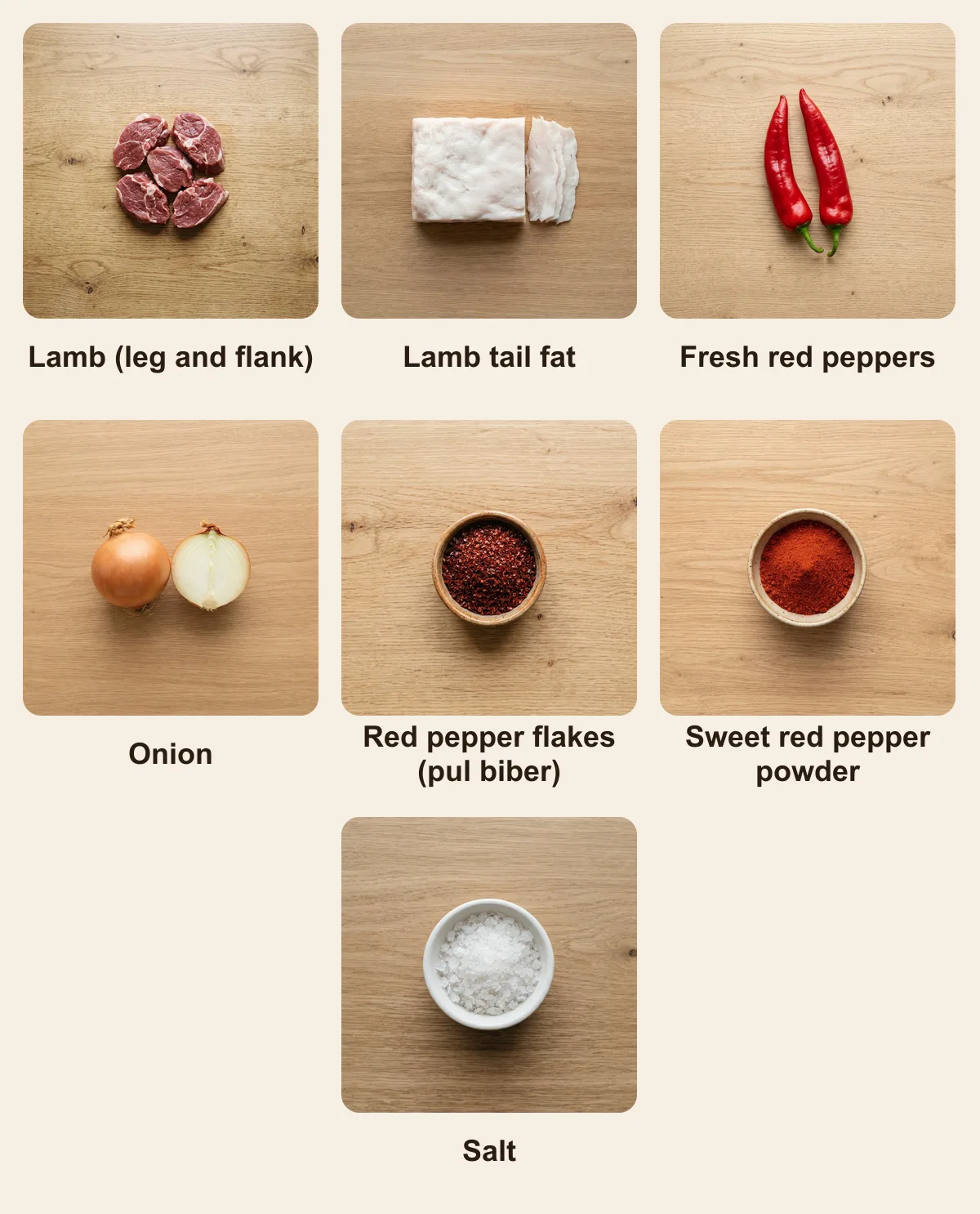
Ingredients
- 700 g lamb, leg (but) and flank (bosluk) — Kivircik breed if you can find it
- 230 g tail fat (kuyruk yagi) — about a third of the meat weight
- 2 fresh red peppers (al biber), very finely chopped
- 1 small onion, very finely chopped and squeezed dry
- 2 tbsp red pepper flakes (pul biber), or to taste
- 1 tsp sweet red pepper powder, for colour
- 2 tsp salt
How To Make Adana Kebab
-
1
Hand-mince the lamb (leg and flank) with a zirh or a heavy chef's knife — the certified Adana way. If knife-mincing is beyond your kitchen, a coarse double grind is the honest home fallback; what ruins the texture is a fine grind, which turns it to paste.
-
2
Finely chop the Tail Fat and vegetables (peppers, onions) separately, then mix into the meat.
-
3
Season with salt, powdered pepper, and red pepper flakes.
-
4
Wet hands lightly and knead thoroughly for 10-15 minutes until the meat is sticky and holds together (protein extraction).
-
5
Mold the meat mixture onto wide flat skewers (sis) using your thumb to create the signature ridges.
-
6
Prepare sides (pide, tomatoes, green peppers) while meat rests.
-
7
Grill "sakin sakin" (calmly) over controlled embers for 3-4 minutes per side, until the surface is charred and the internal temperature reaches 71C (160F). Avoid high flames (soot) or extreme heat (burnt outside, raw inside).
Note: The "Zirh" mincing technique keeps the fat solid. A machine grinder melts the fat too early, making the kebab fall off the skewer.
 Adana Kebab open-license visual reference from Wikimedia Commons: Adana kebab.jpg.
By Anatolianpride · Public domain
Adana Kebab open-license visual reference from Wikimedia Commons: Adana kebab.jpg.
By Anatolianpride · Public domain
 Adana Kebab open-license visual reference from Wikimedia Commons: Adana kebab with bulgur.jpg.
By Sandstein · CC BY 3.0
Adana Kebab open-license visual reference from Wikimedia Commons: Adana kebab with bulgur.jpg.
By Sandstein · CC BY 3.0
 Adana Kebab open-license visual reference from Wikimedia Commons: Adana kebab in Ankara.jpg.
By E4024 · CC BY-SA 4.0
Adana Kebab open-license visual reference from Wikimedia Commons: Adana kebab in Ankara.jpg.
By E4024 · CC BY-SA 4.0
Go Deeper · the full story
About this recipe
Adana kebab is not just minced lamb on a skewer. It is a regional grilling language from southern Turkey, shaped by the heat of Adana, the rhythm of ocakbasi charcoal restaurants, and the old habit of letting a few strong ingredients speak clearly. A proper Adana tastes of lamb, red pepper, salt, smoke, and rendered fat. If any one of those elements disappears, the skewer starts to taste like a generic kebab instead of the dish people travel to Adana to eat.
The traditional method is built around hand-chopped meat, usually worked with a heavy blade called a zirh. The point is not nostalgia for its own sake. Hand chopping keeps small, uneven pieces of lean lamb and fat visible, which gives the kebab a springy bite and a juicy finish. Machine-ground meat can work at home, but only if it stays cold and coarse; once the fat smears, the mixture behaves like paste and loses the open, grill-friendly texture that makes Adana special.
Treat Adana like a pitmaster would: meat ratio first, texture second, fire third, and garnishes last. The onion, parsley, grilled pepper, tomato, and warm lavash are important, but they are supporting players. The skewer itself has to grip the metal, roast over embers, release fat slowly, and come off the grill with a smoky crust and a soft interior.
Why this recipe works
Why This Recipe Works
- Tail fat is the backbone of Adana because it melts differently from lean meat. It bastes the skewer from inside, keeps the lamb supple, and helps the surface brown without turning dry. A lean mixture may look neat on the board, but on the grill it tightens, cracks, and tastes flat.
- Red pepper and pul biber are not there just to make the kebab hot. They bring fruitiness, color, and a slow warmth that balances lamb fat. The best Adana has pepper depth before pepper aggression, so use fresh, fragrant pepper rather than stale powder that only tastes dusty.
- Salt and kneading work together. Salt seasons the meat and helps draw out sticky proteins; kneading turns the chopped lamb into a cohesive mass that can hold a wide skewer. This is why a properly worked mixture feels tacky in the hand instead of loose and crumbly.
- Steady charcoal heat gives the kebab its signature finish. Strong embers roast the outside fast enough to set the meat, while controlled distance keeps the fat from igniting into bitter flames. The goal is sizzle and smoke, not a fire show.
Equipment you need
Equipment
- Wide flat metal skewers for proper grip
- Charcoal grill or very hot grill pan
- Large cold mixing bowl
- Sharp knife or zirh-style chopping blade
Serving & make-ahead
Serving Notes
Serve Adana over warm pide or lavash so the bread catches rendered fat and meat juices instead of letting them run onto the plate. In a good kebab house, that bread is not filler; it is the sponge that carries the lamb flavor into every bite.
Classic companions include grilled tomatoes, green peppers, sumac onions, and a sharp parsley salad that lightens the richness of the lamb. Keep the onion lively and acidic, because that freshness is what keeps the fat from feeling heavy.
If you are building a full table, pair the skewers with one warm bread and one clean side rather than adding too many sauces. Adana is strongest when the meat stays central, the bread is hot, and the vegetables taste like they came from the same fire.
Make Ahead, Store, and Reheat
- You can mince, season, and knead the meat several hours ahead, then keep it covered and cold until shaping. This rest helps the salt and pepper settle into the meat and makes the mixture easier to handle.
- Shape the kebabs close to cooking time if you are new to skewering. Chilled meat is easier to handle, but finished skewers should not sit at room temperature while the grill is still being prepared.
- Cooked leftovers can be wrapped in bread and reheated gently, but the best texture is always straight from the fire. If you must reheat, use low heat and a splash of water under a covered pan so the meat warms without becoming rubbery.
Common mistakes to avoid
Common Mistakes
- Using lean supermarket mince with no added fat. The result will taste dry and will not behave like a real Adana mixture, no matter how much pepper you add.
- Skipping the kneading stage. The meat has to become tacky enough to grip the skewer, not just mixed until combined. Underworked meat is the main reason home Adana breaks or slides.
- Letting the mixture get warm before shaping. Warm fat smears, the meat loses structure, and the skewer becomes difficult to control. Keep the bowl cold and return it to the refrigerator if the mixture softens.
- Cooking directly over uncontrolled flames. Adana should cook over hot embers with attention, not as a flare-up spectacle. Bitter black edges usually mean the fat burned instead of rendering.
History and Origins of Adana Kebab
Adana kebab comes from Adana, a hot and fertile city in southern Turkey where lamb, peppers, flatbread, and charcoal cooking have long been part of daily food culture. The dish grew out of a regional taste for bold but uncluttered grilling: good lamb, enough fat, red pepper, salt, and a fire handled by someone who knows when to turn the skewer. It is the opposite of a recipe that hides behind a long spice cabinet.
In traditional kebab houses, the cook does not treat Adana as a quick mince mixture. The meat is selected, trimmed, chopped, seasoned, kneaded, pressed onto broad skewers, and cooked over a charcoal trough. The customer often eats it with warm bread, sumac onion, parsley, grilled tomato, and charred green pepper. That serving style matters because the bread catches the fat and the sharp onion cuts through the richness.
Adana also carries a strong local identity. It is closely compared with Urfa kebab, but Adana is the sharper, redder, more pepper-forward sibling. Where Urfa tends to be milder and rounder, Adana should have a confident heat that wakes up the lamb without burying it. The best home version respects that balance instead of turning the dish into either bland grilled meat or an overly spicy sausage.
The Why Behind the Ingredients
Lamb is the center because Adana depends on the flavor of the animal. Beef can make a good skewer, but it does not give the same sweetness, mineral depth, or fat aroma. Choose leg and flank, or another flavorful cut with enough structure, then add lamb tail fat or firm lamb fat to bring the mixture close to the juicy restaurant texture.
Tail fat is not optional decoration. It melts into the kebab as it cooks, lubricates the chopped meat, and protects the surface from becoming dry before the middle is done. If you replace it with a neutral oil or skip it entirely, the skewer may still cook, but it will not eat like Adana. The fat should be cold, chopped fine, and distributed through the meat as visible little flecks.
Onion and pepper must be controlled. Onion brings sweetness and moisture, but too much grated onion makes the mixture wet and weak. Red pepper, pul biber, and salt should season the lamb without turning it into a paste of spices. A pitmaster does not chase complexity here; he chases clarity, because Adana is judged by texture, fat, smoke, and pepper balance.
Mastering the Technique
If you can hand-mince the meat, chill the lamb and fat until firm, then chop with a heavy knife in short, repeated strokes. Turn the pile often so the fat and lean meat distribute evenly. You are looking for a coarse, sticky mince, not a smooth puree. If using a grinder, use a coarse plate and keep every part cold, including the bowl that catches the meat.
Kneading is where many home cooks stop too early. Mix the meat, fat, salt, and pepper by hand until the mass becomes tacky and pulls together. When you lift a piece, it should stretch slightly and cling to itself. That stickiness is what grips the skewer; without it, the kebab falls apart even if the ingredients are right.
To shape Adana, wet your hands lightly, take a compact portion of meat, and press it around a wide flat skewer from the center outward. Pinch and smooth the meat so it forms an even ridge, then press shallow finger marks along the length. Those ridges are not just decorative. They create more surface area, help the kebab cook evenly, and give rendered fat somewhere to run.
Manage the charcoal before the meat goes on. Wait until the coals are glowing and covered with a light ash, then cook over heat that is strong but not flaming. Turn the skewers as soon as the first side sets, not after the meat has dried. If fat drips and flames jump up, move the skewer aside for a moment rather than letting the fire blacken the pepper and make the meat bitter.
Adana Kebab Ingredients
The core Adana kebab ingredients are fatty lamb, tail fat, red pepper, onion, pul biber, powdered red pepper, and salt. The recipe works because the meat texture and fat ratio are right, not because the spice list is long. A short list is a strength here, because there is nowhere for poor meat or weak technique to hide.
If you cannot find lamb tail fat, ask a butcher for firm lamb fat and keep it cold before chopping. Soft, smeared fat makes the mixture harder to skewer and easier to dry out. Avoid watery packaged mince if possible; the best home shortcut is fresh lamb ground coarse on the day you cook.
Taste control comes from the pepper. Use pul biber for warmth and fruity depth, then add powdered red pepper for color and body. If your peppers are very salty or very hot, adjust before kneading the full batch. A good Adana should make you want another bite, not punish your mouth.
How to Keep Adana Kebab on the Skewer
The mixture has to be cold, fatty, and kneaded until tacky. When it sticks lightly to your hand and pulls together as one mass, it is ready to press onto the skewer. If it feels loose like burger mince, keep kneading and chill it again before shaping.
Use wide flat skewers when possible. Thin round skewers give the meat less surface area to grip and make falling or spinning more likely. Press the meat firmly against both faces of the skewer so the metal sits through the center like a spine.
Do not overload the skewer. A thick Adana looks impressive raw, but it is harder to set over the fire and more likely to split. Even thickness matters more than size, especially when you are learning.
Adana Kebab Wrap
To make an Adana kebab wrap, press warm lavash onto the cooked skewer so it catches the juices, then pull the meat into the bread and add sumac onions, parsley, roasted pepper, and roasted tomato.
Keep the wrap focused. Too much sauce hides the lamb, while warm bread, onion, herbs, and grilled vegetables make the kebab taste more complete.
Adana Kebab vs Urfa Kebab
Adana kebab is the spicy, red-pepper-forward version, while Urfa kebab is usually milder and more rounded. Both rely on lamb, fat, kneading, and controlled heat.
If you want the closest comparison, cook both over the same fire and serve them with the same bread and vegetables. The difference in pepper balance becomes much clearer.
Frequently Asked Questions
Why does my Adana kebab fall off the skewer?
It usually falls because the mixture is too lean, too warm, too wet, or not kneaded enough. Adana needs cold chopped meat, visible fat, salt, and hand work until the mixture feels sticky. Use a wide flat skewer, press the meat firmly around it, and start over strong embers so the outside sets before gravity has time to pull it apart.
Can I cook Adana kebab in an oven or under a broiler?
Yes, but treat it as a home adaptation rather than the classic version. Use the hottest broiler or a very hot oven rack, preheat the tray, and keep the kebabs close enough to brown quickly. You will miss some charcoal aroma, so compensate with good browning, warm bread, grilled peppers, and a restrained hand with sauce.
What is the best meat and fat ratio for Adana kebab?
A useful home target is roughly 75 to 80 percent lamb and 20 to 25 percent lamb fat, ideally including tail fat if you can get it. The exact ratio depends on the cut, but the mixture should never look dry. If the raw mince looks lean and crumbly, the cooked kebab will usually taste dry and may not grip the skewer properly.
How spicy should authentic Adana kebab be?
Adana should be clearly peppery, warm, and red, but not so aggressive that the lamb disappears. Think of the pepper as a deep heat that rides with the fat. If all you taste is chili burn, the balance is wrong; if you taste only plain meat, it has drifted toward Urfa.
Sources and further reading
- Adana kebabı — Wikipedia
- List of kebabs — Wikipedia
- Adana Kebabı — TÜRKPATENT Geographical Indications Portal (Turkish Patent and Trademark Office)
- Adana Kebabı — Kültür Portalı (Turkish Ministry of Culture and Tourism)
Keep Cooking
Build The Full Plate
Turkish Urfa Kebab
Compare Adana with its milder sibling to understand the spice difference.
Balloon Lavash
Use a hot, flexible flatbread when you want to turn Adana into a wrap.
Turkish Pide Bread
Serve Adana over warm pide so the bread catches the fat and juices.
Adana Durum
Build the wrap version with lavash, onions, herbs, and roasted vegetables.
Technique And Support Guides
Best Meat For Kebab
Choose the best meat for kebab by fat ratio, cut, grind, and cooking style, whether it ends up on a skewer, in a wrap, or on a plate.
How To Keep Kebab On The Skewer
Learn how to keep kebab on the skewer with the right fat level, onion handling, kneading, skewer shape, and grill timing.
Lavash Vs Pita Vs Durum
Compare lavash, pita, and durum for kebab wraps so you know which bread to use for gyros, shawarma, Adana wraps, and sliced-meat rolls.
How To Cook Kebab In The Oven
Learn how to cook kebab in the oven with better browning, broiler timing, pan setup, and moisture control for minced and chunked kebabs.
Explore Related Hubs
Turkish Kebab Guides
A focused collection for Turkish kebab styles including Adana, Urfa, Cag, Iskender, and supporting bread pages.
Best Bread for Kebab, Shawarma, and Gyros
Learn which bread to use for kebab wraps, gyros, shawarma, doner, and grilled meat plates, including lavash, pita, pide, somun, lepinja, and durum.
Related Recipes
Urfa Kebab
Adana's non-spicy sibling. Deep flavor from smoky isot pepper.
Iskender Kebab
Doner meat over chopped pide, topped with tomato sauce and sizzling butter.
Cag Kebabi
The horizontal ancestor of Doner. Marinated lamb slices on a wood fire.
Beyti Sarma
Garlicky minced meat rolled in yufka, sliced into wheels, and baked.