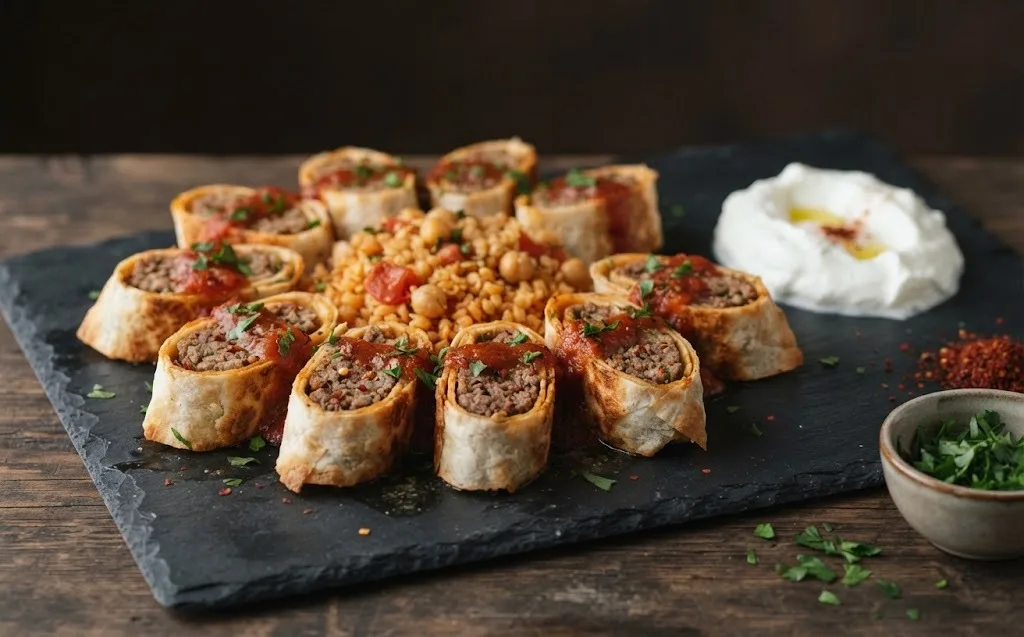
The name belongs to a man. Beyti Güler, who ran an Istanbul grill house, invented the dish in 1961 after seeing a Swiss butcher's method of preparing meat, and it became famous enough to carry his name; the sarma — 'wrapped' — treatment came later, when cooks began rolling the kebab in thin bread, slicing the roll into pinwheels, and ringing them around tomato sauce and yogurt. It is the rare kebab designed for the plate rather than the hand: each slice shows a spiral of bread and meat. This version rolls the raw filling straight into yufka and bakes the whole roll together: the wrap toasts crisp while the meat cooks through, so the bread never turns soggy. It looks like restaurant architecture, but it is genuinely a home-kitchen dish — a rolling pin, a hot pan, and an oven cover all of it.
Also known as: Beyti Kebab, Rolled Kebab, Turkish Meat Wrap, Garlic Yogurt Kebab
Reference video
Reference video, embedded from YouTube: filmed by Hungry Man Kitchen, not by How To Make A Kebab, and not owned, relicensed or distributed by this site.
View Original Video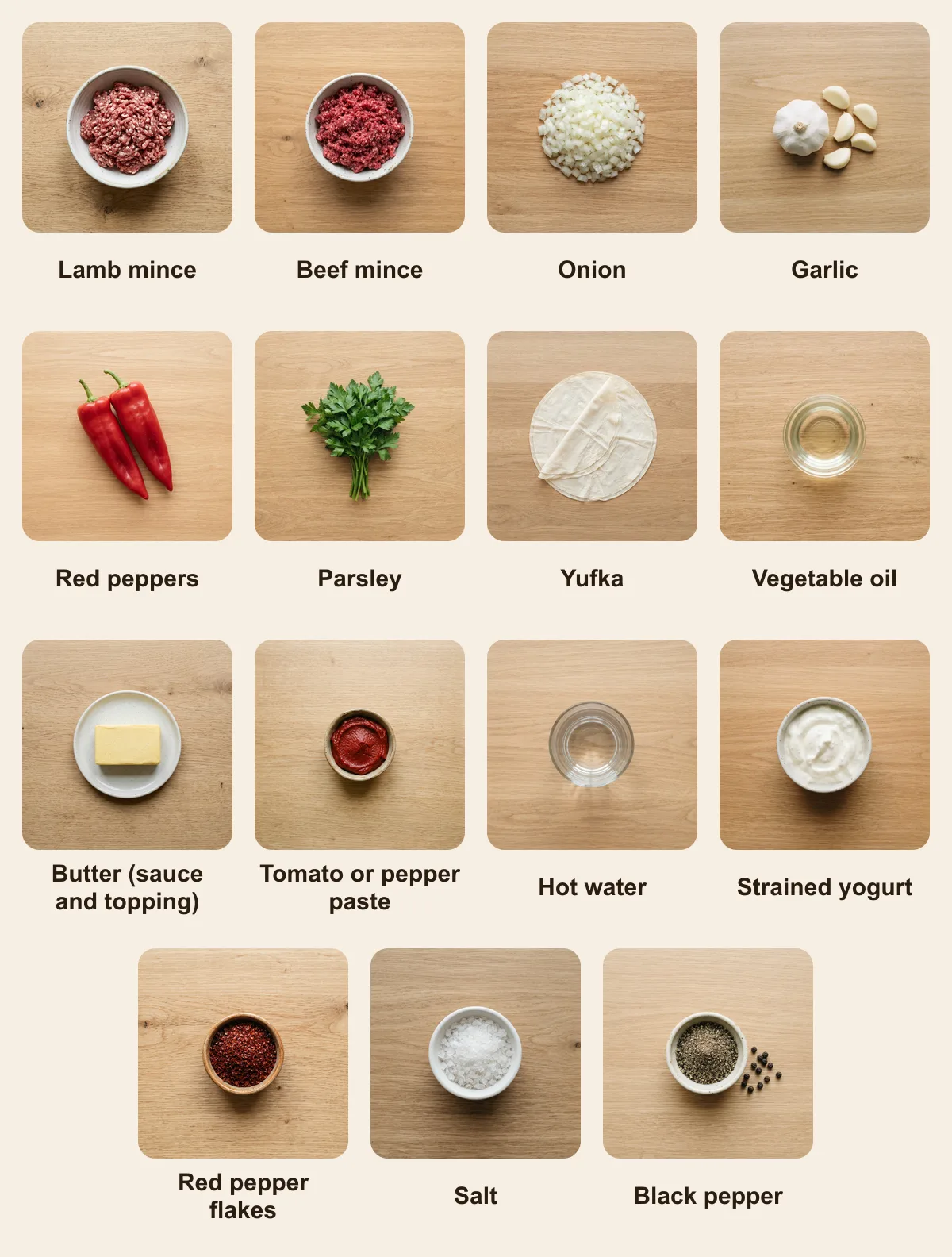
Ingredients
- 400g Minced Meat (Lamb/Beef mix)
- 1 Whole Onion & 3 Garlic Cloves (Finely chopped)
- 2 Red Peppers & 1 Bunch Parsley (Finely chopped)
- 2 Sheets Fresh Yufka (Phyllo Dough)
- Vegetable Oil (for brushing the yufka)
- Sauce: 1 tbsp Butter, 1 tbsp Tomato/Pepper Paste, 1/4 cup Hot Water
- Topping: 200g Strained Yogurt (Suzme), 2 tbsp Sizzling Butter
- Spices: 1 tsp Red Pepper Flakes, 1 tsp Salt, 1/2 tsp Black Pepper
How To Make Beyti Sarma
-
1
Finely chop the onion, red peppers and parsley. Chop the garlic with a knife rather than crushing it, so it keeps a little texture in the filling.
-
2
Put the minced meat in a large bowl with the chopped vegetables, red pepper flakes, salt and black pepper. Knead by hand until the mixture is completely blended and holds together in one mass.
-
3
Divide the filling in half, one portion for each yufka sheet. Fold over one edge of a sheet, press the filling into a long, even cylinder along that folded edge, then brush the rest of the sheet with oil; this oil is what lets the yufka crisp.
-
4
Roll the yufka up tightly around the filling into a firm log, then slice the log on the diagonal into bite-sized wheels.
-
5
Set the wheels on a baking tray lined with baking paper and brush the tops with oil. Bake on the middle rack of an oven preheated to 190°C (375°F) for 25-30 minutes, until the yufka is deep golden and crisp and the filling reads 71°C (160°F) at the centre on an instant-read thermometer.
-
6
While the wheels bake, melt the 1 tbsp butter in a small pan and stir the tomato/pepper paste into it briefly. Whisk in the hot water, bring the sauce just to the boil, then take it off the heat; it should be smooth and loose enough to pour.
-
7
Arrange the hot wheels in a ring around a mound of bulgur pilaf. Finish with the Triple Topping: spoon the tomato sauce over the wheels, heat the 2 tbsp topping butter until it sizzles and pour it over, and set the strained yogurt alongside.
Note: Think of it like a savory sausage roll: The secret is brushing the yufka with oil inside and out to create a crunch that contrasts with the tender meat.
Go Deeper · the full story
About this recipe
What separates Beyti from an ordinary döner wrap is that it is built to be sliced, not folded: the filling and bread are rolled into a tight cylinder first, so every cross-section shows the same spiral of meat and pastry. It is also unusually saucy for a kebab; a butter-and-salça sauce and a side of strained yogurt are not optional garnishes here but structural, meant to be spooned over pinwheel slices the way you would sauce pasta, not eaten dry off a skewer.
This version skips skewers and open flame entirely: the seasoned mince goes in raw, pressed into a cylinder along the yufka's edge, rolled tight, and the whole roll bakes together at 190C (375F) until the wrapper turns deep gold and audibly crisp. Oil carries the method, brushed on before rolling and again on the cut wheels before their short bake, because dry yufka simply hardens instead of crisping. The sauce and yogurt are made separately and added only after baking, so nothing softens the pastry before it reaches the table.
Why this recipe works
Why This Recipe Works
- Brushing the yufka with oil before rolling and again after slicing is what lets it crisp in the oven; that oil brush is the secret to the crunch
- Slicing the rolled cylinder into diagonal wheels before baking exposes more surface area per piece, so more of the pastry gets oil-crisped contact with the tray
- Building the sauce separately, by sautéing the paste in butter and thinning it with hot water, keeps it pourable enough to coat without soaking through the yufka's crisp shell before serving
How to serve it
Serving Notes
Arrange the sliced wheels around bulgur
Apply all three toppings together: tomato sauce, sizzling butter, and yogurt on the side
Serve immediately after baking, while the yufka is still audibly crisp; it softens quickly once the sauce and butter go on
Common mistakes to avoid
Common Mistakes
- Skipping the oil brush on the yufka leaves it dry instead of crisp, which is exactly why it needs brushing inside and out.
- Cutting the roll into straight wheels instead of diagonal ones reduces the crisping surface per piece.
- Adding the sauce before baking instead of after steams the yufka instead of letting it crisp dry in the oven.
- Under-kneading the filling's vegetables and meat stops the mixture from holding together, so it won't roll into a clean cylinder or slice into neat wheels.
Frequently Asked Questions
Can I use lavash instead of yufka?
Yufka is thinner and rolls tighter for the wheel-shaped slices this recipe relies on; lavash is thicker and won't give the same defined pinwheel.
My roll fell apart when I sliced it; what went wrong?
The filling needs to be kneaded until fully blended so it holds together as a cylinder; a loosely mixed filling won't keep its shape under the knife.
Can I skip the sauce and use only yogurt?
You can, but the triple topping of sauce, sizzling butter, and yogurt together is what balances the dish; yogurt alone leaves out the tangy, rich contrast the butter and salça add.
How does the filling stay moist during baking if it's never pre-cooked?
The oil brushed on both before rolling and after slicing protects the yufka from drying out while the raw meat inside finishes cooking in the same short bake.
Sources and further reading
- Beyti kebab — Wikipedia
- List of kebabs — Wikipedia
- The man who changed Turkish kebabs — SBS Food
- Home Style Beyti Kebab — Özlem's Turkish Table
Keep Cooking
Build The Full Plate
Technique And Support Guides
Best Meat For Kebab
Choose the best meat for kebab by fat ratio, cut, grind, and cooking style, whether it ends up on a skewer, in a wrap, or on a plate.
How To Keep Kebab On The Skewer
Learn how to keep kebab on the skewer with the right fat level, onion handling, kneading, skewer shape, and grill timing.
Best Bread For Kebab Wraps
Choose the best bread for kebab wraps, gyros, shawarma, doner, and plate service with lavash, pita, somun, pide, and durum explained clearly.
Gyros Vs Shawarma Vs Donair
Compare gyros, shawarma, and donair by meat style, bread, sauce, garnish, and wrap structure so you know which page to cook next.
Explore Related Hubs
Best Bread for Kebab, Shawarma, and Gyros
Learn which bread to use for kebab wraps, gyros, shawarma, doner, and grilled meat plates, including lavash, pita, pide, somun, lepinja, and durum.
Turkish Kebab Guides
A focused collection for Turkish kebab styles including Adana, Urfa, Cag, Iskender, and supporting bread pages.
Related Recipes
Adana Kebab
The spicy gold standard of Turkish BBQ. Hand-minced lamb with tail fat.
Urfa Kebab
Adana's non-spicy sibling. Deep flavor from smoky isot pepper.
Iskender Kebab
Doner meat over chopped pide, topped with tomato sauce and sizzling butter.
Cag Kebabi
The horizontal ancestor of Doner. Marinated lamb slices on a wood fire.