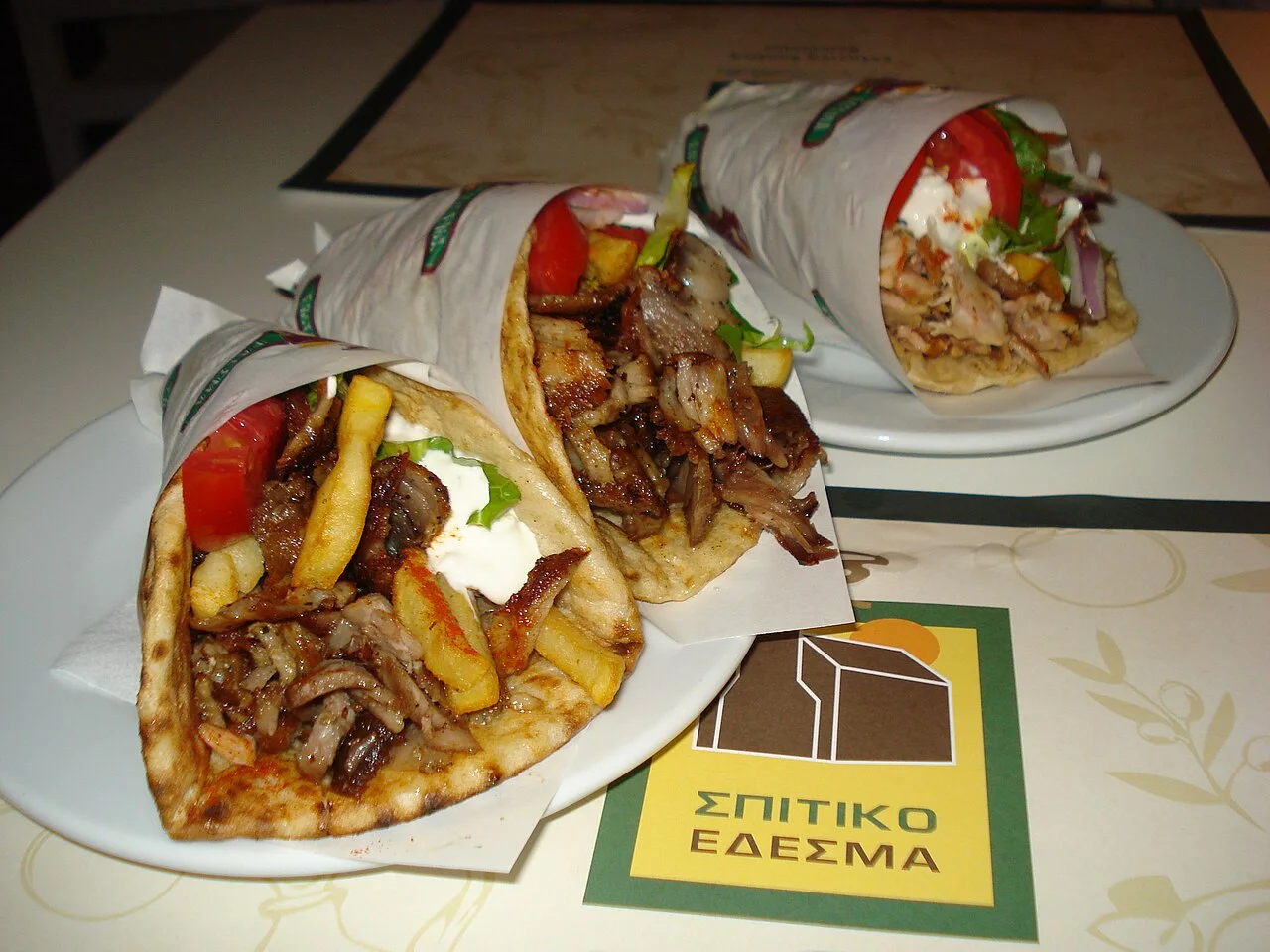
The first thing to understand about real Greek gyros: it is not minced meat. In Athens, the cone on the vertical rotisserie is built from whole slices of pork shoulder and belly, marinated in onion juice, red wine vinegar, oregano, and thyme, stacked and pressed onto the spit so the fat renders down through the layers as it turns. The vendor shaves off only the crisped outer edge, so every serving is browned meat, never grey. Gyros arrived in Greece in the 1920s with refugees from Asia Minor and by the 1970s had become the national street food — wrapped in griddled pita with tzatziki, tomato, raw onion, and chips. At home, a loaf tin and a hot oven substitute for the spit: stack the marinated slices, weight them, roast, then slice thin and crisp the shavings in a screaming-hot pan.
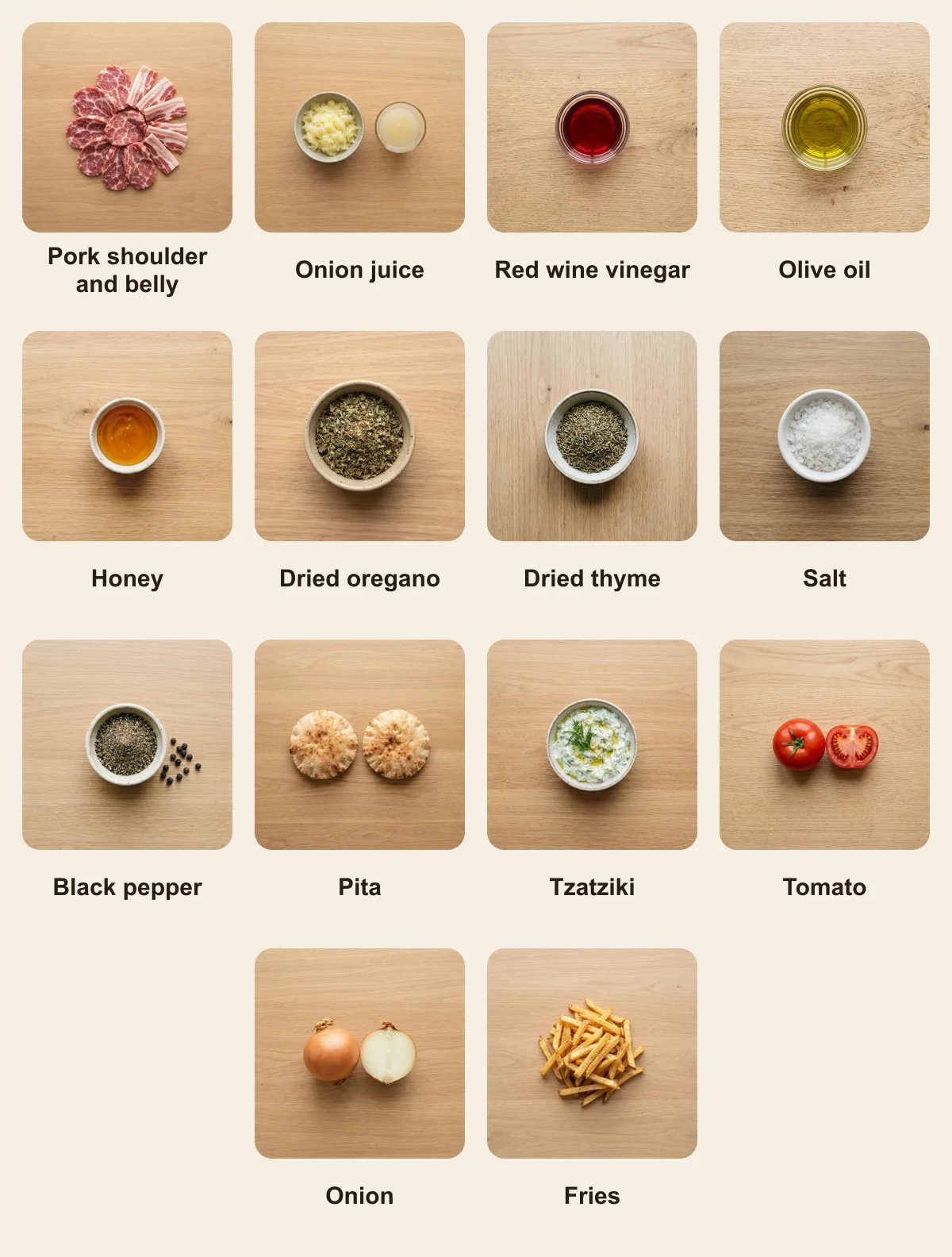
Ingredients
- 2kg Pork Shoulder & Belly (Sliced 5mm thick)
- 1 Onion (grated and squeezed for juice)
- 3 tbsp Red Wine Vinegar
- 2 tbsp Olive Oil
- 1 tbsp Honey
- 2 tsp Dried Oregano
- 1 tsp Dried Thyme
- 2 tsp Salt and 1 tsp Black Pepper
- Pita, Tzatziki, Tomato, Onion, and Fries for serving
How To Make Gyros
-
1
Slice the pork shoulder and belly about 5mm thick, then pound each slice a little thinner and more even with a meat mallet or the base of a heavy pan.
-
2
Whisk the squeezed onion juice with the red wine vinegar, olive oil, honey, oregano, thyme, salt and pepper. Rub the marinade into every slice, not just the ones on top of the pile, then cover and refrigerate overnight.
-
3
Push a large, flat base piece onto the spit first, then stack the rest of the slices in overlapping circles, pressing each layer down firmly so the stack stays tight. Cap the top with a layer of fat (the fattiest belly slices work) so it melts down through the meat as it roasts.
-
4
Roast the stack on a vertical spit, or press the slices tightly into a loaf tin and roast at 180C (350F) for about 1 hour. On the spit, shave off the browned outside layer as it cooks and let the inside keep roasting; with the loaf tin, slice the roasted loaf thin and crisp the slices in a hot, dry pan.
-
5
Pile the thin shavings onto a warm pita with tzatziki, sliced tomato and onion, tuck a few fries inside, and roll it up.
Note: Crispy bits are the best part. You must use fatty meat like belly mixed with shoulder.
 Authentic Gyros open-license visual reference from Wikimedia Commons: Pita giros.JPG.
By Antonio Fajardo i Lopez · CC BY-SA 3.0
Authentic Gyros open-license visual reference from Wikimedia Commons: Pita giros.JPG.
By Antonio Fajardo i Lopez · CC BY-SA 3.0
 Authentic Gyros open-license visual reference from Wikimedia Commons: P1000104-Pita Gyros + Wein.jpg.
By Manfred&Barbara Aulbach · CC BY-SA 3.0
Authentic Gyros open-license visual reference from Wikimedia Commons: P1000104-Pita Gyros + Wein.jpg.
By Manfred&Barbara Aulbach · CC BY-SA 3.0
 Authentic Gyros open-license visual reference from Wikimedia Commons: Lamb Gyros Sydney.jpg.
By insatiablemunch · CC BY 2.0
Authentic Gyros open-license visual reference from Wikimedia Commons: Lamb Gyros Sydney.jpg.
By insatiablemunch · CC BY 2.0
Go Deeper · the full story
About this recipe
Gyros is built from whole slices, not mince, which is the detail that separates it from most other kebabs on this site. The pork shoulder and belly go onto the spit as slices, not ground meat, and a vendor shaves off only the crisped outer edge, so what lands in the pita is browned meat rather than the grey interior underneath.
At home, a vertical spit isn't required: this recipe stacks the marinated 5mm slices in a loaf tin, roasts them at 180C (350F) for about an hour, then crisps the shaved slices in a hot, dry pan the way the rotisserie's outer layer crisps against the heat. The marinade - grated onion juice, red wine vinegar, olive oil, honey, oregano and thyme - goes onto every slice before it's stacked, not just the outside of the loaf.
Why this recipe works
Why This Recipe Works
- Slicing the pork 5mm thick before marinating means the onion juice and vinegar reach every layer of the stack, not just the surface.
- Roasting the pressed loaf at 180C (350F) for about an hour renders the fat between the slices slowly enough that they fuse without drying out the meat underneath.
- A final pass in a hot, dry pan crisps the shaved slices the same way the spinning rotisserie crisps its outer edge, instead of serving the meat straight out of the oven.
How to serve it
Serving Notes
Wrap the shaved meat in a lightly grilled pita with tzatziki, tomato, onion and fries tucked inside.
Crisp only as much meat as will be eaten right away - shavings lose their crunch fast once they sit.
The rendered fat pooling in the loaf tin is worth spooning back over the shavings before wrapping.
Common mistakes to avoid
Common Mistakes
- Using lean cuts instead of the shoulder-and-belly mix. Without enough fat rendering between the layers, the stack falls apart and dries out.
- Skipping the marinade on the inner slices. Only the outside gets flavor, and the center of the loaf tastes plain.
- Serving the meat straight from the oven without the pan-sear. It stays soft throughout instead of getting the crisped edge that defines gyros.
- Roasting well past about an hour at 180C (350F). The outer layers overcook before the center is done.
Frequently Asked Questions
Do I need a vertical rotisserie to make gyros at home?
No - stacking the marinated slices in a loaf tin and roasting at 180C (350F) gets close, and a hot dry pan at the end mimics the crisped edge the spit produces.
Can I use only pork shoulder, no belly?
The belly is there for fat; shoulder alone roasts drier, so keep some belly in the mix if the stack needs to hold together and render properly.
How is gyros different from souvlaki?
Gyros is whole slices stacked and roasted, then shaved; souvlaki is cubes grilled on a skewer. Same country, two different cuts and methods.
Can I make the loaf ahead of time?
Roast it as directed, then reheat and crisp the shavings in the hot pan before serving instead of pan-searing the whole loaf twice.
Sources and further reading
- Gyros — Wikipedia
- History of Gyro, an Ancient Greek Street Food — Diane Kochilas
Keep Cooking
Build The Full Plate
Technique And Support Guides
Gyros Vs Shawarma Vs Donair
Compare gyros, shawarma, and donair by meat style, bread, sauce, garnish, and wrap structure so you know which page to cook next.
Lavash Vs Pita Vs Durum
Compare lavash, pita, and durum for kebab wraps so you know which bread to use for gyros, shawarma, Adana wraps, and sliced-meat rolls.
Best Sauce For Kebab
Find the best sauce for kebab, gyros, shawarma, and cevapi with a practical guide to yogurt sauces, garlic sauces, tahini, and chili styles.
Best Yogurt Sauce For Gyro And Kebab
Compare tzatziki-style, Turkish-style, and garlic-yogurt sauces for kebab wraps and plates so you know which cooling sauce fits each meat and bread style.
Explore Related Hubs
Gyros, Shawarma, and Donair Guide
Compare gyros, shawarma, donair, souvlaki, and tawook with bread pairings, sauce choices, wrap assembly, and serving ideas.
Best Bread for Kebab, Shawarma, and Gyros
Learn which bread to use for kebab wraps, gyros, shawarma, doner, and grilled meat plates, including lavash, pita, pide, somun, lepinja, and durum.
Related Recipes
Souvlaki
Classic Greek skewers. Traditionally Pork, marinated in lemon and oregano.
Halifax Donair
Canada's spiced beef masterpiece with sweet condensed milk sauce.
Cypriot Sheftalia
Crepinette-style sausages. Spiced pork mince wrapped in caul fat.
Beef Shawarma
The Levantine ancestor of Gyros. Distinct Arab spices (cardamom, cinnamon) and Tahini sauce.