Shish kebab is the most honest test in grilling: naked cubes of meat, a fierce fire, and nowhere for a bad cut to hide. There is no sauce, no bread wrap, no low-and-slow rendering window to rescue you. The meat you buy at the counter decides 80 percent of the result before you touch a marinade or a skewer.
Meat guide
Best Cut For Shish Kebab
Choose the best cut for shish kebab with a practical guide to lamb, beef, and chicken options, cube size, fat balance, and what actually stays juicy on skewers.
By Ali Ocak
Updated 2026-09-09
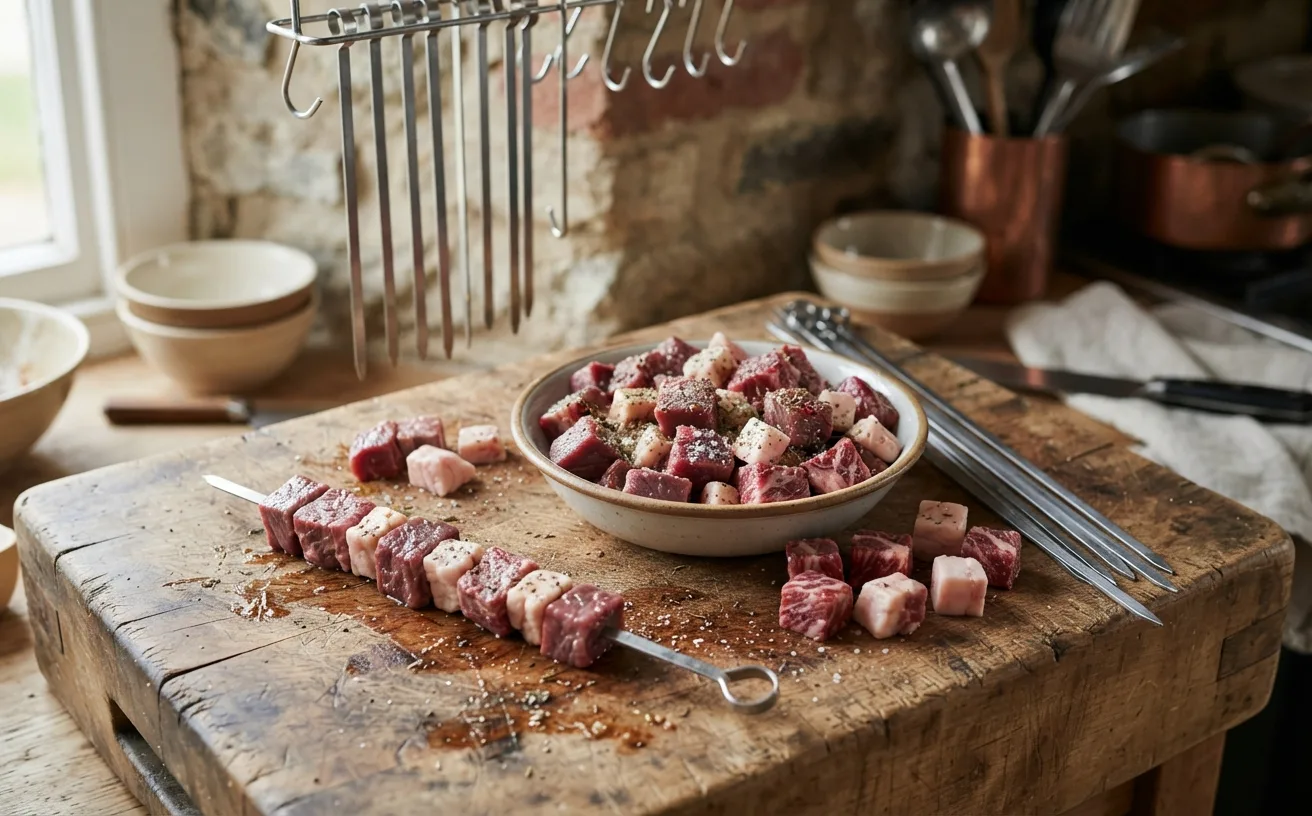
The core problem is time. A cube of meat over live coals is done in 8 to 12 minutes, and the fire is running at 250 to 300 degrees Celsius at grate level. Collagen — the connective tissue that makes shank and stew meat delicious in a braise — only dissolves into gelatin after hours held above roughly 70 degrees Celsius. A skewer never gives it those hours. So every cut in the butcher case sorts into two piles: cuts that are already tender and carry fat marbling, which belong on a skewer, and cuts that need slow cooking to become tender, which will fight you and win.
This guide names the right cut for lamb, beef, chicken, and pork, gives you the numbers that make each one work, and — just as important — tells you when shish is simply the wrong format for the meat in your hands, and a minced kebab like adana or cevapi is the smarter move.
Source-backed support
Sources Worth Watching
Reference material this guide draws on — each link opens with its original publisher.
Beef cut reference
Tasting Table - The Absolute Best Cuts Of Beef For Shish Kebabs
https://www.tastingtable.com/924615/the-absolute-best-cuts-of-beef-for-shish-kebabs/
Cut selection reference
Food Republic - Use This Cut Of Meat For Mouthwatering Beef Kebabs
https://www.foodrepublic.com/2074772/cut-of-meat-to-use-beef-kebabs/
Practical skewer reference
The Mediterranean Dish - Shish Kabob
https://www.themediterraneandish.com/beef-shish-kabob-recipe/
The one rule that sorts every cut
Ask a single question of any cut: would I braise this? If the answer is yes — shank, neck, brisket, generic packaged stew meat, beef round sold as ready-cut kebab cubes — it does not belong on a skewer. Those cuts are dense with connective tissue, and on a fast fire that tissue does the opposite of melting: it contracts. Collagen starts shrinking hard around 60 to 65 degrees Celsius, wringing the muscle like a wet towel. The cube tightens, squeezes out its juice, and lands on your plate both tough and dry. No marinade fixes this, because marinades work on the outer 2 to 3 millimetres and connective tissue runs all the way through.
What you want instead is intramuscular fat — marbling — with only fine, soft connective tissue. Fat begins rendering around 40 to 50 degrees Celsius, well inside a skewer's short cooking window, and it bastes the cube from within while the surface browns. This is why a fattier, cheaper cut like lamb shoulder routinely beats a leaner, more expensive one like leg on the grill: the shoulder carries its own insurance.
There is one honest exception to the braise test: shoulder cuts. Lamb shoulder and pork collar technically contain more connective tissue than the prime cuts, but their fat content — roughly 15 to 20 percent — is high enough to cover for it in a fast cook, and their flavor is deeper than anything from the loin. Shoulder is the family of cuts where cheap and correct point the same direction.
Lamb: shoulder for most people, leg for the confident
Boneless lamb shoulder is the best all-around shish kebab cut, full stop. At 15 to 20 percent fat it survives strong heat, forgives a minute of inattention, and tastes more like lamb than any other affordable cut. Turkish shish culture leans on exactly this logic, and cag kebab — lamb layered with fat and roasted on a horizontal spit — is the same principle taken to its ceiling. Trim only the thick external fat cap down to about 5 millimetres and the hard gristle seams; leave every streak of internal fat where it is.
Leg of lamb is the precision option. It runs lean — around 7 to 9 percent fat once trimmed — so it delivers a cleaner, more elegant bite, but it punishes overcooking immediately. Choose leg when you control your fire well and can pull the cubes at 54 to 57 degrees Celsius internal, a proper medium-rare to medium. Past about 63 degrees Celsius, leg turns woolly, and there is no fat to hide it. If guests will demand well-done meat, buy shoulder instead; it holds up to 70 degrees where leg has already died.
Skip lamb loin and rack for skewers. They are tender, but at three to four times the price of shoulder they buy you nothing a skewer can use — their advantage is texture in large intact pieces, which cubing destroys. And skip pre-cut lamb kebab meat unless the butcher can tell you which primal it came from; anonymous cubes are usually the braising trim.
Beef: sirloin is the default, chuck eye is the value play
Top sirloin is the reference beef cut for shish kebab. It sits in the sweet spot: tender enough for a 10-minute cook, marbled enough to stay juicy, and cheap enough to cube without wincing. Cut it 2.5 to 3 centimetres, grill hot, and pull at 54 to 57 degrees Celsius for medium-rare. Sirloin cap with its fat layer left on is the upgrade — thread it so the fat faces outward and it self-bastes.
Chuck eye is the butcher's secret for beef skewers. It is the continuation of the ribeye muscle into the shoulder, with similar marbling at roughly half the price. It carries slightly more connective tissue than sirloin, so cut it a touch smaller — 2.5 centimetres, not 3 — and take it to about 57 to 60 degrees Celsius, where its fat has properly softened. Ribeye itself works luxuriously if the budget allows; tenderloin is the trap. Tenderloin is tender but nearly fat-free, and on a fierce fire it goes from silken to sawdust in the space of two minutes. If you must use it, cube large, oil heavily, and stand there.
Avoid round, flank cubes, and anything labeled stew or braising beef. Round is both lean and tight-grained — the worst of both failure modes — and stew meat is stew meat no matter what the label suggests about kebabs.
Chicken: thigh wins, and it is not close
Boneless, skinless chicken thigh is the correct chicken for skewers in almost every situation. Thigh carries roughly twice the fat of breast and enough soft collagen that it actually improves with heat: it is safe at 74 degrees Celsius but eats better at 80 to 85, where that collagen has slackened into juiciness. That wide window — a good 10 degrees of forgiveness — is exactly what an uneven home fire needs. Every serious tawook tradition and most Greek chicken souvlaki runs on thigh for this reason.
Breast is the high-wire act. It has no internal fat, so it is genuinely done at 63 to 65 degrees Celsius and visibly dry by 72 — a window of only a few minutes over real coals. If breast is non-negotiable, stack every advantage: a full-fat yogurt marinade for at least 4 hours (yogurt's mild lactic acid, around pH 4.4, protects the surface where lemon would attack it), cubes no larger than 2.5 centimetres, cubes pressed snugly together on the skewer so they shield each other, and a pull the moment the centre loses its blush.
Do not mix thigh and breast on one skewer. Their finishing temperatures are 15 degrees apart, so one of them is always wrong. If you want variety, run separate skewers and pull them separately.
Pork: collar is the souvlaki cut
Greek souvlaki is historically a pork dish, and the cut that built it is the shoulder — specifically the collar, the neck end sometimes sold as coppa or pork neck. Collar runs 10 to 15 percent fat woven through the muscle in fine seams, which is why a street souvlaki stays juicy through the well-done cooking that pork skewers traditionally get. Cube it at 2 to 2.5 centimetres — souvlaki cubes run smaller than lamb or beef shish — and cook to 63 to 68 degrees Celsius; the fat covers the top of that range comfortably.
Pork loin and tenderloin are the supermarket defaults and the usual reason home souvlaki disappoints. Both are very lean, and loin in particular dries noticeably past 63 degrees Celsius. They are acceptable only with the breast-style rescue package: short marinating with plenty of oil, modest cubes, and a strict early pull. If your market cuts belly thin, a few belly cubes threaded between loin pieces is an old and effective cheat — the belly fat renders onto its neighbors.
The same collar logic scales up: it is the cut behind good pork gyros and doner stacks, where sliced shoulder and fat are layered on a vertical spit for exactly the self-basting effect a skewer gets from marbling.
Cube size and knife work decide the second half
The right cut still fails if the cubes are wrong. The target for lamb and beef is 2.5 to 3 centimetres — about the width of two fingers — and, far more important, uniform within about half a centimetre. A skewer cooks as one piece; a 2-centimetre cube next to a 4-centimetre cube means the small one is leather before the big one is safe. Cut with a ruler's discipline the first few times and your hands learn it.
The size itself is a physics trade. Below about 2 centimetres, the surface-to-volume ratio is so high that the cube finishes cooking through before the outside has browned — you get grey, steamed meat. Above about 4 centimetres, the outside chars before the centre moves — the classic burnt-raw skewer. The 2.5-to-3 band is where a 250-plus degree fire browns the surface in roughly the same 8 to 12 minutes the centre needs.
Two details of knife work matter as much as size. First, strip silverskin — the pearly membrane on leg and sirloin — completely; it contracts on heat and buckles the cube into a chewy comma. Second, cut across the grain wherever the muscle direction is visible, so each bite shears short fibres instead of long ones. Thread the cubes on flat or square-section skewers with faces touching for juicy results, or with small gaps for maximum crust; round skewers let cubes spin when you turn them, which is why one side always burns.
When shish is the wrong answer entirely
Sometimes the smartest cut decision is refusing the format. If what you can get is lean, tough, or already trimmed into anonymous scraps, do not force it onto a skewer as cubes — grind it. This is precisely the problem the great minced kebabs solved centuries ago: adana takes fatty lamb chopped fine with around 20 to 25 percent tail fat or fat trim, koobideh grinds lamb or beef with grated onion, cevapi blends beef and lamb into short juicy fingers. Grinding destroys the connective tissue that would ruin a cube and lets you dial fat to exactly the level the fire wants.
The decision logic is simple. Whole tender cut with marbling: shish. Tough or sinewy cut: braise it, or grind it into a minced kebab. Very lean cut you cannot exchange: grind it and add 15 to 20 percent fat back in, or slice it thin for a marinated stack like doner or gyros, where shaving crisped layers off the outside hides what cubing would expose.
One warning if you take the grinding route: minced kebabs are seasoned and kneaded, not marinated. The salt-kneading that makes adana and cevapi bind to the skewer is its own craft with its own rules — treat it as a different dish, not shish with extra steps.
The mistakes and the mechanisms behind them
Buying pre-cut kebab meat. Those cubes are usually leg trim and braising scraps — the pieces left after the butcher sold the good primals. You inherit random muscles, random grain directions, and random connective tissue, so the same skewer contains cubes that are perfect and cubes that are inedible. Buy a named cut and cube it yourself; it costs five minutes.
Trimming off all the fat. Home cooks trim marbled shoulder down to lean nuggets and then wonder why it grilled dry. Internal fat is the mechanism that keeps a fast-cooked cube juicy: it renders from about 40 to 50 degrees Celsius and lubricates the muscle fibres as they tighten. Trim hard external fat to a 5-millimetre cap and gristle completely, and stop there.
Crowding a cool fire. Maillard browning needs a surface well above 140 degrees Celsius, and a crowded grate over modest coals never gets there — the meat sweats, the juices pool and steam, and the cubes boil grey in their own moisture. Fewer skewers, hotter fire, and space between them; the surface should hiss on contact, not sigh.
Cooking every protein to the same doneness. The numbers are not interchangeable: lamb and beef peak at 54 to 60 degrees Celsius, pork collar at 63 to 68, chicken thigh at 80 to 85, chicken breast at 63 to 65. Run one protein per skewer, use a thermometer until your thumb learns the feel, and rest the finished skewers 3 to 5 minutes so the juices redistribute instead of flooding the plate at the first bite.
Cook These Next
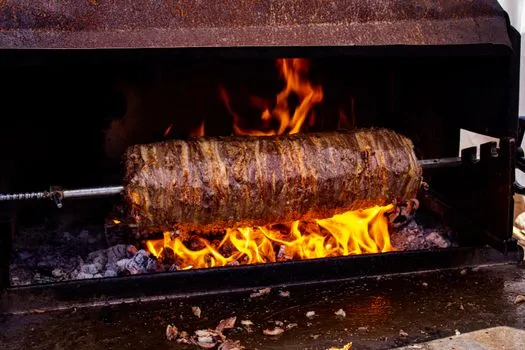
Lamb / 12h
Cag Kebabi
The horizontal ancestor of Doner. Marinated lamb slices on a wood fire.
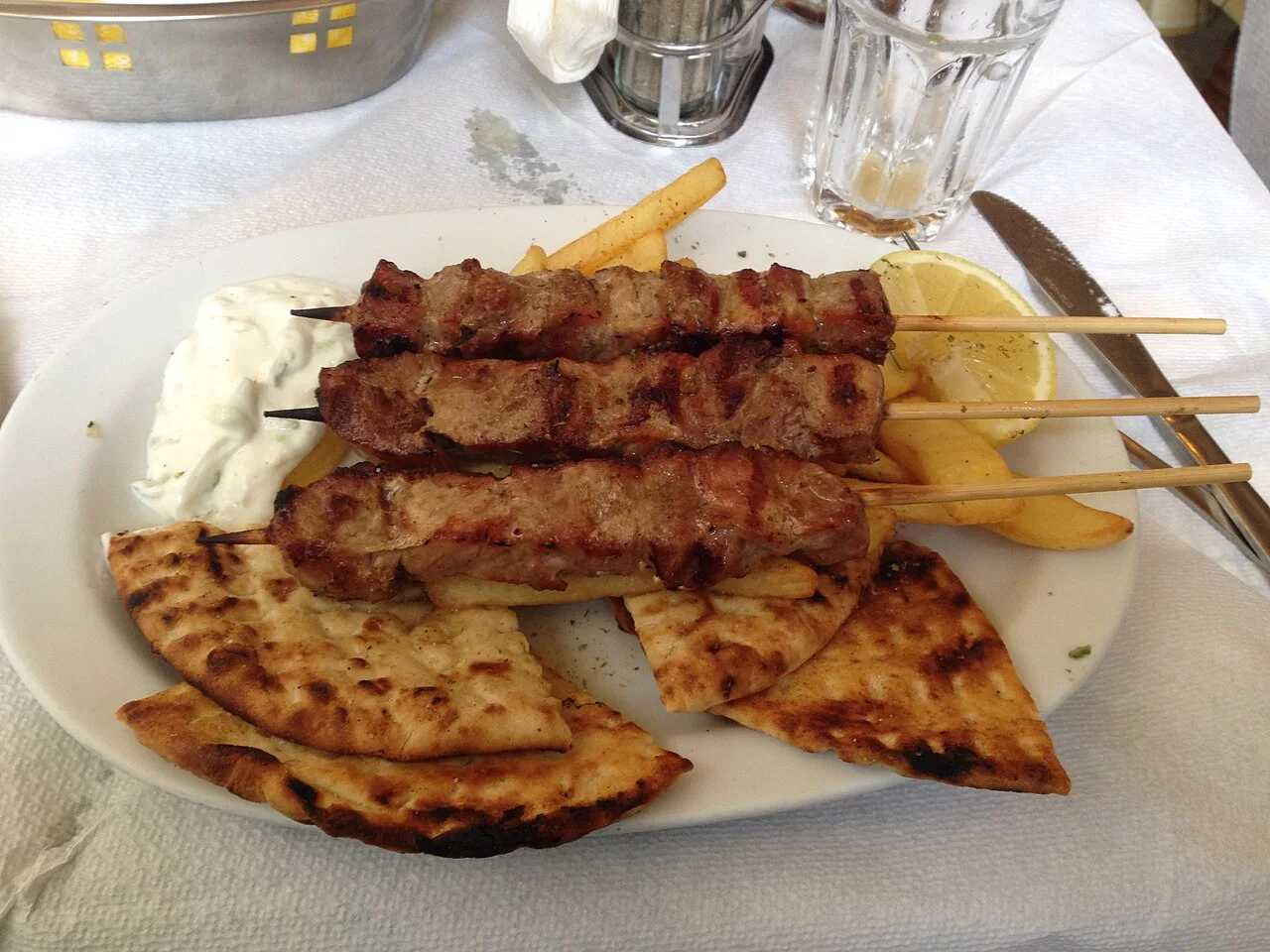
Pork / 2h
Souvlaki
Classic Greek skewers. Traditionally Pork, marinated in lemon and oregano.
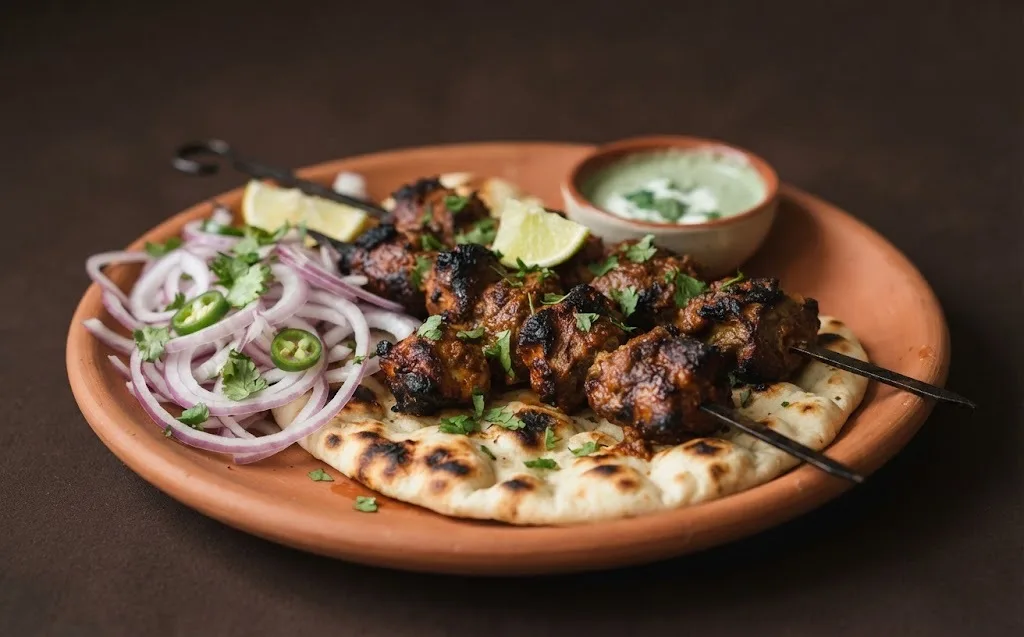 AI illustration
Lamb / 6h
Boti Kebab
Marinated chunks of spiced meat. The chunk version of the minced Seekh.
 AI illustration
Chicken / 6h
Shish Tawook
Levantine grilled chicken skewers. White marinade of yogurt, lemon, and garlic.
Related Collections
Turkish Kebab Guides
A focused collection for Turkish kebab styles including Adana, Urfa, Cag, Iskender, and supporting bread pages.
Gyros, Shawarma, and Donair Guide
Compare gyros, shawarma, donair, souvlaki, and tawook with bread pairings, sauce choices, wrap assembly, and serving ideas.
Indian Kebab Recipes
A collection of Indian kebab styles, from seekh and galouti to boti, reshmi, and green-marinated skewers.
More Guides
Technique guide
How To Marinate Kebab Properly
Learn how to marinate kebab without making the meat mushy, watery, or flat, with clear guidance for chicken, lamb, beef, and yogurt-based marinades.
Heat guide
What Temperature To Cook Kebab
Get the right cooking temperature for kebab on charcoal, gas, grill pan, and oven so minced and chunked kebabs brown properly without drying out.
Serving guide
Best Onion Salad For Kebab
Build the right onion-and-sumac side for kebab, Adana, Urfa, doner, and cevapi with a guide to slicing, seasoning, resting, and balancing sharpness.
Technique guide
How To Shape Minced Kebab On Skewers
Shape Adana-style, koobideh, and seekh kebabs correctly with better hand pressure, skewer coverage, thumb patterning, and grill-ready thickness.
Sauce guide
Best Yogurt Sauce For Gyro And Kebab
Compare tzatziki-style, Turkish-style, and garlic-yogurt sauces for kebab wraps and plates so you know which cooling sauce fits each meat and bread style.
Terminology guide
Kebab Vs Kabob Vs Kabab
Understand the difference between kebab, kabob, and kabab spellings, what people usually mean by each, and which dishes fall under the broader kebab family.