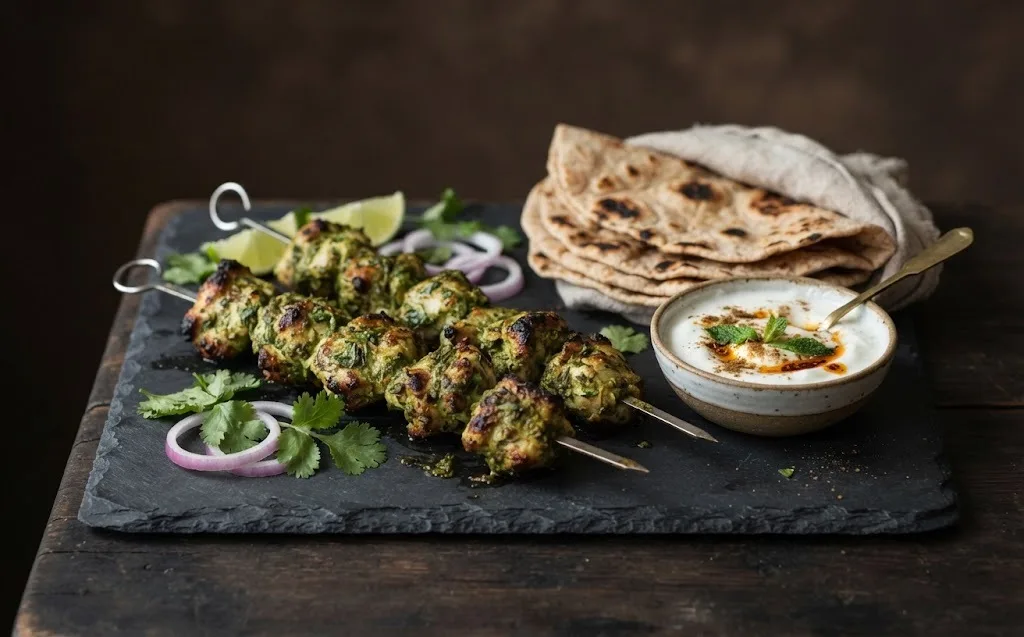
Hariyali means "greenery", and this kebab wears the name like a uniform: chicken pieces cloaked in a vivid emerald paste of fresh mint, coriander and spinach, blitzed with green chillies, ginger and garlic, bound in hung yogurt and charred until the edges catch. It is the tandoori repertoire's freshest voice — where most kebabs build flavour from dried spices and smoke, hariyali gets its punch from raw herbs, so it tastes bright and almost salad-like against the char. The spinach is a quiet piece of kitchen craft: it contributes little flavour but bulks up the chlorophyll, keeping the coating green through cooking instead of fading to khaki. Blanch it first, squeeze it dry, and your kebabs come off the grill as green as they went on, with mint and coriander doing all the talking.
Also known as: Green Kebab, Pahadi Kebab, Mint Coriander Chicken
Reference video
Reference video, embedded from YouTube: filmed by Hash Cooking, not by How To Make A Kebab, and not owned, relicensed or distributed by this site.
View Original Video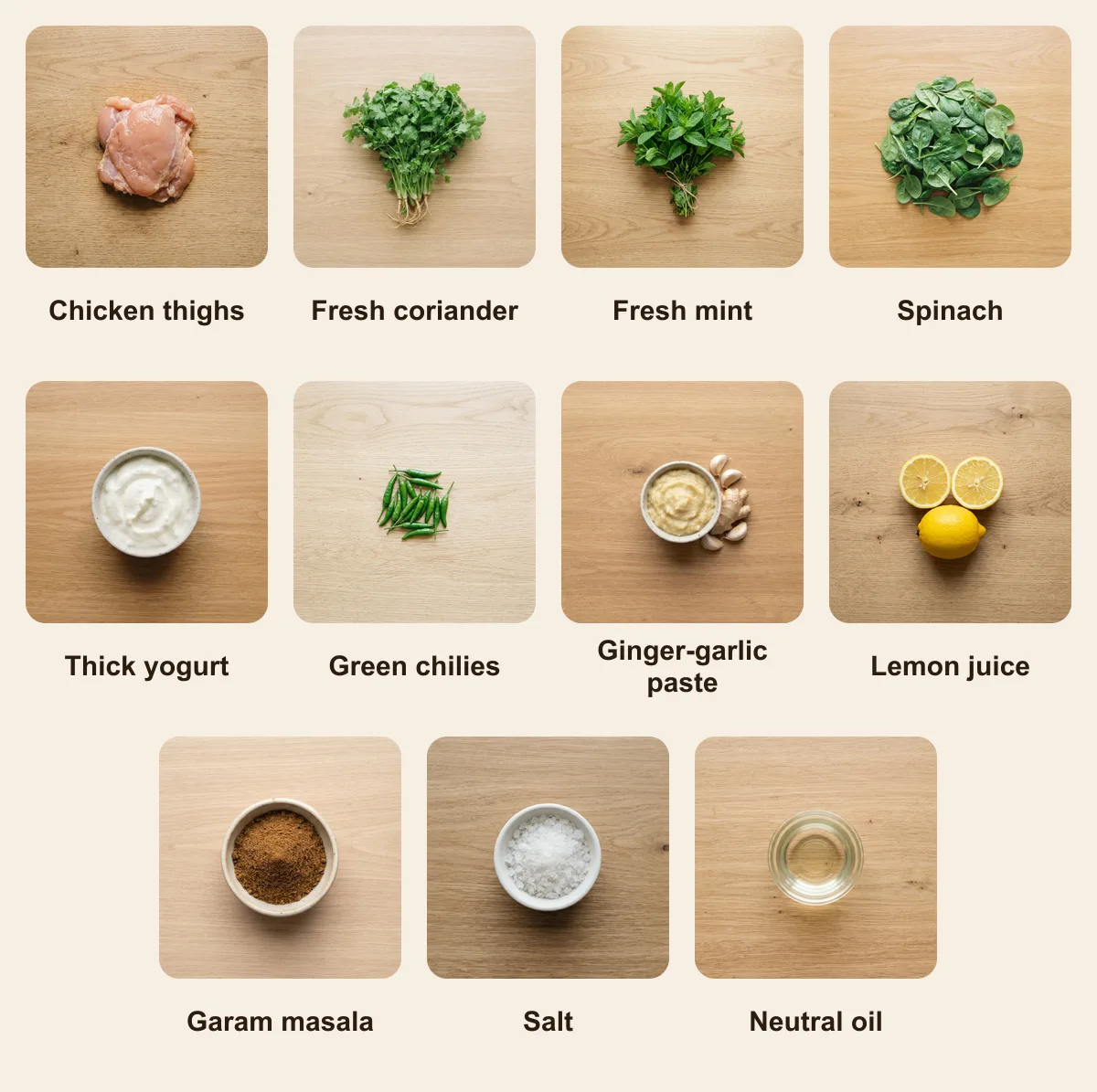
Ingredients
- 1kg Chicken Thighs
- 1 cup Fresh Coriander
- 1/2 cup Fresh Mint
- 1/2 cup Spinach (Blanched - for deep green color)
- 1/2 cup Thick Yogurt
- 3 Green Chilies
- 1 tbsp Ginger-Garlic Paste
- 1 tbsp Lemon Juice
- 1 tsp Garam Masala
- Salt to taste, and 2 tbsp neutral oil for the marinade
How To Make Haryali Kebab
-
1
Blanch spinach briefly, squeeze it dry, then blend it with coriander, mint, green chilies, ginger-garlic paste, lemon juice, and a spoon of yogurt.
-
2
Mix the green paste with thick yogurt, garam masala, salt, and a little oil until smooth.
-
3
Cut chicken thighs into even pieces, coat thoroughly, and massage the marinade into the meat so the herbs cling to every surface.
-
4
Cover and refrigerate for at least 3 hours, or overnight for stronger color and flavor.
-
5
Thread the chicken onto skewers without packing the pieces too tightly, leaving a little space for heat to circulate.
-
6
Cook over charcoal or under a hot broiler, turning often, until the outside is lightly charred and the center reaches 74°C (165°F) while staying juicy.
Note: Blanching the spinach preserves the bright green color during cooking.
Go Deeper · the full story
About this recipe
Hariyali sits at the milder end of the tandoori spectrum, next to reshmi and malai kebabs, and it earns that spot honestly: no red chilli powder, no smoky char masala, just herbs doing the coloring and the flavoring at once. Order it at a Punjabi dhaba and it comes as a starter, meant to be eaten hot off the skewer, not folded into a wrap the way seekh kebab often is.
This version blends the spinach, coriander, mint, green chillies, ginger-garlic paste and lemon juice into one paste before it ever meets the chicken, so every thigh gets the same concentration of herbs instead of a patchy rub. The paste goes into thick yogurt and a little neutral oil, and the chicken rests in it for at least three hours - overnight if the color and flavor matter more than getting dinner on the table fast.
Why this recipe works
Why This Recipe Works
- A rest of at least three hours, longer overnight, gives the ginger-garlic paste and lemon juice time to work into the chicken thighs instead of sitting on the surface.
- Cutting the chicken into even pieces and leaving space between them on the skewer lets the charcoal or broiler heat reach every side, so the pieces char instead of steaming against each other.
- Blending the ginger-garlic paste and lemon juice into the green paste before marinating spreads the acid evenly across the meat instead of leaving it pooled wherever a raw clove happens to land.
How to serve it
Serving Notes
Serve straight off the skewer with extra lemon wedges alongside the tablespoon already worked into the marinade.
A cooling yogurt-based side balances the three green chillies; warm flatbread or plain rice rounds it out as a full plate instead of a starter alone.
Best eaten hot - the char and the bright green color both fade fast once the kebabs sit.
Common mistakes to avoid
Common Mistakes
- Skipping the blanch-and-squeeze step on the spinach. It waters down the marinade and lets the color fade to khaki instead of staying deep green.
- Packing the pieces tight on the skewer. The touching sides block airflow and stay pale while the exposed sides char.
- Cutting the rest short of three hours. The herbs stay on the surface and the center tastes bland once it's cooked through.
- Grilling over low heat instead of hot charcoal or a hot broiler. The outside never catches while the center overcooks and dries out.
Frequently Asked Questions
Can I use chicken breast instead of thighs?
Thighs are more forgiving over direct charcoal or a hot broiler; breast dries out before the outside gets the char this recipe is built around.
Is hariyali kebab spicy?
It's built for heat from three fresh green chillies instead of dried chilli powder, so it reads as bright and herbal rather than fiery; cut the chillies back if that's still too much.
What can I use instead of thick yogurt?
Strained (hung) Greek yogurt is the closest match - it keeps the herb paste thick enough to cling to the chicken instead of running off.
How is this different from a red tandoori kebab?
Same tandoori method, different color source: this one skips the dried chilli and gets its color and punch from raw mint, coriander and spinach instead.
Sources and further reading
- Seekh kebab — Wikipedia
- Haryali Seekh Kebab Recipe — Archana's Kitchen
Keep Cooking
Build The Full Plate
Technique And Support Guides
Best Meat For Kebab
Choose the best meat for kebab by fat ratio, cut, grind, and cooking style, whether it ends up on a skewer, in a wrap, or on a plate.
How To Keep Kebab On The Skewer
Learn how to keep kebab on the skewer with the right fat level, onion handling, kneading, skewer shape, and grill timing.
Metal Vs Wooden Skewers For Kebab
Understand when to use metal or wooden skewers for kebab, plus why flat skewers matter for minced kebab and how oven use changes the choice.
Best Cut For Shish Kebab
Choose the best cut for shish kebab with a practical guide to lamb, beef, and chicken options, cube size, fat balance, and what actually stays juicy on skewers.
Related Recipes
Galouti Kebab
The "Melt-in-Mouth" kebab of Lucknow. Finely minced meat with papaya tenderizer.
Seekh Kebab
Spiced minced meat cylinders cooked in a Tandoor.
Chapli Kebab
Giant, flat, fried beef patties from Peshawar. Uniquely crunchy with pomegranate seeds.
Bihari Kebab
Thin beef strips marinated in yogurt and papaya, incredibly tender.