Reshmi (Malai) Kebab is a classic India / Pakistan dish that rewards attention to texture, heat, and serving balance.
Use this guide to follow the ingredients, method, and serving pattern that suit Reshmi (Malai) Kebab best at home.
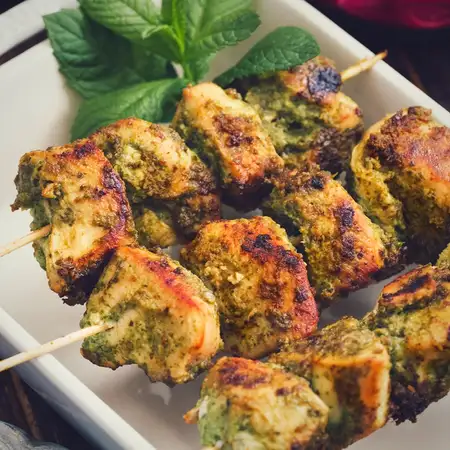
Reshmi means "silken" in Urdu, and everything about this kebab is engineered toward that single word. A Mughlai invention polished in the kitchens of Delhi and Kolkata, it takes chicken — always chicken, always pale — and wraps it in a white marinade of thick cream, cashew paste, grated cheese, egg white and green cardamom. No chilli powder, no turmeric, nothing that would stain it: the reshmi (or malai, "cream") kebab is deliberately mild, aromatic rather than hot, which makes it the dish tandoori chefs use to win over children and spice-shy guests. The cashews and cheese are not garnish; they are insulation. Their fat coats every fibre of the breast meat so that even in the brutal heat of a tandoor or broiler, the chicken emerges ivory, wobbling-tender and rich.
Also known as: Reshmi Kabob, Malai Tikka, Creamy Chicken Kebab, Mild Chicken Recipe, Kid Friendly Kebab
The strip drifts on its own — hover any dia to pause and zoom.


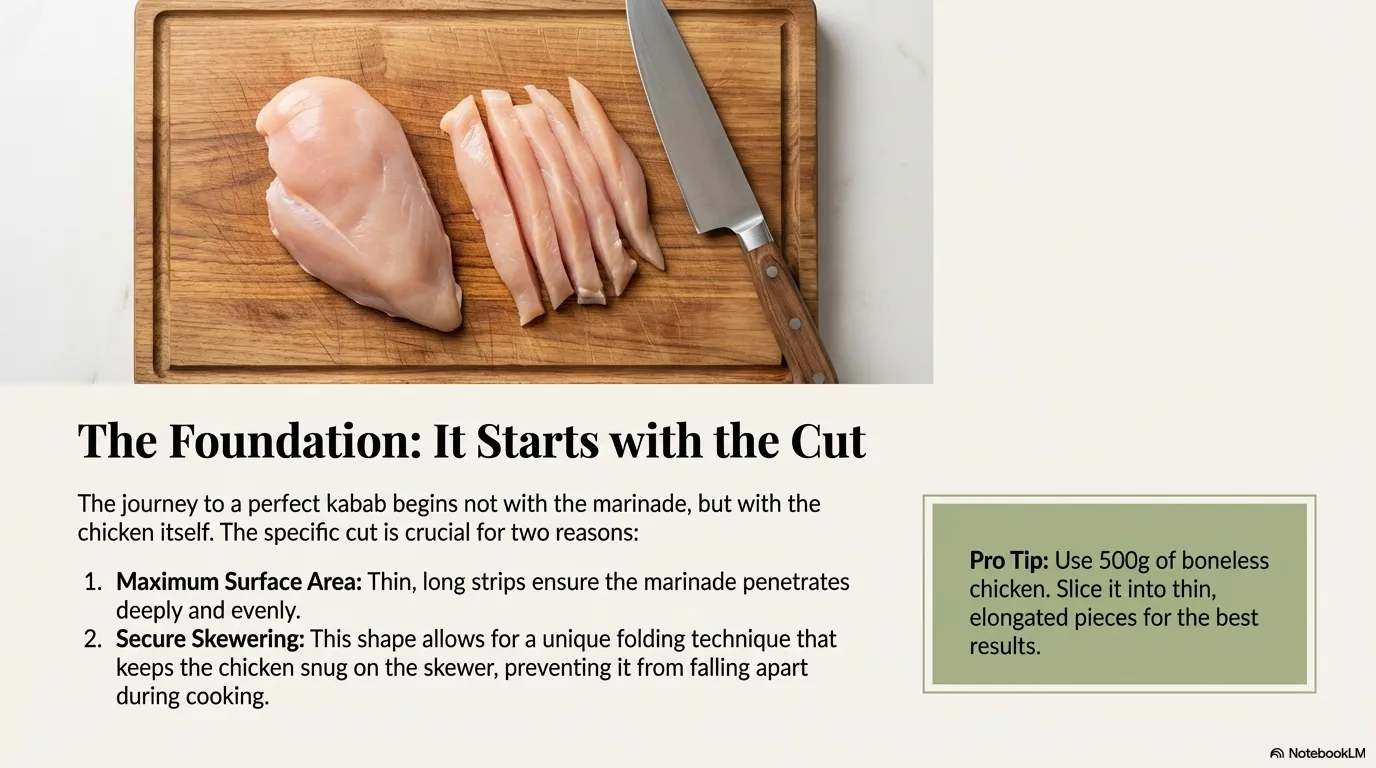
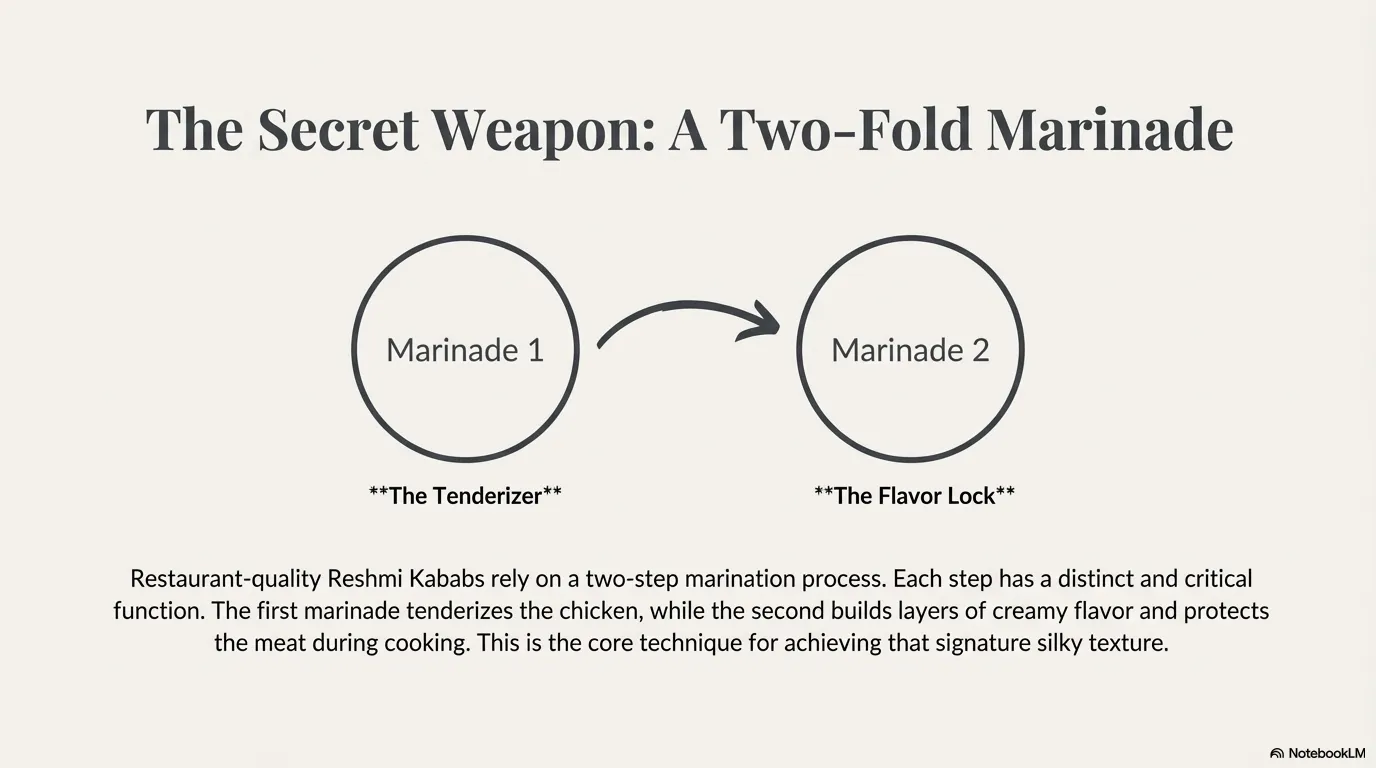


Restaurant-style reshmi kabab: chicken marinated in cream, cheese, cashew paste, and white pepper, skewered and grilled until silky with light charring.
Embedded from YouTube for reference. This video is not owned, relicensed, or distributed by How To Make A Kebab.
View Original VideoPASTE: Grind cashews and green chilies.
MARINADE: Mix cream, cheese, nut paste, ginger-garlic, white pepper. NO RED CHILI or TURMERIC.
COAT: Cover chicken. Marinate 4h.
GRILL: Cook gently. It burns easily due to cream/nuts.
BASTE: Brush with butter/cream mix.
Chef note: The color must remain white/creamy. Do not brown it too much.
Reshmi (Malai) Kebab is a classic India / Pakistan dish that rewards attention to texture, heat, and serving balance.
Use this guide to follow the ingredients, method, and serving pattern that suit Reshmi (Malai) Kebab best at home.
Serve Reshmi (Malai) Kebab with the breads, garnishes, or grilled sides that match its regional style.
Keep the plate simple enough for Reshmi (Malai) Kebab to stay central, then add breads, vegetables, or sauces that support the main flavors.
If you are building a fuller meal, pair it with one bread or side from the same regional family instead of mixing too many competing elements.
Focus on the texture, cooking method, and serving balance first, because those details define whether Reshmi (Malai) Kebab feels convincing.
You can prepare parts of Reshmi (Malai) Kebab ahead of time, then finish cooking and serving closer to the meal for the best texture. The current prep window is about 4h.
Serve Reshmi (Malai) Kebab with the breads, garnishes, or grilled sides that match its regional style.
Yes, but use high heat and aim for browning, not gentle baking. A broiler, hot tray, or cast iron pan helps create the edge color that a kebab needs to taste finished.
Marinate long enough for seasoning to cling and penetrate, but do not let acidic or tenderizing ingredients destroy the texture. Thin pieces need less time than thick cubes or larger cuts.
Dryness usually comes from lean meat, pieces cut too small, low heat that cooks too slowly, or overcooking after the surface has already browned. Use the right cut and pull the kebab before it tightens completely.
Choose the best meat for kebab, kabob, and kabab based on fat ratio, cut, grind, and cooking style for skewers, wraps, and plates.
Learn how to keep kebab on the skewer with the right fat level, onion handling, kneading, skewer shape, and grill timing.
Understand when to use metal or wooden skewers for kebab, plus why flat skewers matter for minced kebab and how oven use changes the choice.
Choose the best cut for shish kebab with a practical guide to lamb, beef, and chicken options, cube size, fat balance, and what actually stays juicy on skewers.
The street king. Marinated chicken stack roast, served in puffy bread. This version focuses on the Turkey style, with practical home-cooking guidance for texture, seasoning, and serving. Key ingredients include 1kg Chicken Thighs (Boneless, Skinless), 1 Onion (Grated), 2 tbsp Tomato Paste, supported by the technique notes on the page. The method starts with mARINADE: Mix pastes, yogurt, onion, garlic, spices. Coat chicken thoroughly.
Classic Persian saffron chicken. Golden, citrusy, and tender. This version focuses on the Iran style, with practical home-cooking guidance for texture, seasoning, and serving. Key ingredients include 1kg Chicken (Poussin/Cornish Hen bone-in pieces OR Breast chunks), 1 cup Greek Yogurt, 2 Onions (Sliced), supported by the technique notes on the page. The method starts with bLOOM SAFFRON: Grind saffron threads with a pinch of sugar, dissolve in hot water.
Green Chicken Kebab. Marinated in fresh mint, coriander, and spinach. This version focuses on the Punjab style, with practical home-cooking guidance for texture, seasoning, and serving. Key ingredients include 1kg Chicken Thighs, 1 cup Fresh Coriander, 1/2 cup Fresh Mint, supported by the technique notes on the page. The method starts with gREEN PASTE: Blanch spinach briefly, squeeze it dry, then blend it with coriander, mint, green chilies, ginger-garlic paste, lemon juice, and a spoon of yogurt.
Garlic-lovers dream. Stacked chicken marinated in yogurt and lemon, served with Toum. This version focuses on the Lebanon style, with practical home-cooking guidance for texture, seasoning, and serving. Key ingredients include 1kg Chicken Thighs (Boneless), Marinade: Yogurt, Vinegar, Lemon, Cardamom, Garlic, Sauce: Toum (Garlic Emulsion), supported by the technique notes on the page. The method starts with mARINADE: Yogurt base with heavy garlic and cardamom. Marinate overnight.