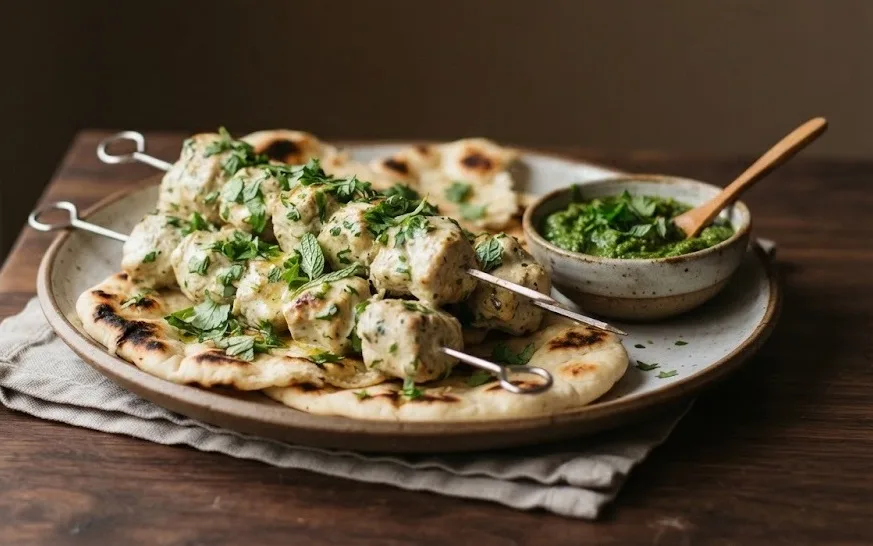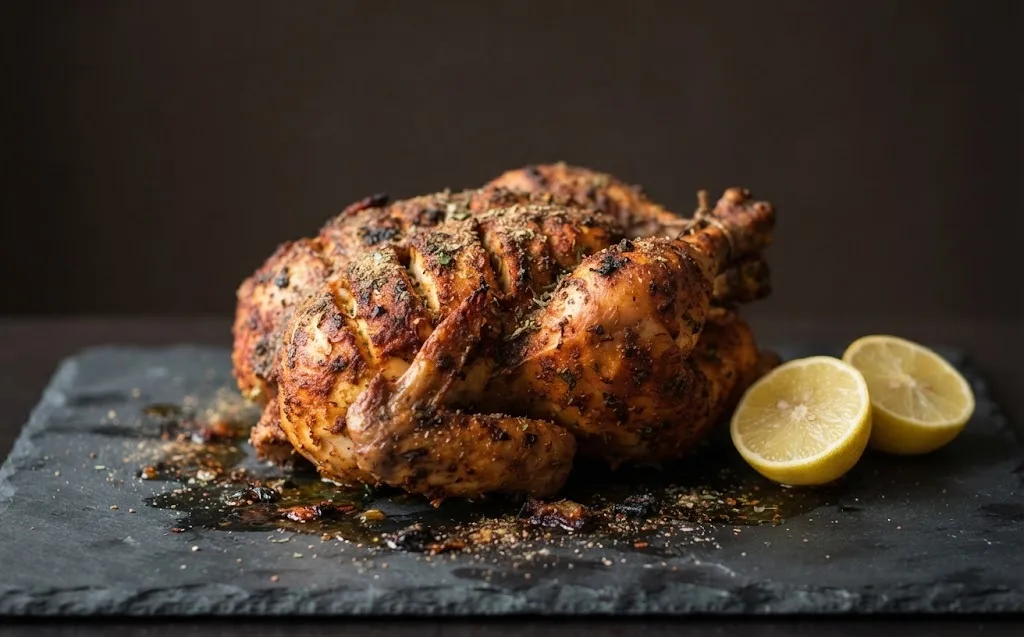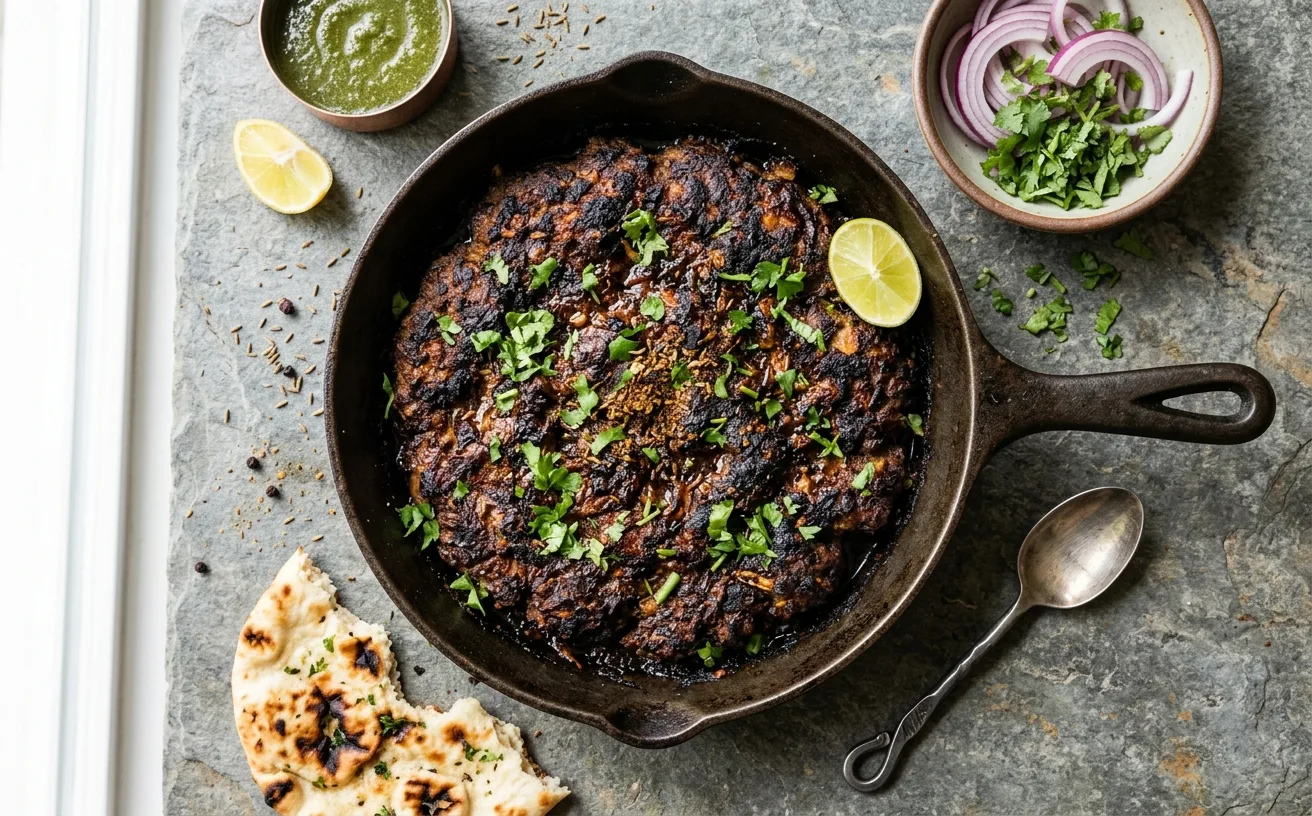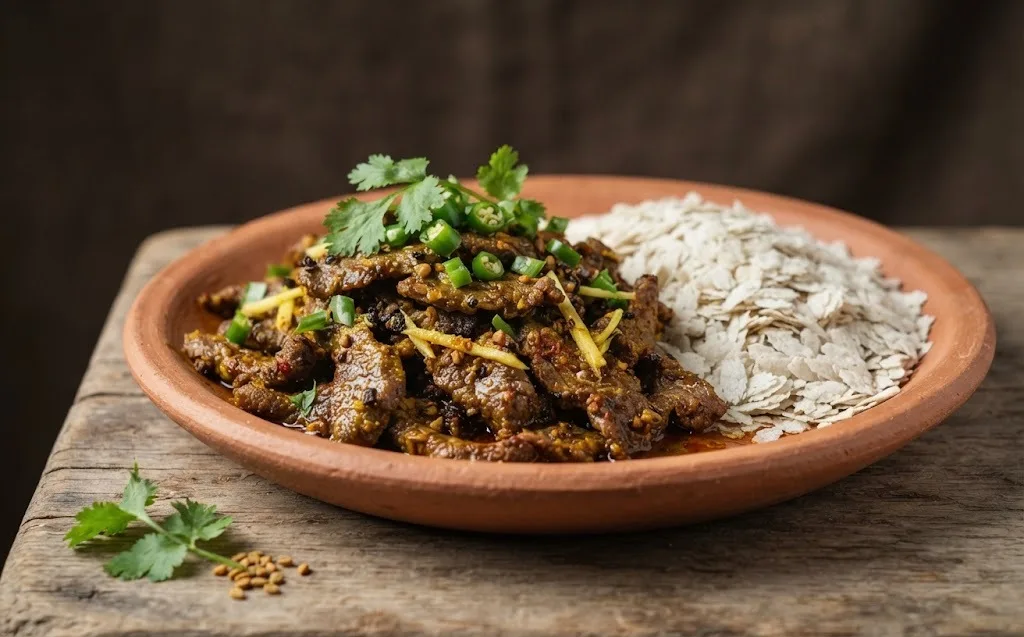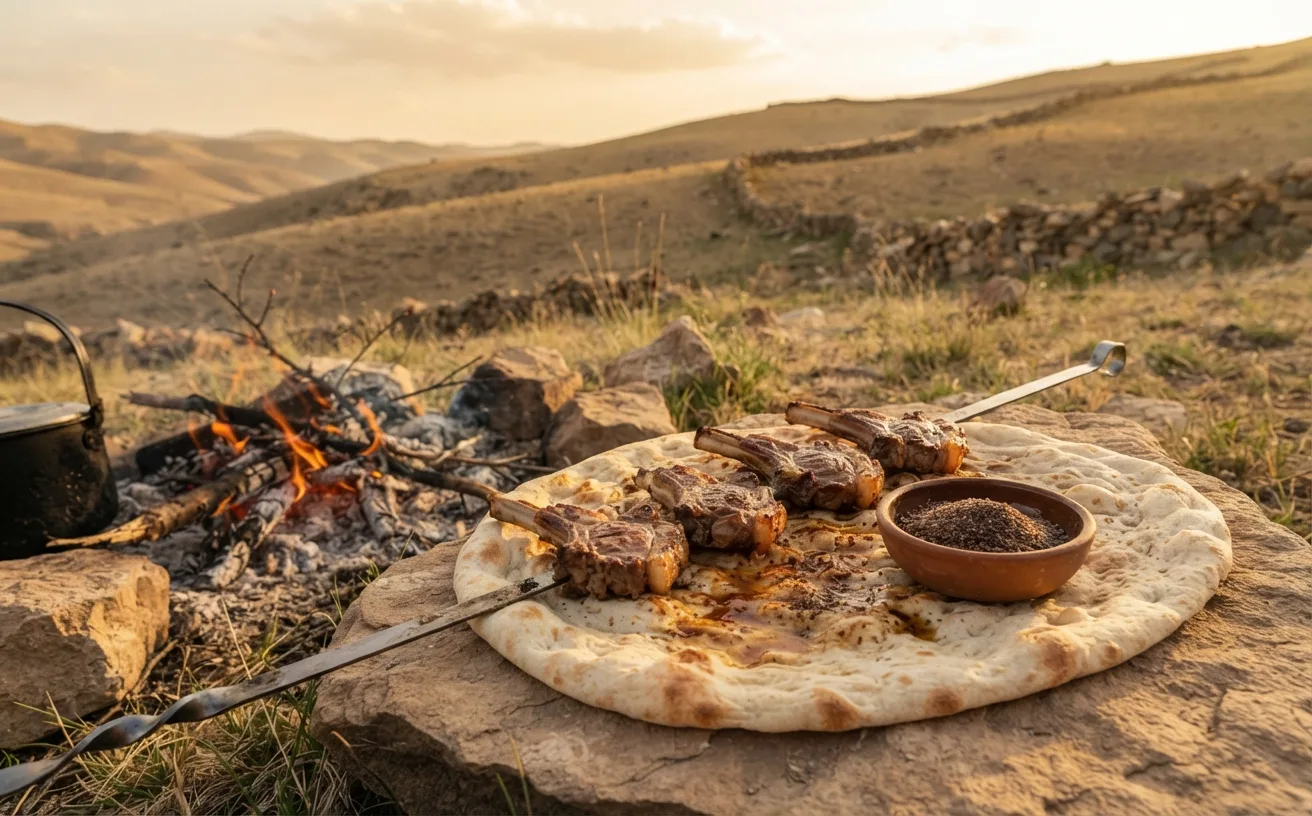
Afghanistan's 'shepherd's kebab': bone-in lamb chops and chunks salted, skewered, and grilled over open flame, traditionally by herders cooking their own flock. Served on Afghan naan that soaks up the drippings, with grape vinegar or ground grape seasoning on the side.
Also known as kebab-e-chopan, chopan kabob, Afghan shepherd kebab.
Reference video
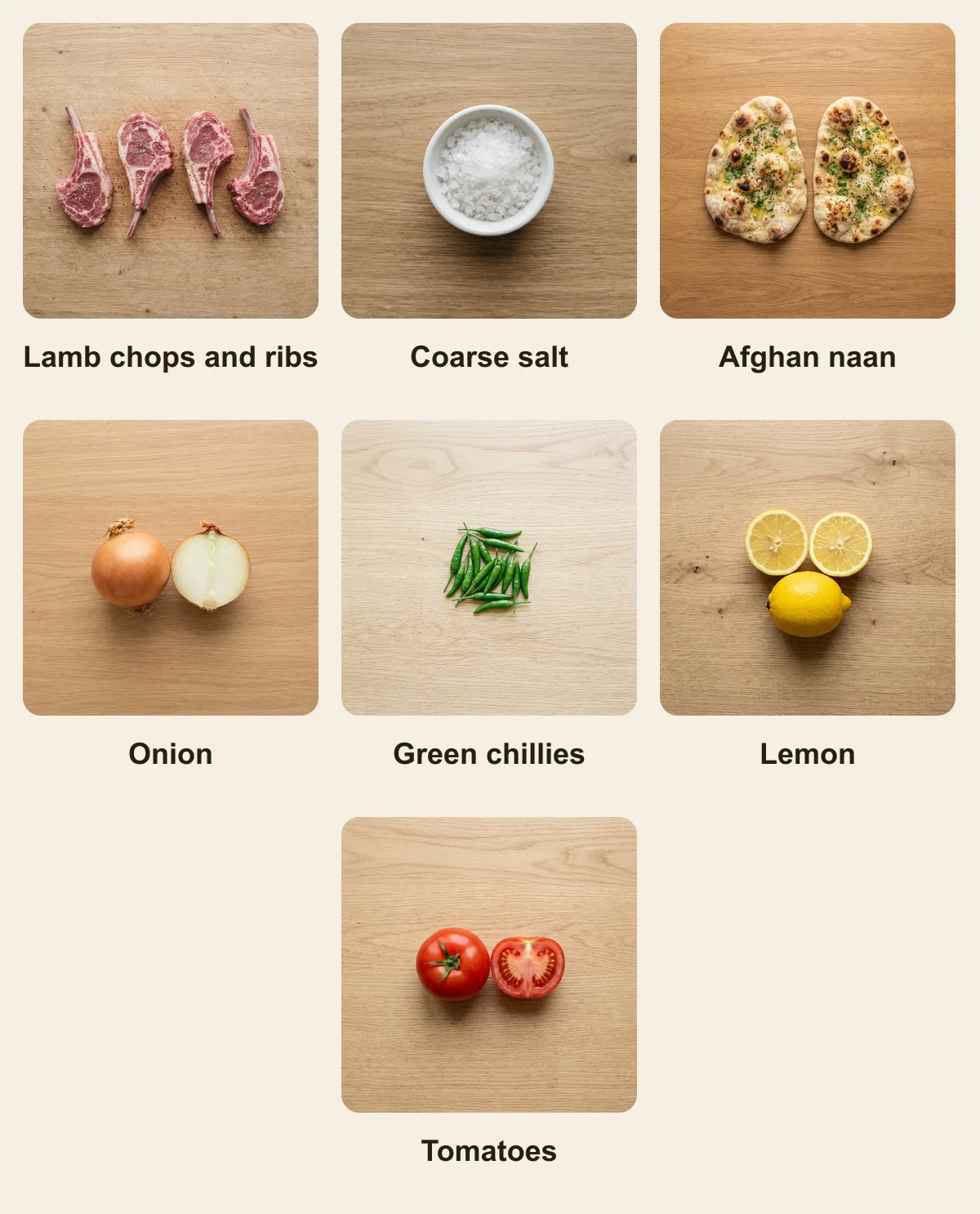
Ingredients
- 1.2 kg bone-in lamb chops and rib chunks
- 20 g coarse salt
- 4 Afghan naan
- 1 onion, sliced thick
- 2 green chillies
- 1 lemon, quartered
- 2 tomatoes (optional, to grill)
How to make it
- 1
Salt the lamb pieces all over and leave them 1 h at room temperature; that is the whole preparation.
- 2
Spear the chunks through the meat beside the bone so nothing spins.
- 3
Grill over open flame or ferocious coals 12-14 min, turning until the fat cap blisters gold-black; char the tomatoes alongside if using.
- 4
Rest 5 min bundled inside a naan.
- 5
Serve with raw onion, green chilli and lemon, shepherd style.
Pro tip: Resist the spice drawer entirely; chopan means salt, flame and fat-tailed lamb, and the smoke is your seasoning. Spend your effort on sourcing the chops.
Where Chopan Kebab comes from
The name is Dari — chopan means shepherd — and the dish began as field cooking: a herder salting fresh lamb from the flock and holding it to a wood fire on whatever skewer was at hand. Restaurants in Kabul and across the diaspora have made it the flagship of the Afghan menu, but it never picked up a marinade, a spice mix or a sauce on its way into town.
It shares its philosophy with Shinwari tikka — salt, fat and fire — but differs in one important respect: chopan is bone-in, and the chops are the point.
How Chopan Kebab is cooked
Bone-in cuts on a skewer create a specific problem: the bone shields part of the meat and the chop is uneven in thickness. Afghan cooks handle it by threading the chops through the eye of the meat so the bones project, and by turning the skewers through all four faces rather than just two.
The fat is left entirely intact and is the basting system. Over an open flame it renders and drips, causing flare-ups that Afghan grill cooks manage by moving the skewers rather than by trimming. The salt goes on a good hour before the fire, and there is no marinade to burn, which is what allows the meat to sit relatively close to a lively flame.
Ingredients and shopping
Lamb rib chops and shoulder chunks, bone in, with the fat left on. Fat-tail lamb where available. Chops of around two centimetres so they take colour without drying. Nothing else is needed except salt.
Afghan naan is the correct bread — long, thin and sturdy enough to sit under dripping meat. Ground dried grape (ghora) or grape vinegar is the traditional condiment and is worth seeking out; sumac is a reasonable stand-in for the sourness if not for the flavour.
How Chopan Kebab is served
On Afghan naan that has been under the meat long enough to absorb the fat, with raw onion, ground dried grape or grape vinegar, and green tea. Sometimes with a plate of Kabuli pulao alongside if the meal is a full one. No sauce and no yoghurt in the traditional service.
Common mistakes
Trimming the fat
It is the only basting the dish gets. Trimmed, chopan is dry.
Turning only twice
Bone-in chops need all four faces exposed to the heat. Rotate the skewer through the full turn.
Marinating
There is no marinade. Salt an hour ahead, and let the lamb and the flame do the rest.
Thin chops
They dry before they colour. Two centimetres is the working thickness.
Chopan Kebab: questions and answers
What does chopan mean?
Chopan is the Dari word for shepherd — the same word that runs through Persian and Turkish as choban — so kebab-e-chopan translates literally as the shepherd's kebab, credited to herders rather than to any city kitchen.
Is chopan kebab bone-in?
Yes, and that is what distinguishes it from Shinwari tikka. The rib chops are the prized part.
What is ghora?
Ground dried unripe grape, used in Afghanistan as a souring condiment with grilled meat. Grape vinegar is the liquid equivalent.
Is it marinated?
No — chopan sits in the same salt-only school as Shinwari tikka. An hour of salting is the entire treatment; anything acidic or spiced would mask the lamb and scorch before thick chops cook through.
Sources and further reading
- Chopan Kebab — The Locavore