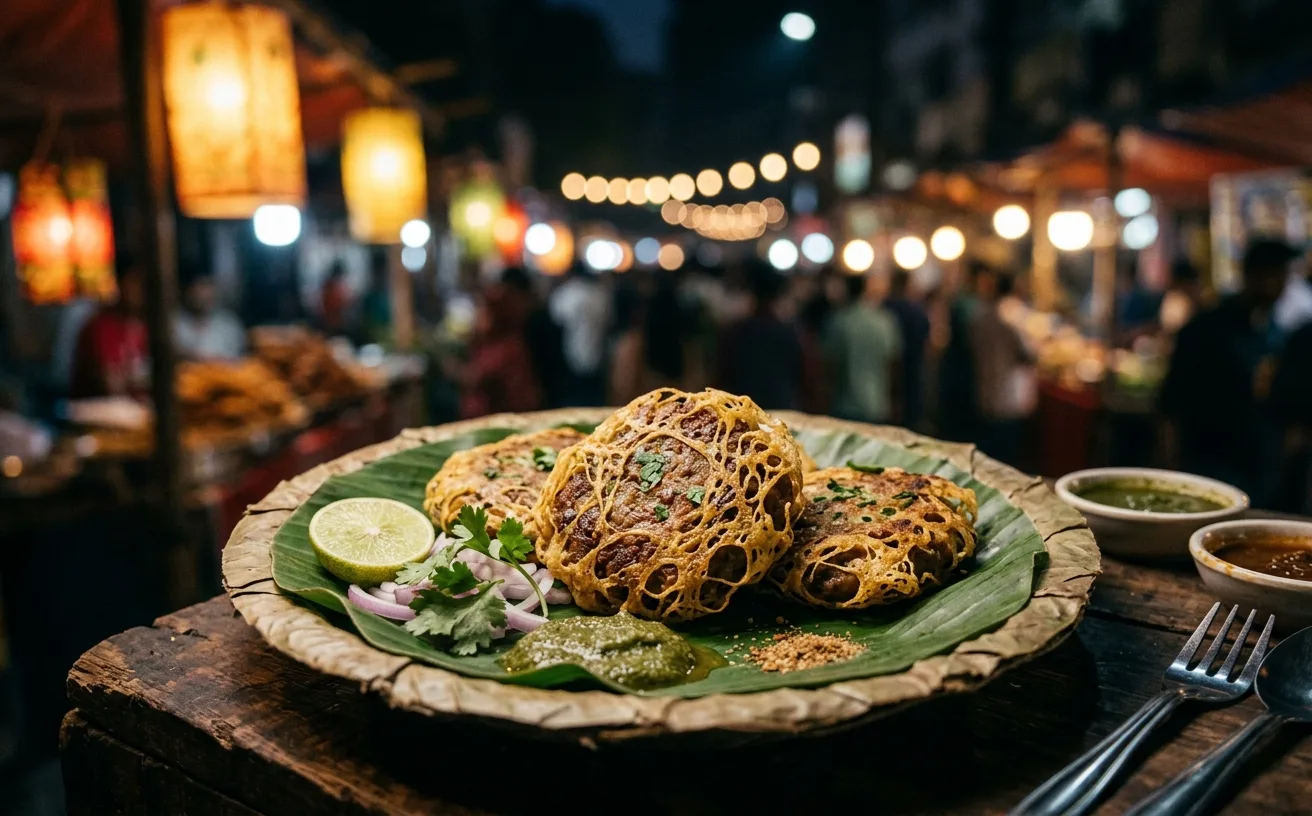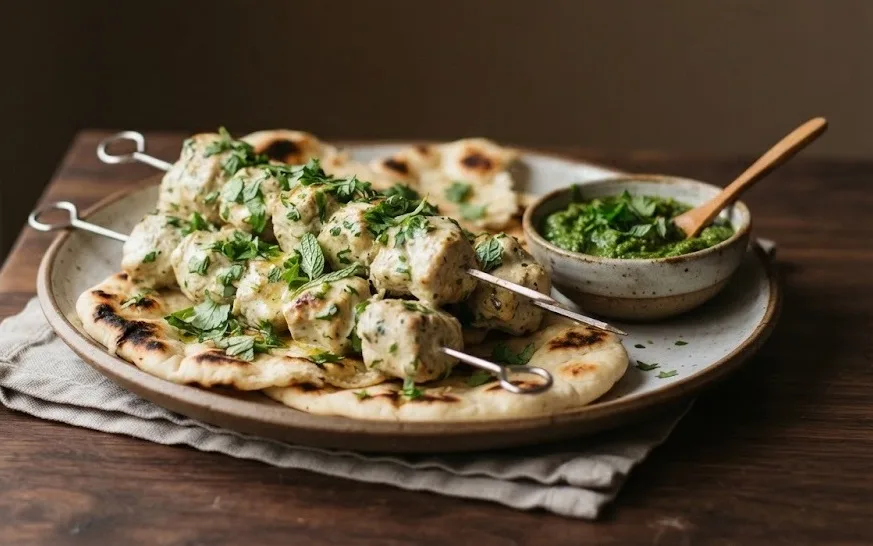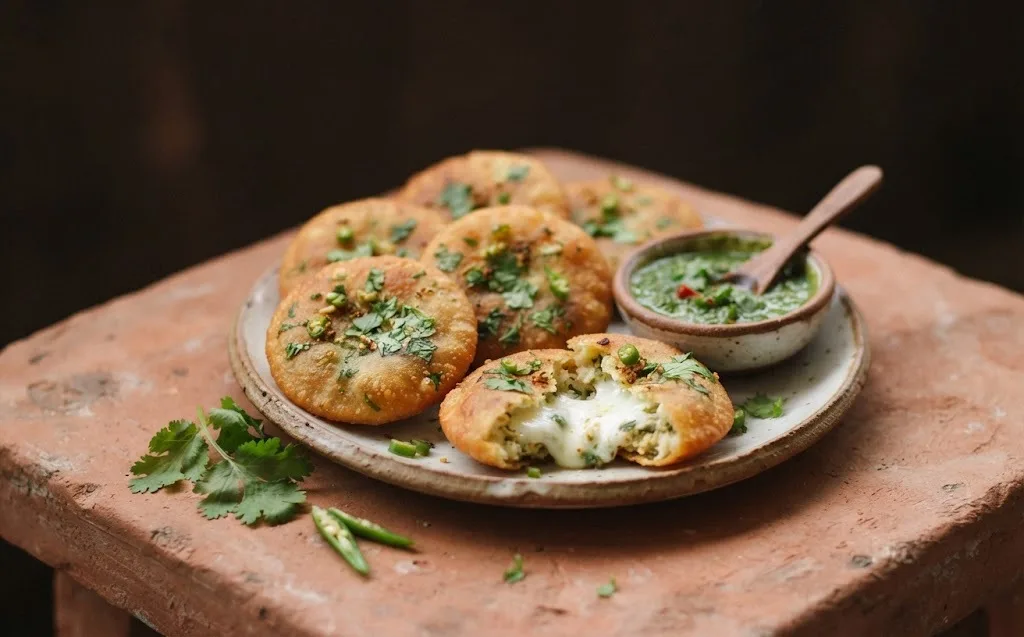
An Awadhi vegetarian curiosity: thick hung yogurt bound with roasted gram flour and onions, shaped into discs and fried to a shell that gives way to a molten, tangy center. It is a kebab made almost entirely of dairy.
Also known as dahi kebab, yogurt kebab, दही के कबाब.
Reference video
Ingredients
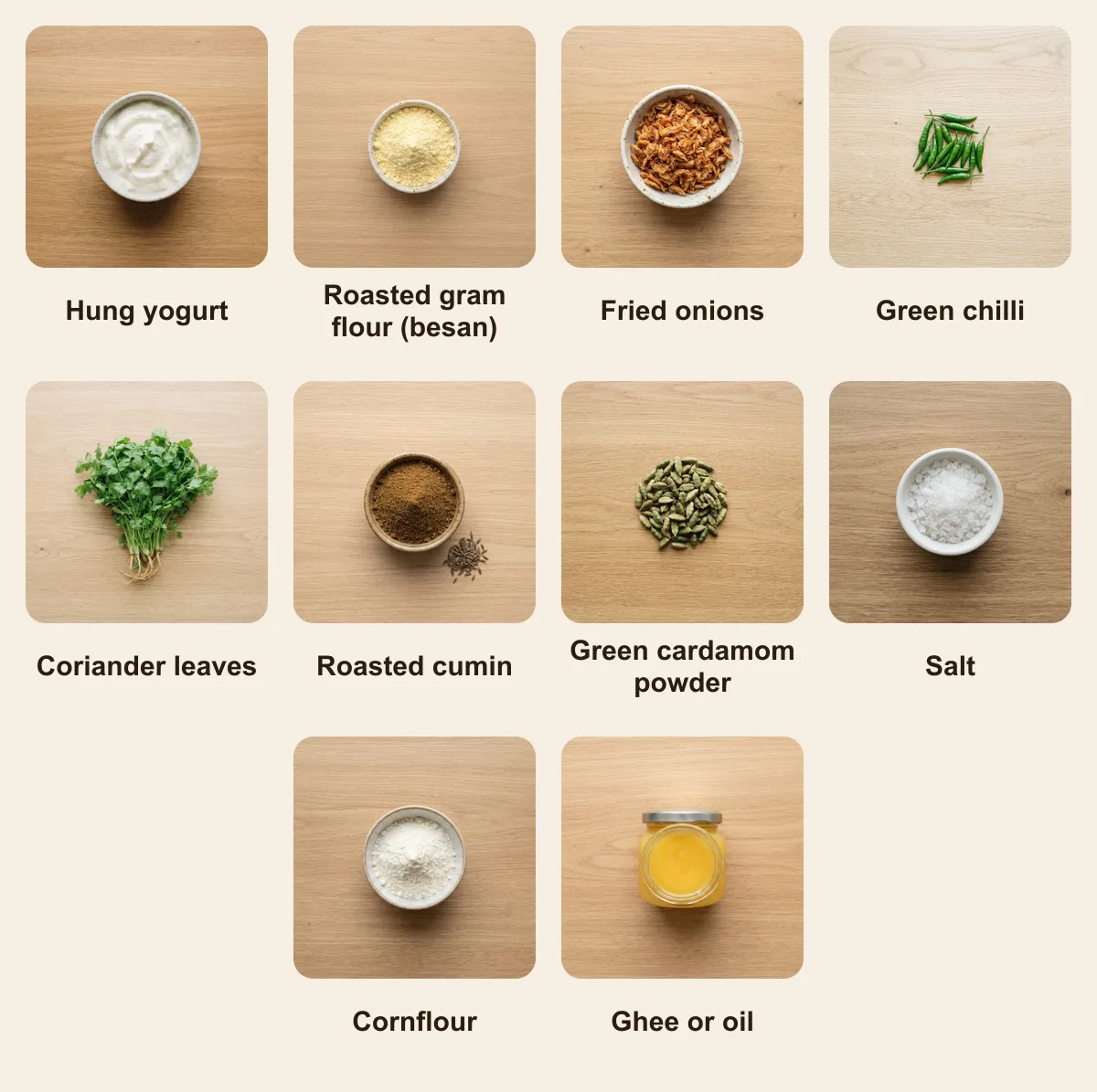
- 500 g full-fat yogurt, hung in muslin overnight (8 h; yields about 250 g)
- 60 g roasted gram flour (besan)
- 40 g fried onions, crushed fine
- 1 green chilli, minced
- 10 g coriander leaves, chopped
- 0.5 tsp roasted cumin, ground
- pinch of green cardamom powder
- 1 tsp salt
- 40 g cornflour, for dusting
- ghee or oil, for shallow frying
How to make it
- 1
Hang the yogurt until it is thick as potter's clay; wet curd is unusable here.
- 2
Fold in the besan, fried onion, chilli, herbs and spices to a soft, just-holdable dough.
- 3
Chill 30 min, then shape 12 small discs with oiled palms, dust each in cornflour and freeze 15 min until very firm.
- 4
Shallow-fry in medium-hot ghee about 2 min per side to a thin amber shell.
- 5
Serve at once with mint chutney; they wait for no one.
Pro tip: Flip exactly once, with your thinnest spatula; that fragile fried crust is the only wall holding a molten yogurt centre.
Where Dahi ke Kebab comes from
It belongs to the Lucknow tradition of vegetarian dishes made to stand alongside the city's famous meat kebabs rather than to apologise for their absence, and its technical audacity is the point. A cook who can fry yoghurt without it exploding is demonstrating something, and Awadhi cooking has always valued that kind of demonstration.
How Dahi ke Kebab is cooked
Hanging the yoghurt is not a preparatory step, it is the dish. Full-fat yoghurt is tied in muslin and hung for six to eight hours, or overnight, until it has lost most of its whey and is as thick as cream cheese. Anything less and the mixture cannot be shaped, let alone fried.
Roasted gram flour is worked in to absorb the last of the moisture and to provide structure, along with crushed fried onion, chilli and warm spices. The shaped discs are then chilled hard — often frozen briefly — before frying, because the temperature differential is what lets the outside set into a shell before the inside melts and bursts.
Ingredients and shopping
Full-fat yoghurt, and a lot of it: 500 grams reduces to about 250 after hanging. Greek yoghurt shortcuts the process but still benefits from a few hours in muslin. Gram flour roasted dry until nutty. Fried onions crushed fine, which bring sweetness without water.
Green cardamom and roasted cumin carry the spicing, with green chilli for heat. Some recipes add crushed cashew or paneer for body, which makes the dish easier at the cost of some of its purity. Breadcrumbs on the outside are a modern insurance policy and genuinely help.
How Dahi ke Kebab is served
Immediately, with mint chutney and sliced onion, as a starter. The contrast between a crisp shell and a hot molten interior lasts only a few minutes, so it is fried to order. Lucknow serves it alongside meat kebabs rather than as a separate vegetarian course.
Common mistakes
Insufficient hanging
Six to eight hours minimum, overnight is better. Under-hung yoghurt cannot be shaped and will burst in the oil.
Frying from room temperature
The discs must be very cold, even briefly frozen. The temperature differential is what sets the shell before the centre melts.
Wet onion
Use crisp fried onion, or squeeze raw onion very hard. Onion water undoes all the work of hanging the yoghurt.
Oil too cool
It must set the crust on contact. Cool oil lets the disc collapse before it seals.
Dahi ke Kebab: questions and answers
Why do my kebabs burst in the oil?
Either the yoghurt was not hung long enough, the discs were not cold enough, or the oil was not hot enough to set the crust on contact.
Can I use Greek yoghurt?
Yes, as a shortcut, though it still benefits from a few hours of hanging. It must be full-fat.
What binds it?
Roasted gram flour, which absorbs the remaining moisture and gives the mixture structure. Roast it dry first or it tastes raw.
Sources and further reading
- Festive Special Kebab Recipes from the Kitchens of Taj Palace — Outlook Traveller
- Dahi Ke Kebab Recipe — Nisha Madhulika