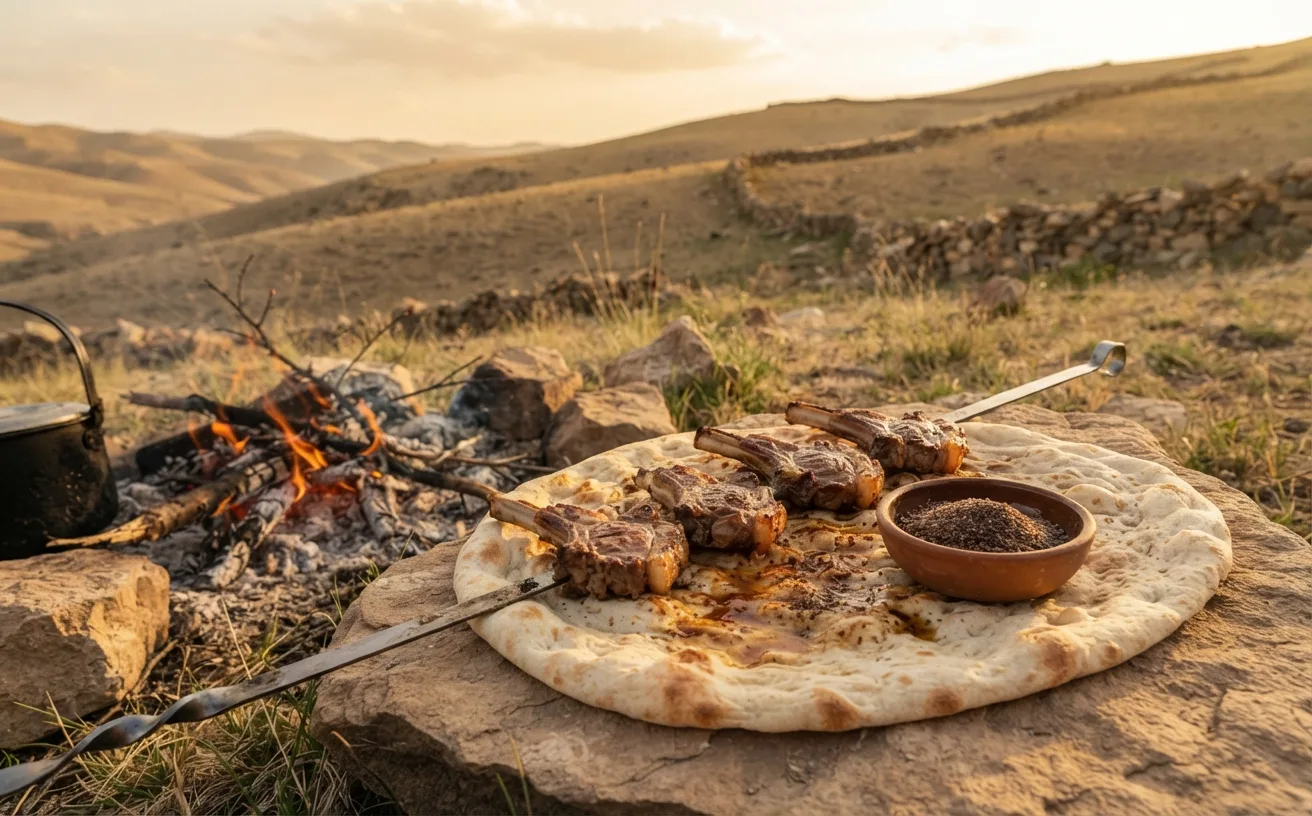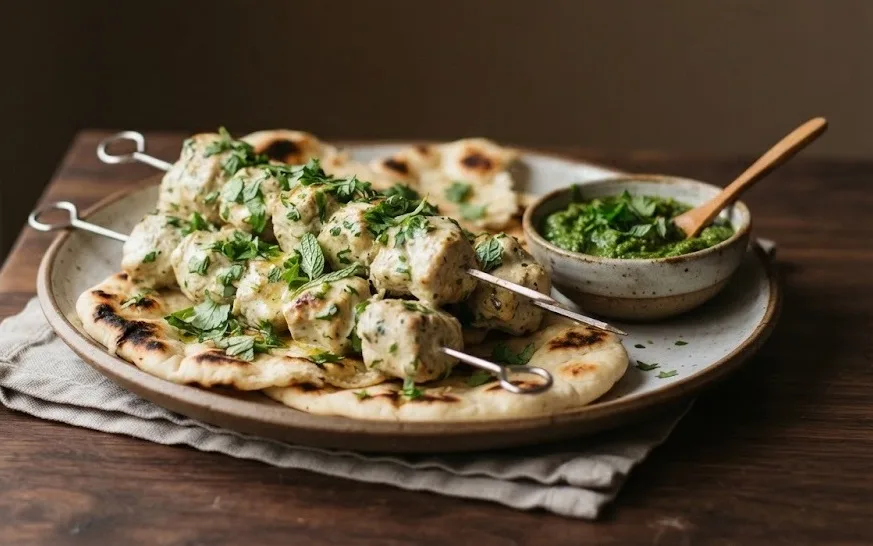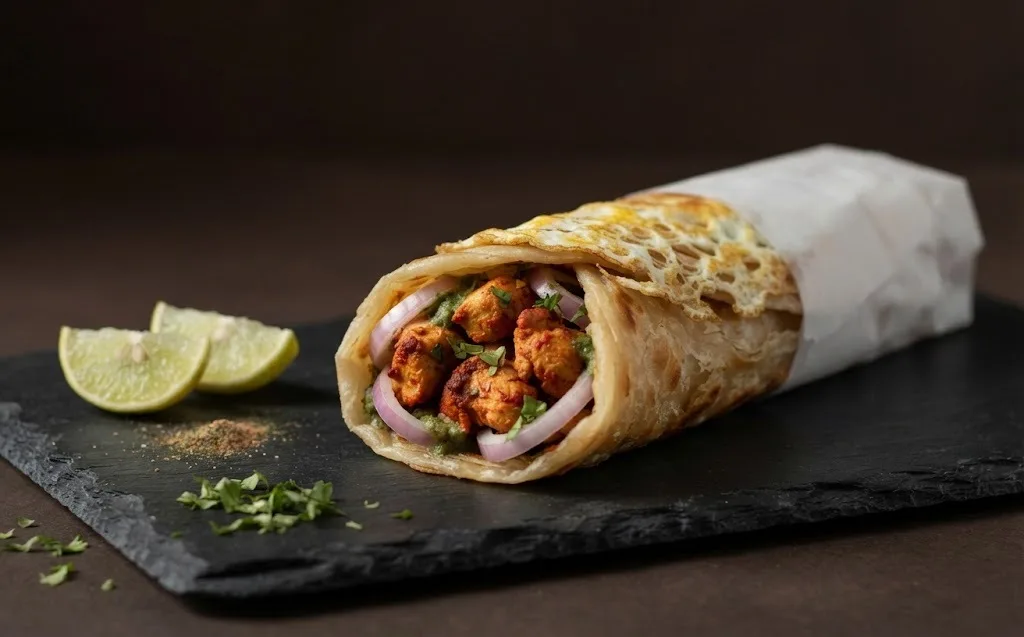
Kolkata street food born at the Nizam's restaurant: skewer-roasted meat ('kathi' means stick) rolled into a flaky, egg-fried paratha with onions and lime. It is the subcontinent's native kebab wrap, predating the shawarma-style rolls now common in Indian cities.
Also known as kathi roll, kati roll, kolkata kathi roll.
Reference video
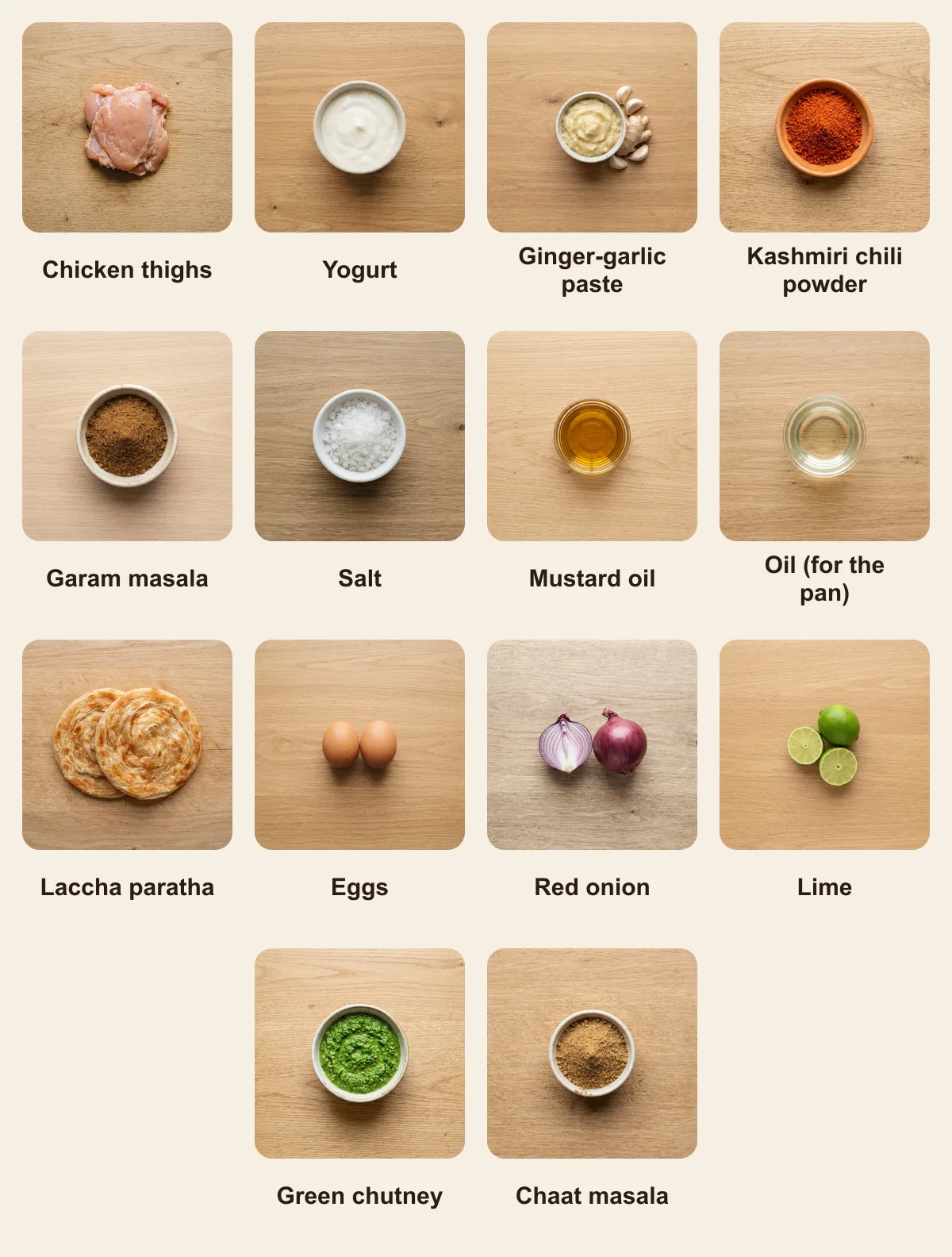
Ingredients
- 500 g chicken thigh, in strips
- 100 g yogurt
- 1 tbsp ginger-garlic paste
- 1 tsp each Kashmiri chili powder, garam masala and salt, plus 15 ml mustard oil and a little oil for the pan
- 4 laccha parathas (frozen ones work)
- 4 eggs, beaten
- 1 red onion, in thin rings, splashed with lime
- 60 g green chutney (coriander-mint-chili)
- A pinch of chaat masala and 4 lime wedges
How to make it
- 1
Marinate the chicken in yogurt, ginger-garlic, spices, salt and mustard oil for 2 hours.
- 2
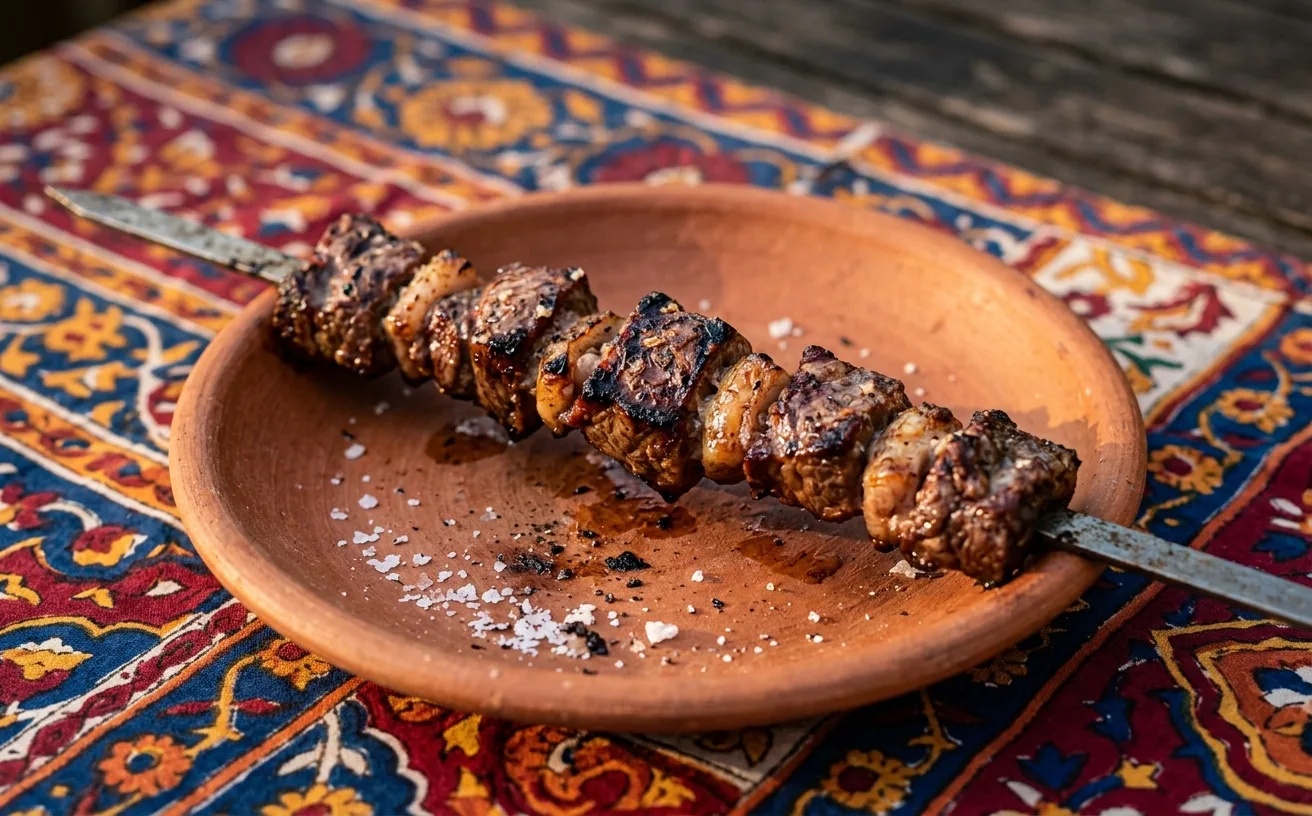
Thread the strips onto skewers and cook under a hot grill or on a screaming tawa until the edges catch, about 8 minutes, then slide off and chop roughly.
- 3
Pour a beaten egg onto the hot greased pan and immediately press a paratha on top; flip when the egg sets so the layers fuse.
- 4
Lay the egg-side up, pile on chicken, onion rings, chutney, a pinch of chaat masala and a hard squeeze of lime.
- 5
Roll snugly, collar the bottom half in paper, and hand it over.
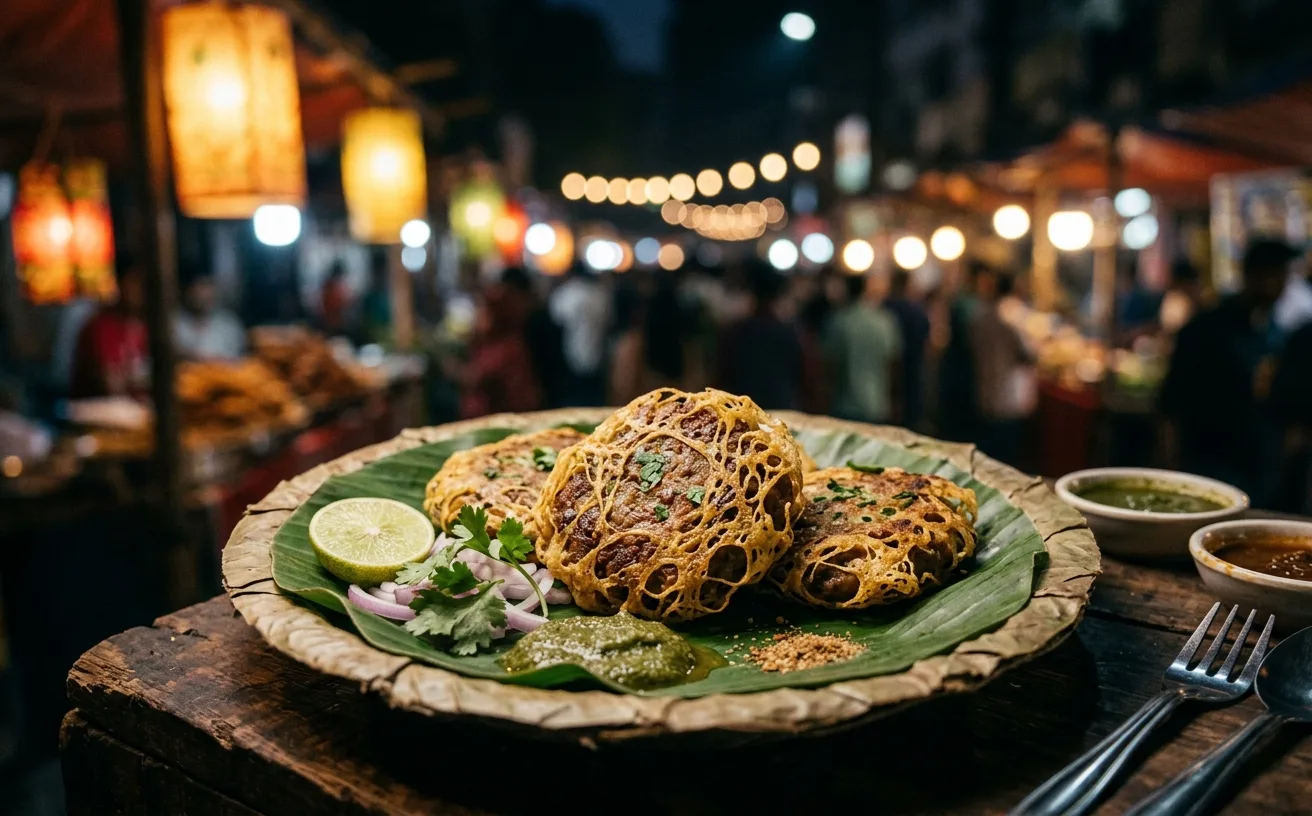
Pro tip: Egg on the pan first, paratha pressed onto it: that order welds a lacy omelet skin onto the bread the way Nizam's of Kolkata did it, and it keeps the roll from going soggy.
Where Kathi Kebab Roll comes from
The origin story is a practical one: British customers wanted the kebab without the grease on their hands, so the kitchen wrapped it in paratha. Whether or not that is precisely how it happened, the roll predates the shawarma-style wraps now common in Indian cities by decades and is a genuinely native format.
How Kathi Kebab Roll is cooked
The egg is the structural trick. A paratha is partially cooked, then a beaten egg is poured onto the griddle and the paratha pressed into it so the egg fries onto one face. That egg layer both stiffens the bread and waterproofs it, so the roll holds juicy filling without going soggy — the problem every other wrap in this atlas has.
The paratha itself is laminated: rolled, oiled, coiled and re-rolled so it cooks in flaky layers rather than as a flat disc. The meat, grilled separately on skewers, goes onto the egged face with sliced onion, chilli and a hard squeeze of lime, and it is rolled in paper.
Ingredients and shopping
Mutton, chicken or paneer, cut small and marinated in yoghurt with ginger-garlic, chilli and garam masala, then grilled on skewers. Kolkata versions lean sharper and less creamy than Punjabi tandoori marinades.
The paratha wants plain flour, water, salt and ghee or oil, laminated. Eggs, one per roll. Thinly sliced red onion, green chilli, lime, and a chaat masala or a light chutney. Do not overload the filling — the roll must close.
How Kathi Kebab Roll is served
Rolled in paper and eaten walking, with extra lime and green chilli. In Kolkata it is bought from a counter and eaten on the street, and the paper is part of the design. It does not keep — the egg layer buys you ten minutes, not an hour.
Common mistakes
Skipping the egg layer
It is what keeps the paratha from going soggy under juicy filling. A plain paratha roll falls apart.
An unlaminated paratha
Rolling, oiling, coiling and re-rolling is what gives the flakiness. A flat rolled disc is a chapati, not a paratha.
Overfilling
It must close and be eaten in the hand. More filling than the bread can wrap defeats the format.
Skipping the lime
The roll is rich and the onion is sharp; the lime is what pulls it together. It goes on at the end, not in the marinade.
Kathi Kebab Roll: questions and answers
What does kathi mean?
Stick, referring to the skewer the meat is grilled on. The name distinguishes it from other rolls.
Where did the kathi roll originate?
Nizam's restaurant in Kolkata, in the first half of the twentieth century. It predates shawarma-style wraps in India by decades.
Can I make it with paneer?
Yes — paneer kathi rolls are standard, and the technique is identical. Marinate and grill the paneer as you would for tikka.
Sources and further reading
- Kati roll — Wikipedia
- How One Man's Ingenious Hack Took 'Kathi Rolls' From Kolkata to the World — The Better India