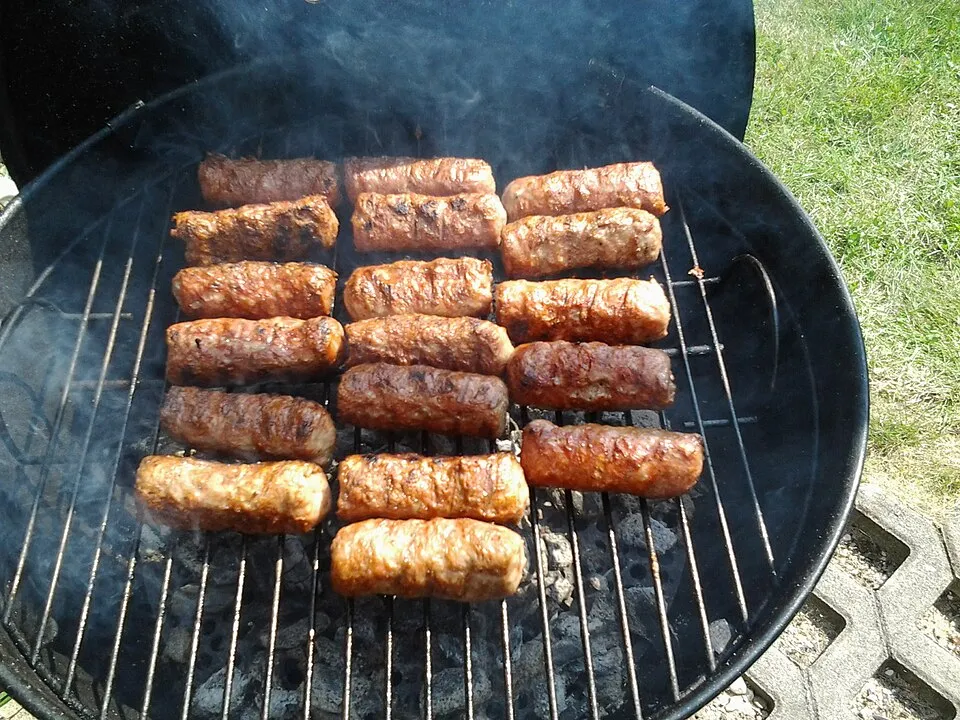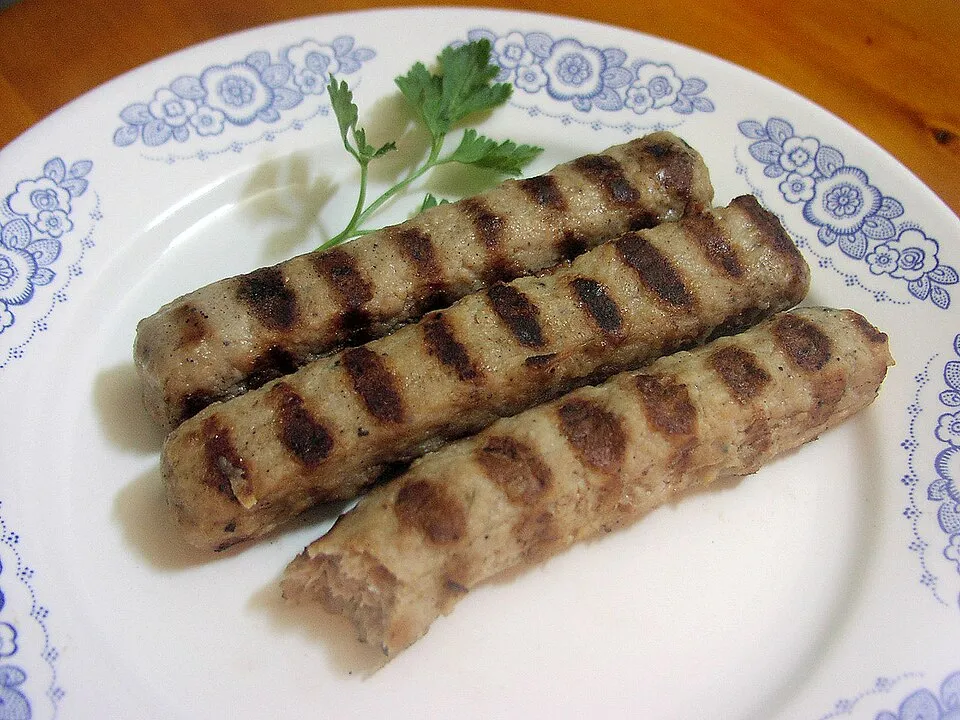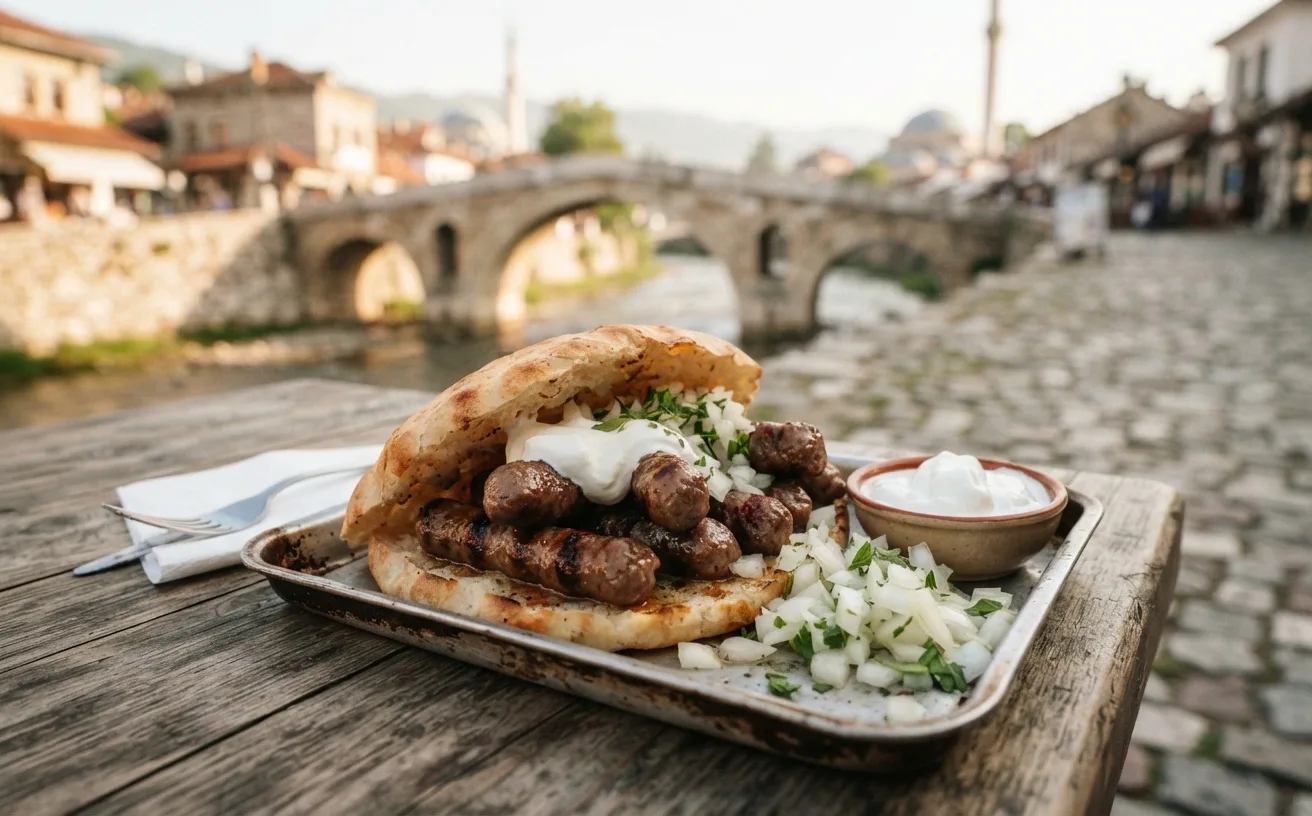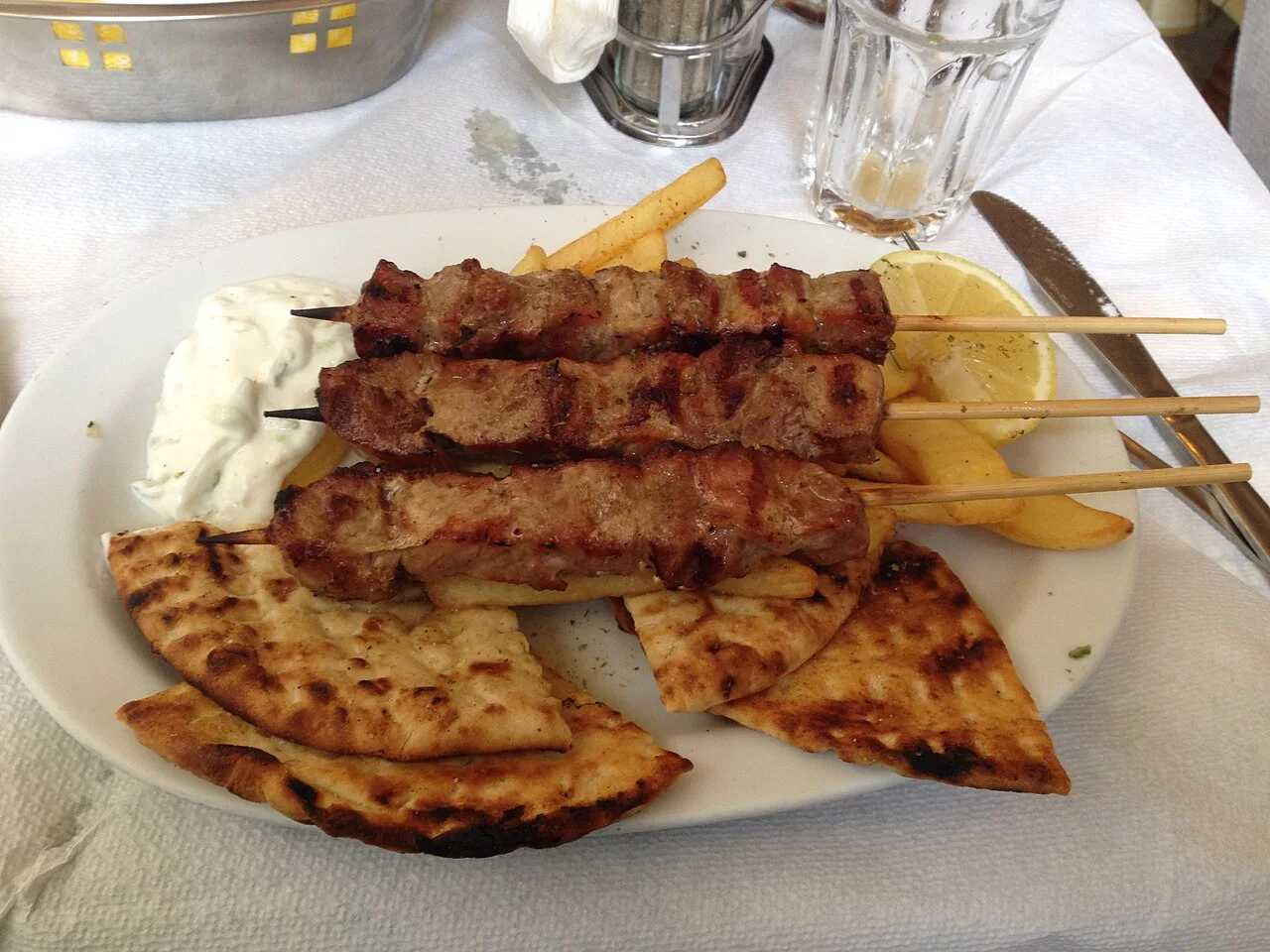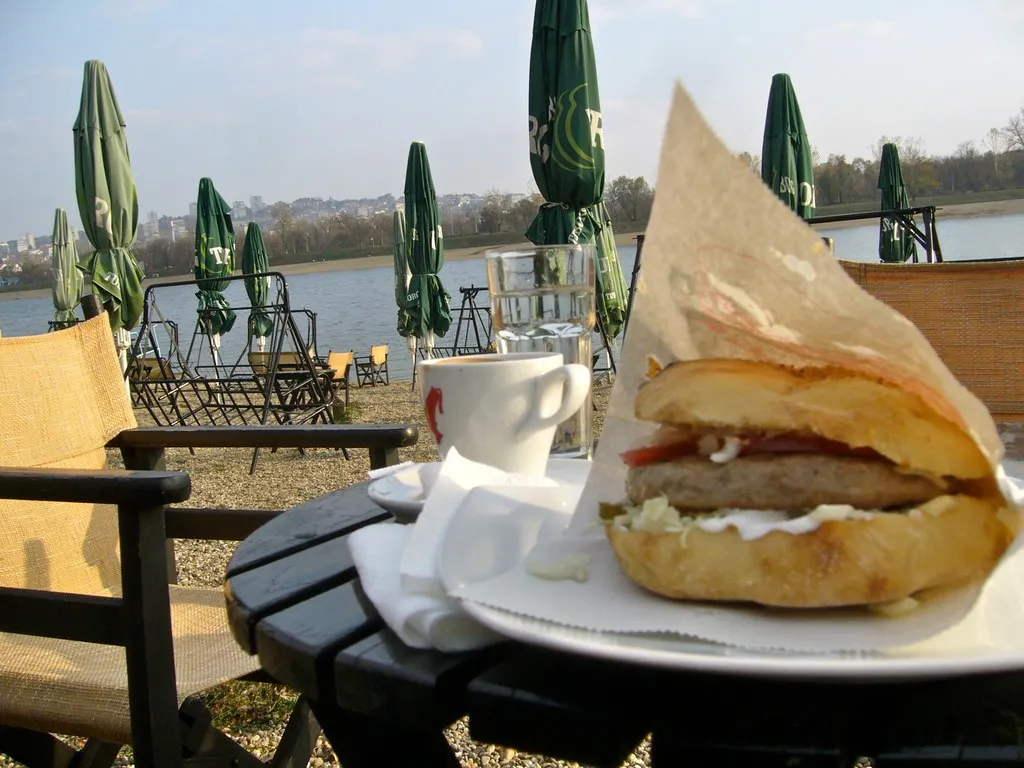
A hand-flattened disc of the same spiced minced meat used for cevapi, grilled and served in lepinja flatbread — essentially the kebab family's burger. The stuffed version (punjena) hides molten kackavalj cheese inside.
Also known as Serbian hamburger, Leskovac pljeskavica, punjena pljeskavica.
Reference video
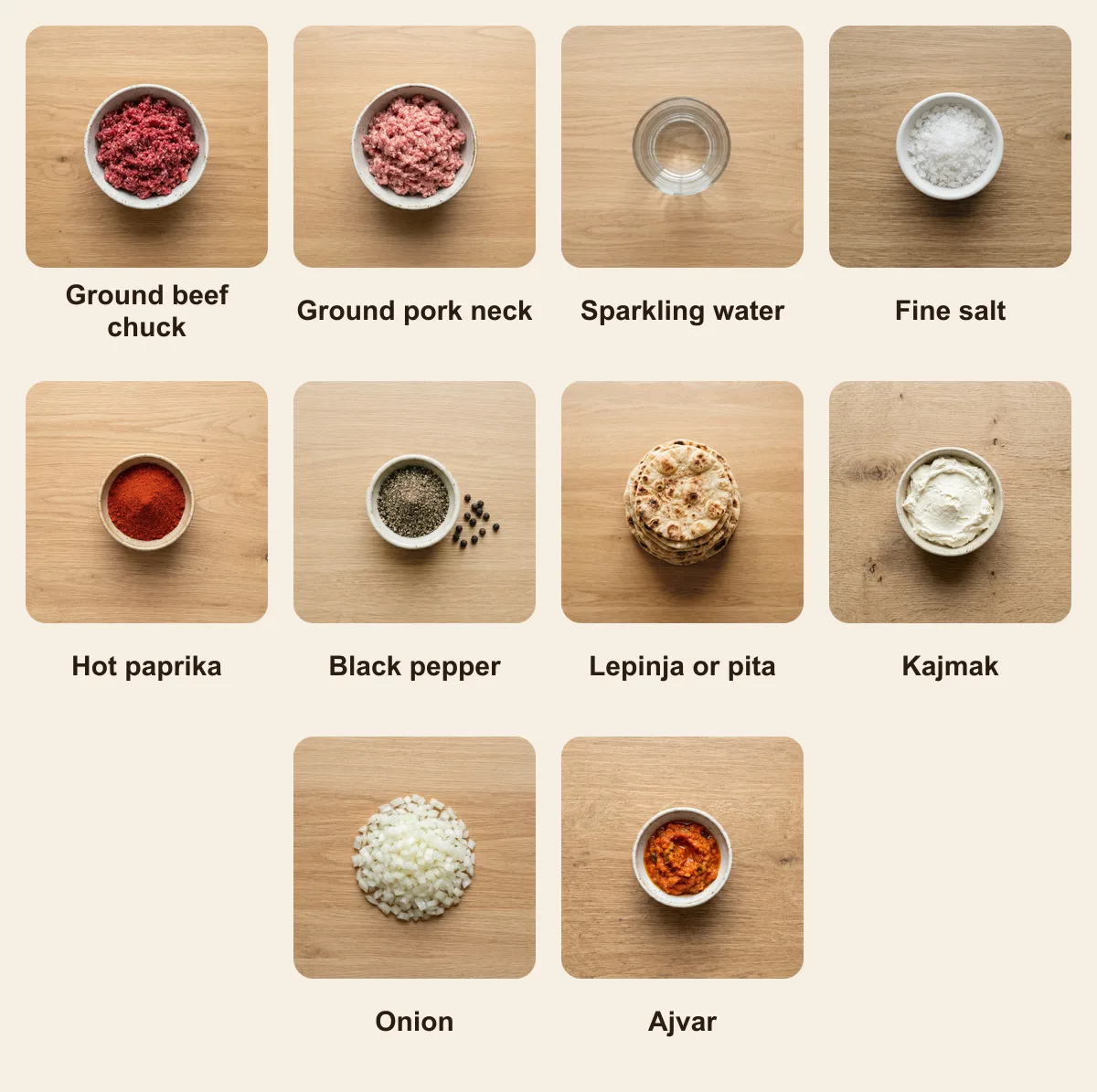
Ingredients
- 500 g coarsely ground beef chuck, minimum 20% fat
- 200 g ground pork neck (or all beef, as in the south)
- 100 ml chilled sparkling water
- 1.5 tsp fine salt
- 1 tsp hot paprika and 0.5 tsp black pepper
- 4 lepinja or thick pita breads
- Kajmak (or thick sour cream mashed with butter)
- 1 onion, chopped
- Ajvar
How to make it
- 1
Knead the meats with salt, paprika, black pepper and the sparkling water until sticky, then cover and refrigerate overnight; the rest builds the springy bind.
- 2
On wet palms, slap each portion flat into a disc wider than your hand and about 1.5 cm thick.
- 3
Grill over strong heat 4-5 minutes per side without ever pressing down.
- 4
Toast the lepinja cut-side down in the drippings while the meat rests a minute.
- 5
Serve the pljeskavica in the bread loaded with kajmak, raw onion and ajvar.
Pro tip: Overnight maturing of the salted mix is not optional folklore: salt and time restructure the proteins into the elastic, juicy chew that separates pljeskavica from a burger that merely looks like one.
Where Pljeskavica comes from
Pljeskavica is what happens when ćevapi is flattened into a single disc, and it is the Balkans' answer to the burger without ever having been influenced by one. The name comes from the verb for clapping or slapping, describing how the mixture is flattened between the hands, and it is a fixture from Belgrade to Novi Pazar.
Leskovac, in southern Serbia, is its acknowledged capital and holds an annual grill festival where the size of the pljeskavica is a point of open competition.
How Pljeskavica is cooked
The mixture is the same family as ćevapi: minced beef, or beef with pork and lamb, worked with salt, pepper, sometimes grated onion, and — crucially — chilled sparkling water or a little bicarbonate of soda in cold water. The soda raises the pH, which helps the proteins hold water; sparkling water, as in this recipe, lightens the bind toward the same springy, juicy texture.
It is then rested, traditionally overnight, which lets the soda work and the mixture firm. Shaping is done by slapping the ball flat between wet palms into a disc considerably wider than the bread it will go in, because it shrinks. Grilling is fast over hot coals, turned once, and it comes off the moment the centre reaches 71°C, the safe point for minced meat.
Ingredients and shopping
Beef with around 20 percent fat is the base; many recipes add pork for fat and lamb for flavour, in roughly 60:30:10. Very lean beef gives a dry, dense disc. If onion goes into the mix it should be grated and squeezed, and the mixture needs the overnight rest to be right.
Lepinja — the soft Balkan flatbread — is the correct bread and it should be warmed on the grill so it absorbs fat. Kajmak, the region's clotted-cream dairy, is the traditional spread and there is no real substitute; thick crème fraîche, or sour cream mashed with butter, comes closest. For punjena, use kačkavalj or another firm melting cheese sealed fully inside the meat.
How Pljeskavica is served
In warmed lepinja with kajmak melting into it, raw onion, ajvar (the roasted red pepper relish) and urnebes for those who want heat. Chips are usual on a restaurant plate. Beer or rakija. In Serbia it is treated as a full meal rather than a snack, and portion sizes reflect that.
Common mistakes
No resting time
The salt — and the bicarbonate, if you use it — needs hours to work. A mixture grilled immediately is dense and grey.
Making it too small
It shrinks considerably. Shape it wider than the bread you plan to use.
Cheese not fully sealed
In the stuffed version, any gap and the cheese escapes into the fire. Seal the edges completely.
Overcooking
Pull it as soon as the centre reaches 71°C. Left on longer, it becomes a dry patty.
Pljeskavica: questions and answers
What is the difference between pljeskavica and ćevapi?
The same mixture, shaped differently: ćevapi are small fingers, pljeskavica is one large flattened disc. Pljeskavica is served in lepinja bread like a burger.
Why add bicarbonate of soda?
It raises the pH so the meat proteins hold more water, producing the springy, juicy texture that defines Balkan grilled mince. Many cooks add it; this recipe leans on chilled sparkling water for a similar lightness.
What is punjena pljeskavica?
The stuffed version, with kačkavalj cheese sealed inside the meat so it melts as it grills.
Sources and further reading
- Pljeskavica — Wikipedia
- Leskovac, the birth place of pljeskavica — Live the World