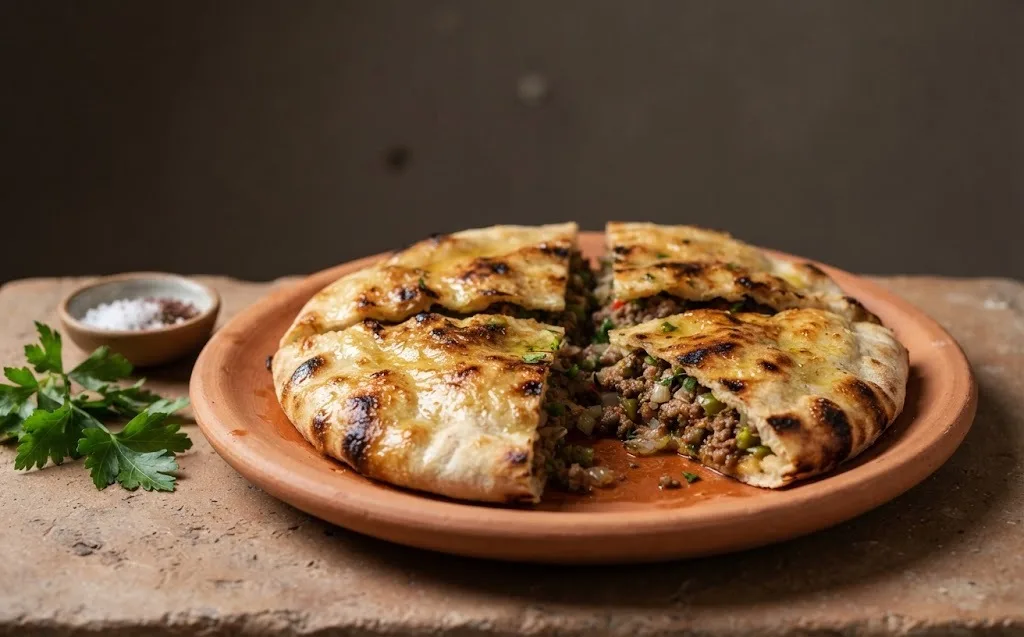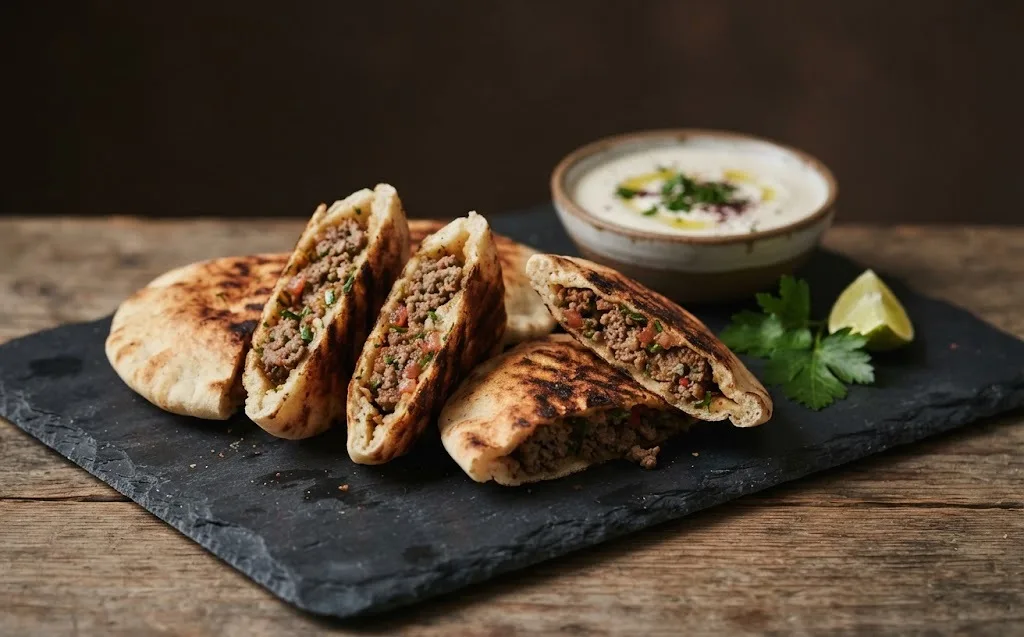
Pita halves stuffed with raw spiced kafta and grilled until the bread crisps and the meat juices fry it from the inside — the name means 'brides'. It inverts the kebab wrap: the bread goes on the fire, not around the finished meat.
Also known as arayes kafta, meat-stuffed pita.
Reference video
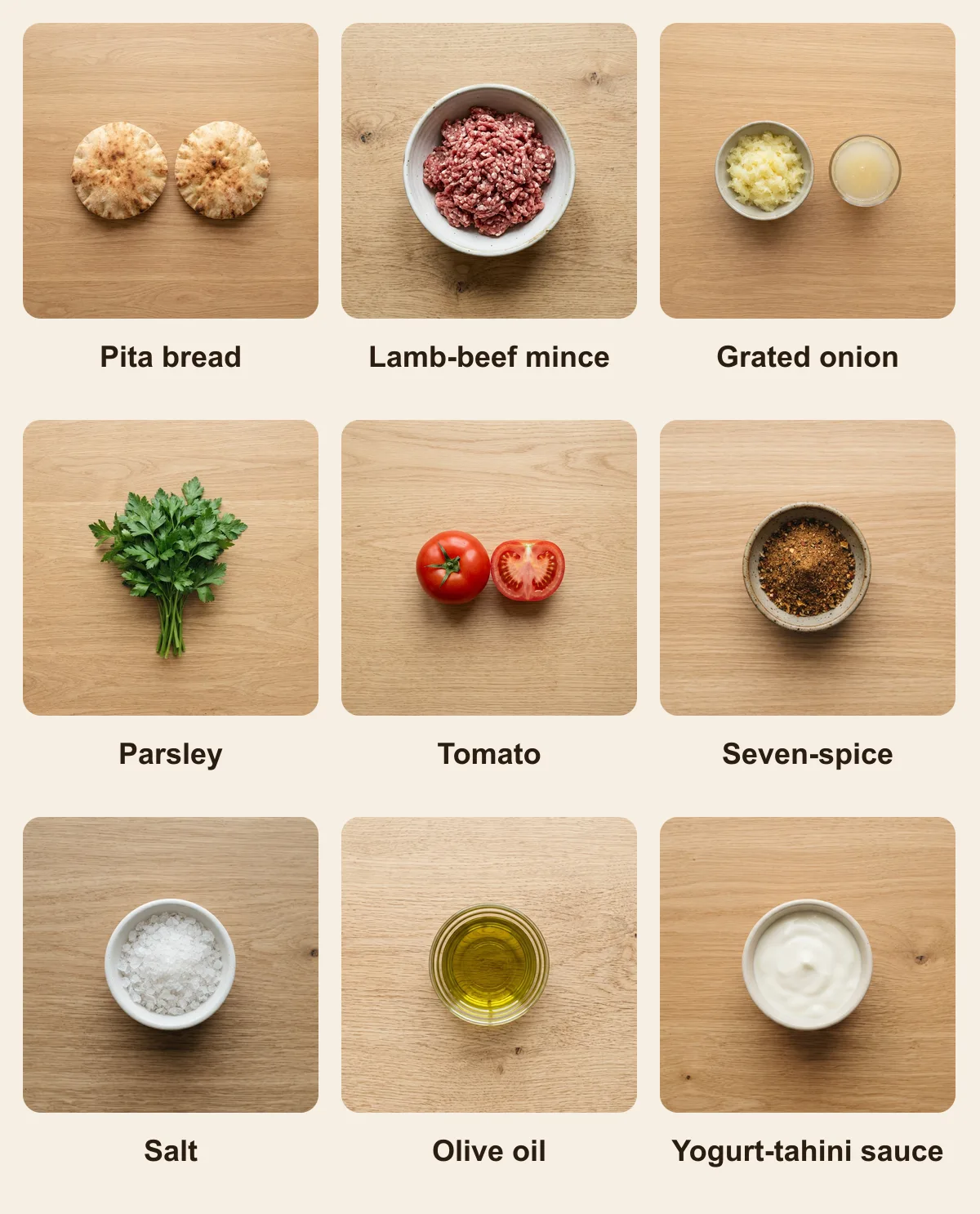
Ingredients
- 4 pita breads with good pockets
- 450 g lamb-beef mince
- 1 small onion, grated and squeezed dry
- 30 g parsley, finely chopped
- 1 tomato, seeded and cut into tiny dice
- 1 tsp seven-spice, 1 tsp salt
- 40 ml olive oil, for brushing
- Yogurt-tahini sauce, to dunk
How to make it
- 1
Mix the mince with onion, parsley, tomato, seven-spice and salt just until combined.
- 2
Split each pita along its equator into a pocket and spread a 0.5 cm layer of raw kafta right to the edges, pressing it flat.
- 3
Paint both faces of the stuffed breads with olive oil.
- 4
Cook over medium coals or a heavy griddle about 4 minutes per side, pressing lightly, until the bread is deep gold and the meat within is cooked through.
- 5
Quarter with a serrated knife and serve hot, the cut edges facing up.
Pro tip: Thin filling is the entire trick: pack it half a centimeter deep at most. Overstuffed arayes burn their bread jacket long before the core cooks, while a thin layer fries the pita from inside with its own juices.
Where Arayes come from
Its cleverness is that it inverts the usual kebab wrap. Normally the meat is cooked and then put into bread; here the bread goes onto the fire with the raw meat inside it, and the fat rendering out of the kafta cooks the bread from within while the coals crisp it from without. It is a genuinely different eating experience from a kebab sandwich.
How Arayes are cooked
The meat must be spread thin — no more than about half a centimetre inside the pocket — because it has to cook through in the time the bread takes to crisp. Thick filling means either burnt bread or raw meat, and there is no way to have both go right.
The pita is split into two rounds, filled, and pressed firmly so the meat adheres to both faces. It then goes onto a moderate grill or a griddle, and the give-away that it is working is the sound: the bread hisses as the fat renders into it. Four or five minutes a side is typical, and the outside should be genuinely crisp, not merely warm.
Ingredients and shopping
The standard kafta mixture, but slightly wetter than for skewers — it does not need to hold a shape on steel, and a little extra moisture helps it cook through. Lamb or beef at 20 percent fat, fine onion, parsley, baharat.
Thin Lebanese pita rather than thick Greek-style pitta; the point is a crisp shell, and a thick bread stays doughy. Some cooks brush the outside with olive oil or a little of the meat fat before grilling, which helps the crisping considerably. Tahini sauce or toum for dipping.
How Arayes are served
Cut into wedges and eaten hot, with tahini sauce or toum for dipping, pickled turnips and a sharp salad. Lemon wedges. It travels badly — the crispness is gone in ten minutes — so it is made and eaten in the same place, which is part of why it is a home dish more than a restaurant one.
Common mistakes
Filling too thickly
The meat must be spread thin or the bread burns before it cooks. Half a centimetre is the maximum.
Thick pita
Use thin Lebanese pita. Thick bread never crisps and the result is doughy.
A fire that is too hot
The bread blackens in a minute while the meat is still raw. Moderate heat and patience.
Not pressing the filling
It must adhere to both faces of the bread. Loose filling steams instead of frying the bread.
Arayes: questions and answers
What does arayes mean?
Brides. The name describes the union of the bread and the meat, which are cooked together rather than separately.
Does the meat go in raw?
Yes. That is the whole point — the raw kafta cooks inside the pocket and its rendering fat fries the bread from within.
Sources and further reading
- Hawawshi (§ Arayes) — Wikipedia
- Arayes (Crispy Lebanese Meat Stuffed Pitas) — FeelGoodFoodie