 AI illustration
Shish Taouk
Lebanon / Syria
 AI illustration
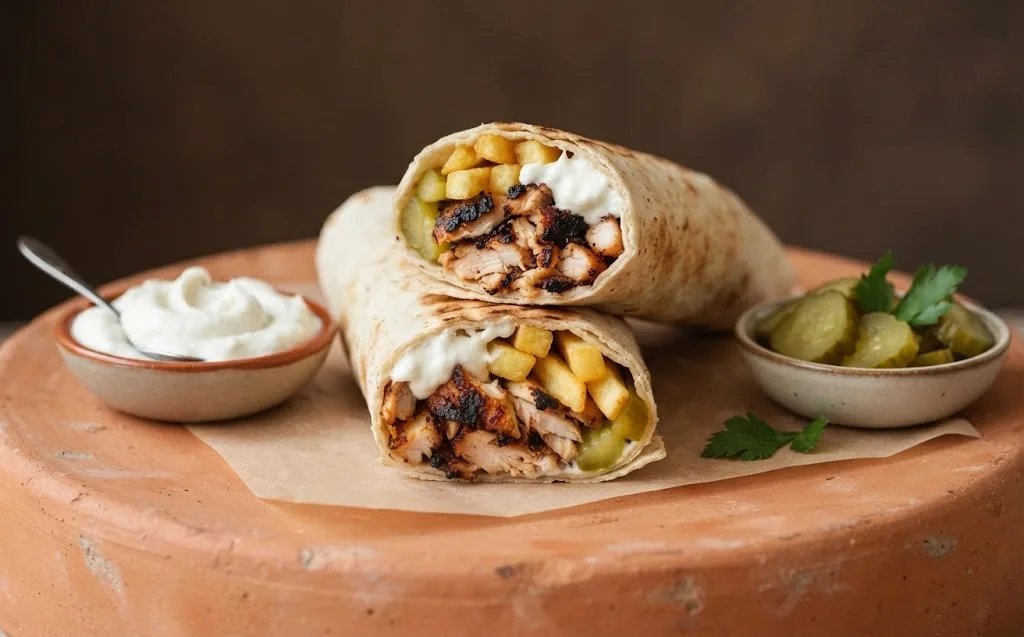
Chicken Shawarma
Lebanon / Syria / Palestine
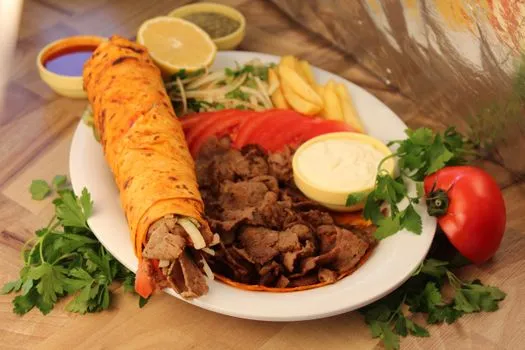
Beef Shawarma
Lebanon / Syria

Kafta Kebab
Lebanon / Syria / Palestine · ▶
 AI illustration
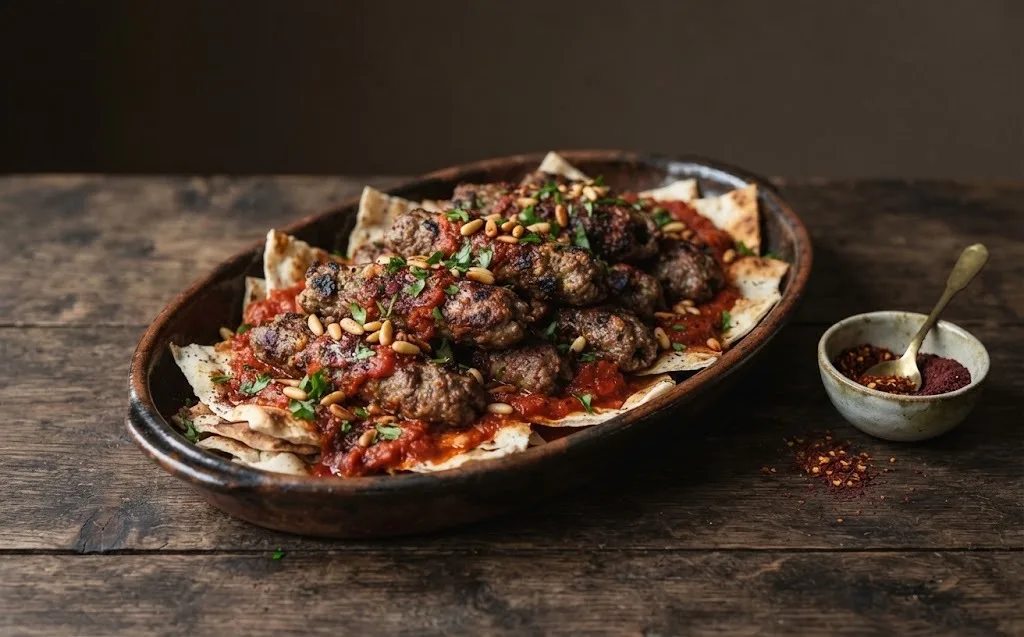
Kebab Halabi
Syria · ▶
 AI illustration
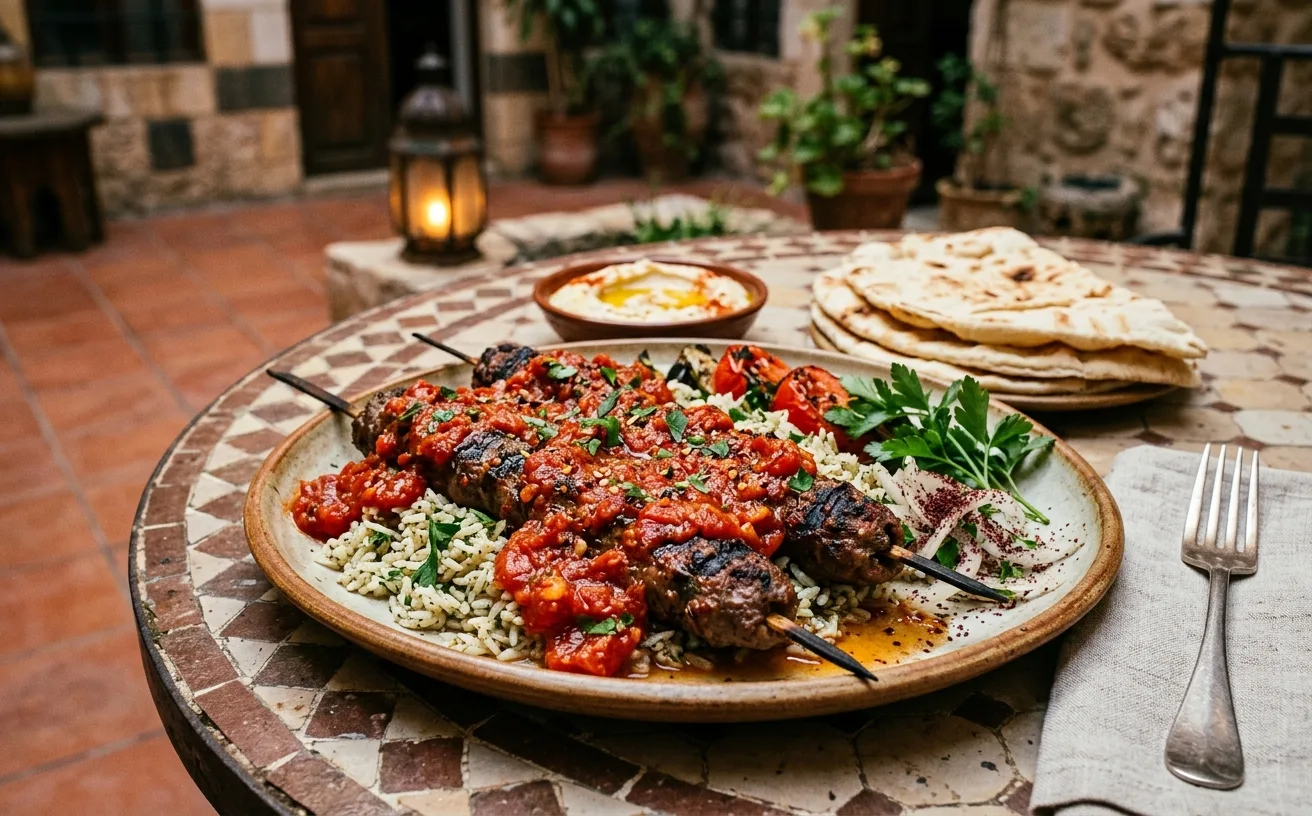
Kebab Khashkhash
Syria / Lebanon · ▶
 AI illustration
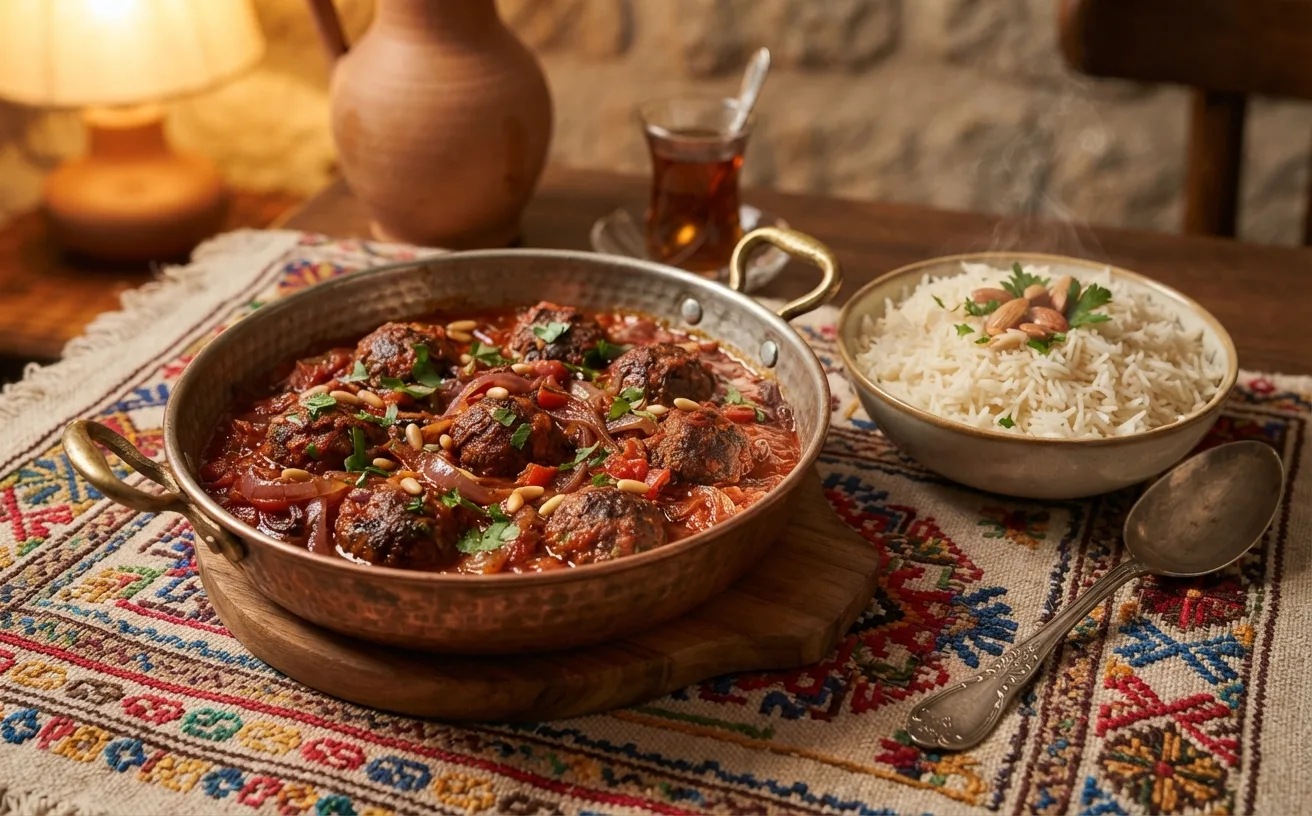
Kebab Hindi
Syria · ▶
 AI illustration
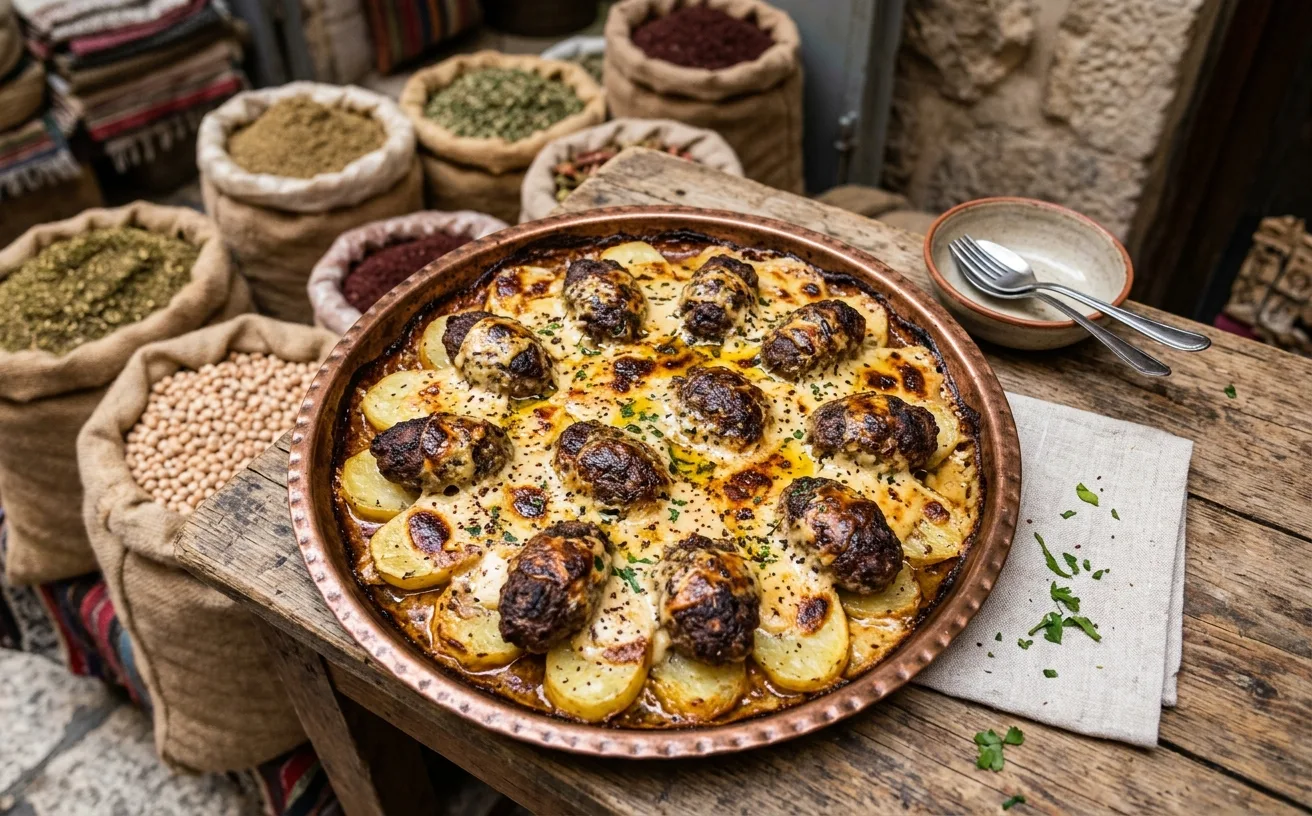
Kafta bi Tahini
Lebanon / Palestine · ▶
 AI illustration
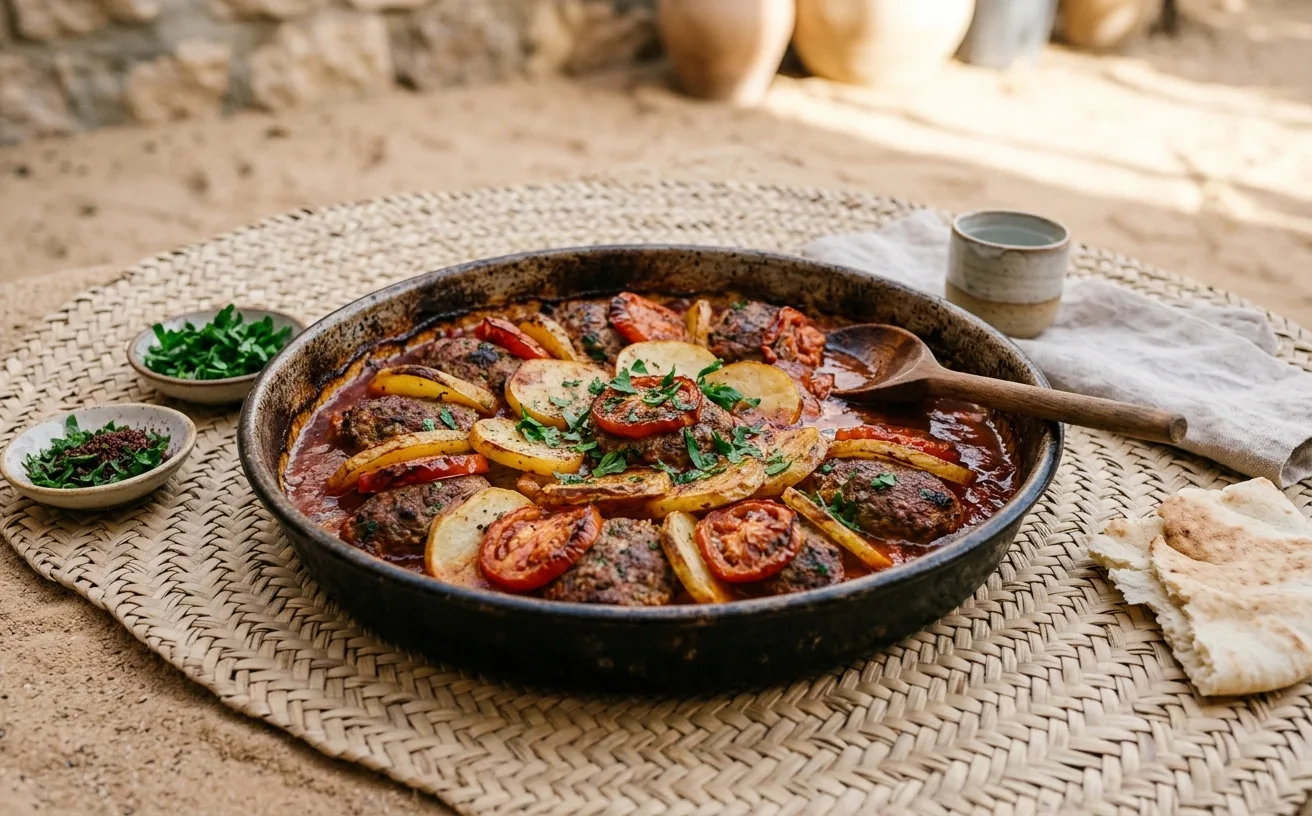
Kafta bi Bandora
Lebanon / Jordan / Palestine · ▶ 🎞
 AI illustration
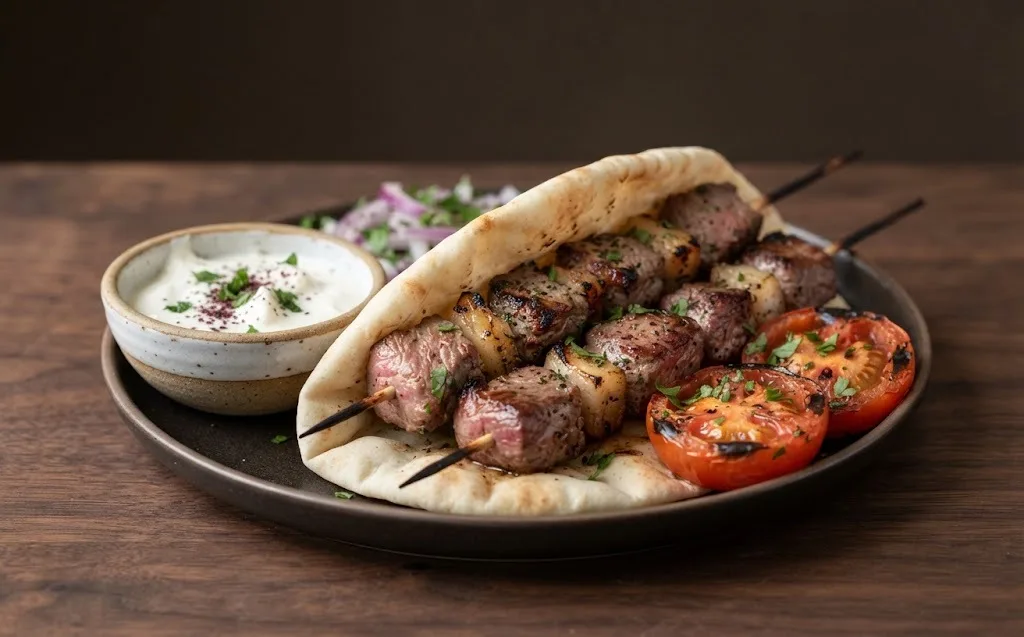
Lahm Mishwi
Lebanon · ▶ 🎞
 AI illustration
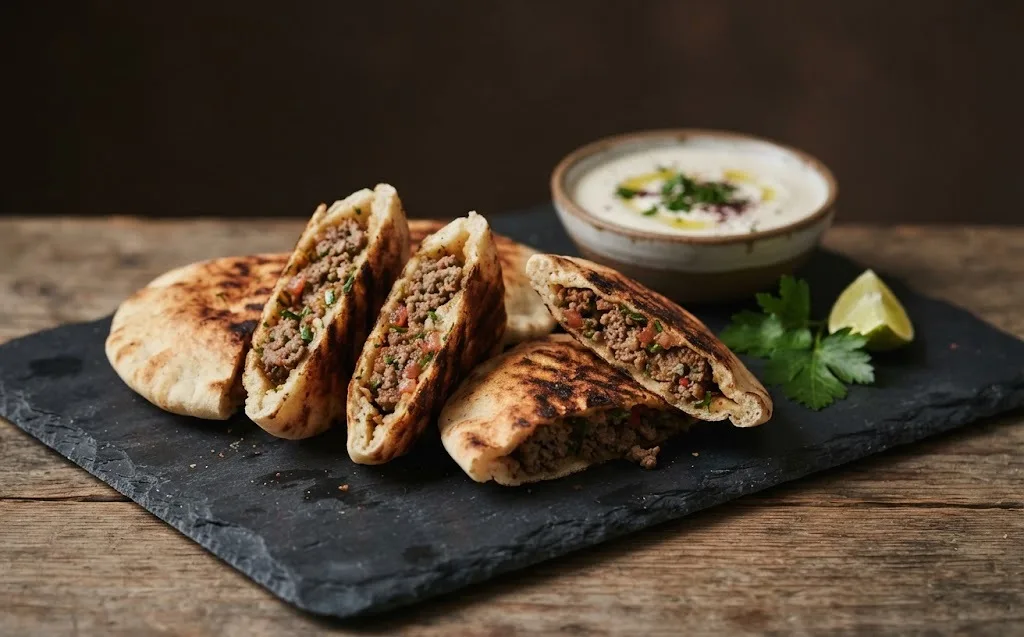
Arayes
Lebanon · ▶
 AI illustration
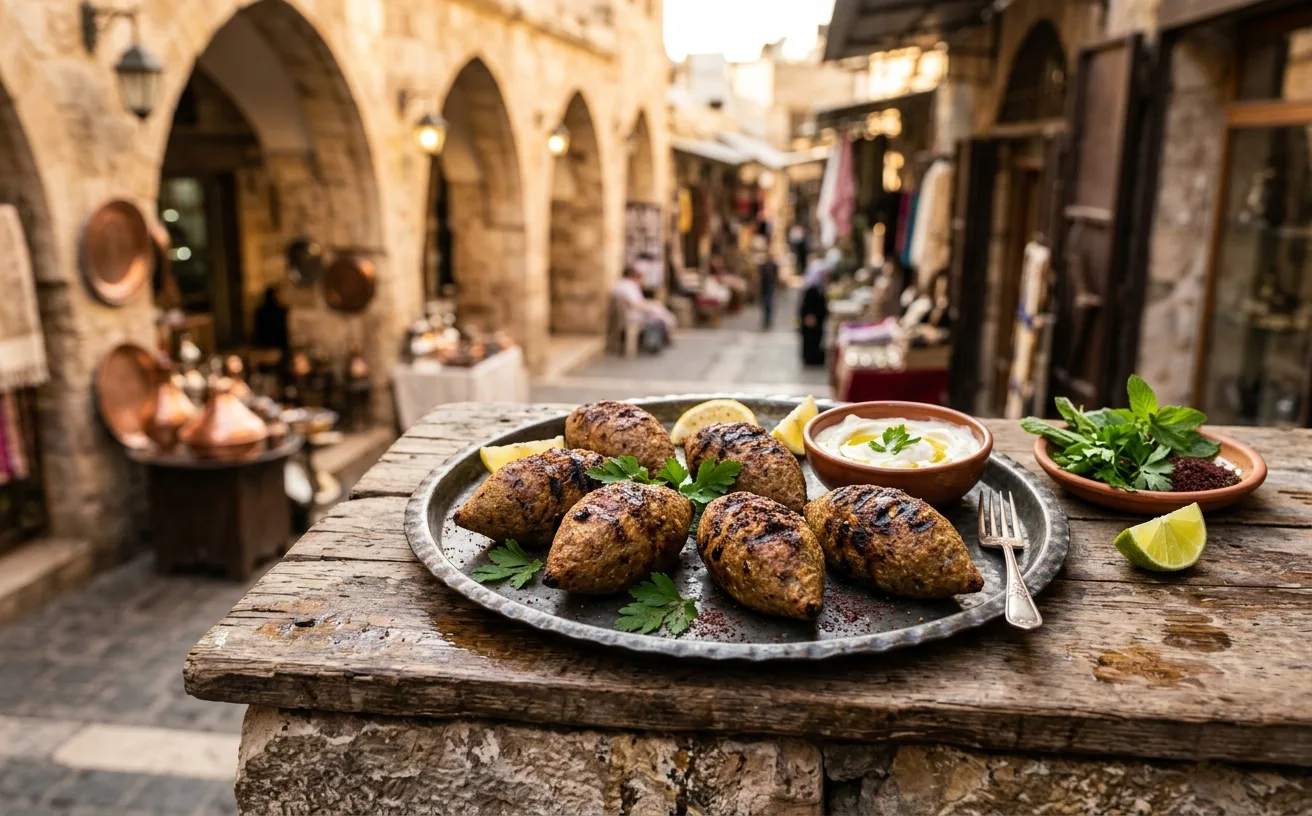
Kibbeh Mishwiyeh
Lebanon / Syria · ▶
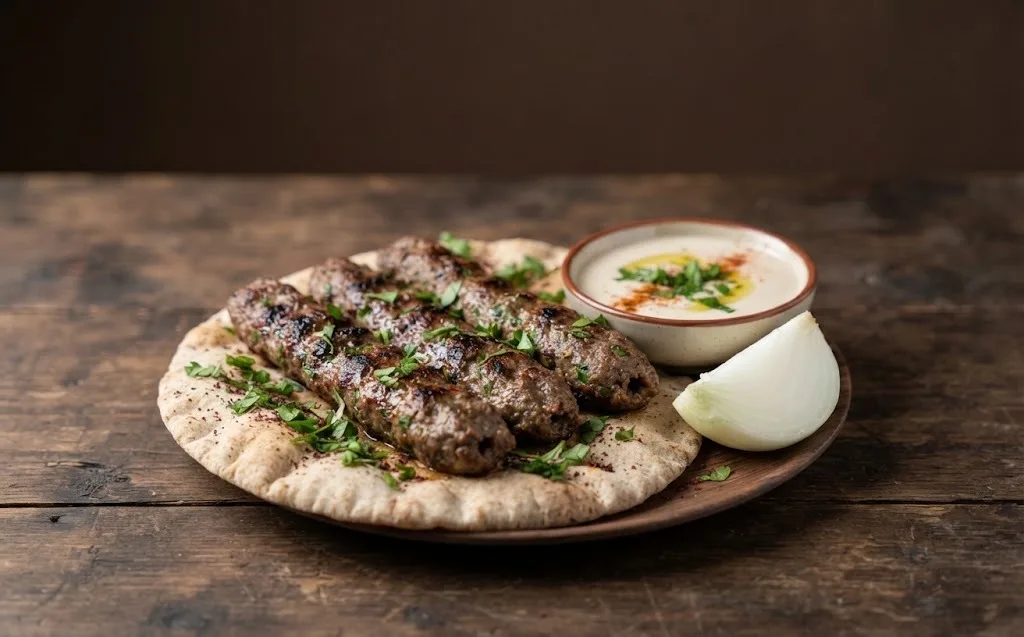
Iraqi Kebab
Iraq
 AI illustration
Egyptian Kofta
Egypt · ▶
 AI illustration
Egyptian Kebab (Kabab Laham)
Egypt · ▶
 AI illustration
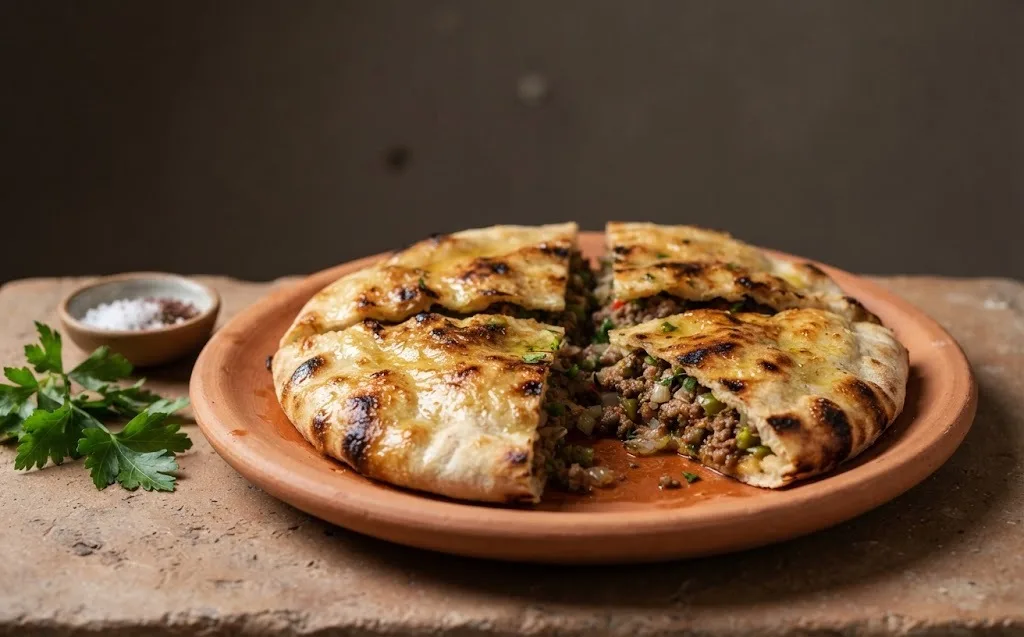
Hawawshi
Egypt · ▶
 AI illustration
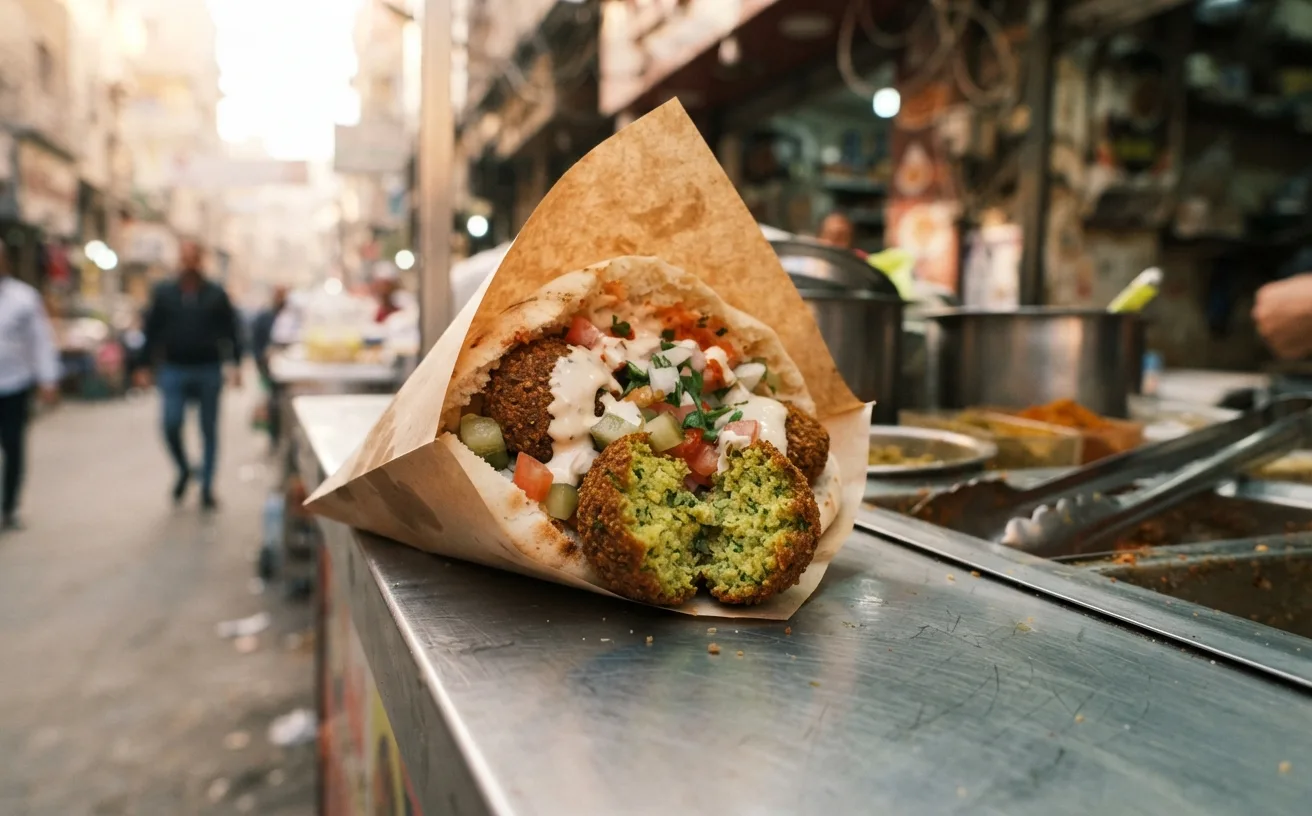
Falafel
Egypt / Levant
 AI illustration
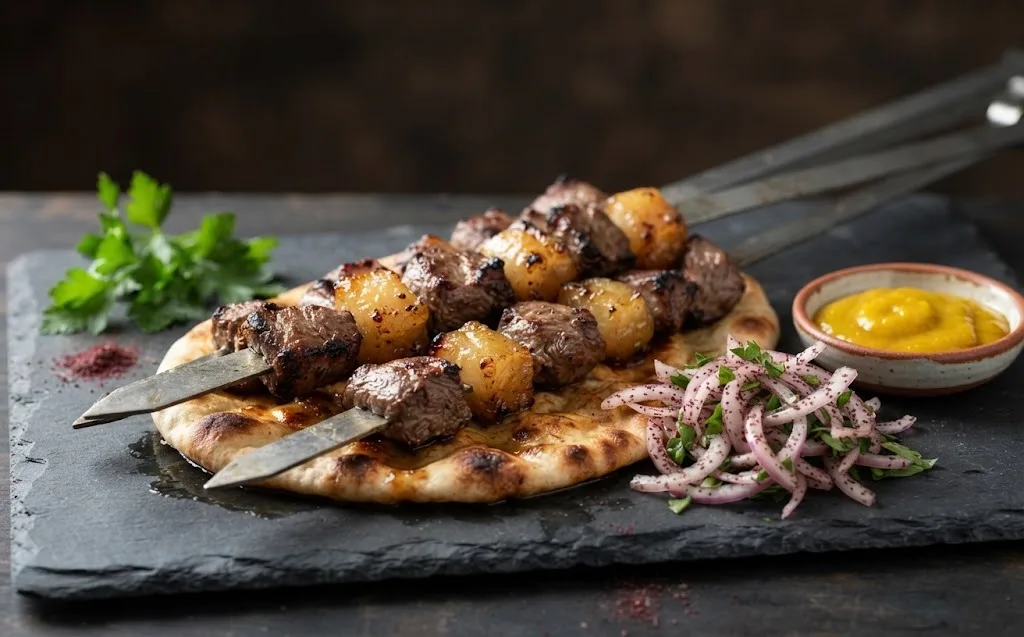
Iraqi Tikka
Iraq
 AI illustration
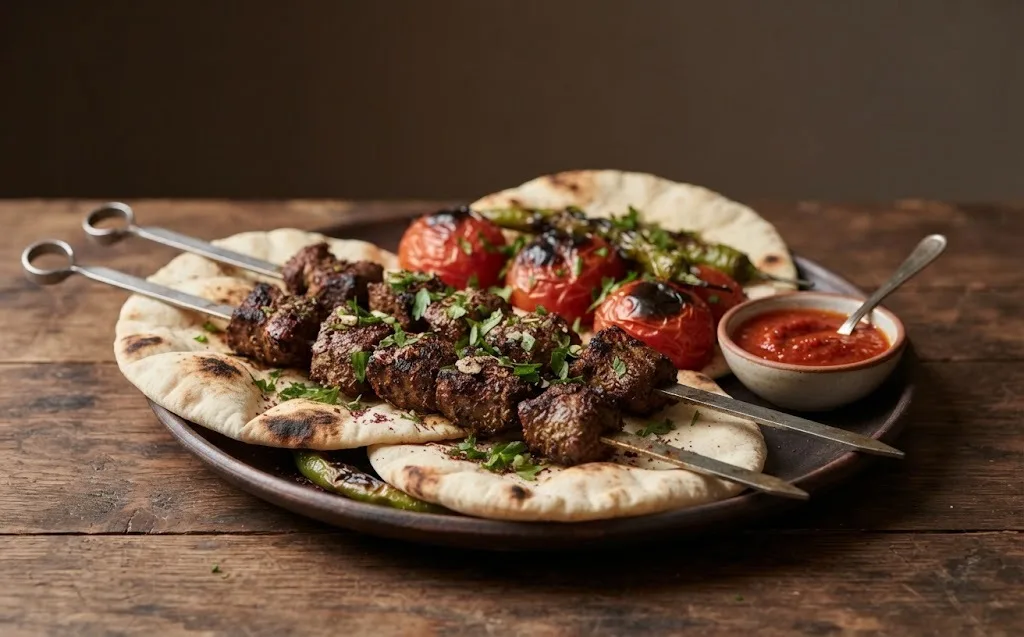
Kebab Meshwi
Saudi Arabia · ▶
 AI illustration
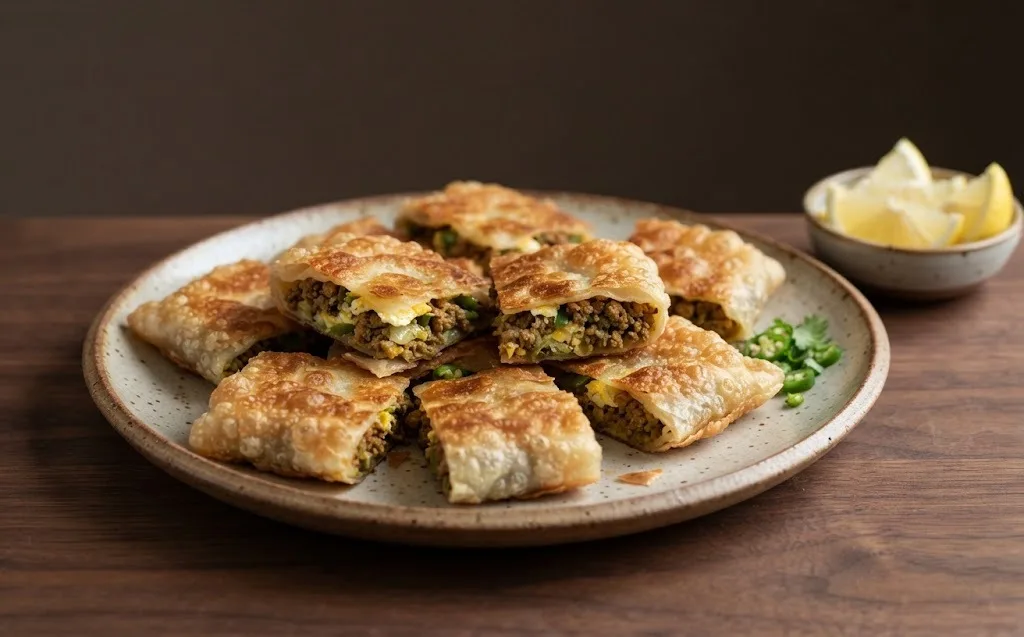
Hejazi Mutabbaq Kebab
Saudi Arabia · ▶
 AI illustration
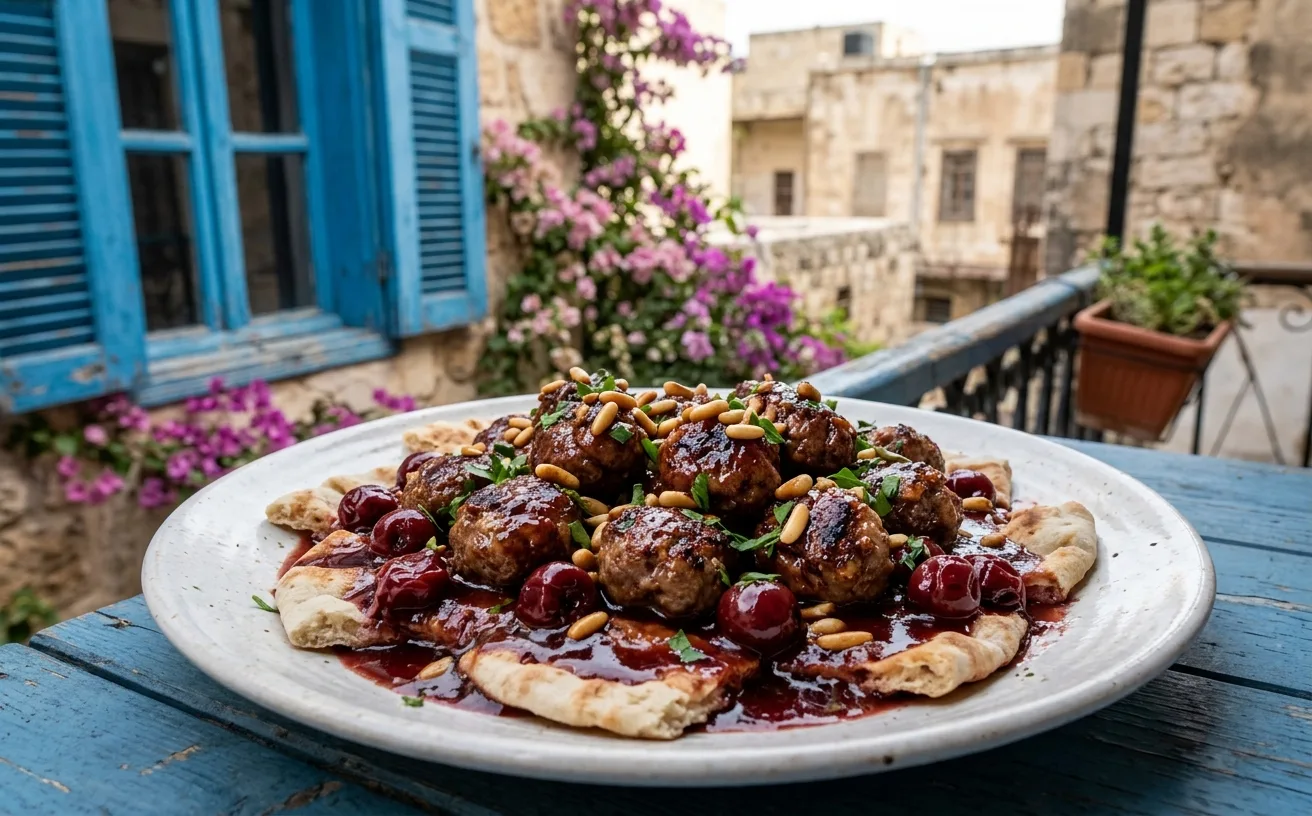
Kabab Karaz
Syria · ▶
 AI illustration
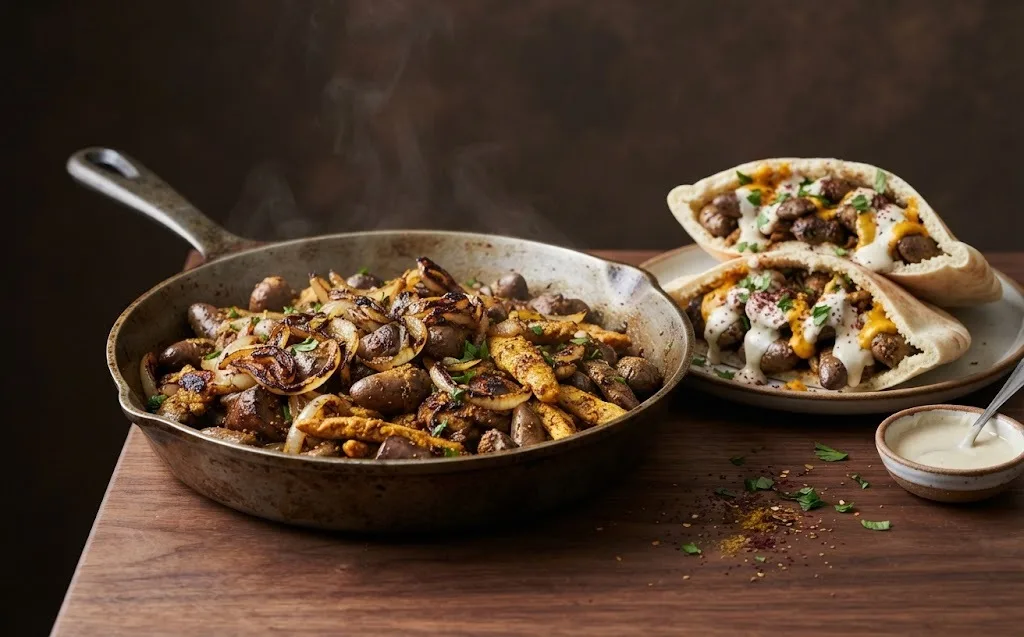
Me'orav Yerushalmi (Jerusalem Mixed Grill)
Israel
 AI illustration
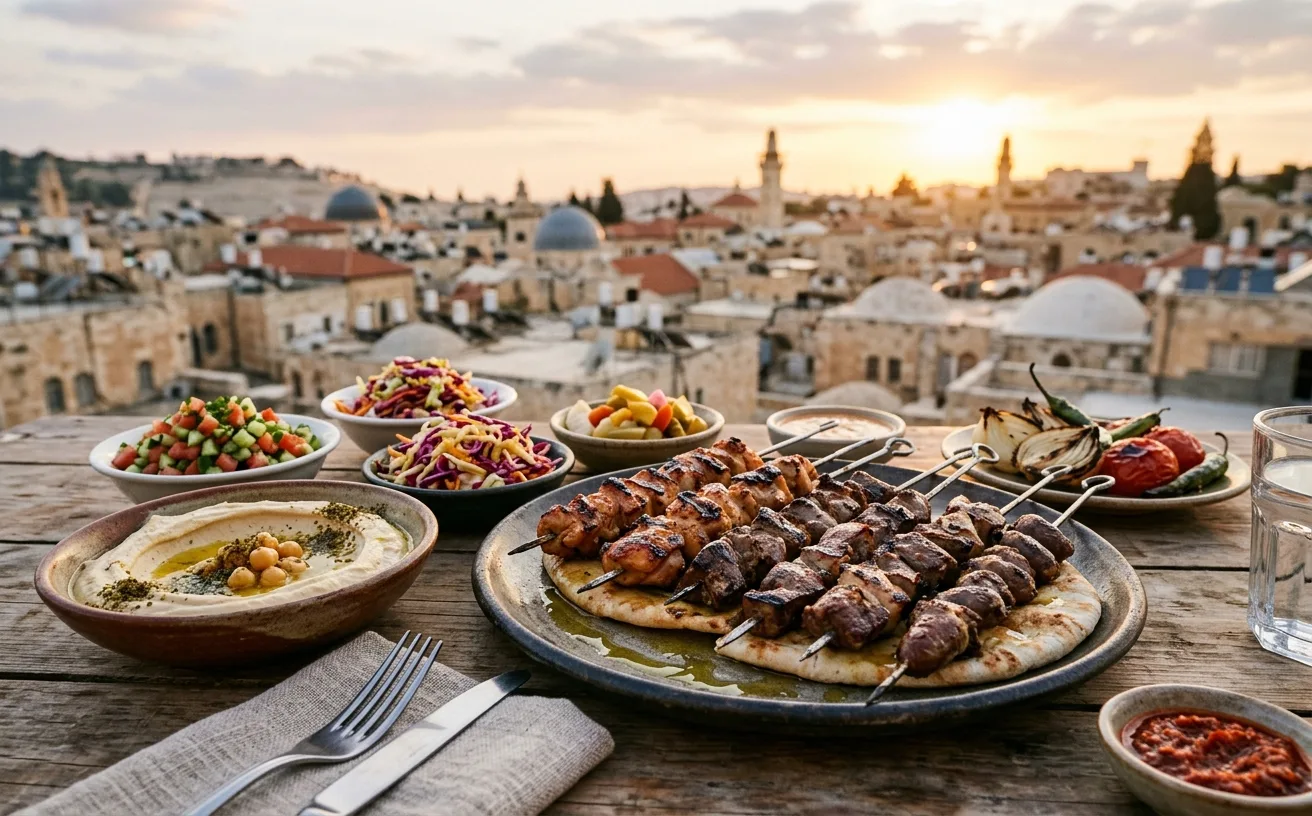
Shipudim
Israel · ▶
 AI illustration
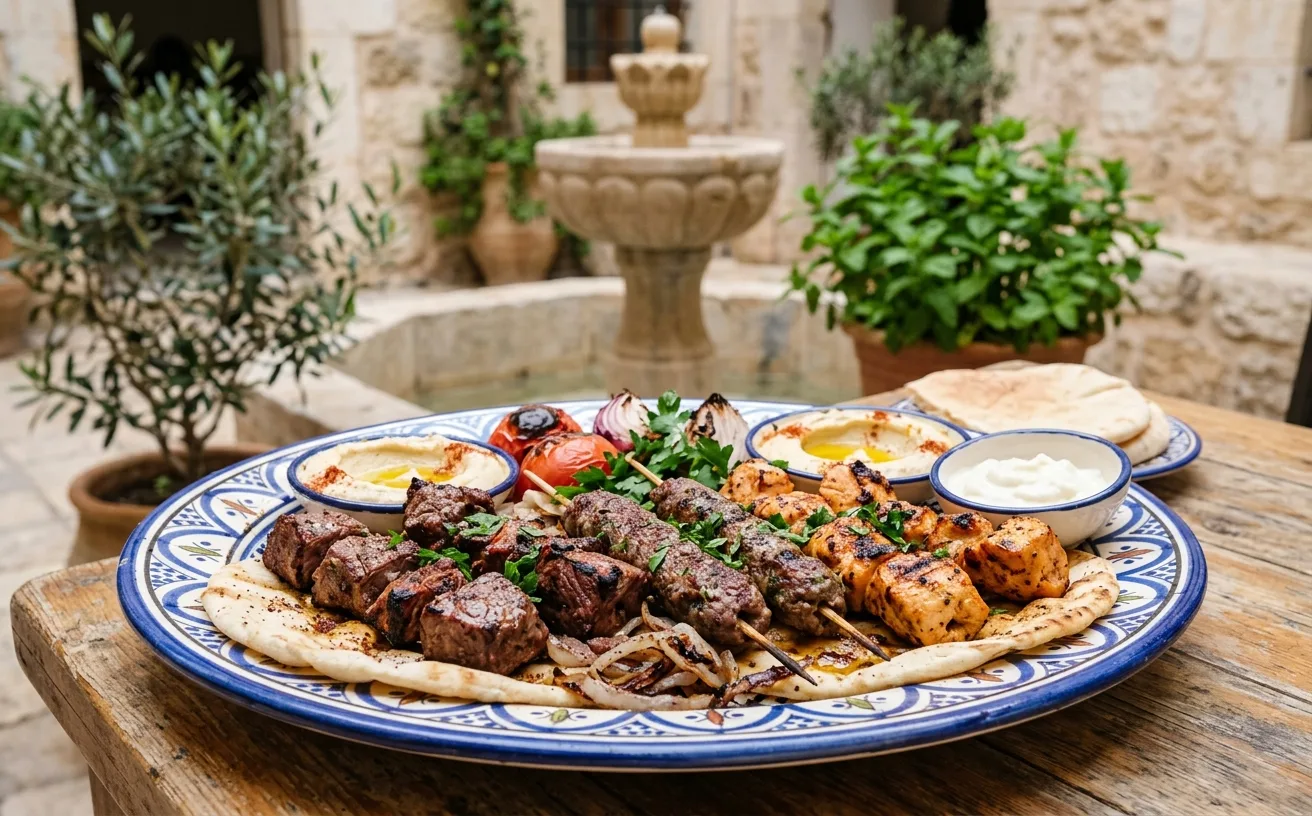
Mashawi Platter
Palestine / Jordan · ▶
 AI illustration
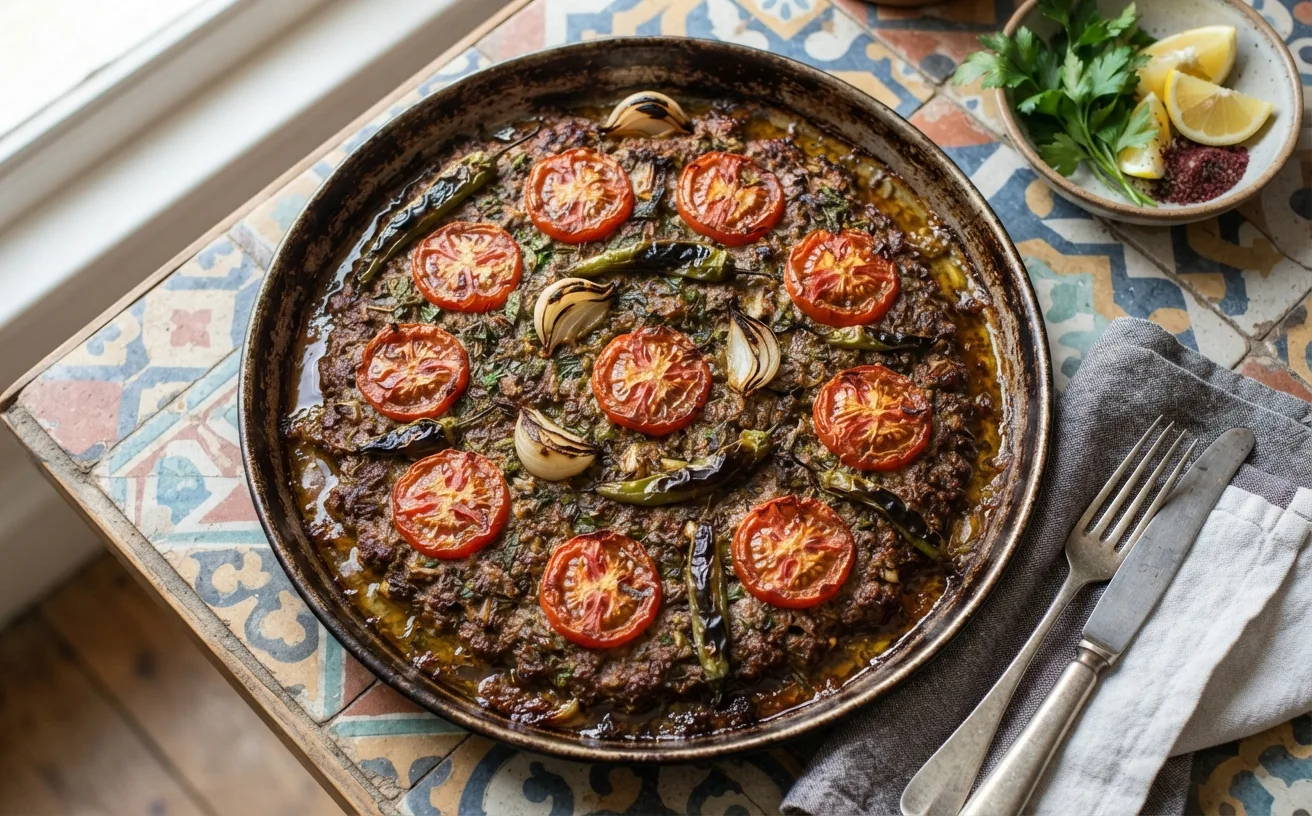
Kebab bil-Siniyeh
Syria
 AI illustration
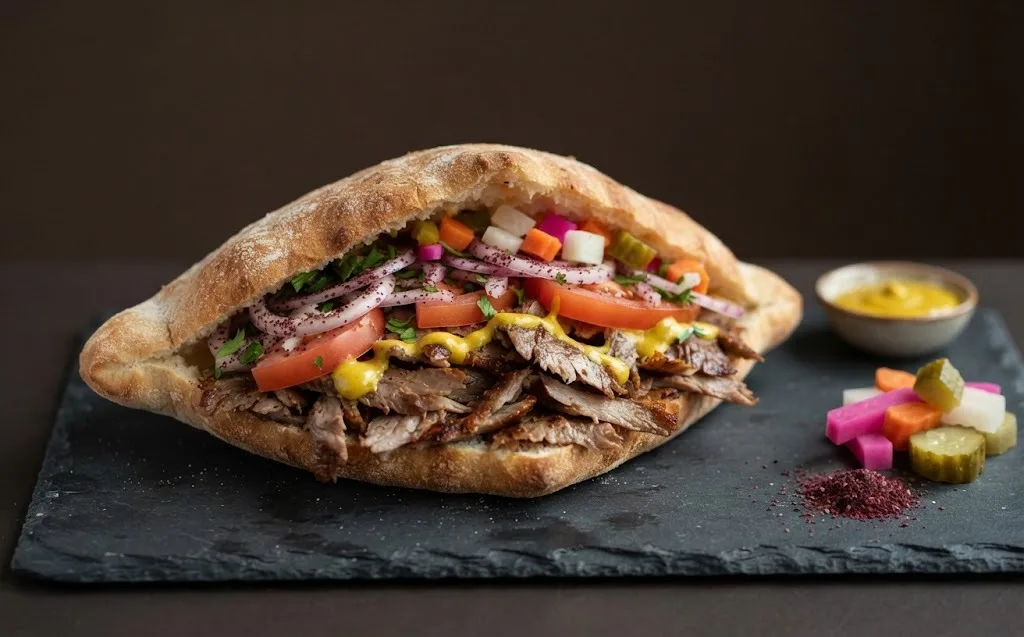
Guss
Iraq
 AI illustration
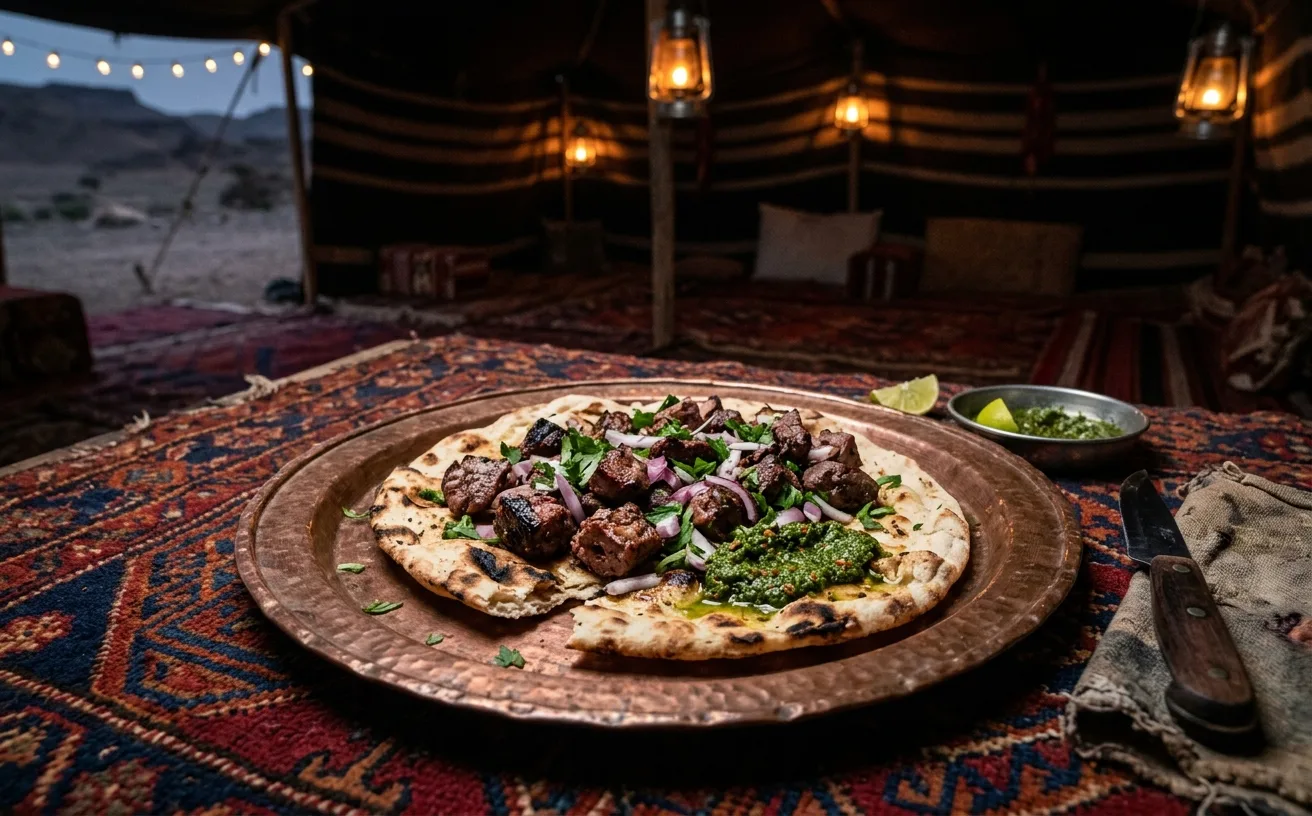
Yemeni Kabab
Yemen · ▶
 AI illustration
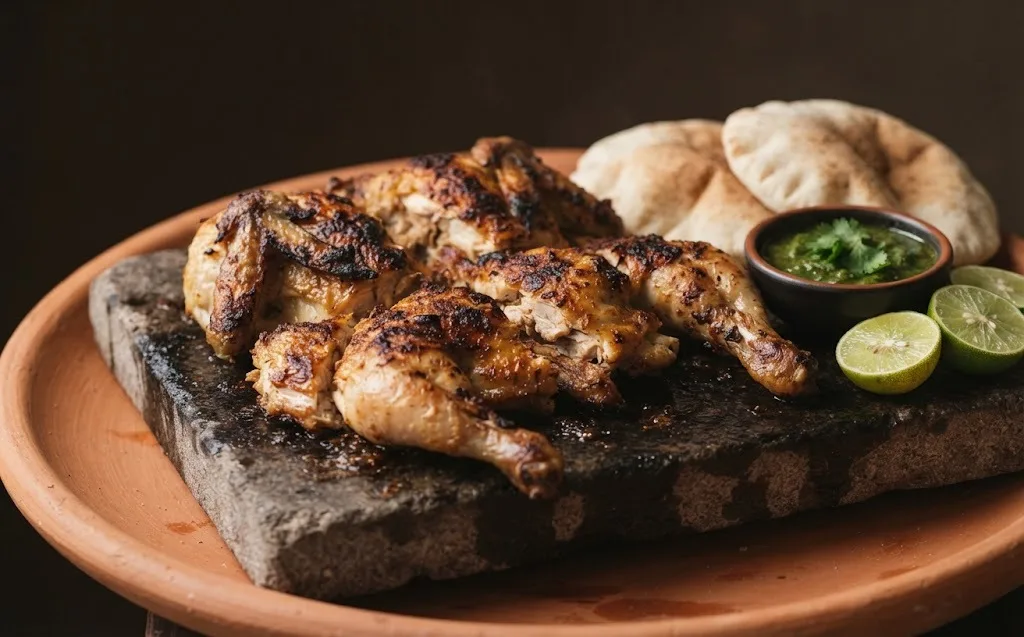
Madhbi
Saudi Arabia · ▶
 AI illustration
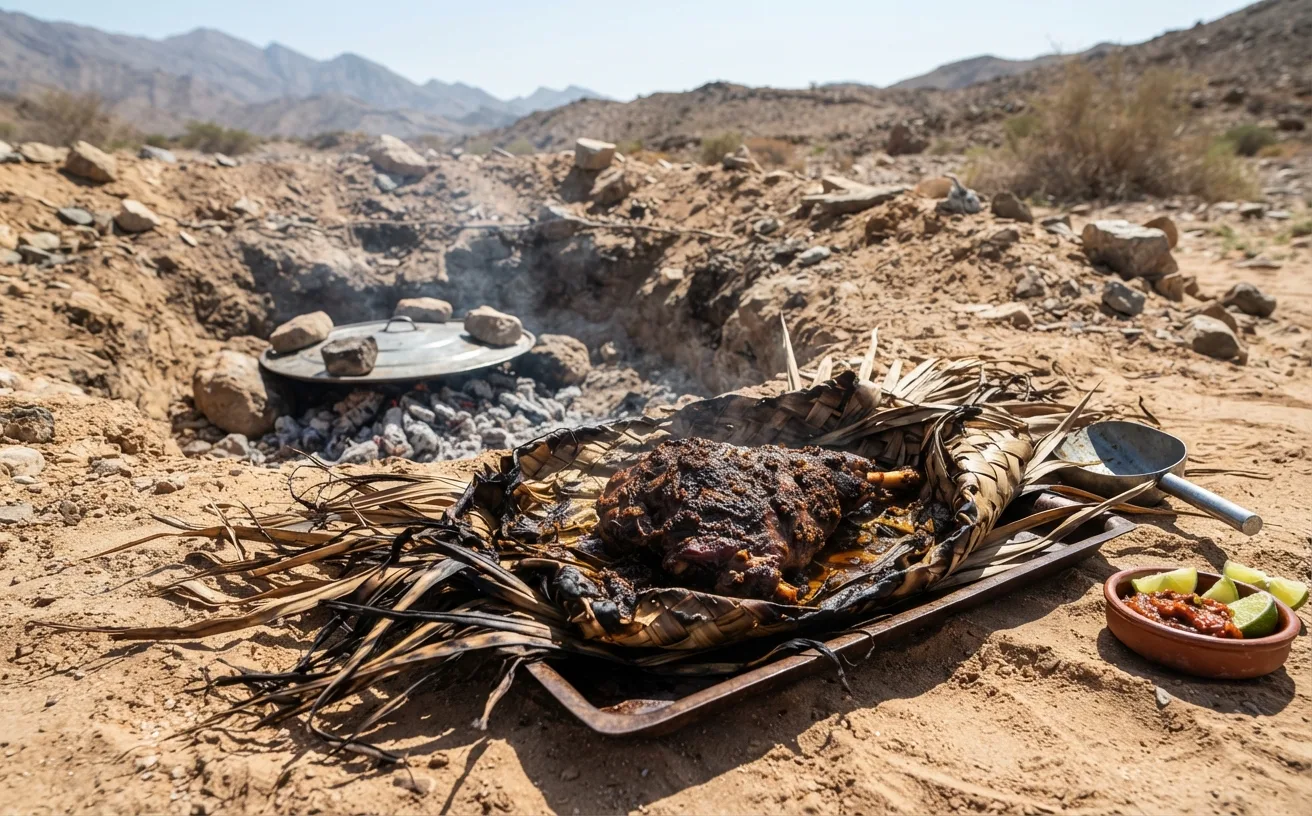
Shuwa
Oman · ▶
Quick index
- Shish Taouk — Cubes of chicken breast tenderized overnight in a garlic-yogurt-lemon marinade, then charred on skewers and almost always eaten with a slick of toum (whipped garlic sauce).
- Chicken Shawarma — Thin sheets of chicken thigh stacked with fat and spices onto a vertical spit, self-basting as they rotate, then shaved off in crisp-edged ribbons.
- Beef Shawarma — The red-meat original of the vertical spit: beef or lamb layered with tail fat, perfumed with vinegar, mahlab and warm spices, and carved into tarator-dressed wraps.
- Kafta Kebab — The Levant's workhorse minced kebab: hand-chopped lamb or beef bound only by finely minced onion and a mountain of flat-leaf parsley, pressed onto flat skewers.
- Kebab Halabi — Aleppo's signature: minced lamb skewers laid over torn flatbread and smothered in a spicy tomato-and-Aleppo-pepper sauce that soaks into the bread.
- Kebab Khashkhash — Kebab khashkhash is a garlicky Aleppo-family kofta skewer served under a bright, fresh tomato sauce sharpened with extra garlic and parsley.
- Kebab Hindi — Despite the name ('Indian kebab'), a thoroughly Syrian home dish of cinnamon-scented kofta simmered with onions in tomato sauce and eaten over rice.
- Kafta bi Tahini — Kafta patties tray-baked under a lemony tahini sauce, often over sliced potatoes, until the sesame cream thickens and browns at the edges.
- Kafta bi Bandora — The tomato counterpart to kafta bi tahini: kofta layered with potato and tomato rounds and baked in seasoned tomato sauce in a single tray.
- Lahm Mishwi — The Levantine take on shish kebab: cubes of lamb marinated simply in onion, allspice and olive oil, grilled alongside kafta and taouk in the classic 'mashawi' mixed grill.
- Arayes — Pita halves stuffed with raw spiced kafta and grilled until the bread crisps and the meat juices fry it from the inside — the name means 'brides'.
- Kibbeh Mishwiyeh — Torpedo shells of pounded lamb and bulgur stuffed with a spiced meat-and-fat filling, then charcoal-grilled rather than fried.
- Iraqi Kebab — Iraq's beloved minced-lamb skewer, notably fatty and coarsely ground, pressed long and thin onto wide blades and eaten folded into samoon or tannour bread with sumac onions and amba.
- Egyptian Kofta — Egypt's grill-house kofta of beef or beef-lamb mix, seasoned with onion, parsley and cumin-forward spicing, always ordered as part of the 'kabab wa kofta' pairing with cubed lamb.
- Egyptian Kebab (Kabab Laham) — The 'kabab' half of Egypt's classic grill order: lamb chunks marinated with onion and mild spices, charcoal-grilled and sold by the kilo alongside kofta in dedicated kababgi restaurants.
- Hawawshi — Baladi bread packed with raw spiced minced beef, peppers and onion, then baked or griddled until the bread turns into a crackling case for the juicy filling.
- Falafel — Deep-fried fritters of ground chickpeas (or, in the Egyptian ta'ameya original, fava beans) with herbs and spices, stuffed into bread with tahina and pickles.
- Iraqi Tikka — Not the South Asian dish of the same name: Iraqi tikka is chunks of lamb (classically alternating with cubes of pure tail fat, liyya) threaded on skewers and grilled over charcoal with little more than onion juice, pepper and salt so the meat and smoke do the talking.
- Kebab Meshwi — The everyday charcoal-grilled meat skewer of Saudi Arabia and the Gulf, typically lamb or chicken marinated with baharat-style spice blends, black lime and garlic, then served over rice or with flat khubz and fiery daqqus chili sauce.
- Hejazi Mutabbaq Kebab — A Hejazi street classic where spiced minced meat and egg are folded inside paper-thin stretched dough and griddled crisp; in Jeddah's kebab stalls it is the standard wrap or side for skewered meats.
- Kabab Karaz — Aleppo's famous sweet-sour kebab: small grilled or seared lamb meatballs finished in a glossy sauce of sour St Lucie cherries, served over torn flatbread with pine nuts and parsley.
- Me'orav Yerushalmi (Jerusalem Mixed Grill) — A flat-top griddle scramble of chicken hearts, spleens, livers and lamb bits seared with onion, turmeric, cumin and baharat, credited to grill stalls around Jerusalem's Mahane Yehuda market in the 1960s-70s.
- Shipudim — Less a single dish than Israel's charcoal-skewer restaurant genre: shipudiyot serve rows of small skewers — pargiyot (deboned chicken thigh), foie-style goose liver, lamb fat, hearts — with hummus, salads and laffa.
- Mashawi Platter — The Levantine restaurant ritual of a mixed charcoal platter — shish lamb cubes, kofta fingers, shish tawook and sometimes kidneys — laid over flatbread that soaks up the drippings, with grilled tomato, onion and toum.
- Kebab bil-Siniyeh — A Syrian home rendering of kebab without a grill: spiced lamb kofta pressed flat into a round metal tray, topped with tomato slices or tahini-lemon sauce and baked until the fat bastes the meat.
- Guss — Iraq's own vertical-spit tradition: lamb layered with fat on a rotating spit, shaved thin and packed into samoon bread with pickles (amba optional), predating the global shawarma boom in Baghdad's street stalls.
- Yemeni Kabab — In Sana'a and Ta'izz souks, small chunks of young lamb, kidney and liver are skewered, charcoal-grilled and chopped onto malooga or khubz flatbread with raw onion and fiery sahawiq (zhug).
- Madhbi — A southern Arabian technique from Jizan, Asir and neighboring Yemen: butterflied chicken or lamb is cooked directly on granite or basalt slabs heated white-hot over a wood fire, the stone searing and steaming at once.
- Shuwa — Oman's Eid centerpiece: whole lamb or goat rubbed with date paste, tamarind and a dense spice blend, wrapped in banana or palm-frond leaves and buried in a communal underground ember pit for one to two days.