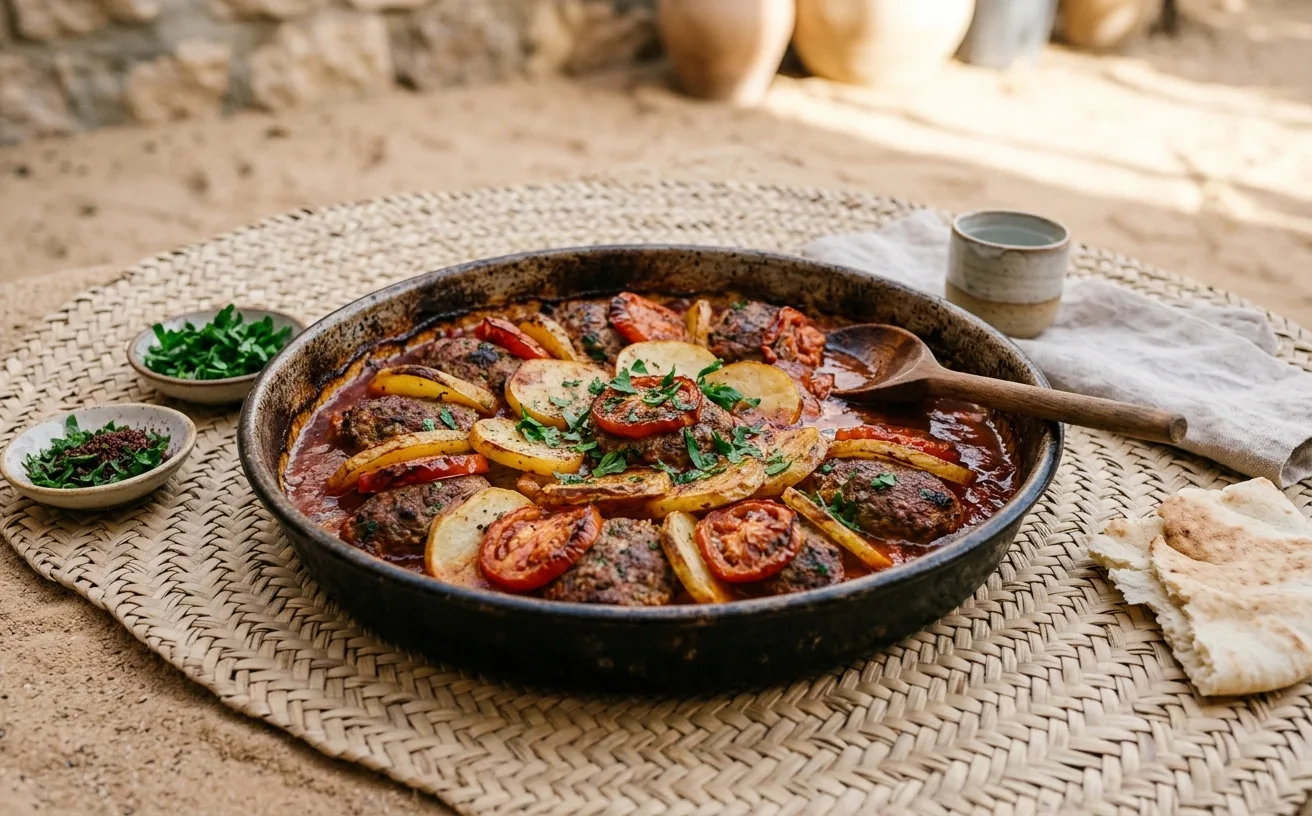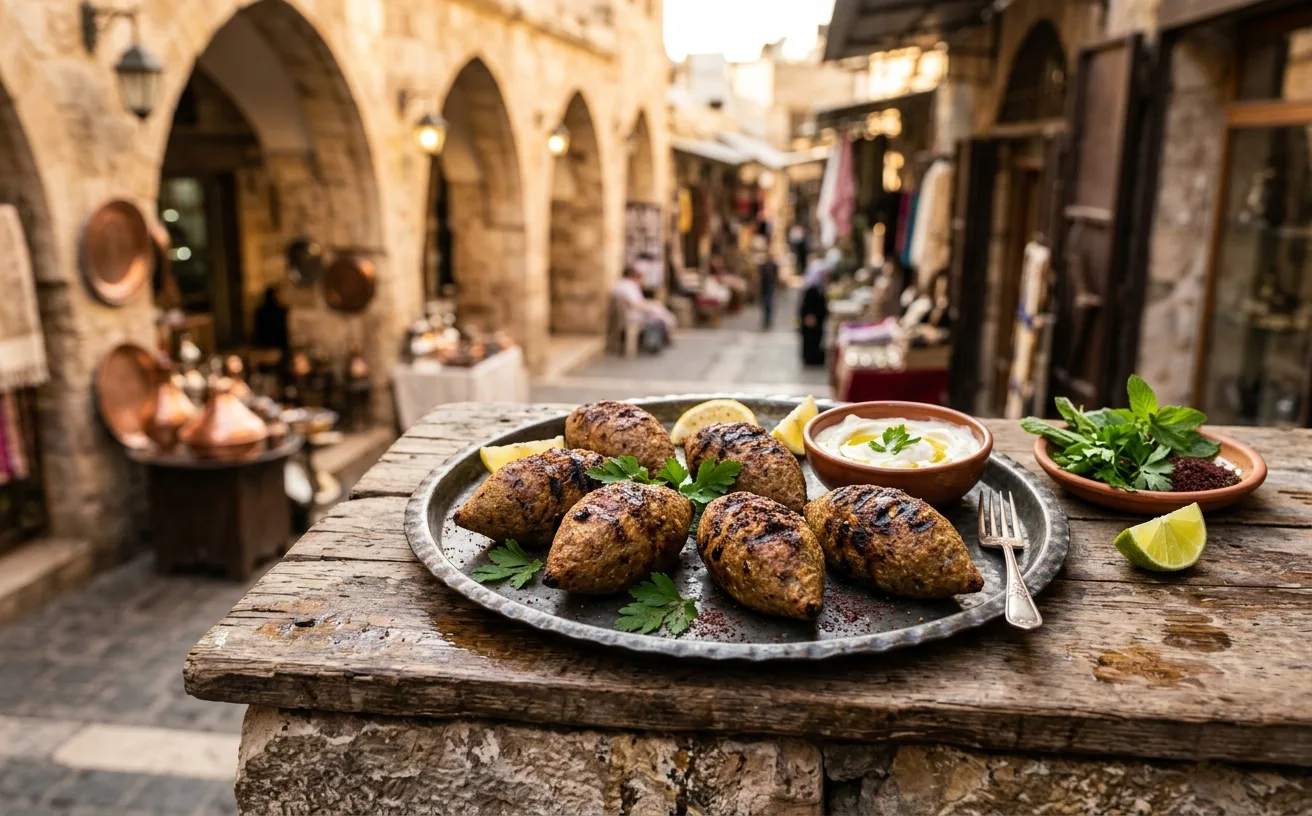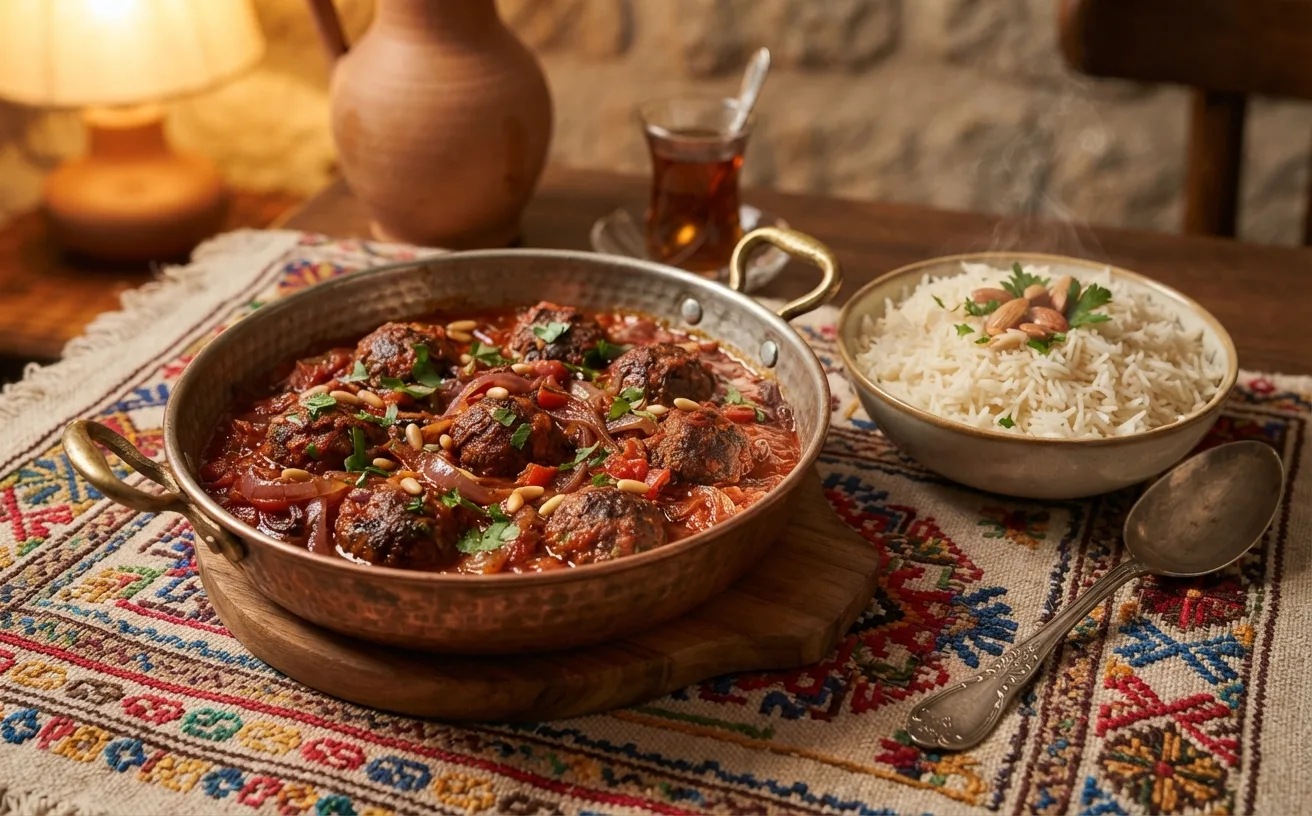
Despite the name ('Indian kebab'), a thoroughly Syrian home dish of cinnamon-scented kofta simmered with onions in tomato sauce and eaten over rice. The name likely nods to the spicing, which struck Damascene cooks as exotically eastern.
Also known as dawood basha (related), Syrian kofta in tomato sauce.
Reference video
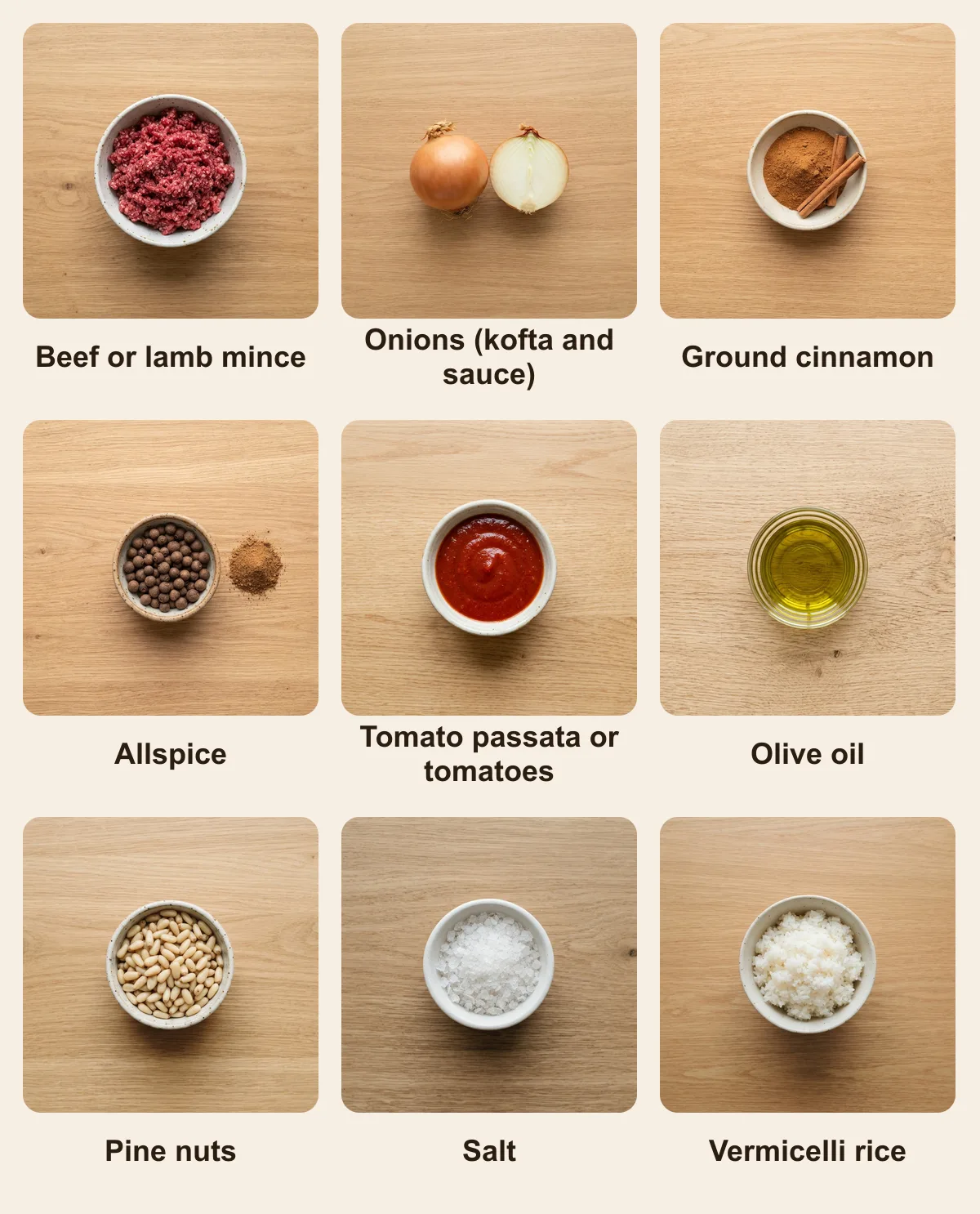
Ingredients
- 500 g beef or lamb mince
- 1 small onion, grated (for the kofta), plus 2 onions, sliced (for the sauce)
- 1 tsp ground cinnamon, divided
- 0.75 tsp allspice
- 30 g tomato paste, plus 700 g tomato passata (or 800 g grated ripe tomatoes)
- 30 ml olive oil
- 20 g pine nuts (optional but lovely)
- 1 tsp salt
- Vermicelli rice, to serve
How to make it
- 1
Season the mince with the grated onion, half the cinnamon, the allspice and salt, then roll it into finger-length torpedoes.
- 2
Brown the kofta briefly in olive oil on two sides and lift them out; they finish cooking later.
- 3
Soften the sliced onions in the same pan for 10 minutes, then stir in the tomato paste and fry it until it darkens before scraping up the meat residue.
- 4
Pour in the passata with 100 ml water, the rest of the cinnamon and salt; return the kofta and simmer gently 25 minutes.
- 5
When oil beads at the rim of the sauce, scatter with toasted pine nuts and serve over vermicelli rice.
Pro tip: Despite the name there is nothing Indian here: the seasoning stays at cinnamon and allspice. Syrian cooks judge doneness by the sauce releasing its oil back to the surface.
Where Kebab Hindi comes from
It is weeknight food rather than restaurant food, and it belongs to the same broad category as the Aleppine sauced kebabs while being simpler and cheaper than any of them. Syrian households abroad have carried it everywhere, and it is one of the first dishes Syrian cooks teach to people who ask what home tastes like.
How Kebab Hindi is cooked
The kofta are shaped small — walnut-sized balls or short fingers — and browned quickly in a pan before the sauce goes in. That browning is worth doing properly because it is the only concentrated flavour the dish gets; everything after it is a gentle simmer.
The sauce is built in the same pan: onions softened, tomato paste fried out until it darkens, then passata, more ground cinnamon and a splash of water. The kofta go back in and simmer covered for twenty-five to thirty minutes, which is long enough for them to give up some fat into the sauce and take some sauce back.
Ingredients and shopping
Minced beef or lamb at around 20 percent fat, worked with grated onion, salt and a good pinch of cinnamon and allspice. The cinnamon is not a background note here — it is what makes the dish read as hindi rather than as a plain kofta in sauce.
Tomato paste fried until it turns brick-coloured is a Levantine habit that makes a real difference to depth. More ground cinnamon goes into the sauce as well as the meat. Rice, preferably short-grain cooked with vermicelli in the Syrian style, is the intended accompaniment.
How Kebab Hindi is served
Over rice with vermicelli, with the sauce spooned generously, flatbread on the side and a bowl of yoghurt or a cucumber-yoghurt salad. Pickles. It is the kind of dish that is better the next day, and Syrian households cook it in quantity for exactly that reason.
Common mistakes
Skipping the browning
The kofta must be seared before they simmer. Dropped raw into the sauce they turn grey and the dish has no depth.
Raw tomato paste
Fry it with the onions until it darkens and smells sweet. Added straight to liquid it tastes tinny.
Under-spicing the cinnamon
Cinnamon and allspice are the signature. Timid quantities give you a generic meatball in tomato sauce.
Kofta too large
Walnut-sized. Large balls need longer than the sauce should be cooked.
Kebab Hindi: questions and answers
Why is it called a kebab if it is stewed?
Because kebab originally described cooked meat in general. Several Levantine and Turkish dishes preserve that broader sense.
What spice defines it?
Cinnamon, in both the meat and the sauce, with allspice behind it in the meat.
What is it served with?
Rice, traditionally short-grain cooked with toasted vermicelli, with flatbread and yoghurt alongside.
Sources and further reading
- Kebab Hindi — Greasy Little Birds
- Kebab Hindi - Syrian Lamb Meatballs and Vegetables — Tasty Oven