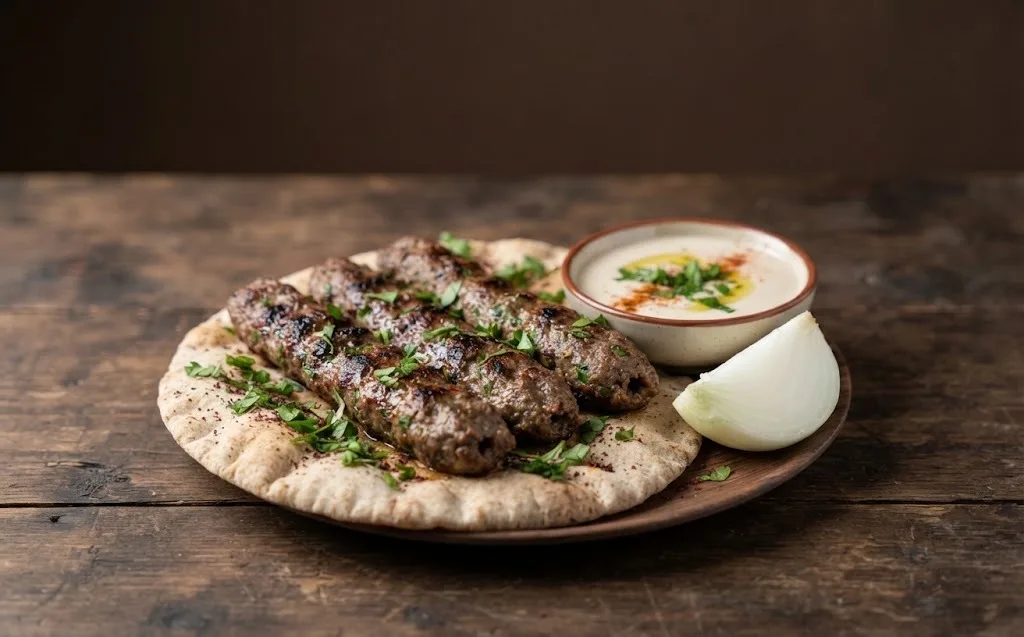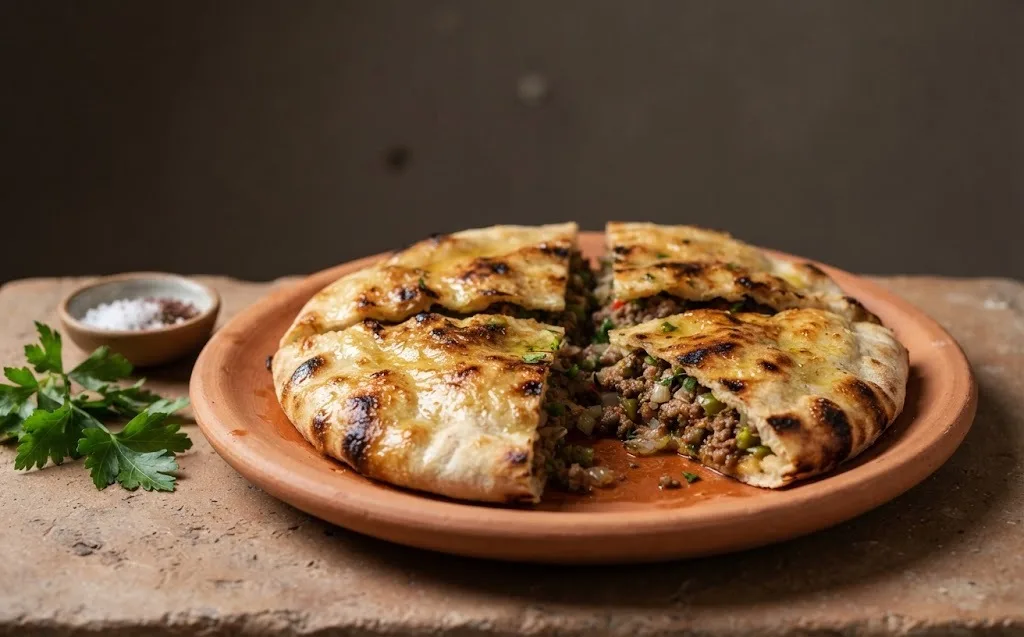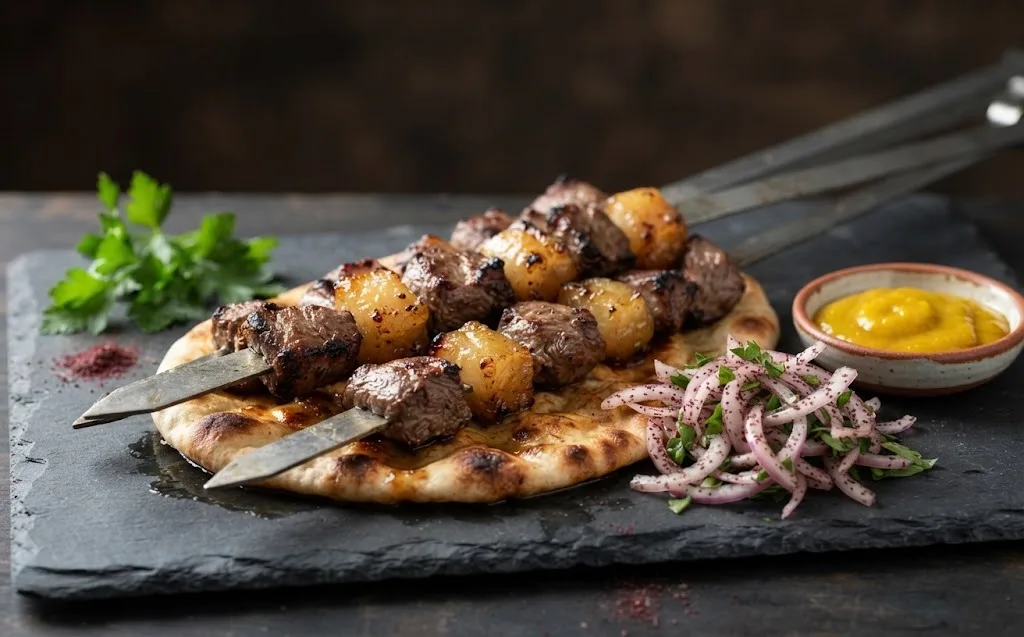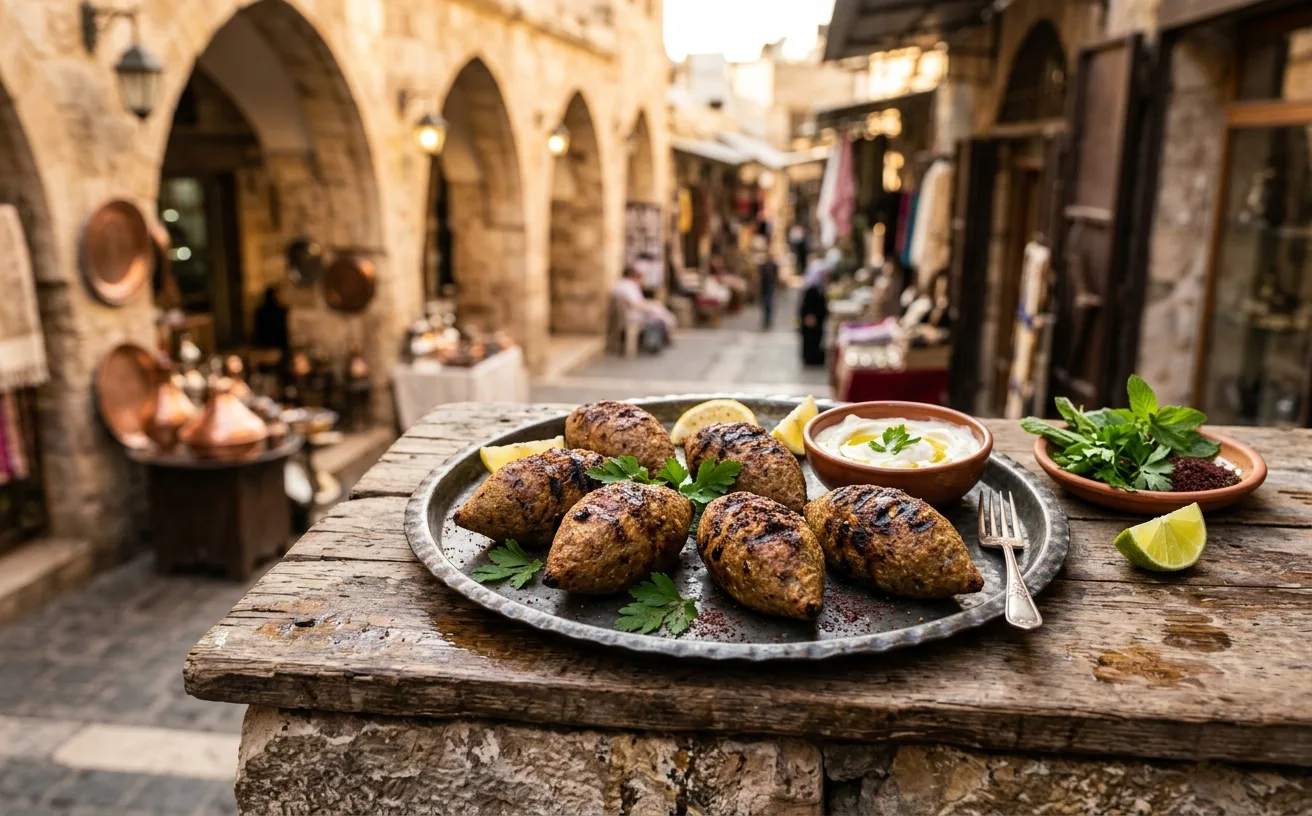
Torpedo shells of pounded lamb and bulgur stuffed with a spiced meat-and-fat filling, then charcoal-grilled rather than fried. The bulgur crust chars while the fatty core bastes the inside — a kebab-family gem rarely seen outside the Levant.
Also known as grilled kibbeh, kibbeh meshwiye, kibbe mishwi.
Reference video
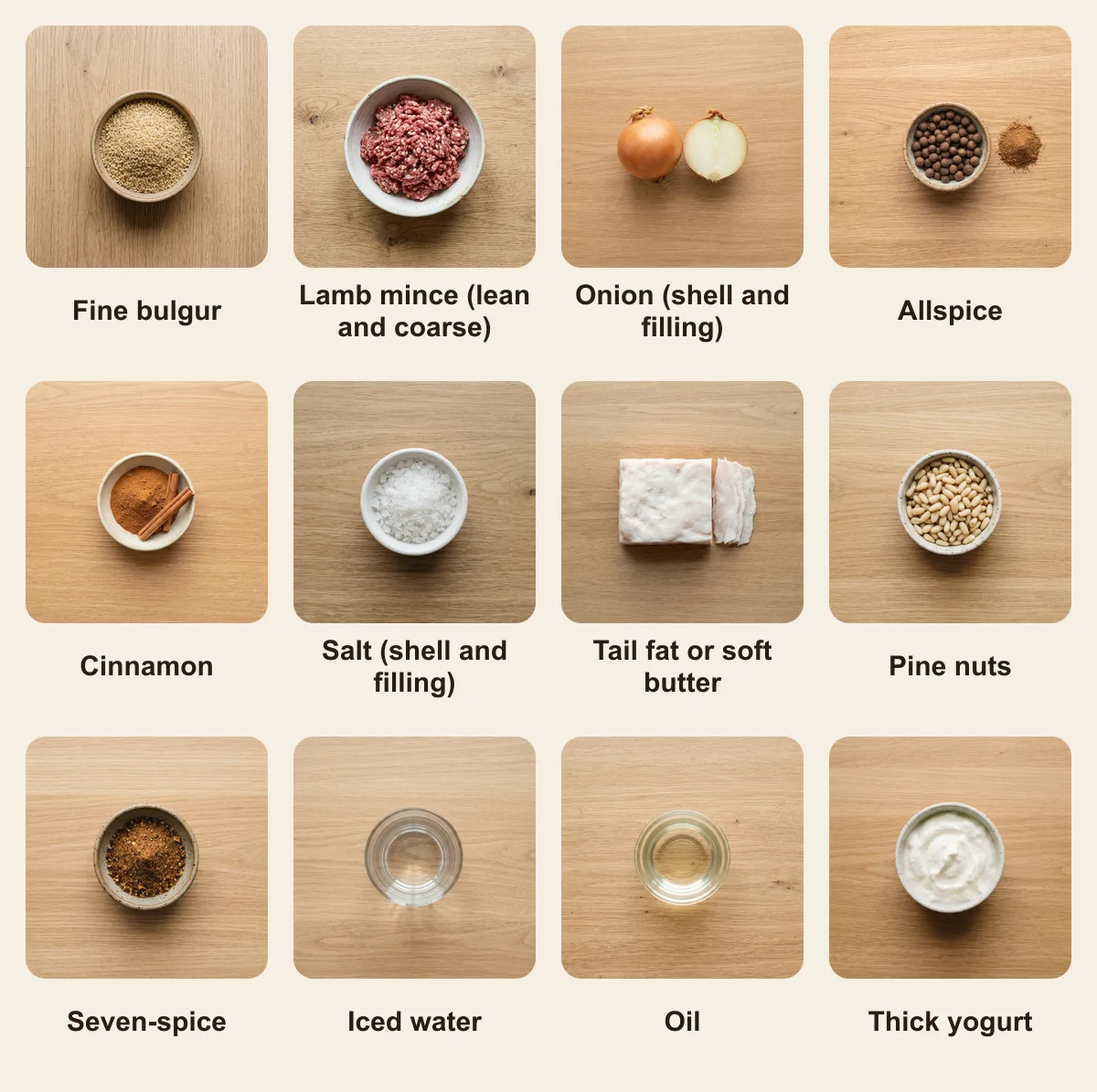
Ingredients
- 300 g fine bulgur, rinsed and soaked 10 min
- 400 g very lean lamb, minced twice (ask the butcher)
- 1 small onion, grated
- 1.5 tsp allspice, a pinch of cinnamon and 1 tsp salt, for the shell
- 250 g coarse lamb mince with 80 g tail fat or soft butter, for the filling
- 1 onion, chopped, for the filling
- 30 g pine nuts, toasted
- 1 tsp seven-spice and 0.5 tsp salt, for the filling
- A bowl of iced water, for shaping, and a little oil for brushing
- Thick yogurt, to serve
How to make it
- 1
Squeeze the bulgur dry and knead it with the lean lamb, grated onion, allspice, cinnamon and salt, dipping your hands in iced water, until it becomes a smooth, sealable paste.
- 2
For the filling, cook the chopped onion in the tail fat, add the coarse mince, seven-spice and salt, brown lightly, then fold in pine nuts and cool completely.
- 3
Cup a ball of shell paste, hollow it with a wet thumb, spoon in filling and close into a fat torpedo (or sandwich filling between two thin discs and crimp).
- 4
Brush with oil and grill over medium charcoal 12-15 minutes, rolling so the crust chars in patches without splitting.
- 5
Rest briefly and serve with cold yogurt against the smoke.
Pro tip: Grilled kibbeh dries out where fried kibbeh does not, so the fat belongs inside: a filling rich in tail fat or butter melts on the coals and bastes the shell from within.
Where Kibbeh Mishwiyeh comes from
Kibbeh is the Levant's most technically demanding dish and the one Lebanese and Syrian cooks are judged on.
It is a rarity even in the region, because grilling is harder than frying here — a shell that cracks in hot oil is a nuisance, while one that cracks on a grill loses its filling into the coals. Restaurants that offer it are signalling something about their kitchen, and it is well worth ordering when you see it.
How Kibbeh Mishwiyeh is cooked
The shell is fine bulgur soaked and squeezed, then pounded or processed with very lean lamb and onion into a smooth, elastic paste. It has to be smooth: any coarseness becomes a fault line. Traditionally this was done in a stone mortar, and cooks who still do it insist the texture is better.
The filling is coarsely minced lamb cooked with onion, pine nuts, allspice and a generous amount of fat — the fat is what bastes the shell from inside on the grill. Shaping is done with wet hands, forming a shell around the fist, filling it, and sealing the ends into a torpedo. Grilling is over moderate coals, turned carefully, and any crack means the filling escapes.
Ingredients and shopping
Very lean lamb for the shell — leg, trimmed hard — because fat in the shell makes it crumble. Fine bulgur (number one grade), soaked and squeezed dry. For the filling, the opposite: fatty lamb shoulder, coarsely minced, with lamb tail fat if available.
Allspice and cinnamon are the Levantine spices in both shell and filling. Pine nuts toasted in butter go into the filling. Keeping everything cold while shaping makes the shell far easier to handle, and a bowl of iced water for the hands is standard practice.
How Kibbeh Mishwiyeh is served
With yoghurt or a garlic-yoghurt sauce, a squeeze of lemon, flatbread and a sharp salad. It usually appears as part of a mezze rather than as a main, and one or two per person is a normal portion. Arak, and pickles on the table.
Common mistakes
Fat in the shell mixture
It makes the shell crumble and crack. The shell wants very lean meat; the fat belongs in the filling.
A coarse shell paste
Any coarseness is a fault line that opens on the grill. Pound or process it until genuinely smooth and elastic.
Working warm
Chill everything and wet your hands in iced water. Warm kibbeh paste is unmanageable.
Fierce heat
Moderate coals and careful turning. A hot fire cracks the shell and the filling is gone.
Kibbeh Mishwiyeh: questions and answers
What is kibbeh made of?
A shell of fine bulgur pounded with very lean lamb and onion, filled with coarsely minced fatty lamb, onion, pine nuts and allspice.
Why does my kibbeh shell crack?
Usually fat in the shell mixture, a paste that is not smooth enough, working while warm, or too fierce a fire.
What grade of bulgur do I need?
Fine bulgur, number one grade, soaked and squeezed dry. Coarse pilav bulgur will not form a smooth shell.
Sources and further reading
- Kibbeh — Wikipedia
- Traditional Grilled Kibbeh Recipe: Kibbeh Mishwiyyeh — Mama's Lebanese Kitchen