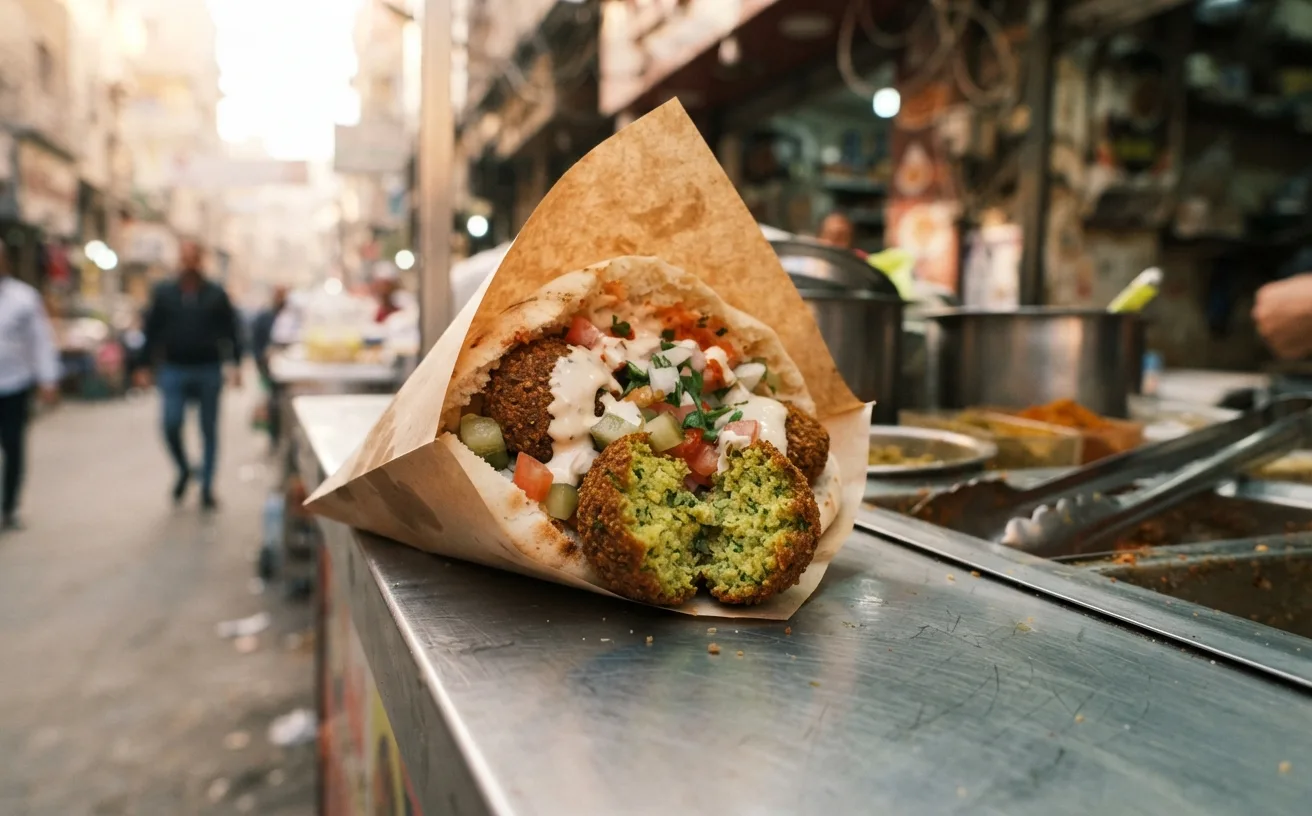
Deep-fried fritters of ground chickpeas (or, in the Egyptian ta'ameya original, fava beans) with herbs and spices, stuffed into bread with tahina and pickles. The region's definitive meat-free answer to the kebab wrap.
Also known as ta'ameya, taameya.
Ingredients
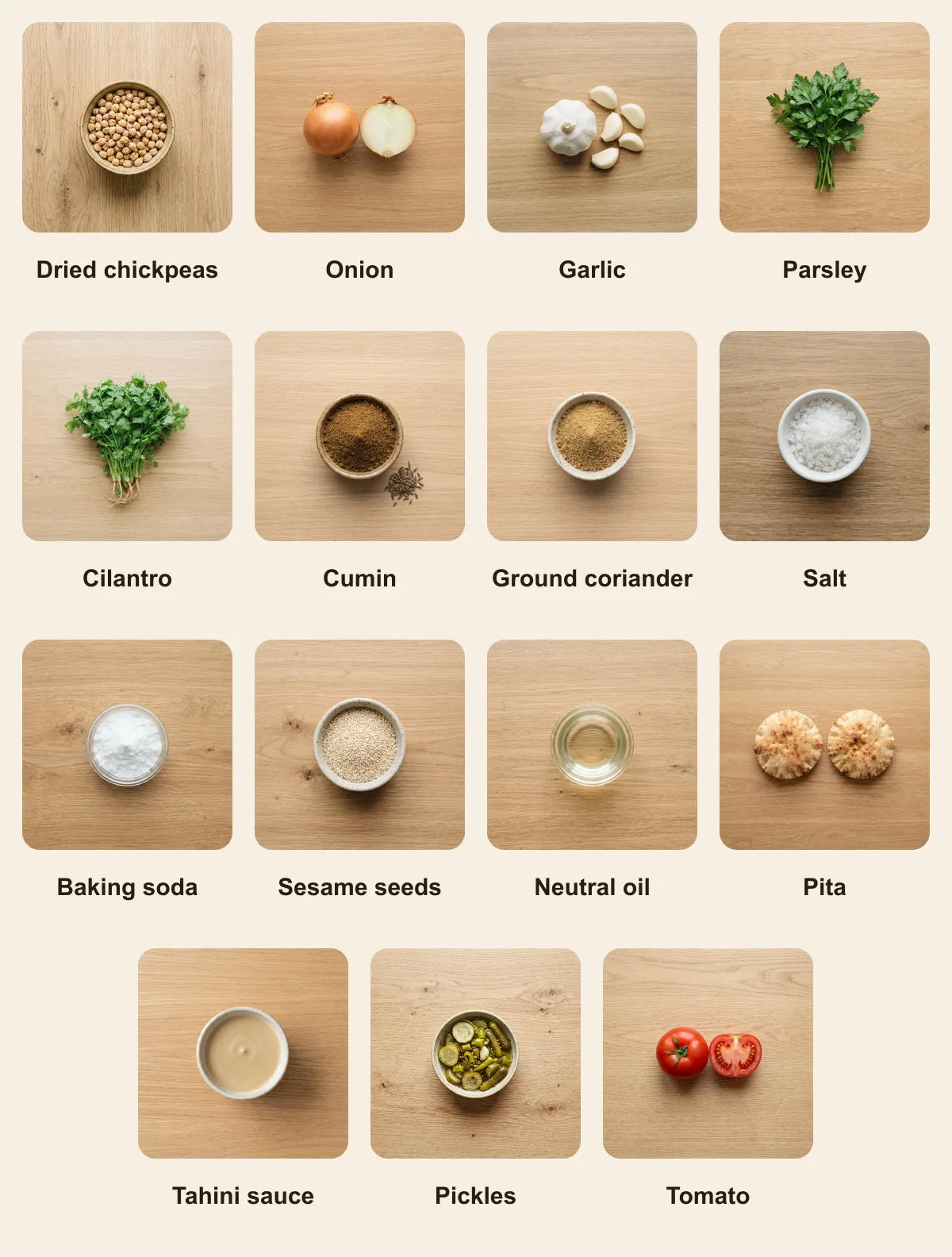
- 250 g dried chickpeas, soaked overnight (never canned)
- 1 small onion, roughly chopped
- 4 garlic cloves
- 1 big bunch parsley + half a bunch cilantro
- 1 tsp cumin, 1 tsp ground coriander
- 1 tsp salt, half tsp baking soda
- 2 tbsp sesame seeds
- Neutral oil for deep-frying; pita, tahini sauce, pickles and tomato to serve
How to make it
- 1
Drain the soaked raw chickpeas well and pulse with onion, garlic, herbs and spices to a coarse green crumb — not a paste.
- 2
Rest the mix 1 h in the fridge, then stir in baking soda and sesame.
- 3
Shape into walnut-size balls, pressing just enough to hold.
- 4
Deep-fry at 175 C in batches 3-4 min until deep brown and crackly.
- 5
Serve immediately in pita with tahini, pickles and tomato.
Pro tip: Canned chickpeas make falafel collapse in the oil — only soaked raw ones bind. If a test ball breaks apart, pulse the mix finer and chill it longer.
Where Falafel comes from
The chickpea version that the rest of the world knows developed in the Levant and became the standard export.
The two versions taste genuinely different. Ta'ameya is greener and softer inside, loaded with herbs, with a distinctive pale-green crumb; Levantine chickpea falafel is denser, nuttier and more golden. Egyptians and Levantines each regard theirs as the real one, and the argument is old enough to be comfortable.
How Falafel is cooked
The single non-negotiable rule is that the pulses are soaked raw and never cooked. Dried chickpeas or split fava beans are soaked overnight and then ground raw — cooked or tinned chickpeas produce a paste that disintegrates in the oil, and there is no way to rescue it. This is the mistake that ruins nearly every first attempt.
The ground mixture is combined with onion, garlic, herbs and spices, and rested before frying so it firms. Bicarbonate of soda is added at the last moment for a lighter interior. Frying is at around 170-180°C — hot enough to set the crust immediately, not so hot that the outside colours before the inside cooks.
Ingredients and shopping
Dried chickpeas for the Levantine version, dried split fava beans for ta'ameya, soaked twelve to twenty-four hours. Never tinned, never pre-cooked. Herbs in quantity — parsley and coriander for both, with far more of them in the Egyptian version, plus dill in some recipes.
Cumin and coriander seed are the base spices, with garlic and onion. Sesame seeds pressed onto the outside are traditional in Egypt. The oil should be neutral and deep enough that the balls float, and a thermometer genuinely helps here.
How Falafel is served
In pita or laffa with tahina, salad, pickled turnips and chilli sauce, or as part of a mezze with hummus and foul. In Egypt ta'ameya is a breakfast food, eaten with foul medames and bread. Fresh from the fryer is the only correct temperature — falafel goes downhill within minutes.
Common mistakes
Using tinned or cooked chickpeas
They disintegrate in the oil. The pulses must be soaked raw and ground raw — this is the single most common failure.
Not resting the mixture
An hour in the fridge firms it and makes shaping possible. Fresh from the processor it is too slack.
Oil too hot
Above about 190°C the outside browns before the inside cooks. 170-180°C is the working range.
Adding flour to bind
If the mixture is falling apart, it is usually too wet or under-rested. Flour makes it stodgy.
Falafel: questions and answers
Can I use tinned chickpeas for falafel?
No. They disintegrate in the oil. Falafel requires dried chickpeas soaked overnight and ground raw — never cooked.
What is the difference between falafel and ta'ameya?
Ta'ameya is the Egyptian original, made from split fava beans with a great deal of herb, giving a green interior. Falafel as exported uses chickpeas and is denser and nuttier.
Why is my falafel falling apart?
Usually cooked pulses, a mixture that has not rested, or oil that is not hot enough to set the crust on contact.
What temperature should the oil be?
Around 170-180°C. Hotter and the outside browns before the centre is cooked.
Sources and further reading
- Falafel — Wikipedia
- Ta'ameya — Wikipedia
- Egypt's beloved breakfast is a fava bean duo with ancient roots — NPR