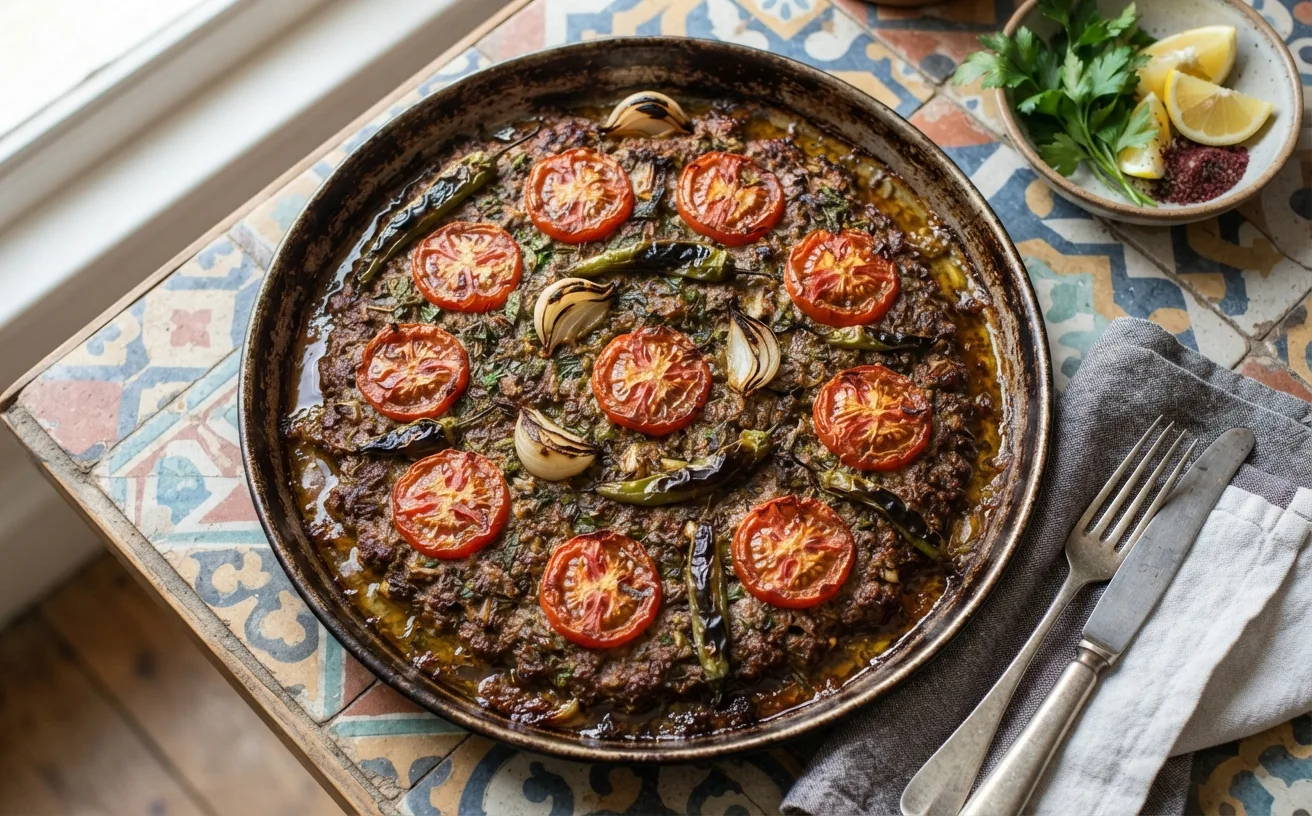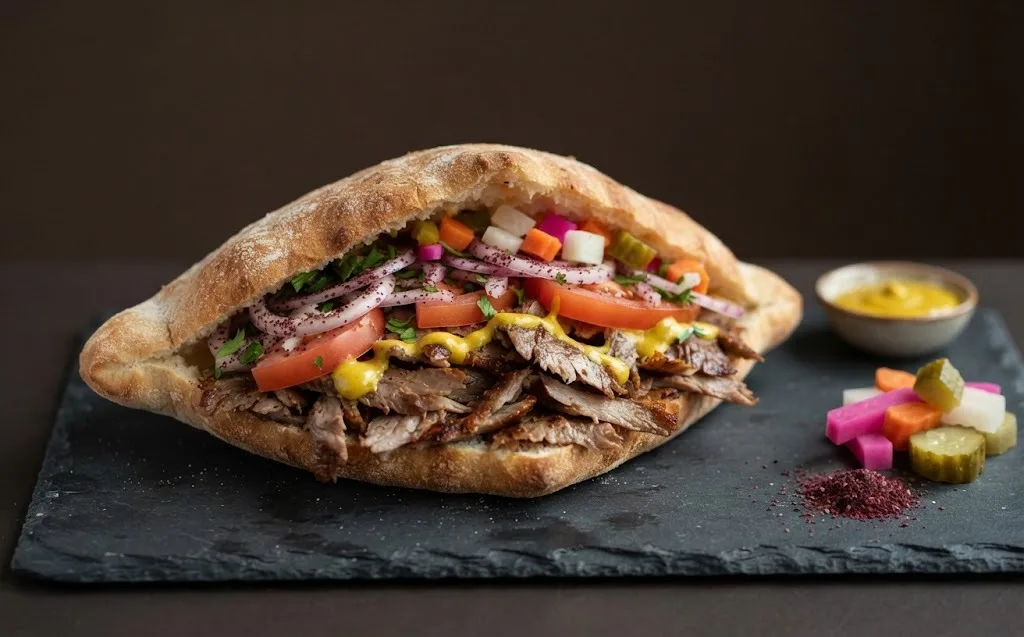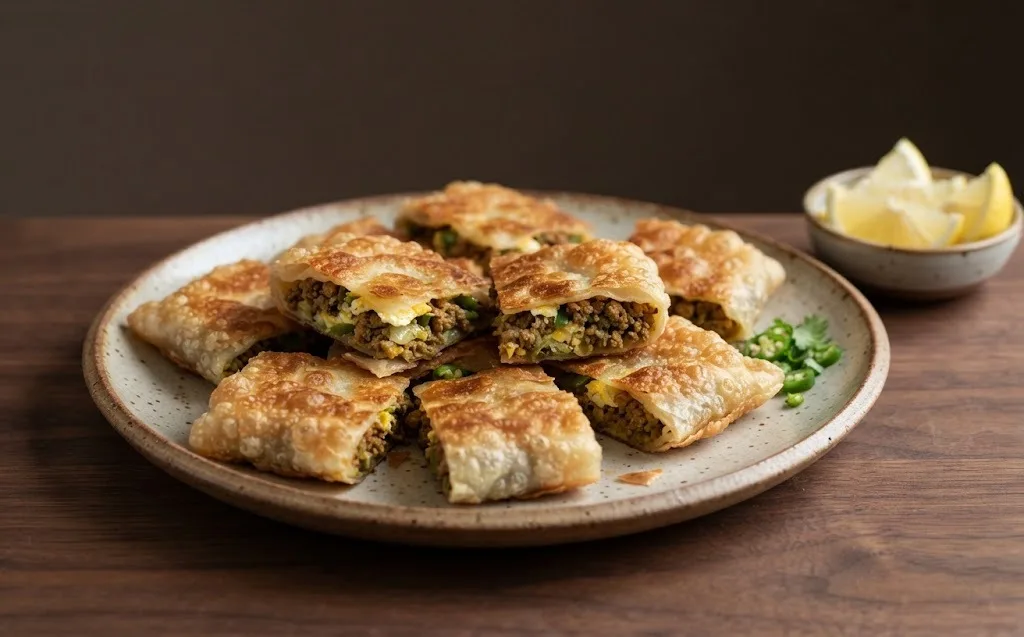
A Hejazi street classic where spiced minced meat and egg are folded inside paper-thin stretched dough and griddled crisp; in Jeddah's kebab stalls it is the standard wrap or side for skewered meats. It shows the Indian Ocean trade influence on western Saudi cooking, being a cousin of the Southeast Asian murtabak.
Also known as mutabbaq, mutabbag, murtabak kebab.
Reference video
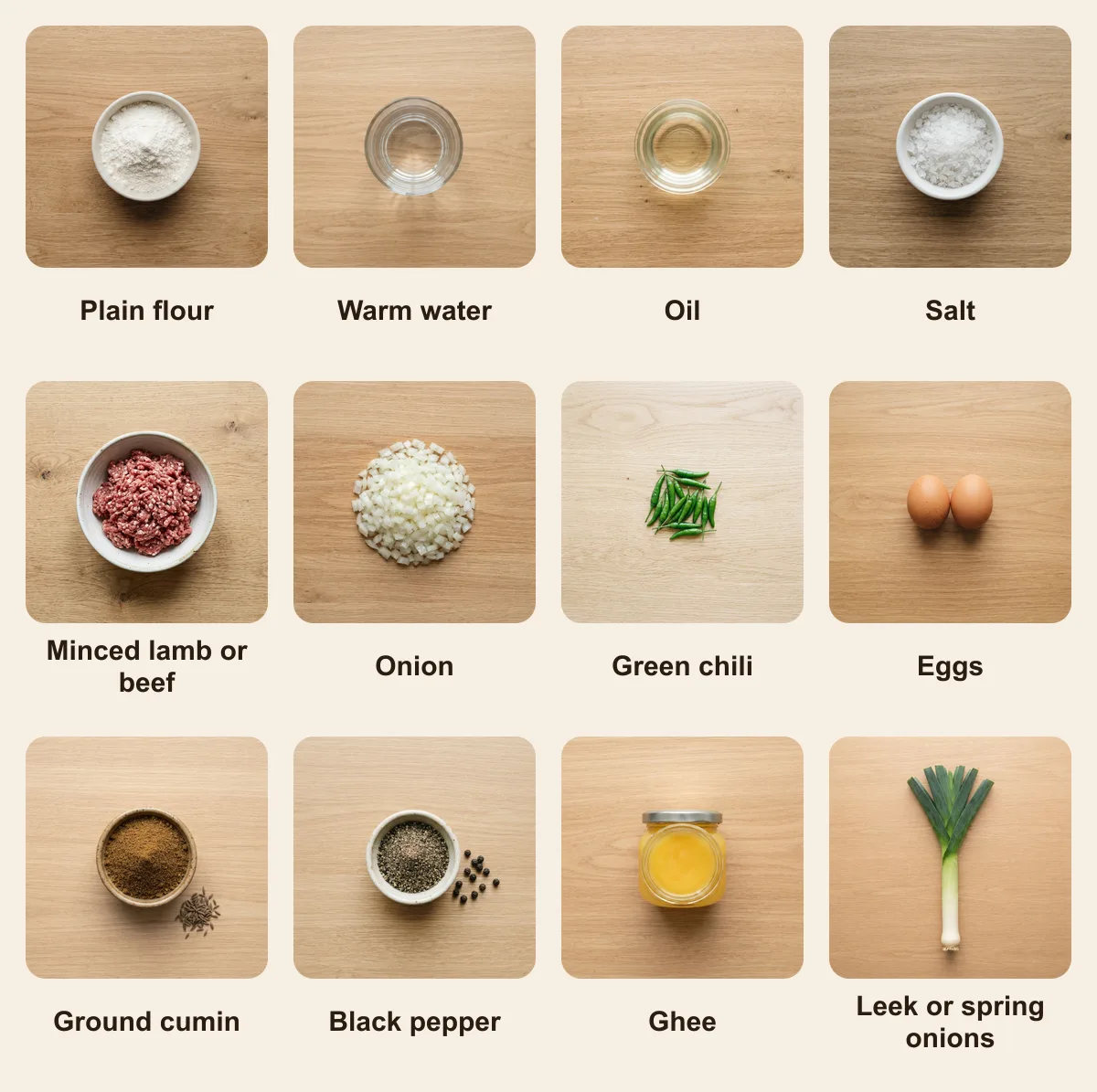
Ingredients
- 300 g plain flour
- 160 ml warm water
- 2 tbsp oil, plus more for coating and stretching
- 1/2 tsp salt for the dough, plus a pinch for the filling
- 300 g minced lamb or beef
- 1 small onion, minced
- 1 leek or 6 spring onions, finely sliced
- 1 green chili, minced
- 3 eggs
- 1 tsp ground cumin, 1/2 tsp black pepper and ghee for the griddle
How to make it
- 1
Knead the flour, water, oil and salt 8 minutes into a supple dough; divide into 4 balls, coat in oil and rest 1 hour under cling film.
- 2
Brown the mince with the onion, cumin, pepper and a pinch of salt; cool, then beat in the eggs, leek and chili.
- 3
On an oiled counter, stretch one ball with your palms until paper-thin and nearly translucent, the size of a large tray.
- 4
Spoon a quarter of the filling into the centre and fold the four sides over into a snug square parcel.
- 5
Griddle in ghee over medium heat 3-4 minutes per side until shatter-crisp and deep gold; cut into squares.
Pro tip: If the dough fights back or tears while stretching, it has not rested long enough — the oiled hour is what buys you that glass-thin sheet.
Where Hejazi Mutabbaq Kebab comes from
It is a direct product of the Indian Ocean trade that shaped western Saudi cooking. Mutabbaq is a cousin of the Southeast Asian murtabak and the two share an ancestry that runs through Yemeni and Indian traders across the ports of the region. Jeddah's position as the gateway to Mecca made it a place where such dishes arrived and stayed.
How Hejazi Mutabbaq Kebab is cooked
The dough is the difficulty and the pleasure. A very soft, well-oiled dough is rested until it becomes extensible, then stretched by hand on an oiled surface until it is almost transparent — thin enough to read through. This is a technique shared with roti canai and Turkish yufka and it takes practice; the reward is the shattering layered crispness of the finished parcel.
The egg-bound filling goes into the centre and the four sides are folded in to make a square parcel. It is then griddled in ghee or oil until deep golden on both sides. The egg does two jobs: it binds the filling and it seals the dough, so the parcel holds together when cut.
Ingredients and shopping
Minced beef or lamb, browned first with onion, cumin and black pepper, then cooled and bound with raw egg, leek or spring onion and green chilli. Cooking the filling beforehand matters — raw mince inside thin dough will not cook through in the time the pastry takes.
For the dough: plain flour, warm water, salt and a generous amount of oil, rested for at least an hour and ideally two. A large flat oiled surface and patience. Ghee for griddling gives the best flavour; a neutral oil works.
How Hejazi Mutabbaq Kebab is served
Cut into squares and eaten hot, with a bowl of curry sauce or a tamarind-chilli dip in the Hejazi manner, and often with the skewered meat it accompanies. Sweet mint tea. It is street food and it is at its best within two minutes of the griddle.
Common mistakes
Raw filling
The dough cooks in minutes. Cook the mince first with the aromatics, or the inside is raw when the outside is done.
Under-rested dough
It will tear rather than stretch. An hour minimum, two is better, well oiled.
Overfilling
A thick parcel does not crisp and bursts on the griddle. A thin, even layer with room to fold.
Skipping the egg
It binds the filling and seals the parcel. Without it the mutabbaq falls open when cut.
Hejazi Mutabbaq Kebab: questions and answers
What does mutabbaq mean?
Folded, in Arabic — describing the way the thin dough is folded around the filling into a square parcel.
Is it related to murtabak?
Yes, closely. Both descend from a shared Indian Ocean trading lineage that carried the technique between India, Yemen, the Hejaz and Southeast Asia.
Why is my dough tearing?
It has not rested long enough or has too little oil. Rest it at least an hour, well oiled, before attempting to stretch it.
Does the filling need to be cooked first?
Yes. The dough cooks in a few minutes, which is not long enough for raw mince.
Sources and further reading
- Murtabak — Wikipedia
- Mutabbaq: A street food classic for the Saudi Arabian GP — Grand Prix Gastronomy