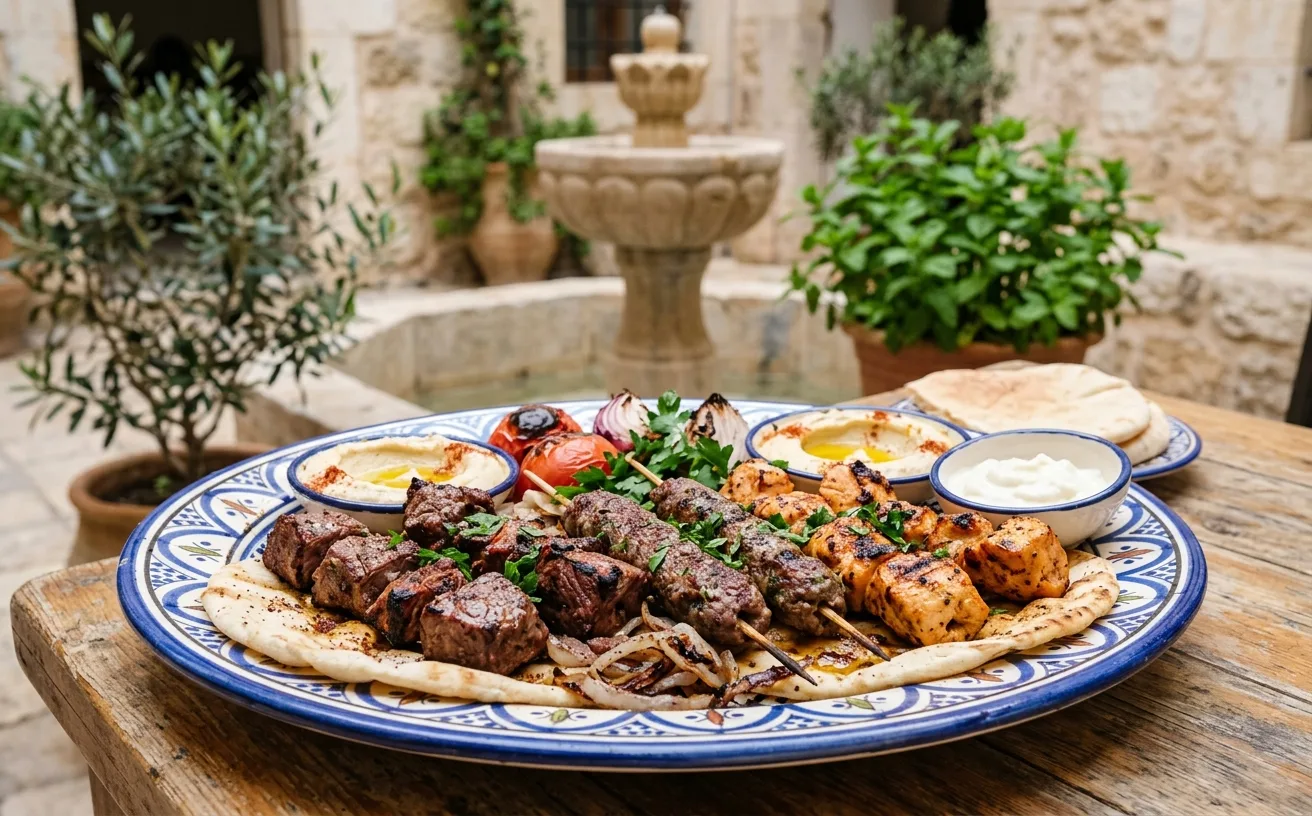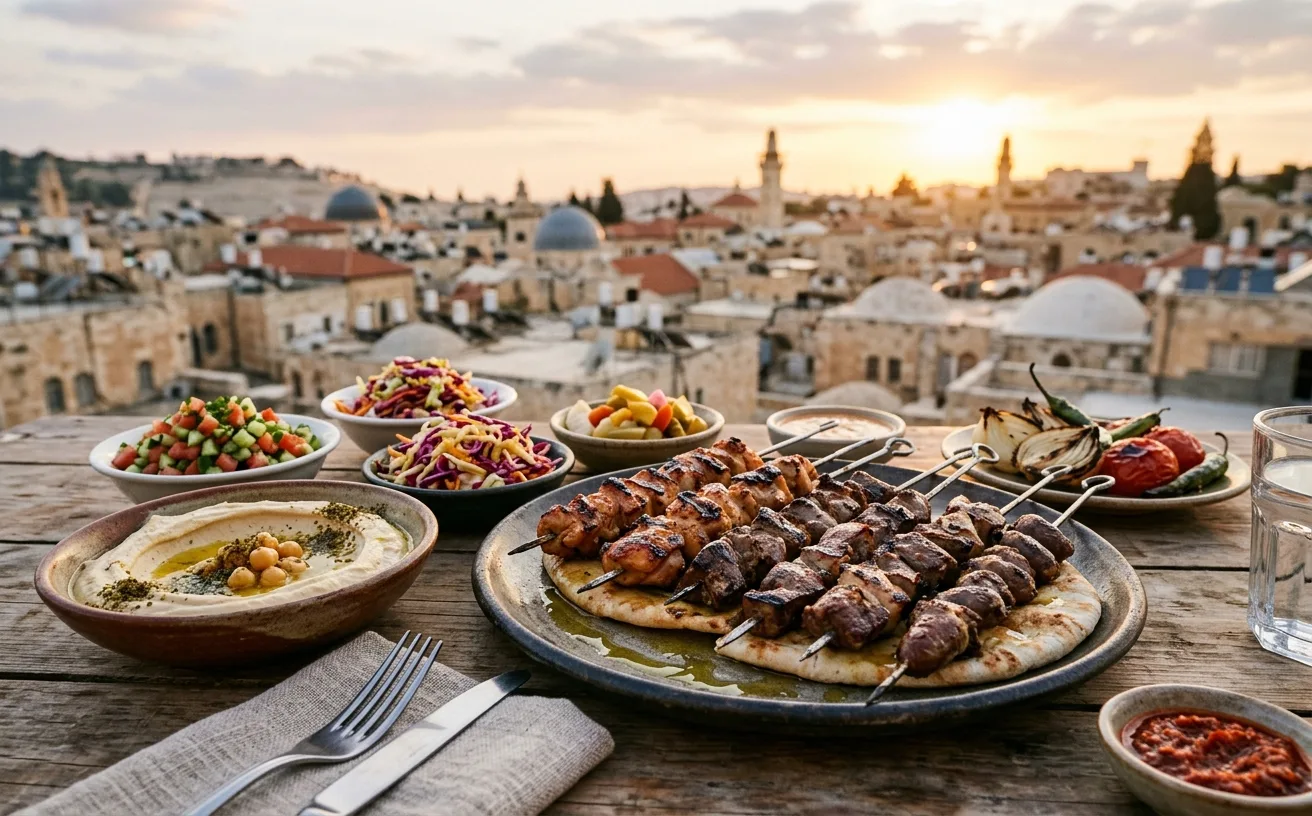
Less a single dish than Israel's charcoal-skewer restaurant genre: shipudiyot serve rows of small skewers — pargiyot (deboned chicken thigh), foie-style goose liver, lamb fat, hearts — with hummus, salads and laffa. The culture fuses Balkan, North African and Middle Eastern shish traditions brought by successive immigrant waves.
Also known as shipud, shipudei pargiyot, shipudiya.
Ingredients
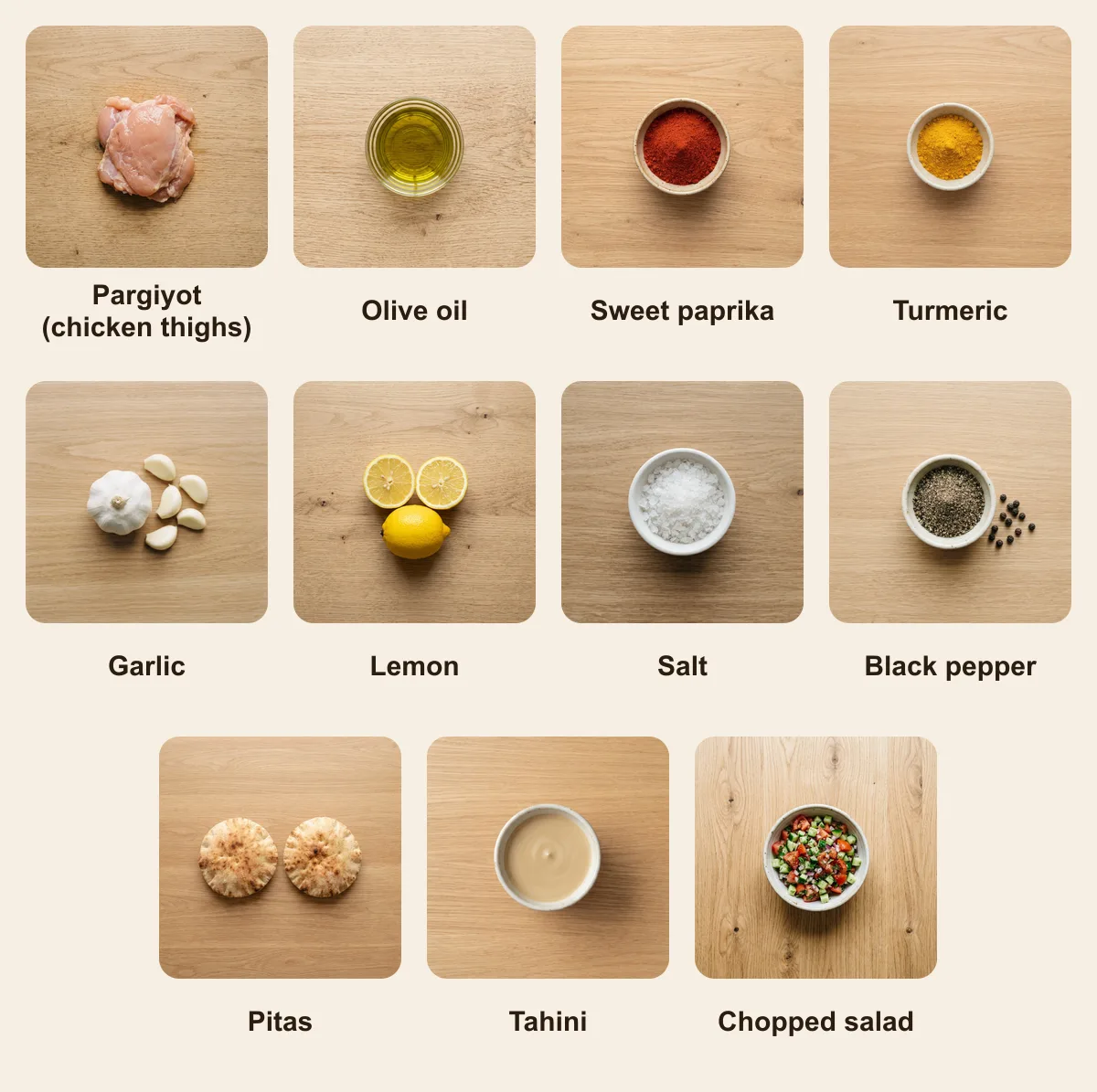
- 800 g pargiyot (boneless chicken thighs), 4 cm pieces
- 3 tbsp olive oil
- 1 tbsp sweet paprika
- 1 tsp turmeric
- 4 garlic cloves, crushed
- 1 lemon
- 1 tsp salt
- 0.5 tsp black pepper
- 4 pitas
- tahini and chopped salad, to serve
How to make it
- 1
Rub the thigh pieces with oil, paprika, turmeric, garlic, salt and pepper and let them sit 2 hours.
- 2
Pack the meat onto narrow skewers with the pieces pressed snugly together so they baste each other on the fire.
- 3
Grill over high charcoal 8-10 minutes, turning often — pargiyot forgive heat that would wreck breast meat.
- 4
Squeeze lemon over the skewers the moment they come off.
- 5
Serve shipudiya-style: pita warmed on the grill's edge, tahini, chopped salad, and the skewers still on their metal.
Pro tip: Never substitute breast for pargiyot — the thigh's fat is the difference between juicy and sawdust at these temperatures.
Where Shipudim comes from
The shipudiya itself is a fusion by immigration. Balkan, North African, Iraqi, Yemeni and Levantine grilling traditions arrived in successive waves and were absorbed into a single format, which is why a shipudiya menu can carry a Romanian-style mixed grill next to a Yemeni spice rub next to a Moroccan chermoula. It is one of the clearest examples in this atlas of a national cuisine assembled rather than inherited.
How Shipudim is cooked
Pargiyot are the house standard and the thing to get right. Deboned chicken thigh, skin on or off, is marinated in oil, garlic, paprika and sometimes silan (date syrup) or soy, and grilled hard over charcoal so the fat renders and the edges char. The thigh's fat is what makes the format work; breast on a shipudiya menu is a concession.
The rest is a matter of managing many small items over one fire. Skewers are short, portions are one or two per person per type, and the grill runs continuously — which means the kitchen's skill is in timing rather than in any single preparation. Laffa bread is warmed on the grill's edge throughout.
Ingredients and shopping
Chicken thigh, deboned, for pargiyot. Chicken hearts and livers for the offal skewers. Lamb fat for threading between meat, and cubed lamb or beef for the meat skewers. Goose or duck liver at the expensive end of the menu.
Marinades vary by skewer and there is no single correct one — paprika, garlic and oil for pargiyot; silan and soy for a sweeter version; a Yemeni hawaij rub for lamb. Laffa or pita, hummus, and a table of salatim (small salads) are the fixed frame.
How Shipudim is served
Skewers arrive as they are ready, with laffa, hummus, tahini, amba, schug and a spread of small salads. Chips and pickles. Beer or arak. The eating is progressive and social — nobody waits for everything to arrive, which is the point of the format.
Common mistakes
Chicken breast for pargiyot
The dish depends on thigh fat rendering over the coals. Breast dries and the format falls apart.
Skewers too long
Shipudim are short and ordered individually. Long skewers make the timing impossible.
One marinade for everything
Each skewer type has its own treatment. Applying one marinade across the board flattens the variety that defines the genre.
Cold laffa
It should be warmed on the grill edge so it takes fat and smoke and stays pliable.
Shipudim: questions and answers
What are pargiyot?
Deboned chicken thighs, the standard skewer in an Israeli shipudiya. The thigh fat is what makes them work; breast is a poor substitute.
Why is the menu so varied?
Israeli grill culture assembled itself from Balkan, North African, Iraqi, Yemeni and Levantine immigrant traditions, and the shipudiya menu reflects all of them at once.
What is served alongside?
Laffa or pita, hummus, tahini, amba, schug, chips and a table of small salads called salatim.
Sources and further reading
- Pargiyot — Wikipedia
- Israeli cuisine — Wikipedia
- Eating Israel with Michael Solomonov — Saveur
- Father's Day Grilling: Spicy Harissa Pargiyot — Jewish Journal
- Emily Grill Bar is a Rishon Letzion must for any meat lover — The Jerusalem Post