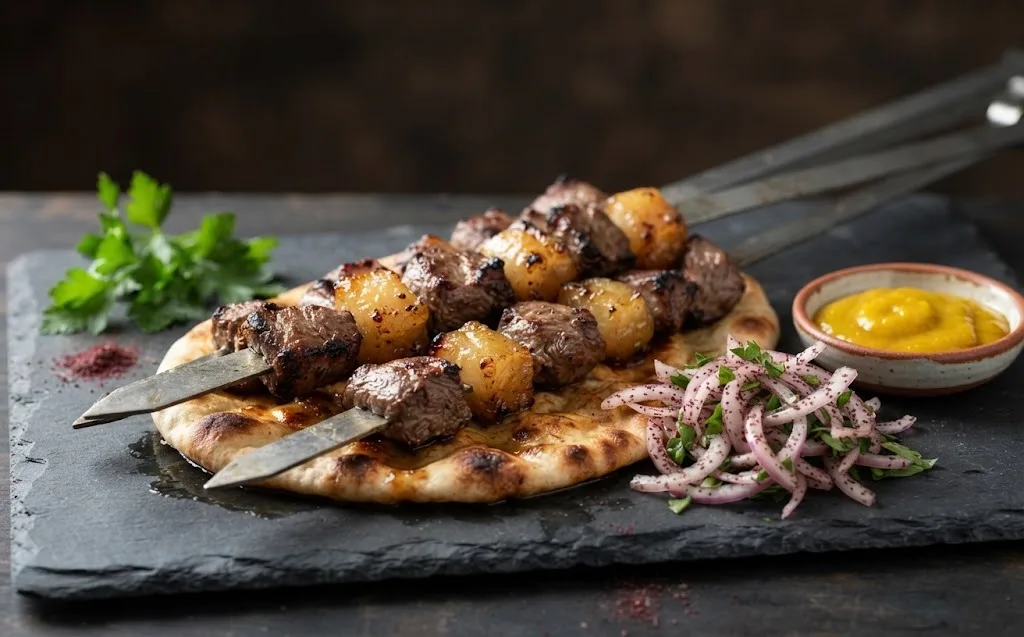
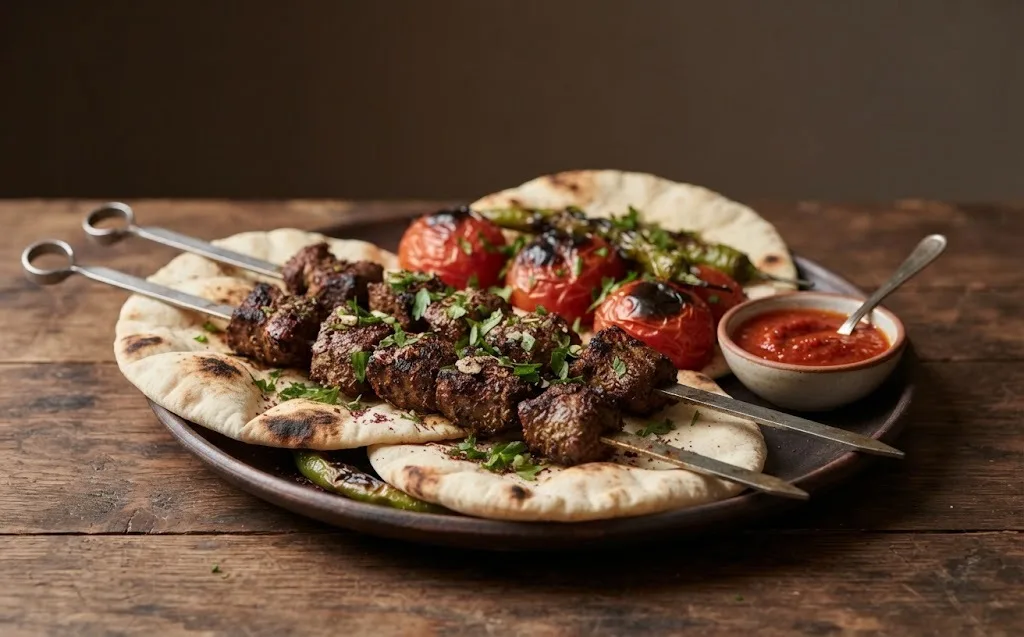
The 'kabab' half of Egypt's classic grill order: lamb chunks marinated with onion and mild spices, charcoal-grilled and sold by the kilo alongside kofta in dedicated kababgi restaurants. Distinct from Levantine versions in its onion-heavy, chili-free marinade.
Also known as kabab mashwi, kebab laham, kabab masri.
Reference video
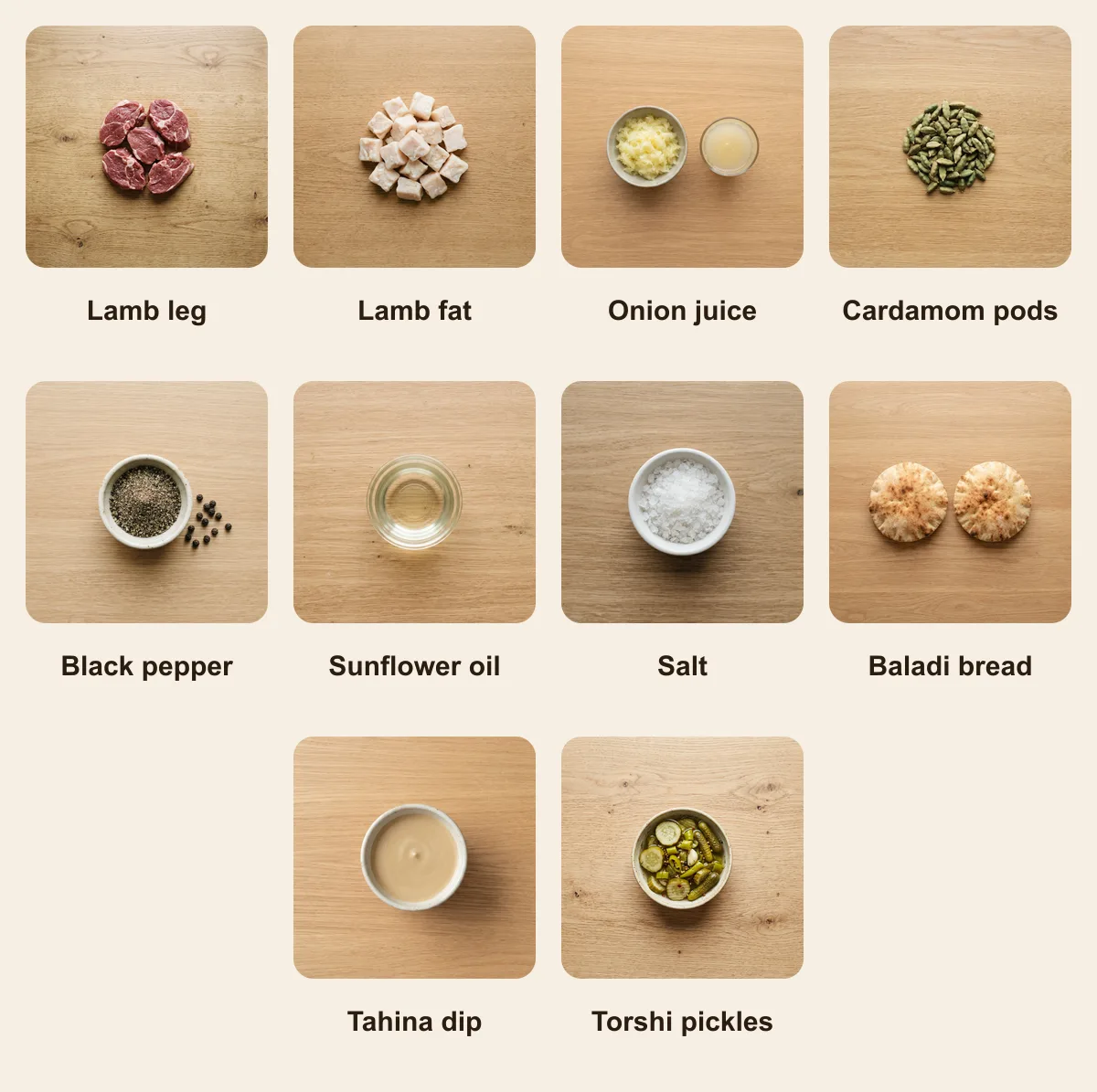
Ingredients
- 800 g lamb leg, in 3 cm cubes, plus a few pieces of lamb fat to thread between
- 2 onions, grated and strained (juice only)
- 4 cardamom pods, crushed
- 1 tsp black pepper
- 30 ml sunflower oil
- 1.5 tsp salt, for the grill
- 4 baladi breads
- 150 g tahina dip
- pickled vegetables (torshi), to serve
How to make it
- 1
Steep the lamb in the strained onion juice with cardamom, pepper and oil for 4 h.
- 2
Wipe the cubes so no pulp clings, then skewer snugly.
- 3
Grill over medium-hot charcoal 10-12 min; Egyptian kabab is taken past pink but must still bead with juice.
- 4
Salt at the first turn, not before.
- 5
Pile onto baladi bread and serve with tahina and torshi.
Pro tip: Strain the onion properly and wipe the meat; stray pulp scorches bitter long before lamb takes its colour.
Where Egyptian Kebab comes from
Egyptian grilling is not a spicy tradition; the heat, when it appears, comes from the pickles and the sauces at the table rather than from the meat. The result is a mild, sweet, onion-scented lamb that is a genuinely different proposition from a Turkish or Iraqi skewer.
How Egyptian Kebab is cooked
The marinade is dominated by onion — grated and strained so only the juice goes in, with the meat left in it for several hours — plus black pepper, a little crushed cardamom and oil; the salt waits for the grill. There is no chilli and usually no acid. Onion's enzymes do a gentle tenderising job over a few hours that acid does faster and more crudely.
Cubes are threaded with pieces of lamb fat between them, as everywhere in the region, and grilled over medium-hot charcoal for ten to twelve minutes with regular turning. The kababgi grills to order in front of the customer, and the standard is a firm char on the outside with the interior just past pink.
Ingredients and shopping
Lamb shoulder or leg in three-centimetre cubes, with fat threaded between. Egyptian butchers sell lamb specifically cut for kabab, with the fat included. Beef versions exist and are cheaper but the dish is properly lamb.
The marinade is onion, oil, black pepper and crushed cardamom — no chilli, no lemon, and the salt waits for the grill. Three to five hours. Baladi bread, tahina and a sharp salad are the accompaniments and should be assembled while the meat is on the grill.
How Egyptian Kebab is served
With kofta on the same platter, baladi bread, tahina, torshi, salad and a plate of raw onion. Ordered by weight for the table. Tea afterwards, and in Cairo the meal is often eaten late — the kababgi districts run well past midnight.
Common mistakes
Adding chilli
Egyptian kabab is deliberately mild. Heat comes from the pickles and sauces at the table, not from the meat.
Adding lemon or vinegar to the marinade
Onion does the tenderising over a few hours. Acid is not part of the Egyptian idiom here.
Skipping the fat cubes
They render and baste as they go. Without them the lamb is dry.
Leaving blended onion on the meat
It burns on the coals. Wipe the cubes down before threading.
Egyptian Kebab: questions and answers
How is it ordered?
By weight, often at a butcher's counter inside the restaurant, then grilled to order and brought out with kofta.
Why no lemon in the marinade?
Egyptian practice uses onion to tenderise gently over several hours. Acid works faster but changes the surface texture of the lamb.
Sources and further reading
- Kebab (§ Egypt) — Wikipedia
- Egyptian cuisine — Wikipedia
- In shabby backstreets, diners find real taste of Cairo — Egypt Independent (AFP)
- Meat and Greet — Google Arts & Culture