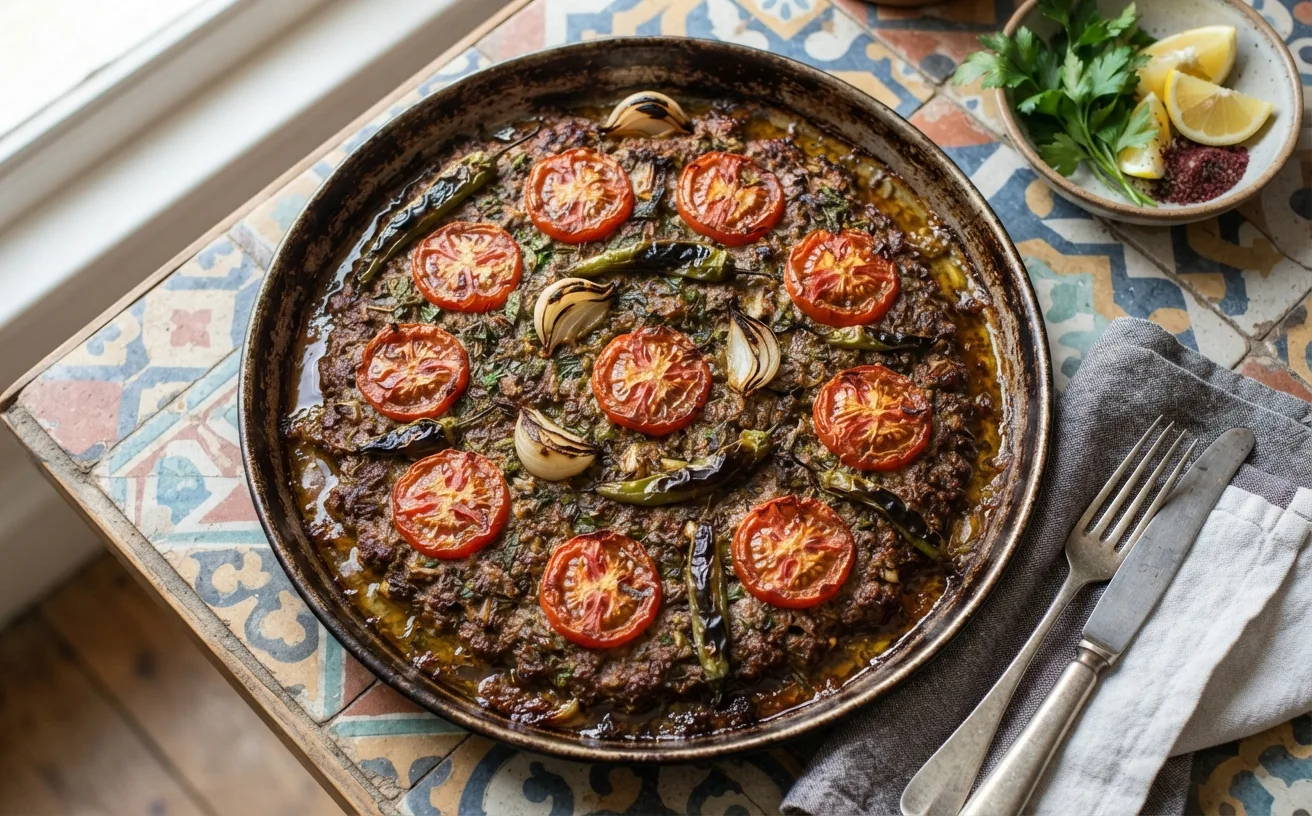
A Syrian home rendering of kebab without a grill: spiced lamb kofta pressed flat into a round metal tray, topped with tomato slices or tahini-lemon sauce and baked until the fat bastes the meat. It sits in Aleppo's famed family of 'fruit and sauce' kebabs alongside the cherry and eggplant versions.
Also known as kebab siniyeh, kabab bil sanieh, kafta bil sanieh.
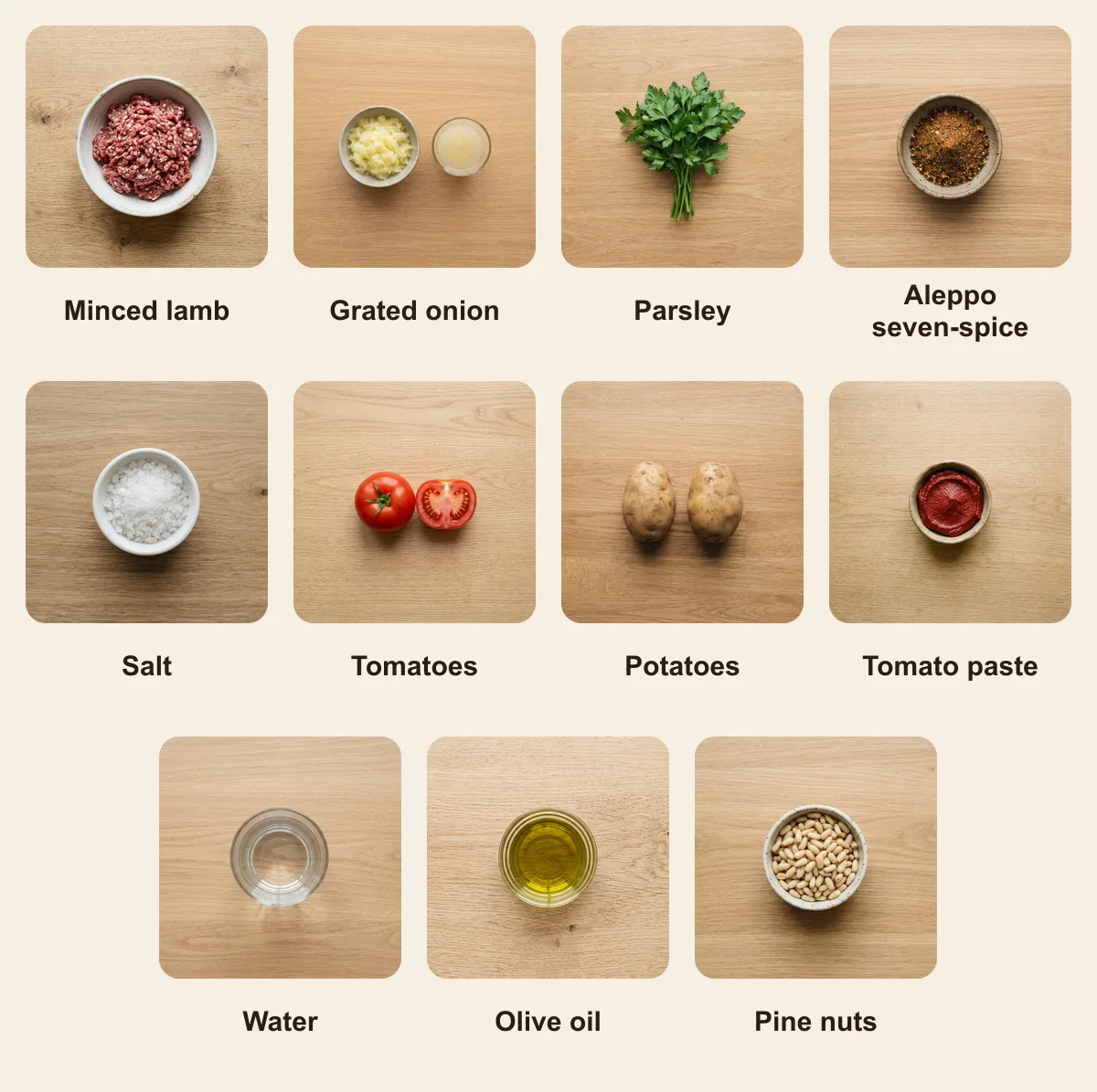
Ingredients
- 700 g minced lamb
- 1 onion, grated and squeezed
- 1 handful parsley, finely chopped
- 1.5 tsp Aleppo seven-spice (or baharat)
- 1.5 tsp salt
- 4 ripe but firm tomatoes, thick slices
- 2 potatoes, 5 mm rounds (optional but traditional)
- 2 tbsp tomato paste loosened in 150 ml hot water
- 2 tbsp olive oil
- pine nuts, a small handful
How to make it
- 1
Heat the oven to 200 C and oil a round metal tray (siniyeh) about 30 cm across.
- 2
Work the lamb with onion, parsley, spice and salt just until combined — overkneading makes the tray-kebab dense.
- 3
Press the meat into the tray in an even 1.5 cm layer, parboil the potato rounds 3 minutes until pliable, then shingle them with the tomato over the top.
- 4
Bake 20 minutes, then pour the tomato-paste water around the edges and bake 15 minutes more until the liquid thickens to a glaze and the potatoes yield to a knife.
- 5
Scatter the pine nuts, toasted in a dry pan, then cut into wedges in the tray and serve with rice or bread to mop the pan juices.
Pro tip: The pour of tomato water halfway through is what keeps a grill-less kebab from baking into a dry meatloaf — do not skip or add it early.
Where Kebab bil-Siniyeh comes from
It belongs to Aleppo's celebrated family of tray kebabs alongside the cherry and aubergine versions, and it is the most everyday of them. Where kabab karaz is a restaurant showpiece, kebab bil-siniyeh is what a Syrian household cooks on a Tuesday, and it is one of the dishes most closely associated with home by Syrians abroad.
How Kebab bil-Siniyeh is cooked
The meat is pressed into an even layer rather than shaped into fingers, and its thickness is the main variable — around a centimetre and a half. Thicker and the centre steams in its own juices; thinner and it dries out before the topping colours.
Par-boiled potato rounds are often shingled over the top with the tomato slices. Because the meat renders a great deal of fat into the tray, many cooks drain it partway through, particularly if a tahini topping is going on, since tahini splits in rendered fat. The tray goes into a hot oven uncovered so the surface browns.
Ingredients and shopping
Lamb, or lamb and beef, at 20 to 25 percent fat, worked with fine onion, parsley and baharat — the same kafta mixture used for skewers. Waxy potatoes sliced thin and par-cooked, since they will not soften otherwise.
Firm tomatoes for the top, sliced thick enough to hold. If using tahini instead, build the sauce by adding lemon and water gradually so it does not seize. Pine nuts toasted and scattered at the end are the traditional finish.
How Kebab bil-Siniyeh is served
Cut into wedges straight from the tray, with rice or bread, yoghurt and a sharp salad. Pickles. It is family food and is served as one dish for the table rather than plated individually. It reheats well and is arguably better the next day.
Common mistakes
Too thick a meat layer
Above about a centimetre and a half the middle steams rather than roasting. Spread it evenly and thin.
Raw potato slices
They will not cook through in the time the meat needs. Par-cook them.
Not draining the fat before a tahini topping
Rendered lamb fat splits tahini sauce. Pour it off partway through.
Covering the tray
It should bake uncovered so the top browns. Foil gives a pale, wet result.
Kebab bil-Siniyeh: questions and answers
What is a siniyeh?
A round metal baking tray, and by extension the dishes cooked in one. Kebab bil-siniyeh is the tray-baked version of kofta.
Tomato or tahini topping?
Both are traditional. If you use tahini, drain the rendered lamb fat first, because it will split the sauce.
Is it related to Turkish tepsi kebabı?
Yes — the same idea of a tray kebab baked rather than grilled, found on both sides of the Turkish-Syrian border.
Sources and further reading
- Tepsi Kebap — The Splendid Table
- The Aleppo Cookbook: Celebrating the Legendary Cuisine of Syria (Marlene Matar) — Interlink Publishing
- Syrian cuisine — Wikipedia