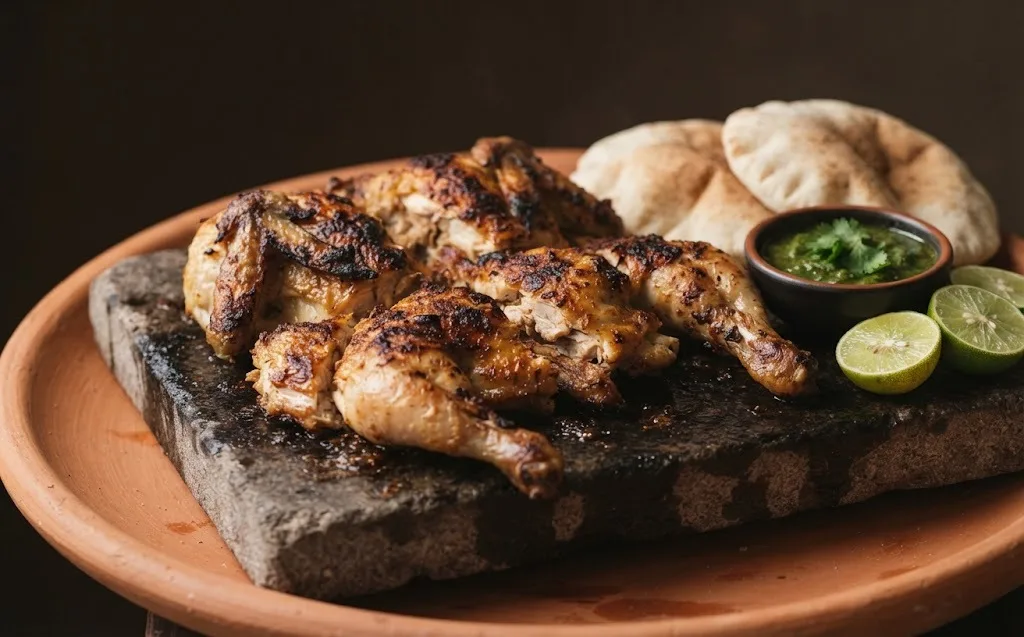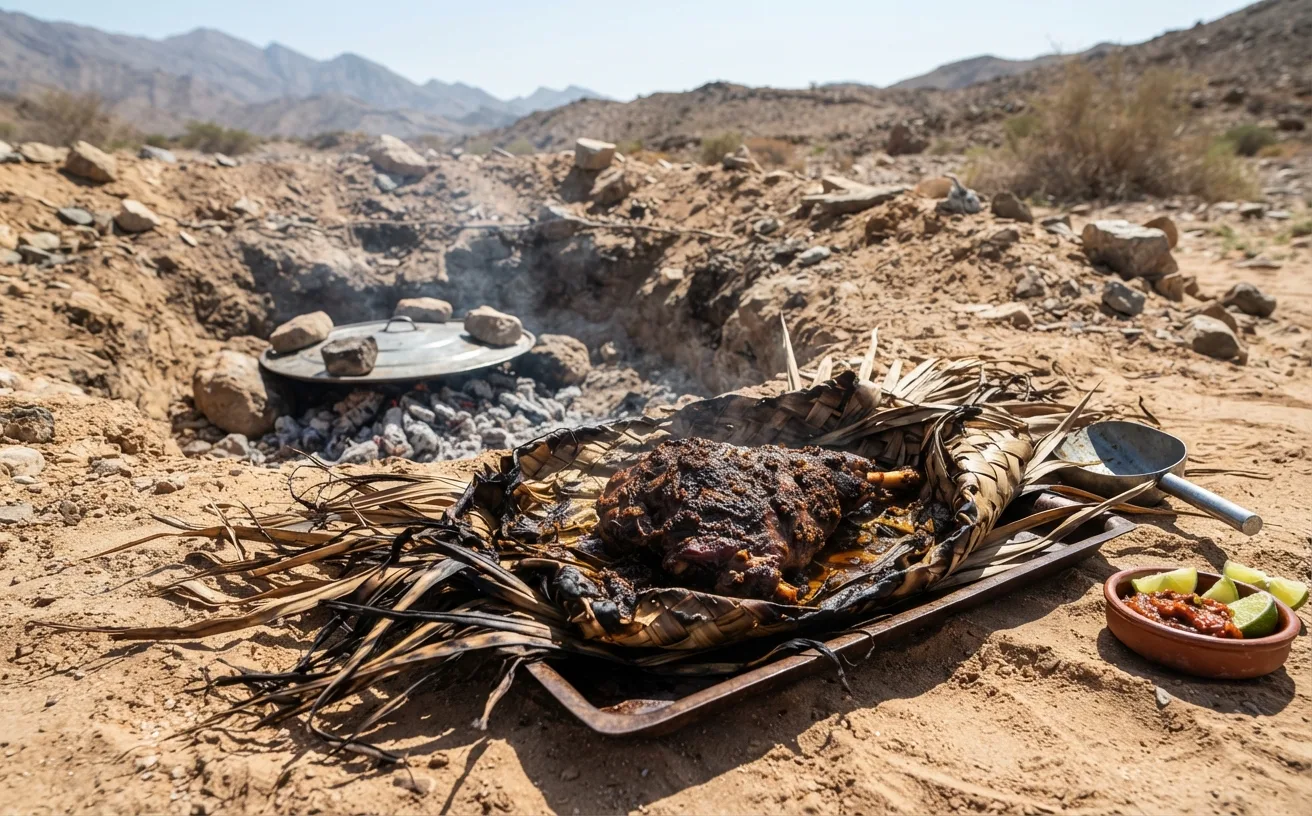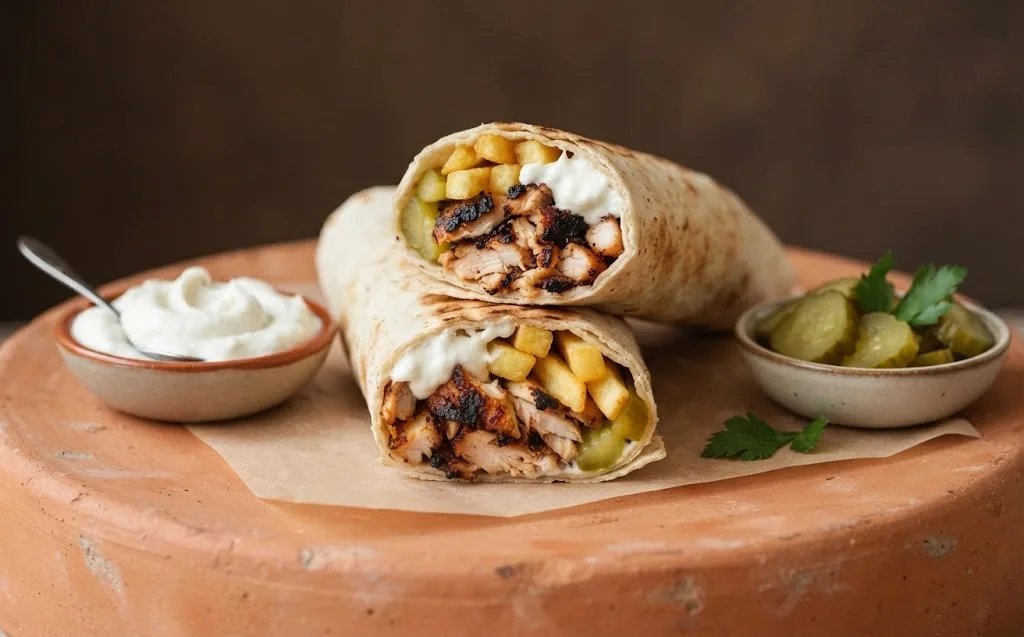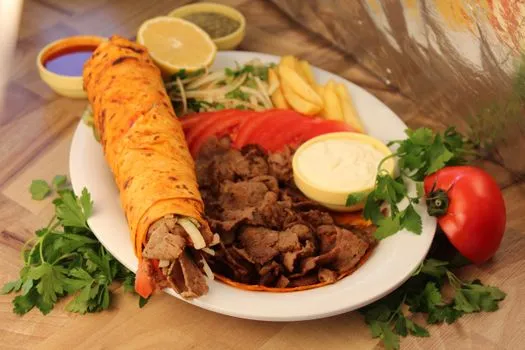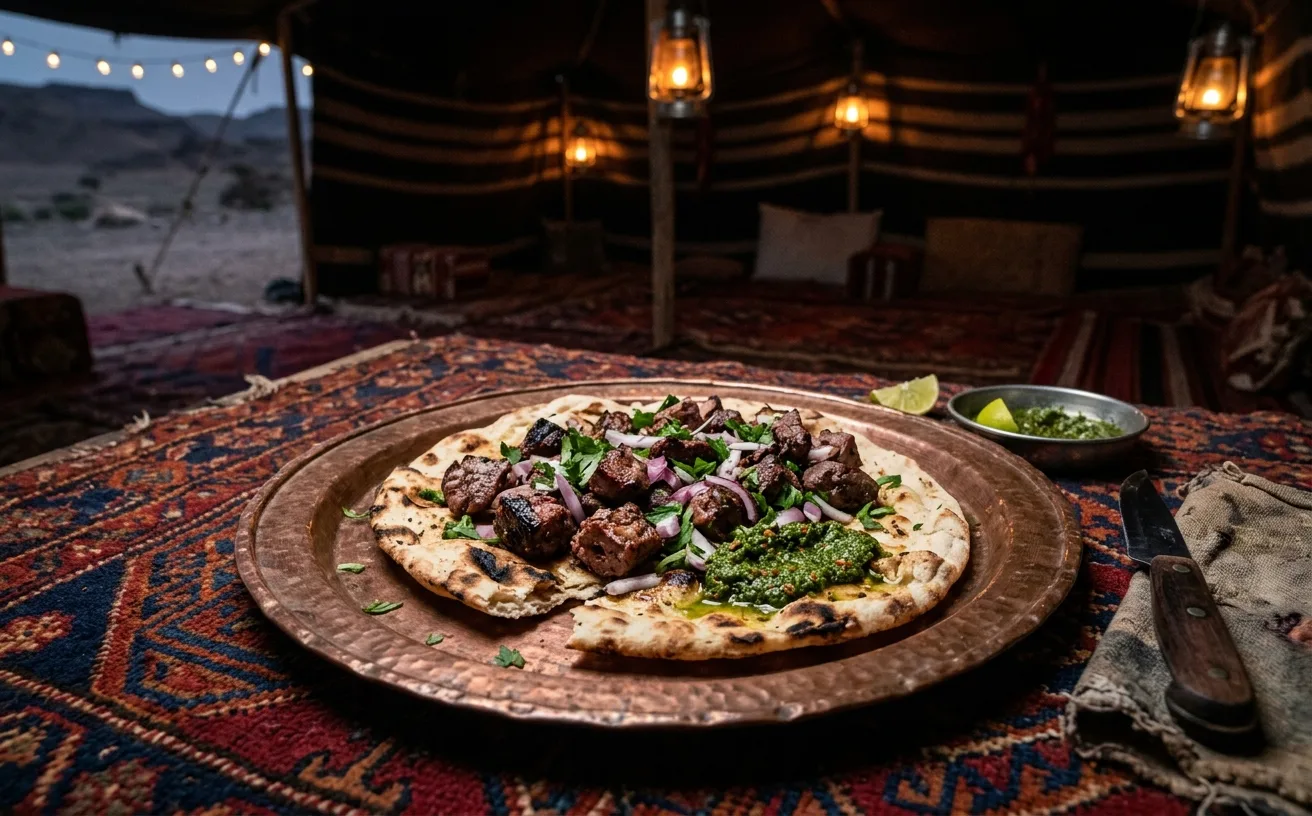
In Sana'a and Ta'izz souks, small chunks of young lamb, kidney and liver are skewered, charcoal-grilled and chopped onto malooga or khubz flatbread with raw onion and fiery sahawiq (zhug). It is the street-side sibling of Yemen's pit-cooked haneeth, kebab technique applied to butcher-fresh highland lamb.
Also known as kabab yamani, kebab sana'ani, lahm mashwi yemeni.
Ingredients
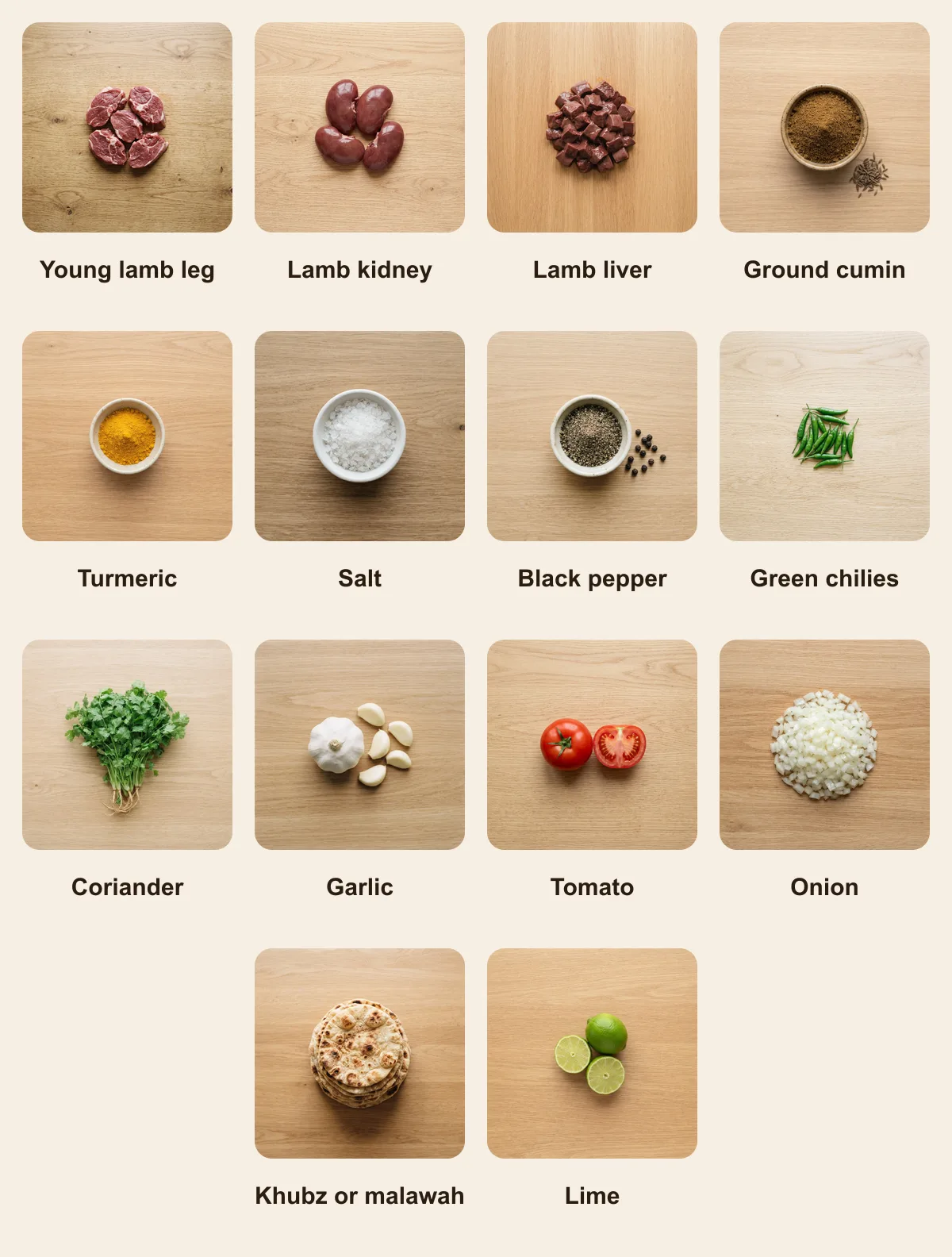
- 500 g young lamb leg, 1.5 cm chunks
- 150 g lamb kidney, soaked 30 min in salted water, cored and quartered
- 150 g lamb liver, 3 cm pieces
- 1 tsp ground cumin
- 0.5 tsp turmeric
- 1 tsp salt
- 0.5 tsp black pepper
- 2 green chilies, 1 bunch coriander, 2 garlic cloves and 1 tomato (for sahawiq)
- 1 onion, finely chopped
- khubz or malawah flatbread
- 1 lime
How to make it
- 1
Pound the chilies, coriander, garlic and tomato with salt into a rough, loose sahawiq and set aside.
- 2
Dust the lamb, kidney and liver with cumin, turmeric, salt and pepper — souk kabab wears its seasoning dry, no marinade.
- 3
Thread the lamb, kidney and liver together on the same skewers — the size difference is what keeps everything finishing at once.
- 4
Grill over hard charcoal heat for about 6-7 minutes total, turning constantly, so the differently sized pieces finish together.
- 5
Chop everything roughly off the skewers together with the raw onion, pile onto warm khubz, squeeze lime over and spoon on the sahawiq.
Pro tip: Liver is done the instant its cut face stops bleeding pink juice — one extra minute and it goes grainy.
Where Yemeni Kabab comes from
The butcher and the grill are usually the same business, and the animal is often slaughtered the same morning. That proximity is the premise of the whole dish: with meat this fresh, marinades are beside the point, and Yemeni grilling has never developed the marinating culture of the Levant.
How Yemeni Kabab is cooked
Muscle meat, kidney and liver go on the same skewer, which sounds careless and is in fact managed: the pieces are cut to different sizes so they finish together, with liver cut largest because it cooks fastest and muscle cut smallest. It is a neat inversion of the usual rule and it works.
After grilling, the skewers are emptied onto a board and the meat is chopped together with more raw onion, tomato and green chilli, then heaped onto bread. That chopping stage mixes the three textures and distributes the fat, and it is what makes the dish a Yemeni kabab rather than a mixed grill.
Ingredients and shopping
Young lamb — shoulder or leg — with kidney and liver from the same animal if possible. Kidney needs soaking in salted water and coring; liver needs its membrane removed. Freshness is the premise and there is no way around it.
Seasoning is salt, black pepper, cumin and turmeric, the backbone of savoury hawaij, applied dry. Malooga or khubz for the bread. Sahawiq, the green chilli-and-coriander relish, made fresh. Raw onion in quantity for the chopping board.
How Yemeni Kabab is served
Chopped onto malooga or khubz with sahawiq, raw onion and tomato, eaten communally with the hands from a shared board or platter. Sweet cardamom tea afterwards. It is fast, cheap souk food and it is eaten hot off the board.
Common mistakes
Cutting everything the same size
Liver cooks fastest, muscle slowest. Cut the liver largest and the meat smallest so they finish together.
Not preparing the kidney
Soak it in salted water and cut out the core, or the whole skewer tastes of ammonia.
Skipping the chopping stage
Chopping the grilled meat together with raw onion and chilli is what makes this dish itself rather than a plain mixed skewer.
Marinating
Yemeni practice relies on very fresh meat and a dry rub. A marinade prevents the char.
Yemeni Kabab: questions and answers
What goes on a Yemeni kabab skewer?
Small chunks of young lamb together with kidney and liver, cut to different sizes so they finish cooking at the same time.
What is sahawiq?
The Yemeni green relish of chilli, coriander, garlic and tomato, served with almost every grilled dish. It supplies the heat.
Why is the meat chopped after grilling?
Chopping mixes the muscle, kidney and liver together with raw onion and chilli, distributing the fat and the textures. It is the defining step.
Sources and further reading
- Zhug — Wikipedia
- Yemeni cuisine — Wikipedia