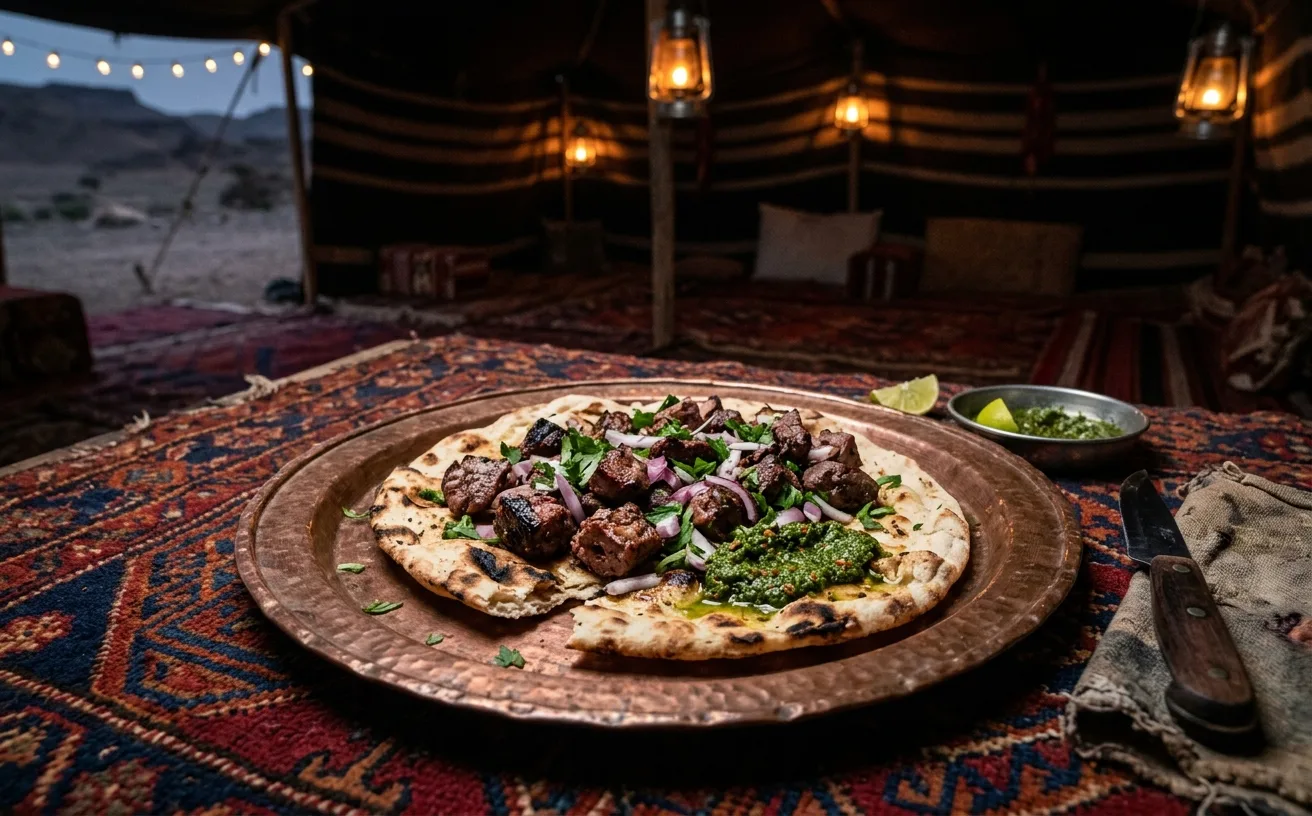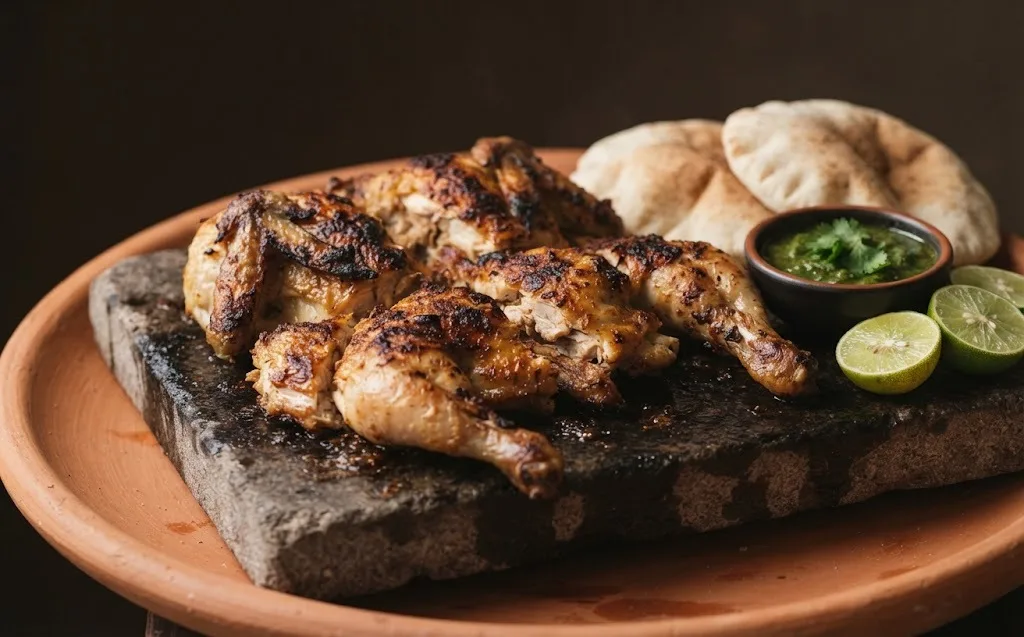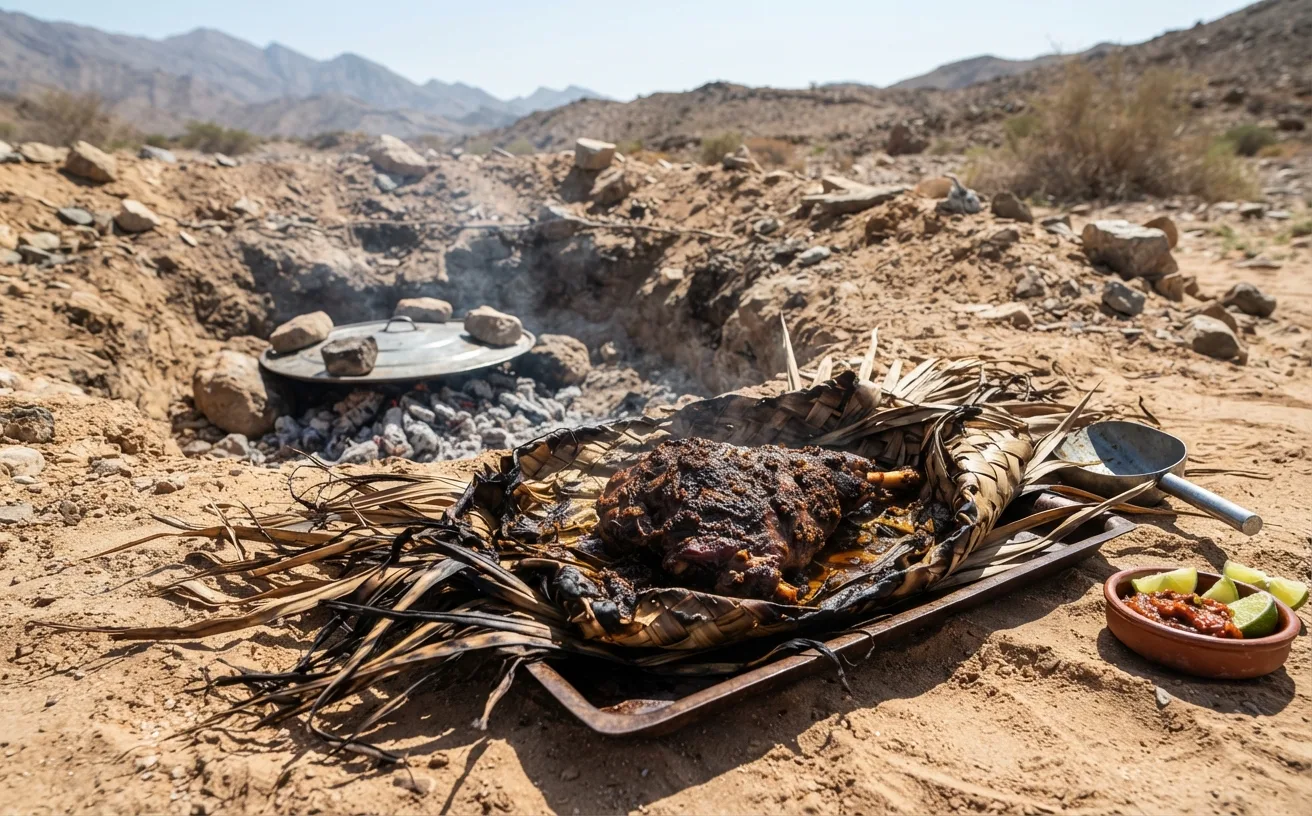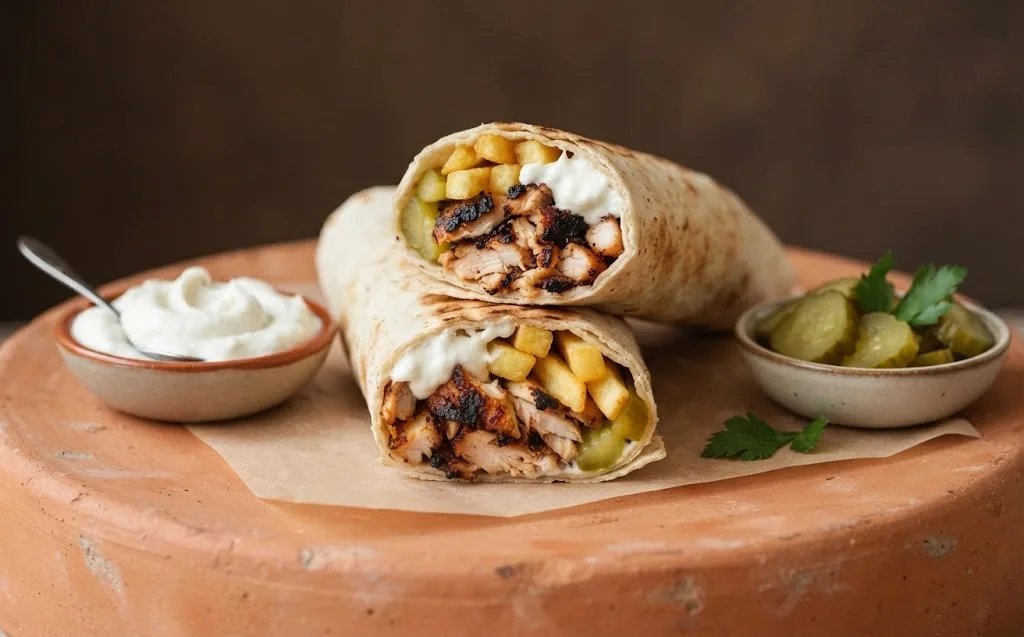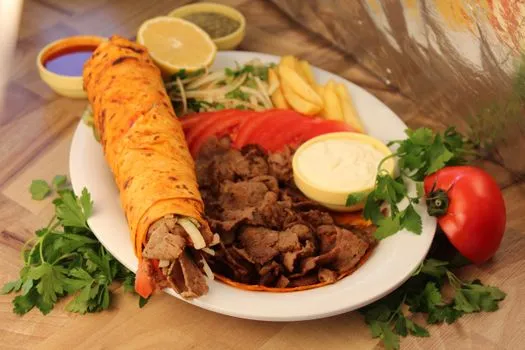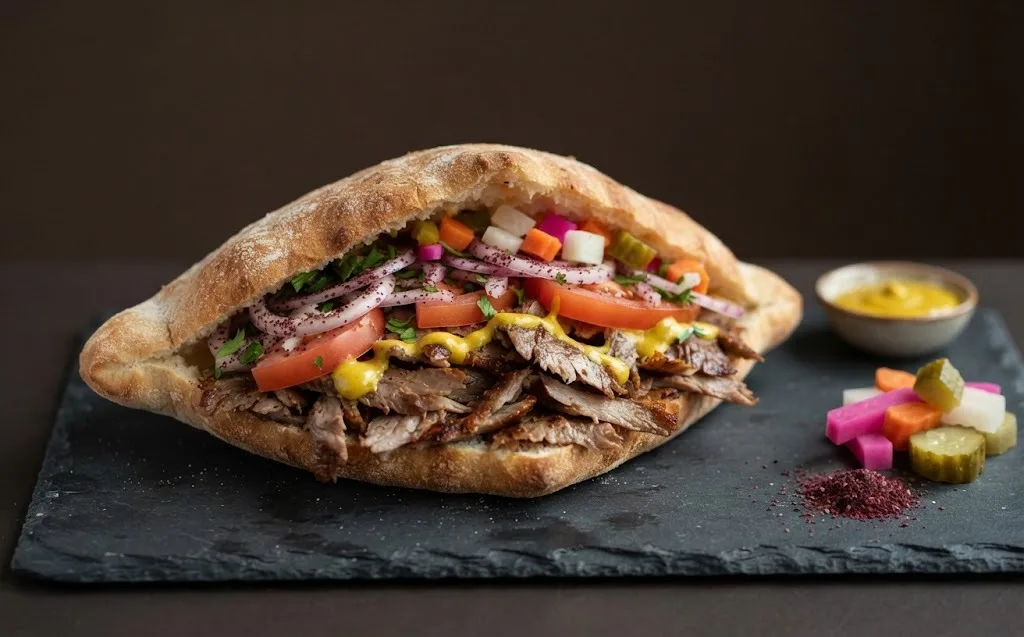
Iraq's own vertical-spit tradition: lamb layered with fat on a rotating spit, shaved thin and packed into samoon bread with pickles (amba optional), predating the global shawarma boom in Baghdad's street stalls. Locals insist guss is distinct from Levantine shawarma in its all-lamb stack and minimal marinade.
Also known as qass, kass, guss laham.
Ingredients
- 800 g lamb shoulder, sliced 5 mm thin
- 100 g lamb fat, thin slices
- 1 tbsp Iraqi baharat
- 1 tsp black pepper
- 1.5 tsp salt
- 4 samoon rolls (or thick pita)
- amba, pickles (turshi), tomato and onion with sumac
How to make it
- 1
Rub the lamb slices with baharat, salt and black pepper and let them sit at room temperature for 30 minutes — guss stays dry-seasoned, no yogurt marinade.
- 2
Build a home spit: stack the slices flat onto two parallel skewers stood in half an onion, layering a slice of fat every fourth layer, and press into a tight cylinder.
- 3
Roast upright on a tray at 190 C for about 50 minutes, until the outside darkens and crisps.
- 4
Shave the browned exterior off in thin ribbons with a long knife, return the stack to the oven 8 minutes to crisp the newly exposed layer, and shave again.
- 5
Split the samoon and pack it with the shaved lamb, amba, turshi, tomato and sumac onions.
Pro tip: The double-shave is the point of guss — every ribbon should carry crisped edge, so never carve the whole stack in one pass.
Where Guss comes from
Guss is plainer, more lamb-forward, and closer to the Turkish cağ kebabı in spirit than to a Beirut shawarma.
How Guss is cooked
The stack is built from thin slices of lamb interleaved with fat, pressed onto the vertical spit and compacted. Because the marinade is minimal — salt, black pepper, sometimes a little baharat — the fat between the layers carries almost all the responsibility for keeping the meat moist as it turns.
The spit rotates in front of a vertical heat source and the outer layer is shaved off in thin sheets as it browns, exposing the next layer. That progressive shaving is the mechanism: each customer gets meat that has just finished cooking, which is why a busy stall serves better guss than a quiet one.
Ingredients and shopping
For a home version, build a small upright stack: thin slices of lamb shoulder layered with lamb fat on two skewers stood in half an onion, pressed hard, roasted at 190°C, then shaved and returned to the oven to crisp the next layer. The crisping step is not optional.
Seasoning stays minimal — salt, black pepper, a little baharat. Samoon, the Iraqi boat-shaped bread, is the correct vessel; a small baguette or a stout pita is the substitute. Pickled vegetables, sliced onion with sumac, and amba for those who want it.
How Guss is served
In samoon with pickled vegetables, sliced onion with sumac, and parsley — amba optional and slightly contentious among purists. Grilled tomato on the side. Tea afterwards. It is street and market food, sold from midday well into the night.
Common mistakes
Over-marinating
Guss is deliberately plain. A heavy marinade makes it shawarma, which Iraqis will point out.
A loosely packed stack
The layers must be compacted hard so they cook as a single mass and shave cleanly.
Skipping the crisping step at home
Meat carved deep into the stack in one pass is soft. Returning the stack to the oven between shaves reproduces the spit's browned surface.
Too little fat between layers
With minimal marinade, interleaved fat is the only thing keeping it moist.
Guss: questions and answers
Is guss the same as shawarma?
Iraqis say no. Guss is an all-lamb stack with minimal marinade; Levantine shawarma is more heavily marinated and often uses chicken. The technique is shared, the result is different.
What is samoon?
Iraq's boat- or diamond-shaped white bread, the standard vessel for guss and for Iraqi kebab.
Sources and further reading
- Guss: Iraqi Grilled Meat in Samoon Bread — Food on the Move (jidlonacestach.cz)