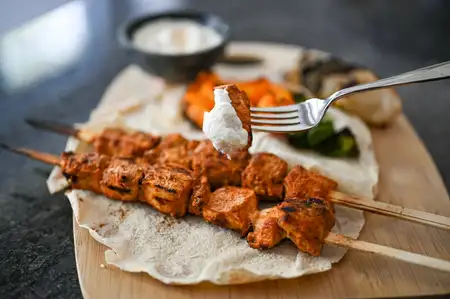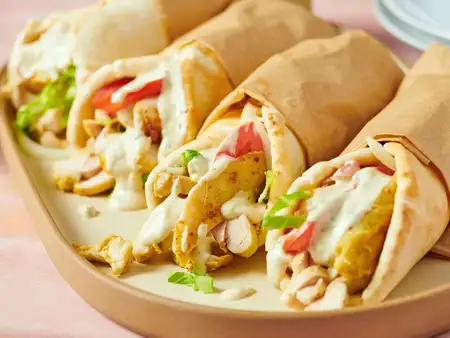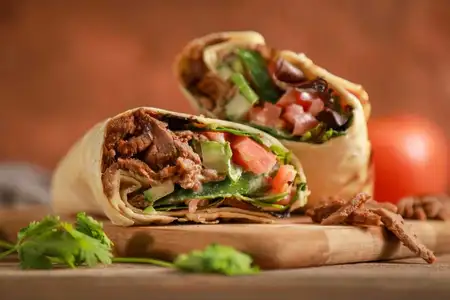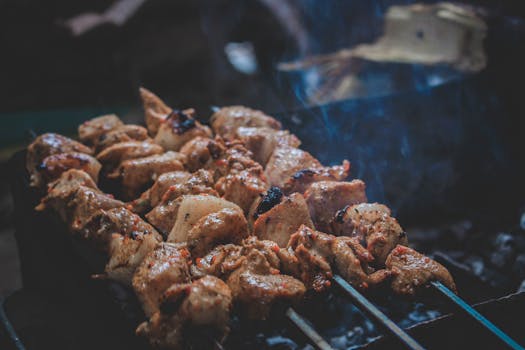
Yemen's charcoal-grilled lamb, cut in small chunks, rubbed with hawaij-type spice mixes and grilled fast over open coals, often from the same slow-cooked lamb tradition that produces haneeth. It is eaten off the skewer with malawah or khubz and the ubiquitous fenugreek froth, sahawiq or hulba, on the side.
Also known as: shiyyah, shiyah kebab, Yemeni mashwi, laham shiyah, Yemeni grilled lamb skewers
Watch it made
Ingredients
- 700 g lamb shoulder or leg, in small 2.5 cm chunks
- 2 tbsp oil
- 1.5 tbsp hawaij (cumin, black pepper, turmeric, cardamom)
- 3 garlic cloves, crushed
- 1 tsp salt
- 2 green chilies, 20 g fresh coriander, 1 garlic clove and 1 tomato, for the sahawiq
- khubz or malawah bread
How to make it
- 1
Rub the lamb with the oil, hawaij, garlic and salt and leave it 1 hour at room temperature.
- 2
Blitz the chilies, coriander, garlic, tomato and a pinch of salt into a coarse sahawiq relish while the charcoal reaches its fiercest stage.
- 3
Skewer the chunks and grill hard and fast, 6-8 minutes total — street shiyah is seared, never slow-roasted.
- 4
Bundle straight into the bread with sahawiq spooned over every layer of meat.
Pro tip: Hawaij carries turmeric, which turns bitter in long flames — small chunks over a quick, violent fire is how Sana'a vendors keep it aromatic.
The story of Yemeni Shiyah
Shiyah is Yemen's charcoal-grilled lamb: small chunks rubbed with hawaij-type spice mixes and grilled fast over open coals. It draws on the same highland lamb tradition that produces haneeth, the slow pit-roasted dish, but takes the fast route rather than the slow one.
It is eaten in the grill houses of Sana'a and Ta'izz and at gatherings, and it belongs to a food culture in which the accompaniments carry as much weight as the meat: sahawiq, the fiery chilli-and-coriander relish, and hulba, the whipped fenugreek froth that Yemenis serve with almost everything and that visitors find genuinely startling.
The technique that defines it
The rub is dry, and hawaij is the spice mix that defines it — cumin, black pepper, cardamom, coriander and turmeric in the savoury version. It is applied dry rather than in a wet marinade, which suits a fast grill: a dry surface chars, a wet one steams.
The pieces are small and the fire is hot, and the cook is a matter of minutes. Yemeni grilling has little of the marinating patience of the Levant; the meat is expected to be fresh enough that it needs only spice, salt and fire. Fat is left on the pieces rather than threaded separately.
Choosing your ingredients
Young highland lamb is the ideal and freshness is the whole premise — Yemeni butchers and grills are typically the same operation. Shoulder in small pieces with the fat left on. Older mutton needs a different, slower treatment.
Hawaij for meat (distinct from the coffee version, which is sweet and contains ginger and cinnamon) is worth buying from a Yemeni or Middle Eastern grocer. Sahawiq — green chilli, coriander, garlic, tomato — is made fresh and should be. Hulba requires fenugreek soaked overnight and whipped, and there is no shortcut.
Mistakes that ruin it
A wet marinade
Yemeni shiyah uses a dry spice rub. Wet meat steams on the fire instead of charring.
Using the sweet hawaij
There are two blends. The coffee hawaij, with ginger and cinnamon, is wrong for meat. Ask for the savoury one.
Large pieces
The pieces are small and the cook is fast. Large chunks need a slower fire and become a different dish.
Skipping the sahawiq
The meat is spiced but not hot. The chilli relish is where the heat lives and the dish is built around it.
How it is served
On malawah or khubz with sahawiq, hulba, and raw onion. Yemeni flatbread is used as plate and utensil. Sweet tea with cardamom afterwards, or qishr — the spiced coffee-husk drink — in the highlands. It is communal eating from a shared platter.
Questions about Yemeni Shiyah
What is hawaij?
A Yemeni spice blend. The savoury version for meat contains cumin, black pepper, cardamom, coriander and turmeric. A separate sweet version, with ginger and cinnamon, is used for coffee.
What is hulba?
Whipped fenugreek froth, made from fenugreek soaked overnight and beaten until light. It is served alongside almost every Yemeni meat dish.
How is shiyah different from haneeth?
Shiyah is small pieces grilled fast over coals. Haneeth is large cuts slow-cooked in a pit. Same lamb tradition, opposite methods.
Is shiyah marinated?
No — a dry spice rub, applied shortly before grilling. Yemeni practice relies on very fresh meat rather than on marinades.