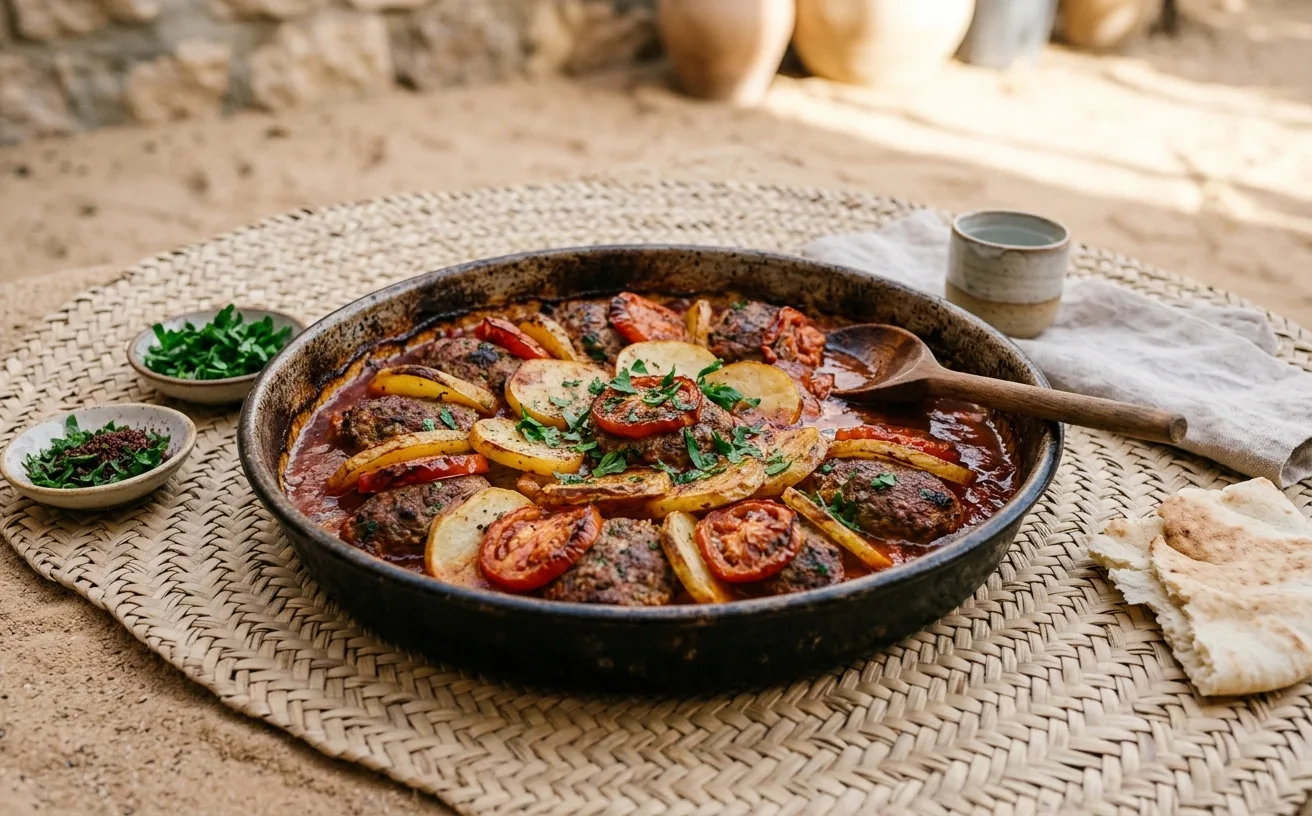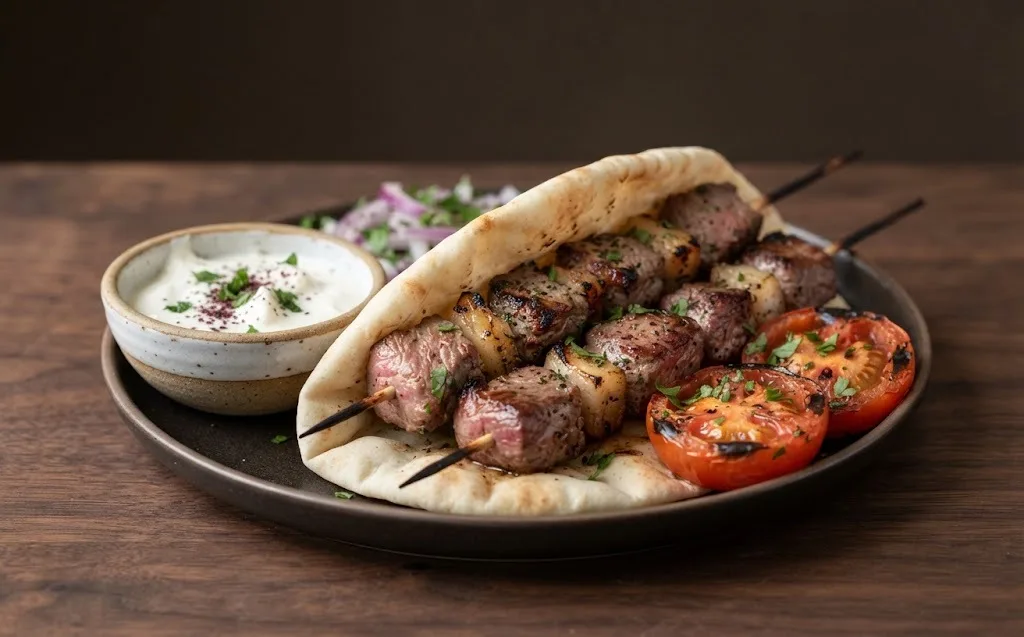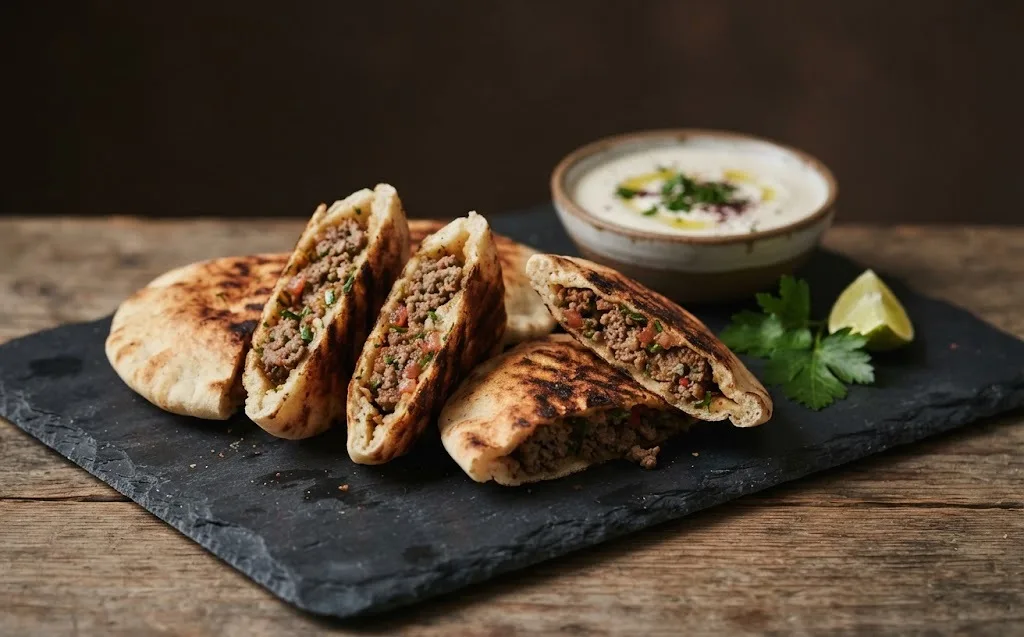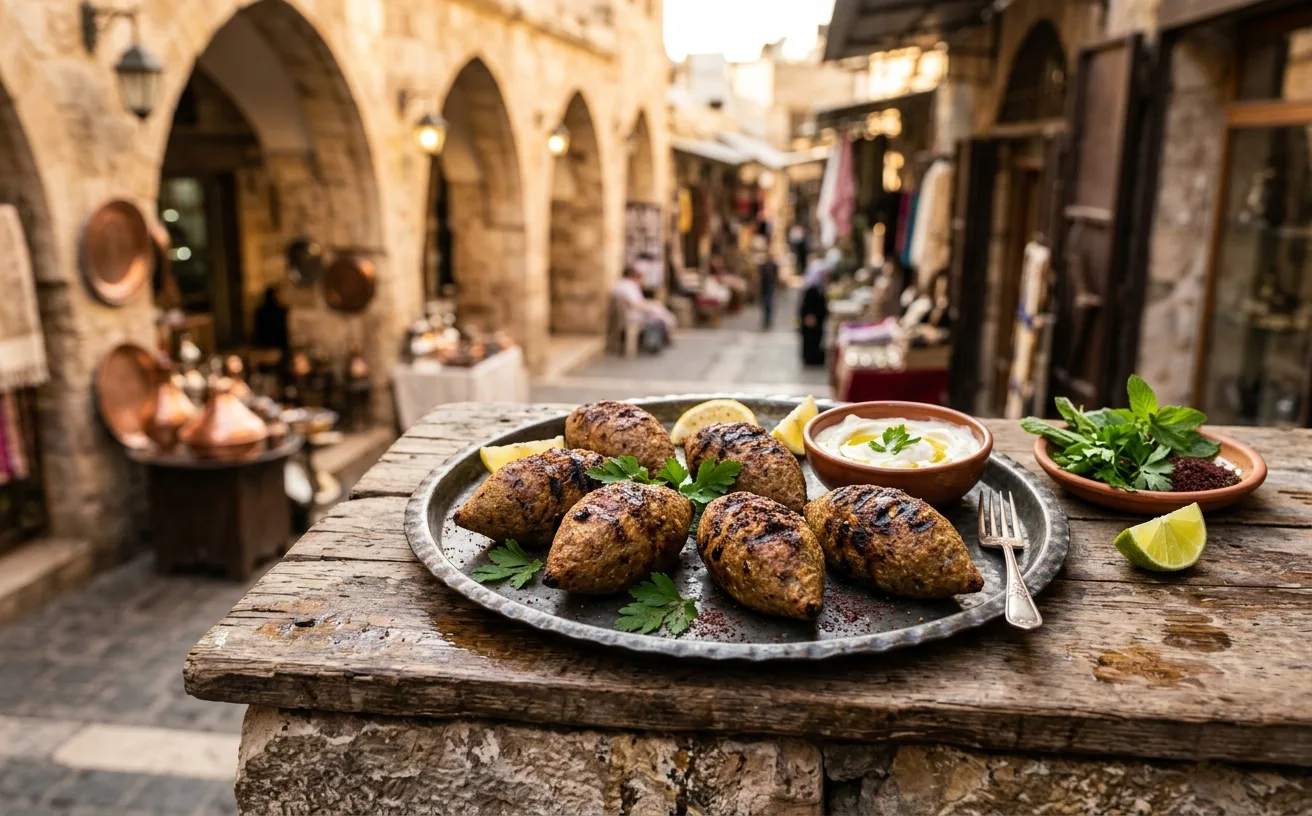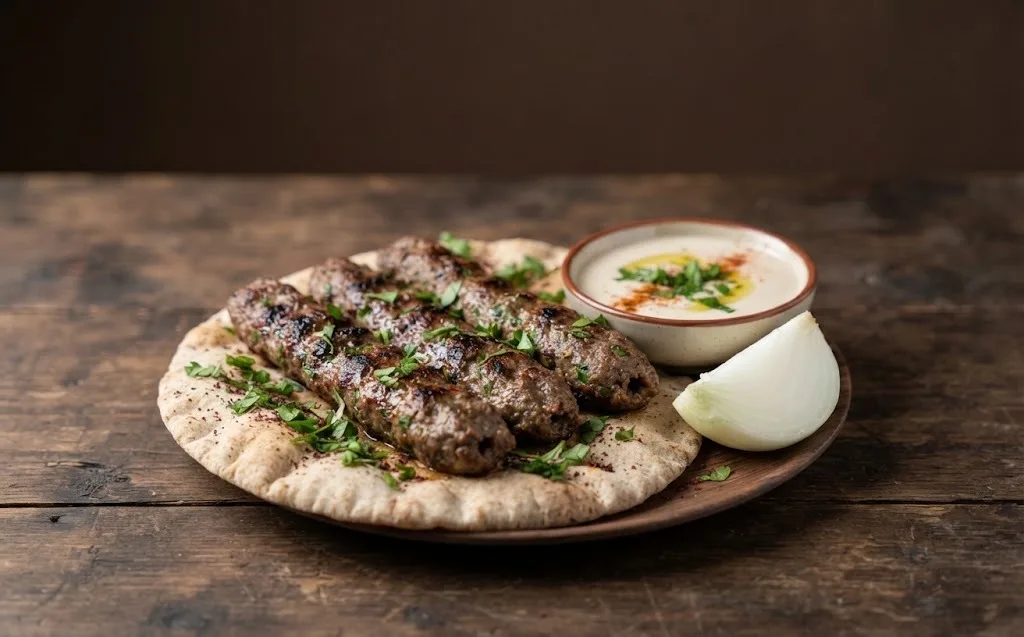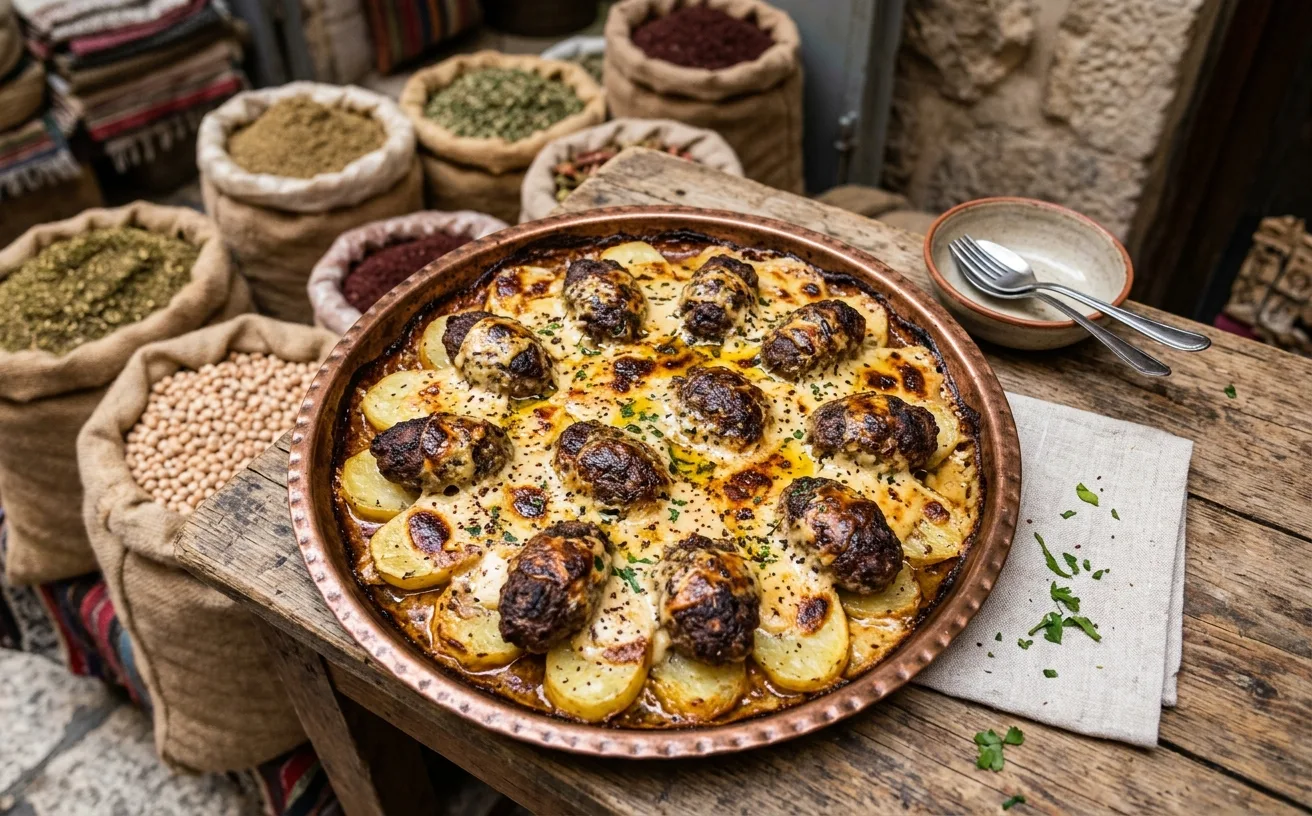
Kafta patties tray-baked under a lemony tahini sauce, often over sliced potatoes, until the sesame cream thickens and browns at the edges. It shows how the Levant takes its skewer meat indoors — same kofta, completely different dish.
Also known as kofta bil tahini, kafta bi tahineh, kofta with tahini.
Reference video
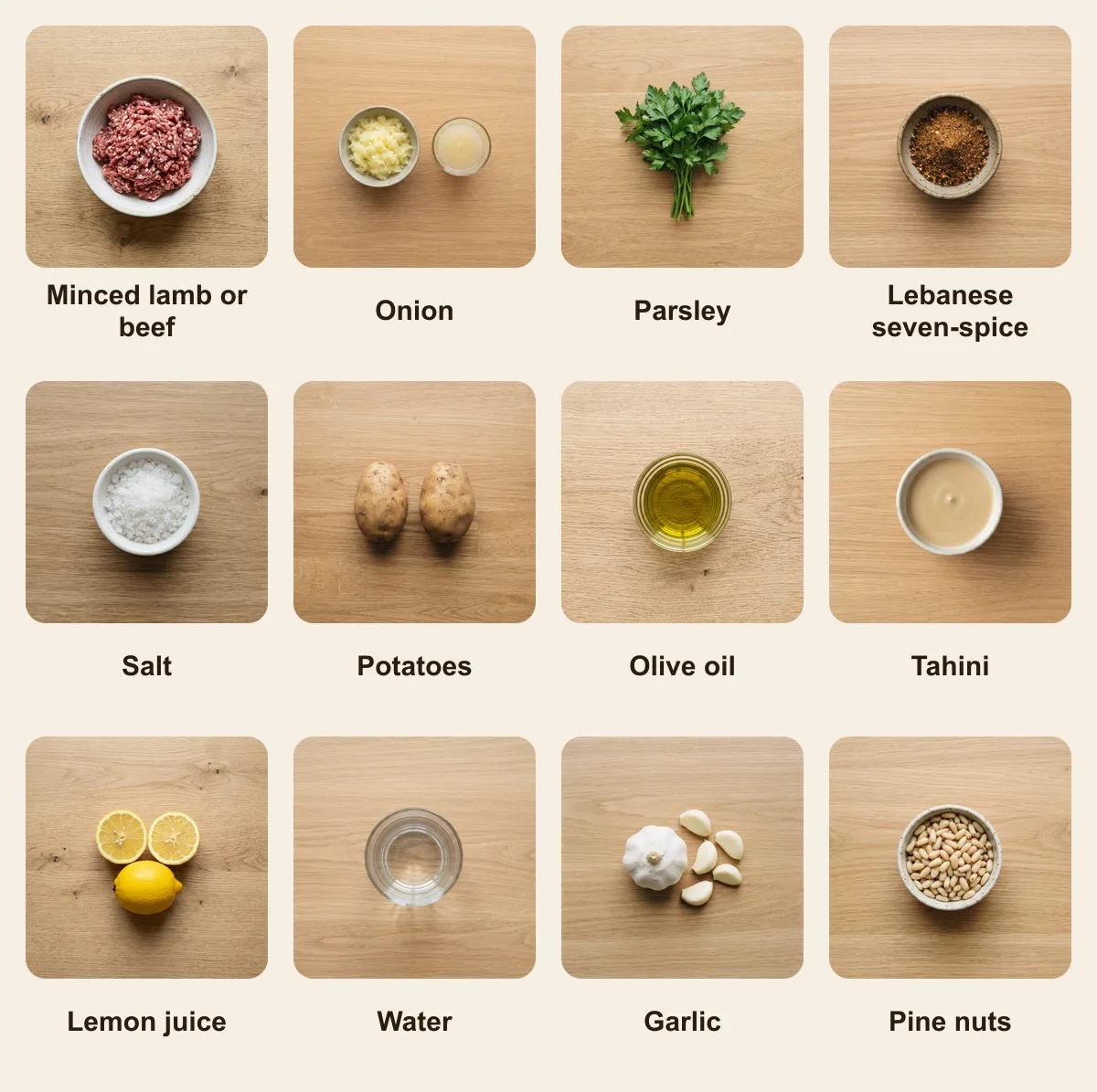
Ingredients
- 700 g minced lamb or beef
- 1 onion, finely grated
- 20 g parsley, chopped
- 1 tsp Lebanese seven-spice
- 1.5 tsp salt
- 3 potatoes, in 1 cm rounds
- 30 ml olive oil, for the potatoes and pine nuts
- 160 g tahini
- 80 ml lemon juice
- 250 ml water
- 1 garlic clove, crushed, plus 20 g pine nuts
How to make it
- 1
Mix the kafta base, shape into 8 flat patties and bake 20 min at 190 C, then drain off the rendered fat.
- 2
Fry or bake the potato rounds in the olive oil until just golden and layer them in a baking dish with the patties on top.
- 3
Whisk tahini, lemon, garlic, a pinch of salt and the water; it will seize thick, then loosen to pouring cream.
- 4
Pour the sauce over and bake at 190 C for 25-30 min until bubbling at the edges and pale gold on top.
- 5
Scatter toasted pine nuts and serve with flatbread or vermicelli rice.
Pro tip: Whisk the tahini sauce past its seized stage to a cream that pours off the spoon; it tightens noticeably again in the oven.
Where Kafta bi Tahini comes from
It is a Lebanese and Palestinian household staple and a common Friday dish, cheap and generous and easy to scale for a crowd. The tray format belongs to the same tradition as the Turkish tepsi kebabı and the Syrian kebab bil-siniyeh — a grill dish reinvented for a domestic oven.
The kafta mixture, baked under tahini instead of grilled
It starts from the same kafta mixture used on Kafta Kebab skewers, lamb or beef with fine onion, parsley and seven-spice, yet it never touches a grill. Patties bake 20 minutes at 190 C, the rendered fat is drained off, and they go onto golden potato rounds under a sauce of tahini whisked with lemon, garlic and water. Kafta bi Bandora shares the tray and the potatoes but swaps sesame for tomato, pours its sauce around rather than over, and starts under foil. Toasted pine nuts and a set, lightly browned top finish this version; serve it with flatbread or vermicelli rice.
Compare: Kafta Kebab · Kafta bi Bandora
How Kafta bi Tahini is cooked
The tahini sauce is where this dish is won or lost, and the mechanics are counter-intuitive: tahini seizes and thickens dramatically when water or lemon juice is added, before loosening again as more liquid goes in. The sauce must be built by whisking liquid in gradually through that seizing stage until it is smooth and pourable.
The kafta is baked partially first — twenty minutes or so — and the fat and juices that render out are drained off before the sauce goes on. Skipping that drain gives a sauce split by meat fat. The tahini then goes over and the tray returns to the oven until the surface is set and lightly browned.
Ingredients and shopping
The same kafta mixture as for skewers: lamb or beef at 20 percent fat with fine onion and plenty of parsley. Potatoes should be waxy and sliced about a centimetre thick, and it helps to par-cook them, because they will not soften enough in the time the meat needs.
Good tahini matters — a runny, pale, well-stirred one from a Middle Eastern grocer rather than a stiff dark supermarket jar. Lemon juice in quantity, garlic crushed with salt, and enough water to bring it to a pourable cream. Pine nuts toasted in a little olive oil over the top at the end.
How Kafta bi Tahini is served
Straight from the tray with rice or bread, a sharp salad and pickles. Extra lemon at the table, because the tahini takes it. It reheats reasonably but the sauce firms, so a splash of water and a gentle oven is the way to bring it back.
Common mistakes
Adding all the liquid to the tahini at once
It seizes and goes lumpy. Add water and lemon gradually, whisking through the thick stage until it loosens.
Not draining the meat fat
Rendered fat splits the tahini sauce. Drain the tray after the first bake.
Raw potato slices
They will not cook through in the time the meat needs. Par-boil or par-roast them first.
Baking the sauce too long
It should set and lightly brown, not dry out and crack. Watch it in the last ten minutes.
Kafta bi Tahini: questions and answers
Why did my tahini sauce go lumpy?
Tahini seizes when liquid is added too fast. Whisk water and lemon in gradually — it will thicken alarmingly, then loosen into a smooth cream.
Do I need to drain the meat before saucing?
Yes. Rendered fat in the tray will split the tahini sauce. Pour it off after the first twenty minutes of baking.
Should the potatoes be cooked first?
Yes, at least partially. Raw slices do not soften in the time the kafta needs.
Sources and further reading
- Palestinian Kafta with Tahini Sauce (Kofta Meatballs) — Palestine in a Dish
- Kafta Tray Bake with Tahini — Rouba Shahin