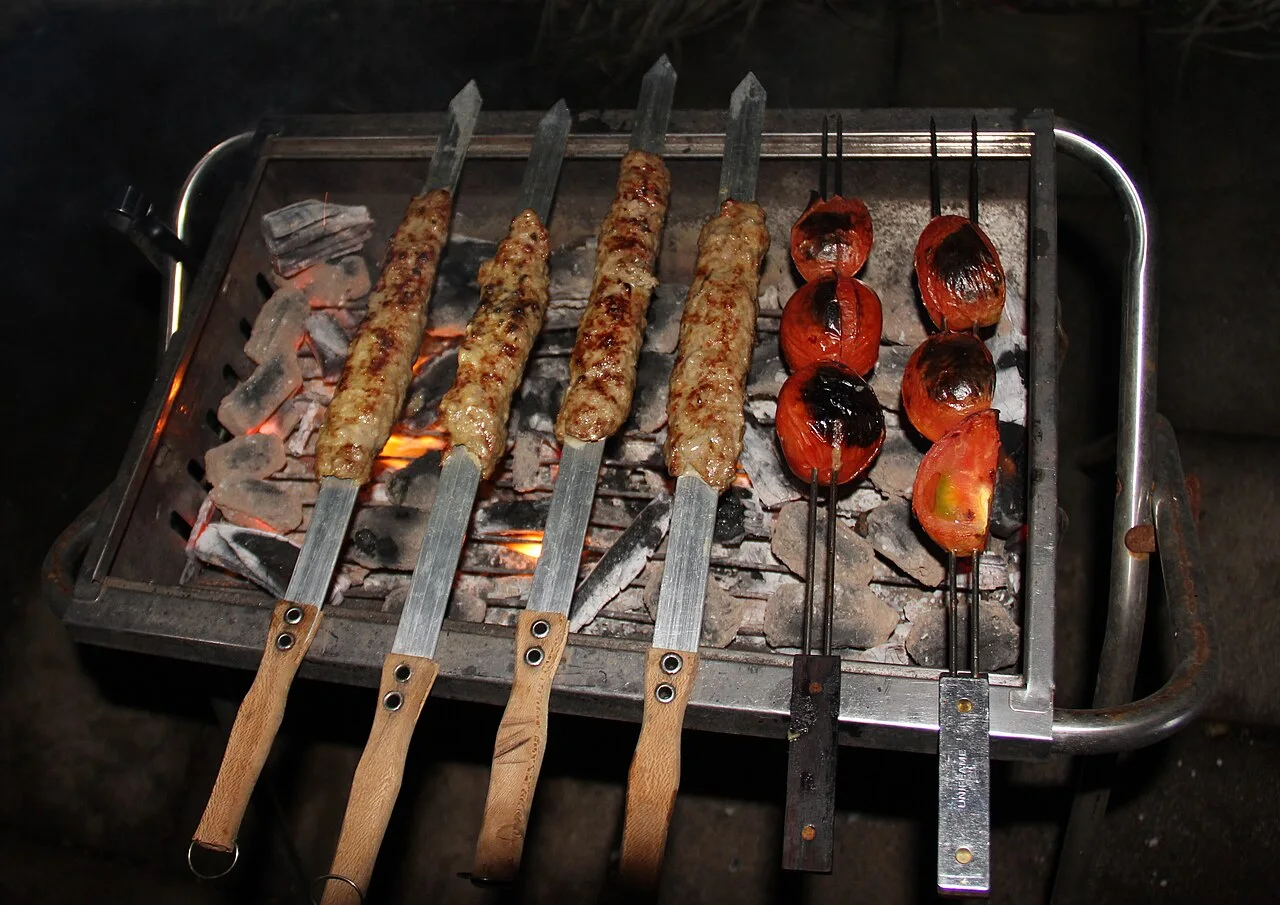
Kabab Koobideh
Iran
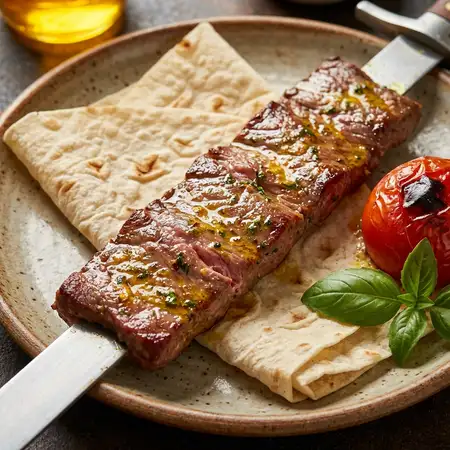 AI illustration
Kabab Barg
Iran
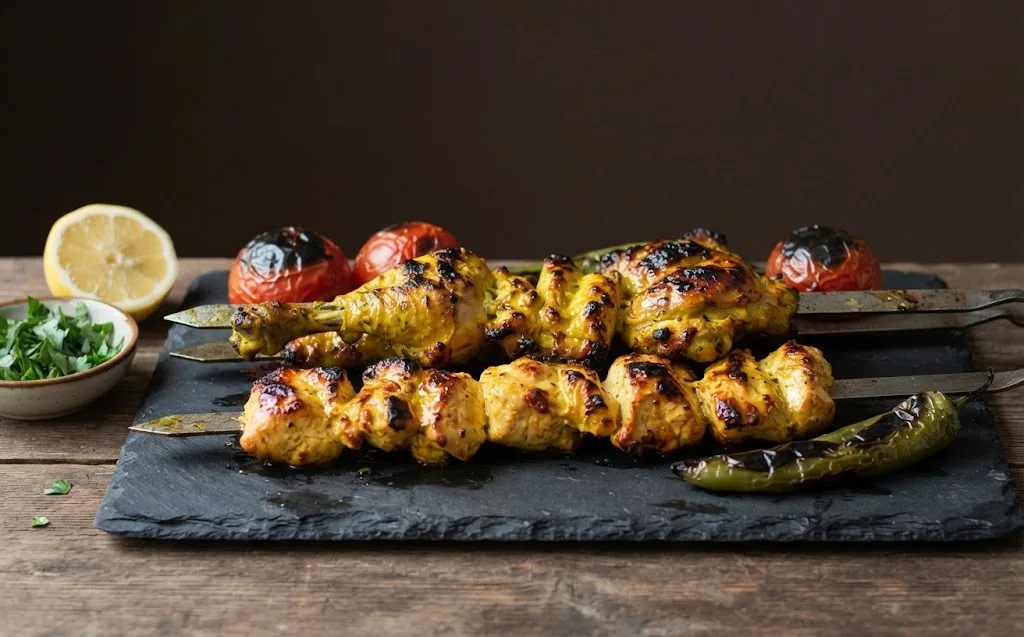 AI illustration
Joojeh Kabab
Iran
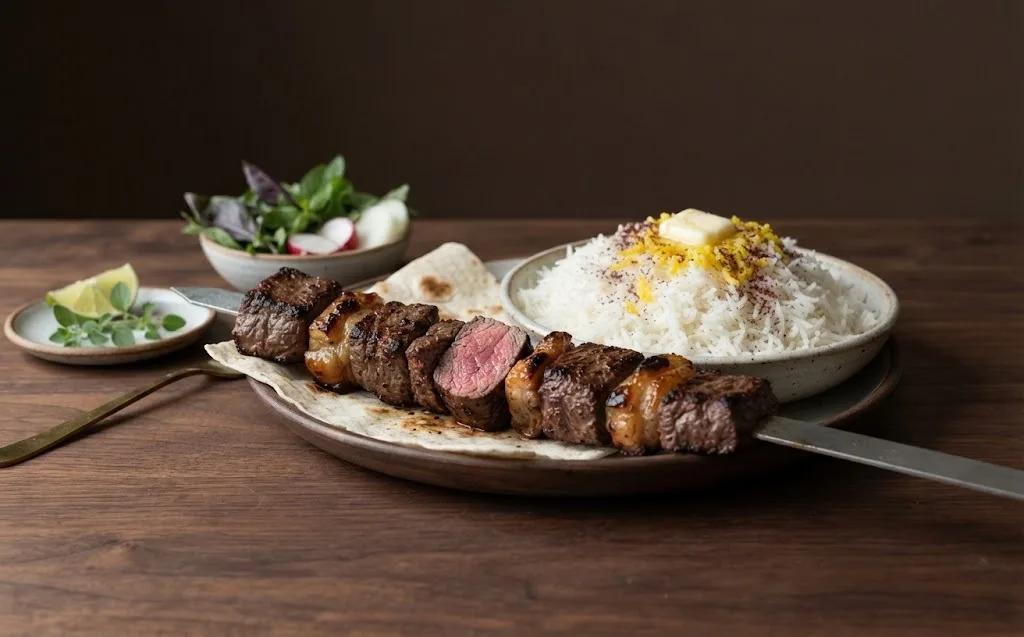 AI illustration
Kabab Chenjeh
Iran
 AI illustration
Kabab Torsh
Iran (Gilan)
 AI illustration
Kabab Bakhtiari
Iran · ▶
 AI illustration
Kabab Soltani
Iran · ▶
 AI illustration
Shishlik
Iran (Mashhad / Shandiz)
Kabab-e Jigar
Iran · ▶
 AI illustration
Kabab Tabei
Iran · ▶
Kabab Hoseini
Iran · ▶
Lyulya Kebab
Azerbaijan · ▶
Tikə Kebab
Azerbaijan
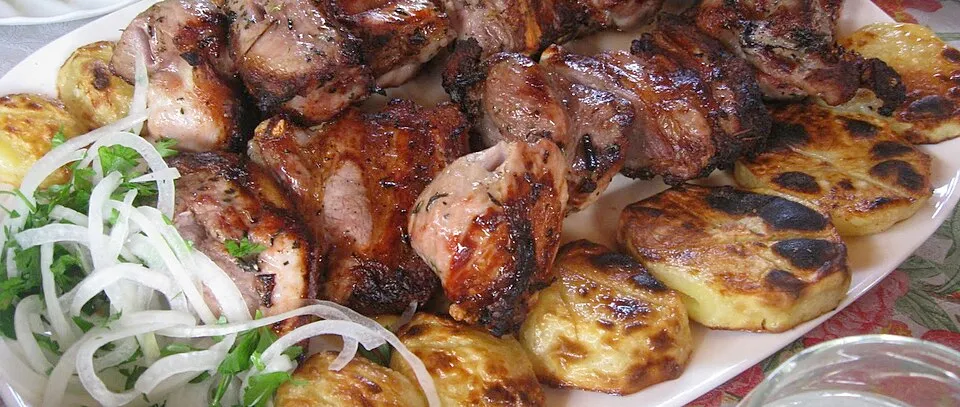
Khorovats
Armenia · ▶
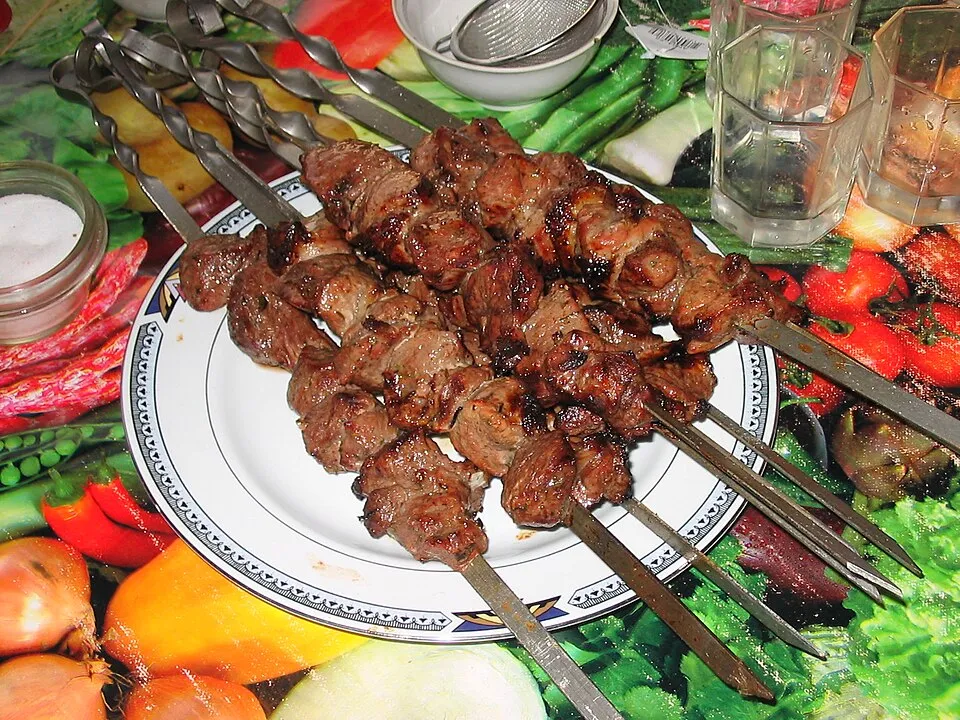
Mtsvadi
Georgia
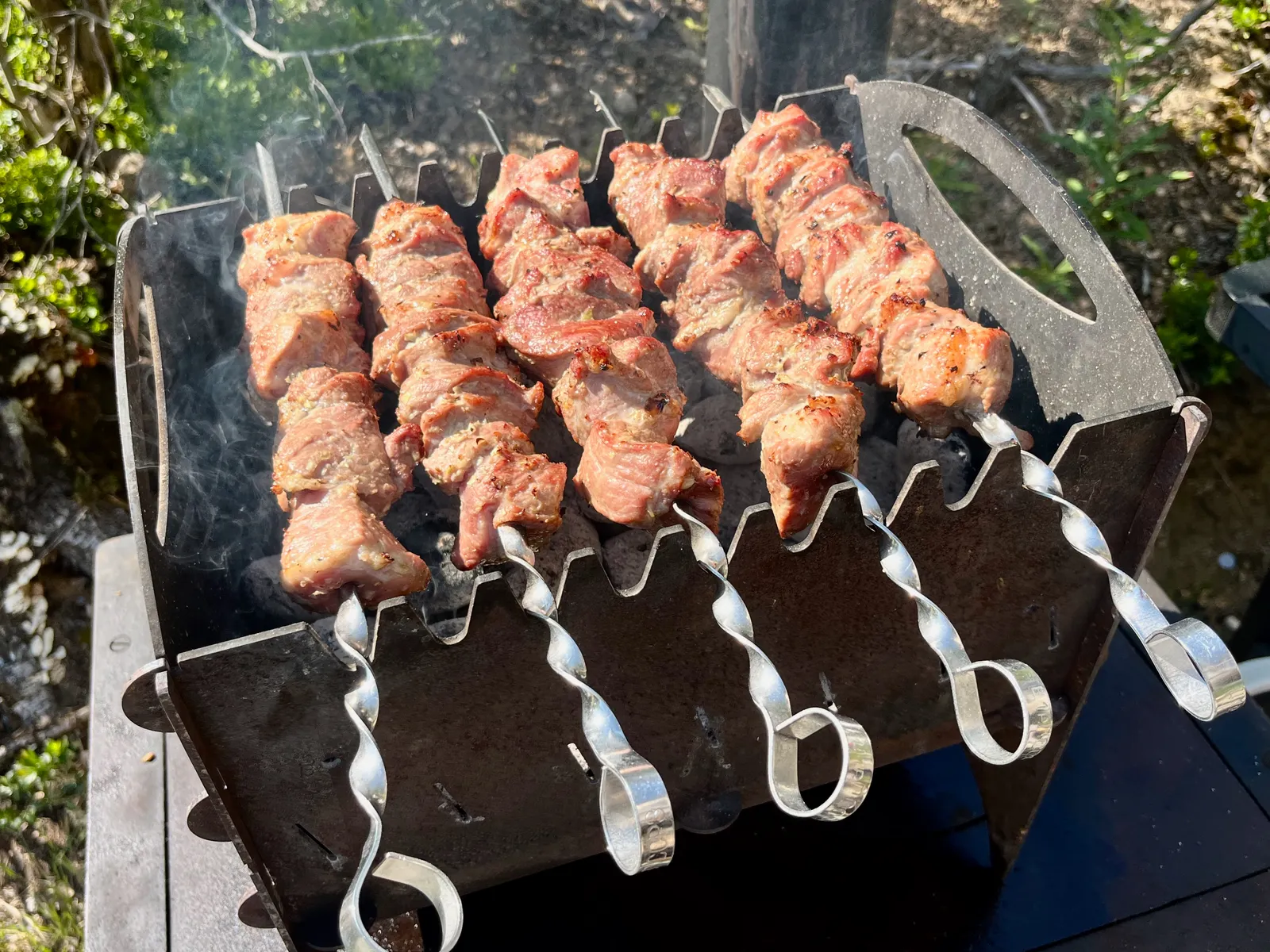
Shashlik
Caucasus / former USSR
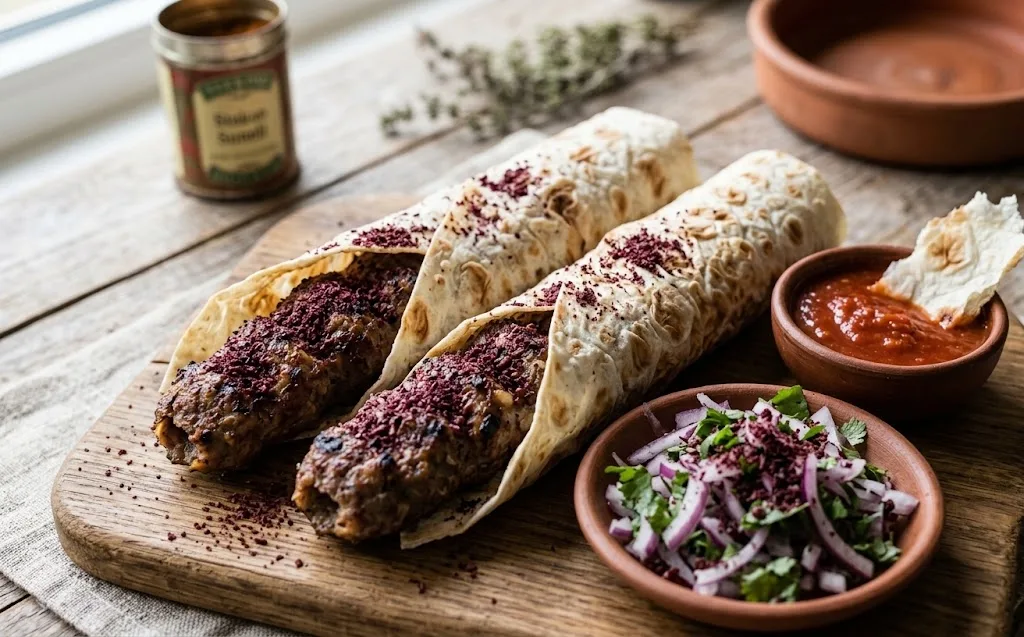 AI illustration
Kababi (Georgian Kebab)
Georgia · ▶
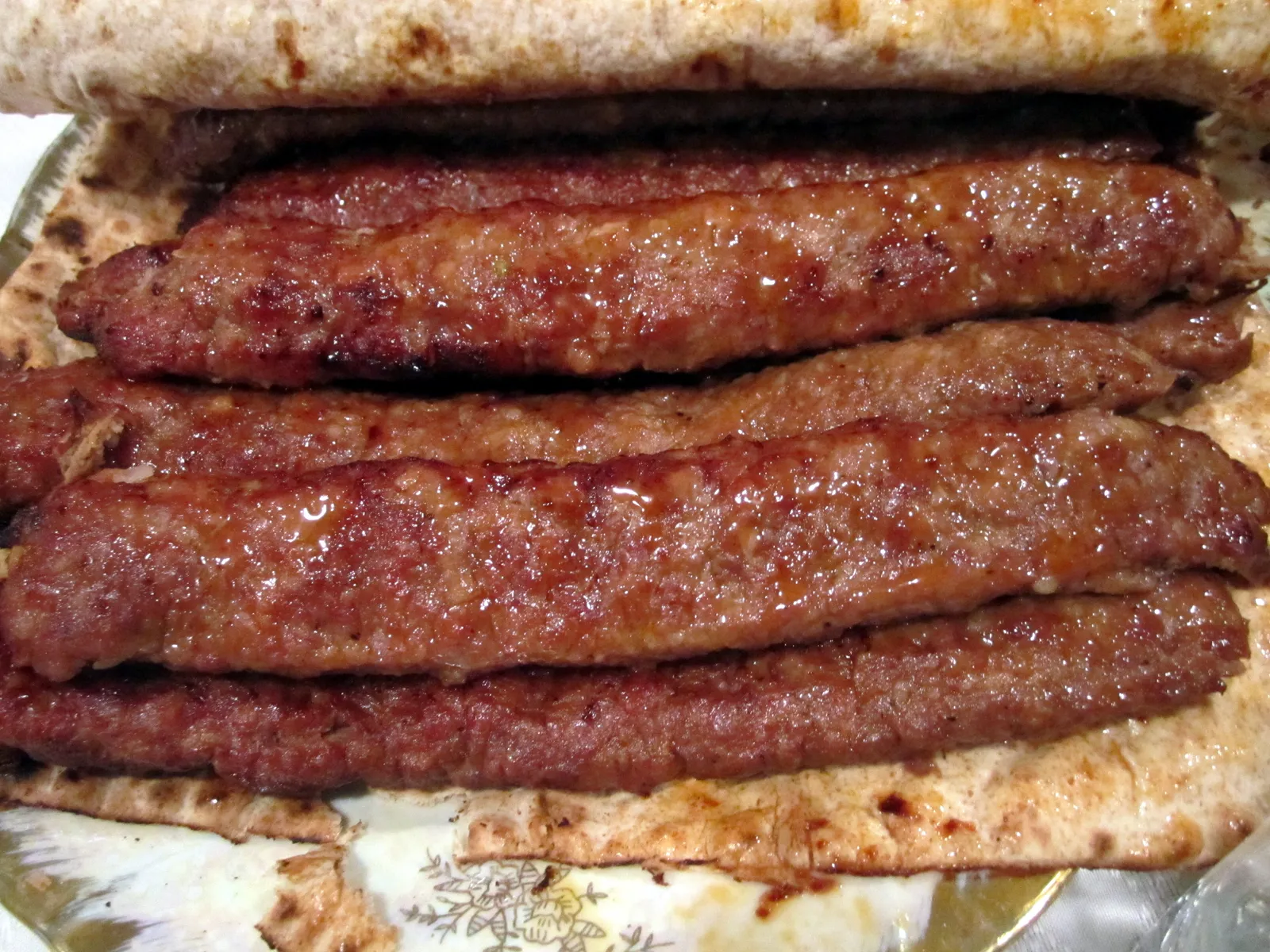
Armenian Lula Kebab
Armenia
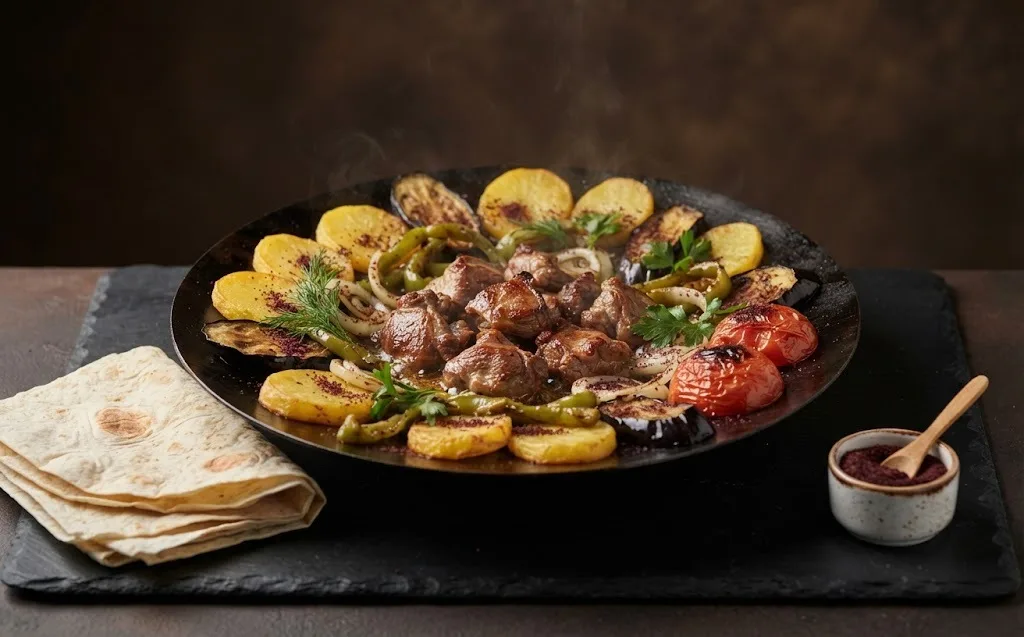 AI illustration
Sadj Kebab
Azerbaijan · ▶
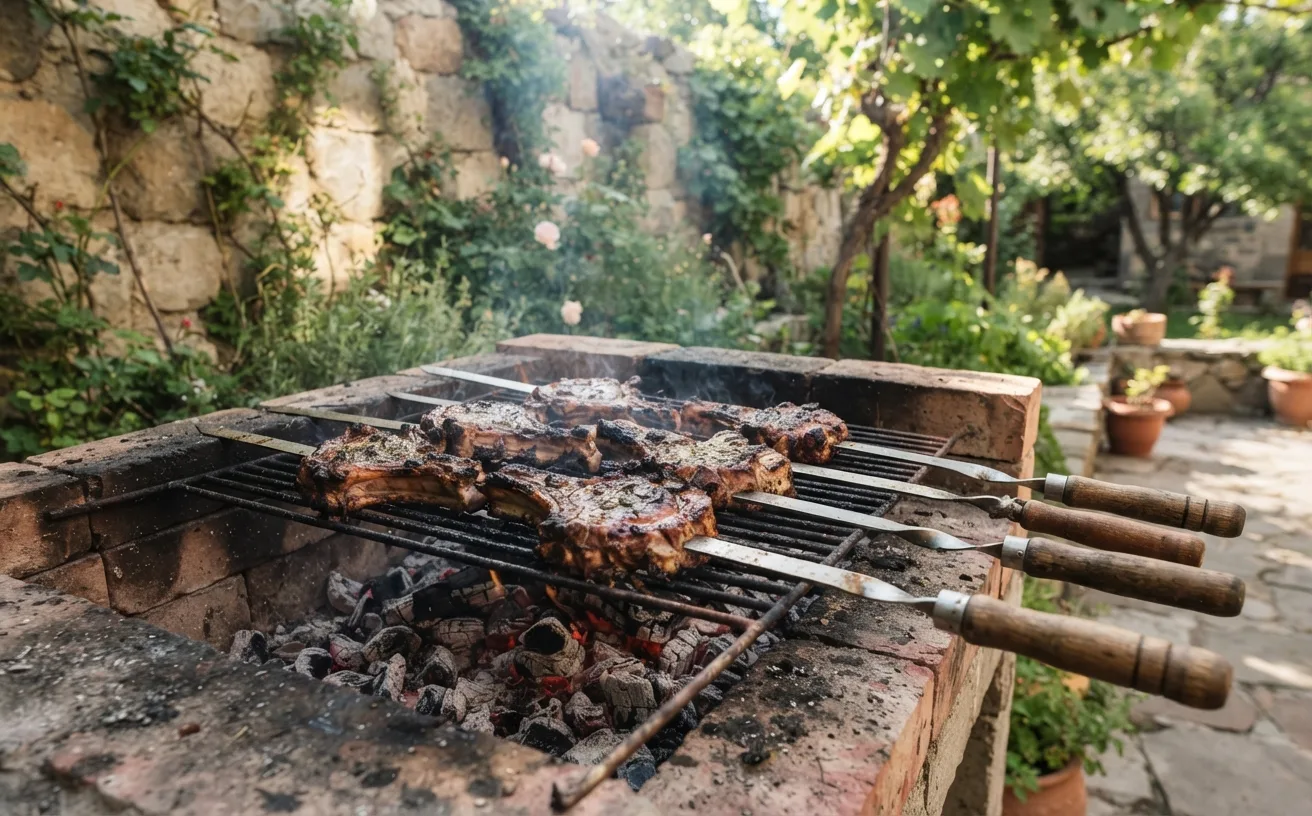 AI illustration
Chalagach
Armenia · ▶
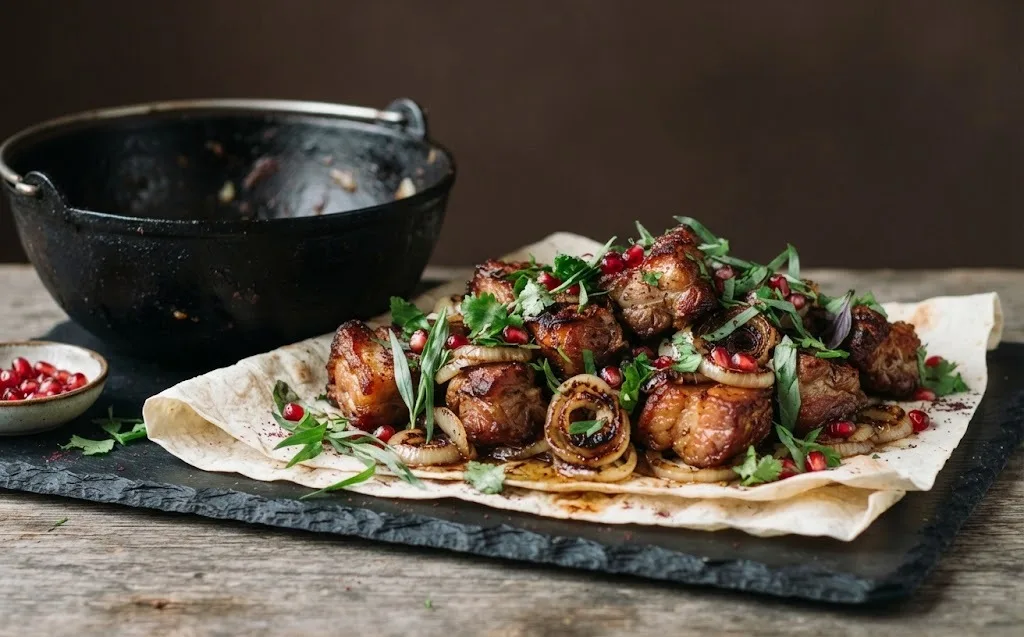 AI illustration
Khazani Khorovats
Armenia · ▶
 AI illustration
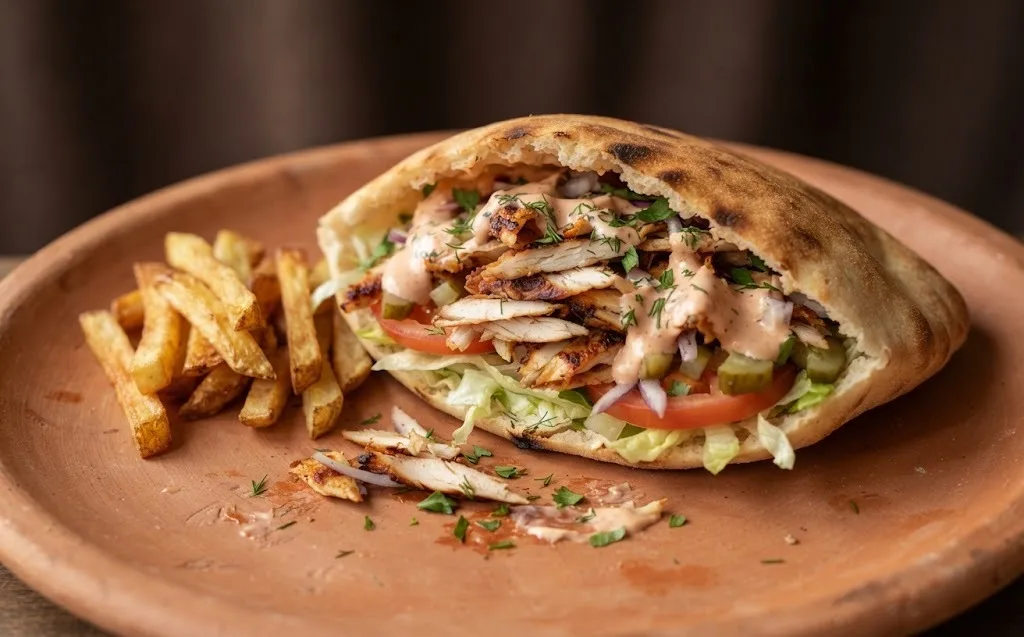
Azerbaijani Doner
Azerbaijan
Quick index
- Kabab Koobideh — Iran's national kebab: minced lamb or beef kneaded with grated onion until sticky, hand-pressed in ridges along wide flat skewers, and grilled fast over coals.
- Kabab Barg — The aristocrat of Persian kebabs: lamb fillet or sirloin sliced into thin ribbons, flattened, and marinated in onion juice, saffron and butter before a brief grilling.
- Joojeh Kabab — Chicken pieces stained gold by a saffron, lemon and yogurt-onion marinade, grilled on skewers until the edges caramelize.
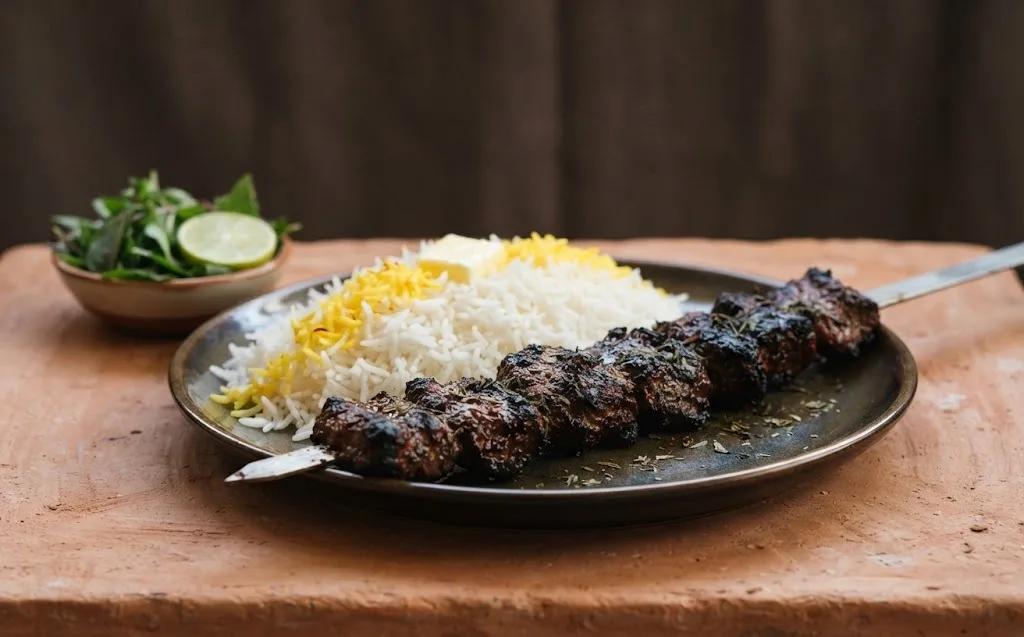
- Kabab Chenjeh — The Persian answer to shish kebab: unpounded chunks of lamb, often just rested in onion and salt, skewered and grilled so the meat's own flavor leads.
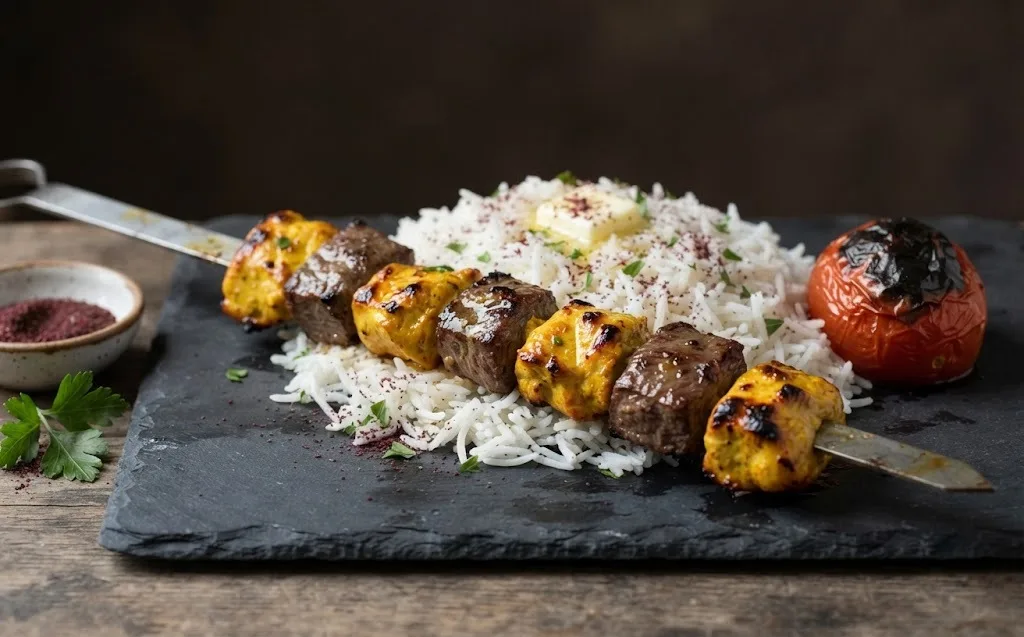
- Kabab Torsh — A Caspian-coast specialty marinating beef or lamb in a paste of crushed walnuts, pomegranate molasses, garlic and herbs — 'torsh' means sour.
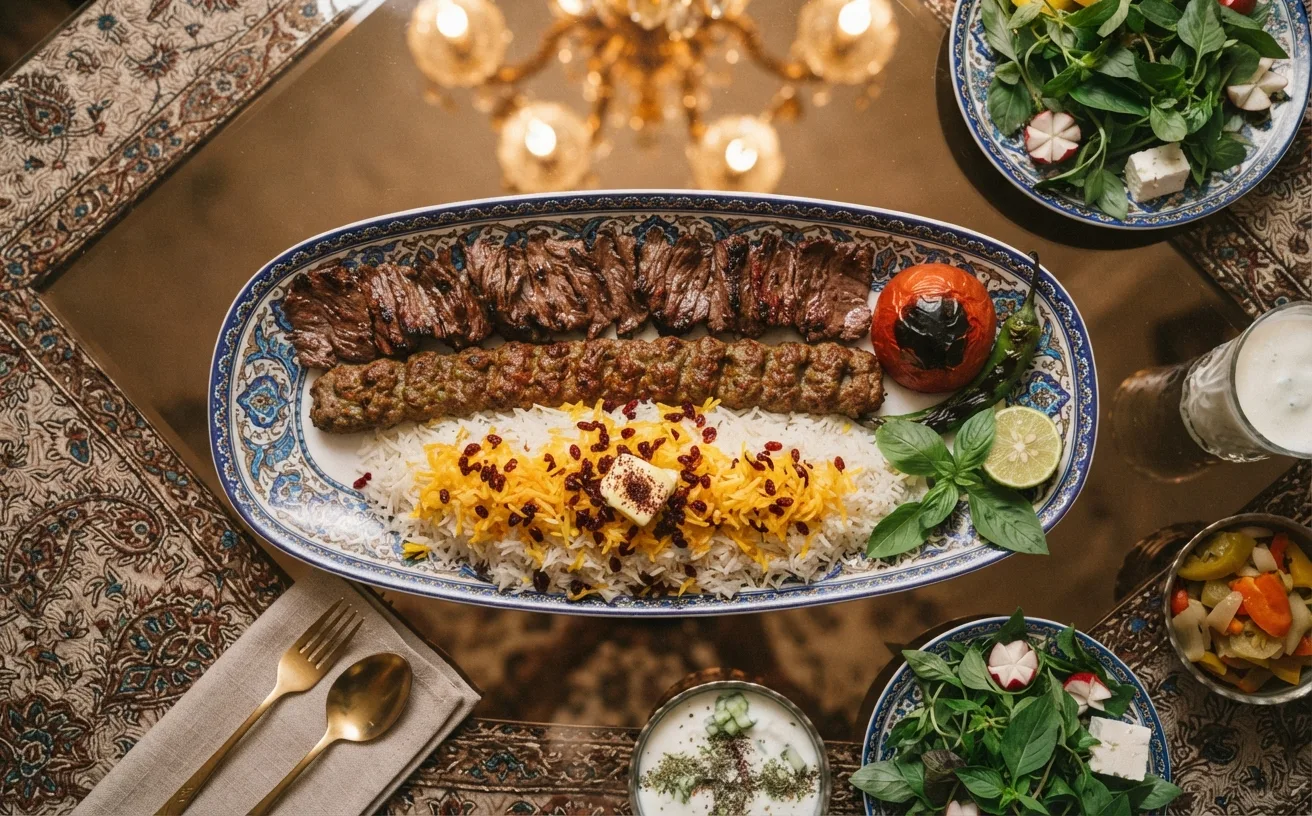
- Kabab Bakhtiari — A single skewer alternating cubes of saffron chicken and lamb fillet, named for the Bakhtiari nomads of the Zagros mountains.
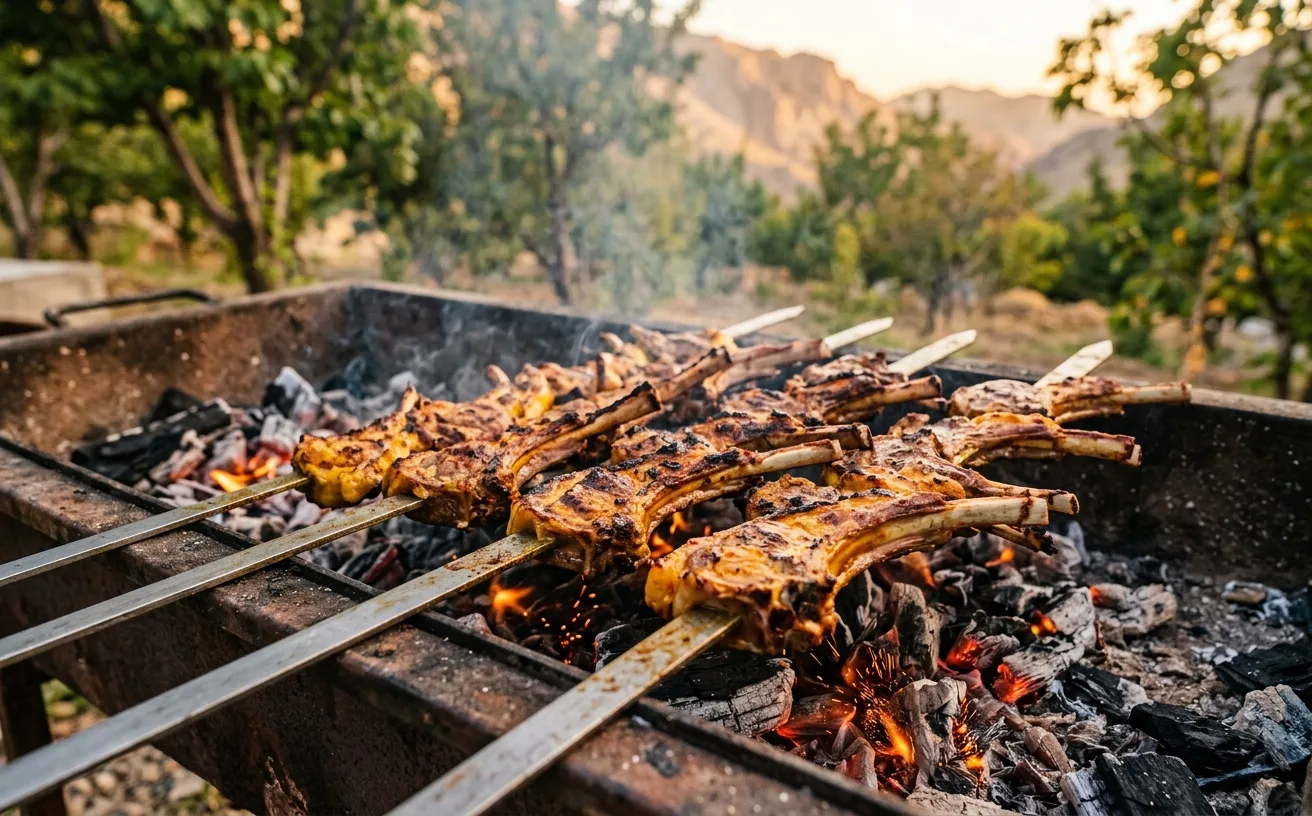
- Kabab Soltani — The 'sultan's' order in any Persian kebab house: one skewer of barg and one of koobideh served together over saffron chelow rice.
- Shishlik — Frenched lamb rib chops marinated in onion and saffron, threaded onto long skewers and grilled bone-in — the pride of Shandiz near Mashhad, where whole restaurants exist for this one dish.
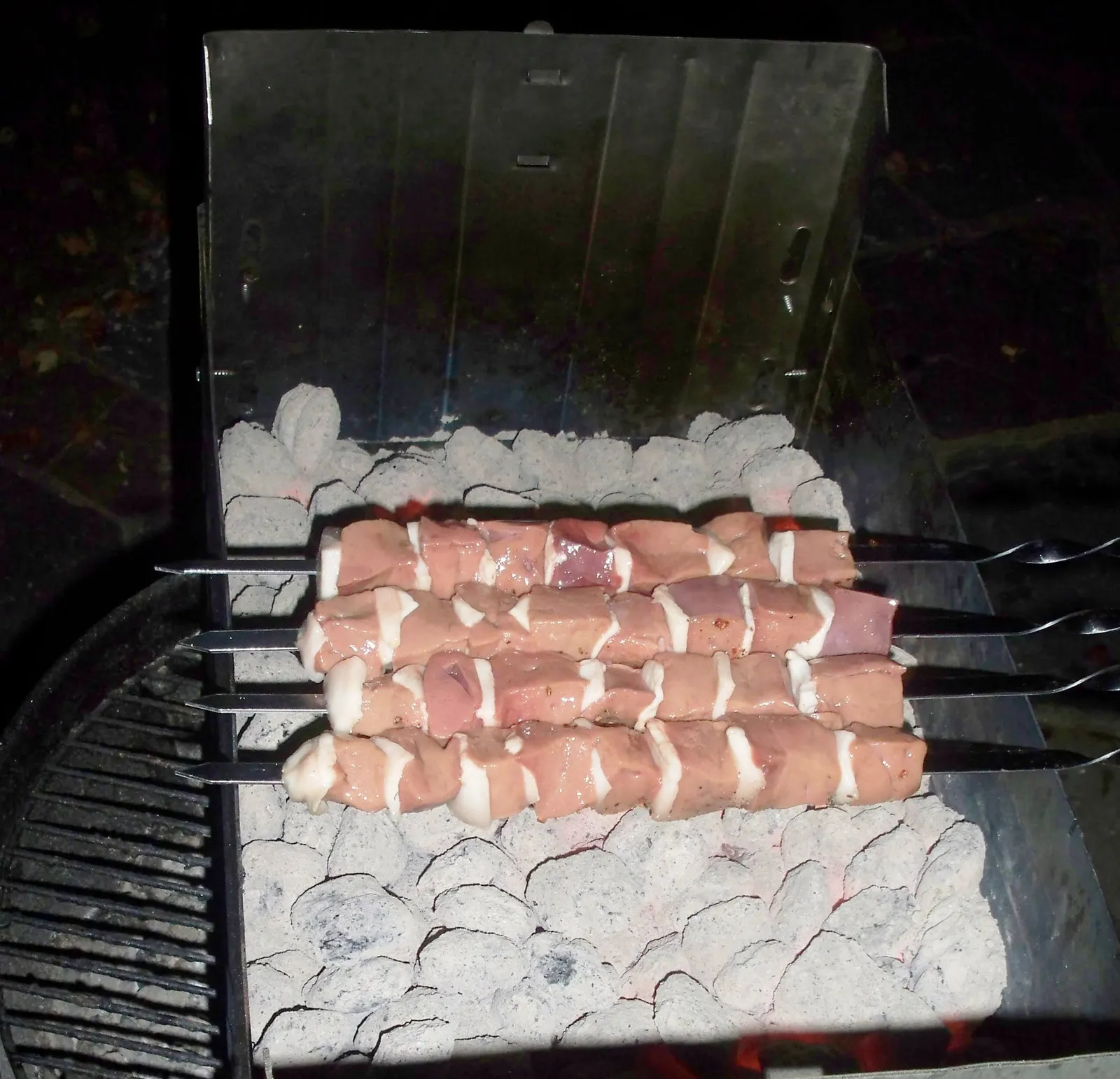
- Kabab-e Jigar — Cubes of fresh lamb liver grilled quickly over hot coals and eaten straight off the skewer with salt, lemon and basil — a late-night street institution in Iranian cities.
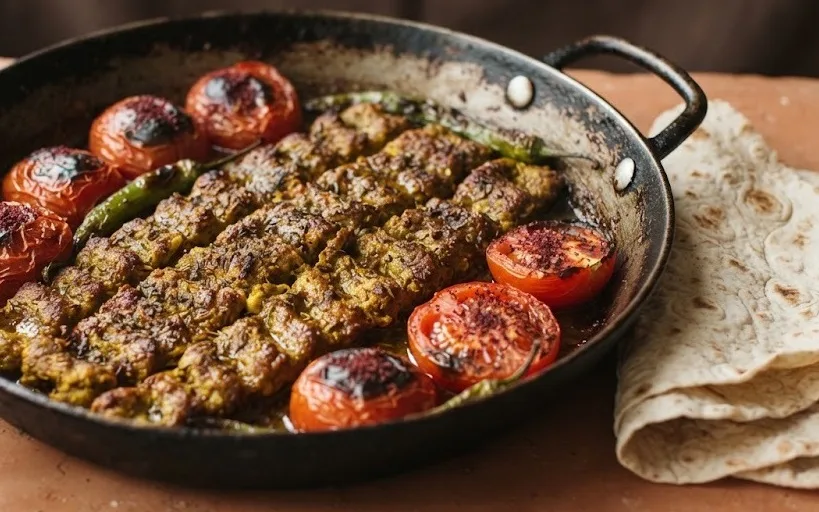
- Kabab Tabei — The home-kitchen koobideh: the same onion-kneaded mince pressed flat into a skillet, cooked, then cut into strips and finished with grilled tomatoes.
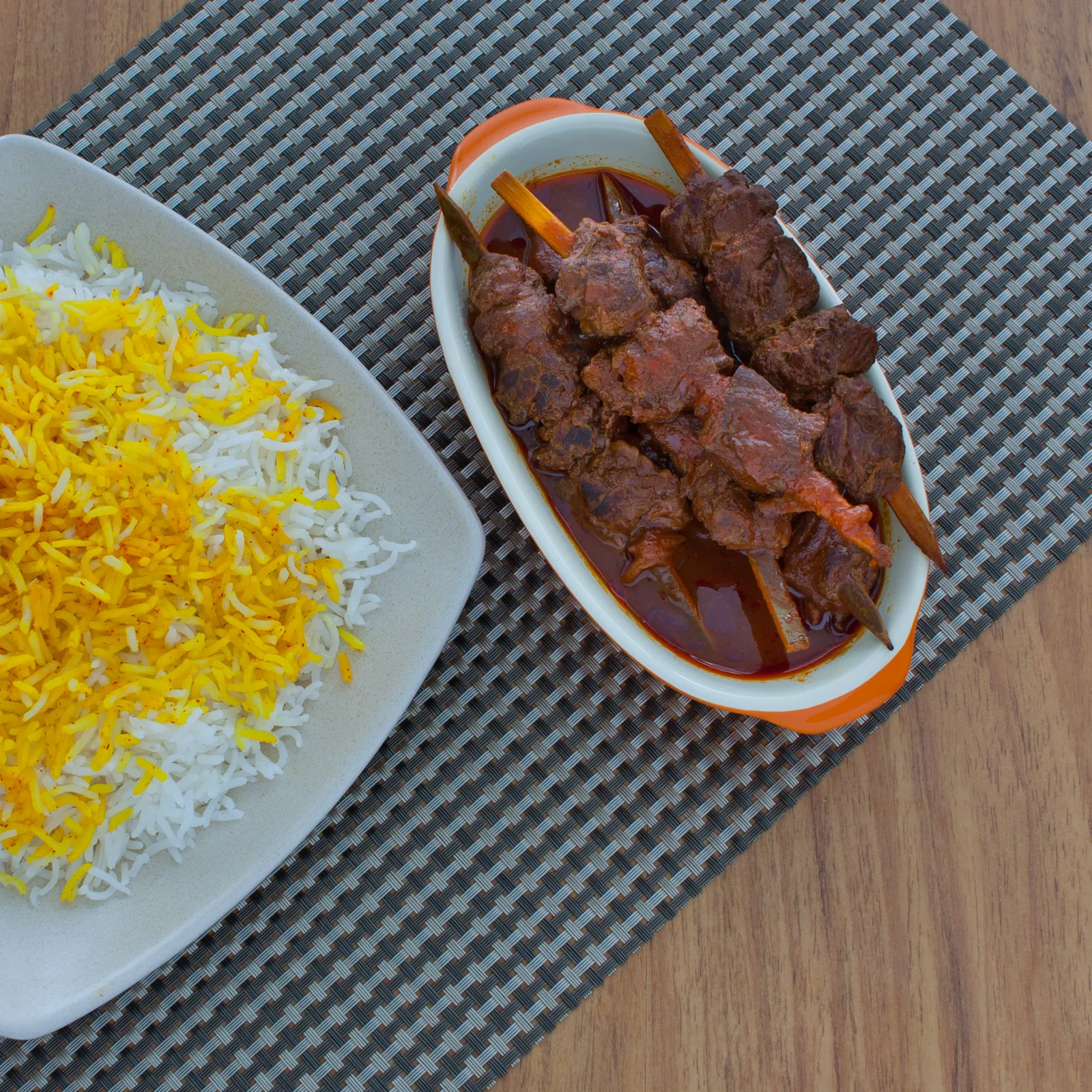
- Kabab Hoseini — An old Qajar-era dish of marinated lamb chunks threaded onto small wooden skewers and slowly braised in a pan with onion and tomato instead of grilled.
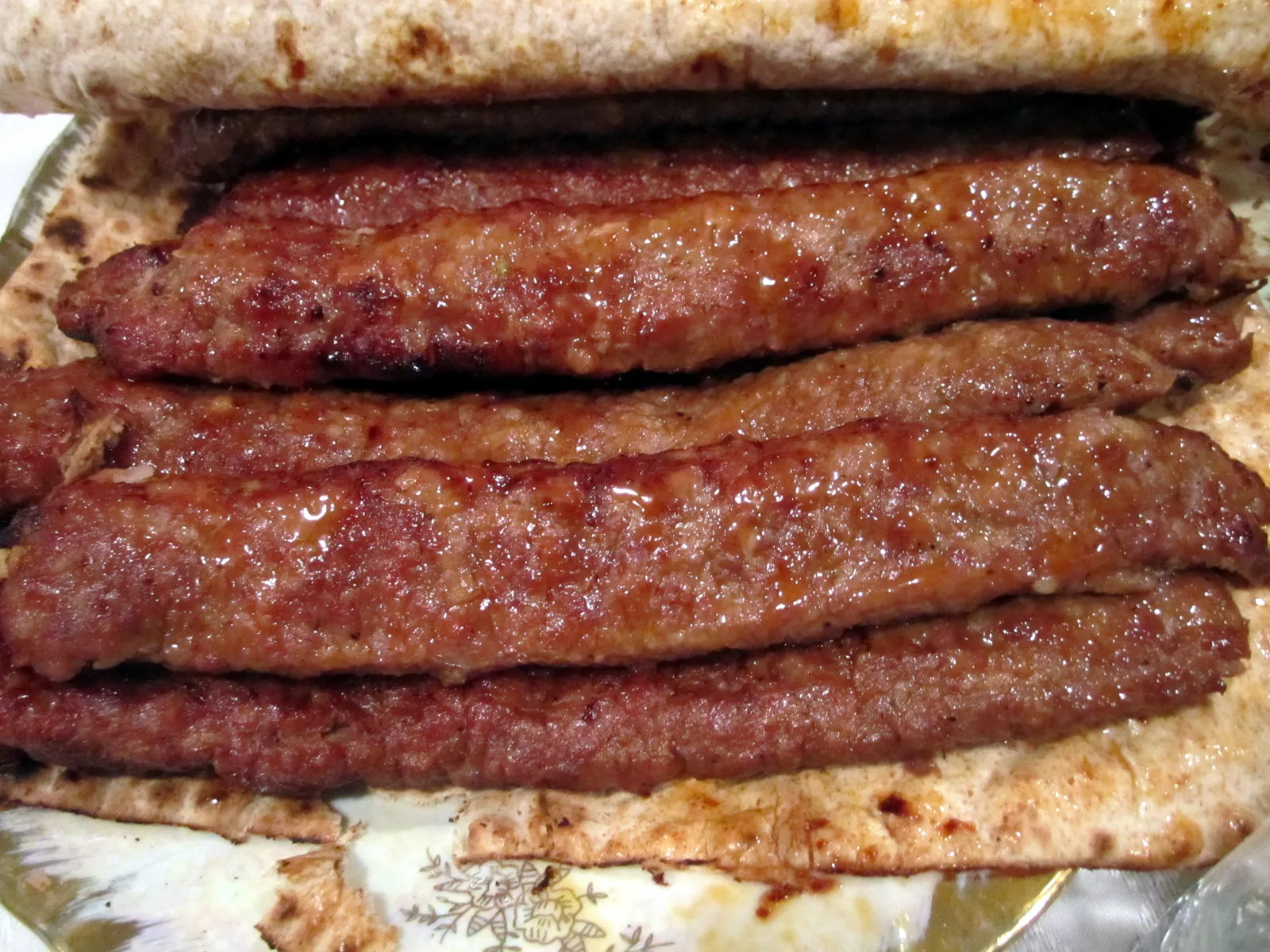
- Lyulya Kebab — The Caucasus's minced masterpiece: fatty lamb chopped with onion and salt — no egg, no breadcrumbs — kneaded until it grips the skewer by protein alone, then grilled and rolled in thin lavash with sumac.
- Tikə Kebab — Azerbaijan's chunked counterpart to lyulya: lamb pieces rested in onion, narsharab (pomegranate syrup) or vinegar, then grilled over hardwood coals and served with pickled onion and fresh herbs.
- Khorovats — Armenia's national grill: large chunks of pork or lamb (often bone-in, unusual for the region's Muslim-majority neighbors) skewered with vegetables and cooked over vine or fruitwood embers.
- Mtsvadi — Georgia's skewer of pork (or veal) grilled over grapevine embers, traditionally with no marinade at all — just salt and the smoke of the vineyard prunings.
- Shashlik — The pan-Caucasian and post-Soviet term for marinated meat chunks grilled on long skewers over a mangal, with vinegar-and-onion or kefir marinades varying by household.
- Kababi (Georgian Kebab) — Kababi (ქაბაბი) is Georgia's minced-meat kebab: Tbilisi tavern-style beef-and-pork, seasoned with coriander and grilled on skewers, then rolled to order in thin lavash with raw onion rings and a pinch of sumac.
- Armenian Lula Kebab — The Armenian take on the hand-minced skewer: lamb worked with onion, cognac in some family recipes, and plenty of fresh basil and parsley until it clings to a wide flat blade.
- Sadj Kebab — Lamb, potatoes, eggplant, and peppers seared together in a sadj — a wok-like iron disc set over coals — and brought to the table still sizzling on the same pan.
- Chalagach — The prestige cut of Armenian khorovats: bone-in pork loin rib chops briefly marinated with onion and basil, threaded whole onto wide flat skewers and grilled over grape or fruitwood embers.
- Khazani Khorovats — The 'kettle barbecue' nuance of khorovats: fatty pork pieces sealed in a kazan or deep pan and cooked in their own rendering fat with onions until browned, made when weather or apartment life rules out an open fire.
- Azerbaijani Doner — Baku's post-Soviet street obsession: usually lamb, sometimes chicken, shaved from the vertical spit into round tandir bread or a half-loaf with pickled cucumber, tomato and a ketchup-mayo blend — a Turkish import re-tuned to Azeri bread culture.