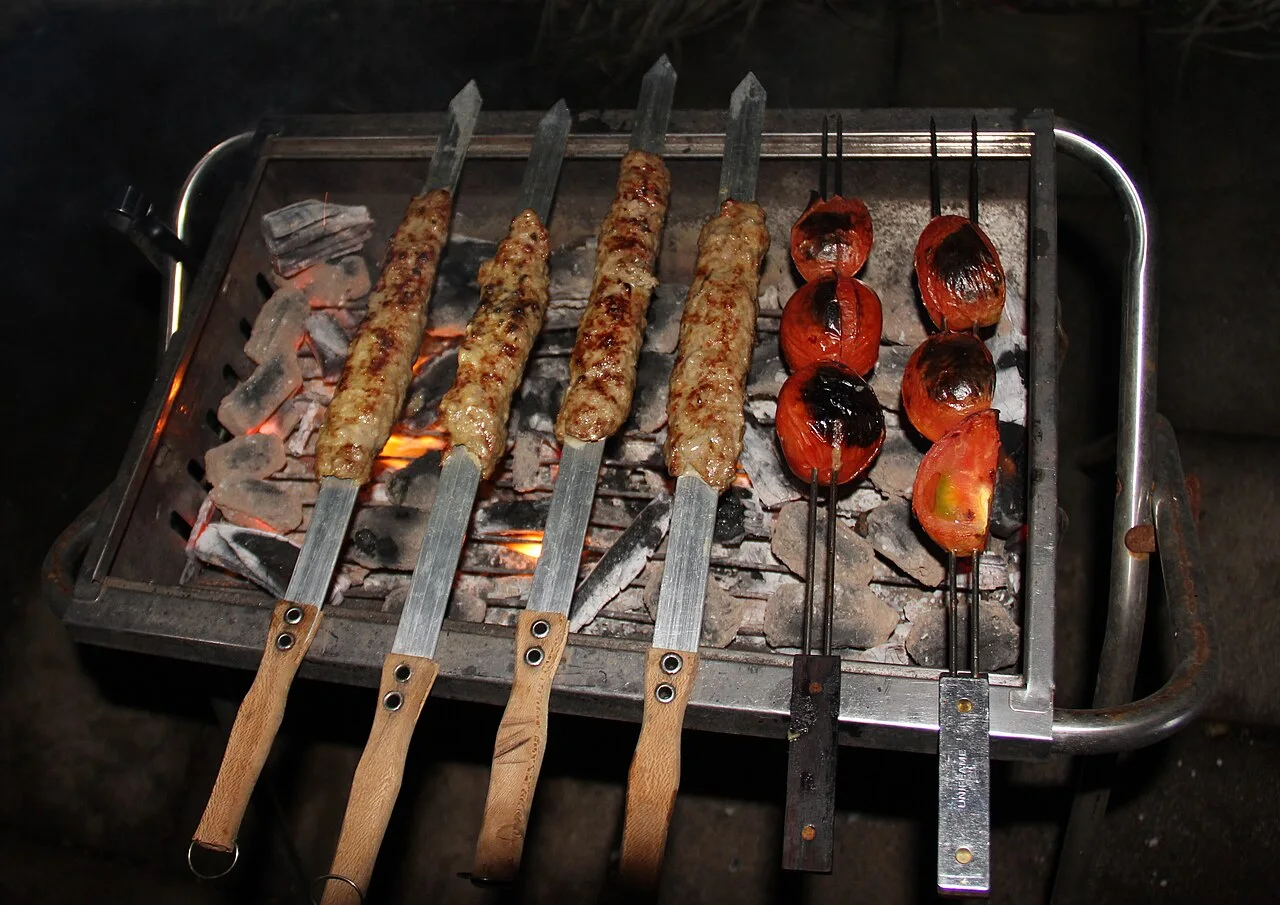
Ask an Iranian abroad what they miss most and koobideh comes up before the answer is finished. Iran's de facto national dish is deceptively short on ingredients — ground lamb or beef, grated onion, salt, pepper, sometimes a pinch of saffron — yet every kababi in Tehran guards its exact ratios. The name comes from koobidan, "to pound", because the meat is worked into a smooth, sticky paste before being pressed by hand along wide flat swords of skewers, dimpled with finger marks, and grilled fast over charcoal. The engineering matters: too lean and it dries, too wet and it drops into the fire, the heartbreak every Persian cook has lived through once. Served draped over a mountain of saffron-buttered rice with a charred tomato and a shake of sumac, it is comfort food with a passport.
Also known as: Kubideh, Koobideh, Persian Ground Beef Kabob, Chelo Kabab
Reference video
Reference video, embedded from YouTube: filmed by Abed Motasemi, not by How To Make A Kebab, and not owned, relicensed or distributed by this site.
View Original Video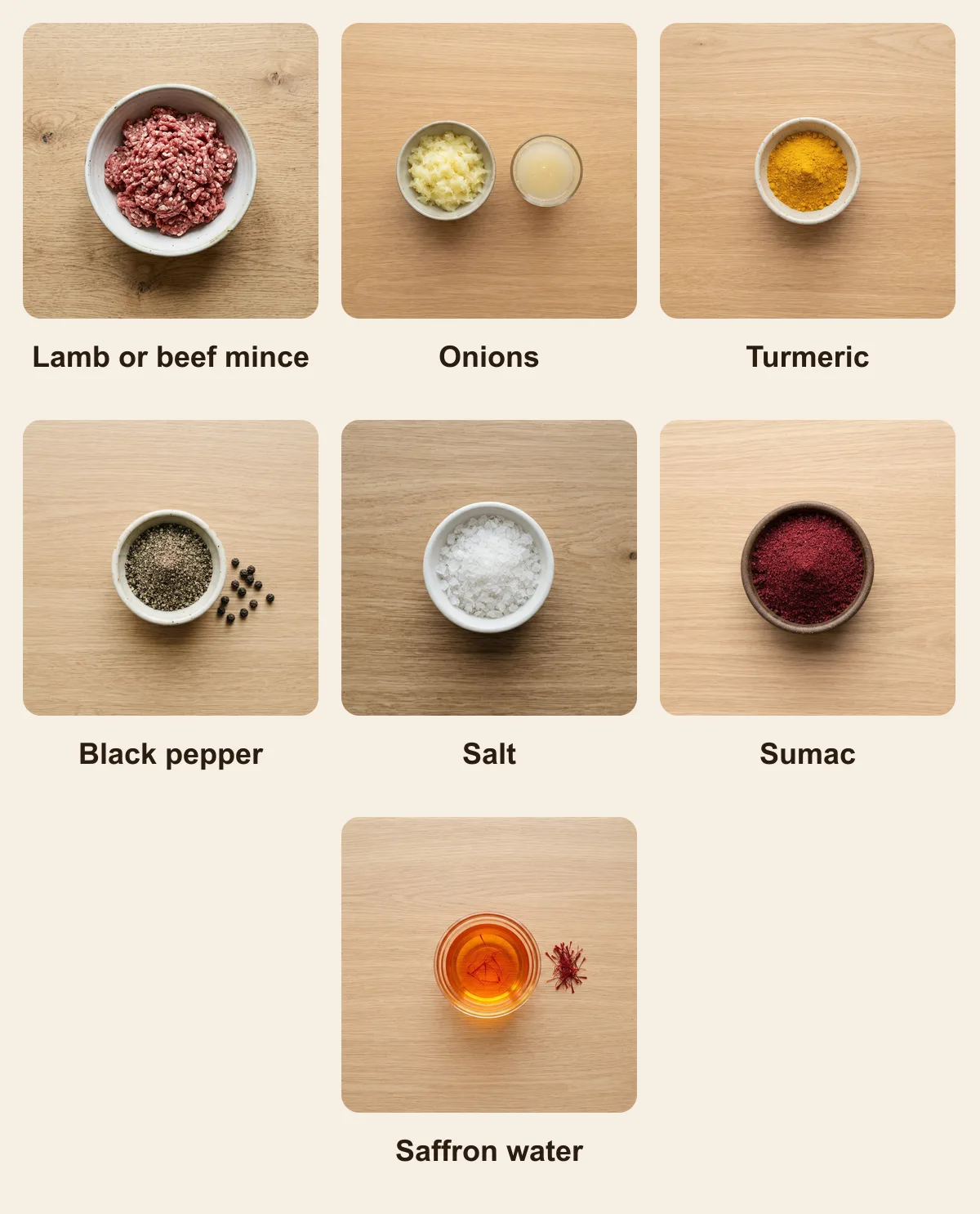
Ingredients
- 1kg Ground Lamb/Beef (80% meat, 20% fat)
- 2 Large Onions (Grated & Squeezed Dry)
- 1 tsp Turmeric
- 1 tsp Ground Black Pepper
- 2 tsp Salt
- Sumac (for sprinkling at the table)
- 2 tbsp Saffron Water (bloomed)
How To Make Kabab Koobideh
-
1
Finely grate the onions, tip the pulp into a clean cloth and twist it hard until no more liquid drips out and the onion is bone dry. Discard the juice, or keep it for another marinade.
-
2
Put the meat, squeezed onion, salt, pepper, turmeric and saffron water in a large bowl and knead hard with your hands for 10-15 minutes, until the mixture releases its proteins and turns smooth, very sticky and paste-like, with no loose crumbs.
-
3
Cover the bowl and refrigerate the mixture for at least 2 hours; the fat firms up as it chills, and cold meat grips the skewer far better than warm meat.
-
4
Wet your hands with warm water so the meat does not stick, take a handful of the cold mixture and squeeze it around a wide flat skewer (Sikh), spreading it into an even layer along the blade. Pinch it with your fingertips at regular intervals to make the signature ridges.
-
5
Lay the skewers over hot coals and turn them after just 10-20 seconds to "catch" the meat before it can sag and fall. Keep turning every couple of minutes for about 8-10 minutes in total, until browned on all sides and an instant-read thermometer reads 71°C (160°F) at the centre.
-
6
Serve straight off the grill over chelo (saffron rice) with grilled tomatoes, and put the sumac on the table for sprinkling.
Note: Two secrets to prevent falling off the skewer: 1) Squeezing onions bone-dry. 2) Kneading until sticky.
 Kabab Koobideh open-license visual reference from Wikimedia Commons: Kabab1.jpg.
By User:همان · CC BY-SA 3.0
Kabab Koobideh open-license visual reference from Wikimedia Commons: Kabab1.jpg.
By User:همان · CC BY-SA 3.0
 Kabab Koobideh open-license visual reference from Wikimedia Commons: Kabab koobideh 2012.10.jpg.
By Roozitaa · CC BY-SA 3.0
Kabab Koobideh open-license visual reference from Wikimedia Commons: Kabab koobideh 2012.10.jpg.
By Roozitaa · CC BY-SA 3.0
 Kabab Koobideh open-license visual reference from Wikimedia Commons: Kabab koobideh 2012.jpg.
By Roozitaa · CC BY-SA 3.0
Kabab Koobideh open-license visual reference from Wikimedia Commons: Kabab koobideh 2012.jpg.
By Roozitaa · CC BY-SA 3.0
Go Deeper · the full story
About this recipe
Koobideh is the everyday half of Iran's two great kebabs — where barg is a whole cut of tenderloin, koobideh is ground meat, worked until it turns pasty and pressed by hand onto wide, flat skewers. Turmeric and grated onion separate its flavor from a plain ground-meat kebab; there's no marinating a solid cut here, because the whole technique is about texture, not soaking time.
This recipe squeezes the grated onion bone dry before it goes anywhere near the meat, then kneads the lamb-and-beef mix with salt, pepper, turmeric, and saffron for 10-15 minutes until it turns sticky enough to hold a shape. A two-hour cold rest firms the fat before the meat gets pressed onto wide skewers with wet hands and ridged by finger. On the grill, the first flip has to come within 10-20 seconds, before the meat has any chance to set to the metal and tear loose.
Why this recipe works
Why This Recipe Works
- Squeezing the grated onion bone dry before mixing removes the water that would otherwise loosen the mince and let it slide off the skewer, while keeping its flavor in the meat.
- Kneading for the full 10-15 minutes develops the sticky, pasty texture that holds the koobideh together on a flat skewer without any binder.
- A two-hour cold rest firms the fat in the mix, which lets the meat keep its ridged shape once it's pressed onto the skewer and goes over the coals instead of slumping.
How to serve it
Serving Notes
Serve over chelo (saffron rice) with a grilled tomato and a shake of sumac.
Pull the meat off the skewer at the table, tearing it along its length rather than slicing — that's how koobideh is traditionally served.
It's best straight off the grill; reheated koobideh loses the char a fresh sear gives it.
Common mistakes to avoid
Common Mistakes
- Not squeezing the onion completely dry — leftover onion water loosens the mince and it drops into the fire instead of holding to the skewer.
- Rushing the knead — under 10 minutes and the mixture won't reach the sticky, pasty stage that keeps it on the skewer.
- Using round skewers instead of wide, flat ones — the mince has too little surface contact to grip, the single most common cause of koobideh falling apart on the grill.
- Skipping the cold rest — the two-hour chill firms the fat; skewering the meat while it's still warm makes it harder to shape and more likely to slide.
Frequently Asked Questions
Why does koobideh need wide, flat skewers instead of round ones?
The mince needs enough surface contact to grip; round skewers give it almost nothing to hold onto, and it drops into the fire.
What's the ideal fat content for koobideh?
This recipe uses a mince that's 20% fat, the usual 80/20 grind for the dish — too lean and it dries on the grill, too fatty and it won't hold its shape.
Can I skip the saffron?
Yes — saffron is closer to a finishing touch than a structural ingredient here; the turmeric, onion, and knead are what actually hold the kebab together and season it.
What's the difference between koobideh and kofta?
Both are ground-meat kebabs, but koobideh is pressed onto wide flat skewers with a turmeric-and-onion base, while kofta is shaped into cigars or balls and seasoned with parsley and milder spices.
Sources and further reading
- Kabab koobideh — Wikipedia
- List of kebabs — Wikipedia
- Chelow Kabab Koubideh (Ground Beef Kebab) — Visit Iran (Iran Tourism)
- Persian Kabab Koobideh Recipe — Unicorns in the Kitchen (Shadi HasanzadeNemati)
Keep Cooking
Build The Full Plate
Technique And Support Guides
Best Meat For Kebab
Choose the best meat for kebab by fat ratio, cut, grind, and cooking style, whether it ends up on a skewer, in a wrap, or on a plate.
How To Keep Kebab On The Skewer
Learn how to keep kebab on the skewer with the right fat level, onion handling, kneading, skewer shape, and grill timing.
Metal Vs Wooden Skewers For Kebab
Understand when to use metal or wooden skewers for kebab, plus why flat skewers matter for minced kebab and how oven use changes the choice.
How To Shape Minced Kebab On Skewers
Shape Adana-style, koobideh, and seekh kebabs correctly with better hand pressure, skewer coverage, thumb patterning, and grill-ready thickness.
Related Recipes
Kabab Barg
The "Leaf" kebab. Thinly pounded filet mignon marinated in aromatic onion juice.
Joojeh Kabab
Classic Persian saffron chicken. Golden, citrusy, and tender.
Kabab Chenjeh
The Prime Steak Kebab. Cubed sirloin or leg of lamb, tenderized with kiwi or onion juice.
Kabab Torsh
The "Sour" Kebab from Northern Iran. Marinated in pomegranate molasses and crushed walnuts.