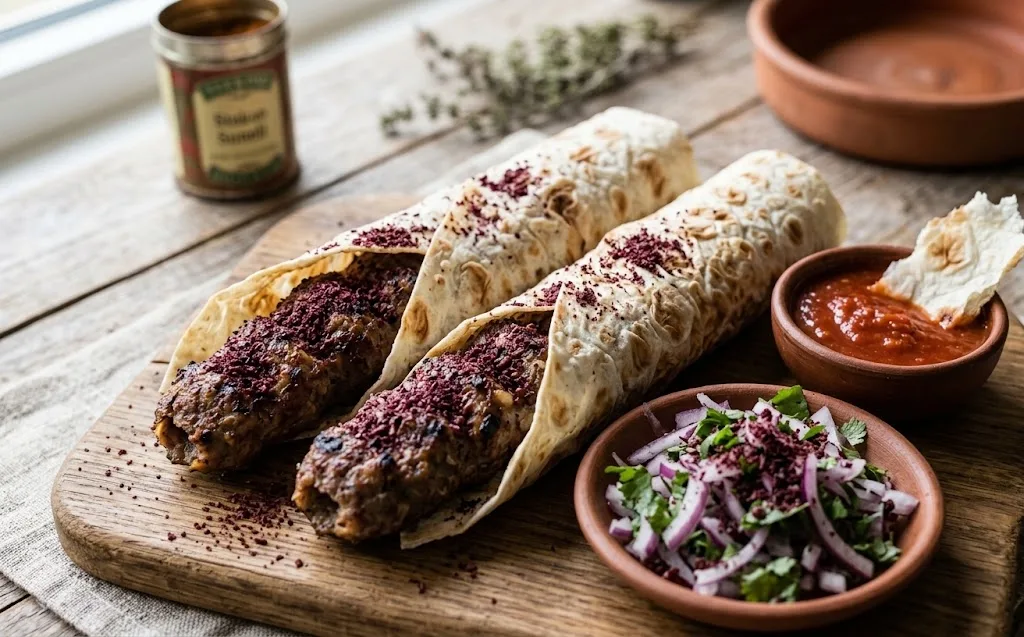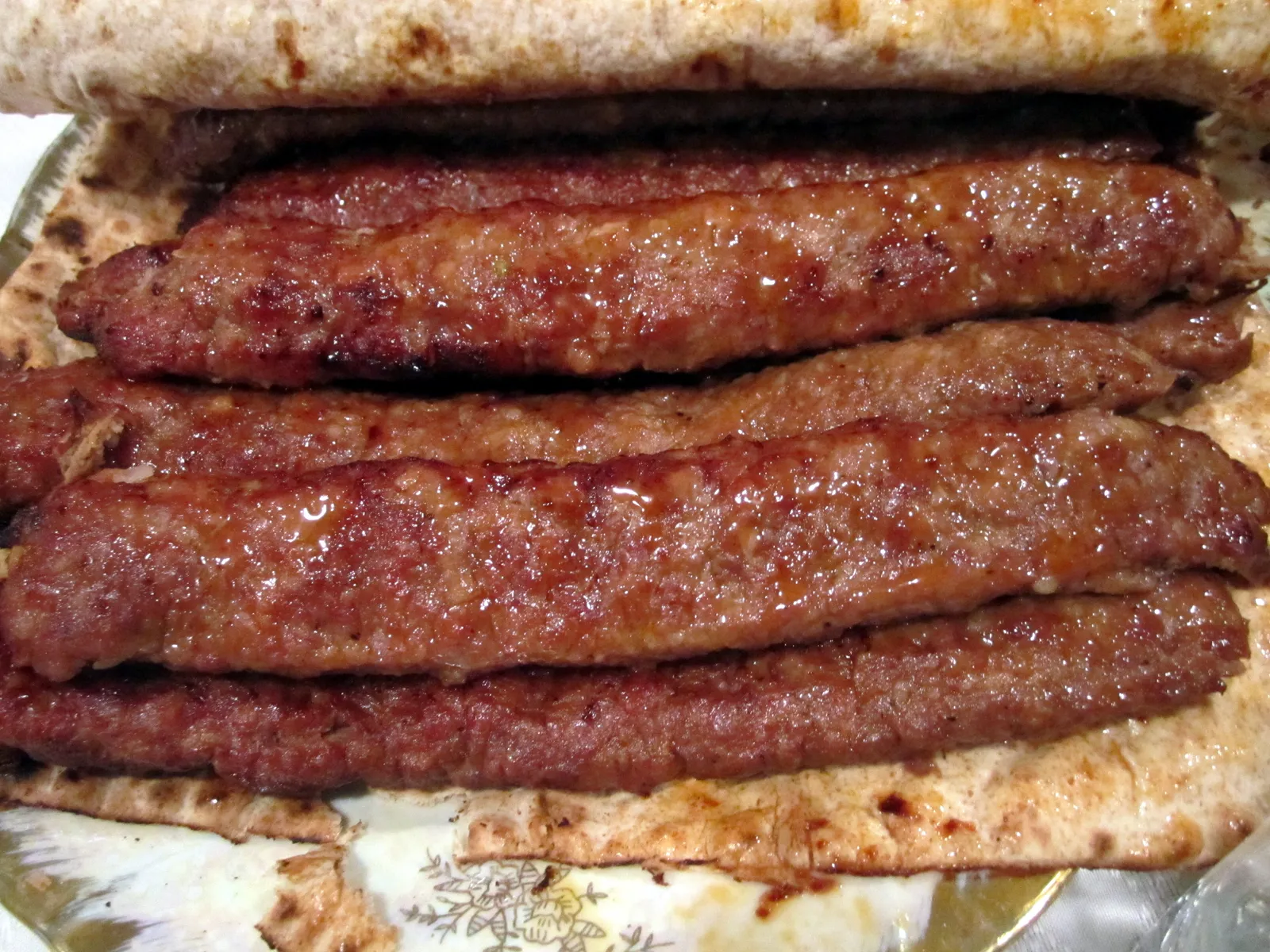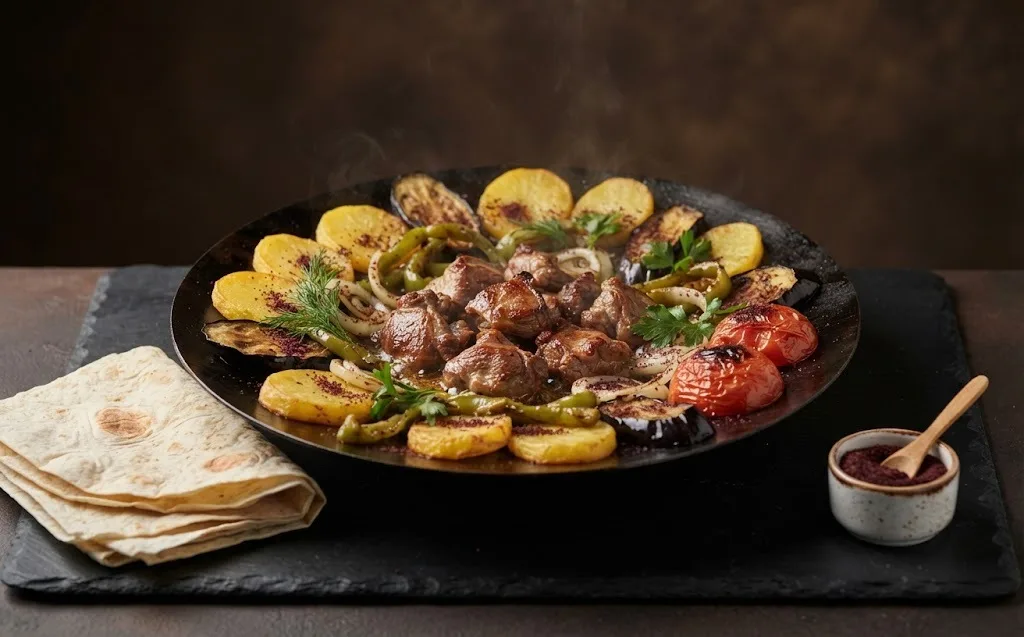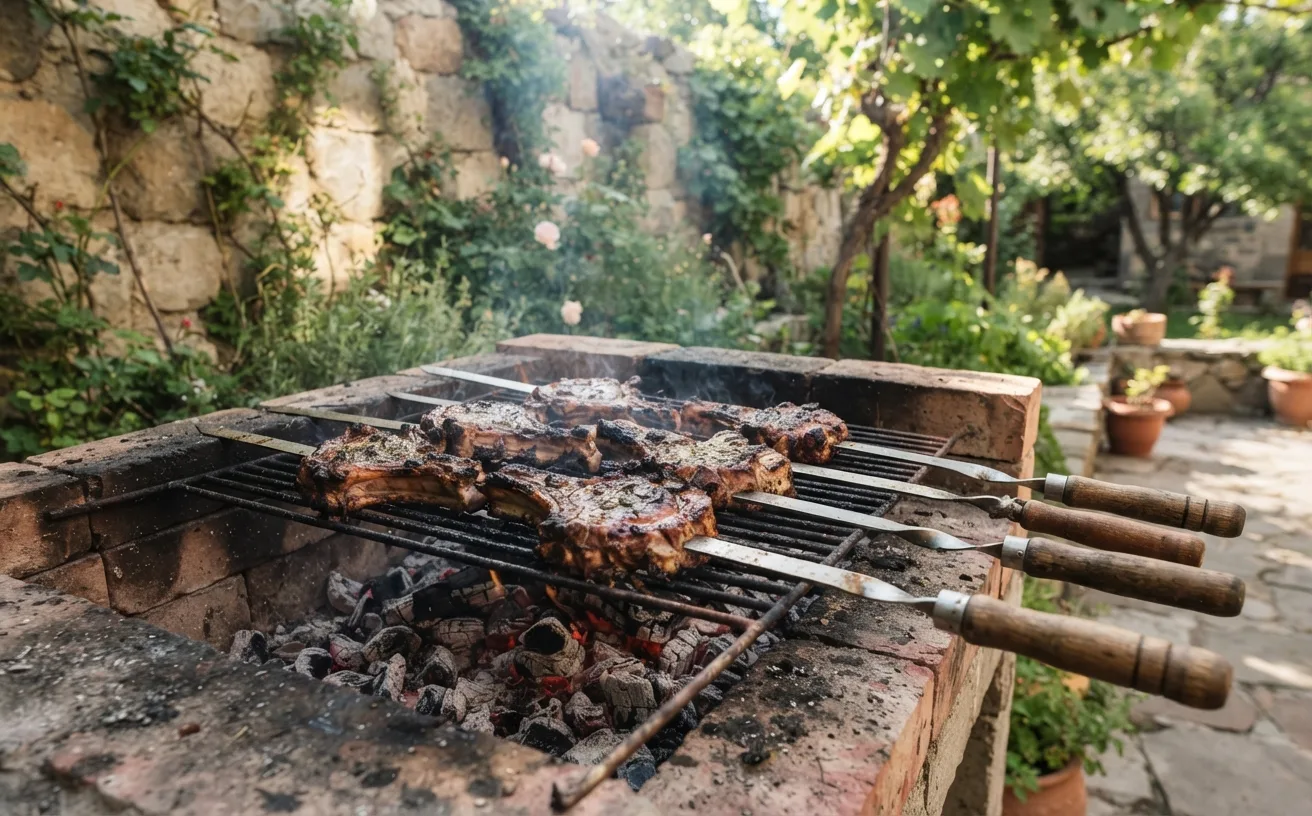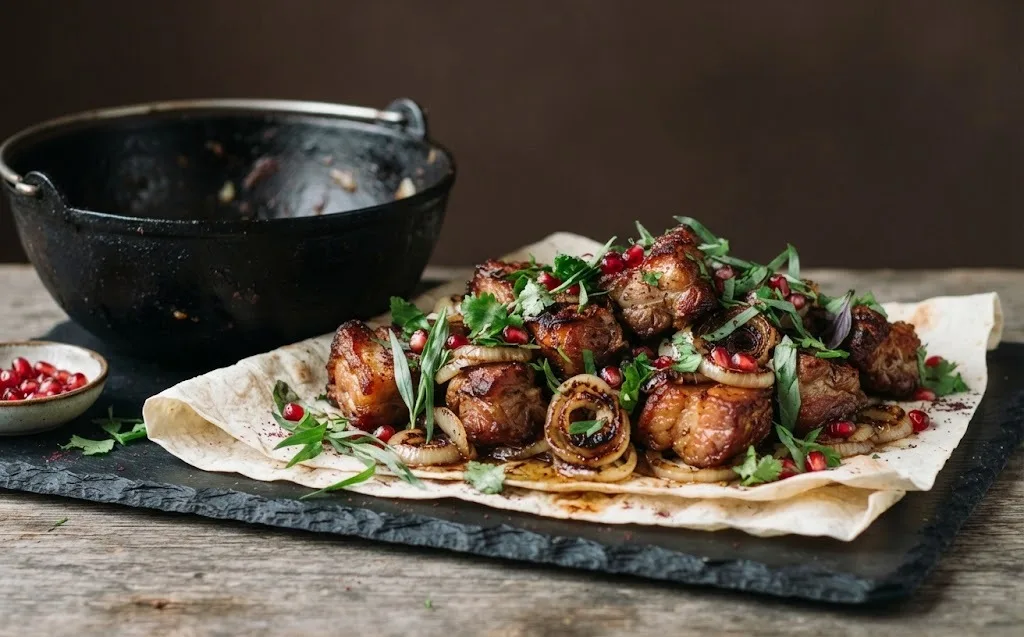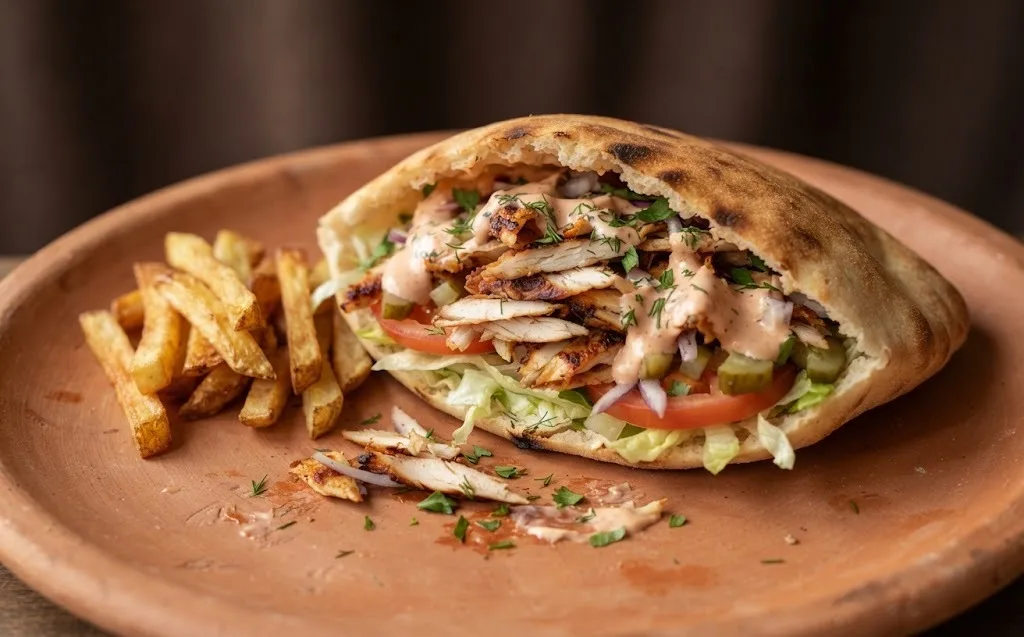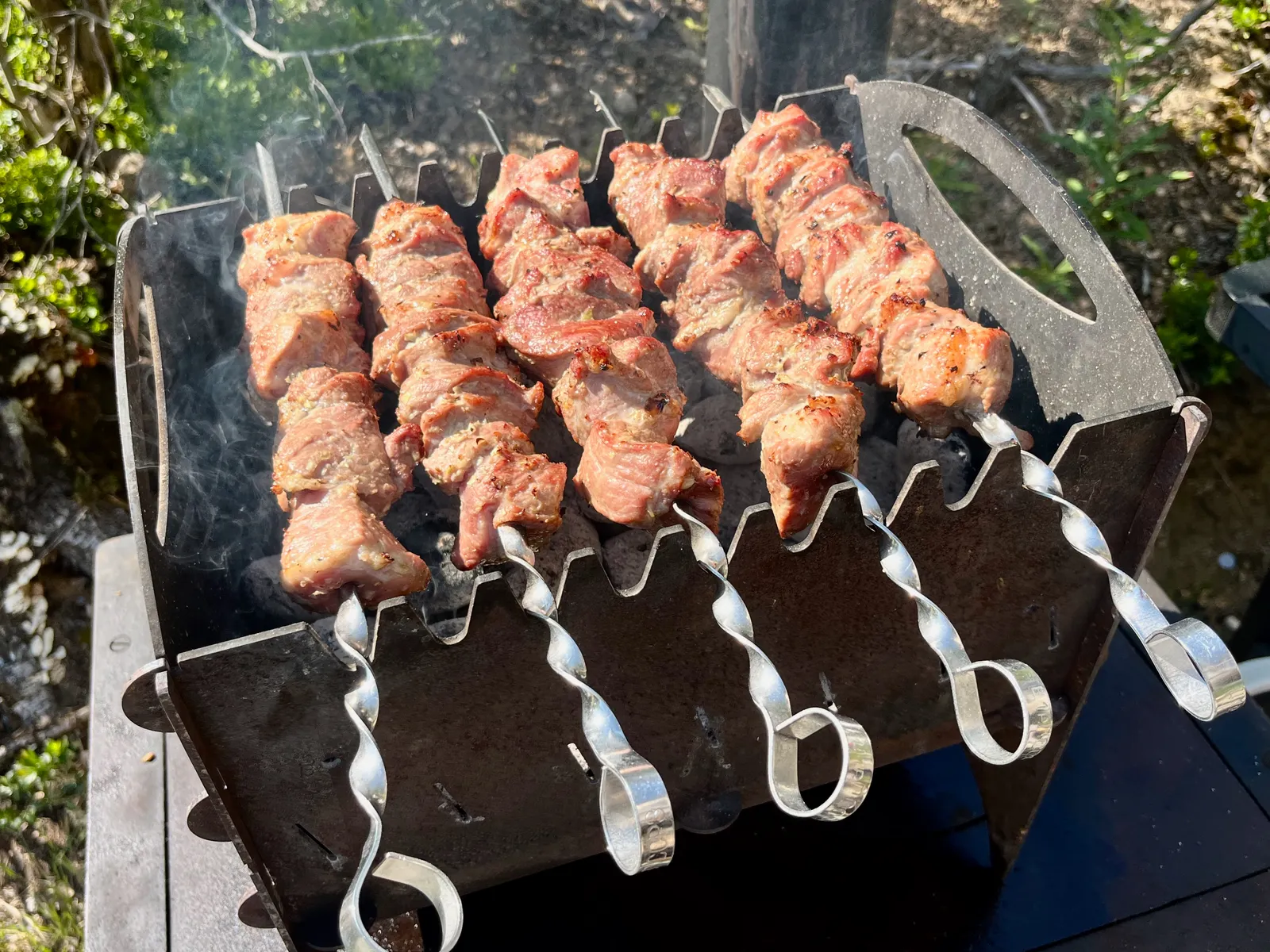
The pan-Caucasian and post-Soviet term for marinated meat chunks grilled on long skewers over a mangal, with vinegar-and-onion or kefir marinades varying by household. Less a single dish than the entire weekend-grilling culture of the region, exported from the Caucasus across the Russian-speaking world.
Also known as şaşlık, shashlik kebab, šašlik.
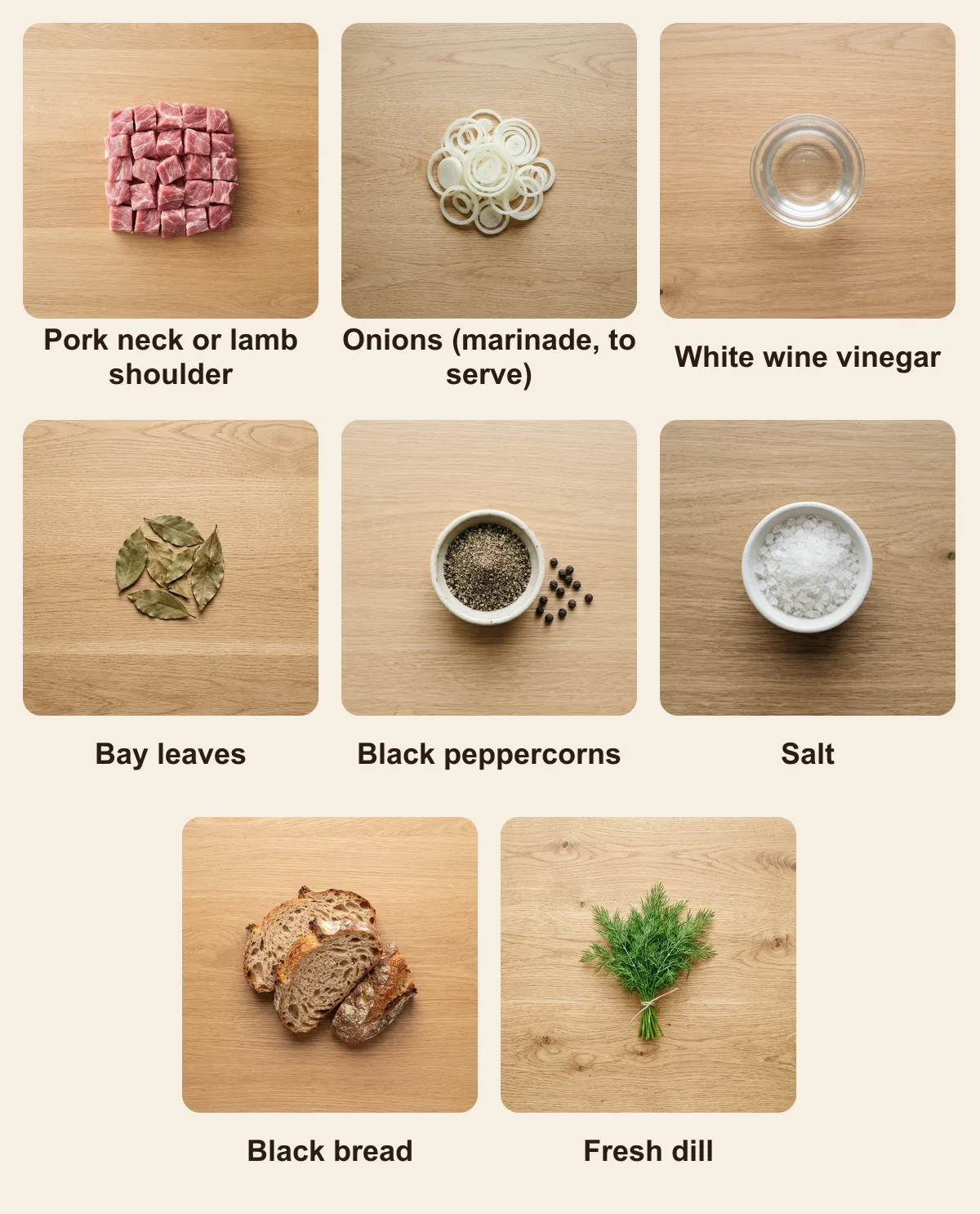
Ingredients
- 1.5 kg pork neck (or lamb shoulder), in 4-5 cm cubes
- 3 onions, in thick rings
- 60 ml white wine vinegar
- 3 bay leaves
- 10 black peppercorns, cracked
- 15 g salt
- 6 slices black (rye) bread, to serve
- 1 small bunch fresh dill, plus 1 onion in thin rings soaked 30 min in 30 ml vinegar, to serve
How to make it
- 1
Layer meat, onion rings, bay and peppercorns in a bowl, pour over the vinegar and press under a plate for 4 hours, working in the salt for the last hour.
- 2
Skewer the cubes along the grain, leaving a whisper of space between pieces.
- 3
Over a mangal of grey coals, sear all four faces 2 min each, then raise the skewers higher for 8 min of gentler cooking.
- 4
Check by nicking a cube: the juice must run clear with the centre still glistening.
- 5
Rest on the skewer 5 min and serve on black bread with dill and the marinated onions.
Pro tip: Pork neck forgives; its marbling self-bastes. If you must use a leaner cut, trade the vinegar for kefir or the shashlik will fight you.
Where Shashlik comes from
Shashlik is less a recipe than a culture. The word entered Russian from Crimean Tatar, and through the Soviet era it became the common name across an enormous territory for marinated meat grilled on long skewers over a mangal. From Yerevan to Vladivostok, shashlik is what people cook when the weather turns and there is a dacha to go to.
That spread means there is no single authoritative version, and arguments about the correct marinade are a genuine and endless feature of Russian-language internet forums. Vinegar and onion is the Soviet canteen classic; kefir, mineral water, wine, tomato juice and pomegranate all have committed partisans. The one constant is the mangal and the ritual around it.
The mangal baseline next to its Central Asian and Iranian kin
Think of Shashlik as the broad post-Soviet baseline: large 4-5 cm chunks, most often pork neck or lamb shoulder, marinated in whichever school the household backs (vinegar and onion, kefir or mineral water) and turned over a mangal for 15-20 minutes. Uzbek Shashlik shrinks the pieces, slips tail fat between them and loads the marinade with cumin and coriander for a hotter, quicker cook. On the steppe, Kazakh Shashlyk often means horse meat soaked overnight in kefir and traditionally grilled over saxaul. Shishlik only sounds related: it is the Iranian dish of bone-in lamb rib chops with saffron. Rye bread, dill and vinegared onion rings complete a classic shashlik plate.
Compare: Uzbek Shashlik · Kazakh Shashlyk · Shishlik
How Shashlik is cooked
The marinade's real job is to soften a cut that is not premium and to season it through. Onion is the near-universal base, usually sliced and pressed with the meat by hand so it releases juice. What is added to it determines the school: acid (vinegar, wine, lemon) softens fast and can go too far; dairy (kefir, yoghurt) softens gently and forgives an overnight soak; mineral water softens through carbonation with almost no flavour impact.
Grilling is over a mangal — a long narrow metal trough — with the coals raked to an even bed and the skewers laid across the top rails, close to the heat. The pieces are large, four to five centimetres, and the cook turns them regularly for fifteen to twenty minutes. Sprinkling the coals with water or marinade to kill flare-ups is standard practice and mildly controversial.
Ingredients and shopping
Pork neck is the most widely used cut across Russia and Ukraine and is genuinely the most forgiving — well marbled, tolerant of a long marinade and a hot fire. Lamb shoulder is the Caucasian preference and the older tradition. Chicken thigh works for a quicker version.
For the marinade, pick one school and commit: kefir overnight, or vinegar-and-onion for four hours, or mineral water for two. Mixing acid and dairy is a common error that gives the worst of both. Salt goes in near the end of the marinating time, not at the start, so it does not draw out moisture for hours.
How Shashlik is served
Pulled off the skewer onto flatbread or a plate, with a mound of onion rings marinated in vinegar, fresh herbs, tomatoes and pickles. Ketchup-based or plum-based sauces are usual. Vodka, beer or Georgian wine depending on the company, and the eating happens outdoors as a matter of course.
Common mistakes
Vinegar marinade left overnight
It denatures the surface into a soft grey layer. Plenty of cooks do it anyway, but a sharply acidic marinade has done its work in about four hours.
Cutting the meat small
Shashlik uses large pieces. Small cubes over a mangal dry out well before they colour.
Salting at the start of a long marinade
Hours of salt draws out moisture. Add it in the last hour.
Grilling over flames
The coals must be grey and even. Flare-ups are damped, not tolerated.
Shashlik: questions and answers
What is the best marinade for shashlik?
There is no single answer — kefir overnight, vinegar and onion for a few hours, or sparkling mineral water are the three main schools. Pick one; mixing acid and dairy gives a poor result.
What meat is used for shashlik?
Across Russia and Ukraine the default is pork neck — cheap, well marbled, hard to ruin. In the Caucasus itself, where the dish began, the answer is lamb, usually shoulder. Chicken thigh is the fast fallback.
How long should shashlik marinate?
Four hours for acidic marinades, overnight for dairy-based ones, two hours for mineral water. Longer is not better with acid.
What is a mangal?
The long narrow metal trough used for grilling across the Caucasus and the post-Soviet world. Skewers rest on its rails over an even bed of coals.
Is shashlik the same as shish kebab?
They share a root — the Turkic şiş, meaning skewer — but not a kitchen. Shish kebab is the generic Ottoman-descended cube on a stick; shashlik is the specific post-Soviet take: bigger pieces cut 4-5 cm, an onion-heavy marinade argued over for days, and always a mangal rather than a grate.
Sources and further reading
- Shashlik — Wikipedia
- How Soviets made BBQ parties outside — Russia Beyond (Eleonora Goldman)
- How to Make Shashlik — Jennifer Eremeeva (food writer)