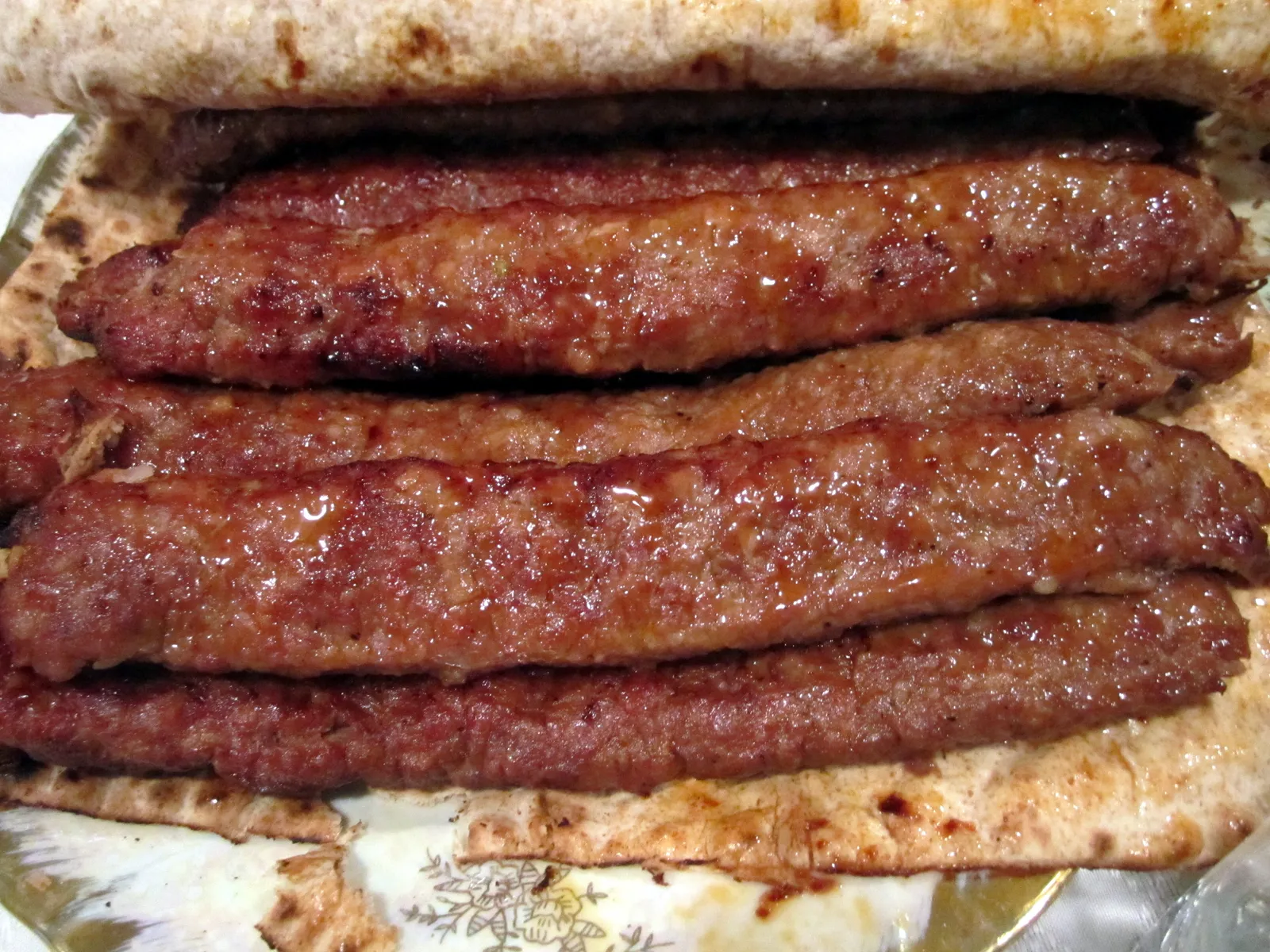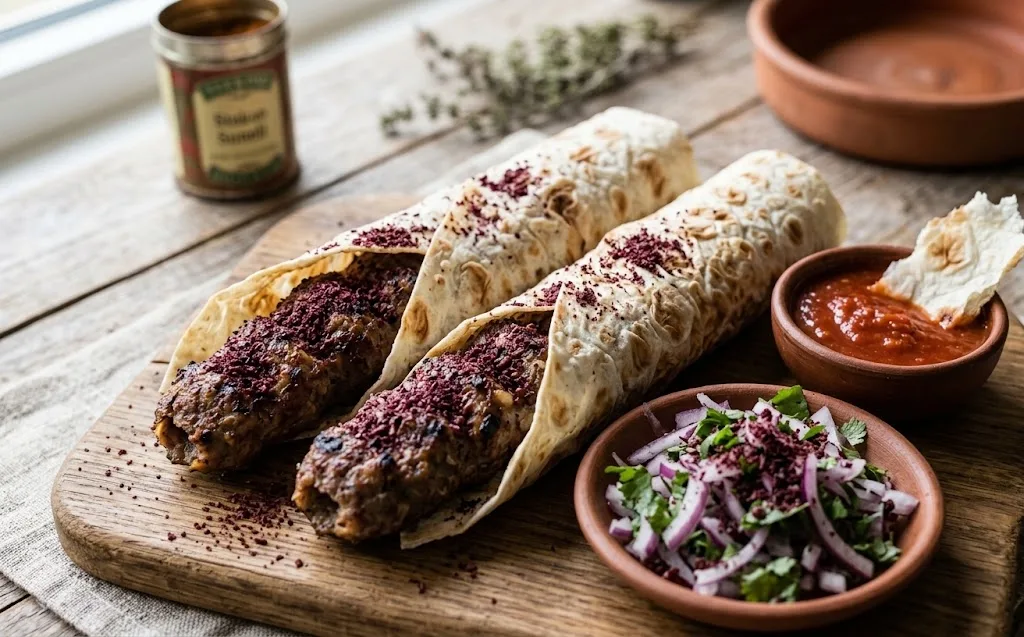
Kababi (ქაბაბი) is Georgia's minced-meat kebab: Tbilisi tavern-style beef-and-pork, seasoned with coriander and grilled on skewers, then rolled to order in thin lavash with raw onion rings and a pinch of sumac. The lavash wrapper steams against the hot meat, becoming part of the dish rather than just a holder.
Also known as kababi, Georgian kebab, qababi.
Reference video
Ingredients
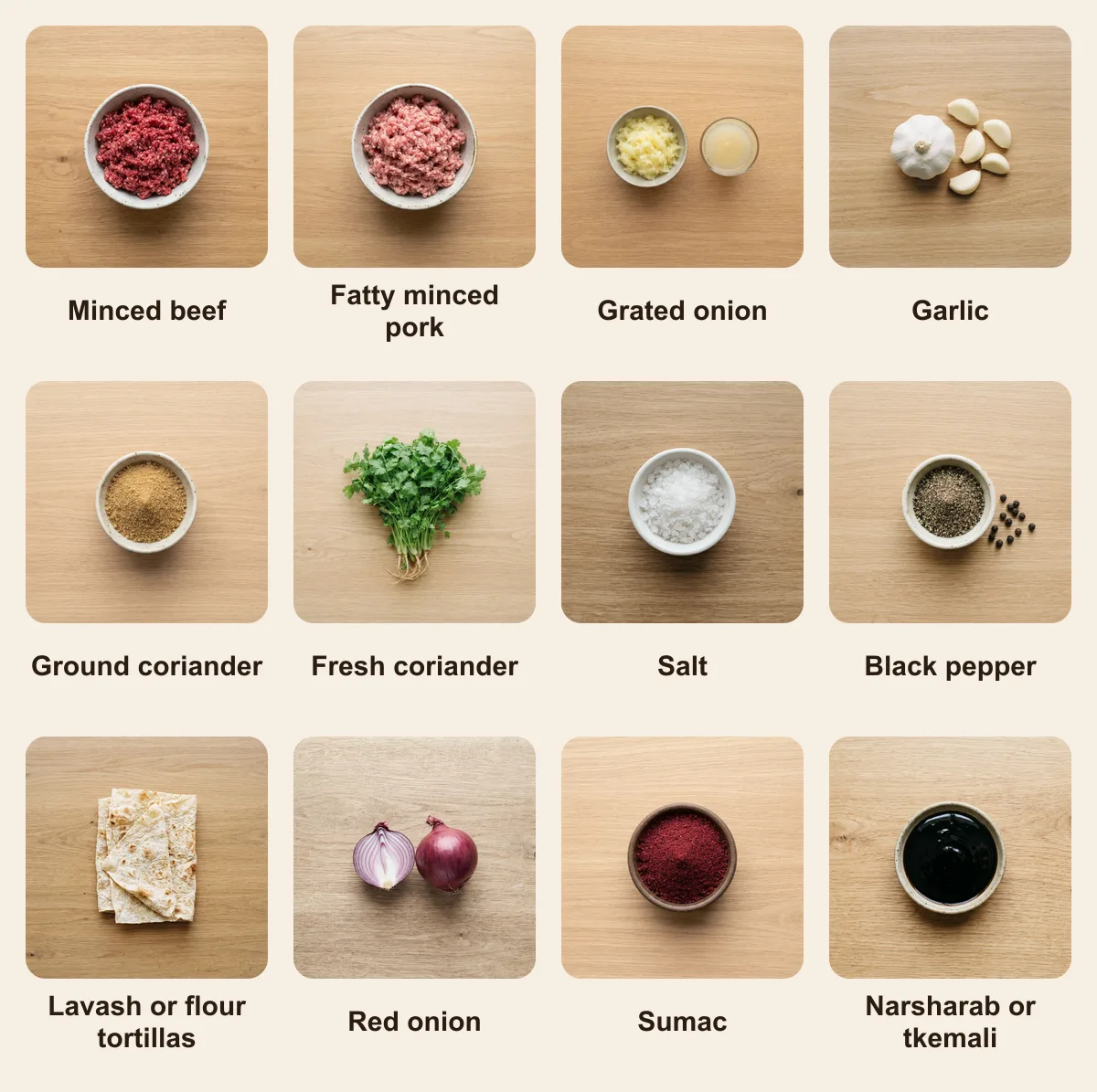
- 400 g minced beef
- 200 g fatty minced pork
- 1 onion, very finely grated
- 3 garlic cloves, crushed
- 1.5 tsp ground coriander
- 15 g fresh coriander, chopped
- 1 tsp salt
- 1/2 tsp black pepper
- thin lavash or flour tortillas
- 1 red onion, in rings, plus a pinch of sumac
- narsharab or tkemali, to serve
How to make it
- 1
Knead both minces with the grated onion, garlic, ground and fresh coriander, salt and pepper for 5 minutes, until the mixture slaps stickily against the bowl.
- 2
With wet hands, mould the meat around skewers into smooth 15 cm cylinders and chill 20 minutes.
- 3
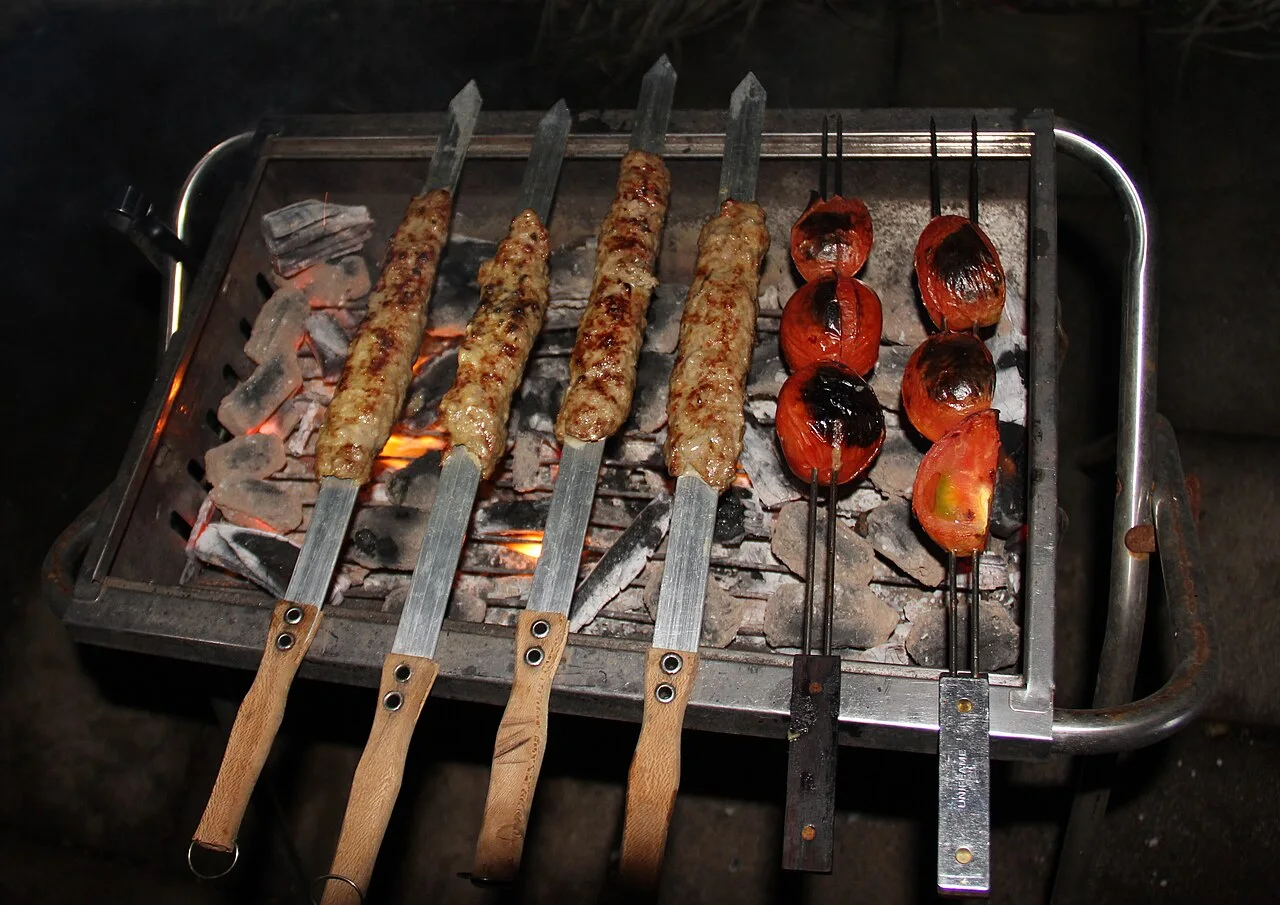
Grill over hot coals 8-10 minutes, turning by thirds, until browned all round and springy when pressed.
- 4
Roll each kebab in a sheet of lavash with raw onion rings and a pinch of sumac, twisting the ends like a Tbilisi tavern.
Pro tip: The lavash goes on while the kebab is steaming hot so the bread drinks the juices — never serve the two separated.
Where Kababi comes from
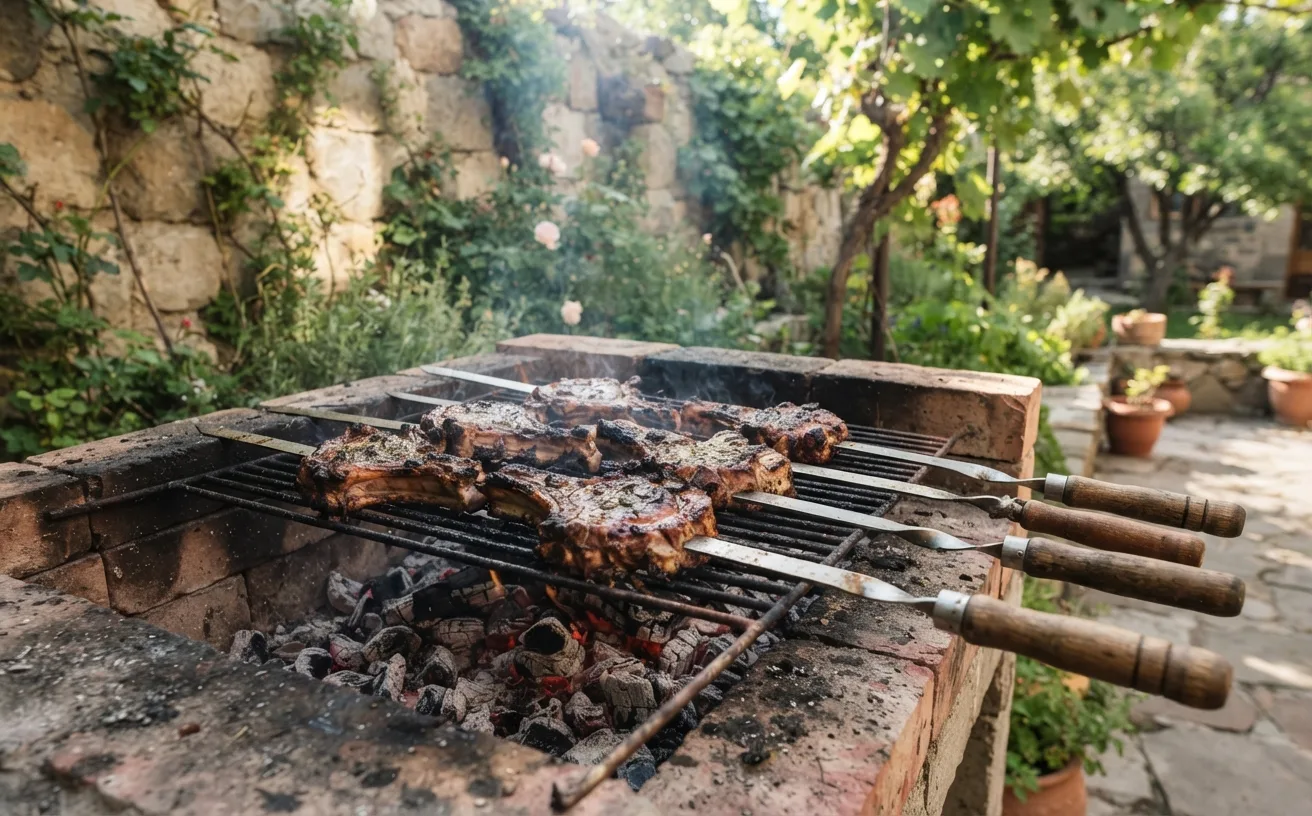
Kababi is Georgia's ground-meat kebab, and it sits in a slightly awkward, interesting position between the Turkish and Persian traditions on one side and Georgia's own fiercely local cooking on the other. Georgians grill mtsvadi — chunks of pork or veal on a skewer over grapevine cuttings — as their national barbecue. Kababi is the minced cousin, adopted from the south and then thoroughly Georgianised. Everywhere else in the Caucasus the same minced skewer answers to lula or lyulya kebab — the name to look for on Azerbaijani and Armenian menus.
What made it Georgian was the wrapping and the sauces. A kababi arrives already rolled in lavash that has been used to strip it from the skewer, and it is dressed with either narsharab, the thick sour pomegranate reduction from neighbouring Azerbaijan, or tkemali, Georgia's own sour plum sauce. Narsharab dresses kebabs across the border in Azerbaijan too; tkemali is what makes the dish taste distinctly Georgian rather than generically Caucasian.
How Kababi is cooked
The mince is coarser than a Turkish kebab's and the seasoning is deliberately restrained: onion, garlic, salt, black pepper, a little coriander, and often nothing else. Georgian cooking treats blue fenugreek and marigold as everyday spices, but kababi usually leaves them out and lets the meat and the sauce carry the dish. Pork is common, beef and lamb both usual, and mixtures of two are normal.
It is grilled on flat skewers over wood coals and pulled off with the lavash itself: the bread is wrapped around the hot kebab and used as a glove to slide it free, which both keeps the shape intact and soaks the bread in fat in one movement. That single gesture is the technique worth copying at home — it is why a kababi eats differently from the same meat served on a plate.
Ingredients and shopping
Fat content decides everything. Aim for around 20 to 25 percent fat in the mix; Georgian butchers will grind pork shoulder for exactly this. If you use beef, add pork fat or fatty lamb — lean beef mince makes a dry, crumbling kebab that no sauce will rescue. The onion should be grated and squeezed, as everywhere in this family of dishes.
The sauce is not a side. Narsharab is worth buying rather than approximating; it is pomegranate juice reduced to a syrup with a sharp, almost savoury edge. Tkemali is the alternative and comes in red and green versions, the green being sourer and better with pork. Lavash matters too — thin, soft and large enough to wrap, not a stiff flatbread.
How Kababi is served
One or two kebabs go into their lavash with raw onion rings, a heavy pour of narsharab or tkemali, and a great deal of fresh coriander and parsley. Pickled vegetables — jonjoli, green tomatoes — sit on the table, and the drink is Georgian red, usually a semi-dry Saperavi, or the country's own lemonade if it is lunchtime. It is a plate that expects its own acidity from three directions at once: sauce, pickle and wine.
Common mistakes
Over-spicing it
The instinct is to reach for cumin and paprika. Georgian kababi is plainer than its neighbours on purpose, because the sour sauce is doing the flavour work. Season it and stop.
Lean mince
Below about 20 percent fat this kebab dries out and splits. Ask the butcher for shoulder, not the pre-packed lean mince.
Serving it on a plate
Half the dish is the lavash that pulled it off the skewer, saturated with fat. Wrap it as it comes off the fire.
Substituting pomegranate molasses for narsharab
They are close but not the same — molasses is sweeter and thinner. If it is what you have, use less and add a pinch of salt.
Kababi: questions and answers
What is the difference between kababi and mtsvadi?
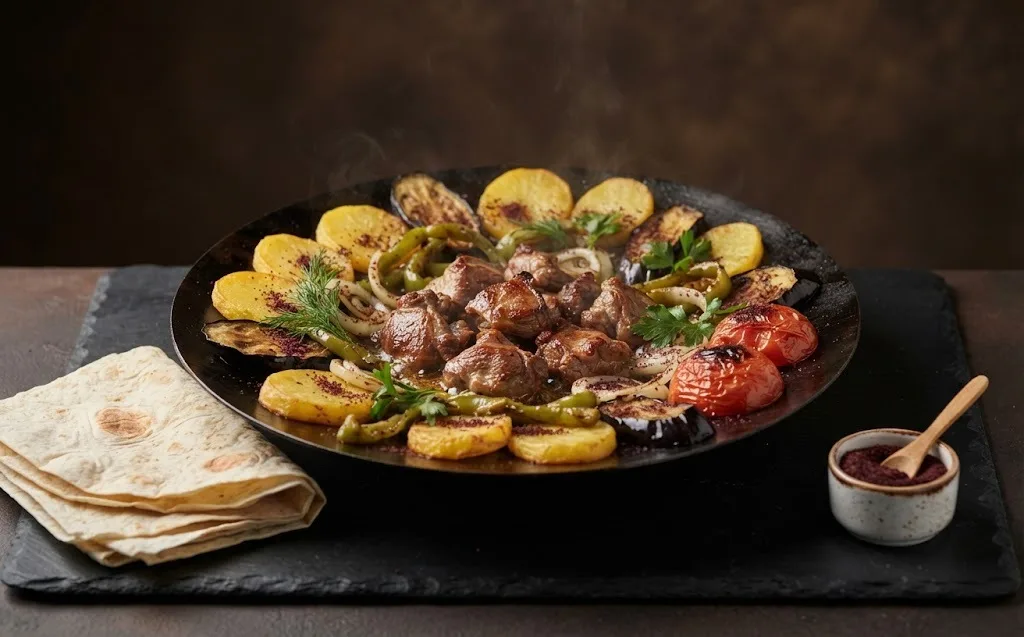
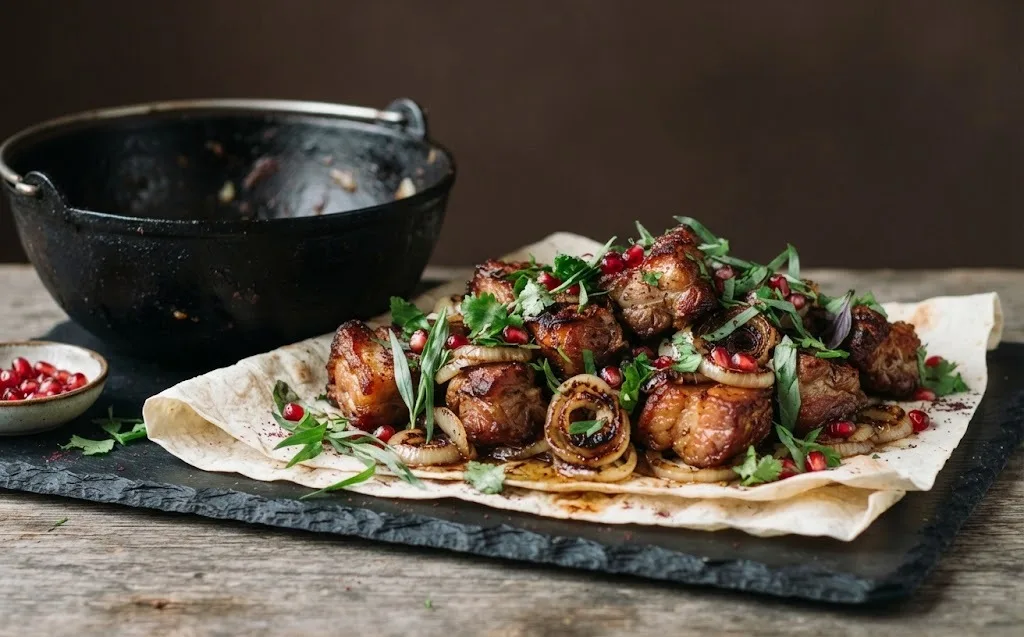
Mtsvadi is whole chunks of meat on a skewer, Georgia's national barbecue. Kababi is minced meat shaped onto a skewer. Same fire, same table, different dishes.
What meat is Georgian kebab made from?
Pork, beef, lamb, or a mixture. Pork is more common in Georgia than in the Muslim-majority kebab traditions around it, which is one of the things that marks the dish as Georgian.
What is narsharab?
A thick, sour pomegranate sauce, reduced until syrupy. It is the traditional dressing for kababi and gives the dish its characteristic sharp finish.
Can I make kababi without a charcoal grill?
Yes — a very hot griddle pan or an oven broiler both work. Warm the lavash separately and still wrap the kebab in it, because the bread soaking up the fat is most of the effect.
Is it spelled kababi or qababi?
Kababi is the standard spelling. The Georgian word is ქაბაბი, and its first letter, ქ, is romanised with a k in every standard system; q stands for a different Georgian letter, ყ. Whichever way it is written, it is the same minced skewer rolled in lavash.
Sources and further reading
- Georgian cuisine — Wikipedia
- Georgian Food: That You Should Try in Tbilisi — Georgia Travel (Georgian National Tourism Administration)