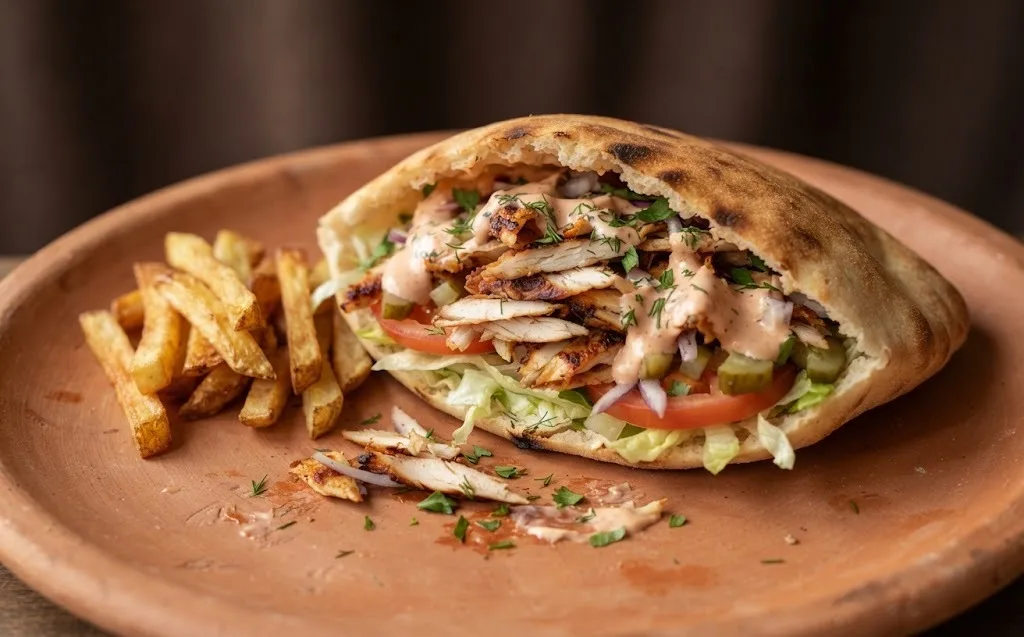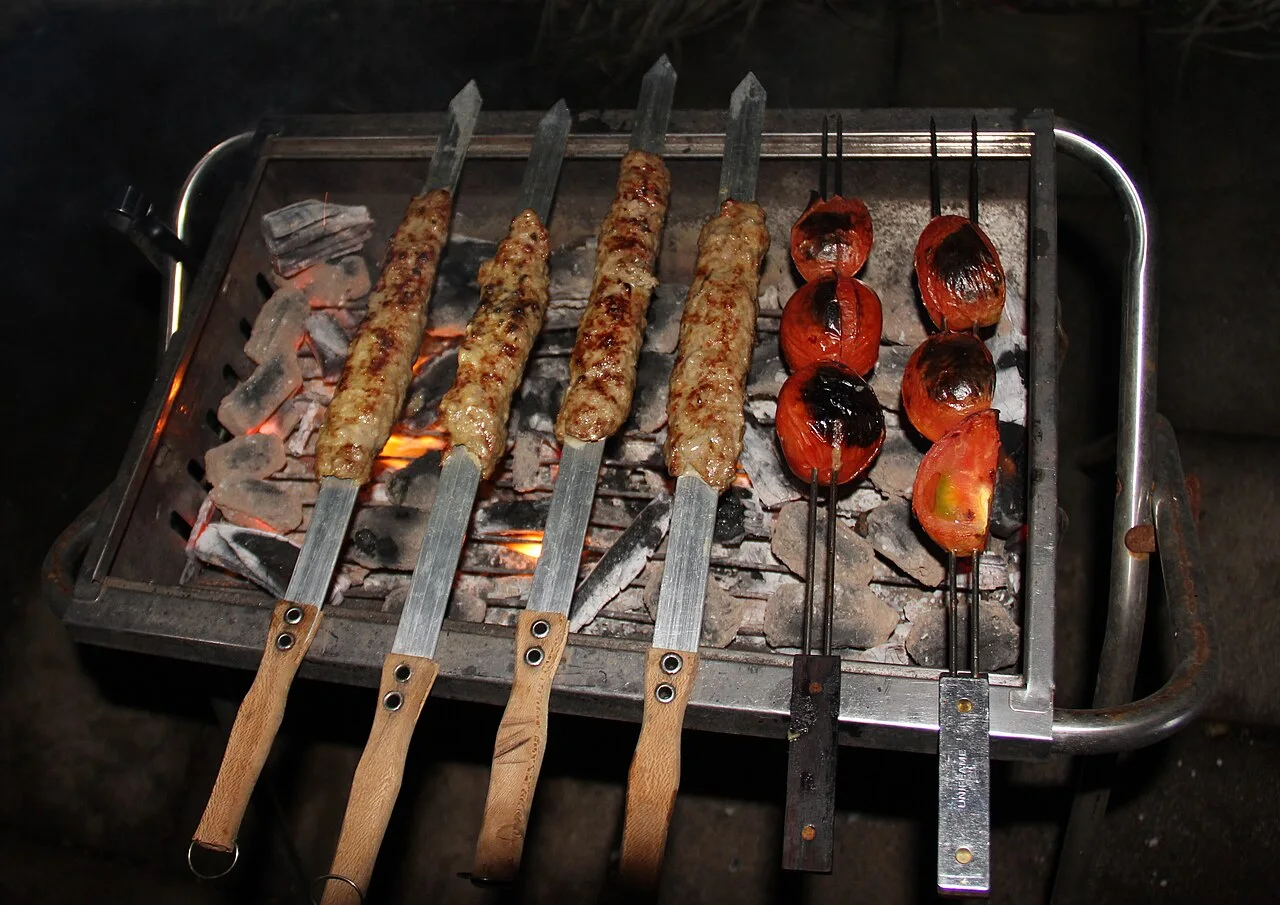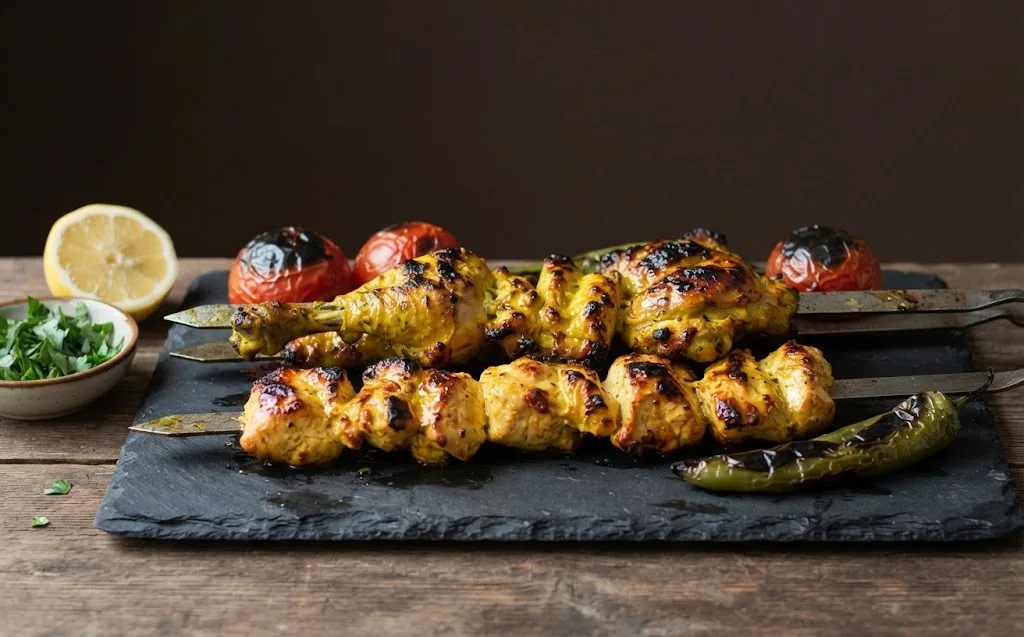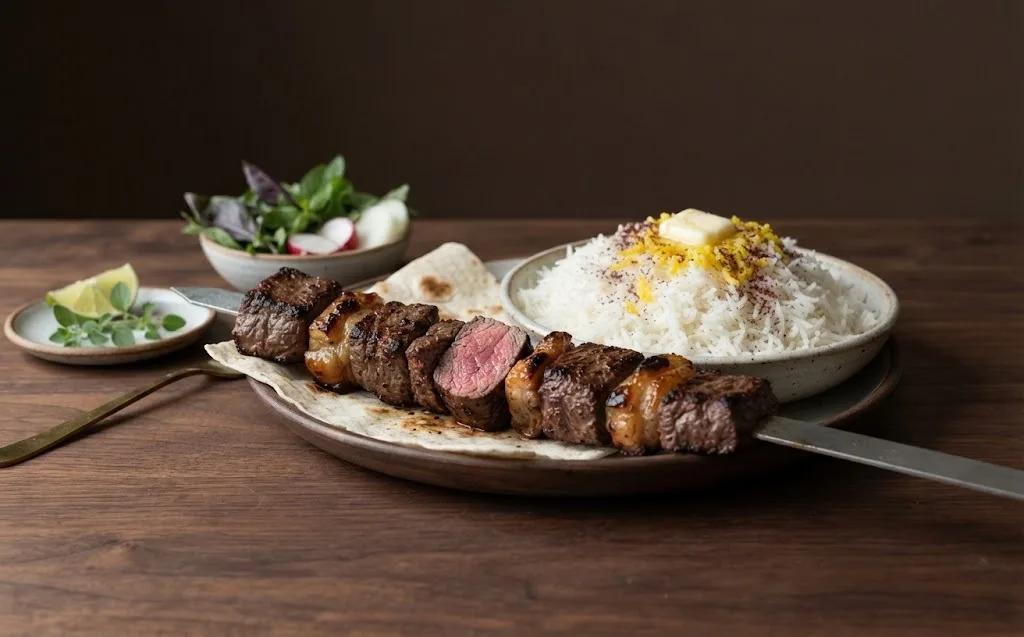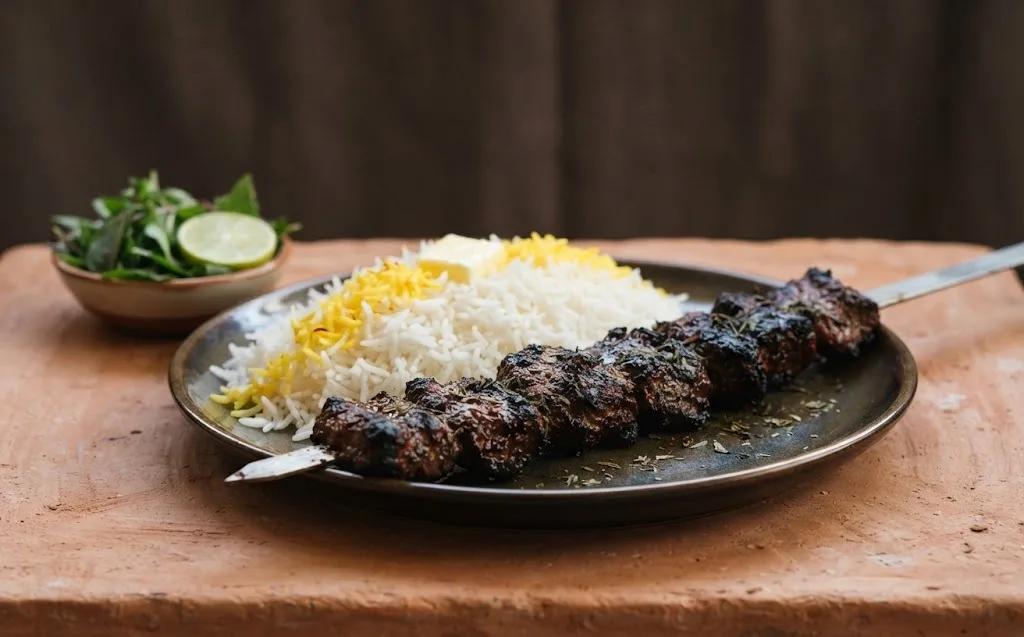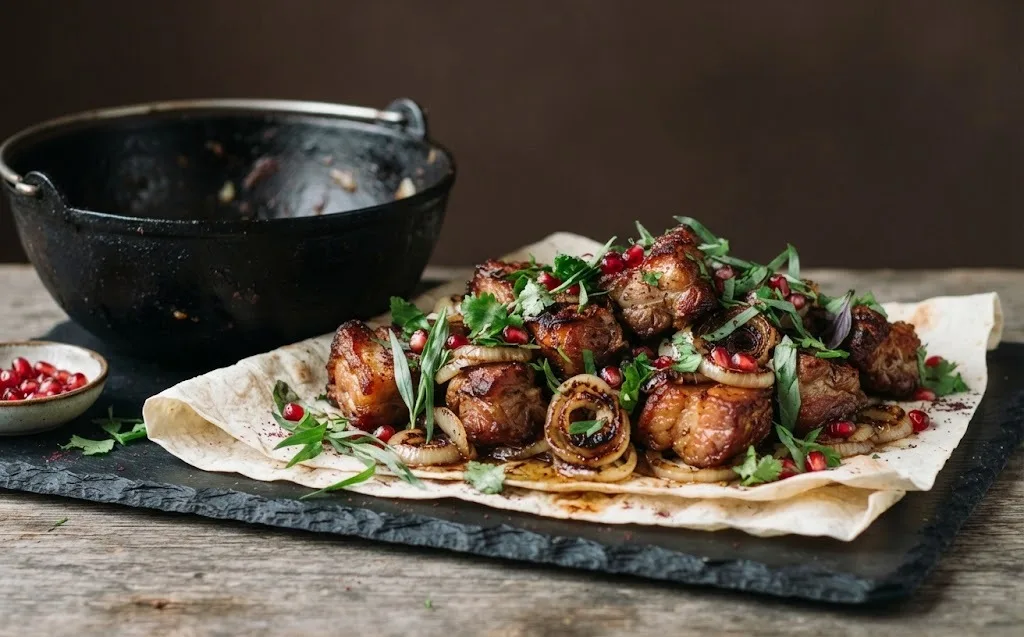
The 'kettle barbecue' nuance of khorovats: fatty pork pieces sealed in a kazan or deep pan and cooked in their own rendering fat with onions until browned, made when weather or apartment life rules out an open fire. Armenians count it as khorovats proper — the dish is defined by the meat, not the flame.
Also known as kazan khorovats, pan khorovats, fireless khorovats.
Reference video
Ingredients
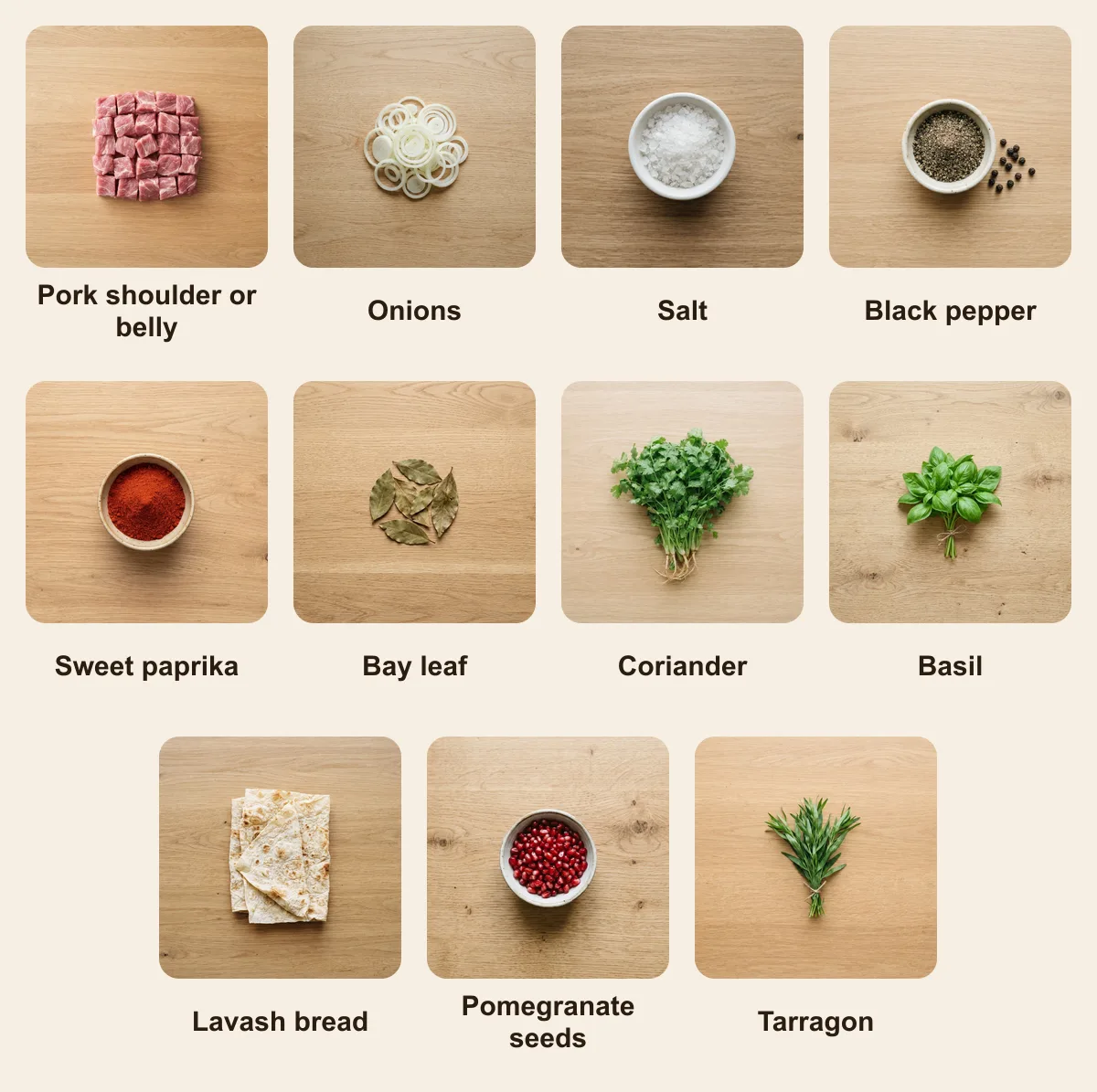
- 1 kg fatty pork shoulder or belly-rib mix, 5 cm pieces
- 2 onions, thick rings
- 1.5 tsp salt
- 1 tsp black pepper
- 1 tsp sweet paprika
- 1 bay leaf
- 1 bunch mixed tarragon, coriander and basil
- lavash bread
- pomegranate seeds (optional)
How to make it
- 1
Put the pork into a dry, cold kazan or heavy lidded pot with the bay leaf — no water, no oil; this is barbecue by trapped fat and steam.
- 2
Set over medium-low heat, uncovered, and leave 30 minutes as the pork releases its fat and begins to simmer in it — the lid stays off until the meat has taken some colour.
- 3
Season with salt, pepper and paprika, raise the heat, lid off, and fry the pieces in the rendered fat 8-10 minutes, adding the onion rings, until everything is bronzed.
- 4
Cover and cook another 25-30 minutes until fork-tender.
- 5
Tip onto lavash, shower with the fresh herbs and pomegranate, and fold the bread around the crisped meat.
Pro tip: Trust the cold-start: fat rendered slowly from the meat itself is the cooking medium, and adding oil at the beginning turns it greasy instead of self-basted.
Where Khazani Khorovats comes from
Counting a fireless pot dish as khorovats is the same broadening that produced tas kebabı in Turkey and kabab tabei in Iran. Across the region, the grill dish has an indoor twin that households actually cook more often, and the language accommodates it without fuss.
Armenian barbecue cooked in a pot, without a flame
Take away the embers and this is what remains. Grilled Khorovats needs vine or fruitwood coals, skewers and 30-40 minutes of turning; Khazani Khorovats starts in a dry, cold kazan or heavy lidded pot with fatty pork neck, belly or shoulder, and no oil or water. First the meat releases its own water, which cooks away, and then it fries in its rendered fat before thick onion rings go in and the lid comes down. Where the open-fire version marinates for hours in onion, pepper and wine, this one is seasoned in the pot with salt, pepper and paprika. It goes to the table hot on lavash, with the smoked vegetable salad when there is one.
Compare: Khorovats
How Khazani Khorovats is cooked
The meat goes into a heavy pot with no added fat and no liquid. Over moderate heat it releases water, boils in it, and then — once the water has cooked away — begins to fry in the fat it has rendered. That transition is the entire technique, and stopping before it happens gives you boiled pork rather than khorovats.
Onions go in once the meat has taken colour, and the pot is covered and left to finish gently. The lid traps enough steam to keep the meat tender while the base continues to brown. At the end the lid comes off so any remaining liquid reduces to a glaze around the meat.
Ingredients and shopping
Pork neck or belly, cut into large pieces, with plenty of fat — this dish supplies its own cooking medium and lean pork simply cannot. Onions in quantity, sliced thickly so they do not dissolve. Salt and black pepper, and little else; some households add a bay leaf or a splash of beer near the end.
A heavy cast-iron pot with a well-fitting lid is what you need. Thin pans scorch the base before the fat has rendered, and the burnt fond will carry through the whole dish. A kazan, if you have one, is ideal for exactly the reason it is ideal elsewhere: thermal mass.
How Khazani Khorovats is served
With lavash, raw onion, pickles and the same smoked vegetable salad served with fire-grilled khorovats when it is available. Potatoes cooked in the rendered fat are a common addition to the pot near the end. It is winter food, and it is served hot from the pot at the table.
Common mistakes
Adding oil at the start
The pork renders its own. Added fat means it fries too early and never releases properly.
Adding water
There is no water in this dish. The meat supplies everything.
Covering before the meat has browned
The lid goes on after the fry stage begins, not during the boil-off. Cover early and it stays pale.
Lean pork
Neck or belly. Loin has nothing to render and gives a dry result with no sauce.
Khazani Khorovats: questions and answers
Is khazani khorovats really khorovats?
Armenians say yes. The category is defined by the meat and its treatment rather than by an open fire, in the same way that tas kebabı and kabab tabei count as kebabs in Turkey and Iran.
Do I add oil or water?
Neither. The pork renders its own fat and releases its own water. Adding either prevents the browning that defines the dish.
What cut of pork should I use?
Neck or belly, in large pieces. It needs a high fat content because the fat is the cooking medium.
When does the lid go on?
After the meat has boiled off its water and started to fry in its own fat. Covering earlier keeps it pale.
Sources and further reading
- Khazani Khorovats — Robot Book Club