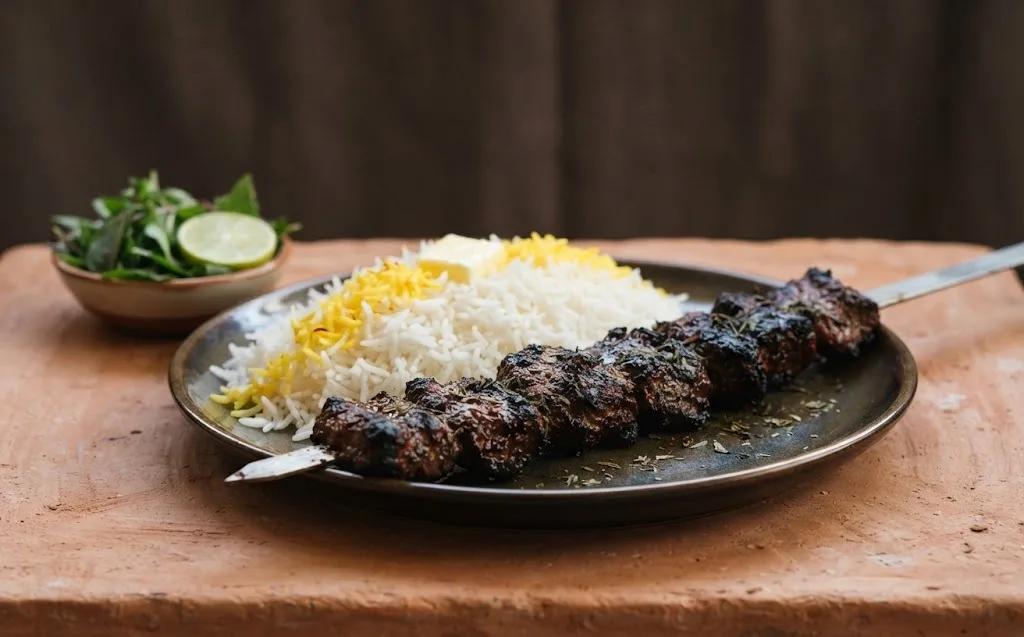
Head north from Tehran, over the mountains and down into the humid green of Gilan province, and the kebabs change character entirely. Kabab torsh — literally "sour kebab" — is the Caspian coast's signature: chunks of beef or lamb buried overnight in a thick paste of crushed walnuts, pomegranate molasses, garlic and dried mint. It is fesenjan logic applied to the grill, and it tastes like nowhere else in Iran: tangy, faintly bitter from the walnut oil, deeply savoury once the paste chars into a crust over charcoal. Gilaki cooking loves sourness the way the rest of Persia loves saffron, and this dish is its proudest export. The paste is doing double duty — the acid tenderises while the walnut fat bastes the meat from the outside as it grills.
Reference video
Reference video, embedded from YouTube: filmed by International Cuisines, not by How To Make A Kebab, and not owned, relicensed or distributed by this site.
View Original Video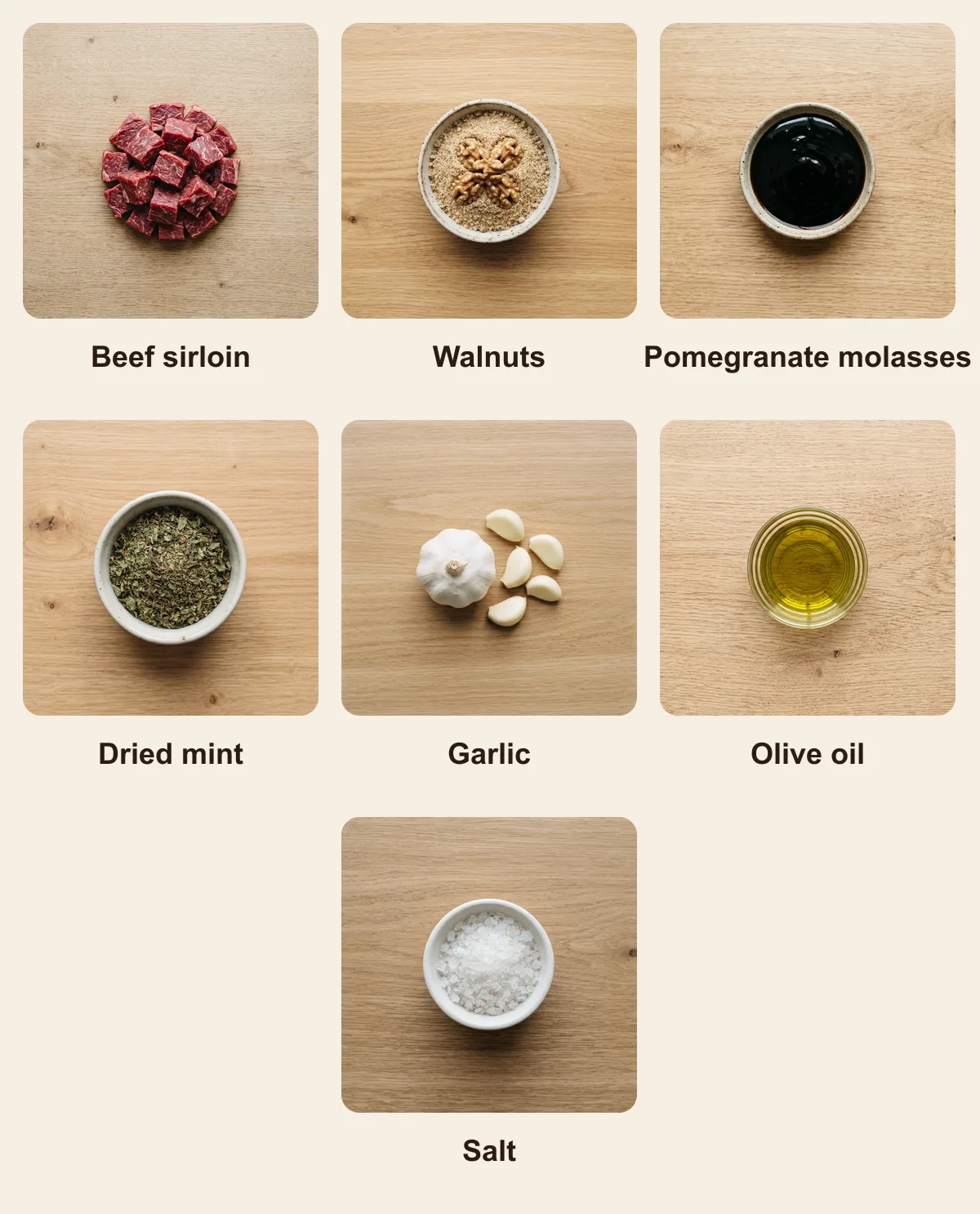
Ingredients
- 1kg Beef Sirloin (Cubed)
- 1 cup Walnuts (Finely ground)
- 1/2 cup Pomegranate Molasses (Rob-e Anar)
- 2 tbsp Dried Mint
- 3 cloves Garlic (minced)
- 2 tbsp Olive Oil
- Salt (to season as the skewers come off the grill)
How To Make Kabab Torsh
-
1
Grind the walnuts in a food processor until they clump into a thick, smooth paste, then mix in the pomegranate molasses, minced garlic, dried mint and olive oil until the paste is dark and evenly blended.
-
2
Scrape the paste into a large bowl, add the beef cubes and rub the paste over every piece with your hands until each one is thickly coated, then cover and refrigerate overnight.
-
3
Thread the coated cubes onto metal skewers and grill over medium heat for 10-12 minutes, turning every 2-3 minutes so the walnut paste chars into a crust without burning.
-
4
Lift the skewers off the grill once the paste has set into a dark crust and an instant-read thermometer in the thickest cube reads 63°C (145°F), so the inside stays tender, and season with salt straight away.
Note: The acidity in the pomegranate molasses tenderizes the meat, not enzymes — it has a unique sweet & sour flavor profile.
Go Deeper · the full story
About this recipe
Kabab torsh belongs to Gilan, the humid rice-and-fish province on Iran's Caspian coast, where sour flavors get the same reverence saffron gets everywhere else in the country. It swaps the usual Persian kebab logic of a thin marinade and a quick hot cook for a thick walnut-and-pomegranate paste that clings to the meat and chars into a dark crust.
This version grinds the walnuts into a paste rather than leaving them chopped, so they melt into the marinade instead of falling off on the grill, and keeps the beef in the fridge overnight so the paste has time to actually penetrate the cubes rather than just coat the surface. The trickiest part is heat control: the same walnut fat and sugar that build the crust will scorch if the fire runs too hot.
Why this recipe works
Why This Recipe Works
- Grinding the walnuts to a paste, rather than leaving them coarse, means they bind into the marinade and coat the meat evenly instead of falling off on the grill.
- Dried mint folded into the walnut-pomegranate paste cuts the richness of the walnut oil with a clean, herbal edge, keeping the marinade from tasting one-note heavy.
- Medium heat, not high, lets the sugars in the pomegranate molasses caramelize into a crust instead of burning before the inside is done — walnuts and molasses both scorch fast.
How to serve it
Serving Notes
Serve with plain rice; the tangy, nutty crust is intense enough that a neutral side works better than another sauced dish.
Scrape any paste that falls off back onto the meat before plating — it's the concentrated flavor of the dish, not a garnish to skip.
Cut into the thickest cube before serving a batch, since the dark crust can look done well before the center actually is.
Common mistakes to avoid
Common Mistakes
- Grilling over high heat: the walnut oil and pomegranate sugars in the crust burn before the inside of the meat is cooked, leaving a bitter char instead of a caramelized one.
- Leaving the walnuts coarsely chopped instead of ground to a paste: chunks fall off the meat on the grill instead of clinging and charring.
- Skipping the overnight rest: a shorter marinade leaves the tang sitting on the surface instead of seasoning the meat all the way through.
- Treating the tenderizing effect as an 'enzyme' at work: pomegranate molasses tenderizes through acidity and sugar, not enzymatic action, and assuming otherwise invites over-marinating.
Frequently Asked Questions
Can I use fresh pomegranate juice instead of pomegranate molasses?
Molasses is thicker and more concentrated, which is what lets the paste cling to the meat and char properly; juice would need reducing first or the marinade will run off the cubes.
Why does kabab torsh taste so different from other Iranian kebabs?
It comes from Gilan province on the Caspian coast, where the local cooking favors sour, herb-heavy flavors over the saffron-scented cooking of the Persian plateau.
Can I use lamb instead of beef?
Beef sirloin is the standard cut here, but the walnut-pomegranate paste works on lamb chunks too, since the marinade — not the meat — carries the dish's identity.
What's the difference between kabab torsh and fesenjan?
Same walnut-and-pomegranate base, different technique: fesenjan is a slow-simmered stew, kabab torsh is that same flavor pairing used as a marinade for grilling.
Sources and further reading
- Kabab torsh — Wikipedia
- Kebab — Wikipedia
- Kabob Torsh - Persian Pomegranate Walnut Kabobs — Unicorns in the Kitchen (Shadi HasanzadeNemati)
- Kabob Torsh - Kebabs marinated in pomegranate and herbs — The Caspian Chef (Omid Roustaei)
Keep Cooking
Build The Full Plate
Technique And Support Guides
Best Meat For Kebab
Choose the best meat for kebab by fat ratio, cut, grind, and cooking style, whether it ends up on a skewer, in a wrap, or on a plate.
How To Keep Kebab On The Skewer
Learn how to keep kebab on the skewer with the right fat level, onion handling, kneading, skewer shape, and grill timing.
Metal Vs Wooden Skewers For Kebab
Understand when to use metal or wooden skewers for kebab, plus why flat skewers matter for minced kebab and how oven use changes the choice.
How To Shape Minced Kebab On Skewers
Shape Adana-style, koobideh, and seekh kebabs correctly with better hand pressure, skewer coverage, thumb patterning, and grill-ready thickness.
Related Recipes
Kabab Koobideh
The national dish of Iran. Ground meat with onion, grilled on wide skewers.
Kabab Barg
The "Leaf" kebab. Thinly pounded filet mignon marinated in aromatic onion juice.
Joojeh Kabab
Classic Persian saffron chicken. Golden, citrusy, and tender.
Kabab Chenjeh
The Prime Steak Kebab. Cubed sirloin or leg of lamb, tenderized with kiwi or onion juice.