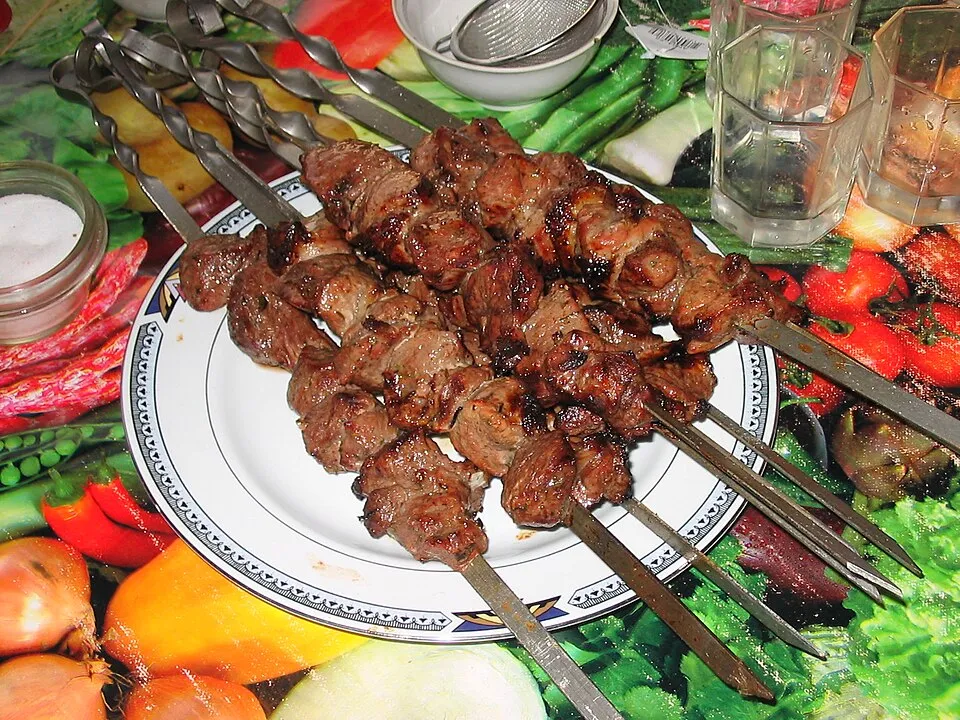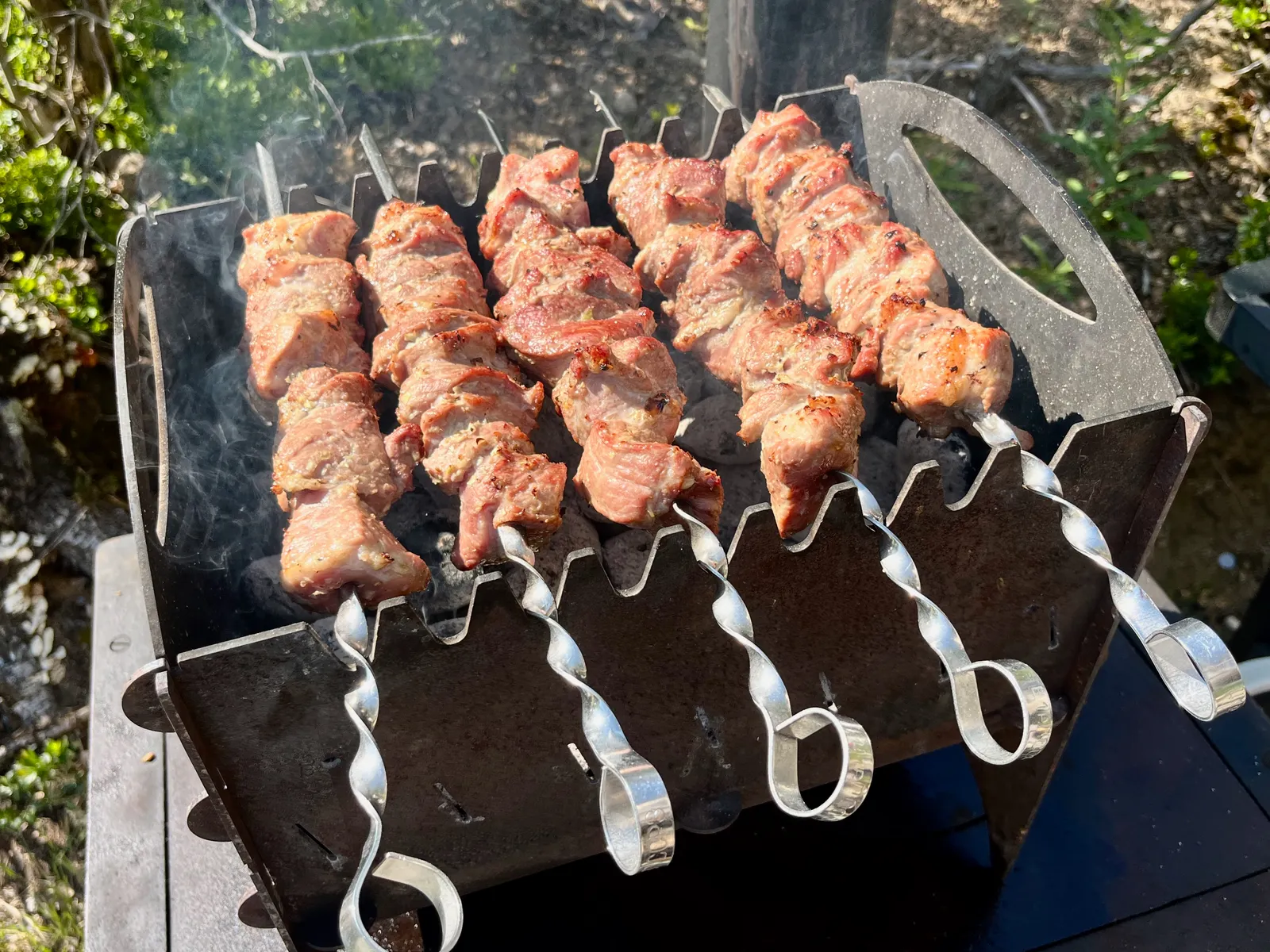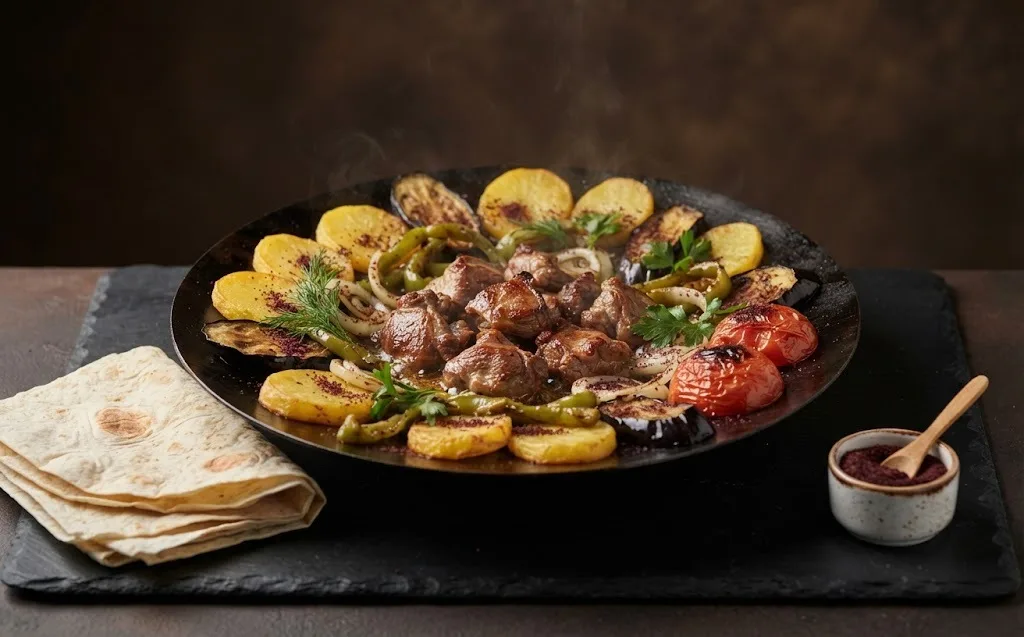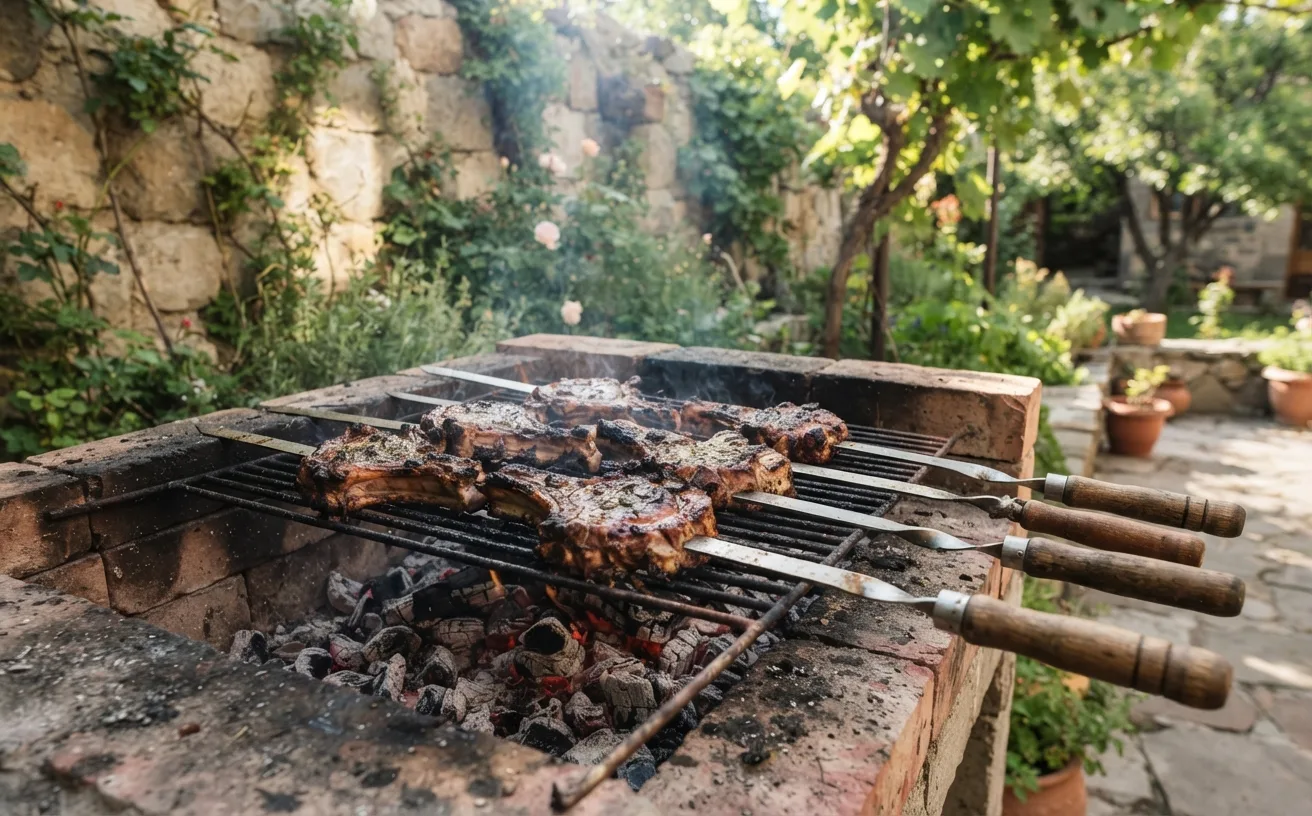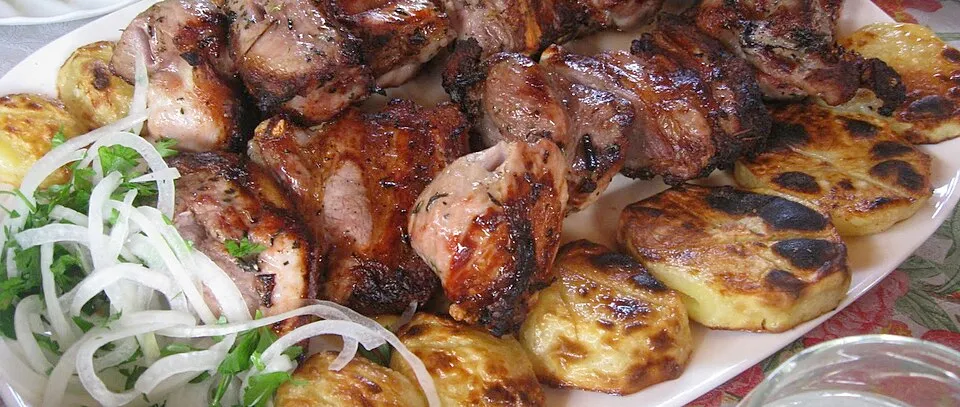
Armenia's national grill: large chunks of pork or lamb (often bone-in, unusual for the region's Muslim-majority neighbors) skewered with vegetables and cooked over vine or fruitwood embers. The grilled peppers, tomatoes and eggplant are peeled and mashed into a side salad, not garnish.
Also known as khorovadz, khorovac, Armenian barbecue.
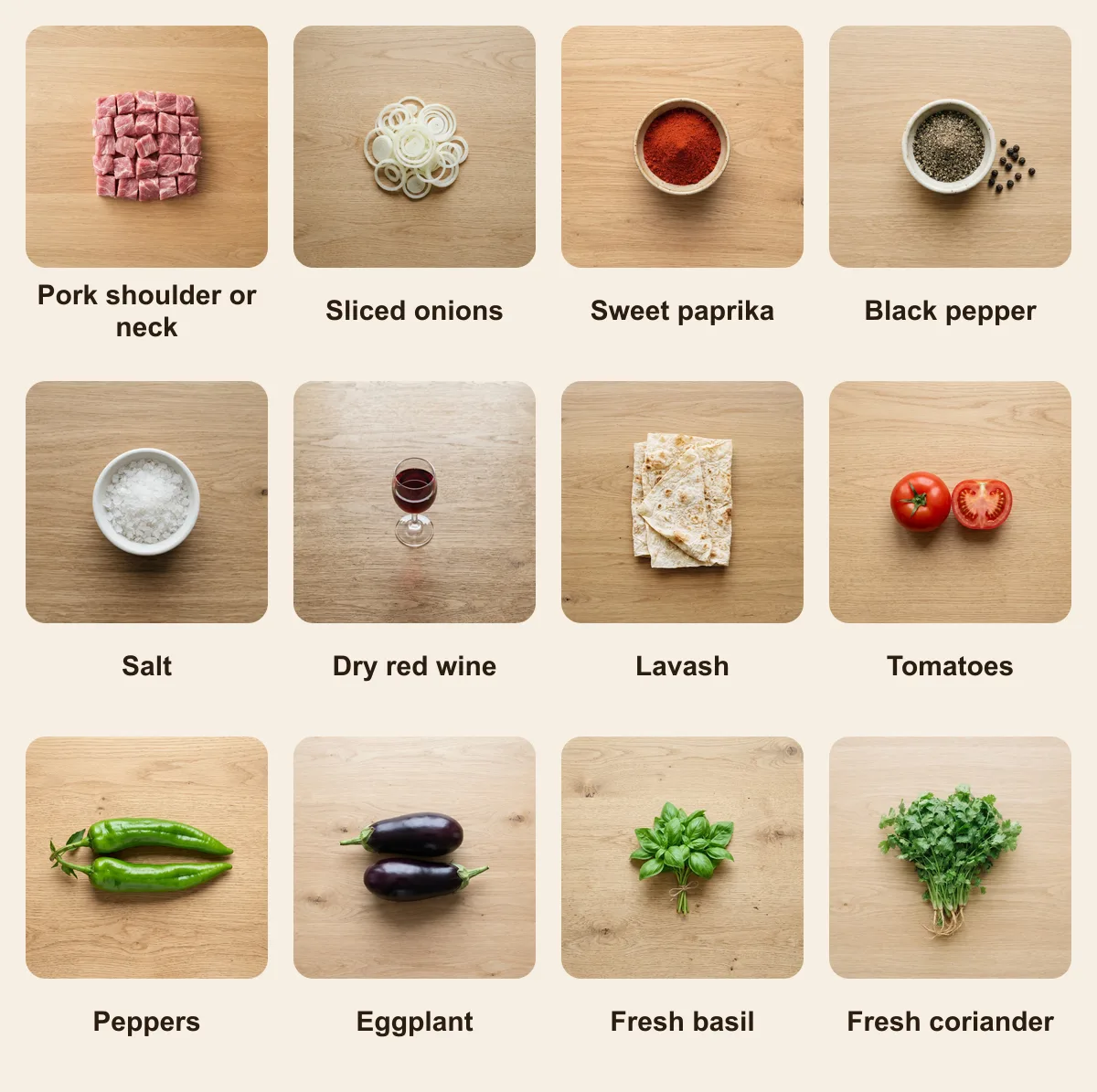
Ingredients
- 1.5 kg bone-in pork shoulder or neck, in 5 cm chunks
- 3 onions, cut in thick rings
- 1 tbsp sweet paprika
- 1 tbsp coarsely cracked black pepper
- 1.5 tbsp salt
- 100 ml dry red wine (optional, but common)
- 4 large lavash sheets
- 4 tomatoes, 4 long green peppers and 2 eggplants, for the fire, plus 2 garlic cloves for the salad
- 1 small bunch each fresh basil and coriander
How to make it
- 1
Massage the pork with salt, pepper, paprika, the onion rings and wine; leave 4 hours in a cool place, turning once.
- 2
Burn hardwood down to a thick bed of embers with no flame.
- 3
Skewer the chunks on wide flat shampoors, keeping the marinade onions aside.
- 4
Cook 30-40 minutes over moderate embers, turning every few minutes, while whole vegetables blister alongside.
- 5
Sheathe the finished skewers in lavash to rest 5 minutes, then serve on the bread with raw onion and the charred vegetables, peeled and chopped with the garlic and herbs into a smoky salad.
Pro tip: Armenians burn wood, not briquettes: vine-cutting or fruitwood embers give the smoke the dish depends on. If charcoal is all you have, throw on a few soaked hardwood chunks.
Where Khorovats comes from
Khorovats is Armenia's national grill and it carries more cultural weight than any single recipe would suggest. Armenians grill pork as often as lamb — a distinction from the Muslim-majority neighbours on almost every side — and the fuel is traditionally vine prunings or fruitwood, which is not an aesthetic detail but a flavour decision.
It is inseparable from the gathering around it. The word covers the whole event: the fire, the man tending it (the khorovatsapan, a semi-official household role), the vegetables charring alongside, the toasts. Foreign visitors reliably describe it as barbecue; Armenians reliably correct them.
Open-fire khorovats compared with the pot-cooked khazani
Fire is the dividing line. Khorovats itself is the outdoor grill: large bone-in chunks of pork neck or shoulder (lamb is traditional too), marinated in onion, salt, pepper and sometimes red wine, threaded on wide flat shampoors and cooked 30-40 minutes over vine-cutting or fruitwood embers. Whole aubergines, peppers and tomatoes blister in the same fire and become the smoky salad that counts as half the dish. Khazani Khorovats is the indoor answer to bad weather or apartment life: fatty pork browned in its own rendered fat with onions in a covered kazan, with no skewer and no embers. Armenians still call that pot version khorovats.
Compare: Khazani Khorovats
How Khorovats is cooked
The meat is cut large — much larger than a Turkish şiş — often bone-in, and marinated simply in onion, salt, pepper and sometimes a splash of beer or wine. Large pieces over moderate embers is the pattern: this is a slower grill than most kebabs in this atlas, thirty to forty minutes rather than ten.
The vegetables are the second half of the dish and are cooked with equal seriousness. Whole aubergines, peppers and tomatoes go directly onto the coals until their skins blacken and split, then they are peeled while hot and chopped together with garlic and herbs into a smoky salad. That salad is not a garnish; it is why khorovats tastes different from grilled meat anywhere else.
Ingredients and shopping
Pork neck or shoulder is the classic and the most forgiving — it has the fat to survive a long grill. Bone-in pork ribs and lamb are both traditional. Cut pieces at five to seven centimetres, considerably larger than you would for şiş.
Vine cuttings are the traditional fuel and worth trying if you have access to them; fruitwood is the next best. The marinade should be restrained: onion, salt, pepper, herbs. Armenians generally do not use yoghurt or heavy spice blends here, and the dish is better for it.
How Khorovats is served
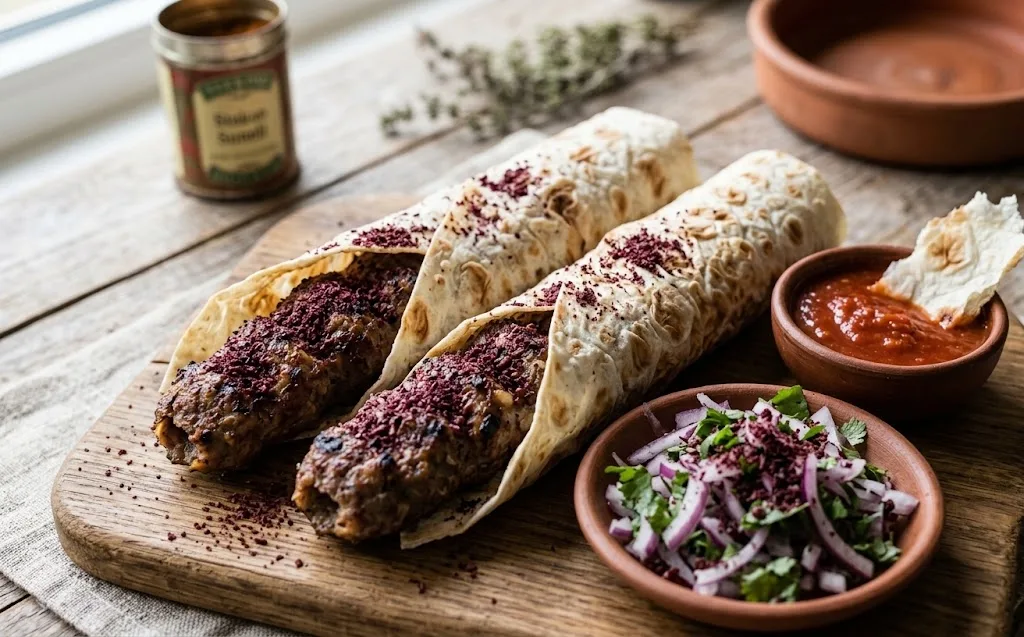
The meat comes to the table on lavash with the smoked vegetable salad, raw onion with sumac, fresh herbs, cheese and greens. Lavash is used to pull the meat off the skewers and then eaten with the drippings. Armenian brandy or homemade wine, and toasts — the toasting is as fixed a part of the ritual as the fire.
Common mistakes
Cutting the meat small
Khorovats uses large pieces cooked slowly. Small cubes over the same fire dry out completely.
Rushing over high heat
Moderate embers and patience. Big pieces over roaring coals char outside and stay raw within.
Skipping the vegetables
The smoked-vegetable salad is half the dish. Grill the aubergines, peppers and tomatoes on the same fire until the skins blacken.
Heavy marinades
Onion, salt, pepper. Elaborate spice mixes are not the Armenian idiom here.
Khorovats: questions and answers
Is khorovats made with pork?
Often, yes. Pork neck and ribs are the most common, which distinguishes Armenian grilling from that of its Muslim-majority neighbours. Lamb is also traditional.
What wood is used for khorovats?
Grapevine prunings are traditional, with fruitwood as the common alternative. The fuel is considered part of the flavour.
How is khorovats different from shashlik?
The pieces are larger, the marinade lighter, the cook slower, and the grilled-vegetable salad served with it is integral rather than optional.
What is served with khorovats?
Lavash, a smoked salad of fire-roasted aubergine, pepper and tomato, raw onion with sumac, herbs and cheese.
Sources and further reading
- Khorovats — Wikipedia
- Get to Know Khorovats, Armenia's Favorite Grilling Pastime — Kate Leahy for the Smithsonian Folklife Festival, reposted by Lavash (the book)
- Armenian Grilled Pork with Pepper Sauce — Christopher Kimball's Milk Street