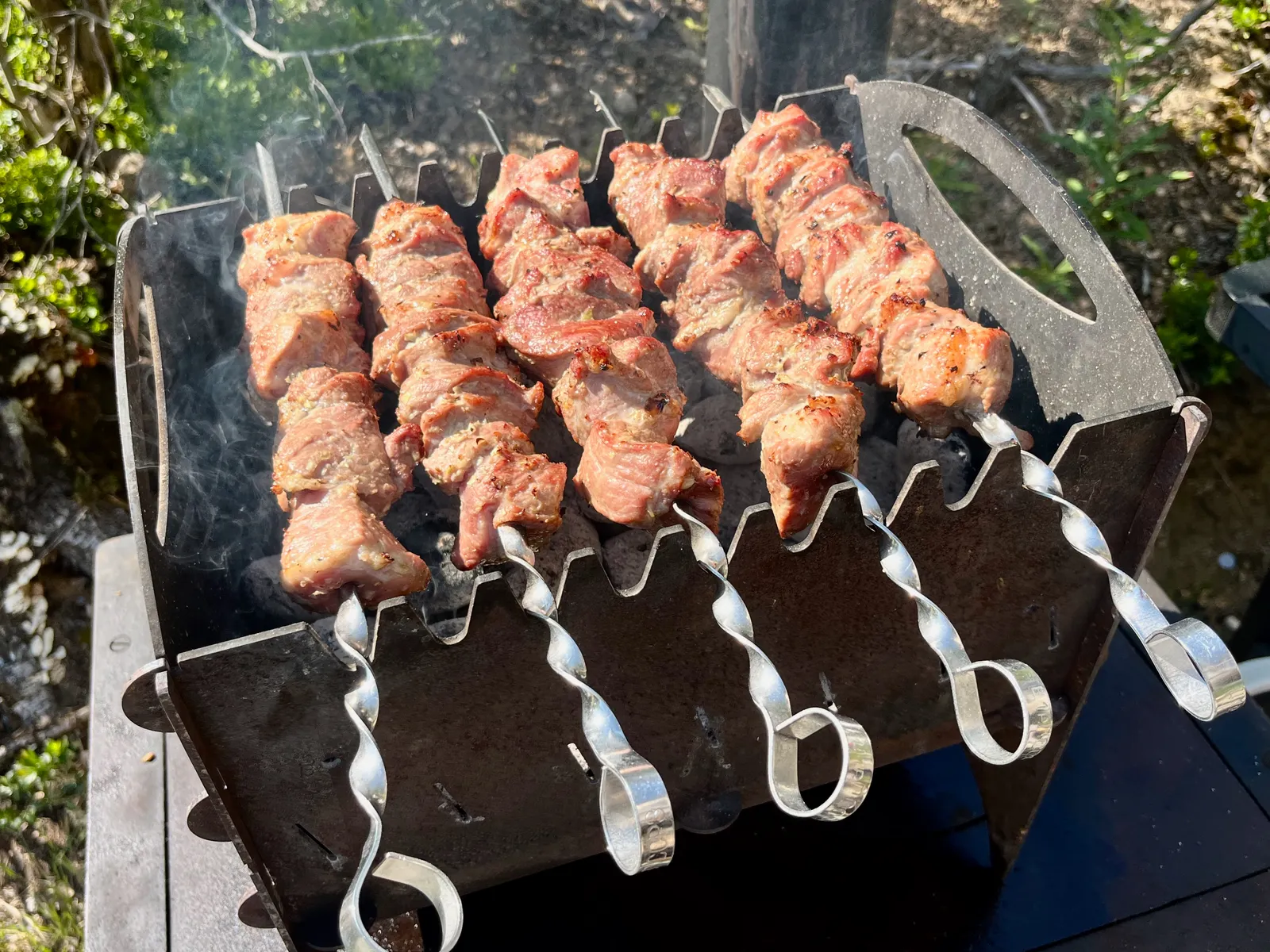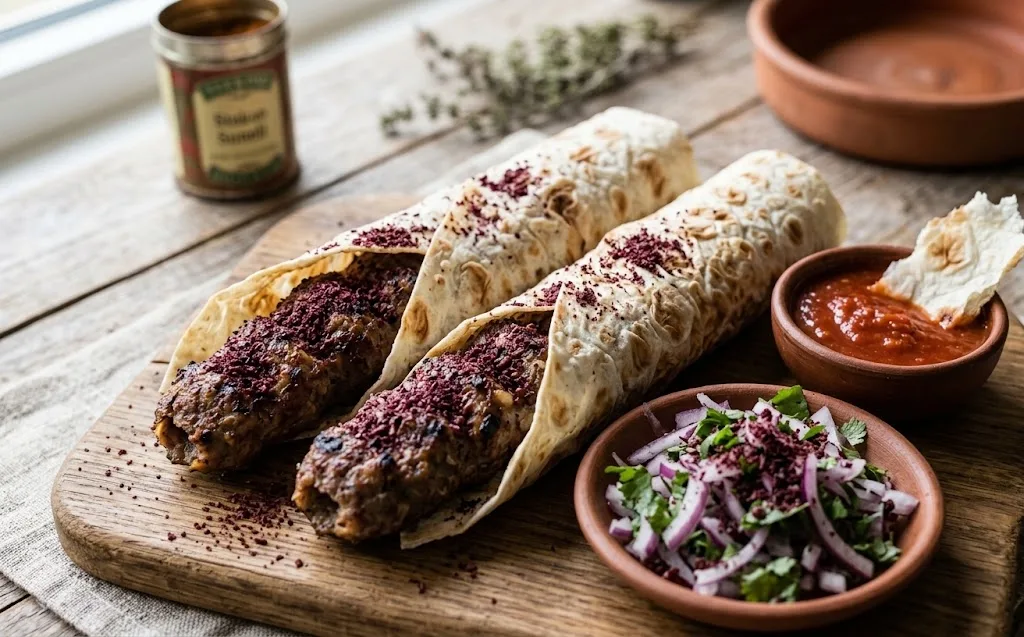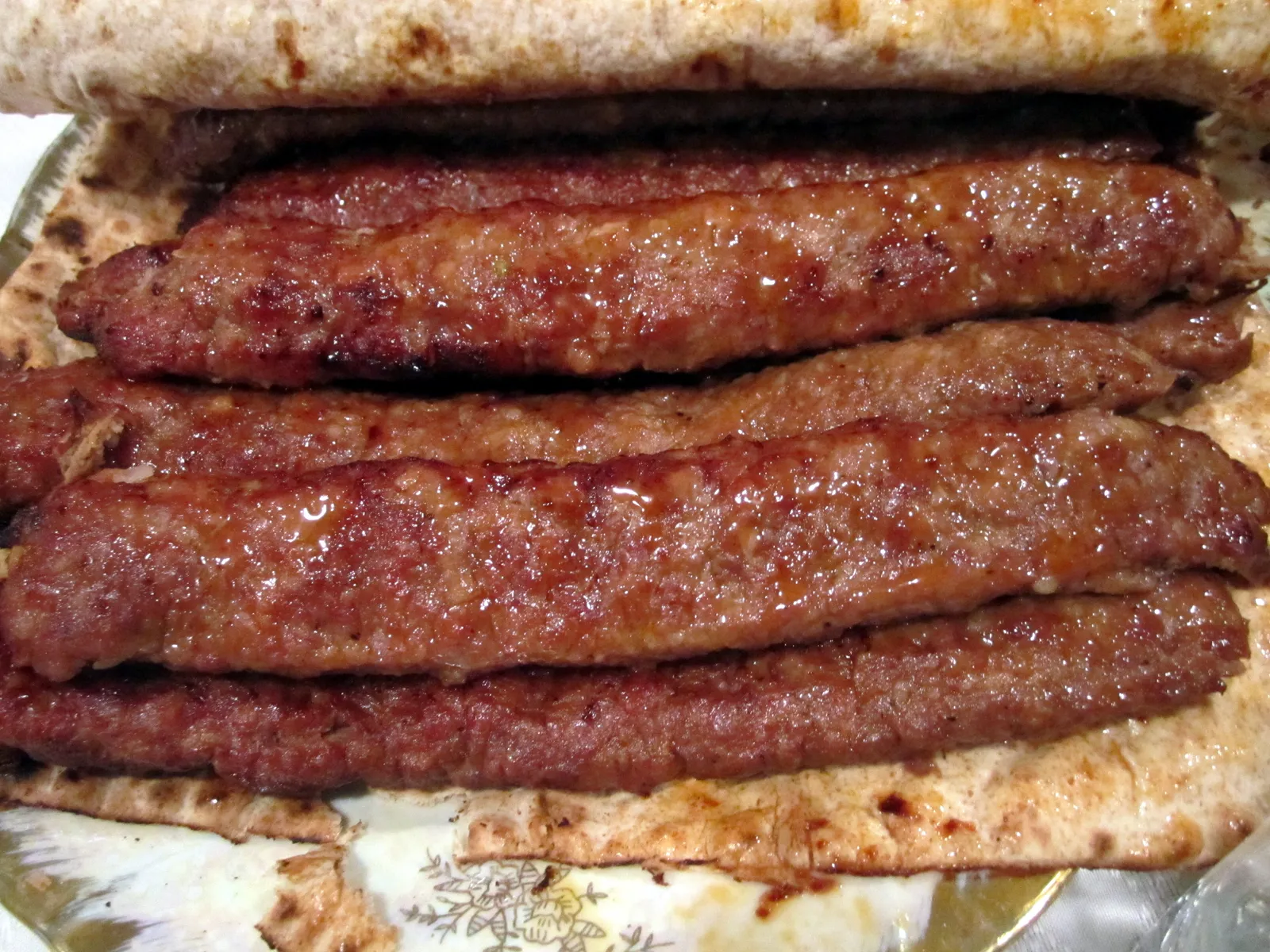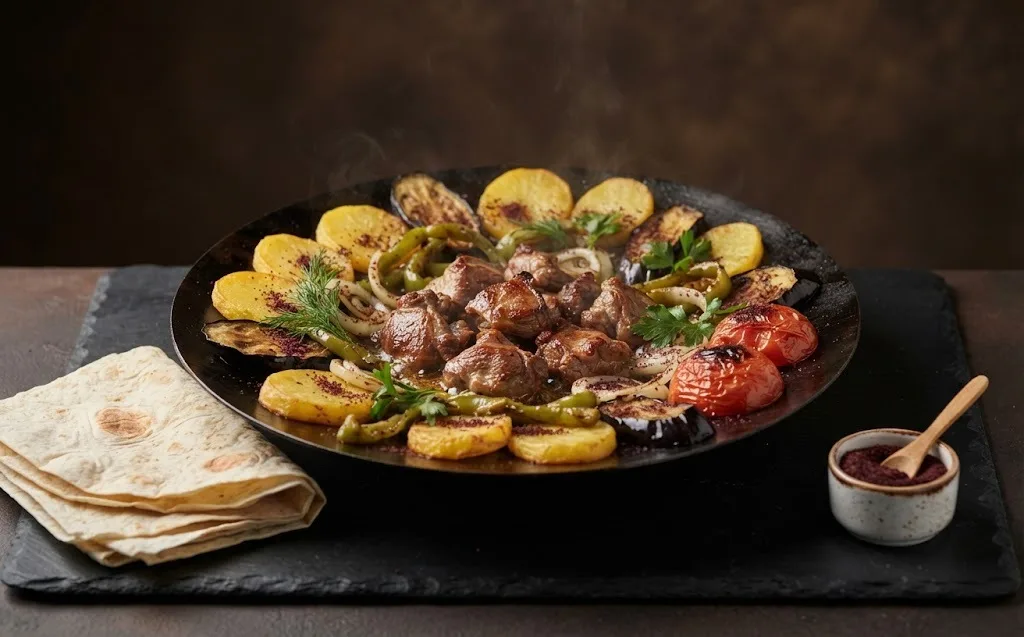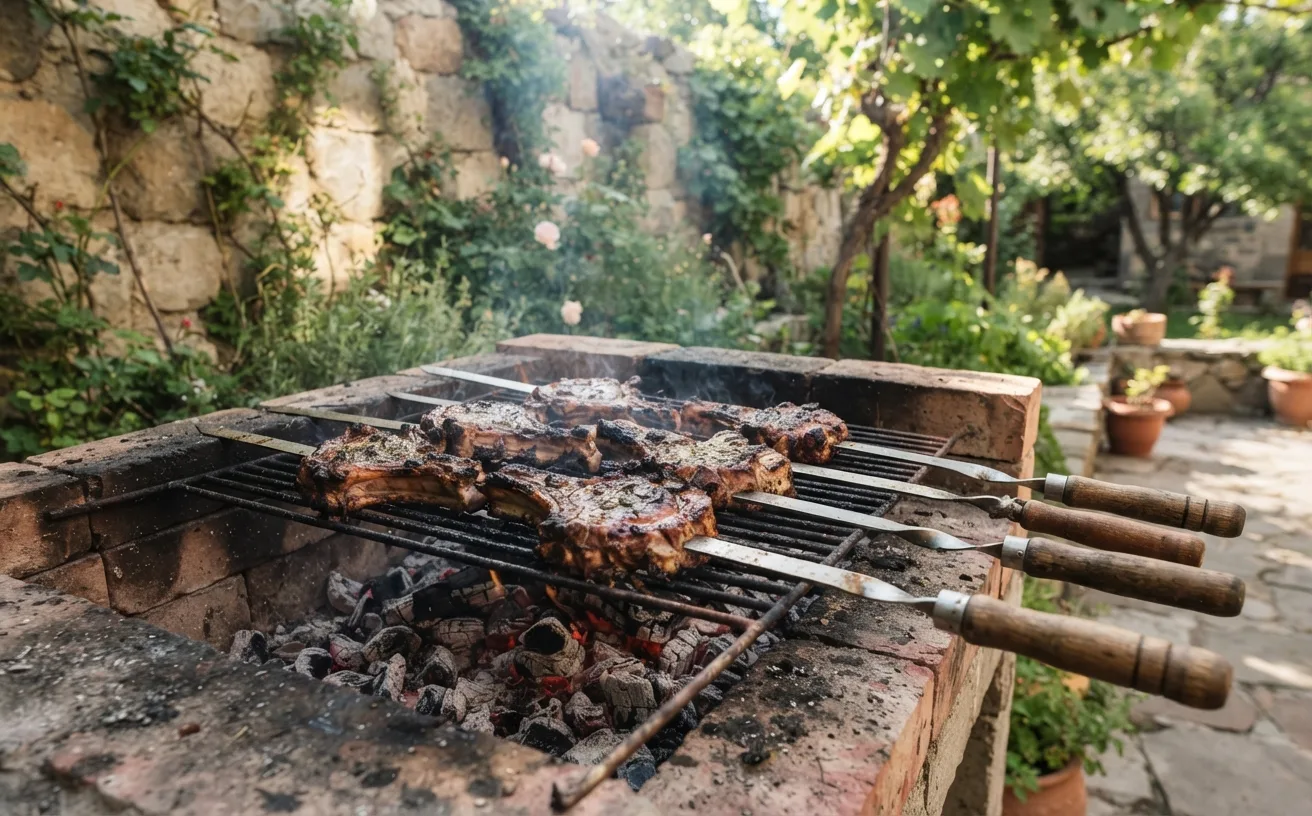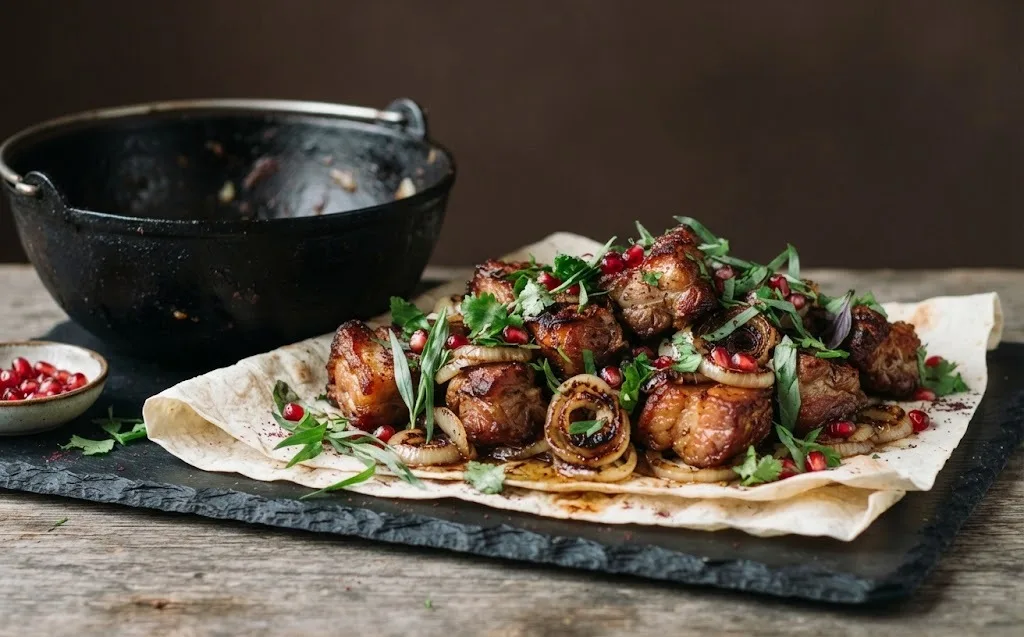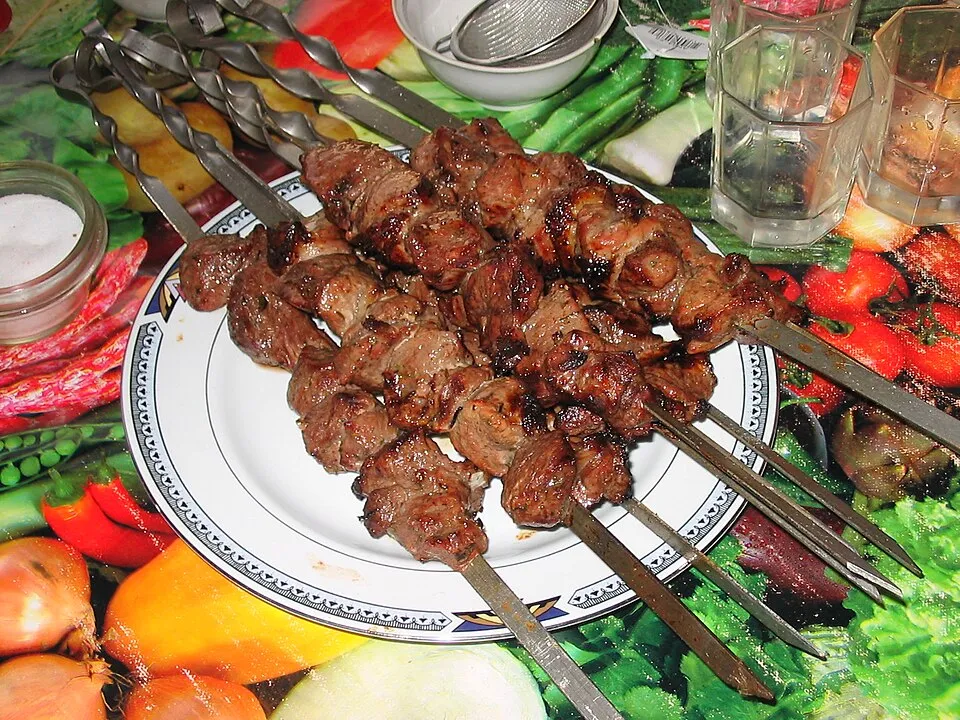
Georgia's skewer of pork (or veal) grilled over grapevine embers, traditionally with no marinade at all — just salt and the smoke of the vineyard prunings. Served buried in raw onion rings with pomegranate seeds and tkemali plum sauce.
Also known as Georgian shashlik, mcvadi, basturma mtsvadi.
Ingredients
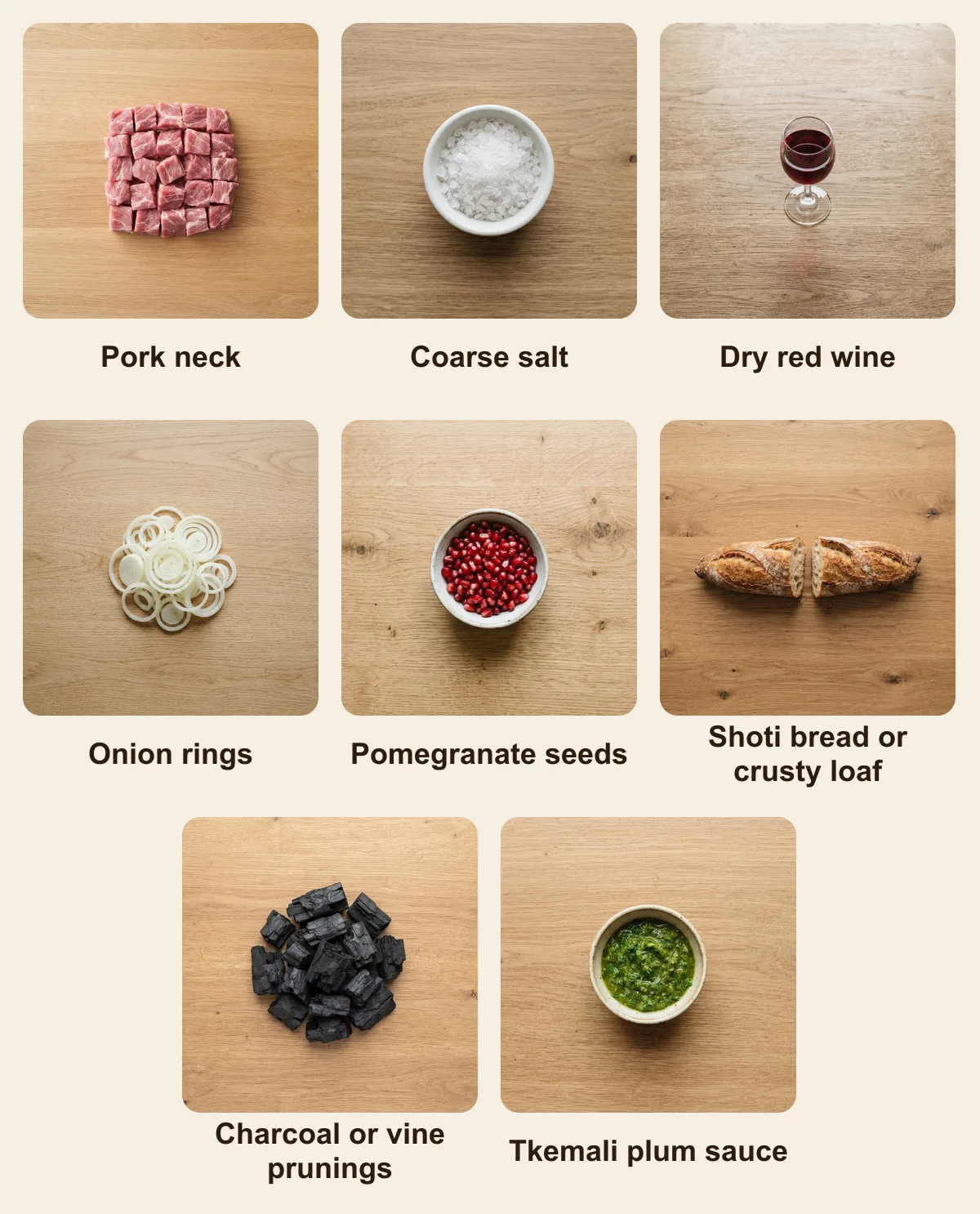
- 1 kg pork neck, in 5 cm cubes
- 1.5 tbsp coarse salt
- 100 ml dry red wine, in a splash bottle
- 2 onions, in thin rings
- Seeds of half a pomegranate
- 150 ml tkemali (sour plum sauce)
- 2 shoti breads or 1 crusty loaf
- Grapevine prunings or lump charcoal
How to make it
- 1
Burn vine cuttings (the Kakhetian ideal) down to embers that are just turning white; no flames, no marinade, no apologies.
- 2
Salt the pork and thread the cubes pressed hard against one another with zero gaps.
- 3
Grill 20-25 minutes, turning as each face bronzes, and spritz with red wine whenever fat flares.
- 4
Push the meat off the skewer onto bread and immediately bury it under raw onion rings and pomegranate seeds.
- 5
Cover 3 minutes so the onions wilt in the steam, then serve with tkemali.
Pro tip: Packing the cubes tight is deliberate and opposite to most kebabs: the touching faces stay juicy and steam-tender while only the outer faces char, so each piece has both textures.
Where Mtsvadi comes from
Mtsvadi is Georgia's skewer and the country's answer to the question of what to do with a vineyard's winter prunings. Pork — occasionally veal — is grilled over grapevine embers, traditionally with no marinade whatsoever, and Georgians will argue that a marinade is what you use when the meat or the wood is not good enough.
It is bound up with the supra, the Georgian feast, and with the tamada who leads its toasts. In wine country the prunings are burned down to embers specifically for this, and the resulting smoke — sweet, fruity, unlike hardwood — is treated as an ingredient rather than a by-product.
How Mtsvadi is cooked
The purist version is salt and fire. Pork neck is cut into large pieces, salted, threaded on long skewers and grilled over vine embers with no oil, no acid and no spice. The fat renders, drips onto the embers and smokes back up onto the meat, which is the entire flavour mechanism.
Where a marinade is used it is minimal and dry: sliced onion and salt, pressed with the meat for a few hours, the onion then discarded. Some households add a splash of mineral water or wine. The cook is moderate and unhurried, twenty to twenty-five minutes for large pieces, with the skewers raised or spritzed with wine whenever the fat flares.
Ingredients and shopping
Pork neck (or shoulder) is the correct cut — it has the marbling to survive a fire with no marinade to protect it. Veal is the traditional alternative, and lamb appears in the mountains. Pieces should be large, five centimetres or so, so the interior stays juicy while the exterior takes on smoke.
Vine prunings if you can get them, fruitwood if you cannot, and charcoal as a distant third. Onion for the optional pre-salting should be sliced. Tkemali — the sour plum sauce, green or red — and narsharab are the sauces, and a proper Georgian table has both.
How Mtsvadi is served
Buried in raw onion rings, with pomegranate seeds scattered over, tkemali on the side and lavash or shoti bread. It arrives as part of a supra alongside khachapuri, pkhali and salads, and the wine is Georgian and usually homemade. The onion is not a garnish — it is eaten in quantity with the meat.
Common mistakes
Marinating heavily
Georgian mtsvadi is deliberately plain. A heavy marinade defeats the point of grilling over vine embers.
Lean pork
Neck or shoulder. Loin has no fat and, without a marinade, no protection at all.
Cutting small
Large pieces are correct. Small cubes lose their moisture over a slow vine fire.
Flames rather than embers
The prunings must burn down. Grilling over flames scorches and adds acrid rather than sweet smoke.
Mtsvadi: questions and answers
What meat is mtsvadi made from?
Pork most often, particularly neck. Veal is the traditional alternative and lamb appears in mountain regions.
Why grapevine wood?
Vineyard prunings burn down to embers with a sweet, fruity smoke that Georgians consider integral to the dish. Fruitwood is the usual substitute.