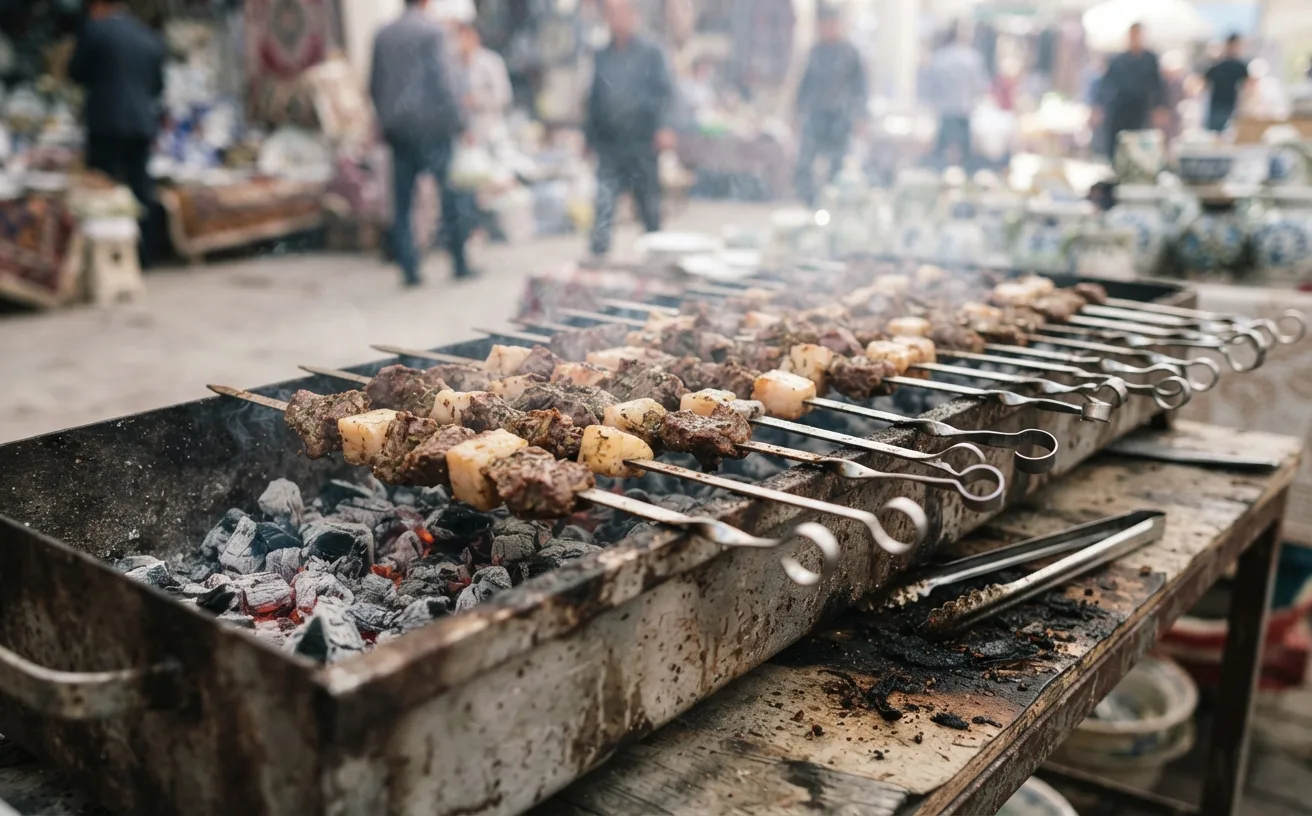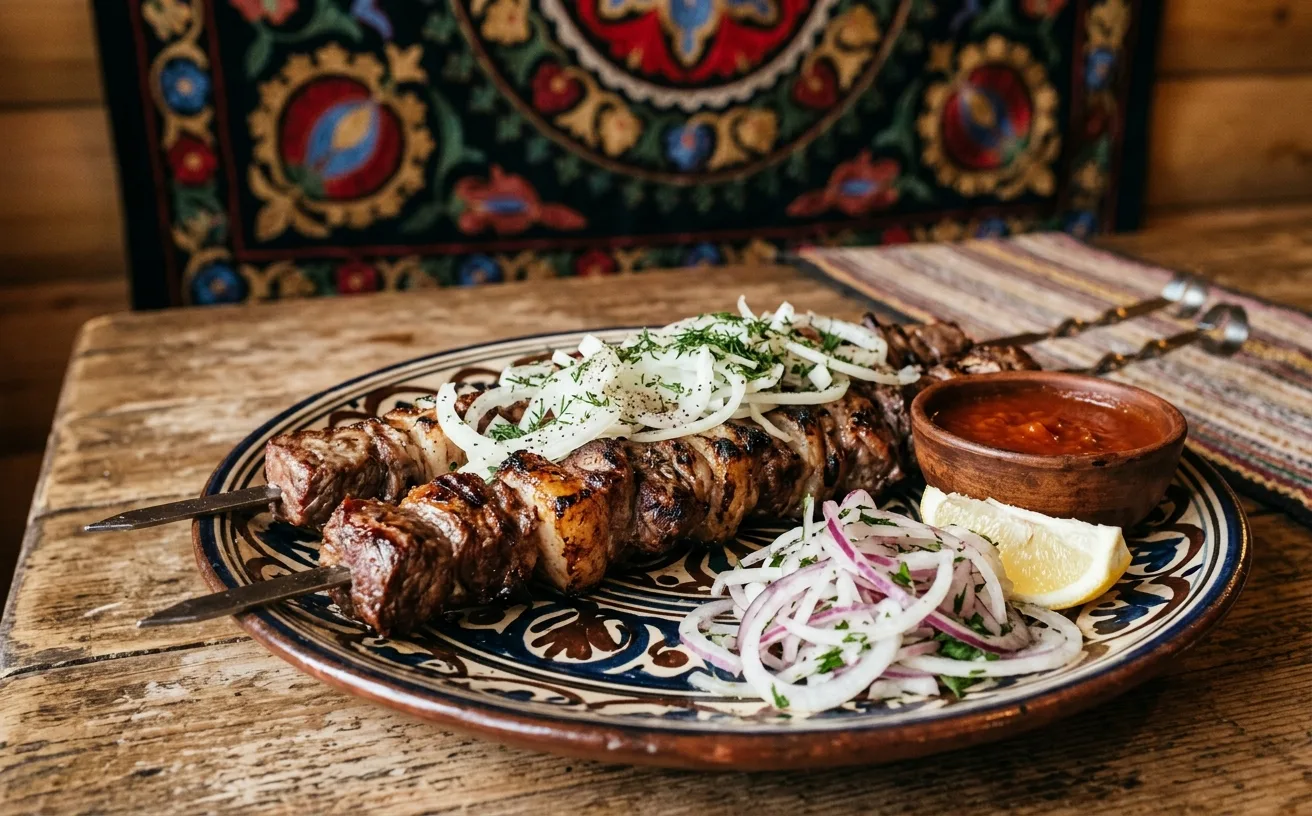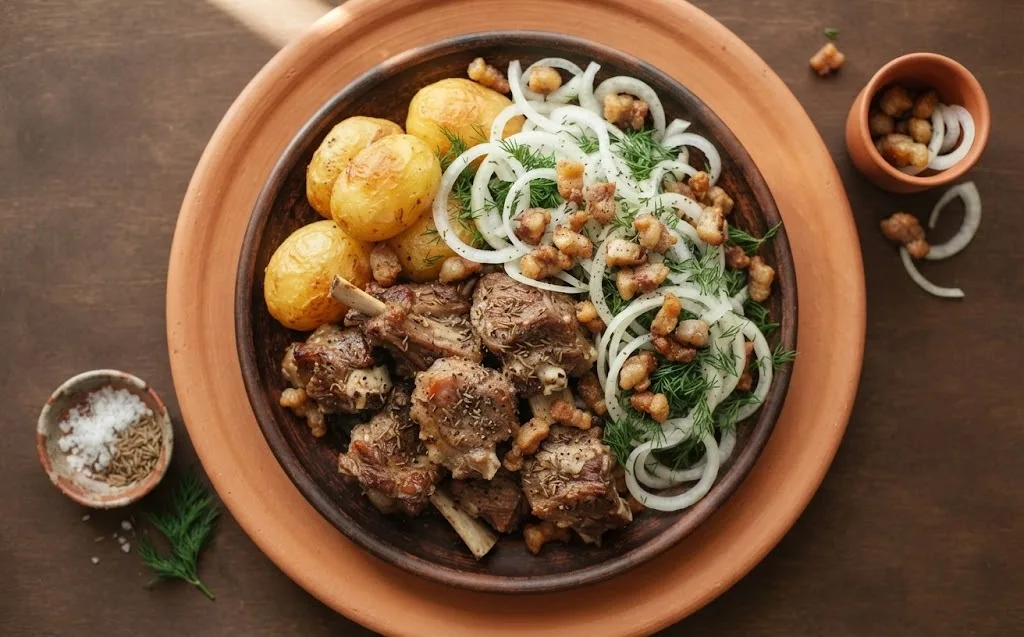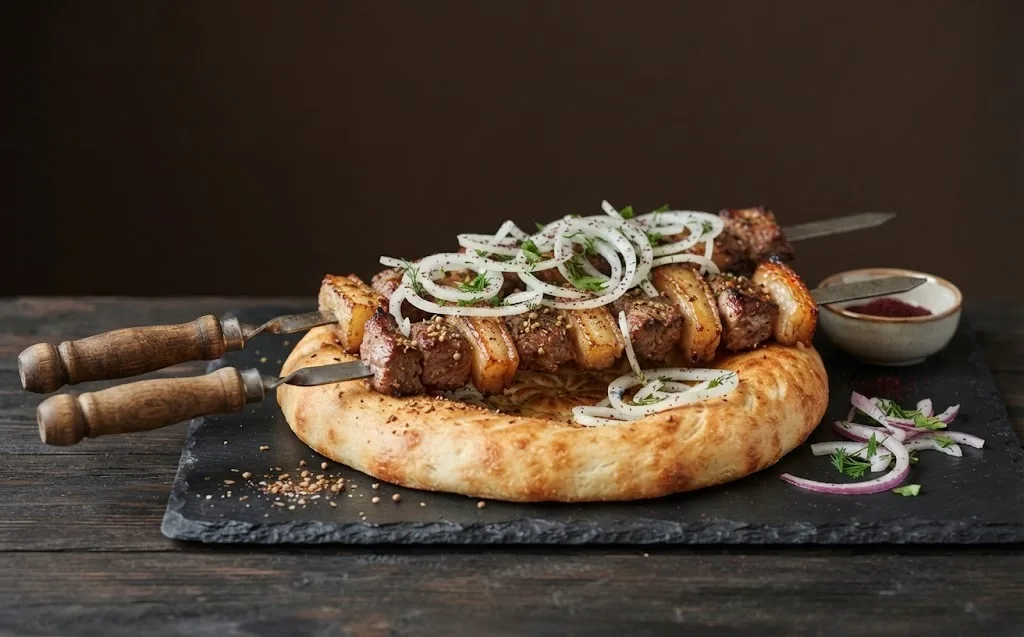
The Silk Road bazaar version of shashlik: small cubes of lamb alternated with slices of dumba (sheep tail fat), marinated with onion, vinegar, and generous cumin and coriander, then grilled fast over white-hot coals. The melting fat crisps the meat's edges, and it is always finished with thin pickled onions.
Also known as shashlik uzbek, uzbek kabob, kesma kabob.
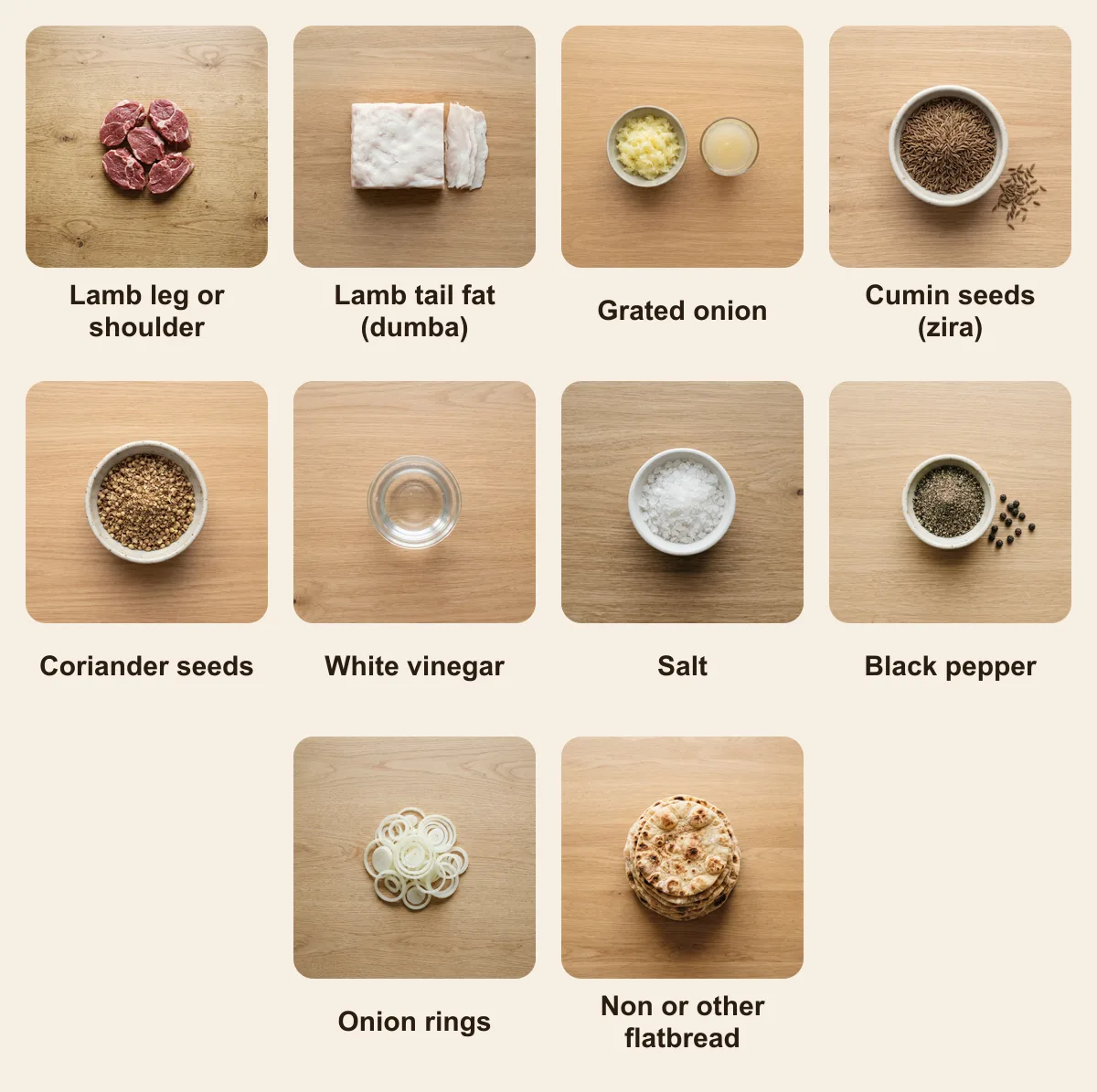
Ingredients
- 600 g lamb leg or shoulder, in 2-2.5 cm cubes
- 150 g lamb tail fat (dumba), in 2 cm slices
- 2 onions, grated
- 2 tsp cumin seeds (zira), half of them crushed
- 1 tsp coriander seeds, crushed
- 1 tbsp white vinegar
- 1.5 tsp salt
- 1 tsp black pepper
- 1 onion, in paper-thin rings, tossed with 1 tbsp vinegar, to serve
- non or other flatbread
How to make it
- 1
Bury the lamb in the grated onion with zira, coriander, black pepper, vinegar and salt; press down, cover and refrigerate 3-4 hours.
- 2
Wipe off the onion pulp, then load flat skewers alternating two cubes of lamb to one slice of tail fat.
- 3
Grill 10-12 cm above white-hot coals 6-7 minutes, turning whenever the dripping fat starts to flare.
- 4
Rest the skewers across a plate of flatbread and shower with the vinegared onion rings.
Pro tip: The three-to-four-hour grated-onion bath, not the fire, is what makes bazaar shashlik tender — cutting it to an hour shows in every bite.
Where Uzbek Shashlik comes from
Uzbek shashlik is the bazaar version of a dish the whole post-Soviet world claims, and what distinguishes it is dumba — sheep tail fat, sliced and threaded between the meat. In Tashkent's Chorsu bazaar and along every road in the Fergana Valley, the skewers are small, the coals are white-hot and the smell of rendering tail fat is the smell of the market.
It sits inside the wider shashlik culture but with Silk Road seasoning: cumin and coriander in quantity, where a Russian dacha version would use only pepper. That spicing links it eastward to Xinjiang rather than westward to the Caucasus, and it is the clearest marker of where you are eating.
Tail fat and cumin: how the Uzbek skewer breaks from the rest
Dumba is the giveaway. After every two small lamb cubes comes a slice of sheep tail fat, and as it renders over white-hot coals it crisps the meat's edges in six or seven minutes. Ordinary Shashlik uses 4-5 cm pieces of pork neck or lamb shoulder, a slower turn on the mangal and simpler onion-and-pepper seasoning. Horse meat and an overnight kefir bath are typical of Kazakh Shashlyk, which also threads fat between its cubes; the Uzbek marinade is grated onion, vinegar and plenty of crushed cumin and coriander seed for three to four hours. Iran's Shishlik is lamb rib chops on the bone. Paper-thin vinegared onions and non bread always come alongside.
Compare: Shashlik · Kazakh Shashlyk · Shishlik
How Uzbek Shashlik is cooked
The pieces are small — much smaller than a Russian shashlik — and they are threaded with a slice of dumba after every two pieces of meat, so fat is never far from any cube. As that fat renders over a hot fire, it runs down the meat and crisps its edges, which is the effect the whole dish is built around.
The fire is hotter and the cook shorter than in the Caucasian tradition: a bazaar cook works over glowing coals fanned with a piece of cardboard, turning constantly, and a skewer is off in six or seven minutes. Crushed cumin and coriander seed from the marinade cling to the meat and toast directly over the coals.
Ingredients and shopping
Lamb shoulder cut into pieces of about two centimetres, and dumba if you can find it at a halal butcher — it is sold specifically and is worth asking for. Failing that, fatty lamb belly cut into squares is the nearest substitute; ordinary fat trimmings render too fast and drip away.
The marinade is grated onion, vinegar, salt, black pepper, and generous whole cumin and coriander seed lightly crushed. Three to four hours is enough. Whole crushed seed gives a cleaner flavour than ground cumin.
How Uzbek Shashlik is served
On a plate with paper-thin vinegared onion rings — the acid is essential against the fat — and non bread. Fresh herbs, tomatoes, and green tea. In the bazaars it is eaten straight from the skewer standing at the grill, with the bread used to pull the meat off.
Common mistakes
Skipping the tail fat
The rendering fat is the mechanism of the dish, not a garnish. Without it, small lamb cubes over a hot fire simply dry.
Cutting the meat large
Uzbek shashlik is deliberately small-cut. Big cubes need a different fire and lose the fat-basting effect.
Under-spicing
Cumin and coriander in quantity are what make this Uzbek rather than generic. Be generous with the seed in the marinade.
A slow fire
It needs white-hot coals and a short cook. A gentle fire renders the fat away before the meat colours.
Uzbek Shashlik: questions and answers
What is dumba?
Sheep tail fat, sliced and threaded between the meat cubes. It renders over the fire and bastes the lamb, and it is the defining element of Uzbek shashlik.
How is it different from Russian shashlik?
The pieces are smaller, the fire hotter, tail fat is threaded between them, and the spicing is cumin- and coriander-forward rather than just onion and pepper.
Why the pickled onions?
Their acidity cuts the rendered fat. They are served with almost every Uzbek shashlik and are not optional in practice.
Sources and further reading
- Uzbek cuisine — Wikipedia
- Fat-tailed sheep — Wikipedia
- Shashlik — Wikipedia
- The indescribable taste and aroma of Uzbek shashlik — Uzbekistan.travel (National PR-Centre)