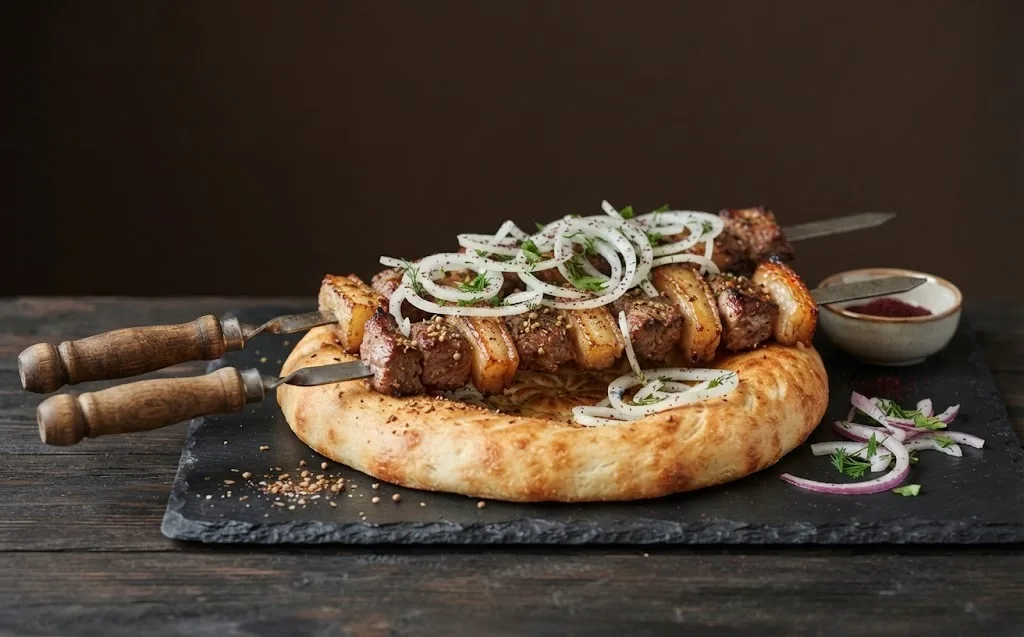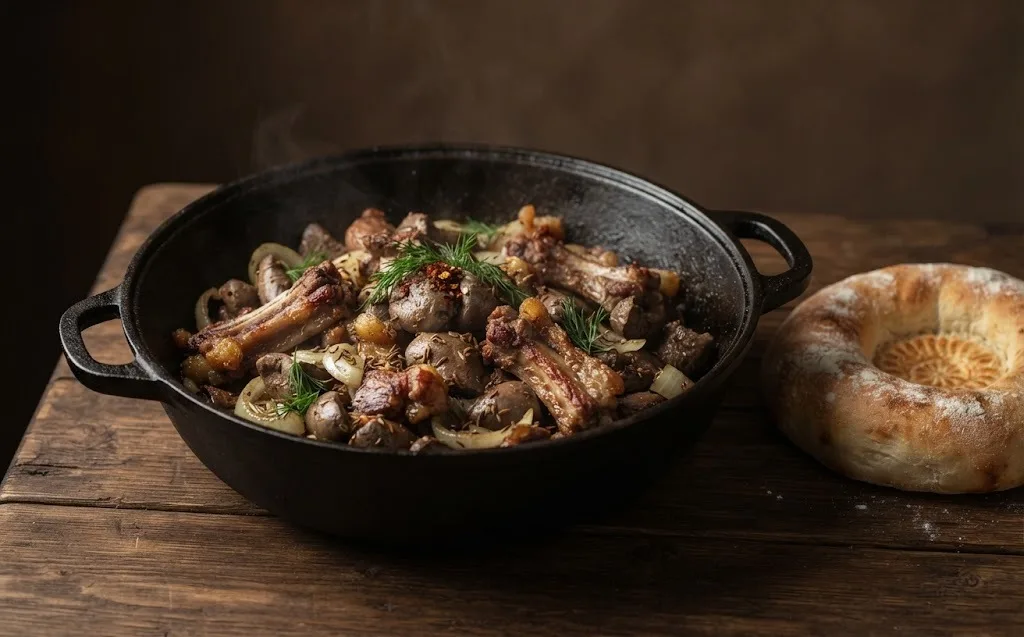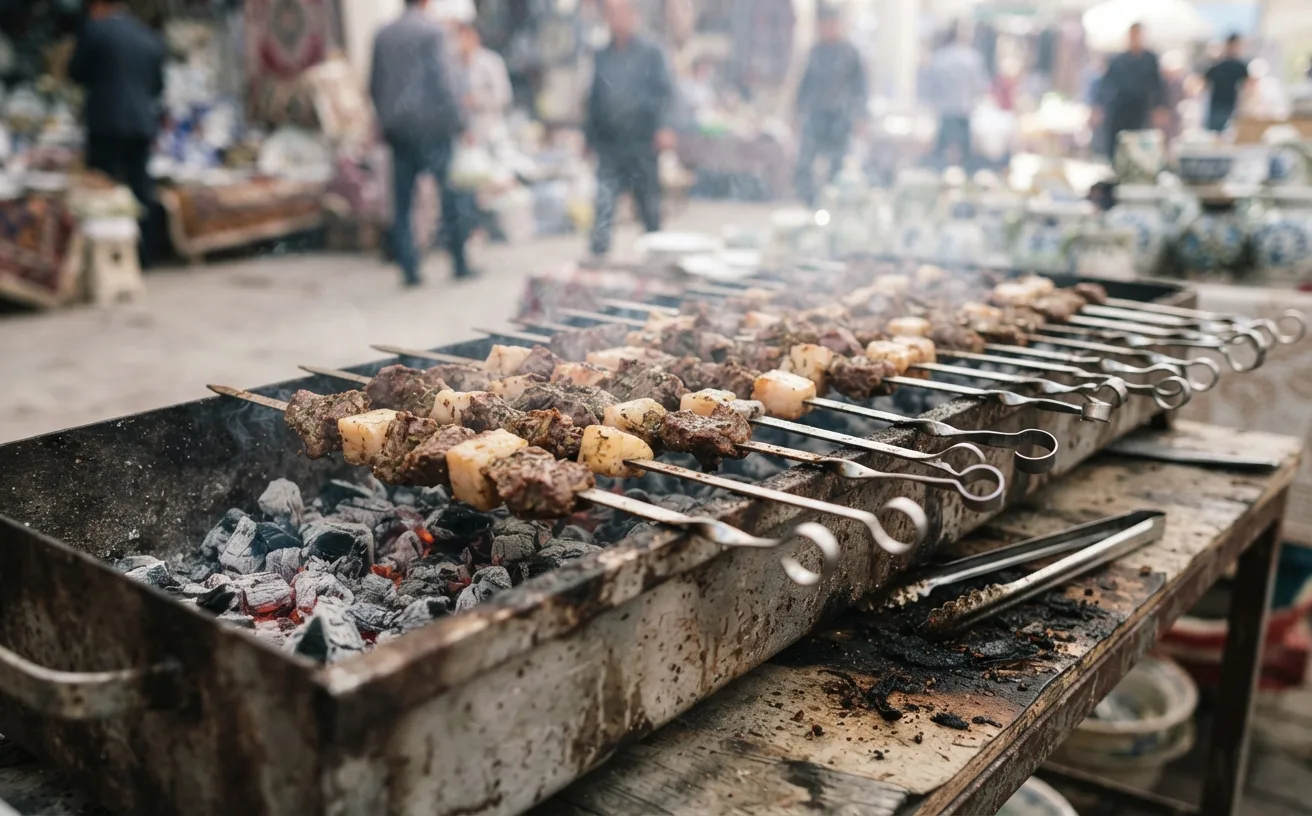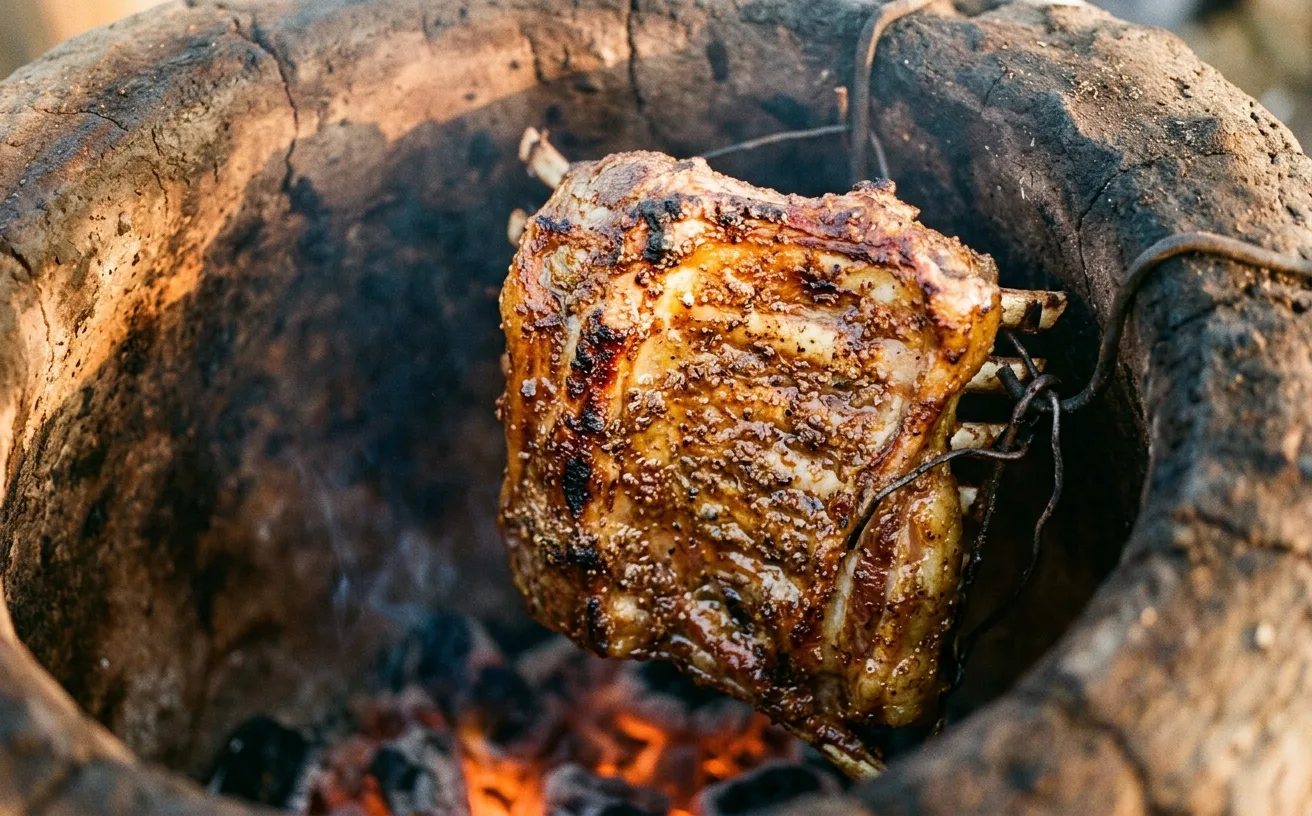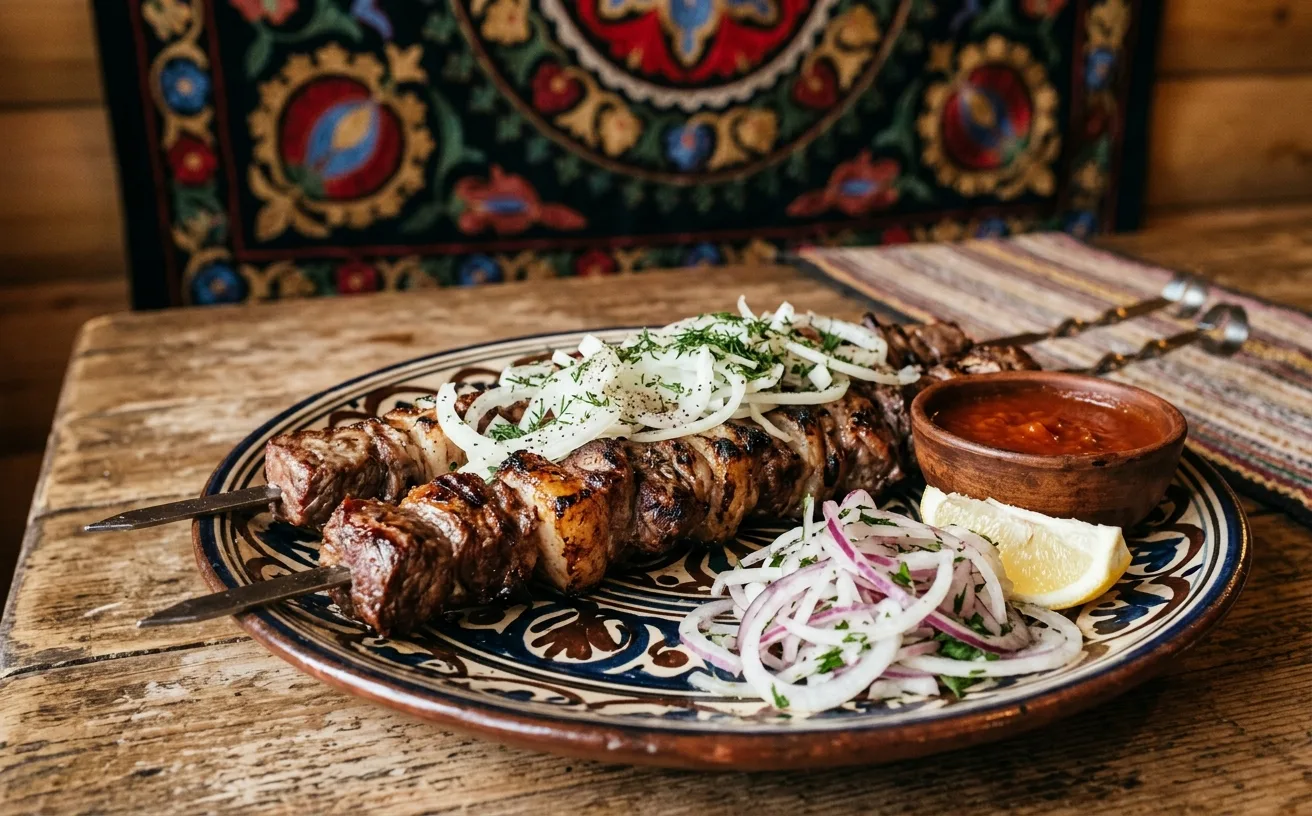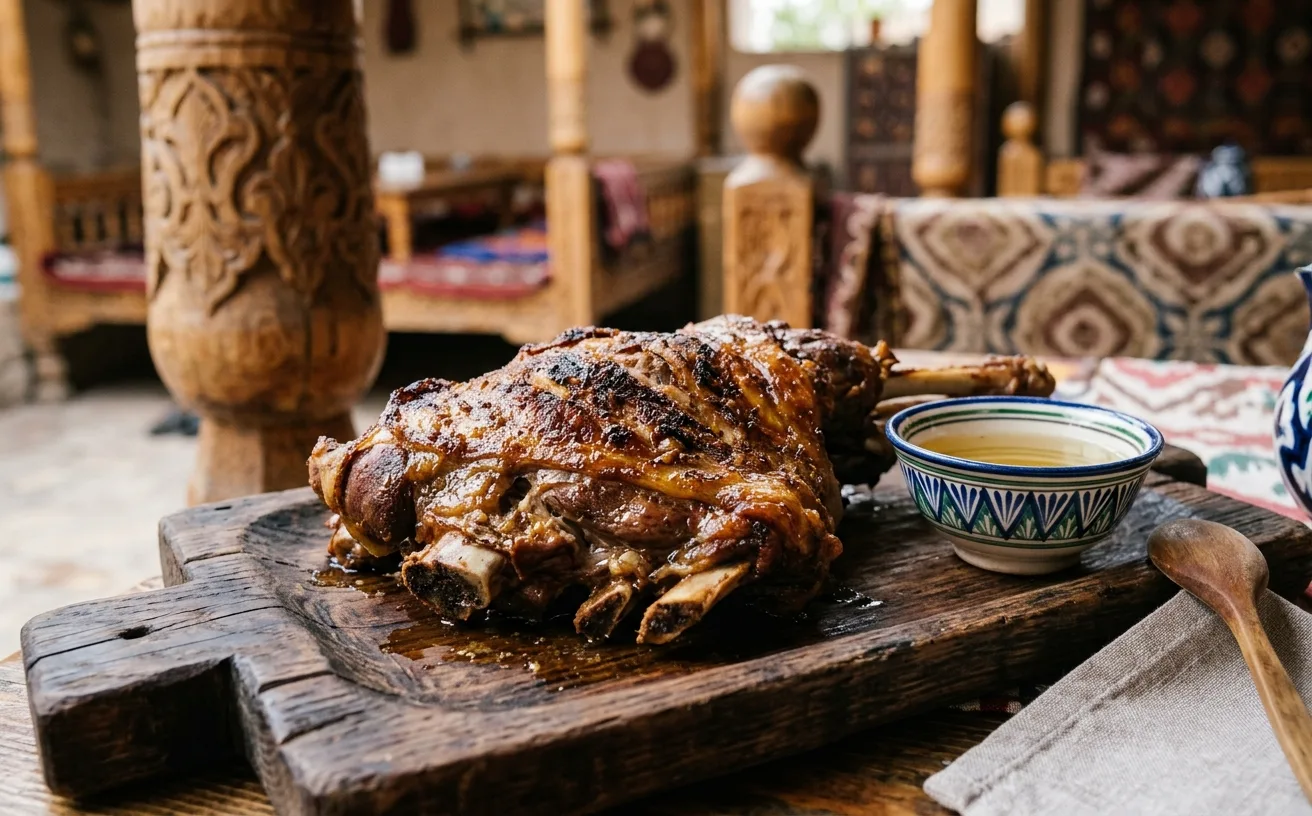
Whole sides of salt-rubbed lamb hung inside a sealed clay tandir over smoldering juniper or fruitwood branches, steam-roasting for hours until the meat pulls from the bone. Roadside tandir-kabob houses in the Fergana Valley are destinations in themselves.
Also known as tandir kebab, tandoor kabob, Uzbek tandir kabob.
Reference video
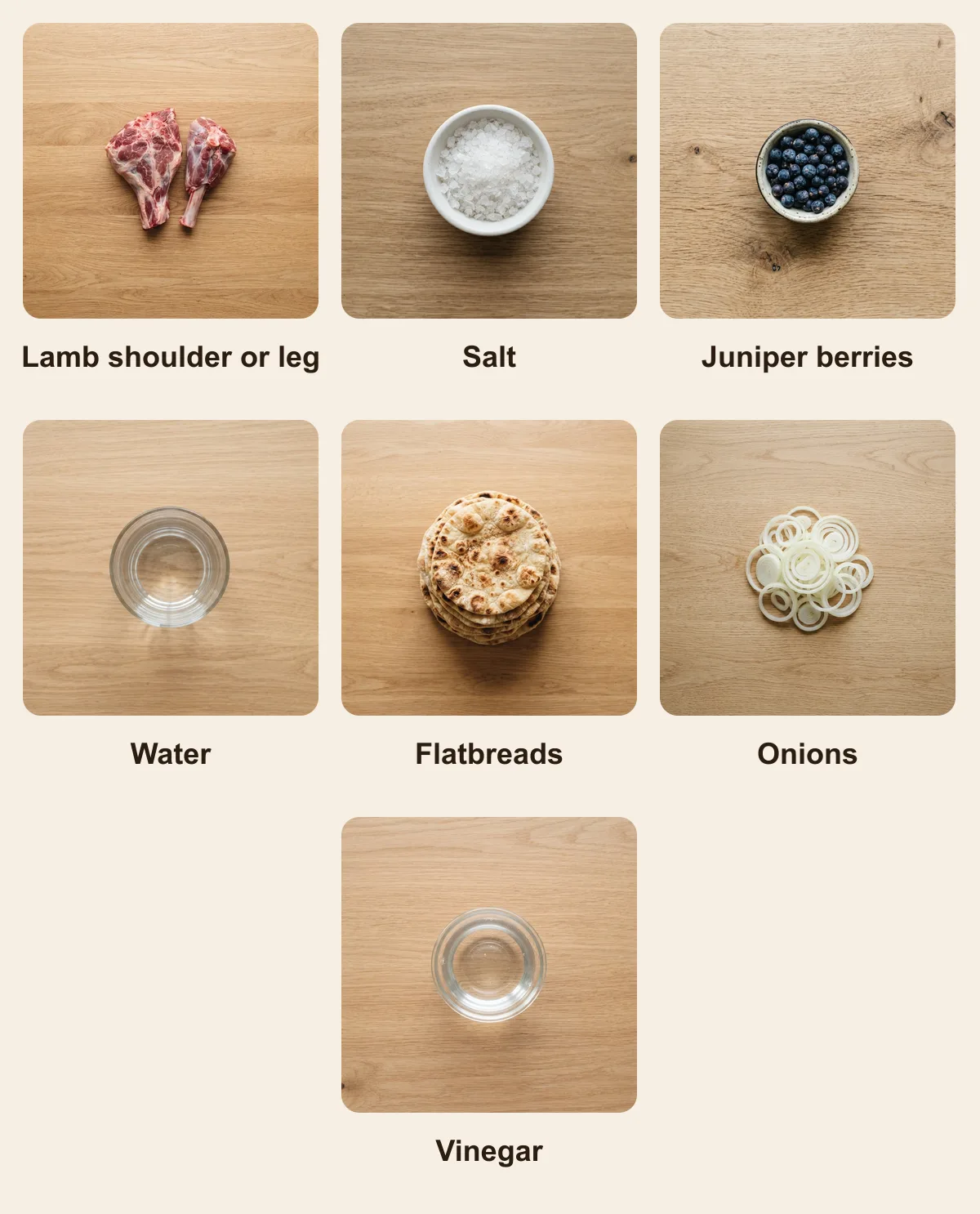
Ingredients
- 2 kg lamb shoulder or leg, on the bone, in large sections
- 30 g salt
- 1 tsp juniper berries, crushed (stand-in for the tandir's juniper smoke)
- 100 ml water
- 3 flatbreads
- 2 onions, sliced and rinsed
- 30 ml vinegar, for the onions
How to make it
- 1
Rub the lamb sections with salt and let them sit while the oven heats to 150 C.
- 2
Scatter the juniper into a Dutch oven with the water, set the lamb on a rack above, and seal the lid with a sheet of foil.
- 3
Cook 3.5 h; the meat is done when the bone twists free.
- 4
Optionally uncover at 240 C for 10 min, though the classic finish is pale, smoky and spoon-tender.
- 5
Rest 15 min wrapped, then pull into chunks and serve on flatbread with vinegared onions.
Pro tip: Do not chase a roast crust: authentic tandir meat is steam-cooked over smouldering juniper, so the juniper steam, not browning, carries the flavour.
Where Tandir Kabob comes from
The tandir itself is older than any of the cuisines that use it, and Central Asia's version is typically a large clay well set into the ground or built up from clay and straw. What distinguishes the Uzbek and Tajik use of it is the sealing: the mouth is closed with a lid and clay, turning the oven into a chamber rather than a fire.
How Tandir Kabob is cooked
The oven is fired with wood until the clay walls are saturated with heat, then the embers are allowed to die back and the lamb is hung on hooks so nothing touches the walls. The mouth is sealed, often with a wet cloth and clay, and the meat cooks for three to five hours in trapped heat and its own steam.
Because the chamber is closed, this is a hybrid of roasting and steaming, and it explains why tandir kabob is falling-apart tender rather than crusted. Juniper or fruitwood is chosen for aroma; the smoke that lingers in the sealed oven is absorbed by the meat far more than it would be over an open fire. The rendered fat collects below and is used or poured back over.
Ingredients and shopping
Whole sides of lamb are not a domestic proposition, but the logic scales: a bone-in shoulder or leg, heavily salted, set on a rack in a Dutch oven over a little water and a few crushed juniper berries standing in for the smoke, sealed and cooked at 150°C for three and a half hours, then uncovered hot for ten minutes only if you want colour. The three principles — suspended meat, trapped moisture, salt as the seasoning — carry over intact.
Salt is genuinely the whole seasoning in the traditional version, rubbed on generously several hours ahead. Some cooks add a paste of flour and water over the surface to seal it, which crisps and is discarded. A young animal matters here as it does in every long-cooked lamb dish.
How Tandir Kabob is served
Hacked into pieces and served by weight on non — the round tandir-baked flatbread — with sliced raw onion, fresh herbs and sometimes a bowl of the rendered fat for dipping the bread. Green tea, always, and in quantity. There is no sauce and none is wanted.
Common mistakes
Opening the oven to check
Every opening releases the trapped steam that keeps the lamb moist. Seal it and trust the time.
Cooking hot
This is a low, long method. High heat gives roast lamb with a dry interior, not tandir kabob.
Elaborate spicing
Salt is the tradition. Hours of enclosed cooking concentrate the lamb's own flavour, and spice rubs turn muddy.
Boneless meat
The bone and its connective tissue are what make the result gelatinous rather than merely soft.
Tandir Kabob: questions and answers
What is a tandir?
A clay oven, usually set into the ground or built up from clay, used across Central Asia for both bread and meat. For tandir kabob the mouth is sealed so the chamber traps steam.
How long does tandir kabob take?
Three to five hours for large cuts, at falling heat in a sealed oven. The method is closer to steam-roasting than to grilling.
What is it seasoned with?
Salt, and traditionally nothing else. The long enclosed cook concentrates the lamb's own flavour.
Sources and further reading
- Where to Find and Try the Most Delicious Tandir Kabob? — Embassy of the Republic of Uzbekistan in India