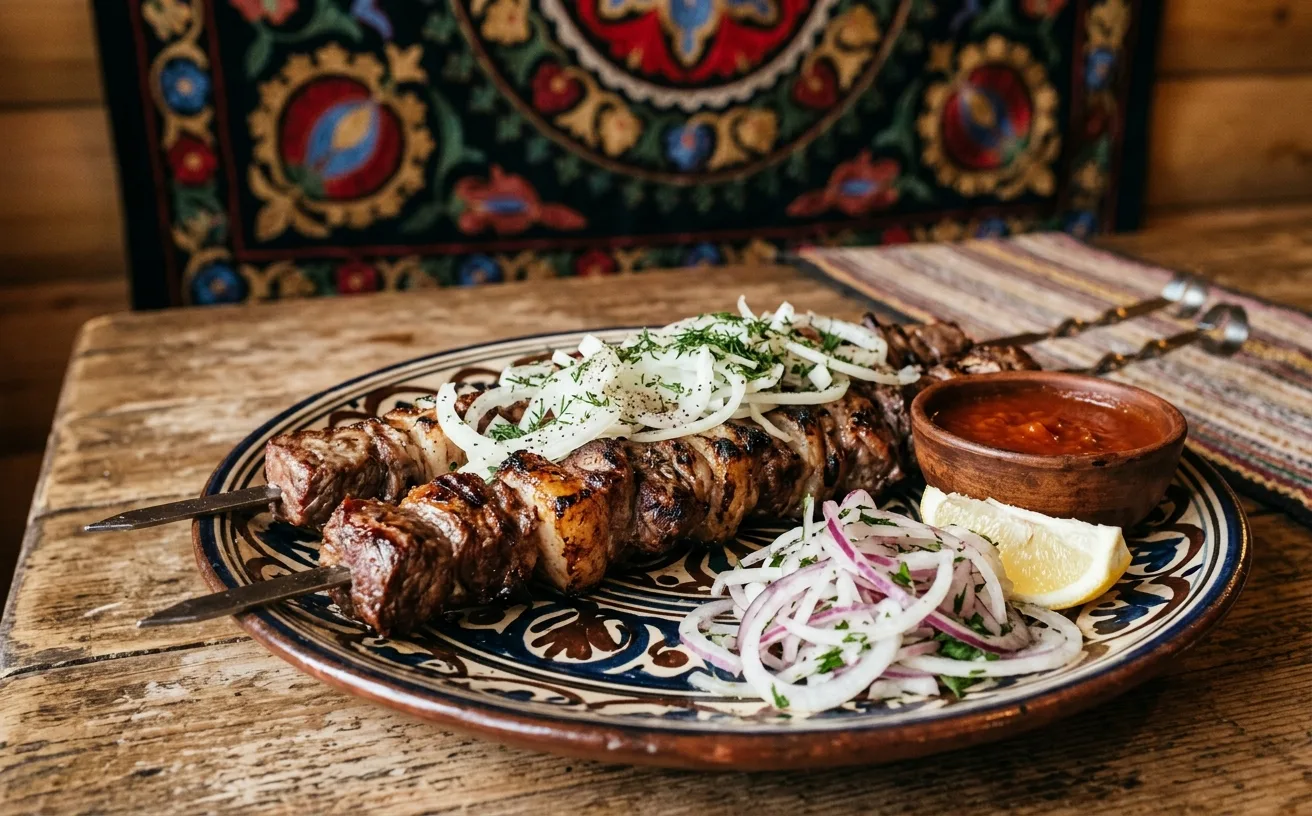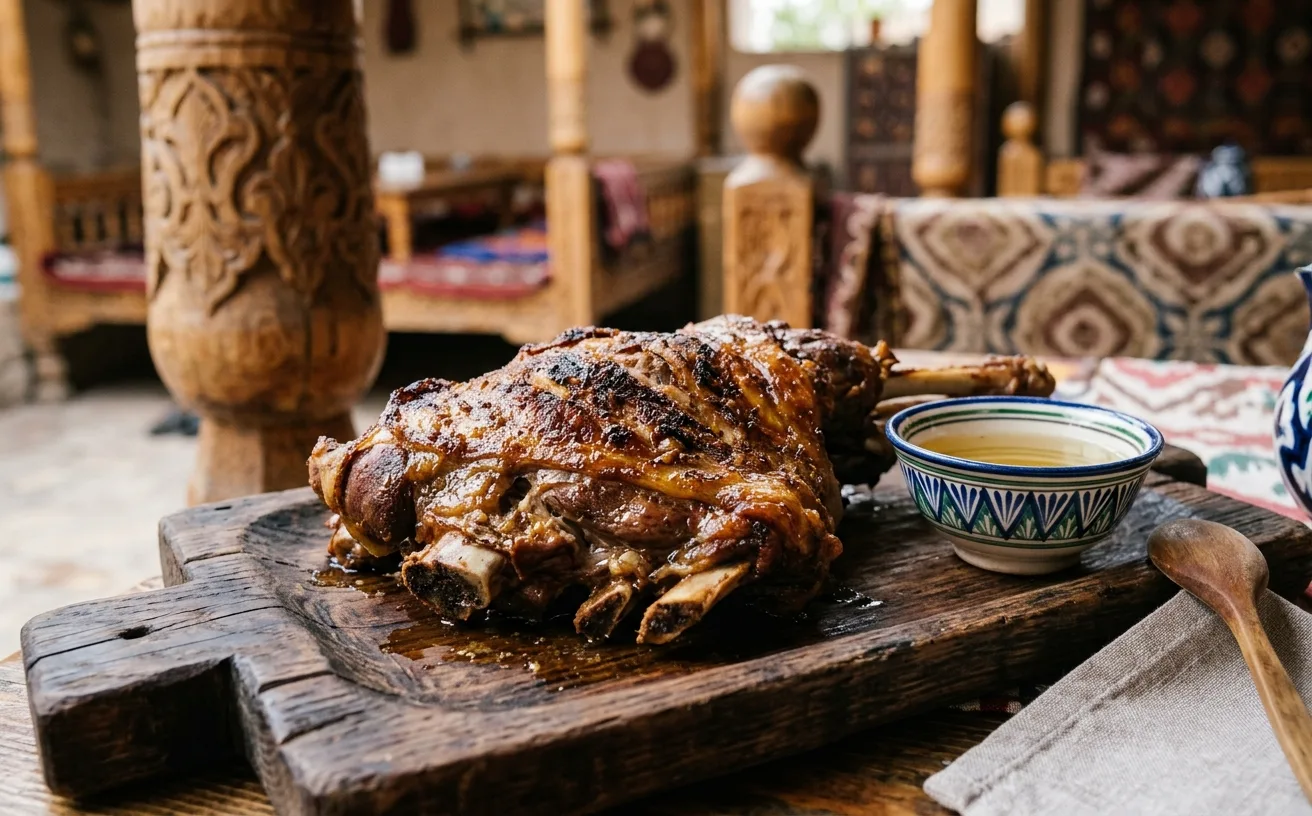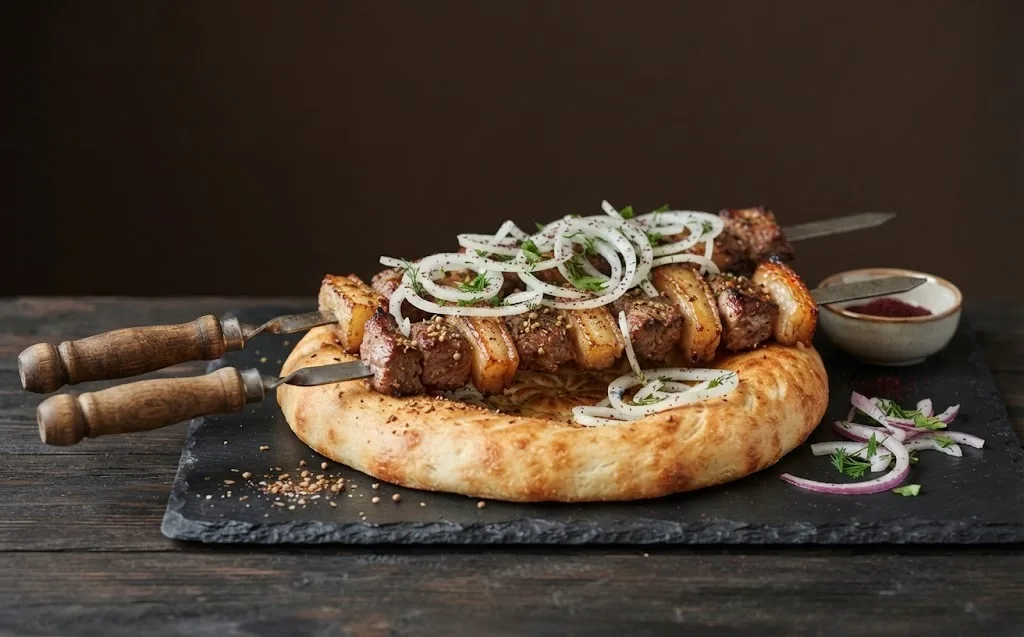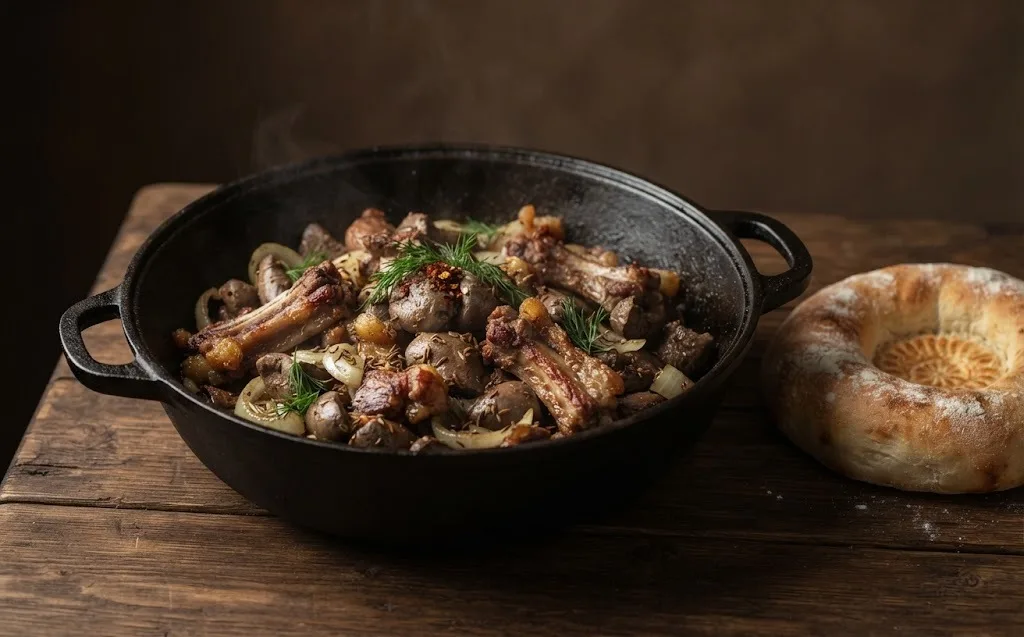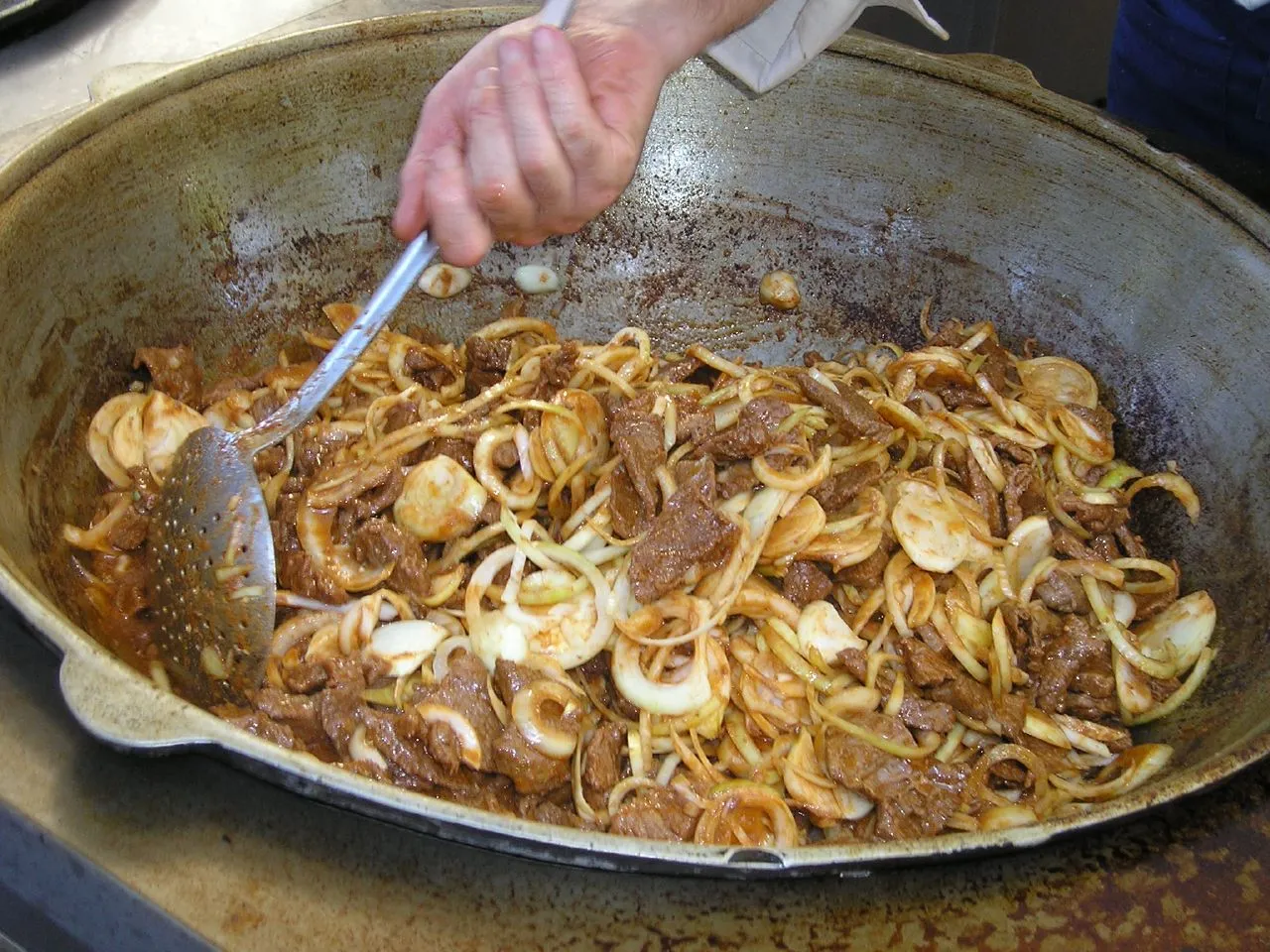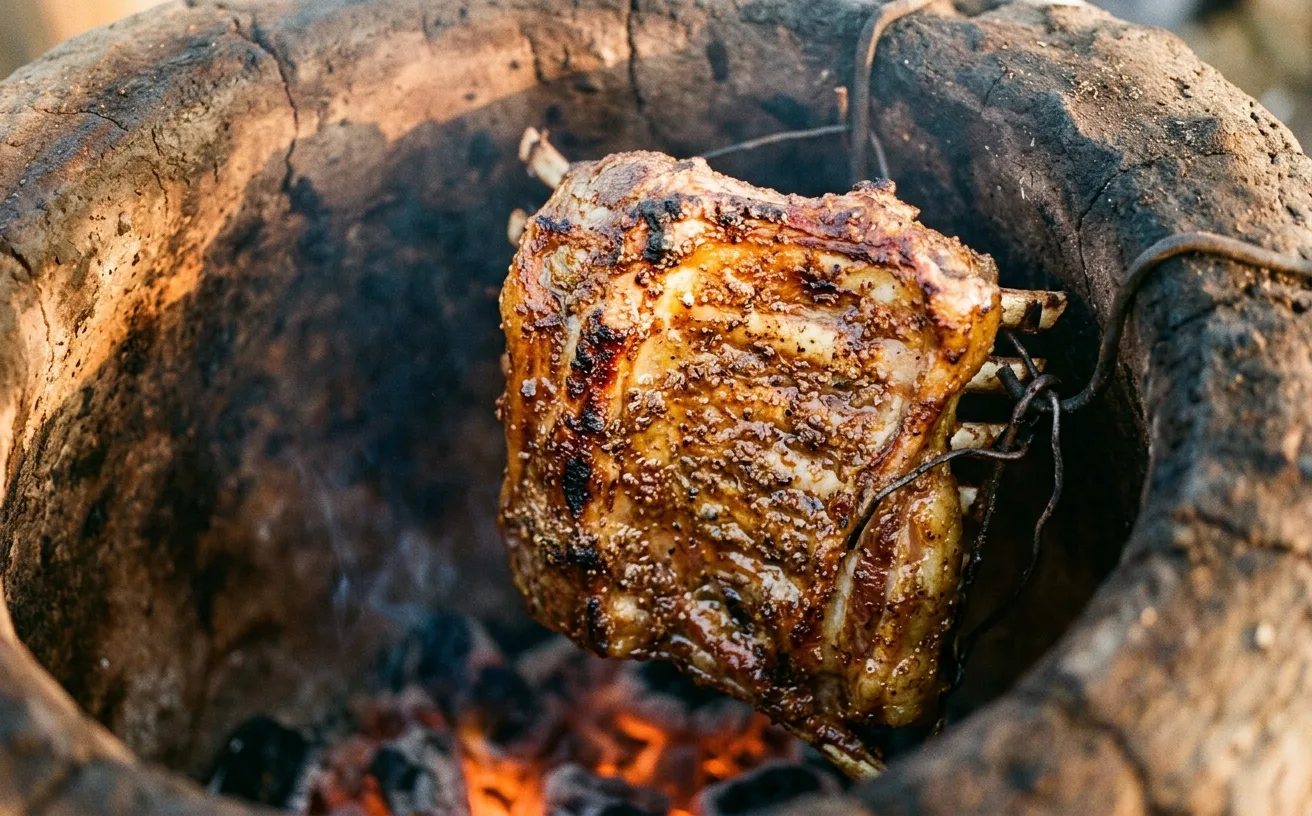
The Uyghur tandoor kebab: whole racks or legs of lamb rubbed with egg, flour, and spices, then roasted against the walls of a clay tonur oven until lacquered outside and juicy within. It is the oven-baked sibling of the Uyghur street chuan, sold hacked into pieces at Kashgar and Urumqi bazaars.
Also known as Uyghur tandoor lamb, kao quan yang, toghach kawap.
Reference video
Ingredients
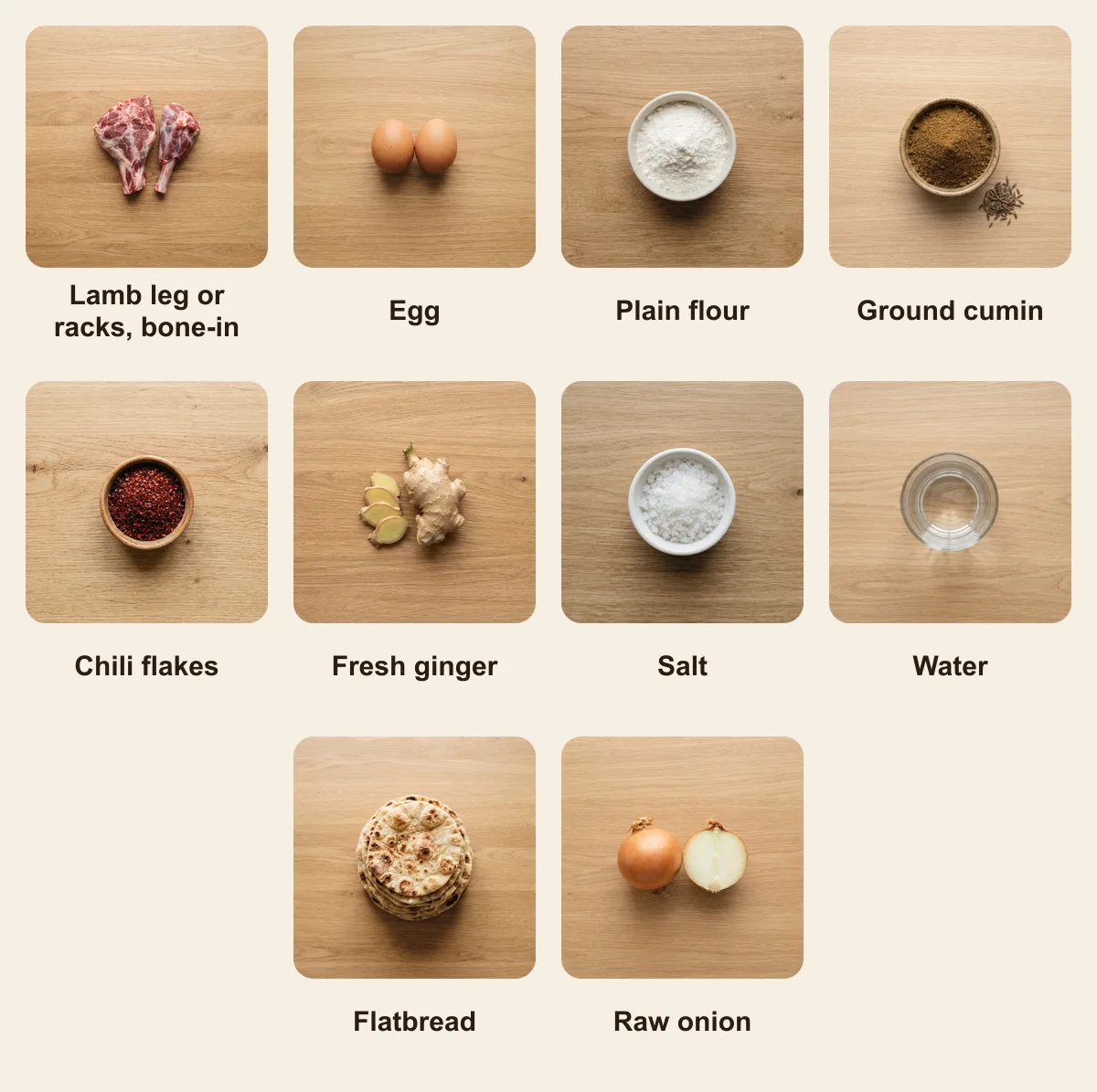
- 1.2 kg lamb leg or 2 racks, on the bone
- 1 egg
- 2 tbsp plain flour
- 1 tbsp ground cumin
- 1 tbsp coarse chili flakes
- 1 tbsp grated fresh ginger
- 2 tsp salt
- 2 tbsp water
- flatbread and raw onion, to serve
How to make it
- 1
Slash the lamb to the bone every 3 cm so heat and seasoning can reach inside.
- 2
Whisk the egg, flour, cumin, chili, ginger, salt and water into a thick slurry and paint it over every surface; rest 1 hour.
- 3
Roast on a rack at 200°C for 20 minutes to set the crust, then drop to 160°C for around 90 minutes more.
- 4
Rest 10 minutes under foil, then hack into pieces along the slashes.
- 5
Serve on flatbread with raw onion, cracked golden crust facing up.
Pro tip: The egg-and-flour shell is the home stand-in for the tonur's clay wall — it traps steam inside the leg, so never trim it off before resting.
Where Tonur Kawap comes from
It is the oven-baked sibling of the chuan — the small cumin-dusted skewers that Xinjiang has exported across China. Where the chuan is a snack, tonur kawap is a meal and a commitment: the oven takes time to reach temperature and the lamb takes an hour or more, so a stall commits to a batch and sells until it is gone.
How Tonur Kawap is cooked
What distinguishes the Uyghur method is the coating. The lamb is rubbed with a batter of egg, flour and spices before it goes into the oven, and that coating sets into a thin lacquered shell that seals the surface. It is the reason tonur kawap is juicy in a way that plain tandoor-roasted lamb is not.
The meat is then pressed against or hung inside the hot clay wall of the tonur and the oven is covered. Radiant heat from the clay does the cooking, at high temperature at first and falling as the session goes on. The coating browns and hardens, the fat renders beneath it, and the meat effectively steams inside its own shell.
Ingredients and shopping
A rack or a bone-in leg of lamb. The cut must be substantial — this method does not suit small pieces, which cook through before the coating sets. Fat should be left on generously; it renders under the shell and bastes from within.
The coating is egg, flour, salt, cumin, chilli and often a little turmeric or paprika for colour, mixed to a thick paste. In a domestic oven, the same coating on a bone-in leg roasted at 200°C for the first twenty minutes and then 160°C for an hour and a half gets remarkably close — the shell is the transferable part of the technique.
How Tonur Kawap is served
Hacked into pieces with a cleaver and served by weight on paper, with cumin and chilli sprinkled over, raw onion and nan bread. Uyghur black tea or a bowl of laghman broth alongside. It is eaten with the hands, standing at the stall or at a low table beside it.
Common mistakes
Skipping the egg-and-flour coating
It is not a garnish. The shell seals the surface and is why the meat stays juicy through a long, hot roast.
Small cuts
The method needs a rack or a leg. Small pieces overcook before the coating has set.
Trimming the fat
It renders under the shell and bastes the meat from inside. Leave it on.
Constant high heat throughout
The tonur's heat falls as the session goes on. In an oven, start hot to set the shell and then drop the temperature.
Tonur Kawap: questions and answers
What is a tonur?
The Uyghur clay oven, the same family of oven as the tandir and tandoor, used for both nan bread and roasted meat.
Why coat the lamb in egg and flour?
The coating sets into a thin lacquered shell that seals the surface, keeping the meat juicy through a long roast in a very hot oven.
Can I make tonur kawap in a normal oven?
Reasonably well. Coat a bone-in leg, roast at 200°C for twenty minutes to set the shell, then 160°C for around ninety minutes.
How is it different from chuanr?
Chuanr are small lamb skewers grilled over charcoal in minutes. Tonur kawap is a whole rack or leg roasted in a clay oven for over an hour.
Sources and further reading
- Uyghur cuisine — Wikipedia