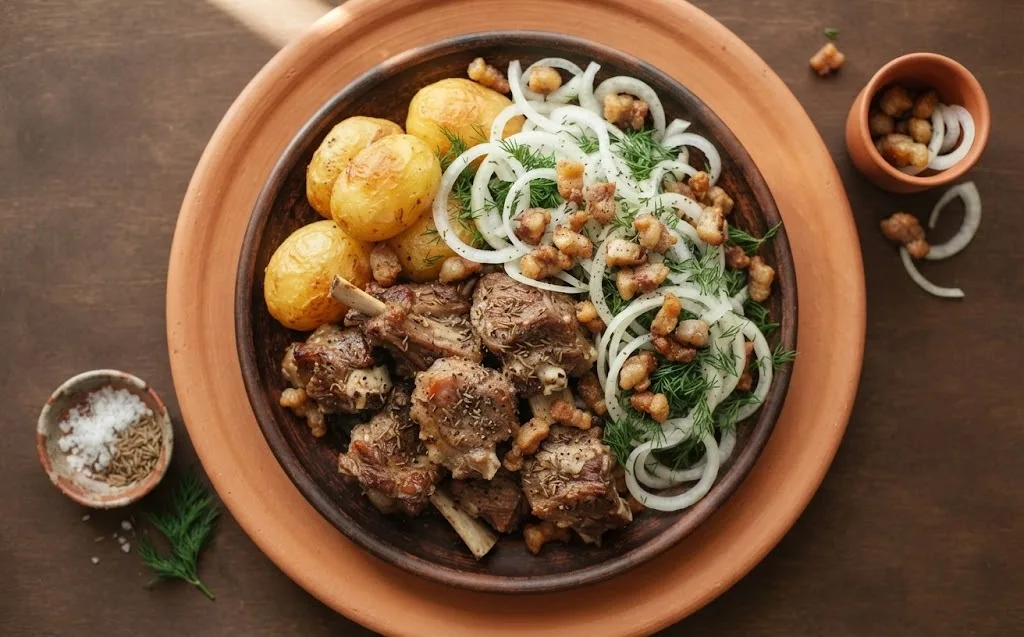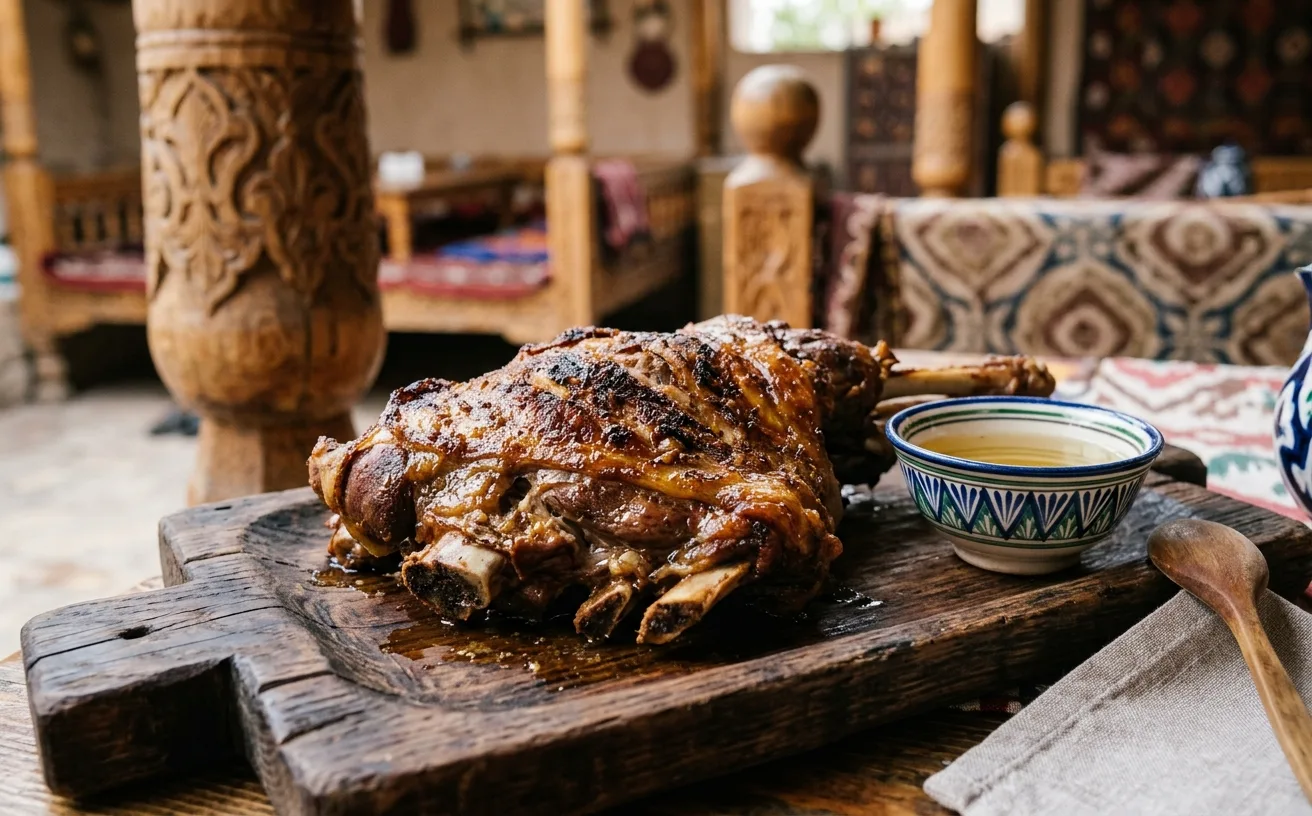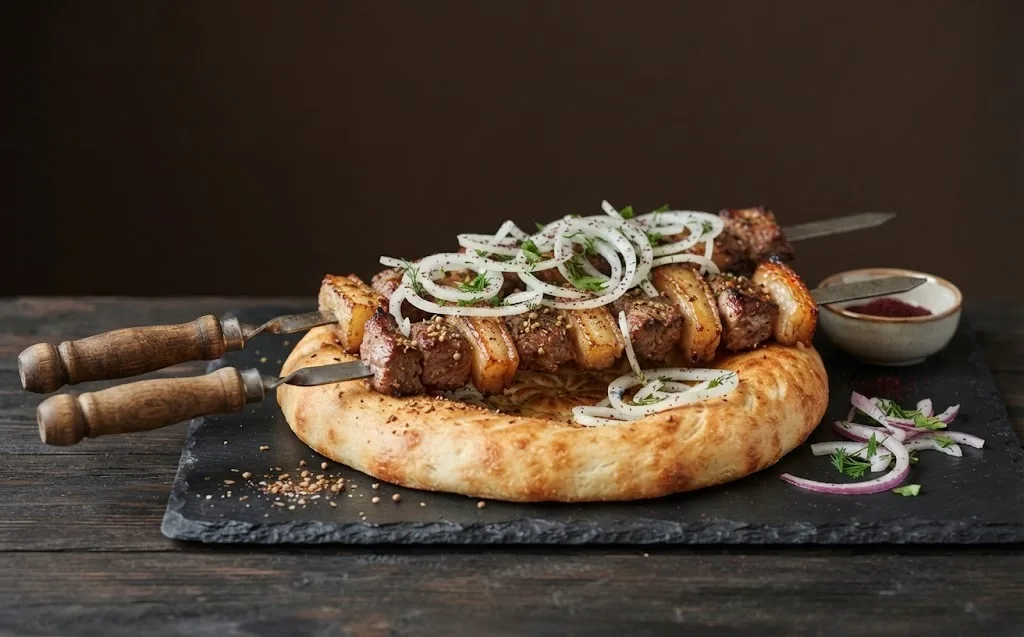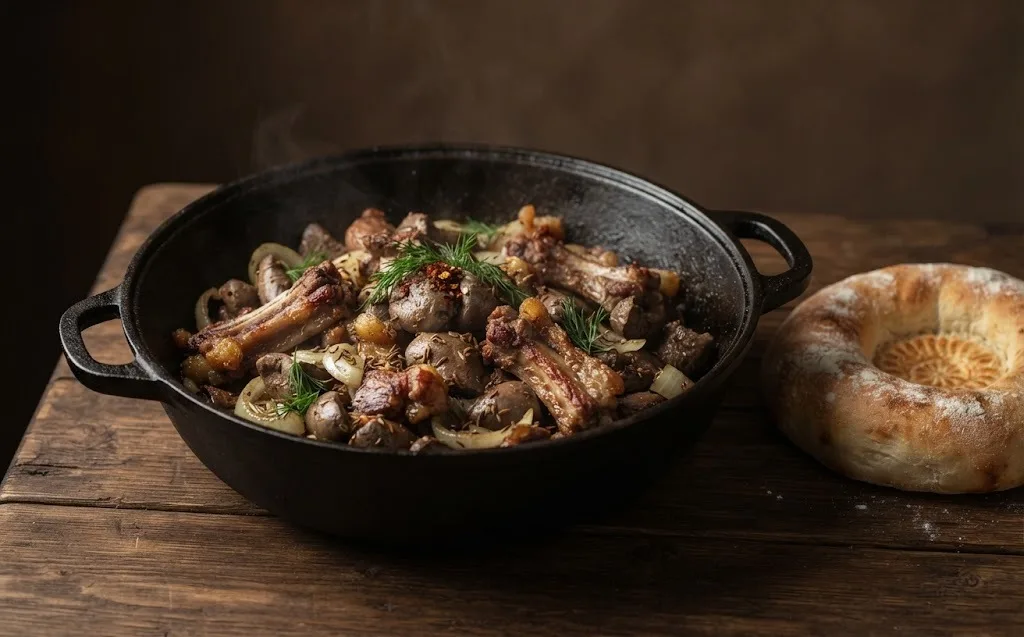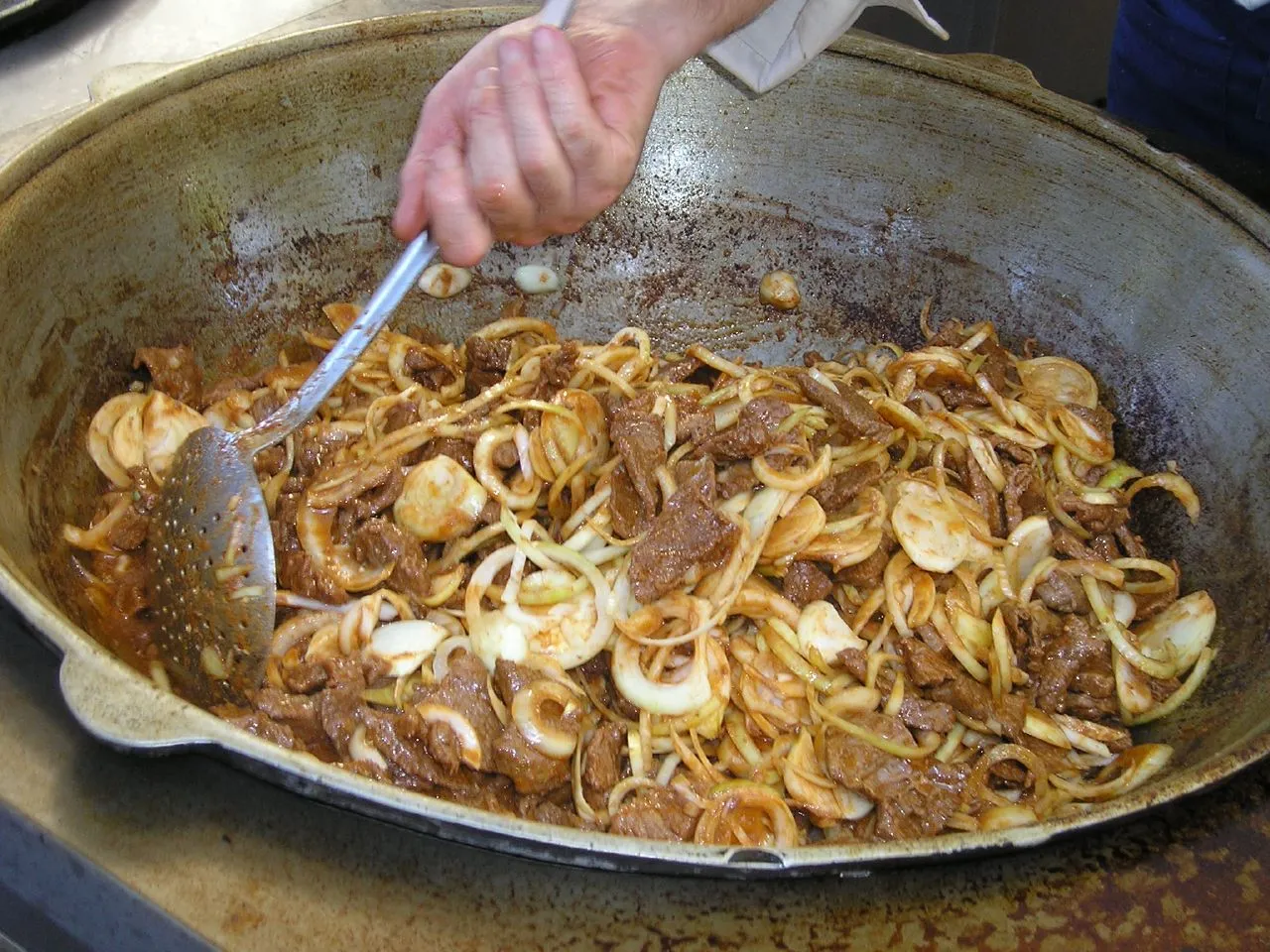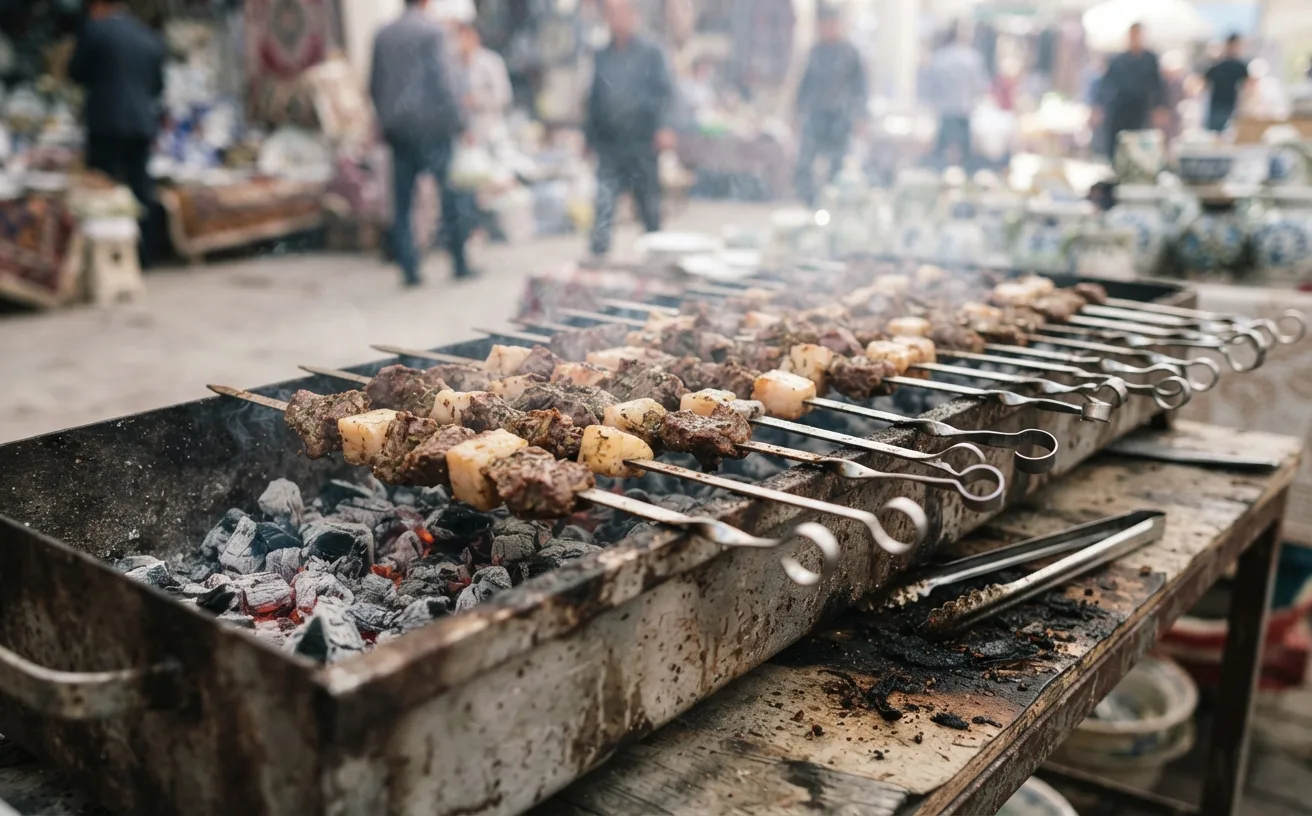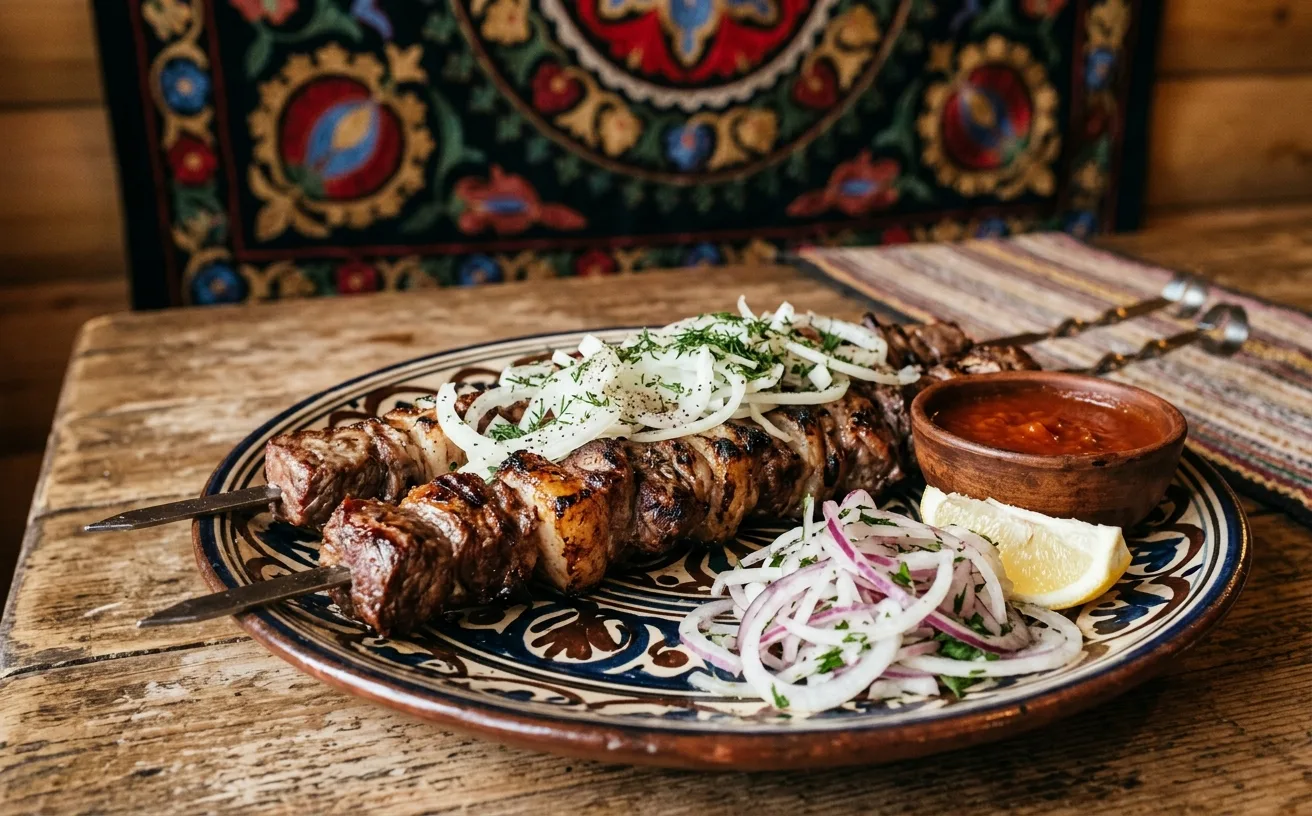
Kazakhstan's steppe rendition of the skewer, distinctive for its frequent use of horse meat or fatty mutton marinated in kefir or mineral water with onion and black pepper, traditionally grilled over the dense wood of the saxaul shrub, whose sale has been banned in Kazakhstan since 2017. Roadside shashlychnaya stands along the steppe highways serve it with vinegared onions and lepyoshka bread.
Also known as shashlyk po-kazakhski, horse meat shashlik, Kazakh kabob.
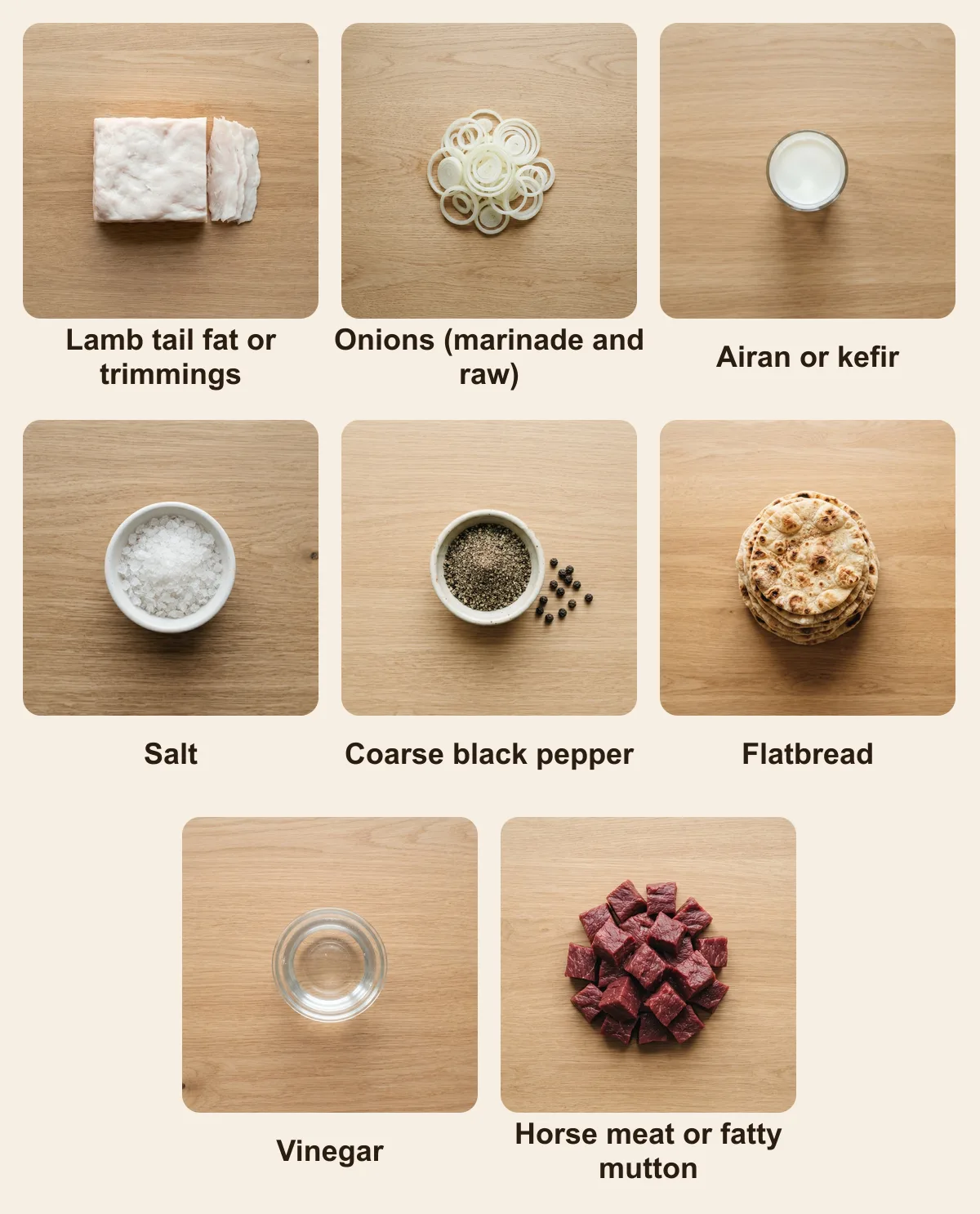
Ingredients
- 700 g horse meat or fatty mutton, in 3 cm cubes (cut horse a little smaller)
- 100 g lamb tail fat or fatty trimmings, sliced
- 2 onions, in thick rings
- 200 ml airan or kefir
- 1.5 tsp salt
- 2 tsp coarsely ground black pepper
- flatbread and thinly sliced raw onion (splashed with vinegar if you like), to serve
How to make it
- 1
Layer the meat and onion rings in a bowl with salt and plenty of black pepper, pour over the airan and marinate 8 hours in the fridge.
- 2
Alternate meat cubes with slices of fat on long flat skewers, ending with meat.
- 3
Grill over hardwood coals past their flame stage, 10-12 minutes, turning on all four sides.
- 4
Rest 3 minutes and serve steppe-style with flatbread, raw onion and strong black tea.
Pro tip: Horse is far leaner than lamb — without the interleaved fat it dries in minutes, so if the butcher has no fat, switch cuts rather than skip it.
Where Kazakh Shashlyk comes from
Shashlyk is the marinated meat skewer of the former Soviet world — cubes soaked for hours, threaded onto long flat skewers and grilled over the open coals of a mangal — and the word runs back through Russian to the Turkic şiş, a spit. Kazakh shashlyk is the steppe's version of that shared dish, and two things make it its own: horse meat, which Kazakhs eat as a matter of course and prize highly, and saxaul, the dense desert shrub whose wood traditionally fed the steppe's grills (its sale has been banned in Kazakhstan since 2017).
Roadside shashlychnaya stands punctuate the long highways between Kazakh cities, and they are the country's motorway service station — a grill, a few tables, vinegared onions and lepyoshka bread. The distances involved mean these stops are genuinely part of the culture rather than an afterthought.
Horse meat and kefir: the steppe version explained
Horse meat sets Kazakh Shashlyk apart. Leaner and denser than lamb, it is cut a little smaller, threaded with slices of fat so it does not dry out, and marinated overnight in kefir or airan with onion, salt and lots of black pepper. Uzbek Shashlik works with lamb in a vinegar marinade heavy with cumin and coriander, and vinegar with onion is also the Soviet canteen classic for Shashlik. Pick fatty mutton instead of horse and the Kazakh method moves closer to the Uzbek one. Saxaul wood, the traditional fuel, burns hotter than charcoal, so skewers were set higher over it; its sale has been banned in Kazakhstan since 2017. Lepyoshka, vinegared onion rings dusted with pepper and black tea with milk are the usual companions.
Compare: Uzbek Shashlik · Shashlik
How Kazakh Shashlyk is cooked
Horse meat behaves differently from lamb and the technique adapts. It is leaner, denser and sweeter, and it benefits from a longer, gentler marinade — kefir or mineral water rather than vinegar — and from being cut a little smaller. Fatty mutton with tail fat is the alternative and is treated more like Uzbek shashlik.
Saxaul wood was traditionally the other variable, though its sale has been banned in Kazakhstan since 2017. It burns hotter than charcoal and holds that heat, which meant the coals had to settle longer before grilling and the skewers sat slightly higher than they would over briquettes. The result was a harder sear in less time, and a cook who was not paying attention lost the meat quickly.
Ingredients and shopping
Horse meat is sold specifically for shashlyk in Kazakhstan; outside the country it is available in parts of Europe and Central Asia and is worth trying if you can source it legally and safely. Fatty mutton with dumba is the standard alternative and needs no apology.
Kefir marinade with onion, black pepper and salt is the Kazakh idiom, left overnight; it tenderises gently and suits the leanness of horse meat. Mineral water is the lighter alternative. Vinegar works but is more associated with the Russian tradition than the Kazakh one.
How Kazakh Shashlyk is served
With lepyoshka bread, a mound of onion rings soaked in vinegar and dusted with black pepper, tomatoes and fresh herbs. Black tea with milk — the Kazakh way — or kumis at a celebration. At a roadside stand it is served on the skewer with bread and nothing else.
Common mistakes
Treating horse meat like lamb
It is leaner and denser. Cut it smaller, marinate it longer in kefir rather than vinegar, and pull it earlier.
Grilling before the coals have settled
Let the coals burn down properly or the outside is black before the inside is warm.
Vinegar overnight
Long acidic marinades damage the surface. For an overnight soak use kefir or mineral water.
Skipping the onions
Thinly sliced raw onion, vinegared or not, is the standard accompaniment, and its bite is what balances a fatty mutton version.
Kazakh Shashlyk: questions and answers
Is Kazakh shashlyk made with horse meat?
Frequently, yes. Horse is a prized meat in Kazakhstan and is commonly used for shashlyk, alongside fatty mutton.
How is horse meat different to cook?
Leaner, denser and slightly sweet. It needs smaller pieces, a gentler dairy-based marinade and a shorter time over the fire.
Sources and further reading
- Kazakh cuisine — Wikipedia
- Haloxylon (saxaul) — Wikipedia
- Что в Казахстане нанизывают на шампур? — Inbusiness.kz
- Shashlik on Kirova — Andrew Zimmern