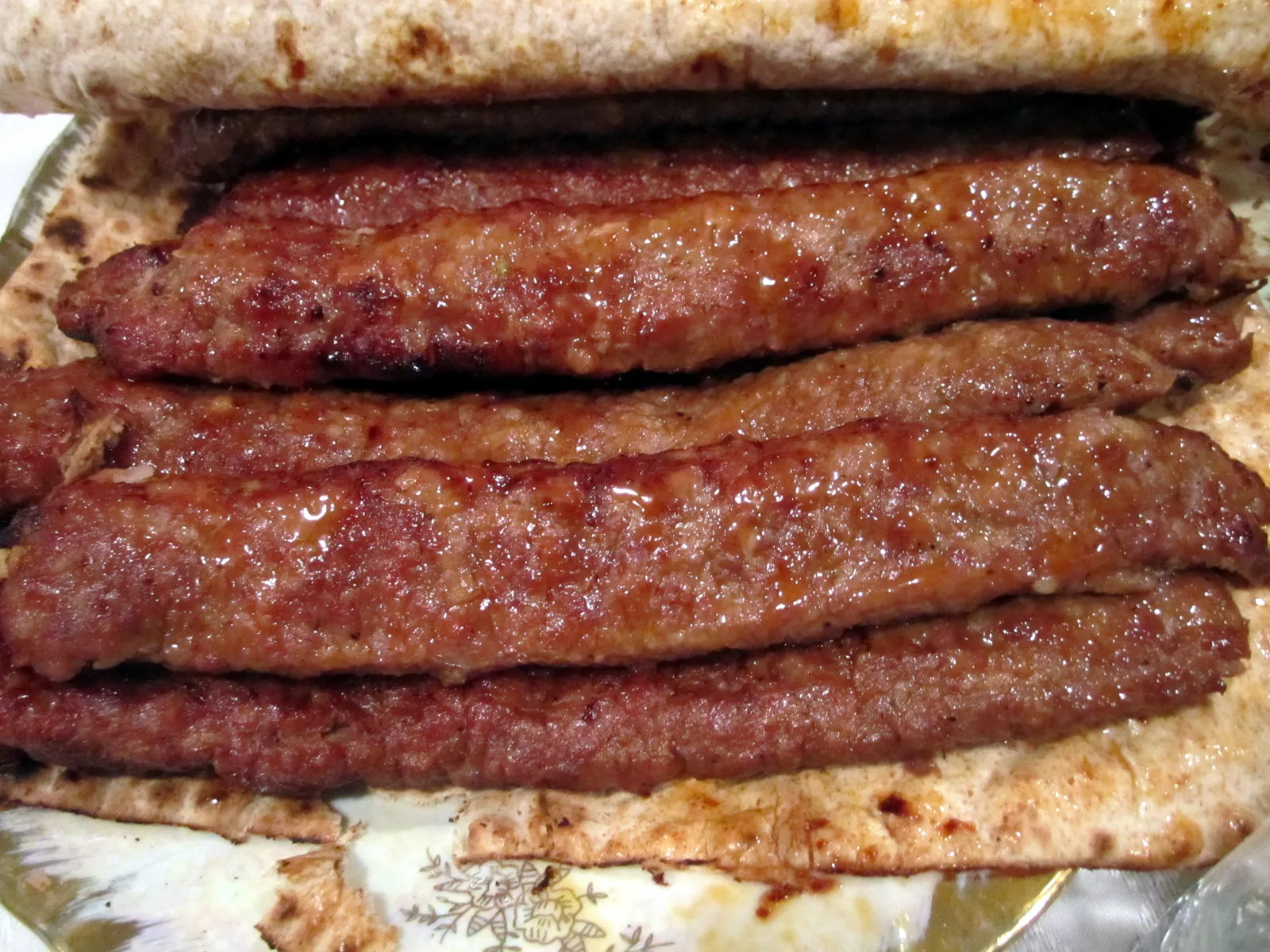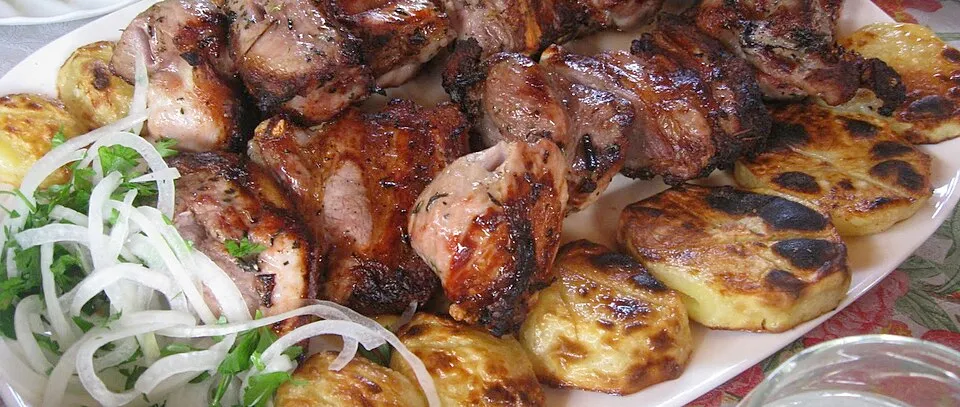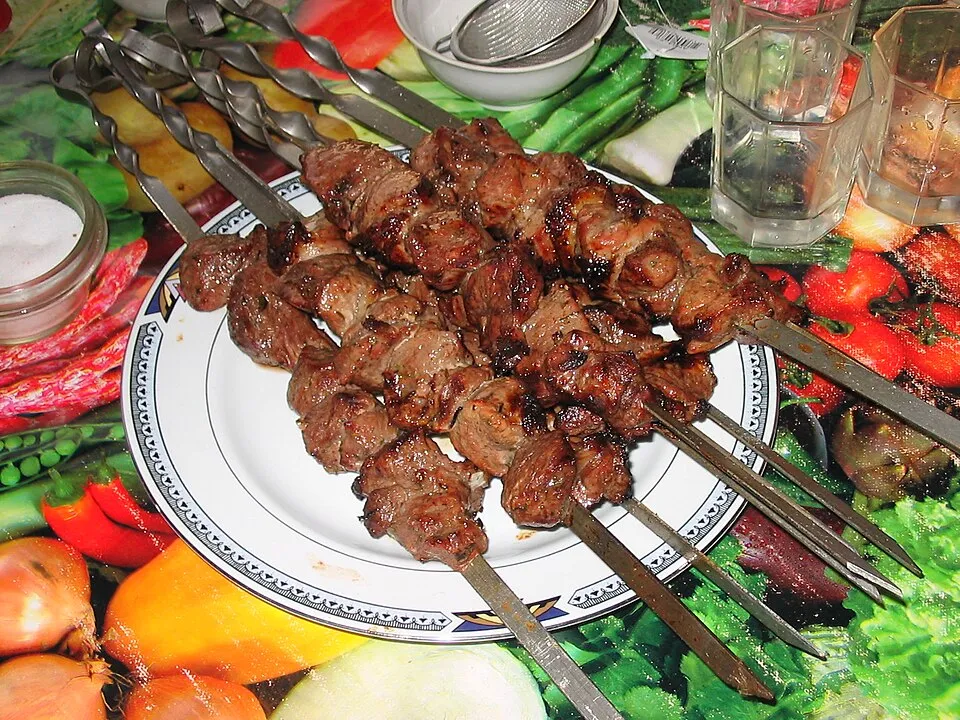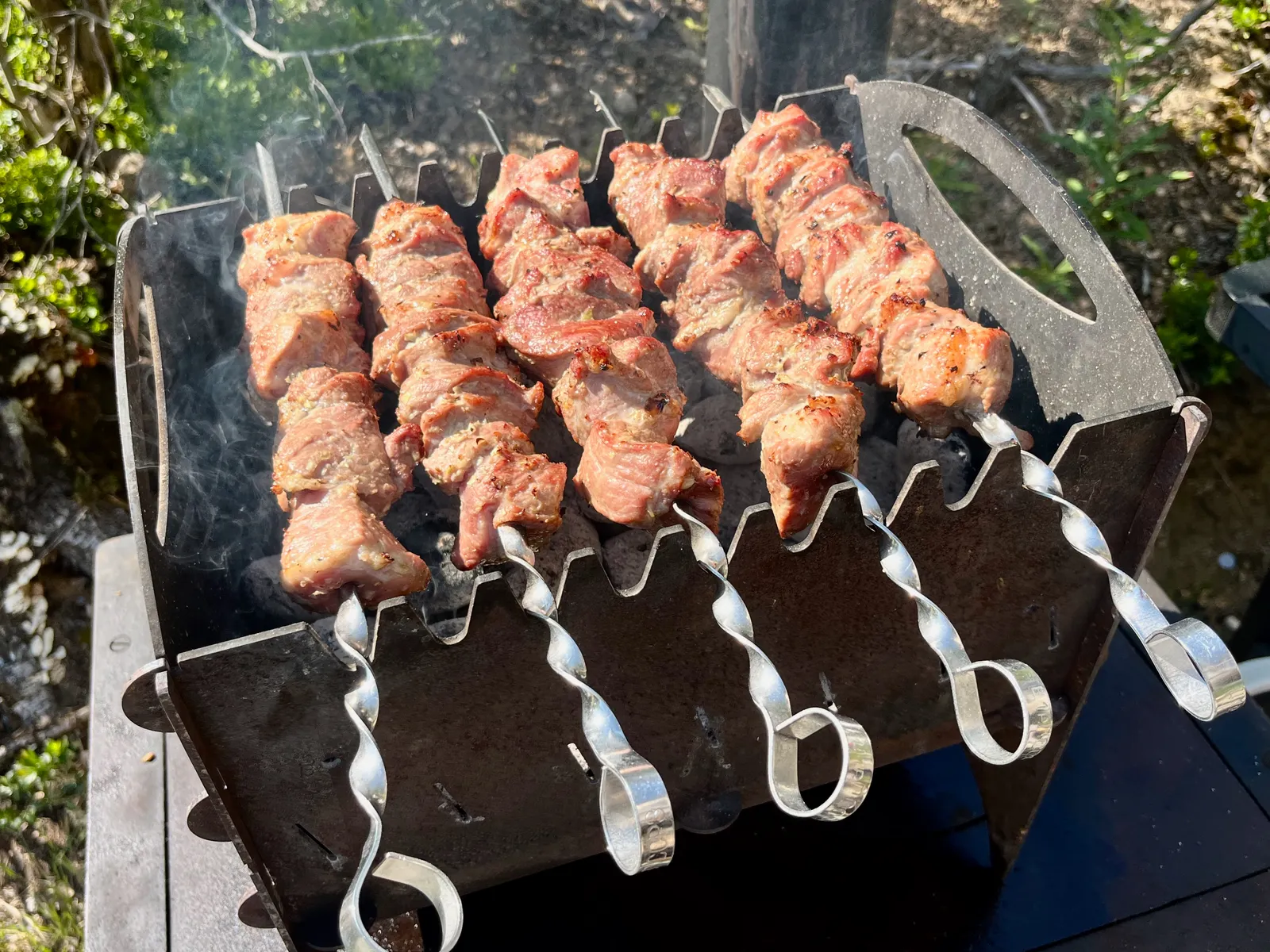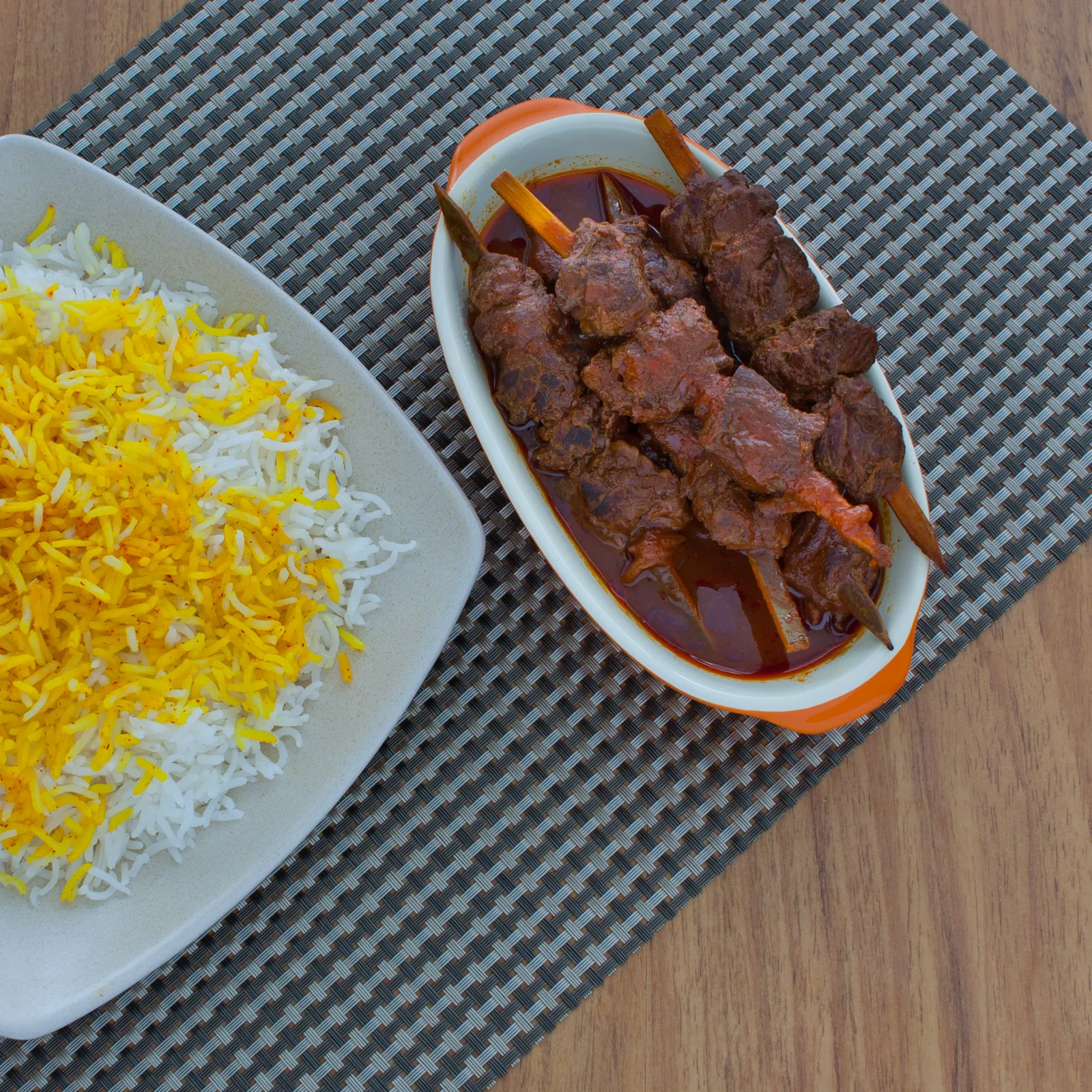
An old Qajar-era dish of marinated lamb chunks threaded onto small wooden skewers and slowly braised in a pan with onion and tomato instead of grilled. The skewers go into the pot — a kebab in form that cooks like a stew.
Also known as kabab husseini, kabab-e hoseini.
Reference video
Ingredients
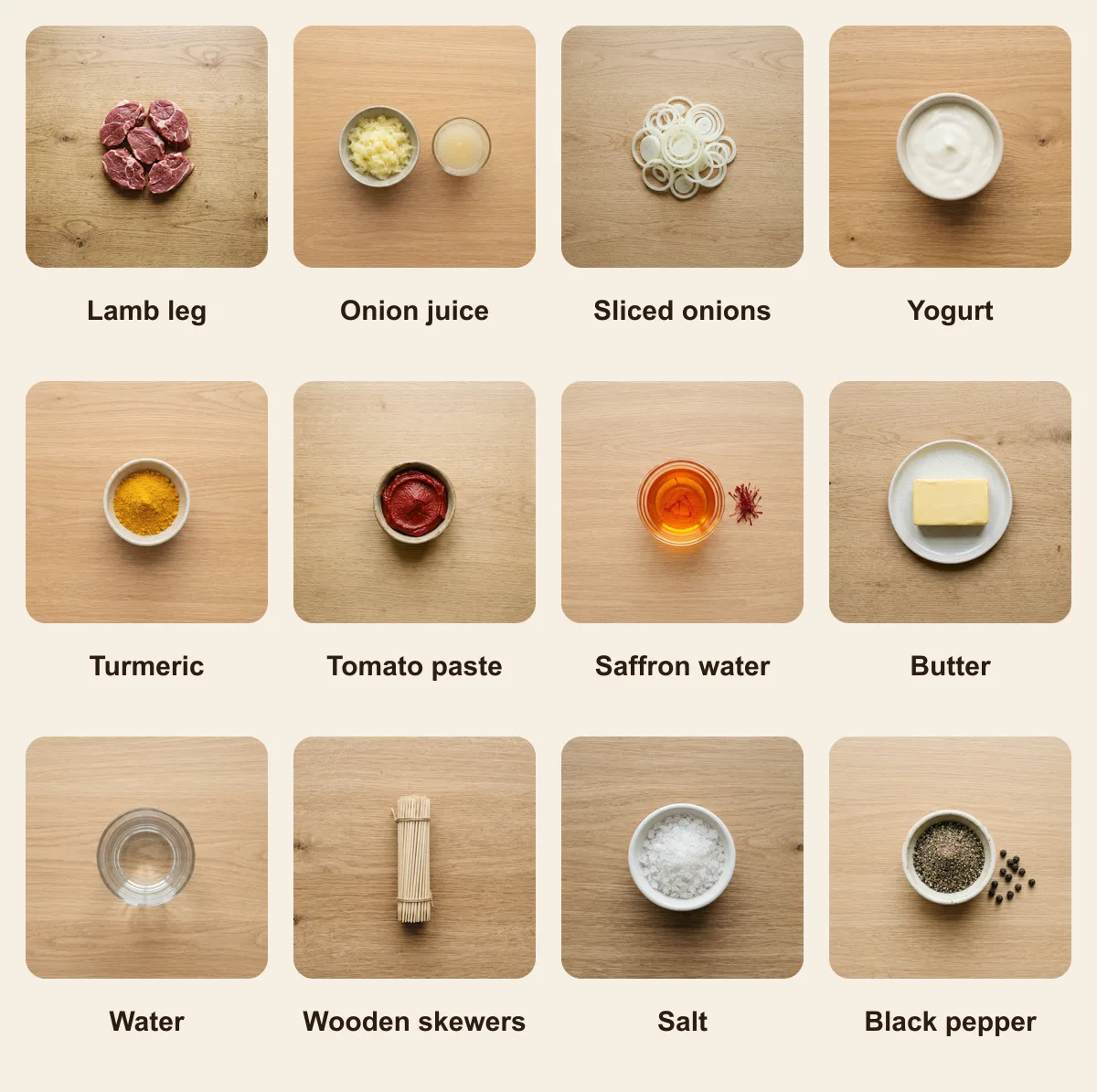
- 700 g lamb shoulder or neck fillet, in 2 cm chunks
- 1 onion, juiced, plus 2 onions, sliced
- 40 g yogurt
- 1 tsp turmeric
- 30 g tomato paste
- 0.2 g saffron, bloomed in 20 ml hot water
- 30 g butter
- 150 ml water
- 8 short wooden skewers, soaked
- 1.5 tsp salt, 0.5 tsp pepper
How to make it
- 1
Marinate the lamb 2 h in onion juice and yogurt, then thread onto the small soaked skewers.
- 2
Brown the loaded skewers on all sides in the butter in a wide saute pan and set aside.
- 3
Soften the sliced onions in the same pan with turmeric, then stir in tomato paste, water, salt and pepper.
- 4
Lay the skewers back in, cover, and braise at a murmur for 45-60 min, turning once, until fork-soft.
- 5
Add the saffron water, reduce uncovered to a clinging sauce, and serve the skewers whole over rice or bread.
Pro tip: Keeping the meat on its skewer through the braise is the Qajar trick; the chunks stay intact and lift out as neat, sauce-glazed batons.
Where Kabab Hoseini comes from
It is home cooking with a formal air — the skewers make it look like a restaurant dish while requiring no grill — and it appears in Iranian family repertoires more than on menus. Like several dishes in this atlas, it exists at the point where the word kebab still meant cooked meat rather than grilled meat.
How Kabab Hoseini is cooked
The lamb is cut small, marinated for a couple of hours in onion juice and a little yogurt, and threaded onto short wooden skewers. Those skewers are then browned in a pan — this step is worth doing properly, because it is the only browning the dish gets — and then the onions, tomato and a little water go in around them.
From there it is a covered braise of forty-five minutes to an hour at a low simmer. The skewers stay in throughout, which keeps the pieces aligned and stops them breaking up in the sauce. The finished dish should have a thick, glossy sauce rather than a thin gravy, so the lid comes off for the last ten minutes if needed.
Ingredients and shopping
Lamb shoulder or neck fillet, cut into pieces of about two centimetres — small enough to sit on a short skewer and to become tender in an hour. Lean leg meat will be dry. Soak the wooden skewers first so they do not splinter, and cut them to fit the pan.
Saffron, bloomed, is what makes this dish read as Persian rather than generic. Turmeric goes in at the browning stage with the onions. Tomato can be fresh or paste; if paste, fry it briefly with the onions to lose its raw edge before the liquid goes in.
How Kabab Hoseini is served
Over chelow rice with the sauce spooned around, with the skewers left in and lifted onto the plate whole. Pickled vegetables (torshi) and a plate of herbs on the side, flatbread for the sauce. It is a winter dish in feel, and it improves overnight.
Common mistakes
Skipping the browning
It is the only colour and depth the dish gets. Brown the loaded skewers properly before the liquid goes in.
Too much liquid
This is a braise, not a soup. Enough to come halfway up the skewers is plenty.
Removing the skewers before serving
They hold the pieces together in the sauce and are part of the presentation. Serve them in.
Lean cuts
Shoulder or neck. Leg goes dry over an hour of simmering.
Kabab Hoseini: questions and answers
Is kabab hoseini grilled?
No. The meat is threaded onto small wooden skewers, browned, then braised in a covered pan with onion and tomato. The skewers stay in throughout.
Why cook a kebab in a pan?
The word kebab originally covered cooked meat in general. Kabab hoseini is one of several dishes that preserve that older, broader sense.
What cut of lamb should I use?
Shoulder or neck fillet in small pieces. They have the connective tissue that turns tender over a slow braise.
Do I need to soak the wooden skewers?
Yes, briefly, so they do not splinter or absorb too much of the sauce.
Sources and further reading
- Iranian Recipes: Kabab Hosseini — Iran Chamber Society
- Kabab Hosseini — Uppersia Travel Company (Shiraz)
- List of kebabs — Wikipedia