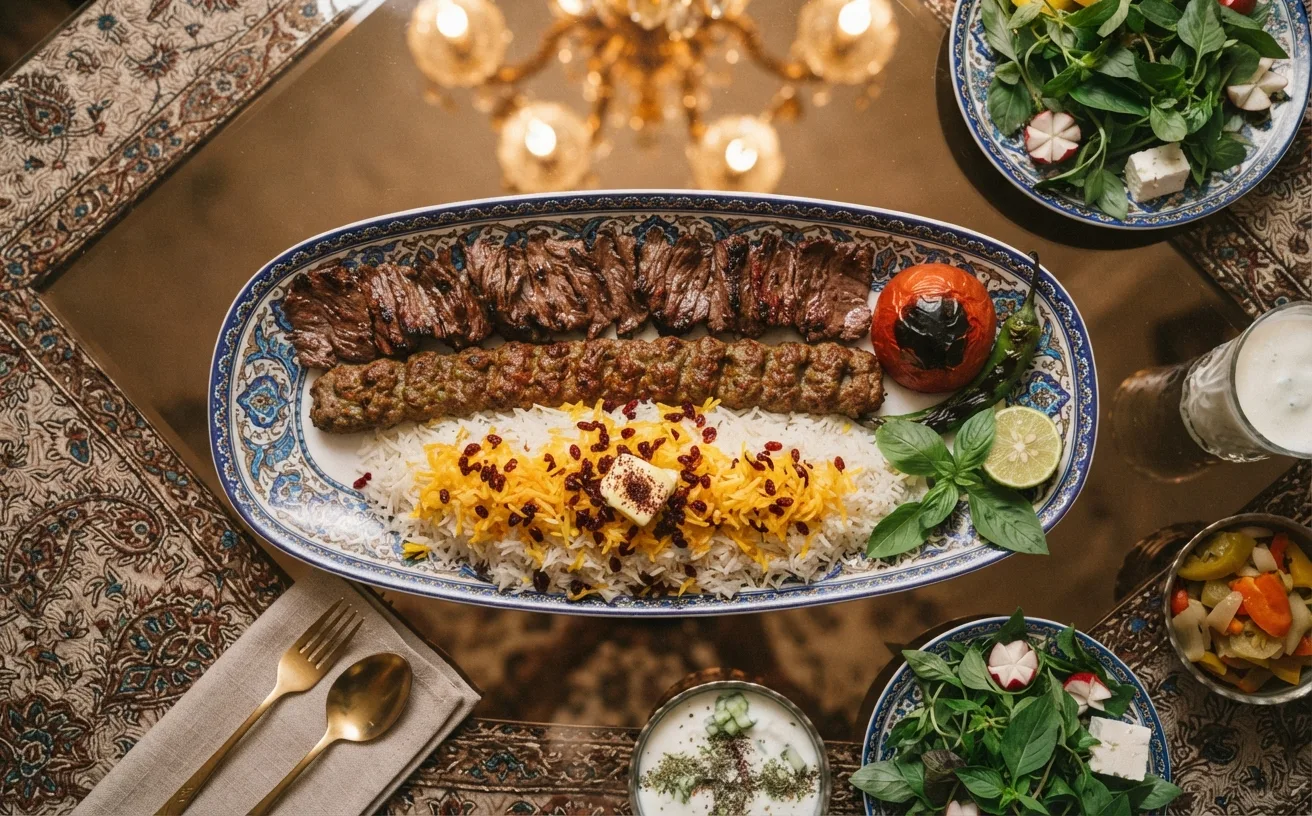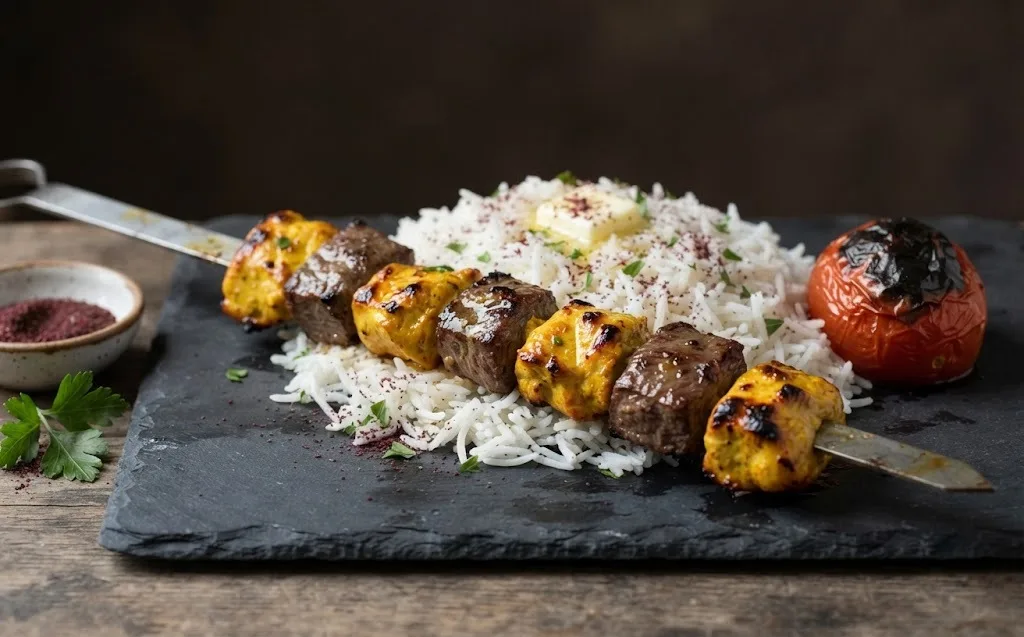
A single skewer alternating cubes of saffron chicken and lamb fillet, named for the Bakhtiari nomads of the Zagros mountains. The point is contrast: two marinades, two meats, one skewer.
Also known as bakhtiari kabab, kabab-e bakhtiari, bakhtiyari kebab.
Reference video
Ingredients
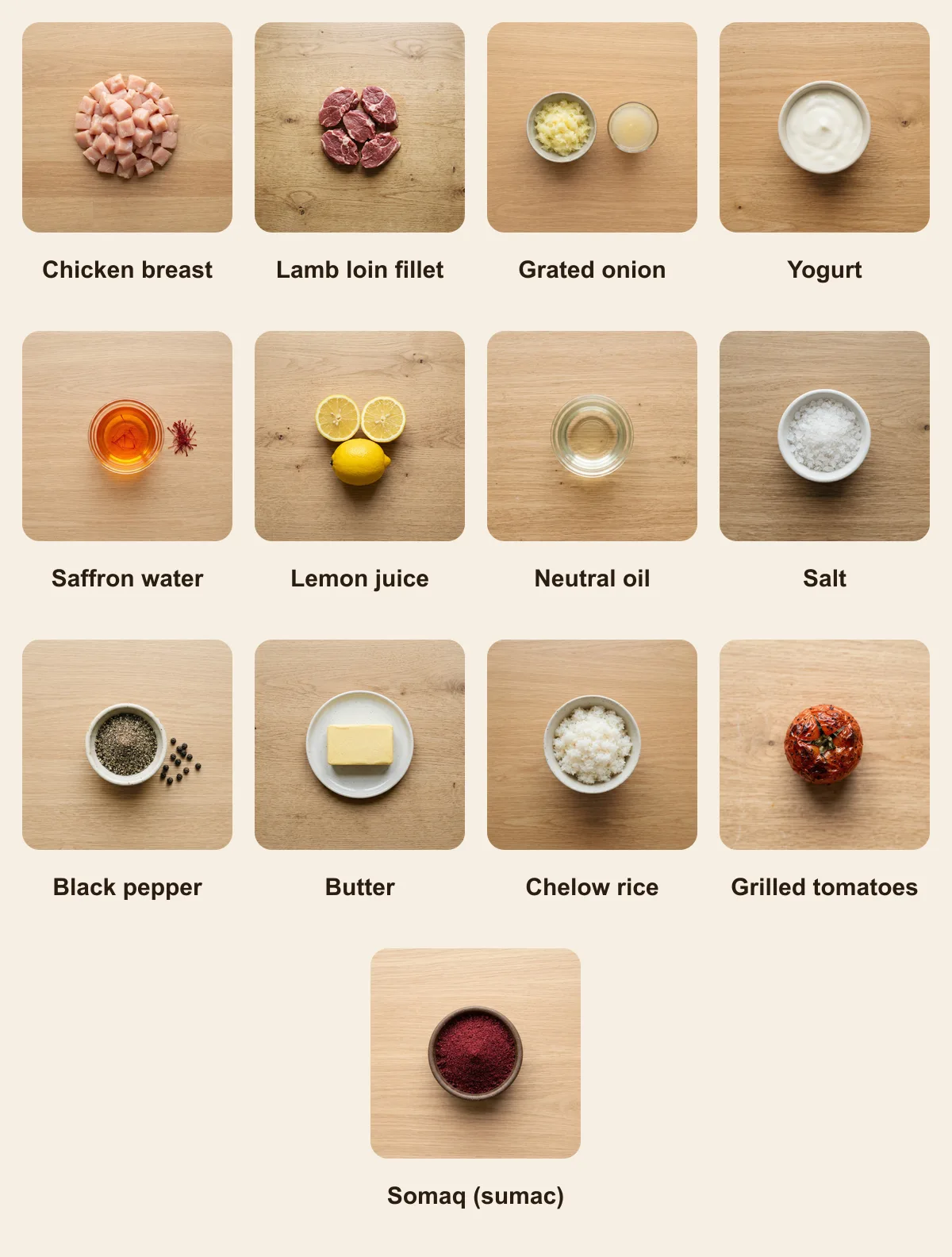
- 400 g chicken breast, in 2.5 cm cubes
- 400 g lamb loin fillet, in 3 cm cubes
- 1 onion, grated
- 100 g yogurt
- 0.4 g saffron, ground and steeped in 30 ml hot water
- 45 ml lemon juice
- 45 ml neutral oil
- 1 tsp salt, 0.5 tsp black pepper
- 30 g melted butter, for basting
- Chelow rice, grilled tomatoes and somaq, to serve
How to make it
- 1
Marinate the chicken in yogurt, half the saffron water, lemon, half the onion and half the salt; give the lamb the remaining onion, the other half of the saffron water, oil and pepper. Refrigerate both 6 hours.
- 2
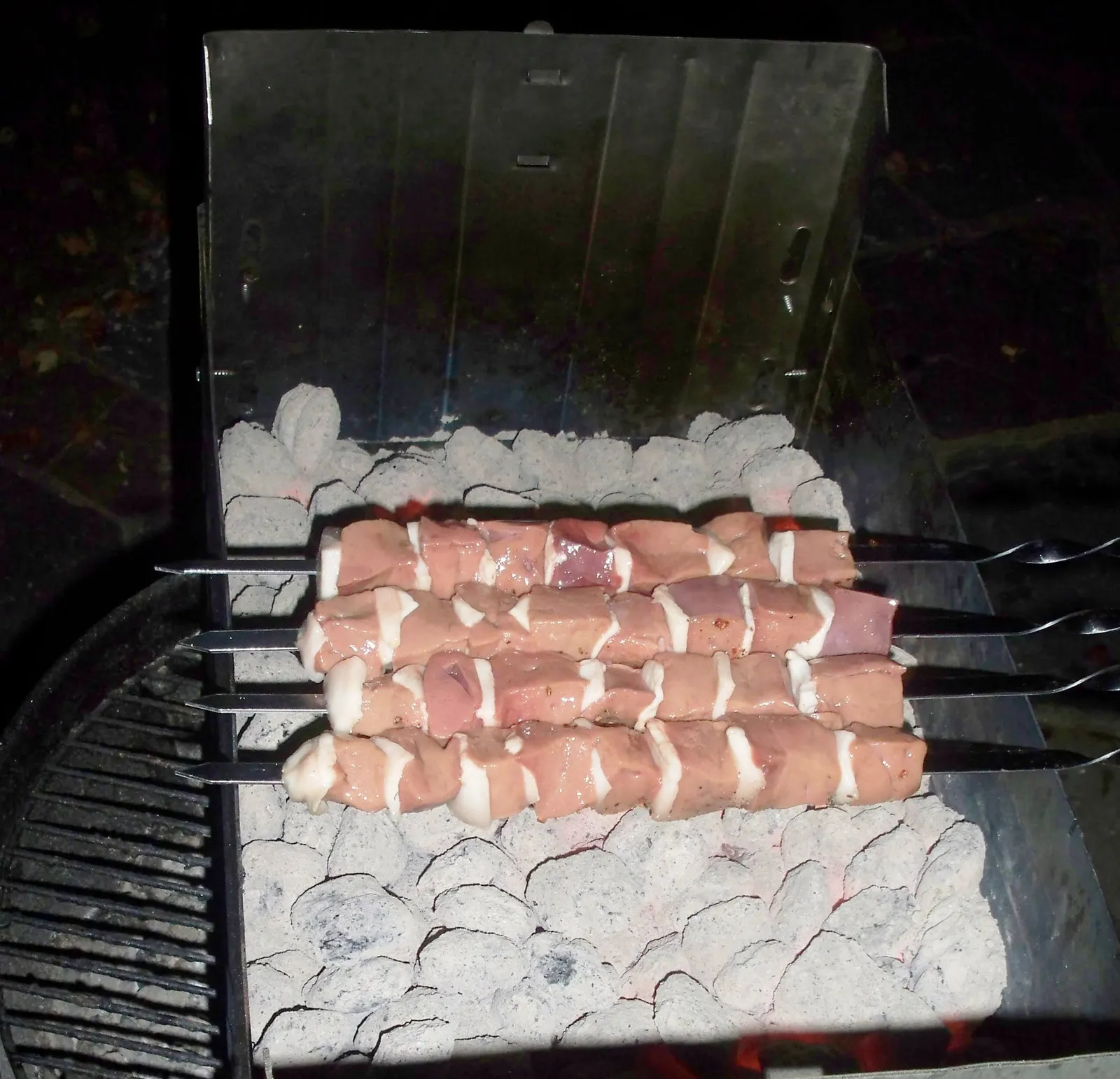
Thread one skewer per person, strictly alternating chicken and lamb.
- 3
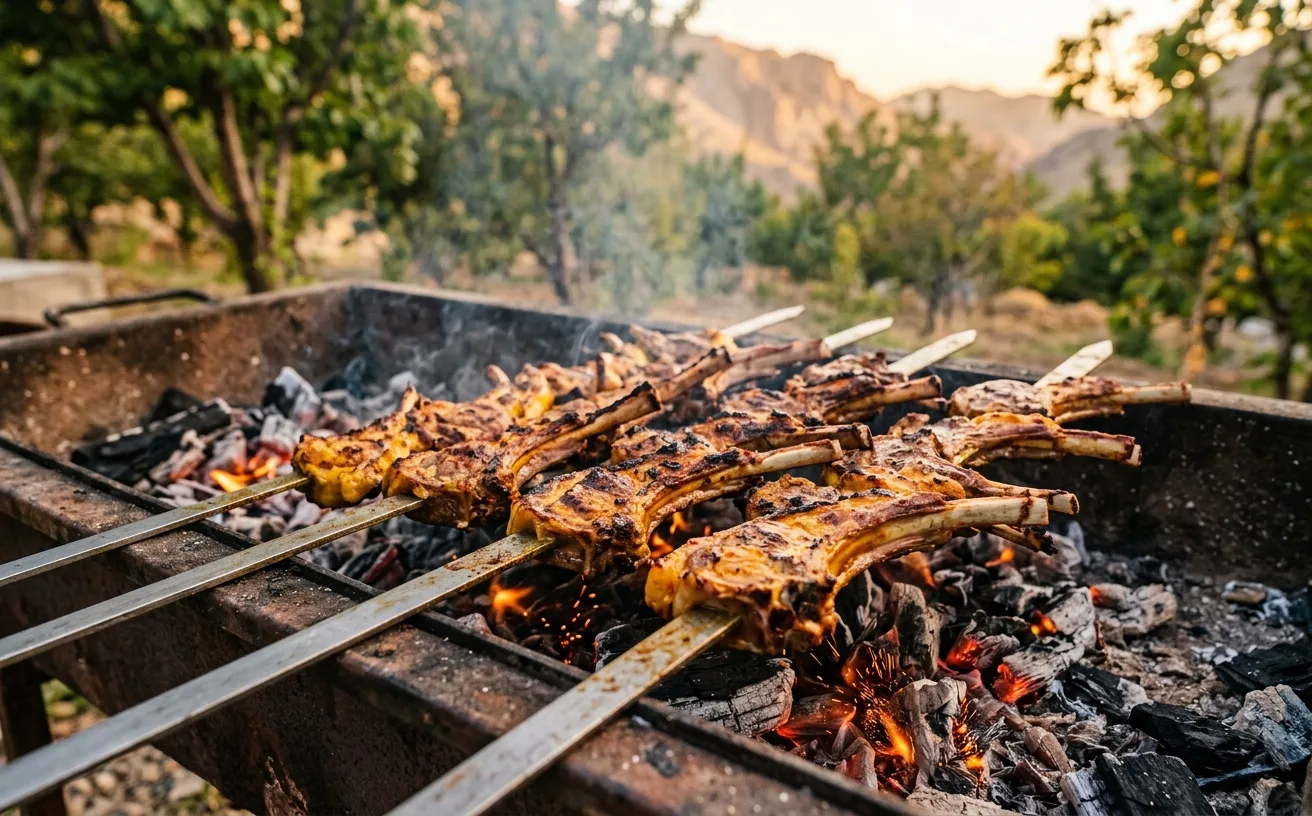
Grill over hot coals, turning every minute for 10-12 minutes so neither meat gets a long blast.
- 4
Brush with the melted butter in the last 2 minutes and salt the lamb with the remaining salt as it comes off.
- 5
Serve laid across chelow with a charred tomato and a shake of somaq.
Pro tip: Cut the chicken slightly smaller than the lamb. Breast must cook through while lamb fillet is best still faintly pink, and the size handicap lands both at their perfect point together.
Where Kabab Bakhtiari comes from
Kabab bakhtiari is named for the Bakhtiari, one of Iran's great nomadic confederations, who move their herds between winter pastures in Khuzestan and summer grazing high in the Zagros. The association is romantic rather than literal — this is a restaurant dish — but it points at something real: a people who kept both sheep and poultry and had no reason to choose between them.
On an Iranian menu it sits between the two classics. Barg is lamb or beef fillet alone; joojeh is saffron chicken alone; bakhtiari is one skewer carrying both. It is the order for someone who cannot decide, and Iranian menus present it without embarrassment as exactly that.
How Kabab Bakhtiari is cooked
Two meats, two marinades, one skewer — and that is the entire technical problem. Chicken takes saffron, onion, lemon and yoghurt; lamb fillet takes onion, saffron, a little neutral oil and black pepper, without acid. They are marinated separately, in separate bowls, and only meet when they are threaded alternately.
The cook then has to manage two cooking rates on one piece of metal. The practical answer is to cut the chicken slightly smaller than the lamb and to keep the skewer moving, turning it frequently over an even bed of coals rather than parking it. Basting with melted butter in the last two minutes serves both meats at once.
Ingredients and shopping
Chicken breast rather than thigh, and lamb fillet or a well-trimmed piece of loin rather than shoulder — this is a quick-cooking skewer and both cuts must be tender from the start. Cubes of around three centimetres, with the chicken cut a fraction smaller so it finishes with the lamb.
Saffron must be bloomed properly: ground with a pinch of sugar or salt in a mortar, then steeped in a little hot water for at least ten minutes before it goes anywhere near the meat. Saffron threads thrown in dry contribute colour to nothing and flavour to less. Full-fat yoghurt and grated onion squeezed for its juice complete the chicken marinade.
How Kabab Bakhtiari is served
Over chelow — Persian steamed rice with its saffron-stained crown — with a knob of butter melting in, a raw egg yolk stirred through the rice in the traditional service, grilled tomatoes, sumac at the table and a bowl of doogh to drink. Fresh herbs (sabzi khordan) and raw onion sit alongside as they do with every Persian kebab.
Common mistakes
Marinating both meats together
Chicken wants acid and yoghurt; lamb fillet does not. Mixed, the lamb turns mealy on the outside.
Equal-sized cubes
Chicken breast must cook through while lamb fillet stays faintly pink. Cut the chicken slightly smaller so both finish together.
Dry saffron threads
Saffron must be ground and steeped in hot water to release its colour and aroma. Thrown in whole and dry it does almost nothing.
Leaving the skewer still
Two meats on one skewer need constant turning over even coals. Parking it guarantees one of them is wrong.
Kabab Bakhtiari: questions and answers
What meats are in kabab bakhtiari?
Chicken and lamb on the same skewer — usually saffron-marinated chicken breast alternating with cubes of lamb fillet.
Why is it called bakhtiari?
After the Bakhtiari nomads of Iran's Zagros mountains. The name evokes a herding culture that kept both sheep and poultry, though the dish itself is a modern restaurant creation.
Sources and further reading
- Kebab Bakhtiari — Visit Iran (Iran Tourism)
- Kabab barg — Wikipedia