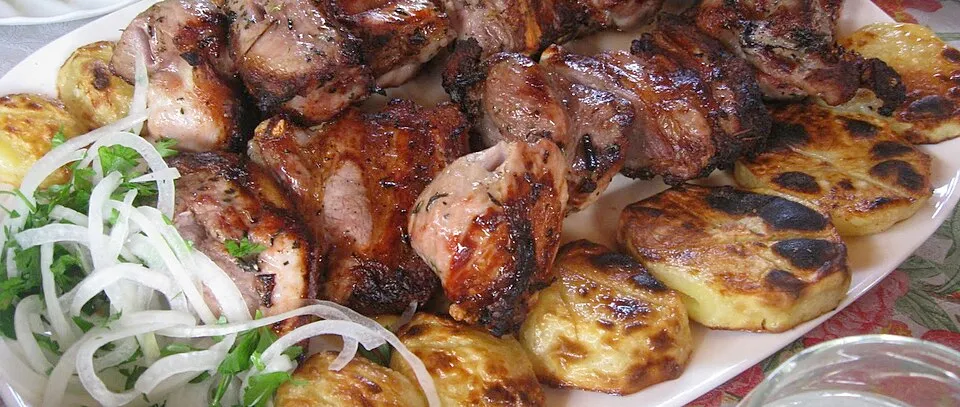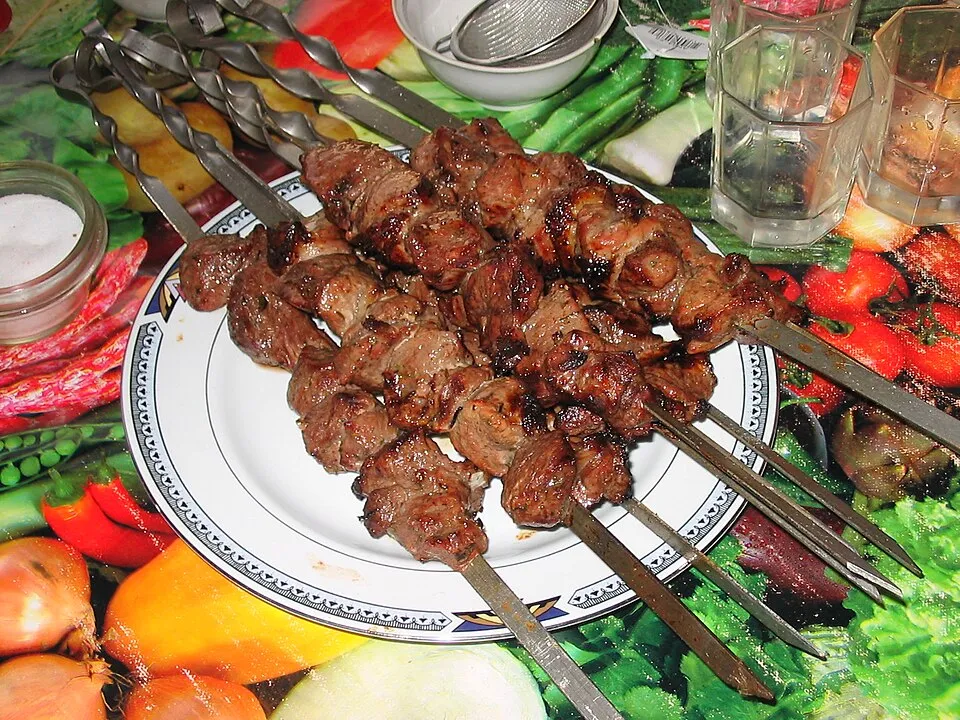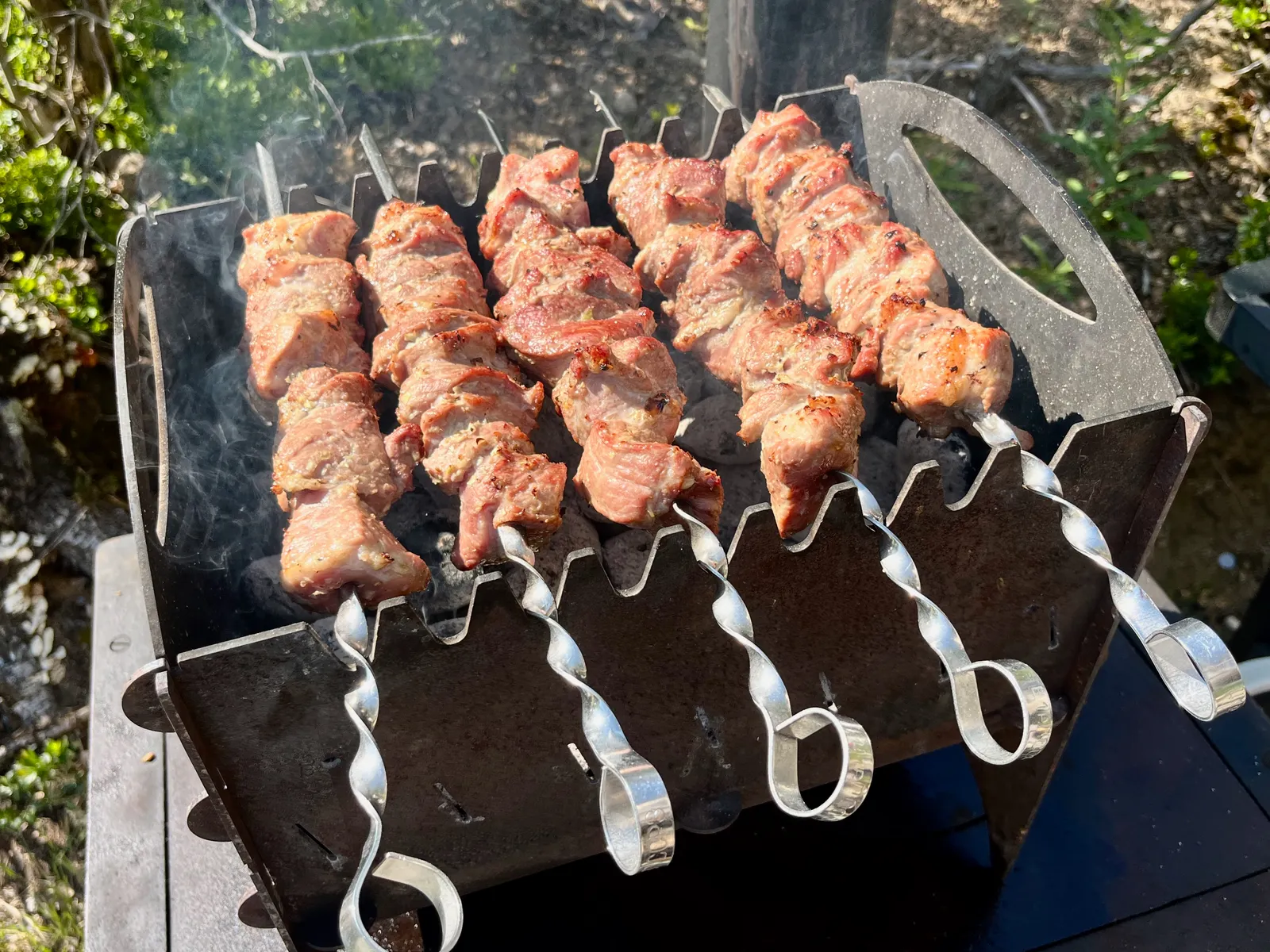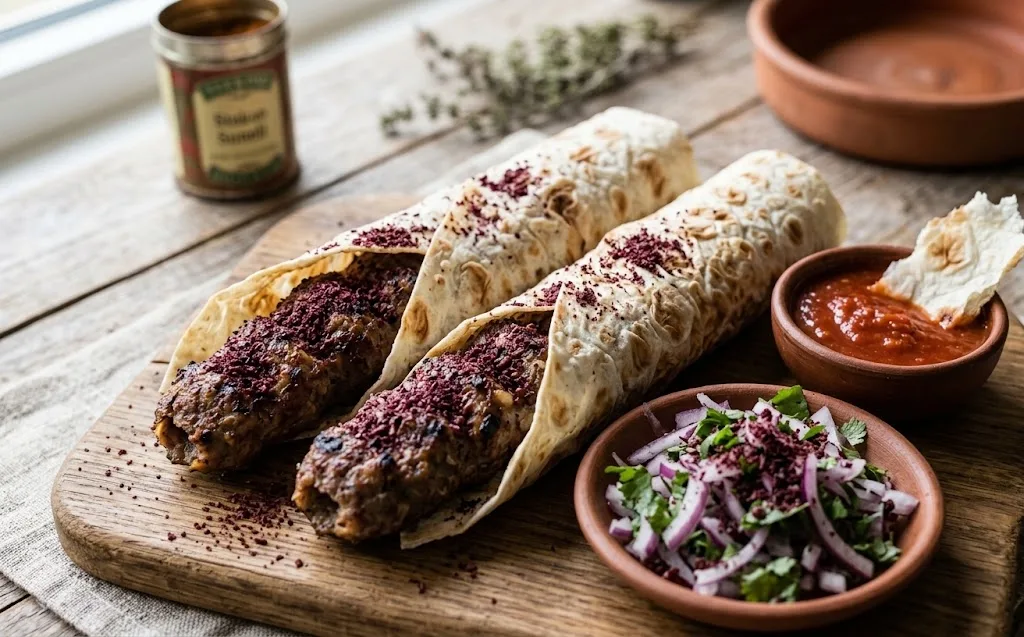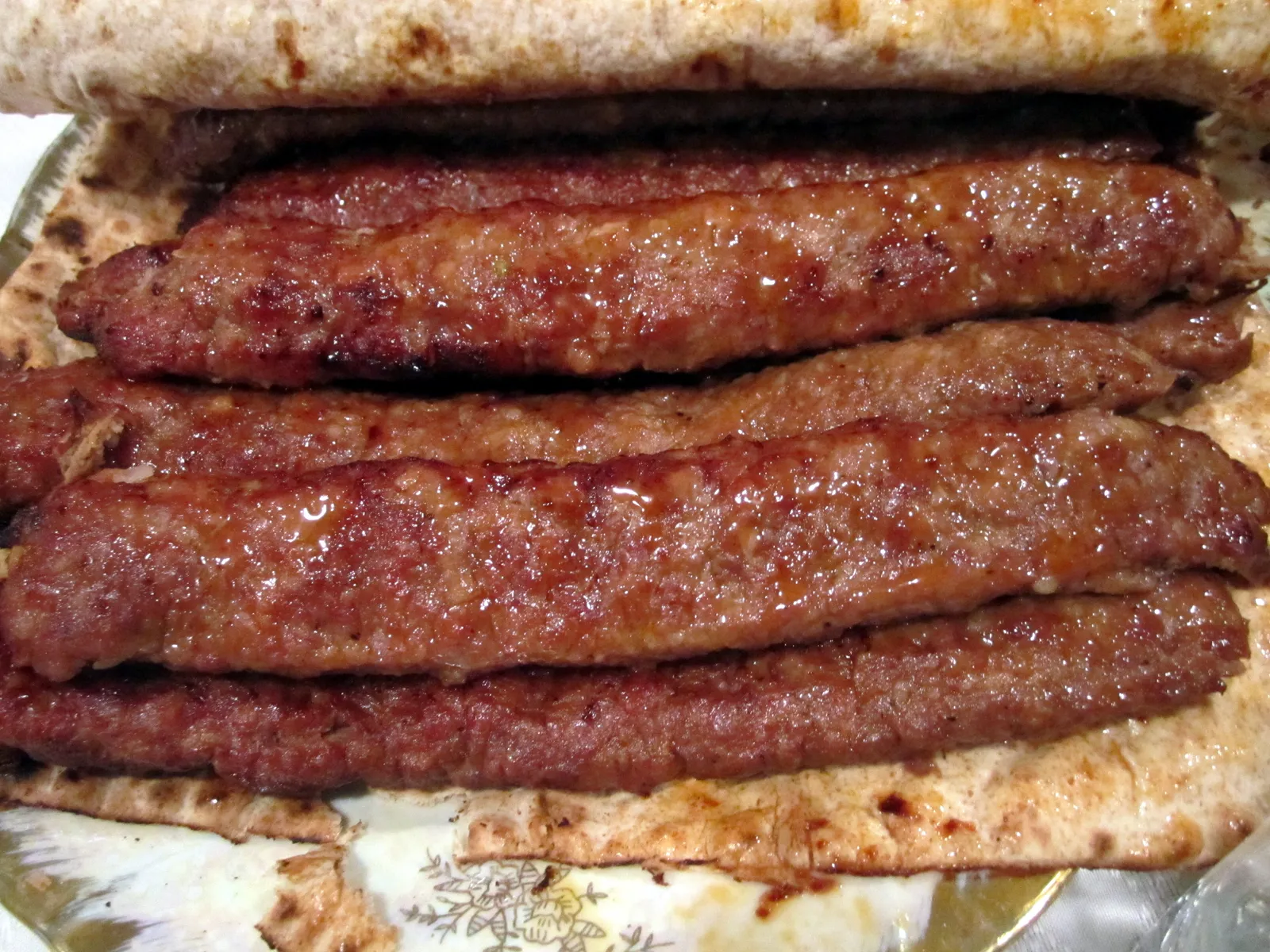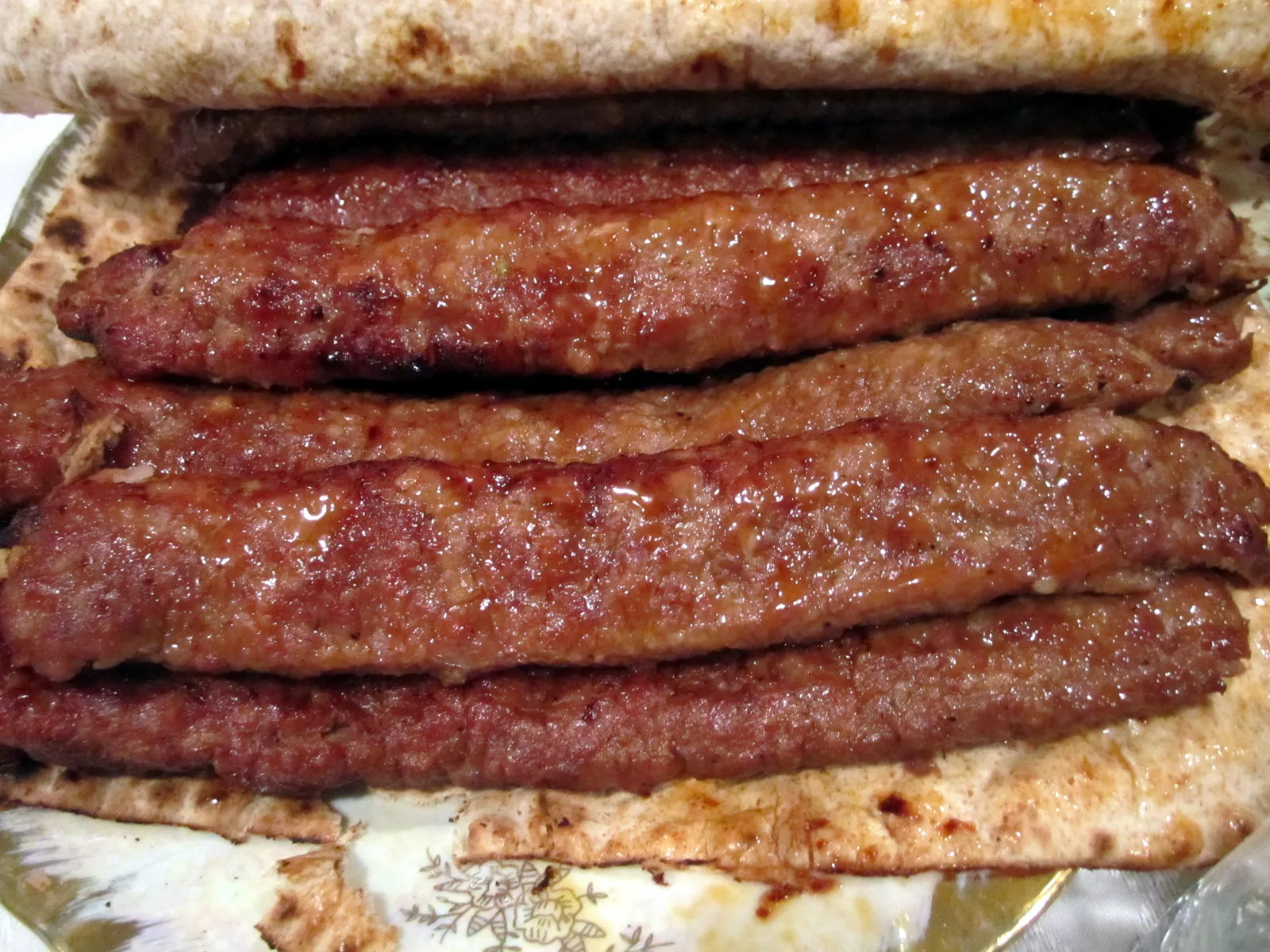
The Caucasus's minced masterpiece: fatty lamb chopped with onion and salt — no egg, no breadcrumbs — kneaded until it grips the skewer by protein alone, then grilled and rolled in thin lavash with sumac. A soft, juicy interior under a taut skin is the test of a proper lyulya.
Also known as lula kebab, lyulya, lülə kabab.
Reference video
Ingredients
- 700 g fatty lamb, hand-chopped or coarsely minced (about 25% fat, ideally tail fat)
- 2 onions, chopped very fine, salted 10 min and squeezed dry
- 10 g salt
- 0.5 tsp black pepper
- 8 wide flat skewers
- 2 lavash breads
- 1 tsp sumac
- 1 small bunch each tarragon, basil and cilantro, to serve
How to make it
- 1
Knead the lamb, onion, salt and pepper 8-10 min, repeatedly slapping the mass hard against the bowl; it is ready when it pales and squeaks.
- 2
Chill 1 h so the fat sets.
- 3
With wet hands, grip fistfuls around flat skewers and squeeze into long ridged cylinders.
- 4
Grill over high coals 8-10 min, turning often; the fat should hiss but never flame.
- 5
Roll each skewer in lavash for 2 min, then serve with sumac and the herb bundle.
Pro tip: No egg, no breadcrumb: the slap-kneading is the only binder. When a fistful sticks to your upturned palm for three seconds, it will hold the skewer.
Where Lyulya Kebab comes from
Lyulya — lülə in Azerbaijani, meaning tube or pipe — is the Caucasus's minced kebab and the region's proudest test of technique. It is made from fatty lamb chopped with onion and salt, and from nothing else: no egg, no breadcrumb, no flour. Whether it stays on the skewer is a public verdict on the cook.
It is strongest in Azerbaijan, where it is a fixture of restaurant grills and family gatherings, and it travelled across the Soviet Union with Caucasian cooks, appearing on menus from Moscow to Vladivostok under the Russianised spelling lyulya. Armenians make their own version with herbs, and the two traditions argue amiably about which came first.
How Lyulya Kebab is cooked
The bind is pure protein and it is created mechanically. Fatty lamb is chopped or minced, combined with finely chopped onion and salt, and then worked — kneaded, slapped against the bowl, thrown down repeatedly — until the myosin in the meat dissolves and the mass becomes tacky enough to cling to steel. There is no binder because the meat is made to bind to itself.
Then it is chilled, which firms the fat and makes shaping possible, and pressed along wide flat skewers in a long even tube. It grills fast over hot coals, turned often, and is done when the outside has a taut browned skin and the inside is still visibly juicy. A lyulya that has dried through has been over the fire twice as long as it should have been.
Ingredients and shopping
Lamb with genuine fat content — around 25 percent, ideally including tail fat (quyruq yağı) — is the requirement. This is the single most common failure point: supermarket lean lamb mince cannot be made to bind no matter how long it is kneaded, because there is not enough fat to carry it.
Onion should be very finely chopped rather than grated, and salted early so it releases its water, which is then squeezed out. Seasoning is minimal — salt, black pepper, sometimes a little sumac. Wide flat skewers, at least three centimetres across, and thin lavash for serving.
How Lyulya Kebab is served
Rolled straight off the skewer into thin lavash, with sumac-dusted onion, fresh herbs and often a pour of narsharab. In Azerbaijani restaurants it comes with grilled tomato and pepper and a bowl of pickles. The lavash is used to strip the meat from the skewer, which soaks the bread in fat — that is the intended eating.
Common mistakes
Lean mince
Below about 20 percent fat it will not bind, and no amount of kneading fixes it. Ask the butcher for fatty lamb or add tail fat.
Adding egg or breadcrumb
It works, and it is considered cheating throughout the Caucasus. It also changes the texture into a meatball.
Not chilling before shaping
Warm fat makes the mixture slack. Half an hour in the fridge after kneading is the minimum; the full hour in the recipe is better.
Round skewers
It needs a wide flat blade. On a round skewer the tube rotates and falls.
Grilling too long
Taut skin, juicy centre. Past that it is a dry sausage.
Lyulya Kebab: questions and answers
Why does lyulya kebab fall off the skewer?
Almost always too little fat in the mince, insufficient kneading, or a mixture that was not chilled before shaping. Wide flat skewers are also essential.
Can I add egg to help it bind?
You can, but throughout the Caucasus it is considered a failure of technique. The bind should come from working fatty meat until it turns tacky.
What does lyulya mean?
It comes from lülə, the Azerbaijani word for tube or pipe, describing the long cylindrical shape on the skewer.
How is lyulya kebab different from koobideh or Adana?
All three are minced meat pressed onto flat skewers. Adana is knife-chopped lamb seasoned for heat with red pepper; koobideh is Iran's softer take, kneaded with grated onion and served over saffron rice. Lyulya is the plainest of the family — little beyond salt and pepper — and it is eaten rolled in lavash, not over rice.
Can I make lyulya kebab without a grill?
Yes. Shape the mixture into skewerless fingers and sear them in a smoking-hot cast-iron pan or under a full broiler, turning once a crust forms. You lose the coal smoke but keep the texture — the kneading and the chill matter just as much indoors.
Sources and further reading
- Lula kebab — Wikipedia
- Kebabs — Azerbaijan.az (official portal of Azerbaijan)
- Lyulya-Kebabs: An Epic Journey — Food Perestroika (Florian Pinel)