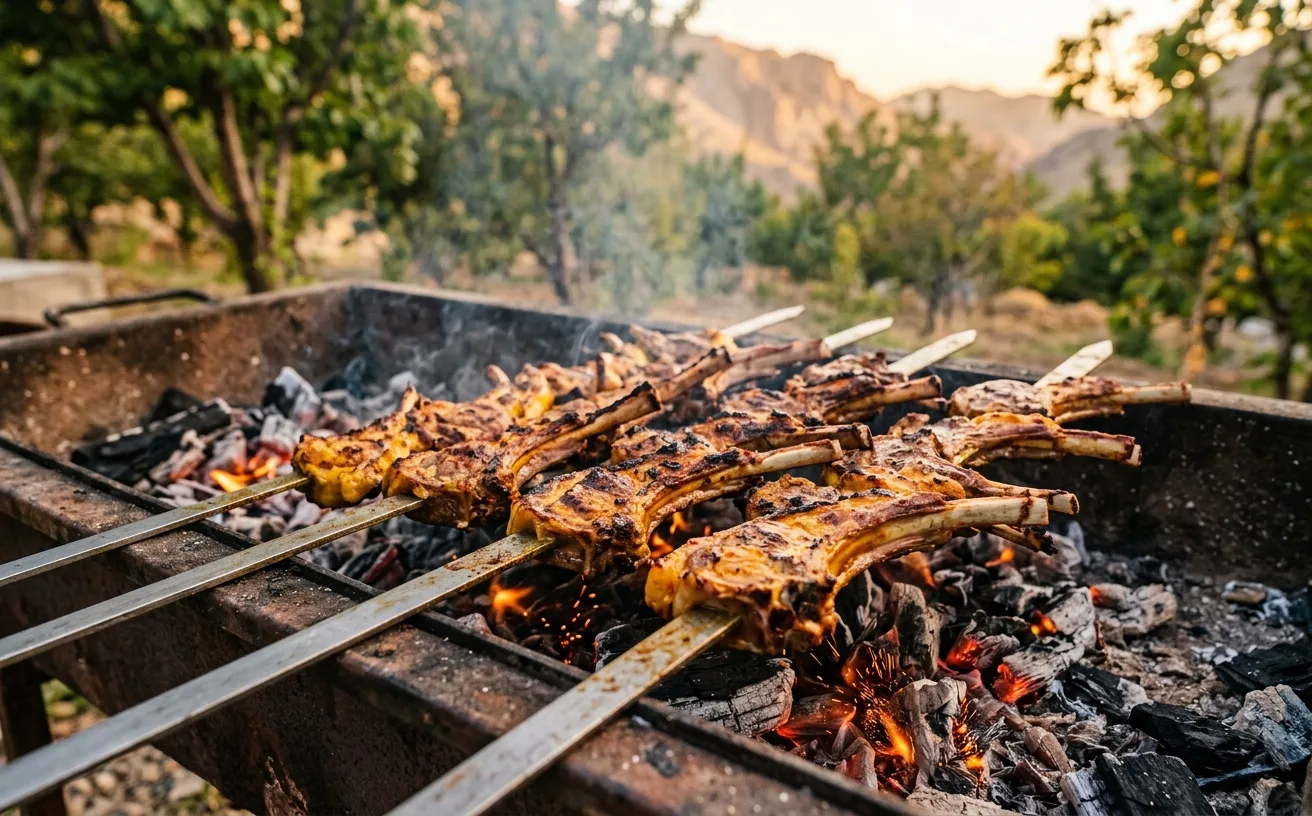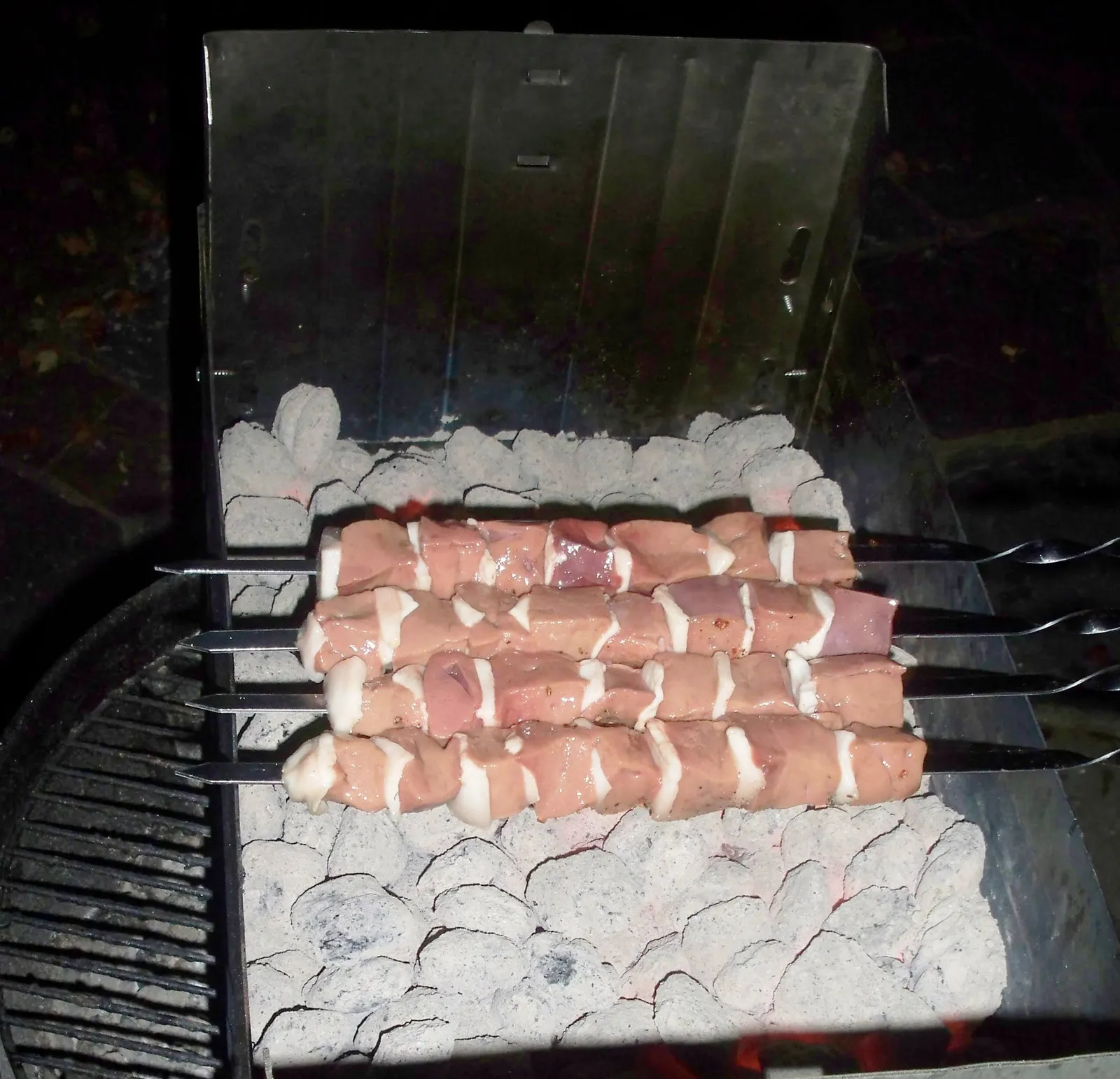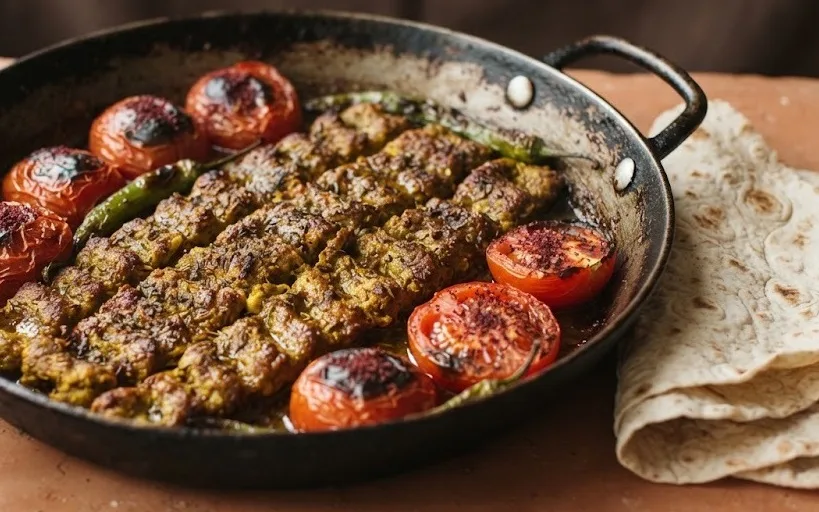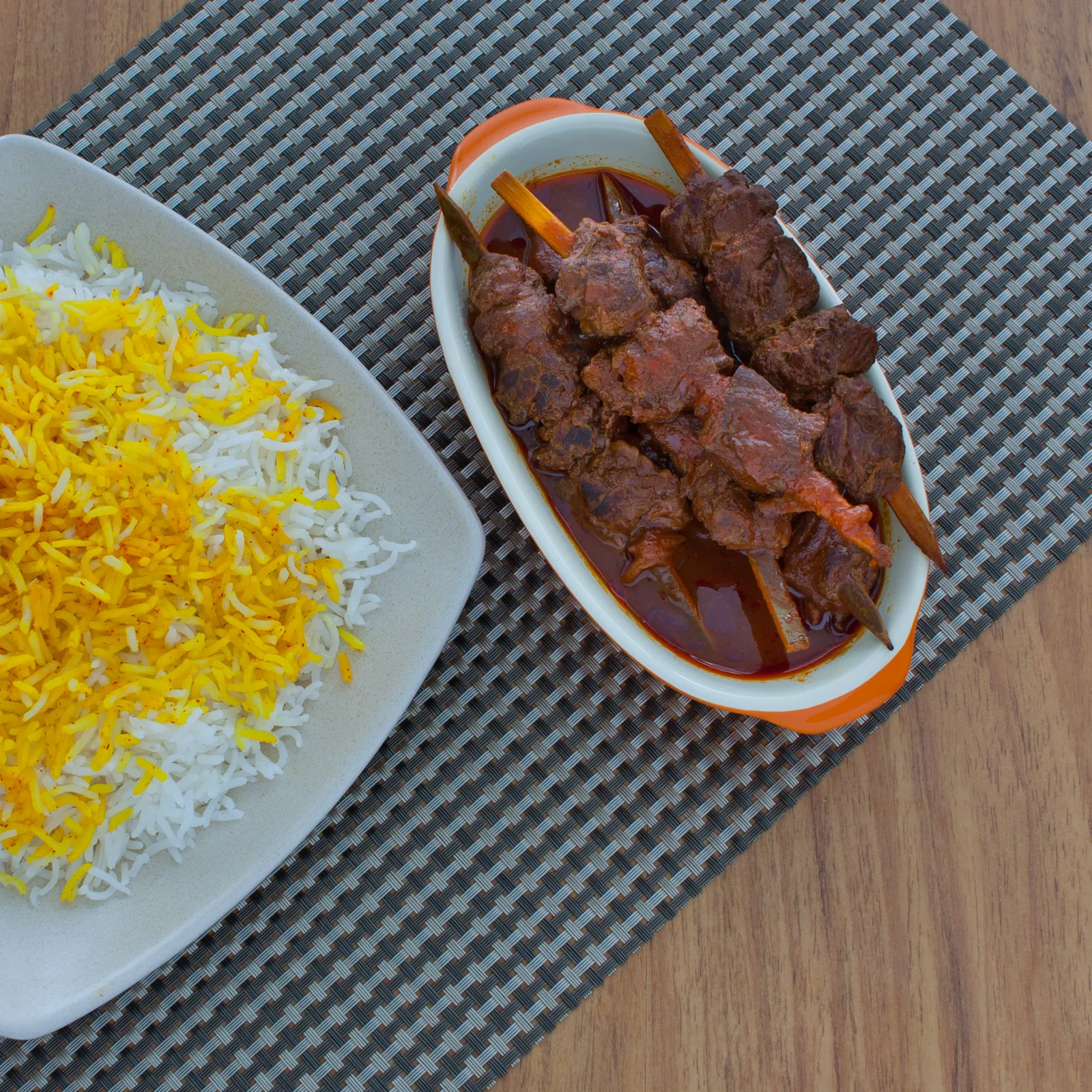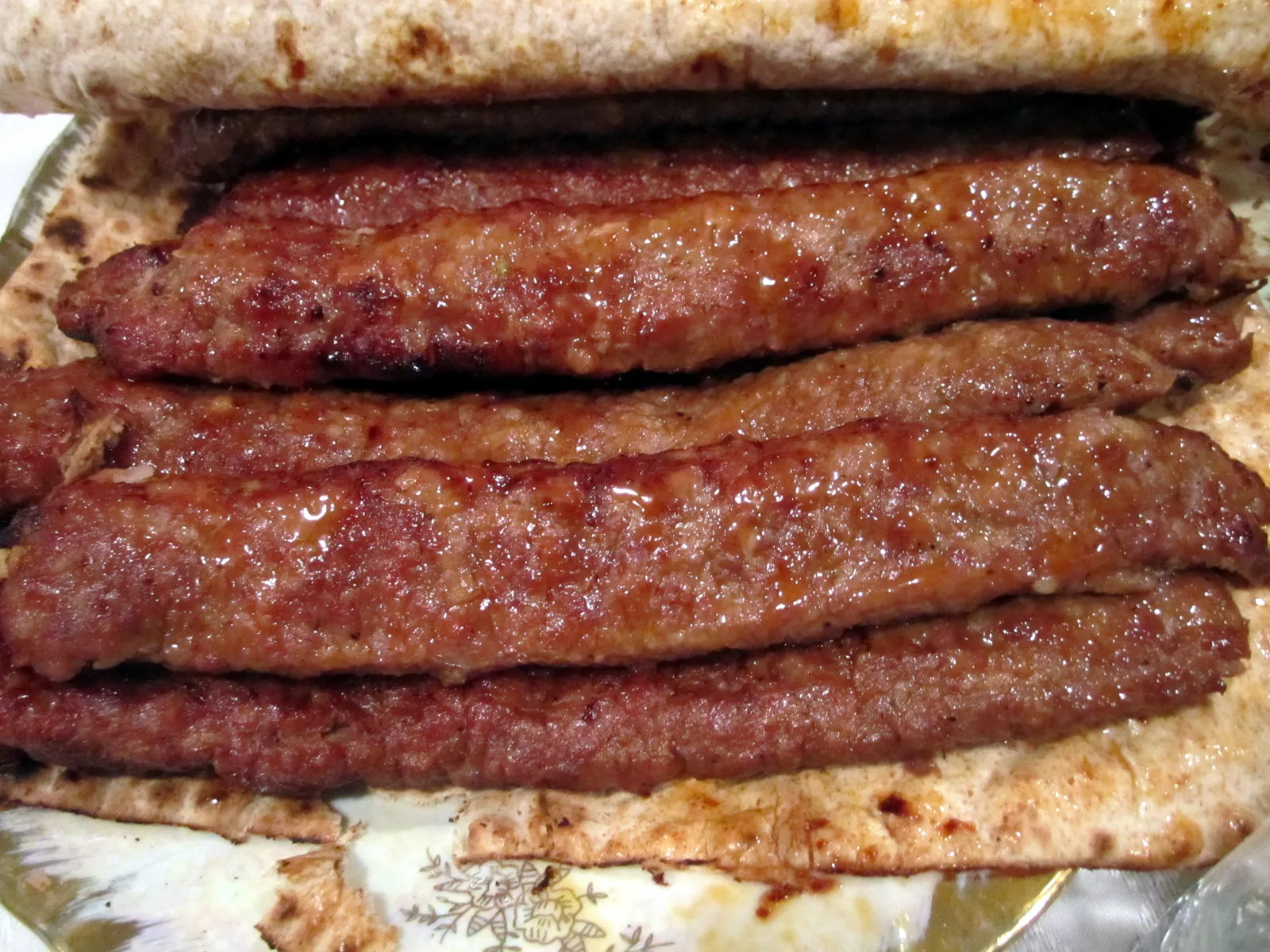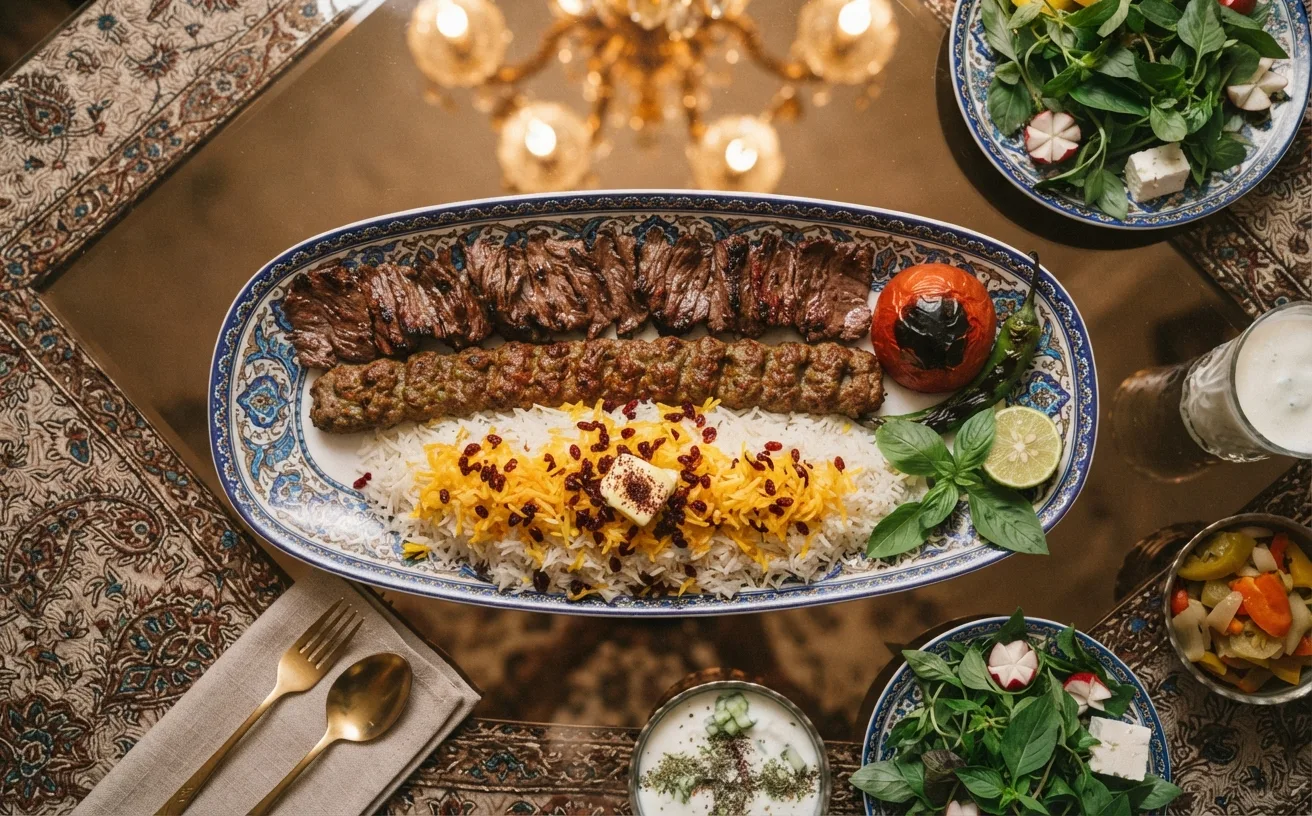
The 'sultan's' order in any Persian kebab house: one skewer of barg and one of koobideh served together over saffron chelow rice. Not a distinct kebab so much as the maximalist combination plate every Iranian menu lists at the top.
Also known as soltani, sultani kabab, kabab-e soltani.
Reference video
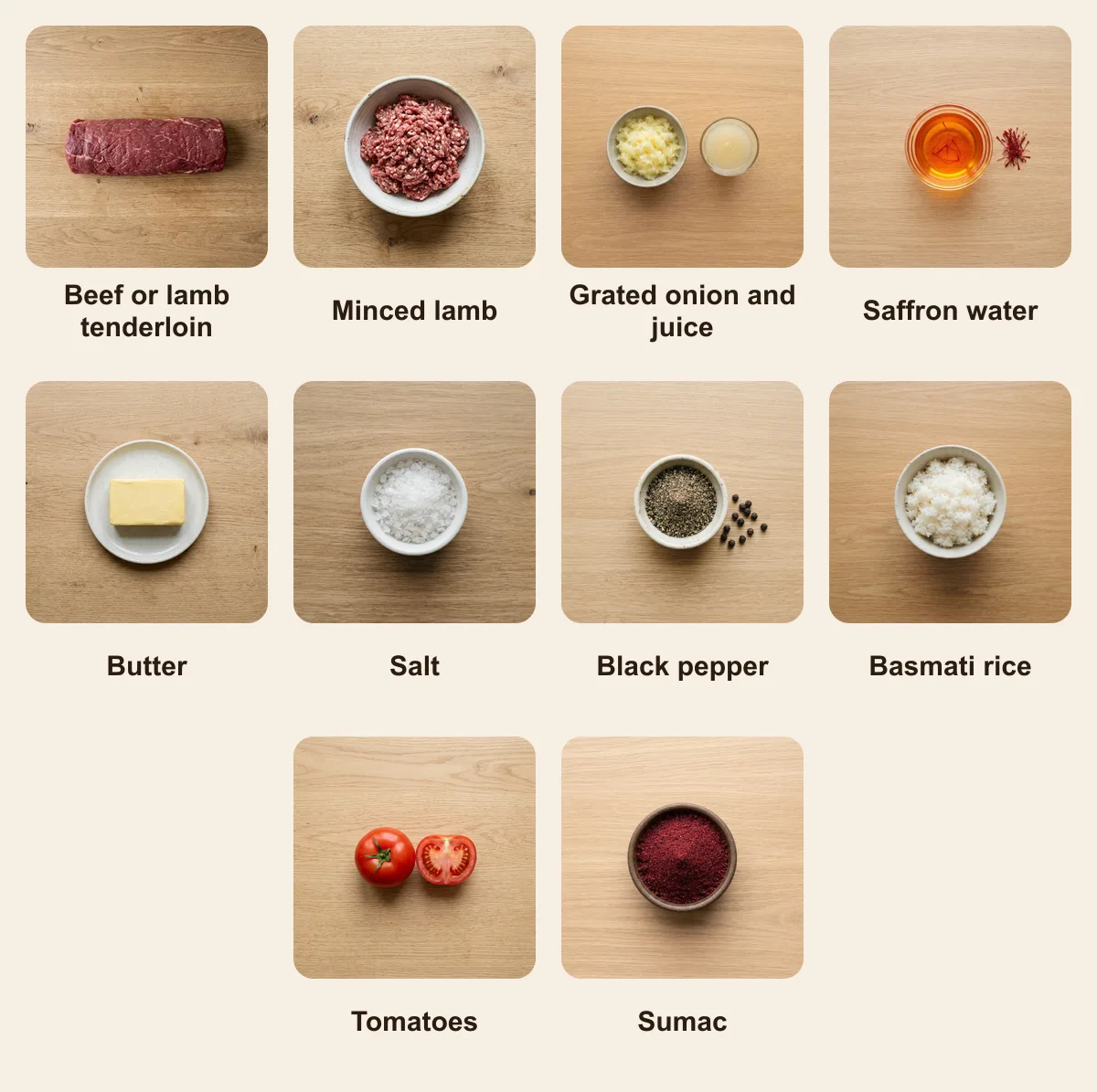
Ingredients
- 300 g beef or lamb tenderloin, butterflied into one long 1 cm ribbon (barg)
- 300 g minced lamb, 25% fat (koobideh)
- 2 onions: one juiced, one grated and squeezed
- 0.3 g saffron, ground and bloomed in 30 ml hot water
- 30 g butter, melted
- 1.5 tsp salt, 0.5 tsp pepper
- 300 g basmati rice, cooked as chelow
- 2 tomatoes, grilled whole
- sumac, to dust
How to make it
- 1
Marinate the barg ribbon 4 h in onion juice with half the saffron water and the pepper.
- 2
Knead the mince with the squeezed grated onion and salt until it clings upside-down to your palm, then press onto a wide flat skewer.
- 3
Grill the barg first, 2-3 min a side, brushing with the butter mixed into the remaining saffron water; salt it lightly as it comes off.
- 4
Grill the koobideh next, over hot coals, 6-8 min, flipping every 30 seconds so it never sags.
- 5
Serve both skewers over chelow with grilled tomato, the last saffron butter and a dusting of sumac.
Pro tip: Test one nub of koobideh over the coals first: if it slumps or drops, knead the mixture two more minutes and chill it before committing the skewer.
Where Kabab Soltani comes from
Soltani means royal, and on an Iranian menu it is not a dish so much as a declaration. It is the most expensive line on the board and it sits at the top for that reason.
The pairing exists because the two kebabs are opposites and Iranians know it. Barg is lean, saffron-scented and expensive; koobideh is fatty, onion-heavy and everyday. Ordering soltani is ordering the argument between them settled on one plate, and it is the standard order for a celebration or for a guest one wants to impress.
How Kabab Soltani is cooked
There is no soltani technique — there are two techniques executed in parallel, and the difficulty is timing them onto the same plate. Koobideh is fast and fragile: minced lamb or beef kneaded with grated onion until it grips a wide flat skewer, grilled hot for a few minutes, and it will fall into the coals if the mix is wet or the skewer narrow.
Barg is unforgiving in the other direction: fillet flattened, marinated in onion juice and saffron, grilled on a narrower skewer and pulled the moment it is done, because a minute too long turns an expensive cut to leather. Grill the barg first and keep it warm under its saffron butter while the koobideh takes the hottest coals.
Ingredients and shopping
For barg: lamb or beef fillet, or a well-trimmed sirloin, sliced and gently flattened. For koobideh: minced lamb with around 25 percent fat, or a lamb-beef mix, with grated onion squeezed until nearly dry. The onion water is the single most common cause of koobideh falling off the skewer, and squeezing it out is not optional.
Wide flat skewers for the koobideh — at least three centimetres — and thinner ones for the barg. Saffron, bloomed properly, goes into the barg marinade and the basting butter. The rice should be genuine Persian chelow with a tahdig if you can manage it; the dish is built around rice as much as meat.
How Kabab Soltani is served
Over chelow with saffron rice on top, a piece of butter, grilled tomatoes and a grilled long pepper, sumac in a shaker, raw onion and a plate of fresh herbs. Doogh or black tea. Traditionally an egg yolk is stirred into the hot rice at the table, which sounds strange to visitors and is very good.
Common mistakes
Wet onion in the koobideh
Grate it, then squeeze it dry in a cloth. Wet onion is why koobideh ends up in the fire.
Narrow skewers for koobideh
It needs a wide flat blade to grip. On a round skewer it rotates and drops.
Overcooking the barg
Fillet has no fat to forgive you. Pull it the moment it firms.
Grilling both at once from the start
They need different handling: a quick sear for the barg, constant flipping for the koobideh. Grill the barg first, keep it warm under its butter, then give the koobideh the whole fire.
Kabab Soltani: questions and answers
Is soltani a separate kind of kebab?
No. It is the pairing of two existing kebabs on one plate, and it sits at the top of Iranian menus as the most complete and most expensive order.
Why does koobideh fall off the skewer?
Almost always wet onion or a skewer that is too narrow. Squeeze the grated onion dry and use a wide flat skewer.
What is tahdig?
The crisp golden crust of rice at the bottom of the pot, served alongside chelow. It is considered the best part of the rice.
Sources and further reading
- Kabab barg — Wikipedia
- Kabab koobideh — Wikipedia