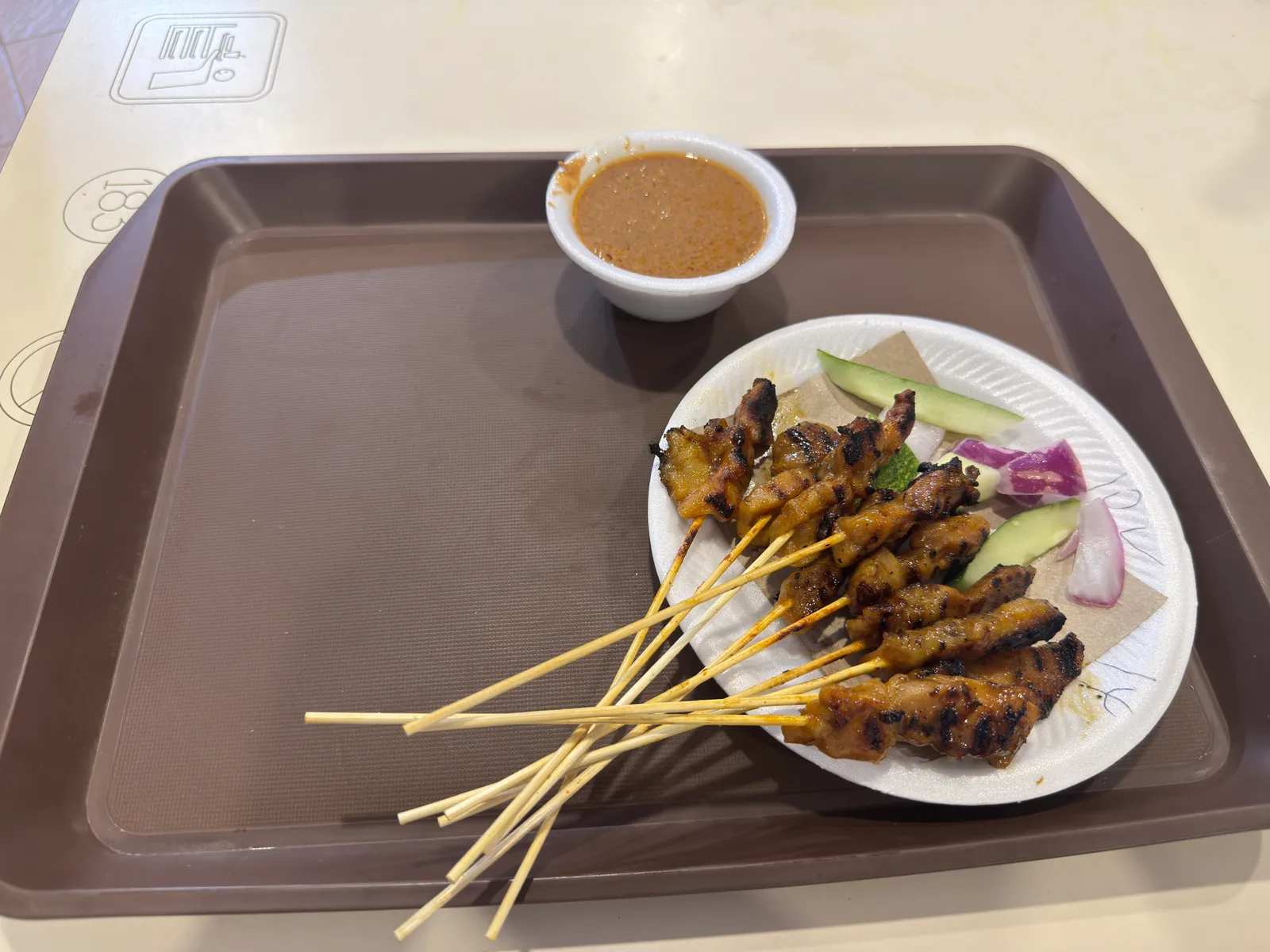
Satay
Indonesia / Malaysia · ▶

Sate Lilit
Indonesia (Bali) · ▶
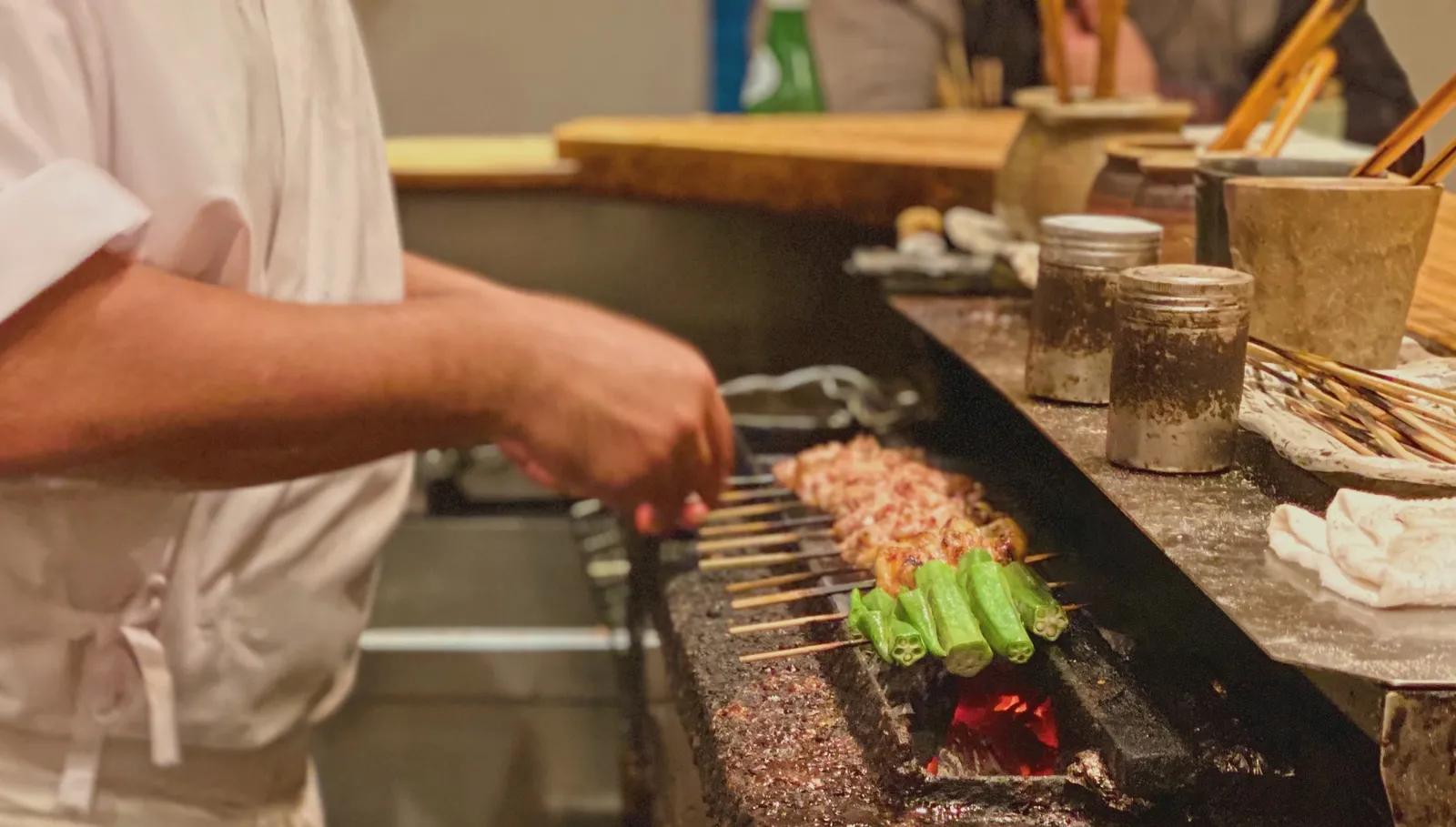
Yakitori
Japan
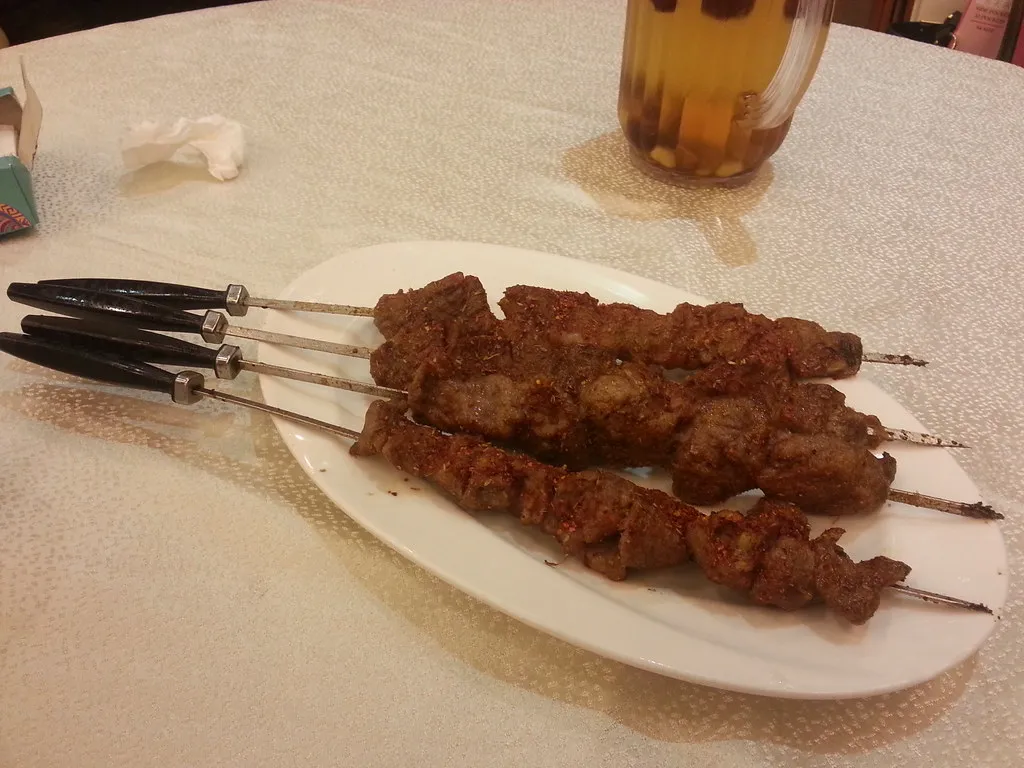
Chuanr
China · ▶
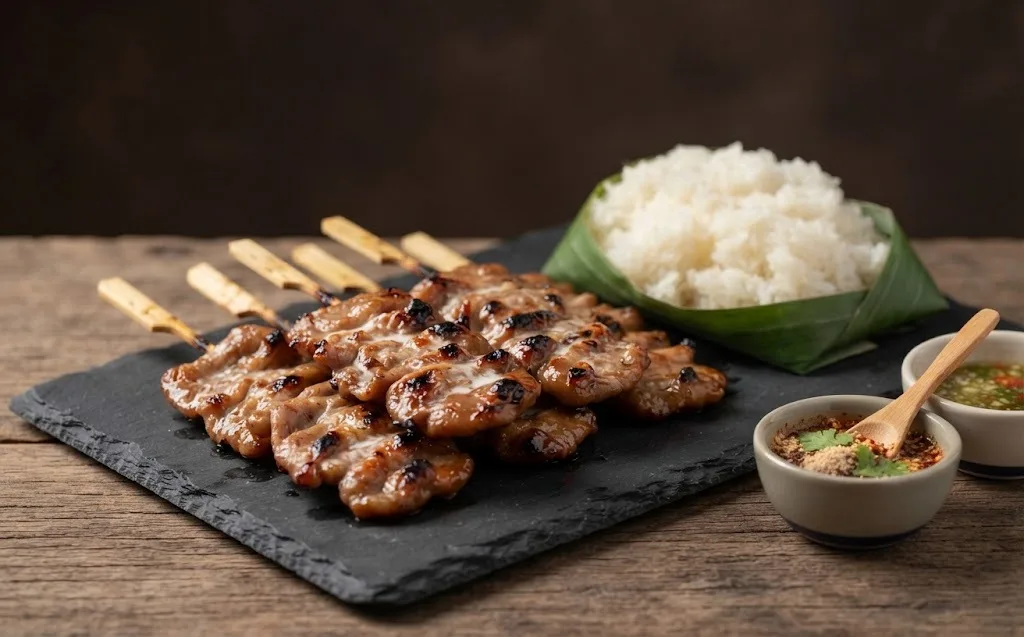 AI illustration
Moo Ping
Thailand · ▶
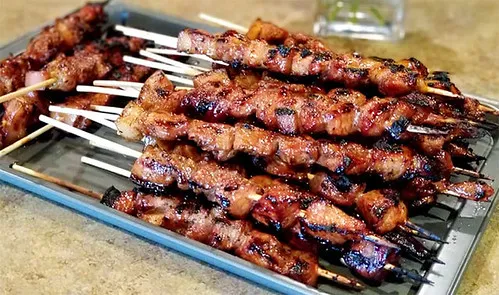
Filipino Pork Barbecue
Philippines · ▶
 AI illustration
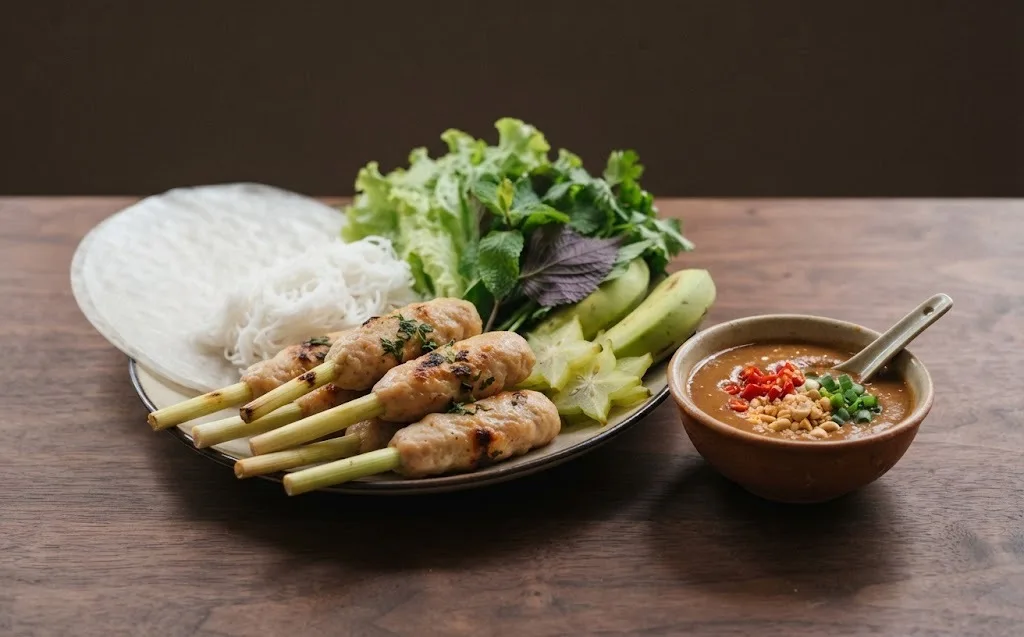
Nem Lui
Vietnam · ▶
 AI illustration
Khorkhog
Mongolia · ▶
 AI illustration
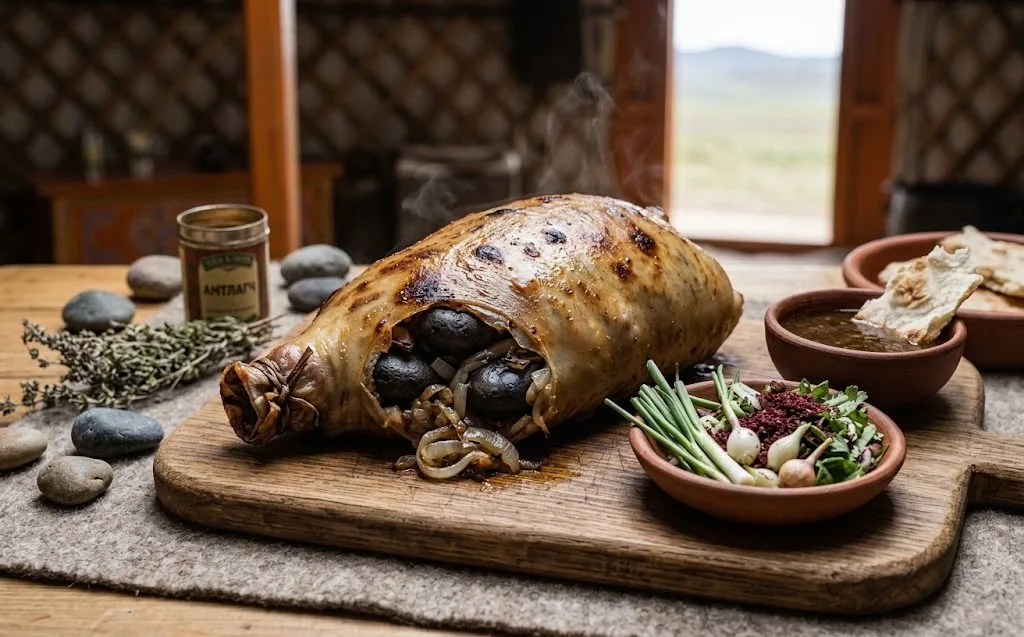
Boodog
Mongolia · ▶

Sate Ayam
Indonesia · ▶
Sate Kambing
Indonesia

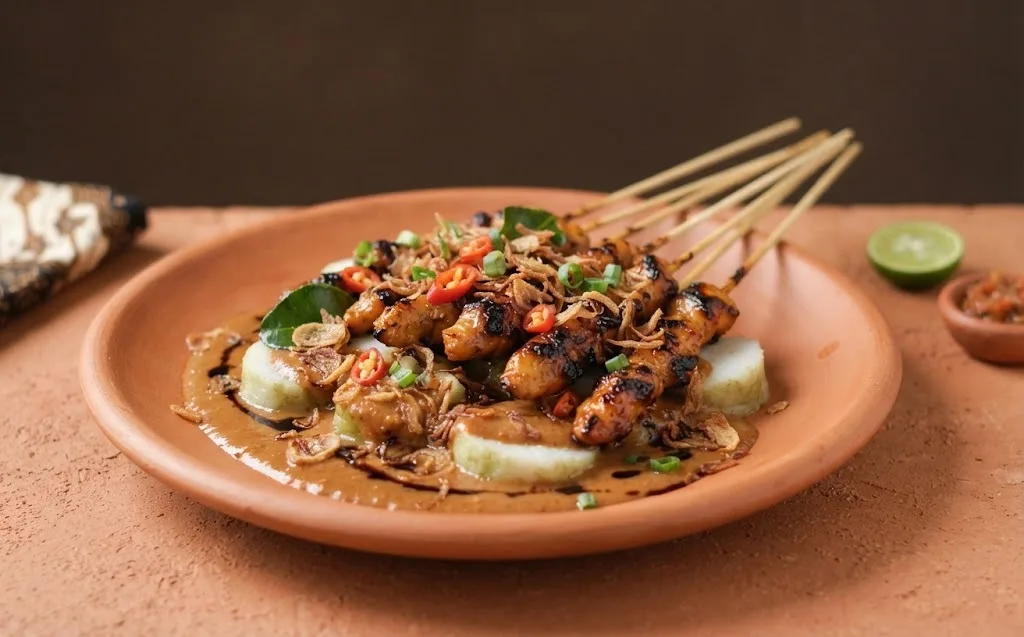
Sate Padang
Indonesia · ▶
 AI illustration
Sate Madura
Indonesia

Sate Maranggi
Indonesia · ▶
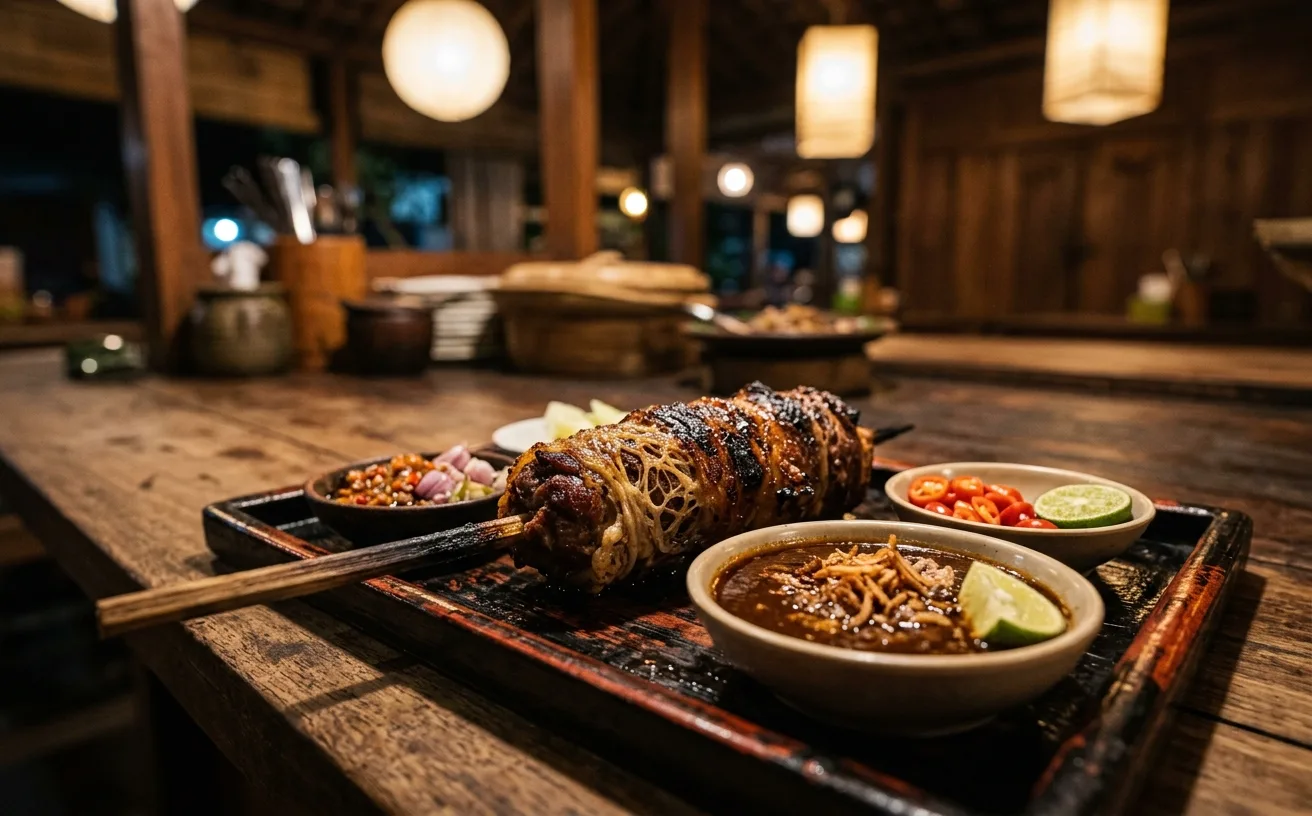 AI illustration
Sate Buntel
Indonesia · ▶
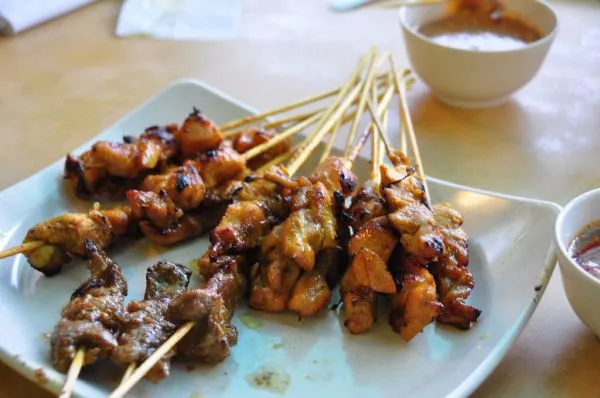
Satay Kajang
Malaysia · ▶
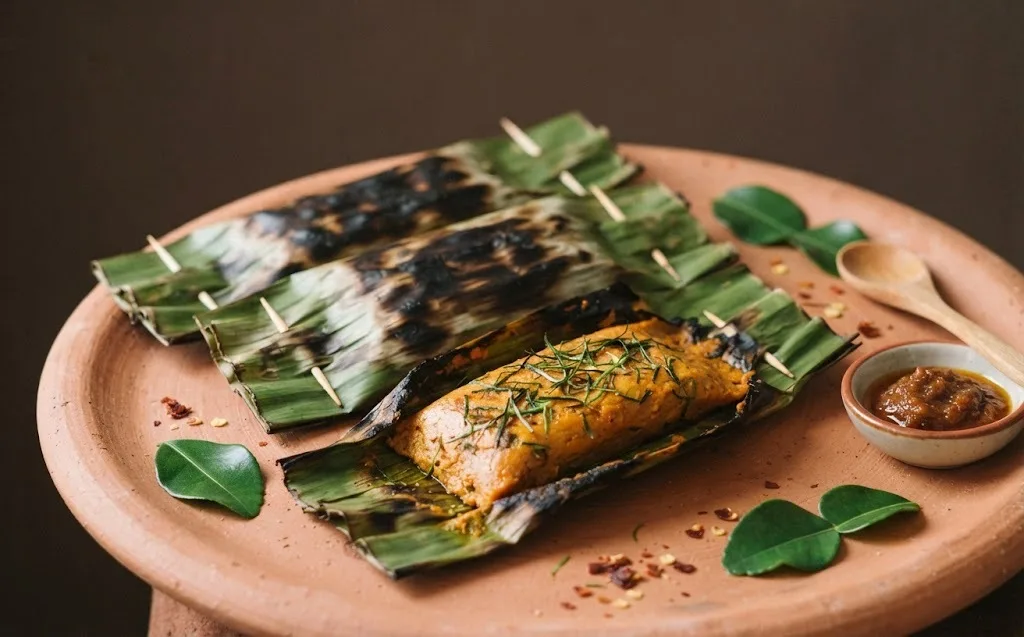 AI illustration
Otak-Otak
Malaysia/Singapore · ▶
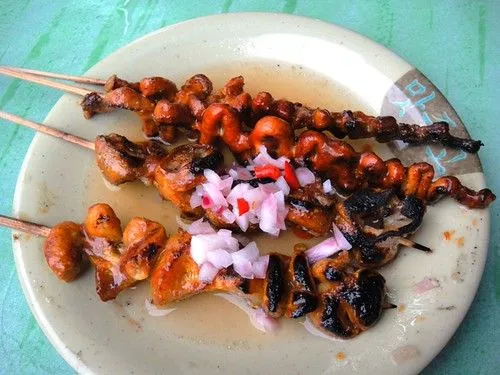
Isaw
Philippines
 AI illustration
Thit Nuong
Vietnam · ▶
Tsukune
Japan · ▶
Negima
Japan · ▶
 AI illustration
Yakiton
Japan · ▶
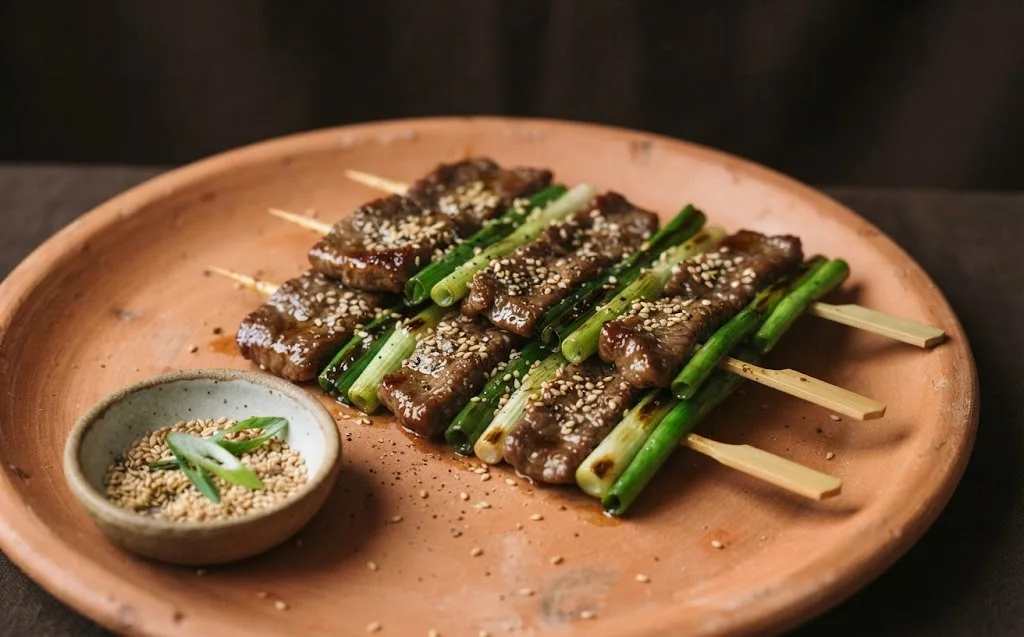 AI illustration
Sanjeok
South Korea · ▶
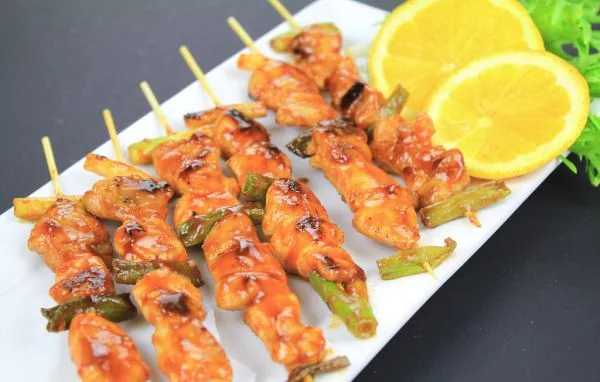
Dakkochi
South Korea
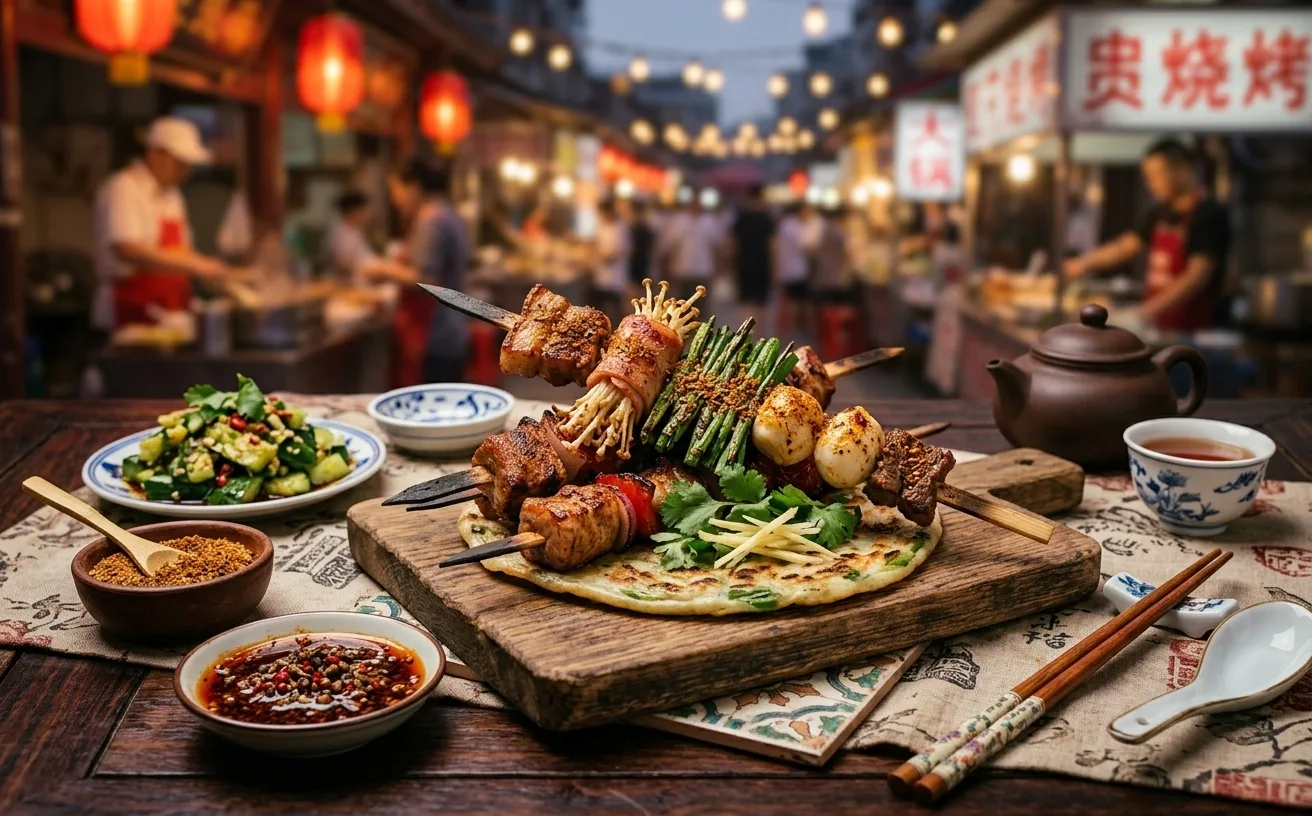 AI illustration
Shao Kao
China
Sate Taichan
Indonesia · ▶
Athar Kin
Myanmar
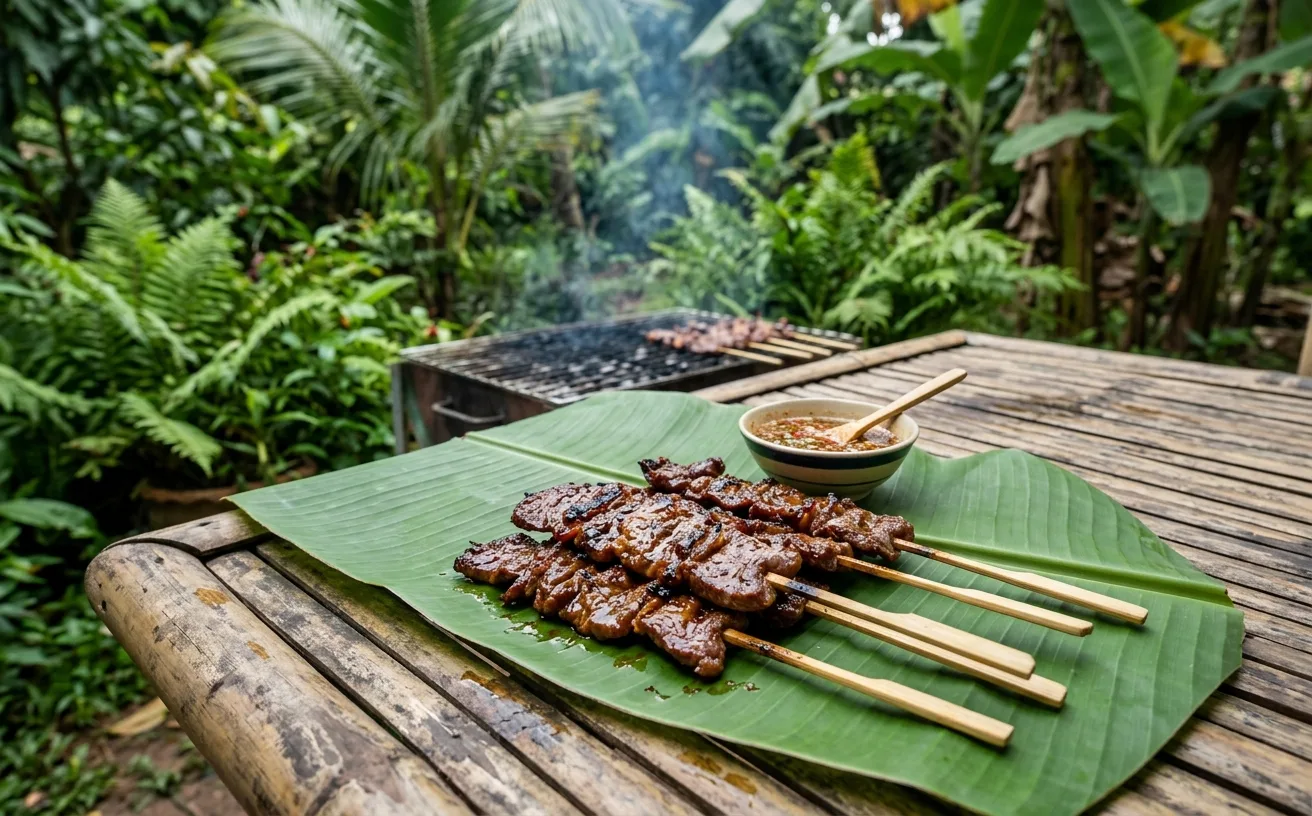 AI illustration
Sach Ko Ang
Cambodia · ▶
 AI illustration
Ping Kai
Laos · ▶
Gai Yang
Thailand · ▶
 AI illustration
Lok-Lok
Malaysia
Satay Celup
Malaysia · ▶
 AI illustration
Sate Klathak
Indonesia
Sate Ponorogo
Indonesia · ▶
 AI illustration
Satti
Philippines · ▶
 AI illustration
Kushikatsu
Japan · ▶
Quick index
- Satay — Southeast Asia's kebab descendant, likely adapted from Arab and Indian Muslim traders' kebabs by Javanese street cooks: small pieces of turmeric-marinated chicken, goat, or beef on bamboo sticks, grilled over coconut charcoal and sauced with sweet-spicy ground peanut.
- Sate Lilit — Bali's signature satay: minced fish or pork blended with grated coconut and basa genep spice paste, then wrapped ('lilit') around flat lemongrass stalks that flavor the meat as it grills.
- Yakitori — Japan's chicken-skewer discipline: every part of the bird — thigh, skin, meatball (tsukune), even cartilage — cut small, skewered, and grilled over binchotan charcoal, finished either with salt (shio) or a glossy soy-mirin glaze (tare).
- Chuanr — Lamb skewers from Uyghur cooks of Xinjiang — small pieces of mutton interleaved with fat, dusted with cumin, chile flakes, and salt over open coals — that conquered every Chinese city as late-night shaokao street food.
- Moo Ping — Bangkok's breakfast kebab: thin slices of pork marinated in coconut milk, palm sugar, fish sauce, and coriander root, grilled over charcoal until caramelized at the edges.
- Filipino Pork Barbecue — The Philippines' street-corner skewer: pork slices marinated in soy sauce, calamansi, garlic, and — the local secret — banana ketchup and 7-Up, grilled while being basted with the same sweet-savory glaze.
- Nem Lui — Hue's royal-city kebab: seasoned pork paste molded around stalks of lemongrass and grilled, then rolled at the table in rice paper with herbs, green banana, and star fruit and dunked in a peanut-liver dipping sauce.
- Khorkhog — The true Mongolian barbecue (unrelated to the stir-fry restaurants): mutton on the bone sealed in a milk churn or pot with fire-heated river stones, which cook the meat from the inside while it steams.
- Boodog — Boodog is a Mongolian nomad showpiece in which a whole goat (or traditionally a marmot) is deboned through the neck, filled with scorching stones and onions, tied shut, and torched from the outside so it roasts simultaneously from within and without.
- Sate Ayam — Indonesia's everyday chicken skewer: small pieces of thigh threaded on bamboo, grilled over coconut-shell charcoal and drowned in sweet peanut sauce with kecap manis.
- Sate Kambing — Young goat skewers, typically served not with peanut sauce but with a sharper dressing of sweet soy, raw shallots, chili and tomato (sambal kecap).
- Sate Padang — West Sumatra's signature satay of beef, tongue and offal first simmered in spiced broth, then grilled and smothered in a thick turmeric-and-rice-flour gravy instead of peanut sauce.
- Sate Madura — The satay style that conquered Indonesia's streets, exported by vendors from Madura island: small chicken or goat skewers with a distinctly sweet, dark peanut-and-kecap-manis sauce, classically sold from shoulder-pole carts.
- Sate Maranggi — West Java's marinade-forward satay from Purwakarta: beef or lamb steeped in coriander, galangal, and sweet soy before grilling, so it needs no sauce at all.
- Sate Buntel — A Solo (Surakarta) specialty of minced goat or lamb wrapped in lacy caul fat around a large skewer, then grilled until the fat crisps and bastes the meat inside.
- Satay Kajang — Malaysia's most famous satay style, named after the town of Kajang in Selangor: larger, well-marinated chunks of chicken or beef with a peanut sauce served alongside a spoonful of fried chili paste you stir in to taste.
- Otak-Otak — A spiced fish mousse of mackerel blended with coconut milk, chili and lemongrass, wrapped flat in banana or coconut leaf and grilled over charcoal until smoky at the edges.
- Isaw — Iconic Filipino street food of chicken or pig intestines, thoroughly cleaned, boiled, then folded accordion-style onto skewers and char-grilled.
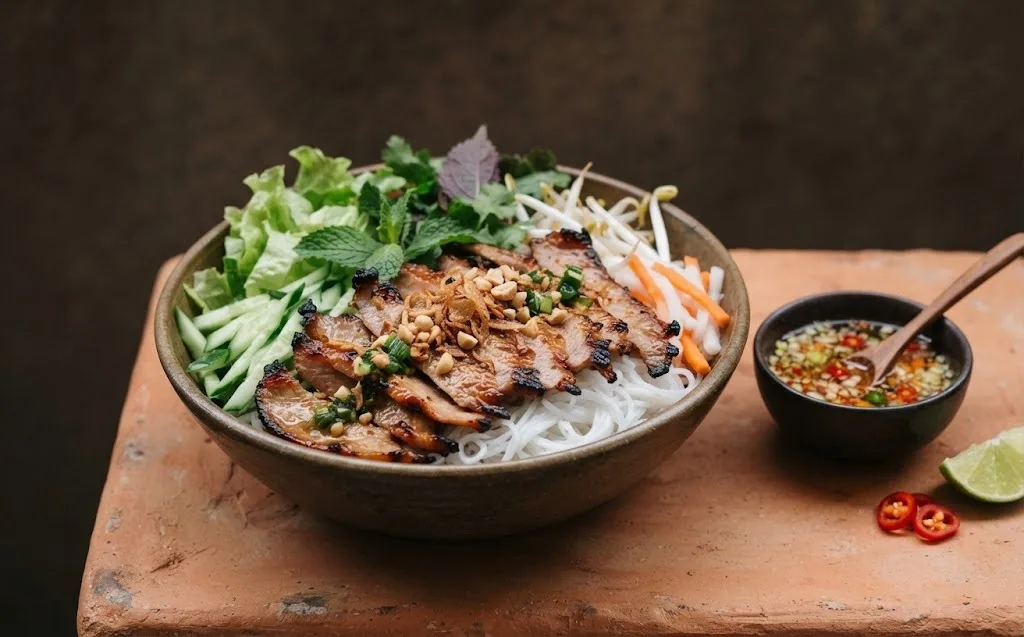
- Thit Nuong — Vietnamese charcoal-grilled pork sliced thin and marinated in fish sauce, lemongrass, garlic, sugar and often honey, grilled until the edges char and caramelize.
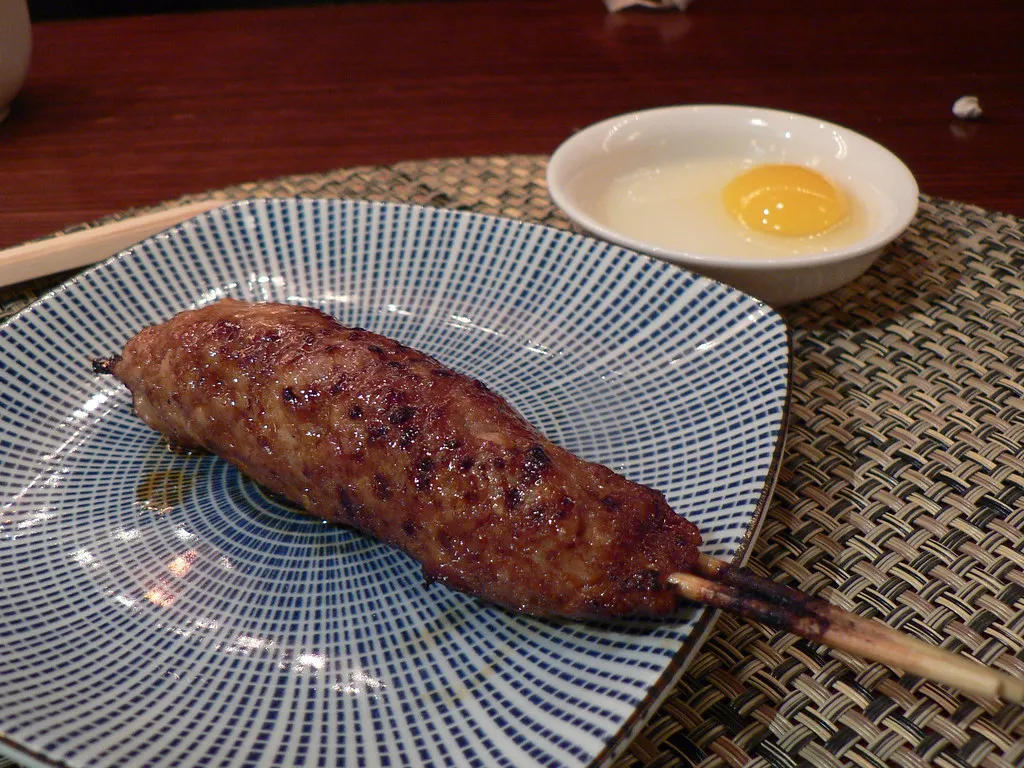
- Tsukune — The minced-meat star of the yakitori canon: ground chicken kneaded with ginger, egg and sometimes crunchy cartilage, formed onto skewers and grilled with repeated dips in sweet soy tare glaze.
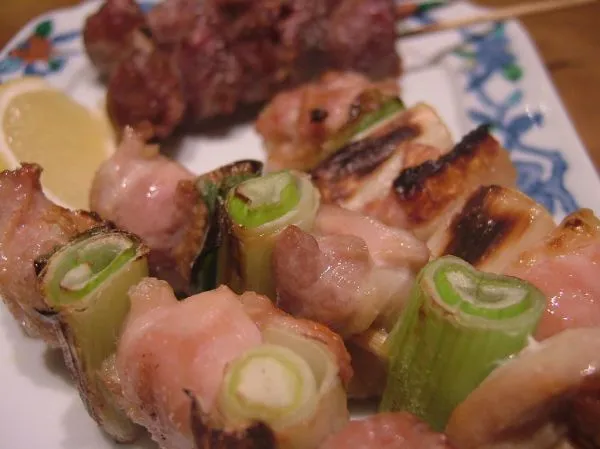
- Negima — The definitive yakitori cut: chicken thigh alternated with segments of Japanese long onion (negi), grilled over binchotan charcoal and finished either with tare glaze or just salt (shio).
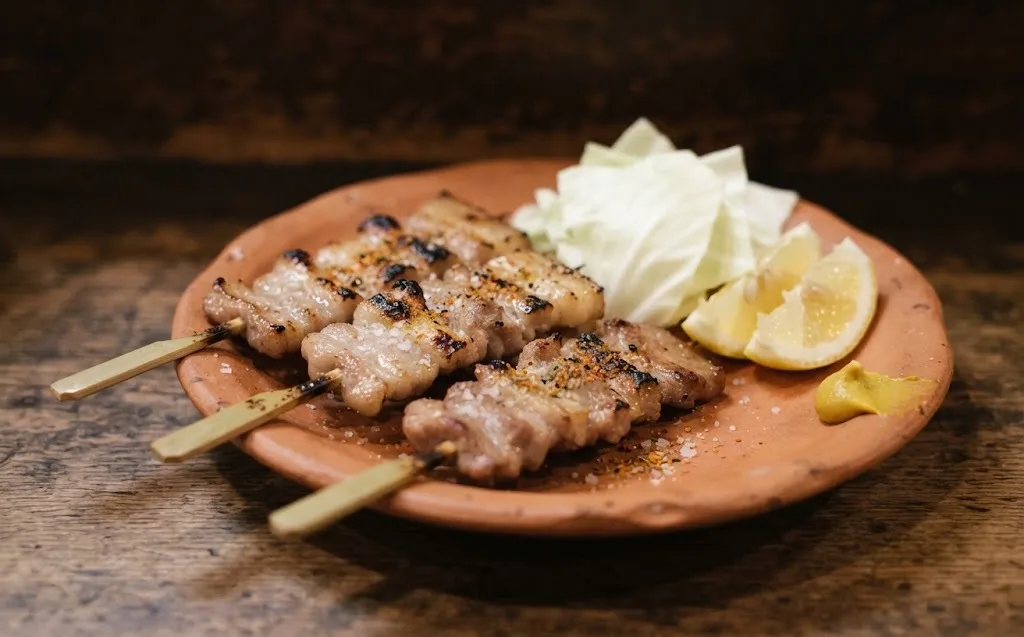
- Yakiton — Yakitori's working-class pork cousin, born in Tokyo's post-war stall culture: skewers running the whole pig from cheek (kashira) and belly to tongue, heart and intestine, grilled over charcoal with salt or miso-tinged tare.
- Sanjeok — A Korean royal-court and holiday dish: strips of soy-marinated beef threaded on skewers alternating with green onion, mushrooms or rice cake, then pan-griddled rather than open-flame grilled.
- Dakkochi — Korea's flagship street-food skewer: chicken chunks (often with scallion or rice cake) grilled on carts and brushed heavily with a choice of glazes, from sweet soy to fiery gochujang.
- Shao Kao — Shao kao (烧烤) is simply the Mandarin word for barbecue, and the name of China's sprawling night-market grill culture: nearly anything — lamb, chicken wings, beef tendon, tofu skin, eggplant, whole leeks — is skewered and grilled over long narrow charcoal troughs.
- Sate Taichan — A modern Jakarta street phenomenon born in the 2010s around Senayan: pale, unmarinated chicken satay grilled without sweet soy or peanut sauce and served instead with fiery sambal and a squeeze of lime.
- Athar Kin — Myanmar's skewer culture centers on athar kin (literally 'grilled meat'): pick-your-own bamboo sticks of pork belly, chicken, offal, and river fish brushed with soy-garlic glaze and charcoal-grilled to order, epitomized by Yangon's 19th Street barbecue strip in Chinatown.
- Sach Ko Ang — Khmer street skewers of beef sliced thin and marinated in kroeung (lemongrass-galangal-turmeric paste), palm sugar, and fish sauce, grilled over coals until lacquered and served with pickled papaya or stuffed into a baguette (num pang sach ko).
- Ping Kai — The Lao market grill standard: whole butterflied chickens rubbed with lemongrass, garlic, coriander root, and fish sauce, clamped flat in split-bamboo tongs and slow-grilled beside sticky rice and jaew bong dipping paste; 'ping sin' extends the same treatment to skewered beef strips.
- Gai Yang — Isan (northeastern Thai) grilled chicken marinated in garlic, coriander root, white pepper, and fish sauce, splayed in bamboo clamps or cut onto street skewers and grilled low over coals, always with som tam, sticky rice, and jaew dipping sauce.
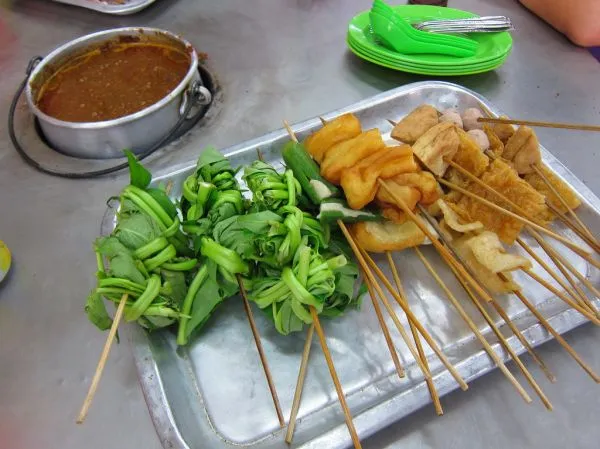
- Lok-Lok — A mobile Malaysian night-market ritual, strongest in Penang: color-coded skewers of fish balls, cockles, quail eggs, meat, and vegetables that customers dunk ('lok' means dip in Cantonese) into a communal vat of boiling broth on the back of a van, then coat in satay peanut, chili, or sweet sauces.
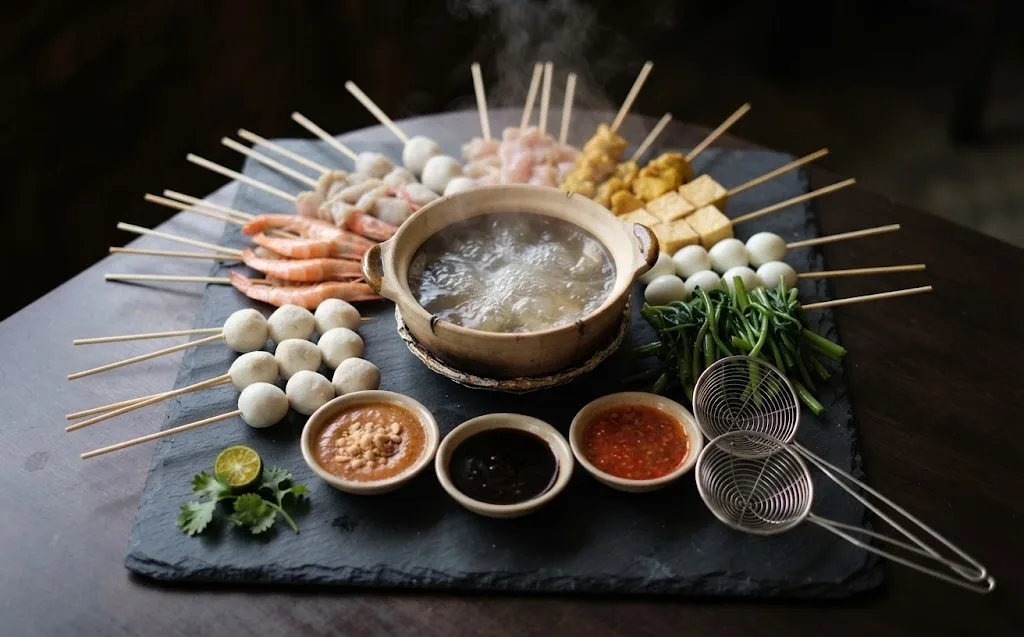
- Satay Celup — Melaka's inversion of satay: raw skewers of meat, seafood, and tofu are cooked at the table in a bubbling cauldron of the peanut satay sauce itself, so the dip becomes the cooking medium.
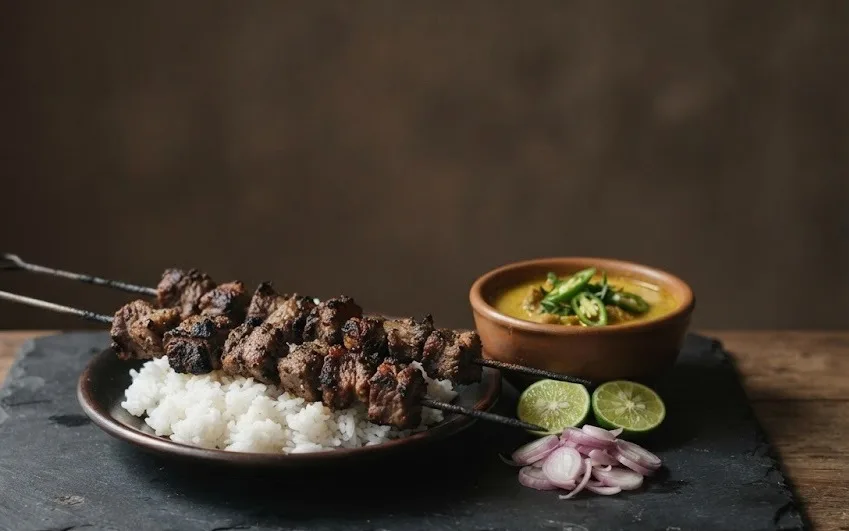
- Sate Klathak — From Pleret in Bantul, just south of Yogyakarta: young goat cubes seasoned with little more than salt and pepper, grilled on the iron spokes of bicycle wheels instead of bamboo, the metal conducting heat into the meat's core so it cooks through evenly; each order comes with a light curry gravy.
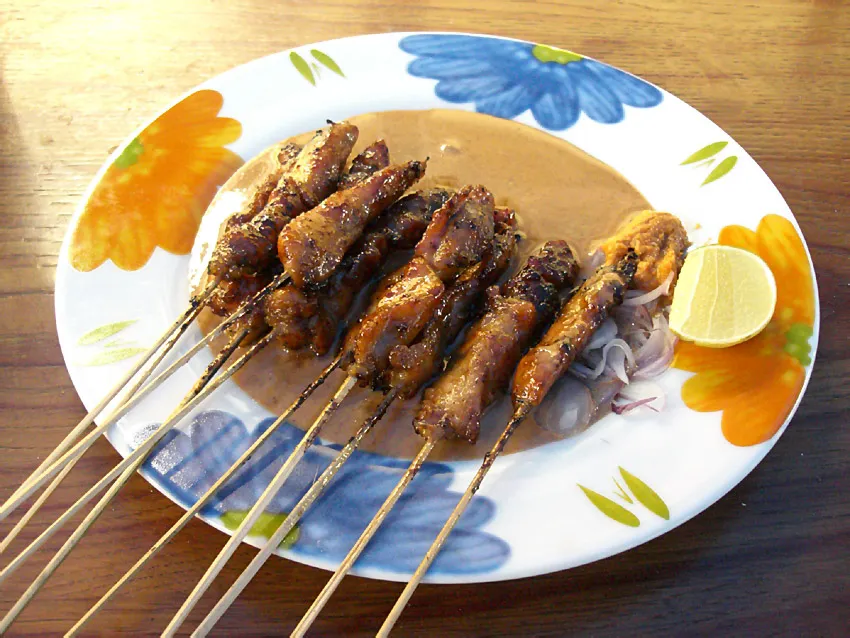
- Sate Ponorogo — East Java's distinctive chicken satay from Ponorogo, cut in long thin fillet strips rather than cubes so each skewer carries one continuous ribbon of meat, bathed ('dicelup') in a sweet kecap-garlic marinade and basted repeatedly while grilling before its peanut sauce arrives.
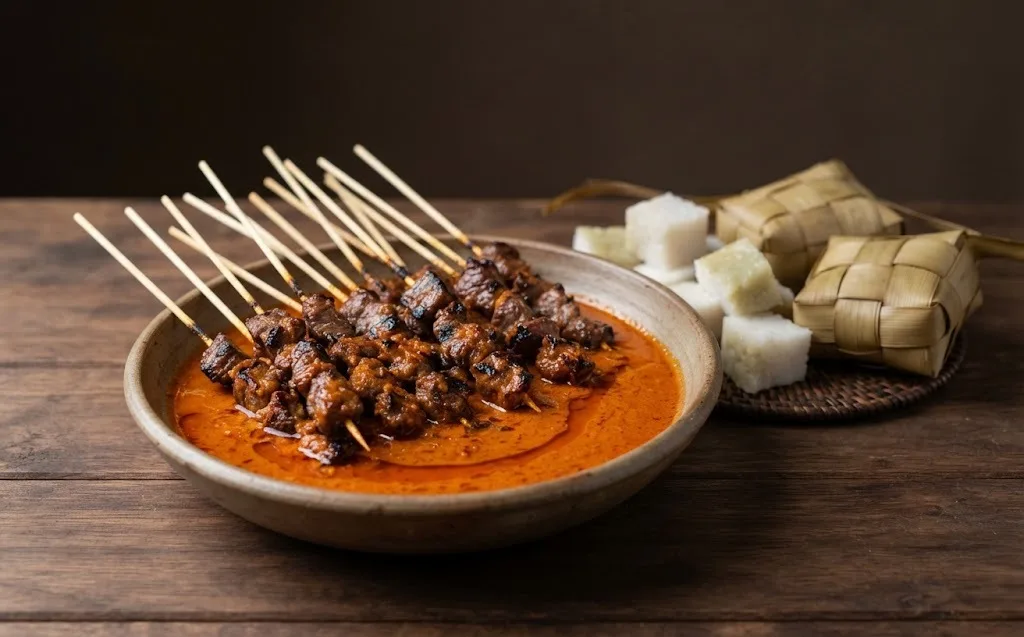
- Satti — The Tausug breakfast kebab of Zamboanga and the Sulu archipelago: small skewers of charcoal-grilled beef or chicken submerged in a bowl of thick, spicy-sweet annatto-red sauce and eaten with tamu, rice cakes steamed in woven coconut-leaf pouches.
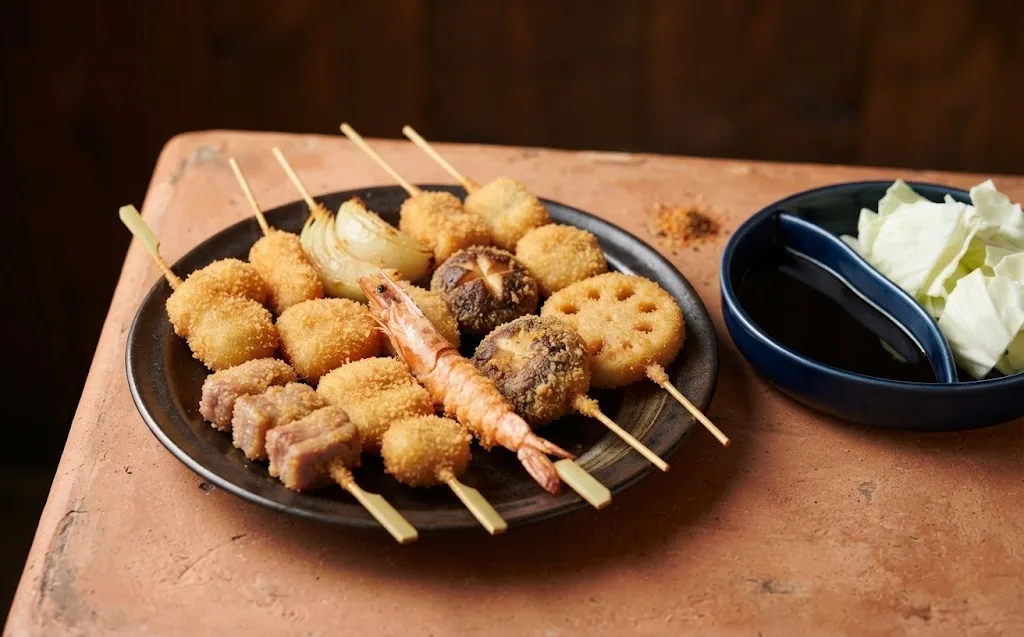
- Kushikatsu — Osaka's working-class skewer tradition from the Shinsekai district: bite-size meat, seafood, and vegetables on bamboo sticks, breaded in fine panko and deep-fried, then dipped once in a communal Worcestershire-style sauce (the famous 'no double-dipping' rule).